

Two people get the same bad news in the same week. One says so out loud to whoever is nearest and sleeps that night. The other straightens the magazines in the waiting room, asks whether anyone has fed the dog, and is still moving three weeks later.
You are reading this for the second one. The parent who says 'it's fine' before the question is finished. The partner who thanks you too warmly for a cup of coffee. The friend who opens with 'sorry to bother you' and keeps a Sunday call that cannot be moved.
None of that is a message about you. It is old arithmetic, kept from a time when help was scarce, moods turned without warning, and asking turned out to be expensive.
Quietness is not coldness. It is a set of protections, and any single one of them proves nothing on its own.
What follows is ten of them, why each exists, and one plain move that helps. Read them together, and you can decide whether the distance was ever about you.
Quick Tips Before You Start
Watch the timing
The moment a behavior shows up matters more than the behavior itself.
Name the concern once
Say 'that cut looks deep' and then stop; arguing turns care into a demand.
Offer something specific
'I can drive you Thursday at 9' beats 'let me know if you need anything.'
Be consistent
Trust builds over months of showing up, not one grand gesture.
Don't announce the diagnosis
Say what you noticed, not what you've concluded about them.
How they handle their own pain
1. They Shrug Off Pain Before Anyone Can Ask

"It's fine," they say, before you have finished asking. "Could be worse. I've had worse." The cut on the hand, the wrecked week, the loss they just came back from burying – all of it gets shrunk on the spot, in one quick line, so that nobody has to spend any energy on it. Including them.
they keep working, keep hosting, keep driving the car with the bad shoulder, because stopping would require someone to notice.
The bill comes later. The cut goes deep and turns angry and red. The deadline slides because nobody was told the week had collapsed. The grief does not arrive at the funeral – it arrives three weeks on, in a quiet house, on an ordinary Tuesday. That is the cost of the quick line, and it is paid alone.
What helps is smaller than it sounds. Name the concern once, plainly – "that cut looks deep" – and then let it be waved off without a fight. Arguing turns care into another demand, and a demand is exactly what the quick line was built to prevent. One plain observation, no second push.
💡 Tip: If they wave off a concern, say 'okay' and leave the door open with one line: 'if it gets worse, I'm around.' No pressure, no debate.
2. They Over-Thank Small Kindnesses Because They Stopped Expecting Them

Because for this person, help was never routine. Someone who spent years making themselves small enough not to need anything has no ordinary category for a favor received – so the gratitude comes out sized for the relief, not the gesture. The thank-you is not performance. It is the sound of being counted, which is not what they expected.
Picture the handoff: a coffee passed across the counter, and then the thank-you that keeps going – the eye contact held a beat too long, the second round of thanks at the door, a text forty minutes later saying again how much it meant. That is not politeness. It is someone who has not built up a surplus of being looked after, and so treats the deposit as an event worth noting.
There is a symmetry to it. These are usually the ones bringing the casserole, giving the neighbor a lift, picking up the shift nobody wanted – help flows outward easily because giving carries no debt. Receiving reverses the direction, and the machinery that handles it is rusty. They know how to owe no one. Being owed to is the unfamiliar side.
So keep the receipt short. 'Glad to do it' and move on – don't wave off the gratitude or make them account for it. A quick, warm acknowledgment lets the exchange close cleanly instead of turning into something they feel they now have to repay.
3. They Apologize for Needing Help Before You Offer It

The cost shows up years before anyone hears the request: the roof that waited two winters, the appointment postponed until the thing was harder to treat, the help that never got asked for because asking felt expensive.
Listen to how a call begins. It opens with "sorry to bother you" rather than a question, then three minutes of context, a hedge about how busy you must be, and finally a small ask that could have been one sentence. If help arrives as an unexpected gift, asking for it becomes an apology paid in advance.
Make asking cheaper by being specific. "Let me know if you need anything" leaves them to do the asking. "I can drive you Thursday at 9" or "I'm bringing dinner Tuesday" spends nothing, because there is no request left to make – which suits the person working through the behavior before this one, who never learned to expect help in the first place.
💡 Tip: When they open with 'sorry to bother you,' answer the apology directly: 'You're not bothering me. What do you need?'
How They Handle Trust and Closeness

The first three behaviors are about pain that gets shrunk before anyone can see it. The next three are what that shrinking does to closeness.
Someone who has learned that needs are expensive does not open the door wide. They test the hinges first, in small doses, and they watch what you do with what they hand over.
4. They Build Trust in Small, Slow Test Doses

Someone who finds asking expensive will also find trusting expensive, so closeness gets handed over in small amounts and held back until the reaction is known.
It looks like a minor confession. Over a plate of food they mention a bad night, four hours of sleep, or a project at work that went sideways last month. Nothing dramatic. Then they stop and watch your face, and whatever they see in the next ten seconds decides how much more you get.
Not the details of the confession. They are reading whether the confidence gets spent elsewhere. Will the sleepless night get quoted back at a family dinner? Will the work failure become the joke at the table? Will it return, sharpened, in the middle of an argument three months from now? One repetition and the door that opened two inches closes entirely.
Time makes the test tighter, not looser. A person burned at thirty still runs the same check decades later, because a second breach no longer feels like something that can be waited out and repaired. There is less room ahead to rebuild in, so the threshold for handing something over sits higher than it did the first time.
The obvious advice is to prove yourself with a grand gesture, and it does not work. A dinner, an expensive present, a weekend planned to show how much you care – none of it answers the only question being asked, which is whether the small thing survives contact with other people. Consistency over months does answer it. You say you will call Sunday and you call. The confession stays in the room where it was made. You do not push for the next part before the first has been left intact.
That is slower than most people want, and it is the pace that actually holds. The proof they need is not that you can be impressive once, but that the ordinary small thing can be kept.
⚠️ COMMON MISTAKE
Don't Rush the Test
The most common mistake with someone who tests trust in small doses is treating the first confidence as an invitation to go deeper. It isn't. It is a sample. Take it, hold it, and let the next one come when they're ready.
5. They Give Help Easily and Receive It Awkwardly
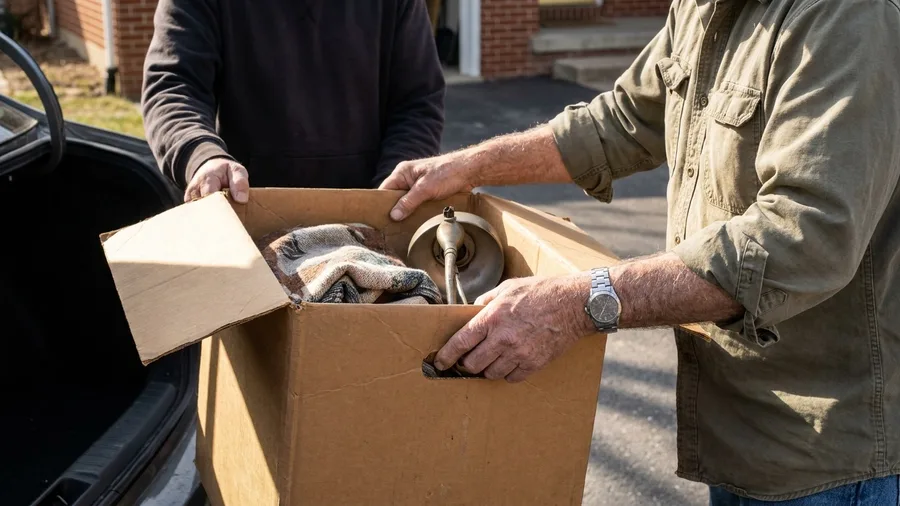
The common advice is to refuse more, set boundaries, stop being the one who always says yes. That advice is written for people who give because they cannot say no. This is the opposite kind of giving, and it is not the problem.
The person who will help you move a couch up three flights, drive you to a procedure at six in the morning, and take your Saturday shift is the last to accept a lift home or a plate of food they did not cook. The offer meets 'I'm fine,' then 'I've got it,' then something about you being busy. Accepting a favor turns them into the one who owes a return, or the one now visibly failing to manage – a debt or a spotlight, either way too costly.
The exception worth noticing is that they accept help when a task gives them cover for it. The move becomes a shared job. The errand becomes two people in a car. One useful line carries it: 'You bring the coffee, I'll have the ladder ready.' They can be helped without being exposed, and that is the whole thing.
6. They Read the Room Before Letting Their Guard Down

The mistake is treating it as rudeness, and I have made that mistake over and over – deciding someone was standoffish because they spent the first twenty minutes in a chair by the door saying almost nothing.
They arrive quiet. They take the seat near the corner, with a clear line to the exit, and drink nothing until they have watched who else is drinking. Over the next half hour they track the tone of the room, who has gone silent, which conversation has an edge in it – the cues that once told a person whether the evening was about to turn without warning. It is not a verdict on the hosts. It is a check of whether the ground will hold.
The most useful help is not cheer. It is a heads-up before the door opens. 'My brother's coming at seven, he's loud but friendly.' 'We eat around six, then people drift.' 'If the dog gets underfoot, she's harmless.'
That script does two things at once, and neither requires mentioning why. It gives the scan a map to work with, and it lets the person settle that much sooner. It is not a judgment of the room and not a report on the reader. It is a seat of the pants need for a stable ground before the guard can come down.
The Structures That Keep Them Steady

Trust is one thing. Predictability is another. The next two behaviors are the scaffolding someone builds when the ground has moved under them too many times.
A routine that looks rigid from the outside is often load-bearing from the inside. The trick is telling the difference between a structure that steadies them and a cage that traps them.
7. They Stick to Routines Because Surprise Has Cost Them

Three Sundays in a row, same call, same hour, same chair by the window. The seat at the table, the route to the store, the Thursday appointment that never moves – these read as preferences and work more like load-bearing walls. Take one down and you find out what it was holding up.
The upset is rarely about the change itself. Move dinner from five to six and what arrives is not annoyance at sixty minutes but the old memory of the plan that got canceled, the furniture that got moved without warning, the surprise that once meant bad news arriving at the door. A person who scans a room for steadiness tends to build that steadiness into the week, where it can be scheduled and trusted.
Change lands better with notice and a version the person can picture: 'we're moving dinner to 6 instead of 5, same table, same people, I'll drive.' That is a map, not a mystery.
💡 Tip: If you must change a plan, give at least 24 hours' notice and describe what stays the same.
What Routine Actually Buys
The numbers behind the need for predictability
8. They Take Extra Work Rather Than Risk a No
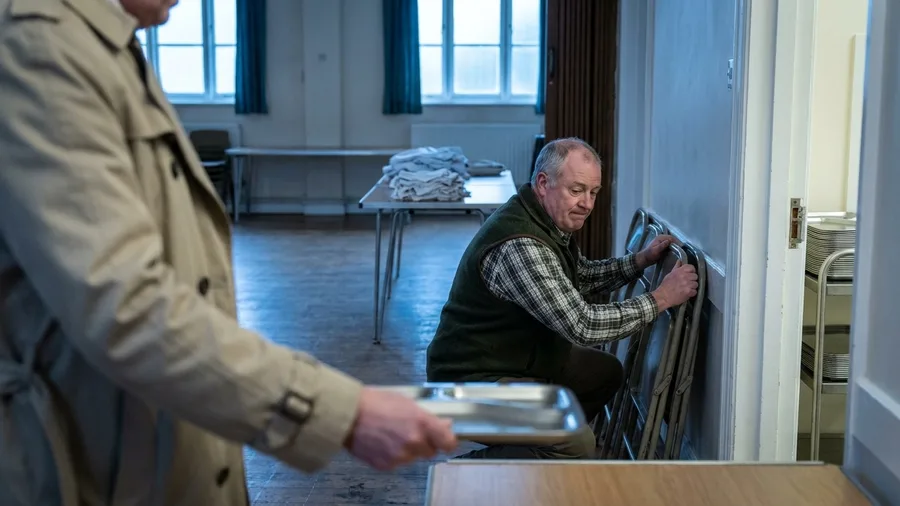
It is 9:40 on a Tuesday and the folding chairs are still stacked against the wall. You are supposed to be leaving. The person who organized the whole evening is on the third trip to the car, carrying the leftover trays herself, and when you say you can take half she says, "No, no, you've done enough, I've got it," already halfway through the door. She will be back for the tablecloths. She has always been back for the tablecloths.
This is how overloading looks from the outside: every request gets a yes, the late hours go unmentioned, the gap in the schedule gets filled before anyone notices it was a gap. What never happens is the handover. The invitations get done, the venue gets booked, and the delivery is three days late, because delegating would have meant asking, and asking costs more than being tired.
The research on helping behavior returns the same result often enough to count on: people who find it hardest to receive help tend to be the ones giving it most, and the resistance is not laziness about the task but dread about the answer. A no does not register as an inconvenience. It registers as evidence, one more item on a long ledger showing that when things get hard, this person stands alone with the work in their arms. So they pre-empt the verdict by never putting the question to a vote.
Watch what it costs everyone else. The person who never says no becomes the bottleneck, and the people around them learn not to offer, and the work that should have been split four ways lands on one set of shoulders while the other three stand in the kitchen feeling useless. Resentment builds on both sides, and neither side says so, because saying so would mean admitting the arrangement was never really working.
What helps here is not encouragement. Telling someone to ask for help is asking them to do the exact thing they cannot do, which is a second task on top of the first. Instead, take a piece before it is offered. "I'll handle the invitations, you take the venue." Or hand them a job and take one back in the same breath: "You book the hall, I'll do the food, we'll meet Thursday." That lands as participation, not as a judgment that they were failing to cope.
And if they wave you off with a shrug, that is not a door closing. It is an old reflex that has not yet been given a reason to relax. Keep making the specific offers at the front of the task instead of the middle of the collapse, and let the tally of small exchanges do the slow work.
💡 PRO TIP
The Sideways Offer
Instead of asking 'do you need help?', try 'I'm heading that way anyway, want company?' It removes the yes/no decision and makes receiving feel like an accident rather than a confession.
How They Let Feeling Show

The last two behaviors are where the composure cracks, and where the whole pattern becomes visible if you know what you are looking at.
Pay attention to what happens after the emergency, not during it.
9. Calm in a Crisis, Undone by Small Things
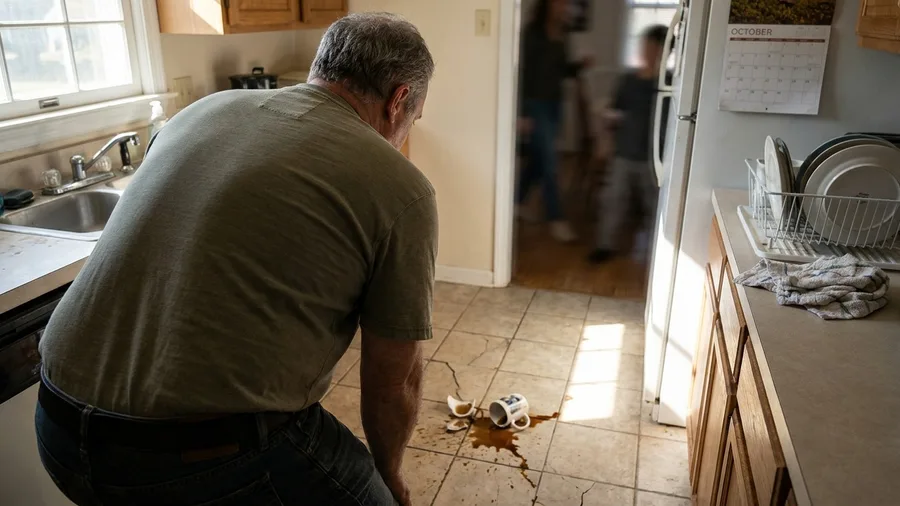
The thing that gets missed is the check-in that never comes. Someone holds it together through the hospital corridor, the calls, the forms, the drive home at two in the morning, and everybody says "you were amazing" and means it, and then nobody calls on Thursday. Two days later the same person is standing over a mug that slipped out of their hand, and the crack in the kitchen floor seems to be the last straw.
It reads as fragility, or as a strange overreaction to a small mess. It is more like a backlog. During the emergency there was a role to fill and a sequence to follow, and the feeling had somewhere to go that was not the surface. Afterward there is no script, no instruction, just a lot of quiet and a chipped mug on the floor, and the stored-up feeling lands on the nearest available thing, because it has to land somewhere.
This is the gap worth learning to read: a person who seems unshakeable when everything is on fire is not necessarily untouched, they are often just saving the tearing up for a smaller, safer moment. The steadiness is real, but it is borrowed from the pressure of the crisis, not proof that nothing hurt.
The answer is patience after the storm rather than during it. "The hard part is done, how are you today?" is worth more than a hundred reassurances while you are still in the middle of it. And when the mug breaks and they are upset, let the upset be about the mug. Do not point out that they handled much worse last week. That correction tells them the old tally of what they are allowed to feel is being kept, and they will go quiet to protect you from it.
10. They Tell Hard Stories Lightly, Then Change the Subject

"Best thing that ever happened to me, honestly – we were divorced by spring." The laugh comes with it, and then, before you can answer, a turn to the parking situation, the price of gas, the game. The heavier the thing was, the lighter it gets told; that is the whole tell.
What the joke is checking is you – whether you flinch, whether your face rearranges into pity, whether you stay. Because a story told heavily becomes a spectacle with them at the center, and they have been the spectacle before and did not care for it. The subject change is not forgetting; it is covering the story back over before it can cost anything.
So stay, and ask one plain question: "What was that like?" Then do not fill the silence with advice or a matching story of your own. One question and a quiet pause say the heavy thing can be set down here without being dropped – and that is the thing they have been checking for all along.
💡 Tip: Stay. Ask one plain question: 'What was that like?' Then let the silence sit. Don't fill it with advice.
What Actually Helps vs. What Backfires
Helps
- Name the concern once, then stop
- Offer something specific and already in motion
- Keep small confessions out of later conversation
- Check back after the crisis, not during it
Backfires
- Arguing when an injury is waved off
- Asking 'are you okay?' on repeat
- Turning a confidence into a later joke
- Praising the calm and missing the crash
Frequently Asked Questions
How can I tell if someone is quiet because of past pain or just naturally reserved?
Look at the timing and the cost. A reserved person is comfortable with silence. Someone who has been through a lot tends to shrink or redirect the moment a feeling gets close. The pattern across several behaviors matters more than any single one.
Should I tell them I've noticed these things?
Resist the urge to announce a diagnosis. Saying 'I've noticed you never let anyone help' will likely feel like an accusation. Instead, respond to the behavior with a specific offer and let them draw their own conclusions about being seen.
What if they get angry when I try to help?
Anger is often the fastest way to end a conversation that feels exposing. Don't match it. Offer once, withdraw without punishment, and leave the door open. A short 'I'm around if you need me' does more than a debate.
Is it worth bringing up old history that might explain this?
Only if they bring it up first. You can acknowledge a hard chapter plainly ('that sounds like it was a rough year') without turning it into a therapy session. Let them decide how much of the story to tell.
How long does it take for someone like this to trust you?
Months, not weeks, and it depends on consistency. The small tests are watching for whether you show up when you said you would and whether their confidences stay safe. There is no shortcut, but the pace is usually honest.
What if I'm the one who does these things?
Then you already know the reason underneath. The move is the same in reverse: let one specific offer land instead of deflecting it, and say one true sentence about a hard week instead of 'it's fine.' Start small.
One Signal Proves Nothing; the Pattern Tells You
One signal proves nothing. The pattern across several is what tells you: pain shrunk before it can be seen, thanks too large for the thing given, an apology before the ask, trust handed over in doses, a routine that cannot move, hard stories told lightly and left early.
Pick the one you recognize most and answer the reason, not the act. Say 'glad to do it' and let the thank-you close. Give notice early. Make the offer specific. Ask one plain question and then leave the silence alone. You do not need to tell anyone you have worked them out.
The too-big thank-you, the 'sorry to bother you,' the Sunday call that cannot shift – none of those are verdicts on you. Go back to the corridor and sit down beside the one still straightening the magazines. Do not ask if he is scared. Ask whether he has eaten, and stay until the news comes.
Pick One and Try It This Week
Choose the single behavior you recognize most and make one specific offer instead of a general one. Then check back in a few days and see what shifts.

