

Sixty represents a quiet threshold where decades of professional identity begin to fade into the background. Another common pattern appears right around this milestone when conversation at the kitchen table slows down significantly.
You notice that the man across from you answers in shorter sentences and stays in the garage longer than necessary. This article breaks down the actual feelings hidden beneath that sudden silence, and what you can do about it without forcing a confrontation.
At a Glance
Why the Silence Arrives Without Warning After Sixty
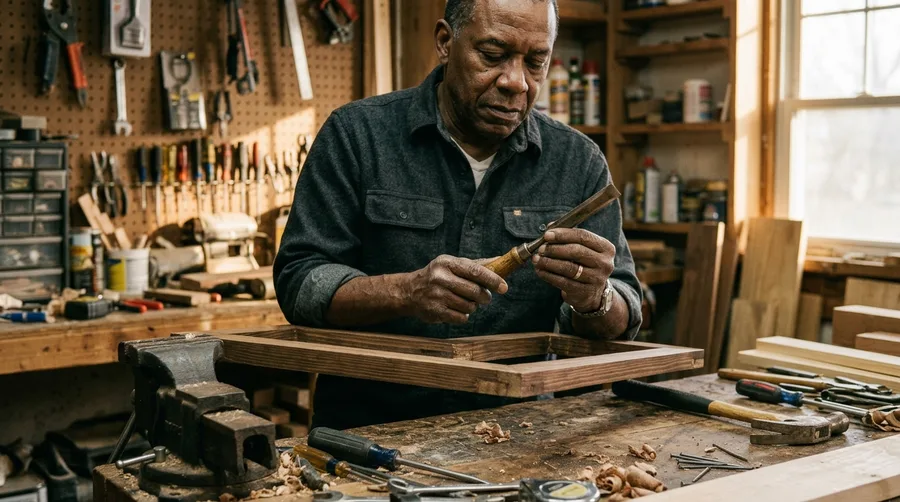
Forty years of uninterrupted working routines condition many men to measure their daily value entirely through external output and professional utility.
When retirement or natural changes in physical energy remove that constant framework, the sudden absence of structure frequently translates into an abrupt retreat inward.
Researchers who study adult male development repeatedly find that this sudden quietness is rarely an indicator of genuine peace or relaxation. It is almost always an internal adjustment period where lifelong habits of emotional suppression collide head-on with a brand new, unscripted reality.
Recognizing this underlying mechanism allows you to stop taking the sudden quietness as a personal rejection. Instead of pressing for immediate conversation, you can view the behavioral shift as a signal of internal recalibration, giving the other person the quiet room they need to find their footing.
1. The Quiet Loss of Workplace Identity and Authority

The quiet that follows retirement often reads as cold detachment when it is actually an unarticulated grief. You see him staring into a cup of coffee at ten in the morning, assuming he has simply grown distant or indifferent to the household around him.
Forty represents the peak of professional momentum, but sixty drops off into a sudden silence where decades of routine vanish overnight. That stillness is not peace, and it is certainly not laziness, though it is frequently mistaken for both by people living right beside it.
When the daily meetings and the authority attached to a title disappear, the internal anchor goes with them. He is not just resting; he is quietly mourning a version of himself that no longer exists.
Instead of asking him what is wrong or demanding an explanation for the quiet, sit down across from him and talk about something entirely unrelated to work. Give him an arena where his worth does not depend on producing results, and watch how quickly the tension shifts.
💡 Tip: Avoid asking how retirement feels. Ask specific, low-stakes questions about a hobby instead.
💡 PRO TIP
Shift the Focus Away From Past Work
When conversation lags, introduce a tangible present task. Working side-by-side lowers the pressure to fill the silence with small talk.
2. The Exhaustion of Maintaining a Lifetime of Stoicism
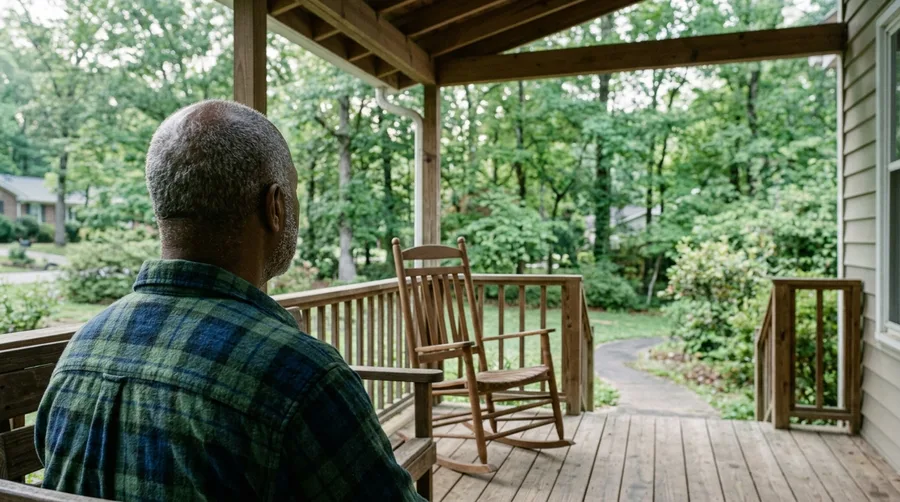
Does your silence after a hard day actually mean you do not care, or does it mean your energy reserves are entirely gone? Ask yourself what it costs to absorb every shock without letting your shoulders drop for decades.
When you swallow every frustration to keep the household steady, the physical cost accumulates quietly in the background until speech simply feels too expensive to attempt.
Stop demanding immediate verbal processing of heavy events right when you walk through the door. Let yourself decompress in absolute silence for an hour before expecting any collaborative problem-solving.
Emotional Shift — At a Glance
🔋 Energy Reserve
Depleted by Evening
🧱 Defense Habit
Emotional Stoicism
⏱️ Recovery Time
Extended Solitude
Core Rule
Silence after a long day is an energy reset, not a personal rejection.
3. Are You Misinterpreting Solitude as Coldness?

The common advice tells you that sudden quietness from a partner always signals growing emotional distance, but researchers who study long-term adult relationships point out that solitude is often just biological decompression rather than rejection.
Ten seconds of honest self-reflection can reveal whether you are pushing for conversation because you genuinely need connection or simply because his silence makes your own nervous system anxious.
If you recognize that the quiet feels like a direct threat to the bond, you are likely misinterpreting healthy rest as abandonment and rushing to fix a problem that does not exist.
The replacement move is simple: when the afternoon grows quiet, stay in the room and read your own book for twenty minutes without asking what he is thinking.
Best Ways to Handle Silent Paces
4. When Quietness Is Simply Contentment in the Present
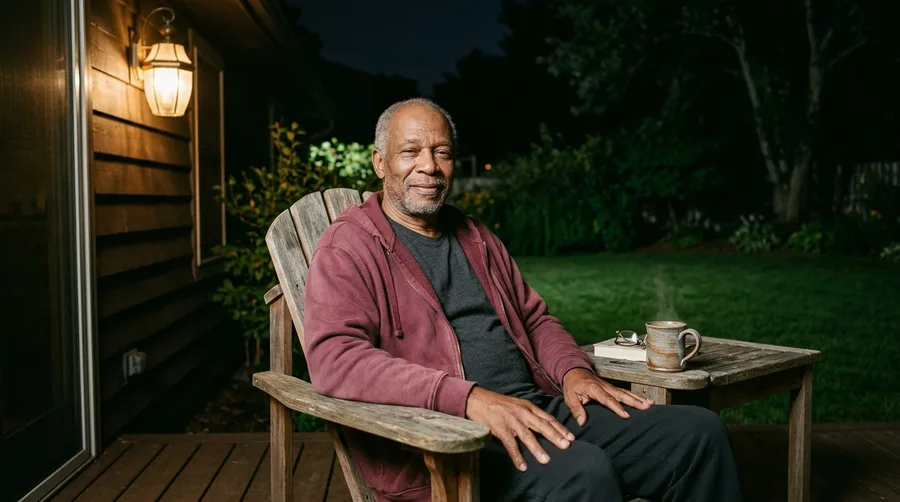
You are sitting on the porch as the afternoon light stretches long across the lawn, neither of you speaking for twenty minutes while the tea goes cold in your mugs.
The standard advice says you should never let a silence linger this long because unexpressed thoughts must be dragged into the open air before they turn to resentment.
That assumption misses the entire point of what contentment actually looks like when people stop performing busyness for the rest of the world.
Researchers who study adult development find that quiet periods late in life often represent a settled baseline rather than an emotional withdrawal or a hidden grievance.
You can tell the difference instantly by looking at the physical posture rather than listening for words that are not arriving.
His shoulders are dropped away from his ears, his breathing is steady and slow, and he leans his weight against the back of the chair with an easy willingness to remain right where he is.
When contentment is the actual root cause of the quiet, trying to drag him out of it with sudden chatter or anxious questions only creates unnecessary friction where none existed.
Instead of filling the air, set your own mug down, match the quiet rhythm of the room, and let the absence of talk remain what it is: a sign of safety rather than a problem to fix.
🌱 GROWING TIP
Recognize Healthy Quiet
If his body language is relaxed and open, let him enjoy the stillness. True peace does not always require narration.
5. The Heavy Weight of Unspoken Physical Vulnerability

For years I thought withholding medical worries was just old-fashioned stubbornness, missing how entirely tied up self-worth is with physical competence.
You sit at the kitchen table while he sorts through the mail, ignoring the manila envelope from the clinic on the counter and casually mentioning that his knee has been acting up a bit more lately.
Acknowledging physical decline feels like losing the last bastion of self-reliance, which makes simple advice to just open up feel impossible to follow.
Handle practical logistics quietly by scheduling the follow-up yourself and handing him the details with a totally matter-of-fact tone instead of asking for a speech.
The Adjustment Arc After Sixty
6. The Quiet Afternoon in the Garage

A man over sixty will often retreat to a workshop, garage, or back room and spend long stretches of time in complete silence, engaging in what looks to an outsider like pointless tinkering.
You look out the kitchen window and see him standing by the workbench, reorganizing a weathered plastic box of rusted screws for forty minutes straight. He moves them one by one into small metal tins, carefully wiping off dust, without ever picking up a single tool or making any move to start an actual repair project.
It is easy to misread this scene as cold emotional distance.
The reframe is that this solitary hour is a deliberate decompression ritual from a world that moves too fast. Sorting small physical objects creates a predictable micro-environment where no one is making demands on his attention. Researchers who study stress recovery note that simple tactile tasks help recalibrate an overstimulated mind far better than sitting idle.
When you notice him standing quietly in that space, resist the urge to interrupt and ask what he is working on or whether something is troubling him in the house.
Instead, walk out, set a cold glass of water on the workbench, and say, 'I brought you a drink, take all the time you need out here.' Then turn around and walk back inside immediately. Giving him that undisturbed processing space shows genuine respect for his emotional needs, building far more trust than forcing an unexpected conversation.
Processing Styles Compared
Internal reflection versus external verbalization
7. Reframing Silence as a Different Dialect of Care

I just checked the oil and topped off the tires for you.
When you frame his silence as a failure to communicate, you miss the quiet acts of service that take its place. The fixed gate latch, the full gas tank, and the coffee cup left on your desk are all sentences spoken in a different dialect.
Instead of asking him to open up with words, say something like, I noticed you fixed the back fence, thank you for taking care of that. Acknowledge the language he is already speaking before asking him to learn a new one.
8. The Exact Words to Use When the Silence Gets Heavy

The conventional advice tells you to pull silence out of a room immediately with bright questions, but that usually makes a quiet person retreat even further into themselves.
Handing over the actual words gives you a concrete tool to use when the quiet room feels too heavy to bear without adding unnecessary pressure to the conversation.
Try saying this exact sentence: 'You do not have to talk right now, but I am right here if you want company.'
Say the sentence, then stop talking immediately and let it sit without rushing to fill the air, allowing the other person the safety to respond only when they are ready.
9. What This Quietness Buys and Spends

Are you wondering if this growing quietness is a slow drift away from you or simply a fundamental shift in how he processes the world now? What this dynamic quietly buys over the months is a rare form of emotional conservation, letting him preserve dwindling energy reserves for the things that truly matter. Yet what it quietly spends is the effortless daily friction of casual banter, leaving you to carry the conversational weight of the household alone. Over time, that hidden imbalance breeds a subtle resentment that neither of you intended to invite into the room. The cost accumulates in the empty spaces between evening meals where words used to flow freely without any prompting. When you demand constant narration to fill those gaps, you inadvertently drain the exact internal resources he is trying so hard to protect. Meeting him in that stillness requires letting go of the old expectation that closeness must always sound like a crowded room. Step back from the pressure to entertain or decode every passing silence, and offer a steady, unpressured companionship instead. Sit with him on the porch without filling every breath with commentary, showing him that quietness is a safe harbor rather than an ongoing test. That simple pivot changes the entire emotional ledger of the house, turning isolation into a shared and comfortable peace.
10. The Long-Term Cost of Forcing Constant Conversation
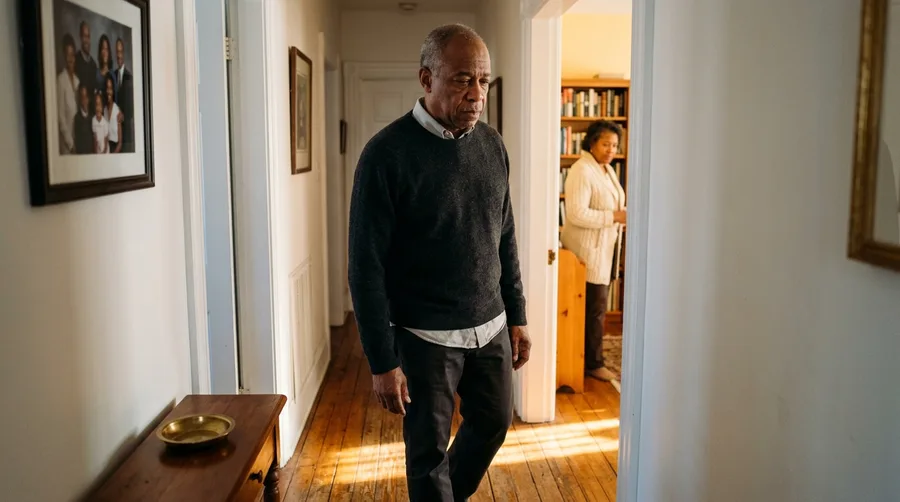
I used to think that pushing through a quiet spell with cheerful questions was the best way to prove I cared, but I was completely wrong about what that persistence actually communicates.
What you think your constant questions signal is care and engagement, but what they quietly signal to him is that his normal state of mind is a problem that needs to be fixed immediately.
What this buys you in the short term is a brief, forced answer, but what it quietly spends over months is his willingness to share anything at all.
When every quiet moment is met with anxiety or interrogation, he learns that home is just another place where he has to perform.
Letting go of the need to fix his silence preserves the deeper bond you built over decades.
Frequently Asked Questions
Is it normal for men to become more withdrawn after turning sixty?
Yes, retirement and shifting physical energy often trigger a period of internal processing and quiet reflection. It is a common behavioral shift rather than an intentional rejection.
How can I tell if his quietness is depression or just normal solitude?
Look for physical posture and engagement levels. Content solitude involves relaxed body language and continued care for daily tasks, whereas clinical withdrawal includes persistent despair and loss of all pleasure.
Should I push him to talk about his feelings when he goes quiet?
Pushing usually increases defensiveness. Instead, offer unpressured companionship and let him know you are available when he is ready to speak.
What are some ways to connect without forcing conversation?
Share physical space during routine tasks like cooking, gardening, or walking. Working side-by-side removes the conversational pressure while maintaining closeness.
The One Conversation to Have Before Sunday
If you try only one thing from this article tomorrow, choose unpressured presence. Sit across from him with your coffee and let the silence breathe without filling it with questions.
That single shift changes the entire emotional weather of the room and lets him know he is safe just as he is.
Try This Simple Shift Today
Notice one act of service he performs without speaking, and acknowledge it simply without demanding a long conversation in return.