

The joke arrives before the trailhead does, months or years before anyone says the real thing out loud. A spouse who used to be first up the hill now says "I'm too old for that" while the boots are still by the door, and you are left deciding whether this is ordinary aging or something quieter.
The dinner canceled an hour before is the same message wearing different clothes. So is the appearance question you have now answered twice. The behavior is rarely the whole thing; the joke, the snap, the cancellation, the repeat question control what you are allowed to see – frailty, dependence, being slowest – before anyone comments on it.
Twelve signs follow, and every one of them is deniable by design. The test is not a bad week. The test is a pattern that is new, specific, and tied to something your spouse has stopped doing.
By the end you can choose the one sign to name first and open with a description rather than a case. Not proof of decline, then, but a way of managing a fear, read carefully enough to answer.
Quick Tips Before You Start
Look for pattern, not a moment
One joke is a joke. The same joke before every social event is a pattern worth noting.
Name the specific behavior
Say 'you cancelled the last three Saturdays' rather than 'you never want to see anyone'.
Ask what it means to them
One question, then silence. Let them fill it before you offer anything.
Offer one small shared adjustment
A shorter visit, an earlier time, a familiar companion. Not a restriction.
Don't stack the evidence
Presenting all twelve signs as a case will start an argument, not a conversation.
Defensive self-talk
1. They Make Age Jokes Before You Can

Three seconds. That is how far ahead of you the line arrives, usually on the driveway, before anyone has touched a bootlace. "I'm too old for that climb" – said while the boots are still in the car, not after the first hill.
This is anticipation, not humor. Your spouse gets to the joke first so nobody else gets to say it: frail, forgetful, past it. And notice how it ends the plan rather than the tension – the group moves on, and no hike gets scheduled at all.
So don't out-quip them. Laughing with someone leaves room for the trail to stay on the calendar; laughing them off, or one-upping the joke, shuts the same door they just closed. Ask instead what part bothers them – the distance, the pace, being last up the hill – and the fear stays in the room where it can be answered.
💡 Tip: When the joke lands, ask: 'What part of it bothers you most?' Then stop talking and let them answer.
When the Struggle Stays in the Room

The signs that live in the room with you both are the ones you are most likely to read as personality. The joke before the hike. The same question about looking old, asked again a week after you answered it. The sharp response when you reach for the jar without being asked. Each is quick, each is deniable, and each is a self-protective move rather than a character trait you have simply noticed late.
Watch what each one protects. A joke protects against being seen as past it, managing the story before anyone else can. A snap protects autonomy, pushing back on help that would make dependence visible. A repeated question protects identity, asking you to confirm that the person they were is still the person in the room. None of these is the whole of who your spouse is. They are small walls built fast, and they go up precisely where the ground feels uncertain.
That is why responding to the behavior directly tends to backfire. Argue with the joke and you have made the fear the subject of a debate. Answer the snap with logic about why the help was reasonable and you have turned a boundary into a score to settle. Answer the question with a stronger compliment and you have answered the wrong thing, so it comes back.
Respond to the fear instead, and the behavior usually relaxes on its own. Ask what part of the hike worries them. Offer the jar with a choice attached. Ask what the question is really about. The move is quiet, and it works because it addresses what the wall was built to guard.
2. They Ask Again Whether They Look Old

I used to hear a question like that as a request for a compliment. Say the reassuring thing, in the warmest tone available, and consider the matter handled. It never was. The reassurance held for an evening and then the same worry came back wearing a different shirt.
That is the pattern worth noticing: the question returns after the answer, and it narrows onto one thing. Hair. Weight. Energy. Skin. "Do I look old?" gets asked on a Tuesday; by the weekend it has become "Do I seem slower to you?" or "Is my hair thinning at the front?" The reply "you look fine" is already known to be temporary before it leaves your mouth.
Which tells you the subject was never the mirror. A compliment answers a question about appearance. What is actually being asked is who the spouse is becoming, and whether that person still counts at work, in bed, among friends. Answer only the surface and the real question stays closed.
Naming the cost is what opens it. "You've asked me this a few times now – what is it you're worried it changes?" is a different conversation from "you look great." One hands them another compliment to test. The other lets them tell you what the change might cost.
⚠️ COMMON MISTAKE
The stronger compliment doesn't work
Telling them they look younger than ever, or that they haven't changed a bit, is not the answer they are asking for. It confirms that the question matters and leaves the real fear unnamed. Name the cost instead.
3. They Snap When You Offer Practical Help

The GPS is already talking when you reach over and tilt the phone toward the windshield so your spouse can see the turn. Nobody asked. The voice cutting in over the directions is sharp: 'I've got it.' Same flash at the corner when you point left, same one at the jar when you take the lid before it's offered, same at the phone settings, same when you carry the groceries in without waiting. Small moments, sudden heat.
Read the heat as ingratitude and you will answer it with hurt, which is exactly the wrong reply. The snap is doing a job. It puts a fence around capability, and it hides the possibility that help is now genuinely needed. Accepting the offer would mean admitting out loud that the directions were hard to follow or the jar would not open, so the offer gets rejected before anyone has to say that.
Notice how different the same offer feels when it arrives as a choice instead of a takeover. 'Want me to do it, or do you want to try first?' hands back the wheel and still leaves the help within reach. 'Here, let me' takes the wheel and asks nothing.
There are two lines that tend to work, and they differ only in where they put you. The first: 'I'm not trying to take over. Tell me if you want a hand and I'll stay out of it until then.' The second, for the moment already gone wrong: 'That came out as me grabbing it. I was trying to help and I did it wrong.' Both lower the price of accepting a hand later.
Then the wider sentence, said when nothing is on the table and no jar is open: 'I've noticed I jump in a lot lately. If I was slower to do that, would that be easier?' It asks about the pattern without mentioning the snap, leaves room for an answer, and makes the spouse a partner in the arrangement rather than the subject of it.
So the aim is not to win the point or prove you were only being kind. The aim is to make it cheaper to accept help than to keep the fence up, and to say the forgiving line before the same scene plays again at the next corner.
💡 Tip: Practice the two-choice question until it is automatic. It works for jars, directions, settings, and carrying things.
Withdrawal from familiar life
4. They Quietly Drop Hobbies They Once Loved
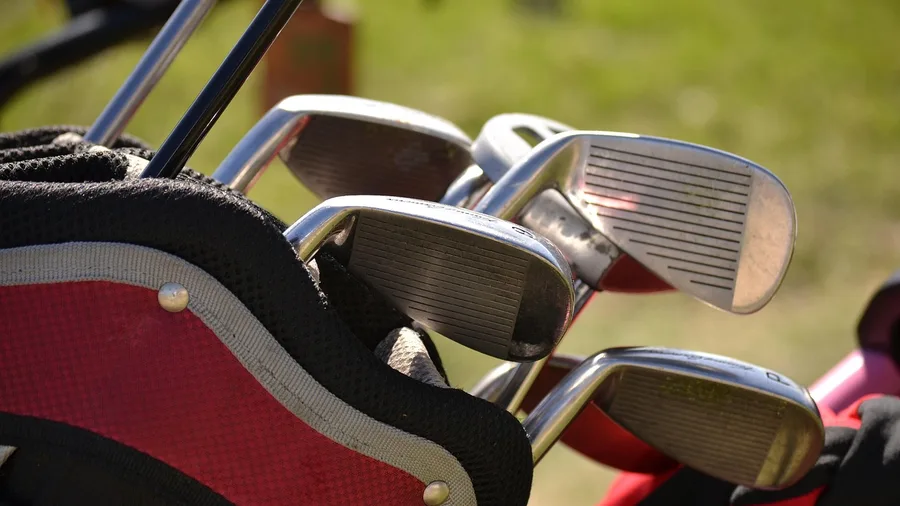
A hobby that fades is not a decision, and calling it one is the mistake. People think quitting is a choice someone makes out loud, a clean break with an announcement. It rarely looks like that. It looks like a standing game with the same group, skipped once, then twice, each skip carrying a reasonable excuse, until nobody mentions it anymore.
The gear sits in the garage gathering dust, sessions get shorter, one Tuesday becomes none, and there is never a formal goodbye. The likely reason is comparison. Leaving early means never standing in that circle as the slowest one, the one who cannot keep up or remember the rules. The cost is not a hole in the calendar; it is the friendships, the routine and a version of the self that lived inside the activity.
Ask what they miss about it rather than why they stopped, and the first answer arrives without shame attached. The right response is quieter than it sounds: treat the dropped hobby as a loss worth grieving, and ask the question the way you would ask a question about meaning rather than a question about an exit.
The Shrinking Circle

Withdrawal never announces itself. One dinner gets cancelled the night before, a visit shortens by an hour, grooming that still holds up for work or guests goes flat the moment the front door closes. Each item has an innocent explanation, and each is easy to wave off.
That is why this stretch is the easiest to miss and the hardest to reverse. Every avoided event is a missed rehearsal, and the next one arrives heavier. The couple who stopped going out is now the couple who cannot imagine going out. The world contracts a little with each rain check.
So 'why are you pulling back?' is the wrong question, because it asks for a defense where there is no good one. 'What part of the plan now feels risky?' is the better one. It names the difficulty as a fact, not a failing, and it treats the avoided event as a puzzle to solve together rather than a symptom to pursue.
5. They Avoid Plans That Used to Feel Easy
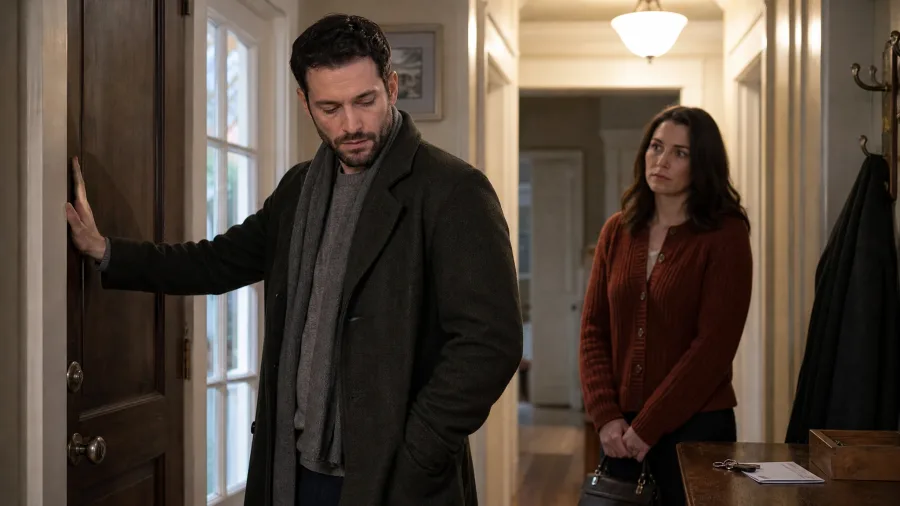
Withdrawing from people is not the same as liking quiet, and the ten-second test is whether the pullback is new. A spouse who has always preferred small gatherings is stable and explainable; a spouse who hosted for years and now cancels the dinner three hours before it starts is telling you something changed.
The pattern has a particular shape. Plans get dropped at the last minute, visits shorten, and your spouse heads for the exit seat at the restaurant or the chair nearest the door. Arriving late and leaving early start to look like a strategy, because they are one: each move trims the window in which something might go wrong. The social world gets smaller, and every dropped plan makes the next invitation harder to accept. Fewer practice runs at being among people, and the first ten minutes of a gathering start to feel like a test nobody announced.
Avoidance like this protects against a specific risk the spouse does not want to name, whether that is running out of energy halfway through, losing the thread of a conversation, or being the one whose limits set the schedule for everyone. Shrink the plan and you find out what the barrier is. A shorter visit, an earlier dinner, one familiar friend instead of the whole group.
The question that helps is not why the spouse is being antisocial but what part of the evening now feels risky. Ask it and you will usually hear a real answer: the drive home in the dark, sitting too long, or the moment someone asks what they have been up to lately.
A decline in your spouse's social life can read as rejection of the friends, and sometimes it is. More often it is a safeguard around a body or a memory the spouse no longer trusts in public.
💡 Tip: Propose a smaller version of the plan before you propose cancelling it. Test the barrier before accepting it.
💡 PRO TIP
The ten-day rule
Wait ten days before deciding a withdrawal is a problem. If the pattern holds across two invitations and narrows each time, it is worth a question. If it lifts after a rest, it was a week.
6. They Let Grooming Slip Only at Home
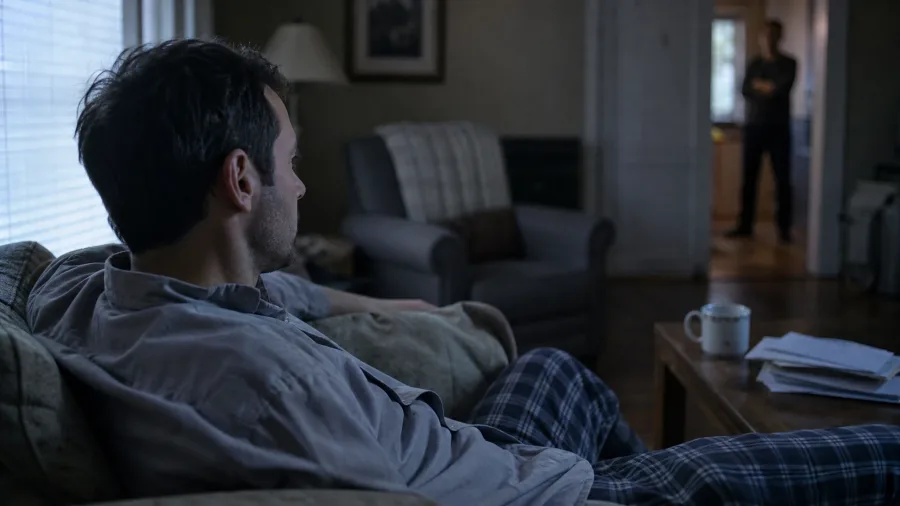
Someone who is still polished for work or guests and flat at home is the same person playing to two different audiences.
That split is what separates this from laziness. A spouse who never cared much about appearance has not changed; a spouse who ironed a shirt every morning for years and now does it only when someone is coming over is guarding the public view and letting it go where no one watches. Before you read anything into it, rule out the plain causes: a back that makes bending hard, eyes that make shaving risky, a routine that broke when the shift changed. Ask, too, whether the home version feels like resignation or simply relief.
The honest opening is an observation, not a review. "I notice you've stopped bothering with the things you used to enjoy doing at home. What's up?" Curiosity gets an answer; a comment on their grooming gets a door closed.
How the Withdrawal Usually Unfolds
Comparison and control
7. They Compare Themselves to Peers More Often
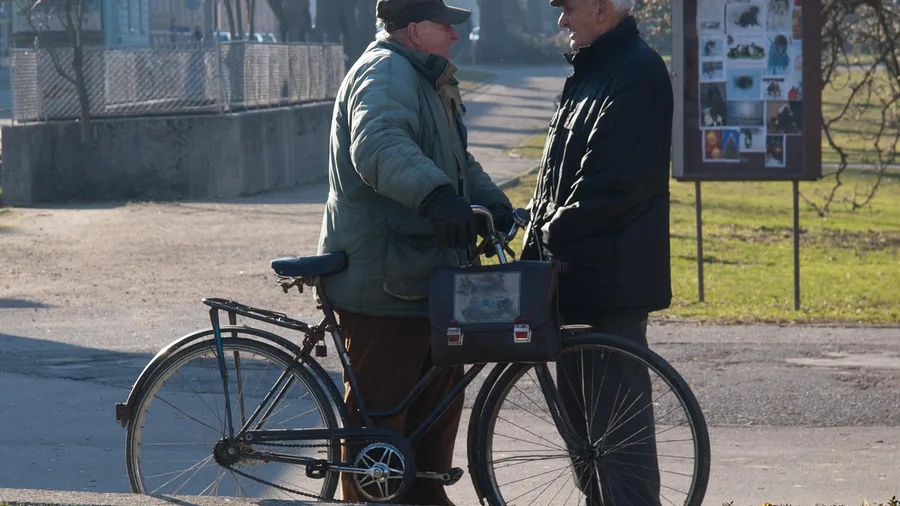
"He retired at fifty-eight, and look at him." "She just ran another marathon."
The comment lands while you are clearing the plates, and it is not really about the friend. It is a measurement. Your spouse has turned the people they know into marks on a private scoreboard, and the question being scored is whether they are behind in aging. Retirement, a finish line, a promotion, a young look after a haircut: each one gets held up, compared, and quietly filed.
Some of this is ordinary. A remark about a friend's news passes and the evening goes on. Envy is different. The mood darkens while the friend is still in the room, lingers after they leave, and then folds inward into self-criticism. You hear it as gossip and it lands on your spouse as a verdict about their own body, their own timeline, their own choices.
The move is not to defend the friend. Whether the marathon is impressive was never the question.
Try asking what the comparison makes them want. "When you talk about Dave's retirement, it sounds like it stirs something. What is it you're measuring yourself against?" That question surfaces the standard, and the standard is the actual subject. Your spouse may say they expected to be retired by now, or to still be able to do what they could at forty-five, and that sentence is worth more than any argument about whether Dave's life is really so great.
Then let it sit. You are not there to talk them out of the standard, only to make it sayable out loud, where it can be looked at instead of just felt.
💡 Tip: Keep your tone curious, not corrective. Arguing that Dave is not that impressive misses the point entirely.
A Lifelong Streak vs. a New Need for Control
Lifelong controlling streak
- Broad: it applies to most areas of life
- Old: it was there in the first year you knew them
- Stable: it does not track with age worries
- Familiar: friends and family have always commented
New need for control
- Narrow: it clusters around one or two routines
- Recent: it appeared in the last year or two
- Linked: it flares when aging comes up
- Disproportionate: small deviations trigger outsized irritation
8. They Need More Control Over Small Routines

The cost of a fixed routine is the fight it starts over nothing. You reach the intersection and turn the way you always turn, and your spouse says, sharply, "No, go the other way," and the sharpness sits between you for an hour over a route neither of you cared about before.
That irritation is out of proportion to the turn because the turn is not the subject. When a body stops being reliable and the future stops feeling predictable, small routines start carrying the certainty that used to come free: the same coffee, the same sequence, the same order of the morning. Deviation stops reading as an option and starts reading as a problem, because the routine is doing work the day no longer does on its own.
The distinction worth making is one of size and timing. A need for control that has been there for thirty years is broad and old and part of the marriage; a need that appeared recently, in narrow pockets, is a different thing, and it tends to be tied to the same set of worries about the body and what comes next.
So do not negotiate everything at once. Pick one low-stakes variable, an errand with nowhere to be, and try the other road. What you are testing is whether the grip loosens when the stakes are small, not whether your spouse can be talked out of needing order. The habit itself is not the enemy. It is a handhold, and the question is whether they can let go of one for an hour.
When Routine Becomes Rigid — At a Glance
🎯 Scope
Narrow, one or two routines
📅 Onset
Recent, last 1–2 years
🔥 Trigger
Change or aging talk
💥 Reaction
Disproportionate irritation
🧪 Test
One low-stakes variable
Why it matters
Rigidity is a grip on predictability; loosening it one variable at a time is safer than challenging it all at once.
9. They Refuse to Try Anything They Might Fail

The common counsel is to push them out of the comfort zone, and it misfires here. You suggest a new recipe, an app, a route the GPS is already proposing, and you get "I'll do it later" – a phrase with no date in it, no private trial, no equipment bought.
Look at what the refusal buys. A person who once learned things quickly cannot afford to be the slow one at the counter, the one asking the clerk to repeat it, so the new thing stays untried and the dignity stays intact. What that costs is spread thin over months: no skills added, fewer rooms they can walk into, and a shrinking sense of what they are capable of. The kitchen stays the same kitchen, the phone does the same handful of things, and the world quietly gets smaller around them a refusal at a time.
The refusal is shame management, so do not argue with it. Lower the cost of being a beginner – do the first attempt privately, in your own kitchen, with nobody watching, before anything gets tried in front of people who would notice.
🌱 GROWING TIP
The private-first rule
Whenever a new task might be hard, set up a version they can try alone first — no audience, no timer, no comment. Dignity is the precondition for a first attempt.
Memory, Future, and Stamina
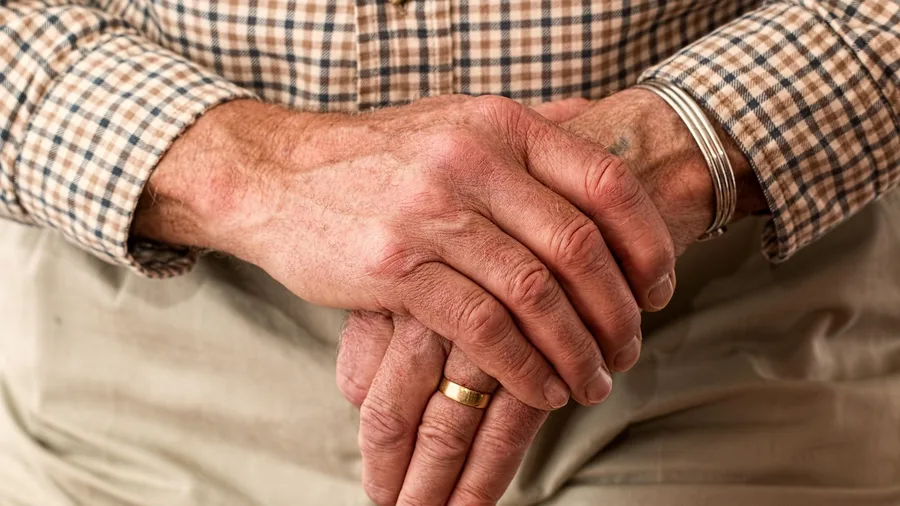
The last theme holds the most direct vulnerabilities. Here the struggle stops being about a joke or a party and starts being about competence, the future, and the body's limits. These signs are also the easiest to over-read.
Go slow. The point is steadiness, not a verdict. If any of these signs worries either of you, a medical check is the right next step — for both the symptom and the anxiety about it.
10. They Repeat Memory Worries as Questions

" You say no, gently, and ten minutes later: "I told you that, didn't I. I'm getting forgetful." The question comes back a third time before the evening is over, each version a little more worried than the last.
A slip that gets noticed and then drops is ordinary; it is a moment that passes. Worry that comes back and stays, that turns a missed name into a running case for decline, is doing something else. Researchers who study aging and memory keep finding the same shape to it: the anxiety about forgetting is often more fixed than the lapses themselves, and reassurance lands only briefly before the question returns in a new form.
What your spouse wants in that moment is not a verdict. It is steadiness about identity and competence, which is why "you're fine" bounces off and "you're not fine" is worse. Do not diagnose dementia and do not promise it is nothing. If either of you is worried, say so plainly and suggest a check that treats it as your concern together rather than a sentence you have passed on their mind.
A medical appointment handles the medical question. What you can offer is the steadiness the question is actually asking for, without taking it on yourself. That way the worry gets company rather than a ruling.
💡 Tip: Separate the symptom from the anxiety about the symptom. One is for a doctor; the other is for you to sit with together.
11. They Talk About the Future as Too Late

"That ship has sailed." It comes out flat, almost cheerful, usually about something small: a class, a trip, learning to swim at the community pool. A memory worry becomes a verdict quickly. Once you are half convinced your mind is slipping, the future stops looking like a place you are allowed to plan for.
The obvious move is to argue. You point out that people take up new things at every age, that the class is cheap, that nobody expects a virtuoso. It rarely lands, because the sentence was never a forecast. "I'm too old for that" and "no point starting now" are grief talking, for the trips not taken, the body that will not come back, the version of themselves they were still planning to become. Arguing with grief with a schedule does not work.
There is a difference worth holding onto. Realism about limits names the limit and then a way around it: the knee rules out the half marathon, so it is the flat five-mile route instead. Foreclosure skips the workaround and closes the door: no route, no date, nothing to try. One is a fact about a body. The other is a mood wearing the clothes of a fact.
Ask what they would want if it were not too late, and then listen for the wish underneath the absolutes. You are not there to reopen every door at once, only to find one that is closed by mood rather than hinge, and see whether a single small step toward it is possible.
12. They Hide Fatigue or Pain to Keep Up
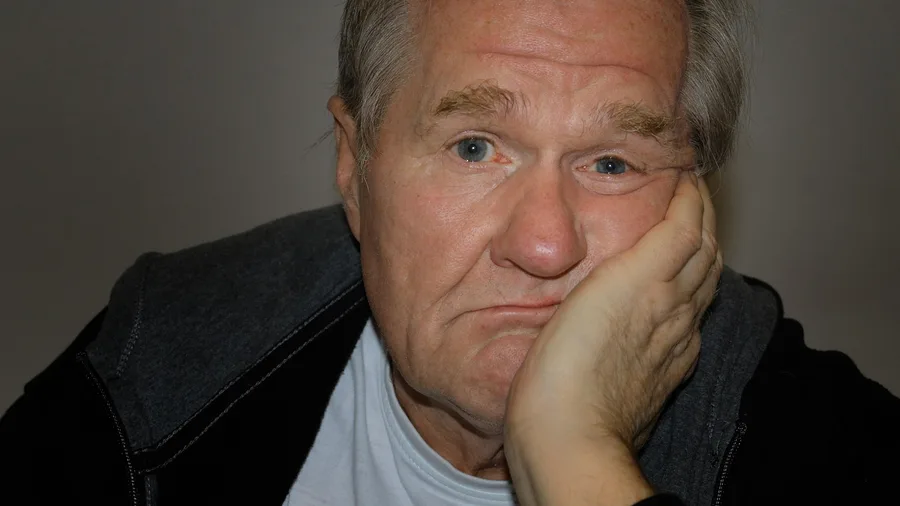
The bill arrives two days after the good afternoon, and by then nobody is watching. A spouse who matches every step of the long walk, jokes through the last mile, then sleeps most of the next day or sits out the following weekend is paying in private for a performance no one asked for.
Watch the sequence rather than the single event. They go all in, disappear to recover, wave off the twelve-hour nap or the heating pad as nothing, then sign up again the moment the next invitation lands. The crash looks sudden from the outside. It was scheduled quietly from inside.
The dread under it is narrow and easy to name once you see it: being the person who sets the pace, who makes the group go slower, who becomes the reason a plan gets trimmed. Pushing hard for one afternoon buys an exit from that role. The price shows up as a strained back, a week of terrible sleep, or a short temper aimed sideways at the people closest by, and sometimes a spouse who simply stops accepting invitations rather than repeat the whole cycle.
Pacing works better as something the two of you decide together than as a limit one of you delivers. "How do we make this work for both of us?" sounds like a shared problem; "you should take it easy" sounds like a verdict on their body. The aim is not to slow them down but to make slowing down cost them less, so the choice stops feeling like a confession.
Frequently Asked Questions
How do I tell if this is ordinary aging or real distress?
Look at pattern, specificity, and loss. A single bad week is not a pattern. A behavior that repeats, aims at one specific feature or activity, and has already cost your spouse something they loved — a hobby, a friend, a standing plan — is worth a conversation. The twelve signs in this article are meant to be read together, not as a checklist that proves anything on its own.
What if my spouse refuses to talk about getting older at all?
Do not force the whole topic. Name one specific behavior and ask what it means to them. 'You've stopped going to the game' is easier to answer than 'you're struggling with aging.' If they shut that down, wait a week and try the smaller version. A conversation that starts too broad usually ends fast.
Is it ever fine to just let these signs go?
Some of them, yes. One joke, one skipped week, one grooming dip at home is not a crisis. The distinction is whether the behavior is stable and explainable, or whether it narrows over time and costs something your spouse used to care about. When in doubt, run the ten-day test before you name anything.
Should I bring up memory worries directly?
Bring up the concern and a medical check, not a diagnosis. Do not name conditions or promise that it is nothing. Say you have noticed the worry, that it matters to you, and that you will go with them to get it checked. A doctor can do what you cannot: tell the symptom from the anxiety about it.
What if I get the conversation wrong?
You probably will, at least once. Getting it wrong looks like presenting all twelve signs as evidence or using them to win an argument. The repair is simple: come back later, name one behavior, and ask instead of telling. The second attempt is usually better than the first, and the point is not a perfect conversation.
Name the Newest Sign First
Ordinary aging is stable and explainable. Quiet distress is a new pattern that costs an activity, a relationship, or a piece of who your spouse thinks they are. Act on the pattern, never on a single rough week.
Name the newest, most specific sign first, and the one tied to something already lost. The spouse who once hiked says "I'm too old for that" and has stopped going. Say what you saw, then ask: "I've noticed you say you're too old for the hike and you haven't gone lately. What does that mean to you?" Then one shared adjustment: "Would a shorter, flatter trail with just us be worth trying, or would you rather pick the route?"
Do not present all twelve as evidence. Do not use them to win an argument. You came in with a joke before a hike, a canceled dinner, a question asked twice. You leave with one observed behavior and a door to open it by – and the next time that joke arrives before the trailhead, you will know what to say back.
One sign. One question. This week.
Choose the newest sign on this list and ask your spouse what it means to them. Then stop talking and listen to the answer.