

Seven twelve in the morning, and the clinic portal has a message waiting: the scan needs a follow-up. That single line is the whole morning now, whether or not you open it again.
Before you do, there is the reflex. A small, automatic 'I'm fine' rises up to meet the screen, and it is the least useful sentence available to you right now.
Staying hopeful after a message like that does not begin with 'I'm fine.' It begins with saying, in plain words, exactly what you are afraid of.
That is the difference worth holding onto: optimism that survives a hard season is not a mood pumped up by cheer. It is a set of small, honest moves that stop hope from quietly turning into a lie.
What follows is nine of them, each small enough to attempt on a bad day. Start this week with the naming pause, and keep the other eight for when the next wave comes.
Quick Tips Before You Start
Name it to tame it
Write down the loss in plain words before you try to fix anything.
Ten-minute steps
Break the overwhelming into one action you can finish in ten minutes.
Ask specific
Name one person, one task, and one time when you need help.
Schedule joy
Put a small pleasure on the calendar like an appointment.
Write a bad-day plan
List what actually helps and keep it where you'll find it.
Handling the Hit
The first days or weeks after a setback are the hardest to navigate because everything feels raw and uncertain. Your instinct might be to push through or distract yourself, but the habits in this section work differently: they start by turning toward the difficulty rather than away from it.
These habits help you process what happened without letting it define you, and they give you a way to take action even when the big picture feels impossible.
1. Naming the Loss First Keeps Hope Honest

You say the worst thing out loud in the plainest words you have, and then you leave it alone for a minute.
Not 'I'm between opportunities' when the plant closed and forty of you walked out with cardboard boxes the same afternoon. Not 'we're figuring things out' when the six years ended in a parking lot. Not 'it's probably nothing' when the portal says the scan needs a closer look. Say the flat version, once, to yourself.
Then wait. Sixty seconds, or one night if the day has been long enough, before you reach for a fix or a lesson. The 'at least' offered too early lands as an instruction to stop feeling it, and whatever bright thing follows gets filed as a lie. Hope built on a loss you never named has to keep denying it; hope built after costs you only the naming. The same resilience that carries seniors through hard seasons is built from habits rather than temperament, and you can see the habits of resilient seniors laid out plainly.
💡 Tip: Say the loss out loud to yourself or a trusted friend. Hearing it spoken makes it real and starts the process of moving through it.
💡 PRO TIP
Find the Funny in the Ridiculous
When something goes comically wrong, let yourself laugh at the absurdity. It's not denying the problem; it's giving your nervous system a break.
2. One Bad Event Doesn't Define the Whole Self
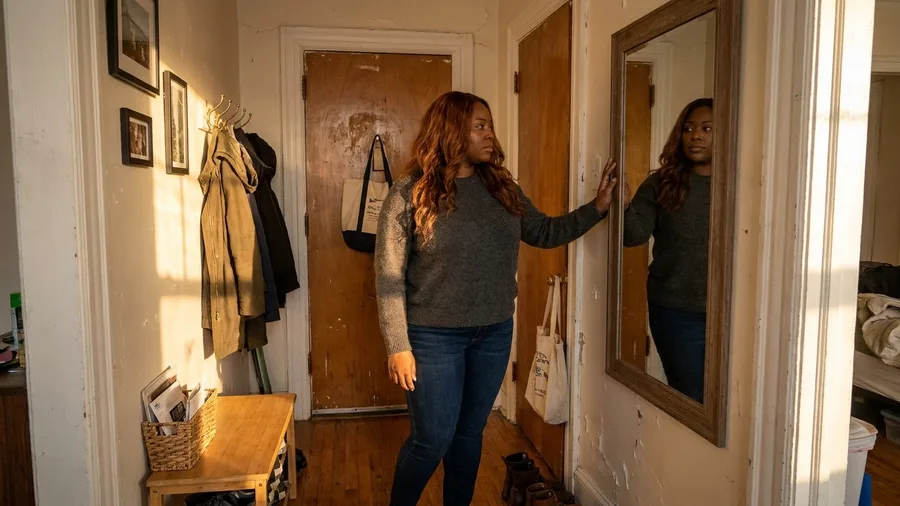
People will tell you to stop being so hard on yourself, as if the fix were nicer words. It isn't the tone that matters. It's the grammar: 'I'm a failure at everything' is a verdict with no exit, a permanent condition, and it explains nothing.
The event has a date and a verb. You were cut from the warehouse on a Friday. Separately: you have never missed a rent payment, you call your sister every Sunday, your last checkup was clean. One column emptied; the others are still standing, and a good week at work doesn't get to testify against them.
The cost arrives slowly. When one bad quarter speaks for the whole self, every call and every application becomes a referendum on your total worth, so you stop making them. Say to a friend what you'd say to anyone: 'Bad week, not a bad person. What can I still do today?' Then turn it on yourself.
3. A Small Next Step Beats a Perfect Plan

The cost of the perfect plan is that it keeps you still. You build the whole map in your head – the settlement, the retraining, the six-month budget, the conversation with your brother – and it is too large to start, so nothing gets started.
Then a month goes by and the only thing that changed is the pile of unopened envelopes on the counter.
The reframe is smaller than it sounds. Instead of 'sort out the insurance,' you open the portal and read page one. That's it. Ten minutes, kitchen table, phone still in your pocket. Not finished – just looked at, with your own eyes, in your own chair.
What comes back isn't motivation, which is why waiting for it never works. What comes back is evidence. An email sent. A call scheduled. A form that went from a two-page threat to a two-page piece of paper with your name at the top, and the small fact of having done one thing.
A few that fit the ten-minute rule: one call to the billing office asking them to mail the charges in writing; the rent-relief form your county keeps behind a link; a three-sentence email to your old manager asking whether the shift ever opened back up. None of them solve the year. All of them solve today.
Some days ten minutes is a fiction. Then it's two: open the form and write the date in the corner, or skip it, drink water, and do the same step tomorrow. The one rule is that you don't invent a fresh plan from zero. A stalled plan promises a future that hasn't shown up; a finished step hands you something you can hold today.
⚠️ COMMON MISTAKE
Don't Wait for Motivation
Motivation follows action, not the other way around. Start with a tiny step and let the momentum build.
Using Other People Well
Hard times can make you want to isolate, but the people around you are a resource—if you use them well. The habits in this section are about getting help without feeling like a burden and staying connected without performing positivity.
These habits help you lean on others in a way that actually lightens the load and keeps your hope from curdling into denial.
4. Specific Asks Get More Help Than Vague Cries
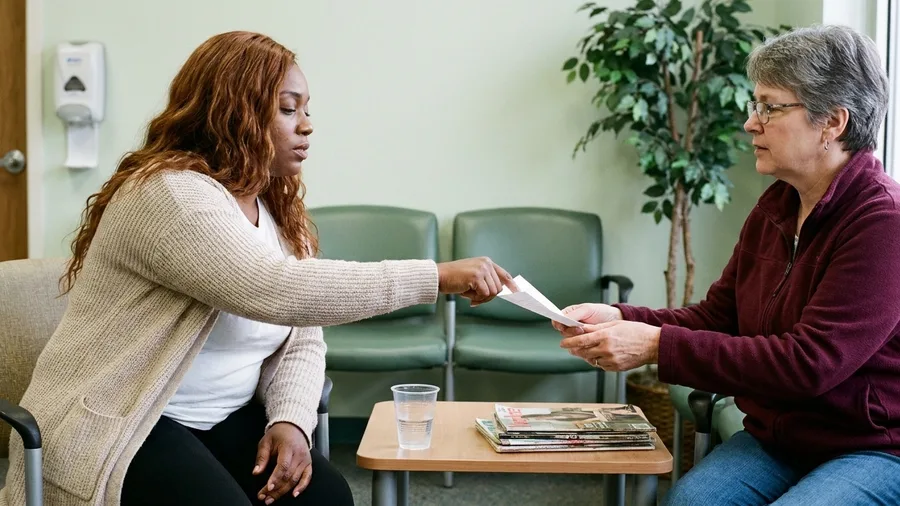
You have your one small step in hand, and you have already run into its limit: half of it needs another person. So you send the message to the group thread: "Hey, I'm drowning a bit with all of this, could anyone help?" Three people reply with heart emojis. Nobody picks anything up. The Thursday pharmacy run still has no name attached to it.
Researchers who study how people actually respond to requests keep landing on the same finding: vague appeals produce sympathy, and specific appeals produce action. A helper reading "I'm overwhelmed" cannot tell whether you need a ride, a form signed, or twenty minutes of company, so the safest reply is warmth. Name a person, a job, and a time and the decision becomes a yes-or-no you can work with. "Maya, can you do the Thursday 4 p.m. pharmacy pickup?" takes her nine seconds to answer.
Build the ask out of two short lines. One states what is true, the other hands over the details: "I'm stuck on the rent-relief form. Could you sit with me for twenty minutes on Thursday?" No paragraph about how sorry you are to ask, no medical history, no "only if it's not too much." Those prefaces are the burden feeling doing the talking, and they make the helper work harder to reassure you instead of helping.
And when Maya says she is away Thursday, the move is another name or a smaller piece, not a retreat into "never mind, I'll manage." "Can you do Tuesday instead?" or "Could you just text me the clinic's number?" A no is information about one person's week, not a verdict on whether you are allowed to need things.
💡 Tip: Before you ask, decide on a specific task and time. This makes it easier for the other person to help and reduces back-and-forth.
The Hidden Cost of Going It Alone
5. The Counterintuitive Truth About Confidants
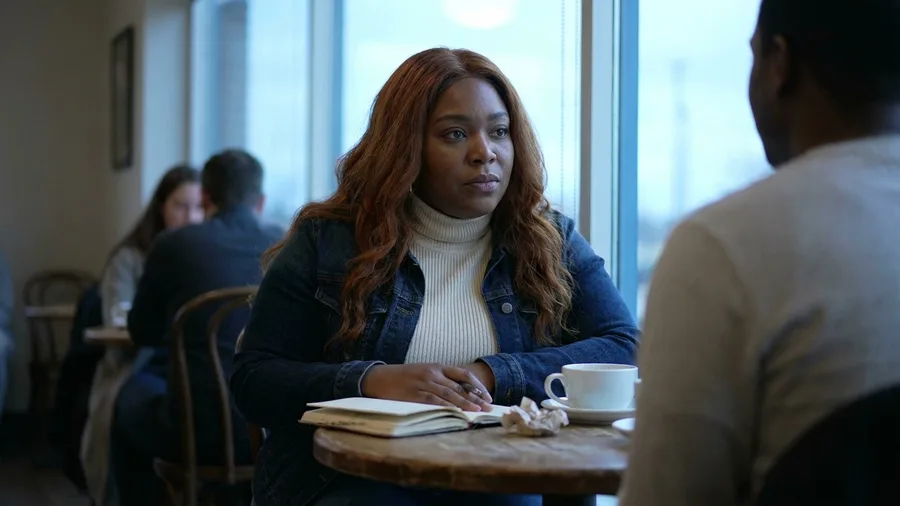
For years I treated the friend who cheered hardest as the good one. Tell her the plan and she would say it sounded great, and I would hang up lighter and no wiser, and the plan would fold at the first pushback. What I actually needed in the room was someone willing to look at the same page and say the second paragraph does not add up.
The useful person is rarely the enthusiast. It is the older cousin, the former colleague, the sponsor who has watched you make two bad calls and stayed anyway, and who will not flinch at a third. What you ask them is small and blunt: does this hold together, or am I talking myself into it? That wording invites a verdict. "What do you think?" invites a hug.
The hard part is what to do with the verdict. When they poke a hole in the plan, write the objection down word for word, thank them, and leave it alone for a day before you argue back. Defending in the moment is the reflex, and it teaches the honest person to stop being honest with you. A steady diet of "you've got this" never gets tested against a Tuesday, which is why the first real obstacle takes it apart. Optimism that cannot survive a friend's correction was never built to carry weight. It was built to be watched.
6. Real Humor Relieves More Than Forced Cheer
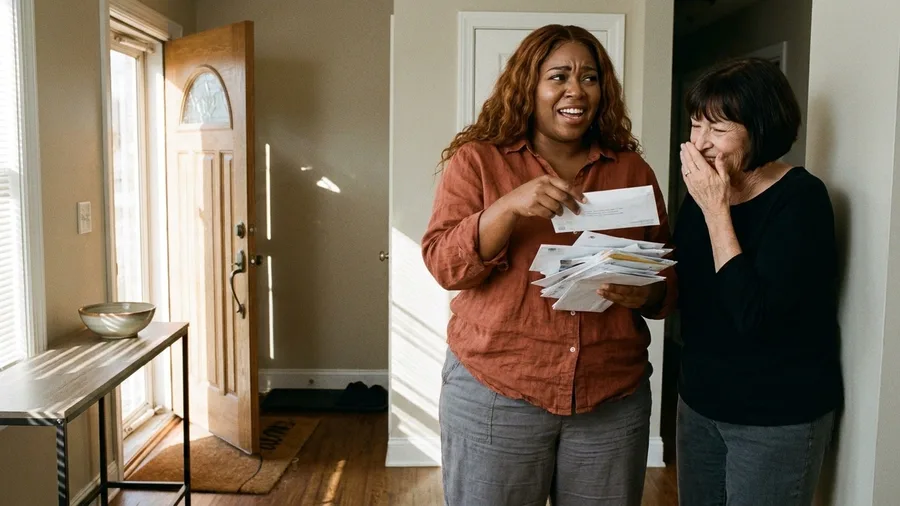
Real humor is specific and it is aimed at the situation, not at you. The fifth duplicate letter from the same agency. The wrong name printed on the replacement card. A forced grin says "stay positive" with the jaw tight and the eyes doing something else.
The unemployment portal that logs you out after every single page, then emails a cheerful survey asking how the experience was, is the cleanest joke the week will offer. Laugh at its timing. The rule that keeps the laugh honest is simple: you never make the illness, the death, or the lost relationship the punchline, and you never crack the joke that closes the conversation before the unpaid bill gets opened.
What you are after is one short exhale that lets the shoulders drop while the hard fact stays where it is. This is ridiculous and it is still bad. Forced cheer costs a second job, performing happy on top of everything else. The real laugh costs one breath and leaves the problem in view.
Forced Cheer vs. Real Humor
Forced Cheer
- Denies difficulty
- Requires performance
- Feels exhausting
- Ends conversation
- Increases isolation
Real Humor
- Acknowledges absurdity
- Releases tension
- Feels connecting
- Keeps problems in view
- Builds resilience
Protecting the Ordinary
When life is hard, it's easy to let go of the small routines that keep you grounded. But those ordinary pleasures and structures are often what carry you through. The habits in this section are about maintaining a baseline of normalcy and using your past resilience as evidence for future hope.
These habits help you keep going when the big picture is still uncertain.
7. One Small Pleasure Is Scheduled, Not Saved for Later

Fifteen minutes. That is the whole unit of time this habit asks for: a walk to the corner and back, a single episode of something, a cup of coffee made at home and drunk by the window instead of standing at the counter.
Relief gets a person through an hour; something ordinary and pleasant gets them through a stretch of weeks, which is why the pleasure goes into the calendar at a fixed time. Tuesday at 7:30 p.m., written down like a dentist appointment, not held out as a prize for clearing the inbox first. The distinction matters because a reward waits on the crisis ending, and the crisis has not agreed to a date. People who stay content for decades keep the same small daily rituals on the calendar, which is what the daily rituals of contentment describe.
is there anything good on your calendar this week that does not depend on the problem being solved? If the answer is nothing, joy has quietly become conditional on the hard season finishing, and a hard season can run long. If the answer is one fixed appointment, small and dated, then the day is being told it is difficult and still worth living in.
When guilt objects that this is not the moment, do not argue with it. Shrink the permission instead: fifteen minutes, then back to the form. The walk is maintenance, not payment for suffering, and the clock in Tuesday's column is what keeps it from sliding off the list.
Your Past Resilience — At a Glance
📅 Past hardship
The winter I was on leave
🚗 Challenge
Car broke down
📞 Method
Called credit union
🚌 Method
Took the bus
🍚 Method
Ate rice and eggs for six weeks
Proof
You have survived hard things before. Name the method, and you have a precedent for hope.
8. Past Survivals Are Proof, Not Just Memories
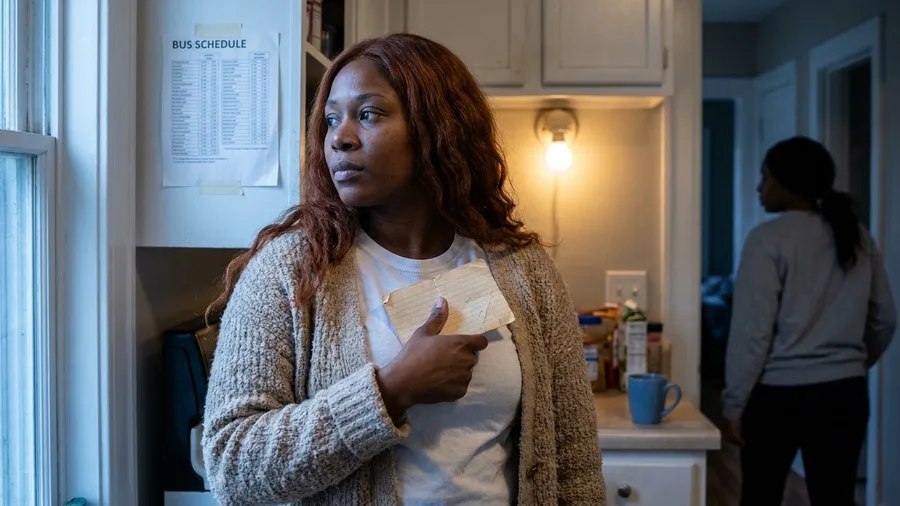
"It'll be fine." It is the sentence people offer when someone they love is frightened, and it is the sentence that keeps a person in a hard season from hearing anything solid all week. Fine has no evidence in it. Spoken to yourself, it lands with the other wishes and gets filed there, and on the fourth bad morning it is not available.
Now try the other sentence. That winter on leave, when the car went and the money ran thin: the call to the credit union, the bus schedule taped inside the kitchen cabinet door, the six weeks of rice and eggs eaten at the same small table. You got through that. Not by being optimistic about it. By making one call, then riding one bus, then cooking one pot of rice, and repeating it until the season turned.
That sentence has a date, a method, and an ending. "I'll get through this" is a prediction about a future nobody can see; "I got through that" is a fact about a past you personally attended. The bridge between the two is the method, and the method is the entire point.
A woman I once sat across from, halfway through a round of interviews that had gone quiet for a month, kept a card in her wallet that read: "2016. Called the bank. Rode the 14. Small dinners for weeks." She did not read it every day. She read it on the mornings when the inbox had nothing in it and the optimism had gone thin.
The habit is to write your own version while the calm is with you, because you will not craft a good sentence about your own past on the morning the wave hits. Name the year, name what broke, name the three things you actually did, and stop there. No lesson. No silver lining.
Then use it: on an index card in the kitchen drawer, aloud into the phone to the friend who has seen you through worse, or in a single line to the person who asks how you are – "I've done this before, and here is what I did." Specific memory is a precedent, and a precedent is what a prediction cannot be.
The Power of Specific Memory
9. A Written Plan Makes the Next Bad Day Easier
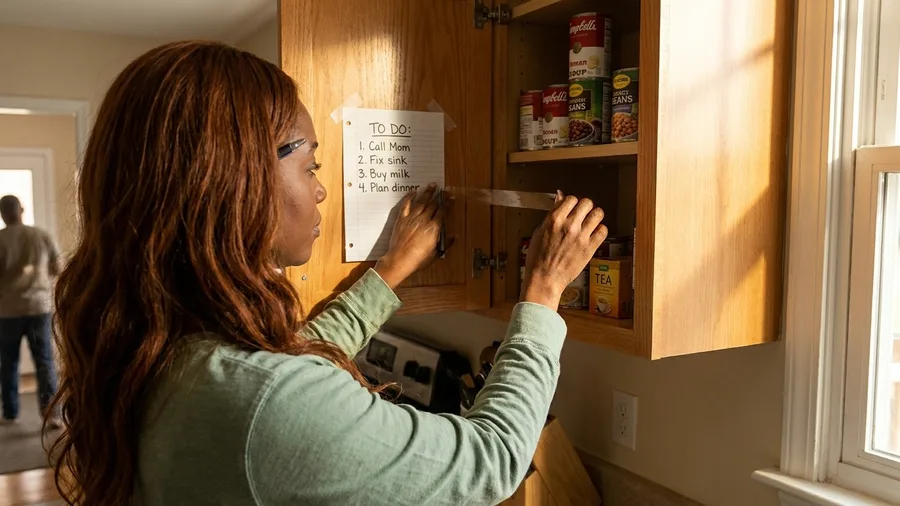
A written plan is four lines kept somewhere the worst evening can reach without thinking. Getting through one hard stretch proves you can survive the next, but proving it does not schedule it, and the wave does not check whether you are rested. So the response gets written down while the water is still calm, and the writing is not the same as hoping.
The first line is four things that genuinely help, kept deliberately small and bodily: call Dana, walk to the corner and back, play 'Lost in the World,' eat the frozen soup. Next to it sits one name and a sentence ready to send, worded so the other person knows exactly what is being asked. The version that fails is the vague one, the note-to-self to reach out if things get bad, which on the bad night produces nothing but a phone held and put down. The script says: this is a rough one, can you give me ten minutes at eight.
One line names the thing to stay away from, and it needs to be specific: the banking app after nine, or the cousin whose first question is why you are not past it yet. Vague warnings about overdoing it protect no one; a named drain can be walked around.
Then the list has to physically live where the bad day will trip over it, taped inside the kitchen cabinet, photographed into the phone's favorites, a folded copy in the wallet. A note buried three folders deep in an app is a plan for a person who is already thinking clearly, which is not who needs it. Writing it down admits the next wave is coming and does not pretend this calm is permanent, and that is what makes it honest rather than superstitious.
📋 How to Create Your Bad-Day Plan
List what helps
Four items, each doable in under ten minutes without money or a car. If an item needs planning, it fails on the night you need it.
Name one contact
Pick someone who answers in the evening, not your most sympathetic friend. Word the ask with a length and a time: ten minutes at eight.
Identify one drain
Name the hour too, not just the thing. The banking app is fine at noon; it is the after-nine version that costs you the night.
Place it visibly
Test it cold: reach for it without searching. If you have to think about where it is, it is filed, not placed.
Frequently Asked Questions
How long does it take to feel optimistic again after a setback?
There's no fixed timeline. The habits here help you build hope gradually, but don't pressure yourself to feel better by a certain date. Small steps count.
What if I can't find anything positive to focus on?
Start by naming the loss honestly. You don't have to find a silver lining right away. The goal is to acknowledge reality and then take one small action.
Is it okay to ask for help if I feel like a burden?
Yes. Specific asks make it easier for others to help and reduce the chance of feeling like a burden. Most people appreciate being asked directly.
How do I keep from being overwhelmed by a big problem?
Break it down into a ten-minute step. Focus on what you can do today, not the entire solution. Action builds momentum.
What if my past hardships feel too painful to remember?
Start with a small, manageable memory. You don't have to relive the whole experience. Focus on one method you used to get through it.
Start With the Loss You Haven't Named Yet
So the verdict is plain: optimism after a hard hit is not a mood you keep up with cheer. It is a set of small honest moves, and you already know their names. Name the loss. Shrink the step. Ask specifically. Keep one pleasure. Remember a survival. Write the plan.
This week, do the smallest one, the one that works even on the worst day: the naming pause. Say the plain name of the loss out loud. 'I lost the job.' 'The relationship ended.' 'The scan needs a follow-up.' Then wait sixty seconds before you reach for a lesson or a plan.
Put the words 'Name it. Don't fix it yet.' somewhere the bad day will actually see them, a sticky note on the bathroom mirror or the lock screen of your phone.
The clinic portal message is still a follow-up. It is no longer an unnameable cloud hanging over the morning. Hope that survives a hard season is built out of evidence, and the first piece of evidence is the sentence you can say out loud.
Name the Loss, Then Take a Step
This week, try habit #1: write down the loss in plain words. Then pick one ten-minute action from habit #3 and do it today.

