
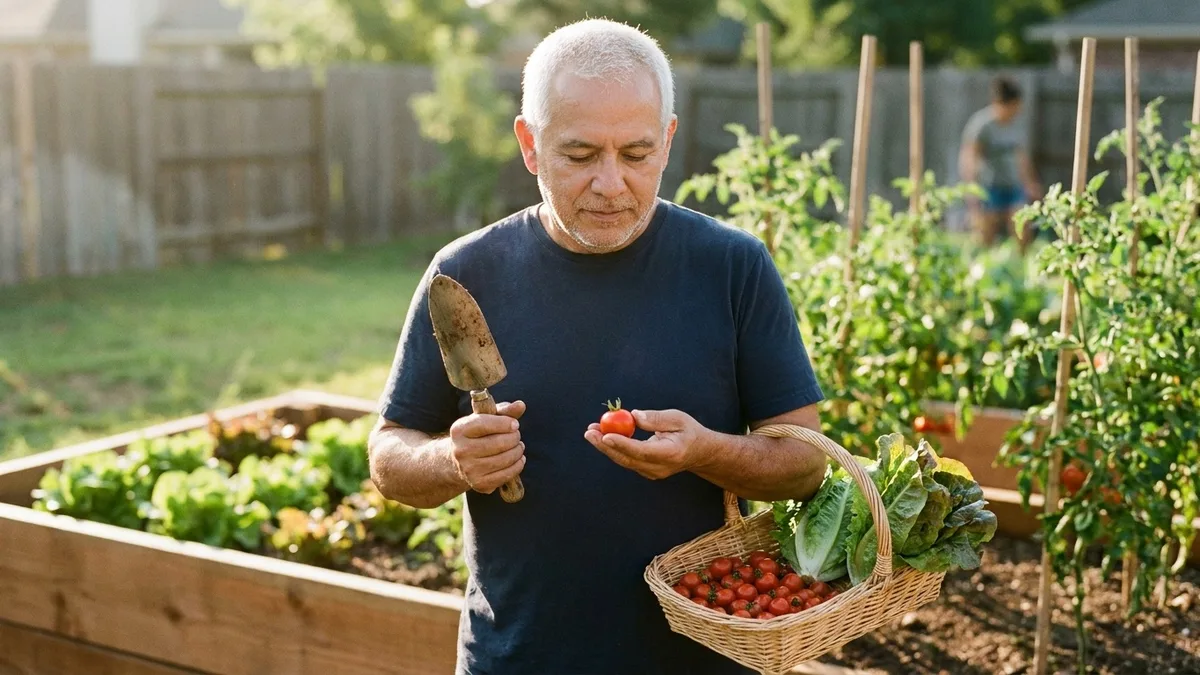
By the end of this, you will know which eight strengths a garden actually builds, which task builds each one, and where each stops paying its way. Start with the units. A 4-by-8 raised bed is a typical first plot and wants about a cubic yard of soil mix to fill it. Seed packets run $2 to $4. The summer morning round takes 15 to 20 minutes.
The strengths are not a general glow that settles on anyone holding a trowel. They come out of specific work. Lettuce takes 50 to 60 days and teaches you what waiting feels like when nothing moves. Late blight takes a bed in under a week and teaches you what a loss is worth. Ten to fifteen pounds of tomatoes off one plant teaches you what to do with a surplus. Each of those has a point past which it stops helping and starts costing.
So the question is dosage. One bed, or two pots of lettuce and a cherry tomato. A morning round set before the heat, a first-season budget written down, or a deliberate wait because caregiving is in a crunch or a doctor has capped your lifting, bending or sun.
This spring, you can decide how much to take on. Not whether a garden is good for you in principle.
Quick Tips Before You Start
Size the first bed small
One 4-by-8-foot raised bed takes about 1 cubic yard of soil mix to fill and is a realistic first plot.
Check your frost date
Your county extension office gives the local last-frost date and a free planting calendar; USDA zones run 2–13.
Read days to maturity
Seed packets cost $2–$4 and list 50–60 days for lettuce, 70–85 for tomatoes — that number sets your expectations.
Community plot for $30–$60
A rented plot costs roughly $30–$60 a season and comes with shared hoses, tools and neighbours on either side.
Two pots count
Two containers of lettuce and a cherry tomato still deliver the morning round and the first harvest if a bed is too much.
Ease the body load
Use a kneeler, long-handled tools and a 15-minute timer; the summer round is 15–20 minutes, not an afternoon.
Strengths That Steady You
The first three strengths are private. They show up in the shape of a Tuesday, not in a conversation. Start here if your days since retirement feel formless and you want a reason to be up and dressed before nine.
Each one costs almost nothing to test: a packet of lettuce seed, a notebook, and fifteen minutes before the heat. If these three do not land, the rest of the list will not either.
1. Waiting on Seed Teaches Patience You Can Use Elsewhere
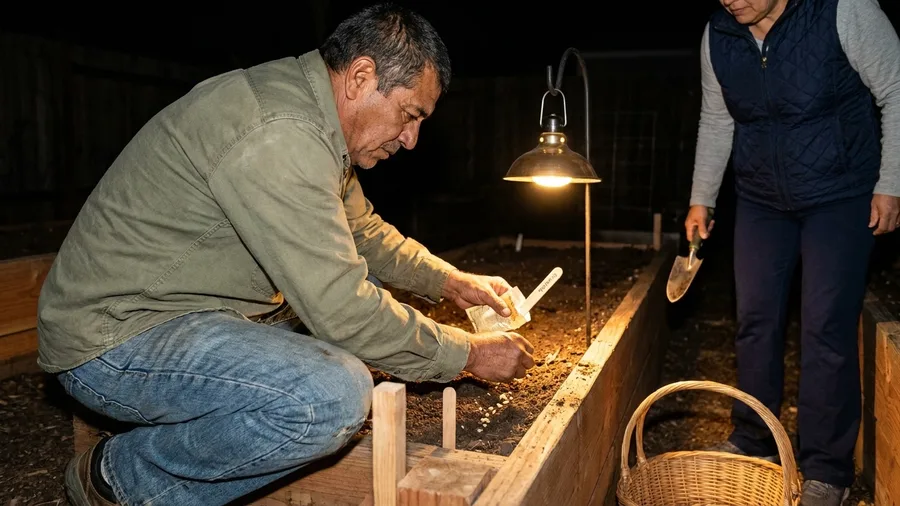
For the first three days after sowing, nothing moves. That is the whole test. A seed packet for lettuce lists 50 to 60 days to maturity, tomatoes 70 to 85, and the fortnight after you press those seeds into soil shows you absolutely nothing. The honest admission is that most of us read that silence as failure and reach for the watering can.
The waiting is the strength, and it is the same waiting the rest of the week asks for: the specialist appointment that is three months out, the adult child who needs a season to decide, the repair the shop keeps pushing back. Treating a seed packet's timeline as weather rather than as a judgment on you is the habit, and it transfers because it is one habit.
The limit is that a garden does not fix anything clinical. If worry or low mood is cutting into sleep or appetite, that is a conversation with a clinician, not a planting schedule, and this piece cites no study to hide behind.
💡 Tip: Write the sowing date on a wooden stake and push it into the bed. Seeing 50–60 days counted out in front of you makes the wait a fact instead of a test of character.
💡 PRO TIP
Count the days out loud
Seed packets print days to maturity for a reason. Circle the harvest window on a wall calendar the day you sow, and the waiting stops being vague anxiety and becomes a date you can point at.
2. A Bad Season Stops Feeling Like a Verdict
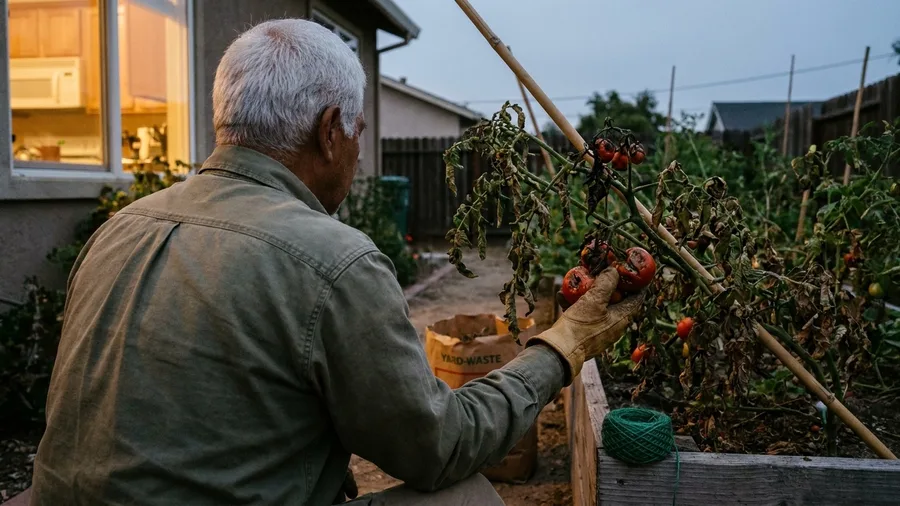
The comforting line is that a garden teaches you to fail gracefully, and that a bad year simply makes you wiser. It isn't the failing that changes anything. A bed can vanish in a week and teach nobody anything, if the gardener lets it sit there brown and unaddressed.
Late blight does not negotiate. It takes a whole bed in under a week, leaves the stems black and the fruit hard and blotchy, and the wet June that splits the tomatoes wide open runs it. A tray of seedlings on the windowsill damps off, flops over at the soil line, and is done. All ordinary, none of it moral.
What builds the strength is the hour after. Pull the plants, bag them out of the garden, and write the date and the cause in a notebook. Plant a fall crop in the gap. The gardener who does this often enough stops reading a lost bed as a character report and starts reading it as weather. The same slow softening explains why some people become kinder with age while others harden.
The counterweight matters here. A sealed greenhouse, or two pots of lettuce on a bright sill, removes the failure almost entirely, and with it the practice of losing and going on. This one is built out in the open, and it costs what an open bed costs.
| Strength | The garden habit behind it | Where it stops helping |
|---|---|---|
| Patience | Waiting 50–85 days for seed to mature | When waiting turns into worry that disrupts sleep or eating |
| Resilience | Pulling a blighted bed and replanting | When every failure is sealed away under glass or indoors |
| Daily rhythm | The 15–20 minute summer morning round | When travel means a dead bed and guilt instead of rhythm |
| Social role | Handing out surplus zucchini and tomatoes | When no recipients exist and surplus becomes pressure |
| Being needed | Daily checks on trays and seedlings | When you already care for a spouse or parent full-time |
| Neighbourliness | Front-yard beds and shared community plots | When a walled backyard has no street visibility |
| Competence | Skills proven by a full basket on the counter | When a lost crop removes the only evidence you count |
| Accepting imperfection | Eating holey kale and saucing split tomatoes | When it becomes an excuse to ignore a real hazard |
3. The Morning Round Gives the Day a Shape
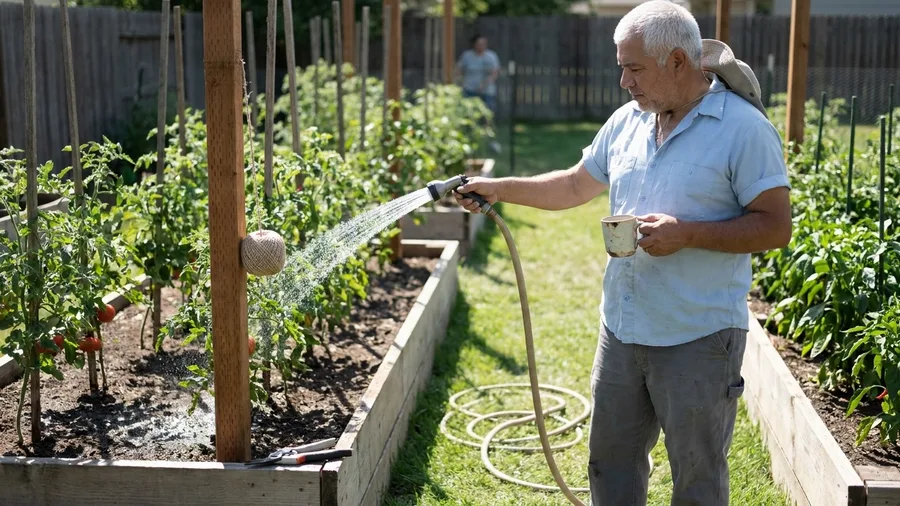
It takes 15 to 20 minutes in summer: water, check the undersides of leaves for aphids, tie up the stems that are leaning. Winter drops the whole thing to a weekly walk-through. That short a commitment sounds too small to be the shape of a day, and that is exactly what makes it work.
The obvious advice is that structure should be big, a class, a volunteer shift, a standing appointment with people. The counterintuitive bit is that the anchor holds because it is small and yours. Do it before the heat, coffee in hand, around 7am, before the first phone call of the day. It is the same morning ritual the commute used to provide, with no manager and no one else's timetable to consult.
What a failed bed returns you to is not a drama but a next morning, and the morning is where a day gets its shape. The round gives the day a starting line it did not have.
The one clear exception is the person who travels for weeks at a time. For them the round becomes a guilt about a dead bed rather than a rhythm, and that is worth knowing before the pots go in.
💡 Tip: Set a kitchen timer for 15 minutes. When it rings, stop, even if the bed is not finished. The rhythm survives only if it stays short.
Strengths That Connect You
The next three put you among other people — not on purpose, most of the time, but through the ordinary traffic of a garden that produces more than you can eat and needs someone to look at it.
These are the strengths that turn a street of strangers into people you know by name, and they cost nothing beyond what the bed already gives you.
4. You Become the Person Who Brings the Tomatoes
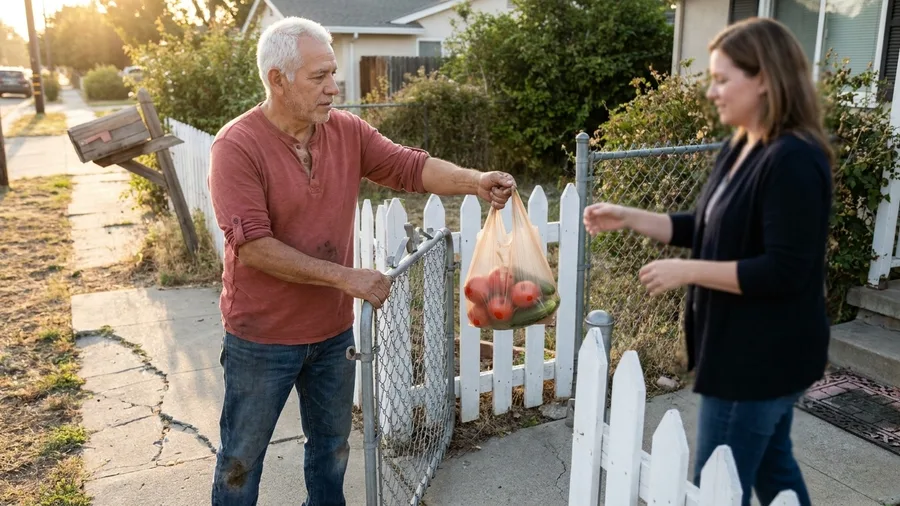
The point is the doorstep. By mid-July one zucchini plant has buried a two-person household, and a decent tomato plant hands you ten to fifteen pounds you cannot finish alone – and that surplus is what turns a private morning routine into a reason someone's doorbell rings.
It happens on a Tuesday, usually. You come up the walk with a plastic bag sagging with six tomatoes and two cucumbers, knock, and say something like, "I've got more than I can use – would these be any good to you?" The neighbour takes the bag, says thank you, and the whole exchange runs twenty seconds. Then it happens again the following week, and the week after that.
The other two lines are the ones people forget they are allowed to use. To a grandchild heading home: "Take a bag for your mum – there's plenty." At the food bank box: "Is it alright if I leave these here? They're from the garden." None of it is a speech. Each is a small door held open, and it is the repeat, not the words, that does the work.
What that builds is a role, and the role is the payoff. You become the one who turns up with tomatoes – not the one people check in on, not the one handing out advice nobody asked for. A bag of produce is a thing you can offer without asking for anything, which is why it sits more easily than sympathy in either direction.
The cost is real, and it arrives in July. A reputation like that has to be kept up; there is a week when the bags on the counter feel less like generosity and more like a chore with a deadline, and you find yourself resenting a plant. That is the signal to give some away faster or let a few rot on the vine.
The limit sits at both ends. A gardener with nobody to hand a tomato to is just carrying baskets back into the house, and a gardener with too many takers has built a job. Two or three recipients is where the role stays a pleasure – enough that the surplus has somewhere to go, few enough that no one is keeping score.
5. Something Depends on You, and That Is the Point
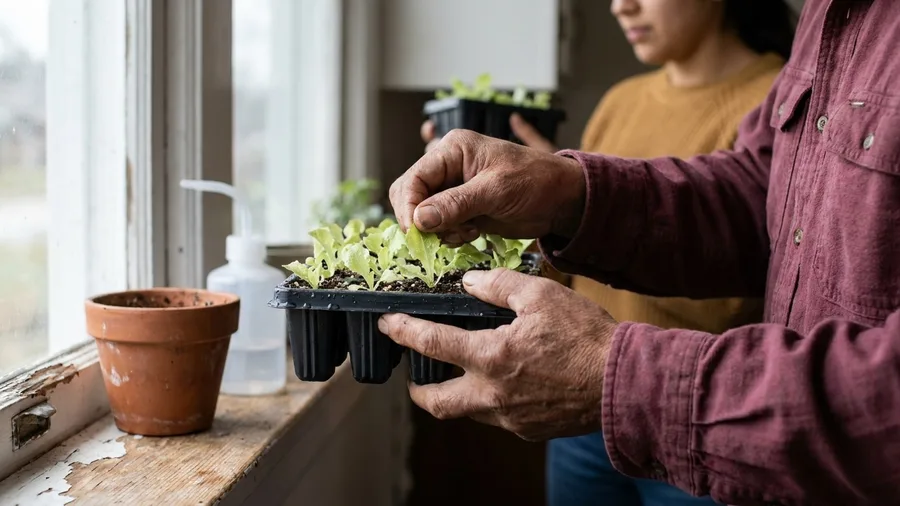
The cost comes first: if you are already the one checking on a spouse, driving a parent to appointments, or managing a household that runs on your attention, adding something that wilts when you forget it is one demand too many.
The dependency, though, is small and specific. Seedling trays on the windowsill want a glance each morning, and a hot afternoon can dry them out by dinnertime. It is not a pet – no vet bills, no kennel booking, and a neighbor with a key can water a week's worth. It gives a reason to get up that no one had to schedule for you.
6. Gardening in View Turns Neighbours into Acquaintances
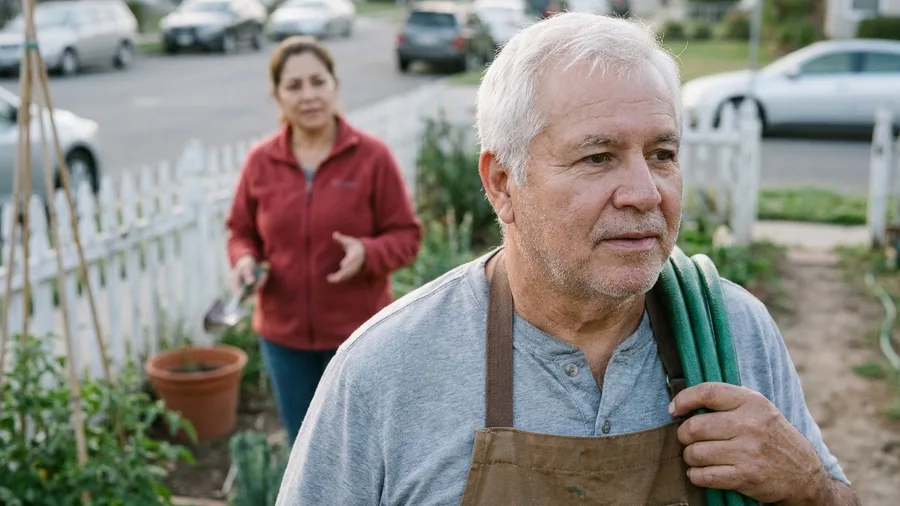
"I know my neighbours to nod at, not to talk to." That is the line most people say, and it is usually accurate – until something in the garden gives the nodding a subject. Once the plot has you outdoors on the same schedule, the exchanges start small and repeat.
The shape is almost embarrassingly minor. Someone pauses at the fence: "Your beans are doing better than mine." You mention the aphids on the roses; they offer the hose while theirs is unwound anyway; a week later a bag of surplus changes hands over the hedge. Thirty seconds, then again on Thursday, then again all summer.
What that quietly buys is familiarity, and familiarity is what turns a street of strangers into people you know by name – the person who takes in a parcel, the one who notices the bin went out late. What it quietly spends is visibility: your mistakes are public, and so is the unmown strip by the bed.
The $30-$60 for a community plot a season is the shortcut, because shared hoses, a tool shed and a neighbour gardening eighteen inches away do the introducing for you. A walled backyard does far less of it, however good the soil. A front-yard bed, or a plot, puts you where the talking happens.
💡 Tip: Put one visible thing out front — a pot of chives, a hanging basket — and a chair nearby. The chair is the invitation; the plant is the excuse.
Pick your space before the first seed goes in
Front-yard bed or community plot
- Default if the social strengths are the reason you are starting
- Costs more than a backyard bed, and the visibility is the point
- Skip if you want the garden to be nobody's business – it will not be
- Expect a season before names stick, not a first conversation
Walled backyard or indoor pots
- Default if privacy outranks the social payoff – a real choice, not a lesser one
- Keep it if you already see people weekly elsewhere; the garden need not be where it happens
- You still get the other strengths – just not the chance encounters
- Indoor pots hold the routine, not the acquaintance
Strengths That Change How You See Yourself
The last two are about evidence. After 60, with no manager and no review, the proof of your competence has to come from something you can hold in your hand or eat for dinner.
These are the strengths that shift how you answer the question "what do you do now?" — not with a title, but with a basket.
7. A Full Basket Is Competence You Can Point At
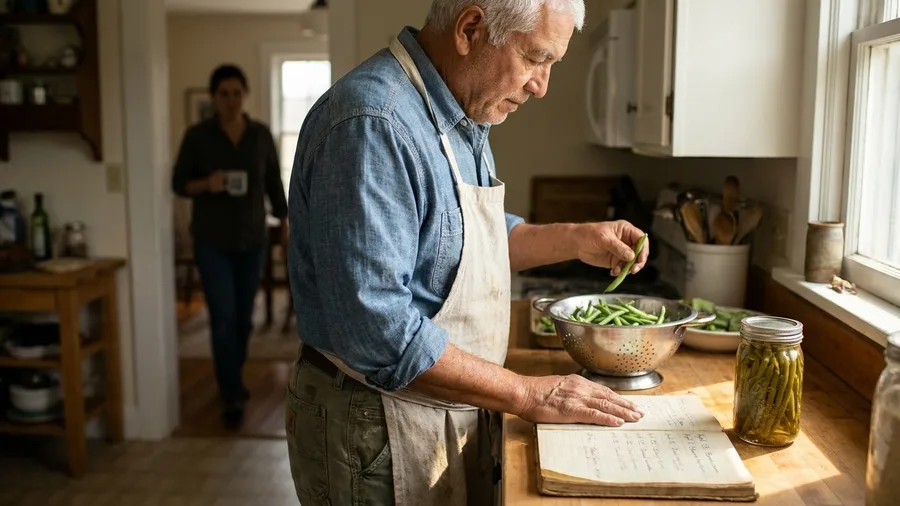
Competence in a garden shows up on the kitchen counter, not on a wall. By mid-July the proof is a colander of beans, a jar of pickled ones in the fridge door, a freezer bag of pesto that will still be there in February, and neighbours who now nod at the person who grows things.
Almost none of the skill was studied. You read the back of a $2.50 seed packet until the phrase 'days to maturity' stopped being decoration and became a date you could plan around. You sent a trowel of soil to the county extension office, paid a small fee, and got back a number that explained why the beans sulked and the lettuce thrived. You learned what a tomato stem looks like when it needs tying, and you learned that late blight announces itself at the leaf edges before it takes the whole bed.
This lands differently now than it would have at forty. There is no manager, no annual review, no title that says what you are. The proof has to be something you can hold in your hand, and a basket is exactly that.
what can I point at? If there is a basket, a jar, a freezer bag, name the skill that put it there. If the answer comes easily, the competence is real and you built it in a single season. If nothing is on the counter, ask a second question: was the season lost, or the growing not attempted?
A lost bed removes the basket, and a wet June can do that to anyone. So the durable proof is not the harvest but the notebook on the shelf. Turn to last spring: the date you sowed, the variety that sulked, the soil test number, the day blight arrived. That is skill written down, and weather cannot take it.
The limit worth knowing: the basket is a reward, and rewards are weather-dependent. The notebook and the hands that filled it are not. Point at those first, and hold the basket for what it is, a good August.
8. You Get Better at Letting Things Be Imperfect
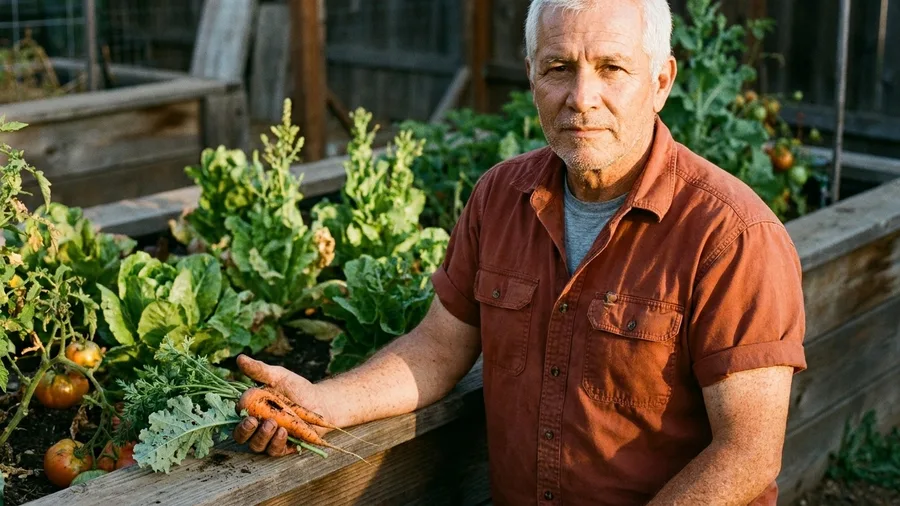
The rain came sideways for four days in June, and by Friday the tomatoes on the vine had split down their sides, the hosta leaves looked like lace where the slugs had worked them, and the one squash variety you had high hopes for sat there yellow and refused to grow.
Walk through any garden in a bad week and you find the same thing: weather, pests and stubborn plants do not negotiate. What can be controlled is the size of the reaction, and what tends to happen as seasons pile up is that the split fruit stops stinging and starts getting sauced.
That is not surrender, and the line matters. A split tomato still gets eaten; a tray of slugs and a wasp nest by the door get dealt with. The skill is telling the two apart, and then eating the good-enough result without apologising for it.
💡 Tip: Keep a two-column page in the notebook: "fixed it" and "let it go." Write one entry in each column every week and the distinction becomes automatic.
Frequently Asked Questions
Does gardening actually make you calmer, or does it just keep you busy?
The calm comes from the waiting, not the distraction. Seed packets list 50–60 days for lettuce and 70–85 for tomatoes, and the first two weeks show nothing visible. You practise sitting with a delay you cannot argue with, which is the same skill you use in a waiting room or when an adult child takes their time deciding.
What if I am a perfectionist and the garden keeps going wrong?
The garden will keep going wrong — a wet June splits tomatoes, slugs work the hostas, a variety sulks in your soil. The practice is eating the holey kale and saucing the split tomatoes anyway. Keep a notebook with two columns, "fixed it" and "let it go," so you learn which problems are weather and which are yours to solve.
My days have no shape since I stopped working — does a garden really fix that?
It gives you a hinge. The summer morning round is 15–20 minutes — water, check the undersides of leaves, tie up stems — and it happens before the heat and before anyone else's schedule. In winter it drops to a weekly walk-through. The rhythm, not the workload, is the point.
Will gardening really help me meet anyone at my age?
It helps if the garden is visible. A front-yard bed or a community plot — roughly $30–$60 a season with shared hoses and tools — puts you where people pass and comment. A walled backyard does far less. The exchanges are tiny and repeated: a comment about aphids, a borrowed hose, a bag of surplus over the fence.
How much does a first season realistically cost?
Seed packets run $2–$4 each, a 4-by-8 raised bed takes about 1 cubic yard of soil mix to fill, and a community plot rents for roughly $30–$60 a season. A soil test through your county extension office costs a small fee. Start with one bed or two containers and add next year.
Is it too late to start if I have never gardened before?
No. Start with two containers of lettuce and a cherry tomato, or one 4-by-8 bed. Your county extension office gives you the local last-frost date, a free planting calendar and a soil test for a small fee. The first season is for learning the morning round, not for a perfect harvest.
The Bed You Actually Dig This Spring
The smallest version that reliably produces these strengths is one 4-by-8 raised bed – about a cubic yard of soil mix to fill it, a community plot at roughly $30 to $60 for the season if you rent one – or two containers of lettuce and a cherry tomato. Either way, budget for the plot fee if you take one, the soil, and a few seed packets at $2 to $4. The 15-minute morning round goes with it: water, check the undersides of leaves, tie up the stems that lean.
Hold off if you are a caregiver in a crunch, or if a doctor has capped your lifting, bending or sun. A dead bed kept on principle is worse than a deferred one. And if you want the local last-frost date, plot fees or a soil test, your county extension office gives all three for little or nothing. No specific study is being quoted here, so evidence questions go there or to a licensed counselor.
The reader who kept hearing gardening is good for them now has the actual purchase: one bed or two pots, 15 to 20 minutes before the heat, a budget you can write down. This weekend you can call the extension office, decide whether to rent a bed or fill two pots, or wait – and you will know, the way you know which strengths a garden builds, exactly which one you chose.
Pick Your First Bed This Weekend
Measure the space, call the county extension office for your last-frost date, and buy one packet of lettuce seed. The morning round starts the day you sow.

