

Forty-nine. That is how old I was when Maya was born, and the first person to hand her to me was a maternity nurse who said, 'Mom, she needs to eat.' I corrected her twice. I am Dana, 50, in Columbus, Ohio. I retired from teaching at 48, my husband Paul still works full time, and our daughter Jen, 27, lives 25 minutes away with her husband Marcus. I keep Maya two weekdays a week and take her two overnights a month.
The year since felt less like instant joy and more like a series of fittings that did not take: a name that sounded like someone else, an arithmetic problem every time I did it, a demotion in my own daughter's kitchen, a stranger who needed a one-line answer, a spare room filling with equipment, a job harder than the one I retired from, and a love that arrived last.
None of that meant I was too young. It was the sound of a role being built, its parts arriving at different speeds.
By the end you can pick what you are called, keep one sentence ready for the assumptions, ask your child plainly what help is wanted, and stop grading the first year against a joy you were told to feel on day one.
Quick Tips Before You Start
Choose your name early
Ask for the grandparent name you want before the baby starts talking, and run it past the parents first.
Ask for the schedule
Get the parents' routines in writing—nap times, feeding rules, screen policy—and follow them without commentary.
Buy only what you'll use
A car seat, a crib, and a high chair cover the first year; skip the rest until you see a real need.
Keep one adult space
Pick a chair or a drawer that stays toy-free so your house still feels like yours.
Use the two-cent question
Before offering advice, ask: 'Do you want my two cents, or do you need me to listen?'
The Name and the Mirror
The first strangeness was not about the baby at all. It was about me—what I was called, how old I suddenly seemed, and whether the woman in the mirror matched the woman holding the infant.
These first two entries are about the private shock: the name that felt like a costume and the age math that made me feel like an impostor.
1. Hearing 'Grandma' Felt Like a Costume
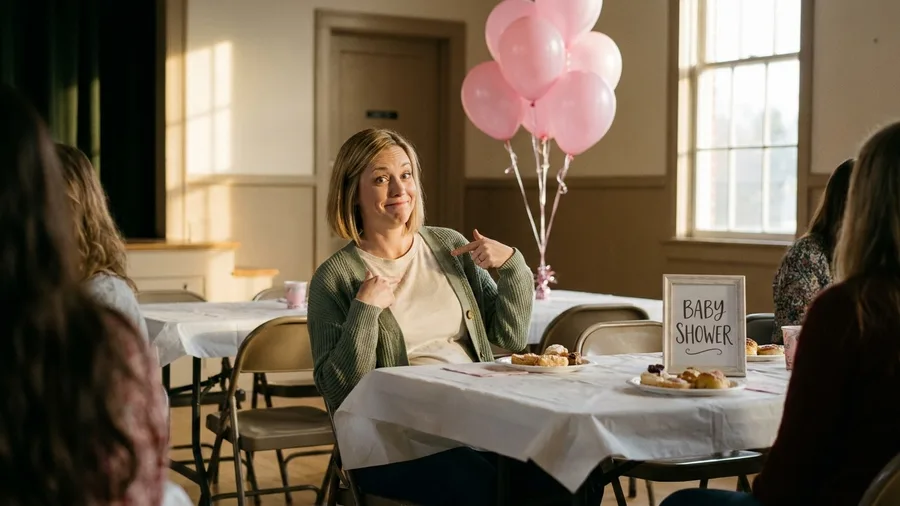
Everyone says the name will grow on you. Mine didn't grow; it landed on me sideways at Jen's baby shower, when my aunt waved me toward the table with the grandma sign and I flinched, pointed at my own chest, and said, "Dana."
Two months after Maya was born I asked Jen and Marcus about Mimi. Jen said the name was mine to choose. Marcus's mother was already Nana, so nobody was competing. At 13 months Maya said it at the door, arms up, and it stopped being a label I was dodging and became a voice I could hear.
The grandparent proposes the name; the parents approve it, because they're the ones who teach it. What felt like a costume was the role being fitted to me, not a sign I'd started too early.
💡 Tip: Pick a name you can say without flinching, then ask the parents to use it every time they hand you the baby.
The first year is not about proving you are young enough. It is about building a role that fits the grandmother you actually are.
— What other grandmothers keep telling me
2. I Felt Too Young to Be the Old One

The cost of doing the arithmetic is that every birthday, every school pickup, every friend's announcement gets converted into a verdict on whether you started early or late. I turned 49 the month Maya was born. My mother had been 61 when Jen arrived, so the twelve years between her number and mine lived in my head through entire commutes, waiting out lights on High Street with my hands on the wheel.
There were three at a table in a Clintonville diner, all retired since my mid-forties too, and not one of them had a photo to pass around that wasn't a graduation or a boarding pass. One showed me her daughter's Lisbon apartment. I had a diaper bag flat under my seat and said less than I usually do.
Then the clerk at the register, sliding bananas across the scanner, called me a young grandma, polite and quick, and I heard the small note of near-miss in it. I thanked her twice, which is one time too many. That is the part I would take back: the woman behind me was only being kind, and I spent the rest of the day explaining my math to no one.
The Public and Private Role
The name made the role visible; then the role walked out the front door with me. Once Maya arrived, people had opinions before I had finished forming my own. A woman at the playground asked which preschool she attended. A cashier said she looked just like me. Strangers were building a picture of who I was from the stroller, and I was still assembling it.
Then the rules moved too. In Jen's house, Jen's routines hold, and my experience is a reference offered at the door, not an order given from it. The authority I had raising Jen stayed with Jen, and Marcus beside her. I learned to ask before I gave a second opinion.
And the house changed with it. A crib sits where my sewing table was, the chair pushed to the bedroom. Home and role were being rebuilt at the same speed, in the same rooms, whether I was ready or not.
3. My Daughter's Rules Overrode My Instincts
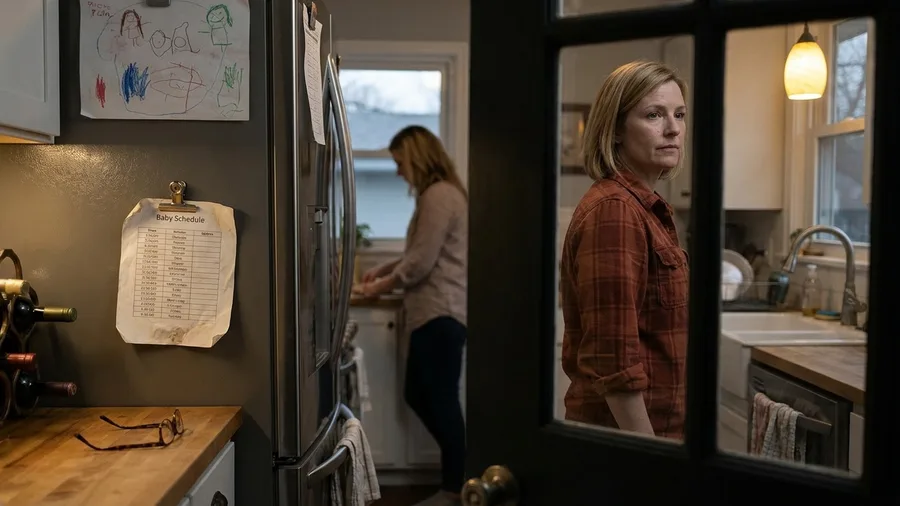
Knowing your own age in a room full of younger mothers and then walking into your daughter's kitchen are two different tests. I raised Jen from a newborn to a 27-year-old, and in her house her routines set the day. My experience stopped being orders and became something closer to a reference book on a shelf.
The schedule lived on the fridge, printed out: nap at 12:30 in the crib, sound machine on, curtains pulled dark. No screens, none, not even the phone propped up while I folded laundry. I followed it. Maya fought sleep anyway, arching and squalling, and I walked her in circles because the paper said 12:30 and not noon, and the paper won.
The middle of the night is where I got it wrong. Four-month sleep regression, 2 a.m., Maya awake for the third time, and I told Jen to just let her cry, that she was building a rod for her own back. Jen said nothing. That silence sat in the room until breakfast, and I knew before the coffee was poured that it had been my mouth, not her baby, that needed managing.
So I built a gate. Before a word of advice, I ask her: does she want my two cents, or does she need me to listen? Then I wait. Sometimes she says listening and I keep my mouth shut for an hour, which at first felt like holding my breath and now feels like the job.
One fussy afternoon I turned on a nature show, foxes in snow, something quiet. Marcus came home, Jen said no screens, and Marcus said, flat and easy, that she was right. I switched it off. I did not make the case, did not mention that it had calmed her, did not reopen it at dinner.
This is the exception worth naming: disagreeing with your child is fine. Reopening a closed call in front of your grandchild is not. State your view once, accept the answer, and stay the helper who gets called back.
💡 Tip: Write down the parents' three most important rules and tape them inside a kitchen cabinet where you will see them.
The First-Year Setup, Ranked by What Mattered
Prices from Columbus, Ohio, fall 2023.
The public and private role
4. People Assumed I Was the Mother
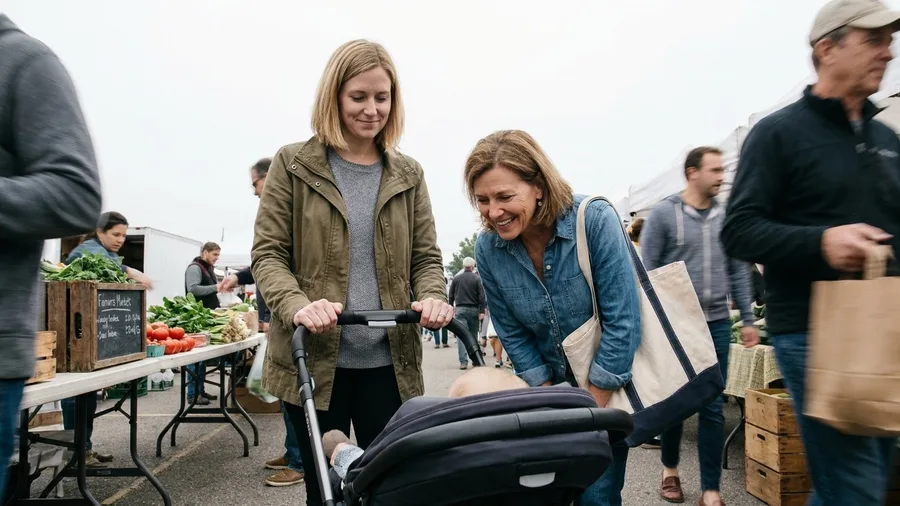
I was mistaken for Maya's mother four times in her first year, and the first one was in the maternity ward. A nurse handed me the discharge folder and said, "Mom, sign here." I said I was the grandmother. She asked "Mom?" again.
The playground mother asked which preschool Maya attended. A cashier said Maya looked just like me. On a COTA bus, with Maya screaming and the stroller folding wrong under my arm, a woman said, "You've got your hands full, Mom." That time I just nodded, because correcting her would have taken attention Maya needed.
So my line became "I'm Mimi, her mom's at work." I say it, I smile, and I turn back to Maya. Each assumption drags the private role into public, and the one-line answer decides how much explanation a stranger gets.
⚠️ COMMON MISTAKE
The Mistake I Made in Month One
Do not answer the 'are you the mom?' question with a full story. A ten-second answer—'I'm Mimi, her mom's at work'—protects your role and the baby's attention.
The Body, the Joy, and What Lasts
The last three strangenesses are physical and emotional, and nobody warns you about any of them: the fatigue, the gear that rearranges your house, and the joy that arrives late.
Childcare is harder than the job I retired from. Maya is 18 months old, and I keep her two weekdays a week, 7:30 to 5:30, plus two overnights a month. My first month, I fell asleep before Paul got home from work. After that I moved my volunteer shift to Wednesday, prepped meals on Sunday, capped outings at one, napped when Maya napped, and held pickup at 5:30. The fatigue was the work of a real job, and a real job gets a schedule.
The gear did its own rearranging. The crib sits where my sewing table was, the sewing table is in the basement, and the reading chair is in the bedroom. The first nap in that crib, I stood in my own doorway with coffee and did not go in until Maya woke, like a guest in the house. So I kept two things adult: the green armchair by the window stayed toy-free, and the top dresser drawer stayed off-limits.
The joy came late. At six months Maya laughed at Paul's sneeze, and that was the first uncomplicated pleasure I felt, the first moment that was not management or fear. Before that, there had been awe at the hospital, panic, a nurse's checklist.
At 13 months she said "Mimi" at the door and held up her arms, and the name and the role fused into one thing. None of this made the role mine on arrival. It became mine by routine, by a chair and a drawer and a nap schedule I could keep.
5. I Had Opinions But No Authority

You are standing in your daughter's kitchen at 12:40, the baby is fighting the crib, and every instinct from raising her says let the kid cry it out. At ten months, that was exactly where I stood, and Jen and Marcus had already chosen a gentler check-in method for naps and made the call. They were 27 and 29; I had raised one of them. The instinct was real. The authority was not mine.
Researchers who study family roles keep finding the same shape here: when a grown child becomes a parent, the older generation's experience shifts from command to counsel, and the relationships that hold up are the ones where that shift is accepted rather than resisted. What I learned to say before offering anything was one sentence. "Can I offer what worked for me, or would you rather I follow your plan?" Then I waited for the answer instead of assuming it.
I suggested white noise for naps once. Jen said they were keeping the room quiet, and I dropped it and never raised it again. The rest of my help I took straight from her words, a list in my own handwriting: laundry Tuesdays, soup Thursdays, pickup by 5:30. I did those and did not tally them against anything Marcus's mother did or didn't do.
Experience becomes a toolbox you set down at the door, offered and not installed. Authority stays with the parents, and your help stays steady because you stopped keeping score. That is how a role gets built without turning into a takeover.
💡 Tip: Keep a running list of the parents' stated needs and check it on Sunday, so you are doing what they asked for, not what you would have chosen.
Offer Versus Takeover
Offer
- Ask once, then act on the answer even if it is no
- Keep the habit for months, not the first visit
- Say 'Jen and Marcus decided' when others ask why
- Skip the scoreboard – help you track is help you resent
Takeover
- Re-ask the same question next week hoping for a new answer
- Hold the rule until the parents leave the room, then bend it
- Compare aloud to how you did it in 1998
- Let an overnight become your call because you are the one there
6. Baby Gear Made My House Feel Borrowed
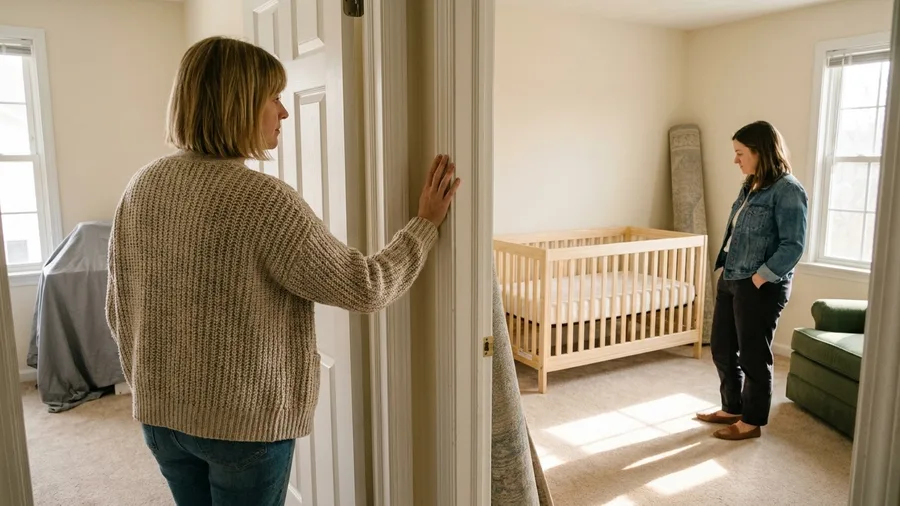
"You must be so excited to set up a nursery!" A neighbor said that in the driveway the week the boxes arrived, and I smiled before I registered the word nursery. My spare room had a sewing table in it. A nursery was the last thing it was.
What the gear actually signalled was rearrangement. Car seat, stroller, high chair, crib – $220, $180, $120, $160, $680 in all – and a room that had to give up something for each one. The sewing table went down to the basement, the reading chair squeezed into my bedroom, three framed prints faced the closet wall. The crib sat where my work had been.
The feeling of a takeover was mine to manage. I kept the green armchair by the window toy-free and the top dresser drawer out of reach. Those stayed adult. The rest was not a loss – it was a room under construction.
💡 Tip: Before you move furniture, decide which one adult space stays untouched. For me it was the green armchair by the living-room window.
What the Gear Actually Changed in My House
🧵 Sewing table
Moved to basement
📚 Reading chair
Squeezed into bedroom
🖼️ Framed prints
Turned to face closet
📍 Crib spot
Where my work was
🔒 Adult-only zones
2: armchair, top drawer
The rule I made for myself
Two adult-only zones. Everything else is negotiable while Maya is small.
The body, the joy, and what lasts
7. Childcare Was Harder Than My Old Job

Because it is two days of real work. I am 50, Maya is 18 months, and I have her Tuesdays and Thursdays from 7:30 in the morning until Jen picks her up at 5:30, plus two overnights a month. That is 20 hours of a job I have not done in 27 years.
But the real test is one you can answer in ten seconds. Think back to last Tuesday night. Did you feel spent but steady, or did you feel like you were proving you could still do it? The first answer means the schedule is working. The second means you are carrying the schedule and something else.
45 for work. Then Maya. Up at 6:15, breakfast, a diaper, the stroller walk, lunch, the nap fight, the park, pickup. The first month I fell asleep before Paul got home.
So I adjusted the way I did as a teacher. The volunteer shift moved to Wednesday, meals got prepped Sunday, I limited outings to one a day, napped when Maya napped, and I stopped letting pickup slip past 5:30. The tiredness was not saying I am too old. It was saying the job was real.
📅 How I Built a Workable Week
Move the volunteer shift
I shifted my regular Wednesday shift so the two weekdays with Maya had no other commitment.
Sunday meal prep
I cook and portion lunches and snacks on Sunday so weekday afternoons do not require a decision.
Cap outings at one
One stroller walk or one park visit per day, not both, so the afternoon nap still happens.
Nap when Maya naps
The first month I answered emails during nap time; after that, I lay down for twenty minutes.
Hold the 5:30 pickup
Jen and Marcus pick up by 5:30 so I can cook dinner and reset the house before Paul gets home.
8. The Joy Arrived After the Shock

I expected to feel it in the delivery room and I did not. What I felt was awe and panic in the same minute, and a nurse's checklist running underneath both – Apgar, bracelets, the folder to sign. For months afterward I was managing: naps, bottles, the drive over, the drive home. For a while I thought that flatness meant something was wrong with me.
Then a Tuesday in my living room, Maya around six months, Paul sneezed on his way to the kitchen and she laughed – a real laugh, startled out of her. I laughed until I had to sit down. Fear and management ran the show for half a year, and then one sneeze broke it open.
The rest arrived on its own clock. At six months she reached for me from Jen's arms and I felt chosen. At thirteen months she stood at my door, said 'Mimi,' and put her arms up, and the name I had picked and the role I had been assembling stopped being separate things. I quit feeling like an understudy in my own life.
'I'd like to be called Mimi. Does that work for you two?' And then, 'Tell me what help you actually need – not what you think I want to hear.' Two questions, asked out loud, both answered by someone else.
The delay was not an absence of love. It was a role taking the time it takes to become mine – the name, the age math, the rules, the strangers, the gear, the tiredness, and the love arriving last, which does not make it the least.
💡 Tip: Say the sentence out loud before the baby arrives: 'I want to be called Mimi, and I want to know what help you actually need.'
Frequently Asked Questions
Is 49 too young to be a grandmother?
There is no universal right age. What matters is whether you are ready to build the role, not prove your youth. The strangeness you feel is not a sign you are too young; it is a sign the role is new.
What should I do if I do not like being called 'Grandma'?
Propose the name you want—Mimi, Gigi, Nonna, whatever fits—and ask the parents to use it. They are the ones who will teach it, so their agreement matters.
How do I handle people who assume I am the mother?
Use one short line: 'I'm Mimi—her mom's at work.' Then turn back to the baby. You do not owe strangers a full explanation, and silence is a valid answer on hard days.
What baby gear should I keep at my house?
Start with a safe sleep space, a car seat, a high chair and a stroller if you provide regular care. That covers the first year. Add other items only when a specific need appears.
Is it normal to feel exhausted after watching my grandchild?
Yes. Caring for a toddler is physical work. If you are doing two full days a week, build in one planned rest, cap outings, and set a firm pickup time so the job has edges.
The Verdict I Wish Someone Had Given Me at 49
the strangeness was evidence of a role being built, not proof I was too young. The costume, the age math, the overridden instincts, the public assumptions, the gear, the fatigue and the delayed joy were all construction noise.
This week, two questions. Tell your family what you want to be called. Ask your child what help they actually need, and take the answer as given. Neither pretends the joy is instant; both start building the thing that holds it.
The nurse who assumed I was Maya's mother met a woman correcting her twice and explaining too much. Now the answer is one line and a life: Mimi, two days a week, a crib in the spare room. Maya says 'Mimi' now. The name fits because we built it around her, and it took the time it took.
Do One Thing This Week
Ask to be called what you want, then ask your child what help they actually need. That single conversation starts the role on your terms.

