

A bad yes costs years. The home equity line, the co-signed loan, the remodel paid upfront in cash, the family arrangement sealed in a living room with no paper in sight – some of these unwind in months, others never unwind at all.
Most people can still name the exact call. Six thousand five hundred for a nephew's business, agreed on a phone that was, of course, only good today. What stings is not the sum. It is how fast the yes came out.
The exposure was never stupidity. It was a missing pause and a missing line at the precise moment a deadline, a compliment, or a second opinion did all the talking.
Nine habits follow, each with the exact sentence and what saying it costs you. By the end you will know which you already carry, which leave you open, and which to build first.
Quick Tips Before You Start
Buy one night
The line 'I'll tell you tomorrow' costs nothing today and changes the terms by morning.
Three lines or no deal
What's delivered, by when, and what happens if it isn't. If it won't go on paper, it wasn't a term.
No reasons with the no
A reason becomes a hook. 'No, I'm not doing that' stands on its own.
One call to a stake-free check
The licensing board, the records office, the professional paid to check — not the friend who benefits.
Keep the signature
Letting someone decide 'with you' is fine. Letting them sign for you is not.
Buying time before the yes
1. They let a request sit overnight

The common advice is to sleep on big decisions, which is fine as far as it goes, and most people still get taken by a deal they had all night to think about. A day does nothing on its own. The pressure in these conversations is almost never in the offer; it sits in the clock. Strip the clock out and the same offer has to stand on what it actually is: the price, the terms, the delivery date, the risk if it falls through.
A deadline made up on the spot is there to block two things, comparing the offer against anything else and thinking past the first minute of it. It only works while the answer has to come before either can happen. So the line is four words, said once, flat, with nothing trailing behind it: 'I'll tell you tomorrow.' The temptation is to add why, and the why is the handle they pull on. A reason restarts the clock and hands them something to argue down.
did the deadline exist before someone asked you for an answer?
💡 Tip: Deliver the line with nothing after it. The silence is doing the work.
Buying Time Before the Yes
Everything else here leans on one thing: the gap between the ask and the answer. Close that gap and no check survives, because every check needs a stretch of time in which it can happen. A deadline invented in the moment is built to block two moves at once, weighing this against other options and thinking the thing through to the end. Take the clock away and the offer has to hold itself up on price, terms, delivery and what happens if it goes wrong.
A bad offer cannot do that. That is the whole mechanism, and it is why the pressure always arrives as a time limit rather than as a reason the deal is good.
The picture most people carry is a phone call that ends in a number. 'It's only good today,' and the voice on the line is warm and slightly rushed, and the figure being discussed is not small. Under that, the offer stays a mood. An hour later, sitting down with a pen, four lines appear where a single lump of money used to be, and the question that was impossible to ask on the call becomes obvious. What is the rate, what is the term, what is actually being delivered, and what happens if it stops paying.
2. They ask what a no would cost them

The usual advice is to explain why you're declining, to soften it, to leave the other person with a reason. That is exactly what hands the conversation back. The answer worth having comes from asking, flatly, 'And if I say no, what happens?' – then letting the silence do its work.
Stop the clock and the asker reaches for the next lever: the cost of refusal. A real option survives a no. A manipulated one makes you pay for it, and the threatened penalty tells you which is on the table. If the deal simply vanishes when you decline, that disappearance is a price tag: an offer that cannot withstand a no was never about the terms.
The discomfort of asking is the price. You will sound difficult, maybe suspicious, and the asker has to name the consequence out loud. On the $6,500 loan, 'then I'll be in trouble with my partner' is a cost to the relationship, not a condition of the money. You lose a little ease and gain a named consequence you can judge.
💡 Tip: Ask it flatly. The question is not aggressive; it is a term check.
3. They treat urgency as a fact about the asker

Urgency pushed at you is information about the person pushing it, not about the deal on the table. Once you have said out loud what a no would cost, the next thing to sort is whether the clock in the conversation belongs to the offer or only to the asker's schedule.
Take the deadline off the page. On a single sheet, set down what is being sold, what it costs, how long the term runs and when it would arrive, then read that sheet with no time pressure and no phone in your hand. Repeated hurry tells you something specific: whoever is selling expects speed to beat comparison, because comparison is the thing they are racing. A written expiry you can hold and plan around is a different object from 'today only' spoken down a line, which leaves nothing behind to check.
The reply is one sentence – send me the terms and the date it closes, and if they cannot, the hurry was theirs to keep. You will look slow, maybe suspicious, and that is the fee. A roof quote good through today that can never produce a printed expiry is not the same animal as a fare with a booking deadline in black and white.
⚠️ COMMON MISTAKE
The reason is the hook
The fast talker wants you to argue. The moment you supply a reason, he has a point of attachment to pull on. Say the line and stop talking.
Keeping the Decision in Their Own Hands
The pause buys time. What you do with that time decides whether the final answer belongs to you or to whoever is most eager in the room.
These three habits keep the signature — literally and figuratively — where it belongs.
4. They never hand the final yes to someone else
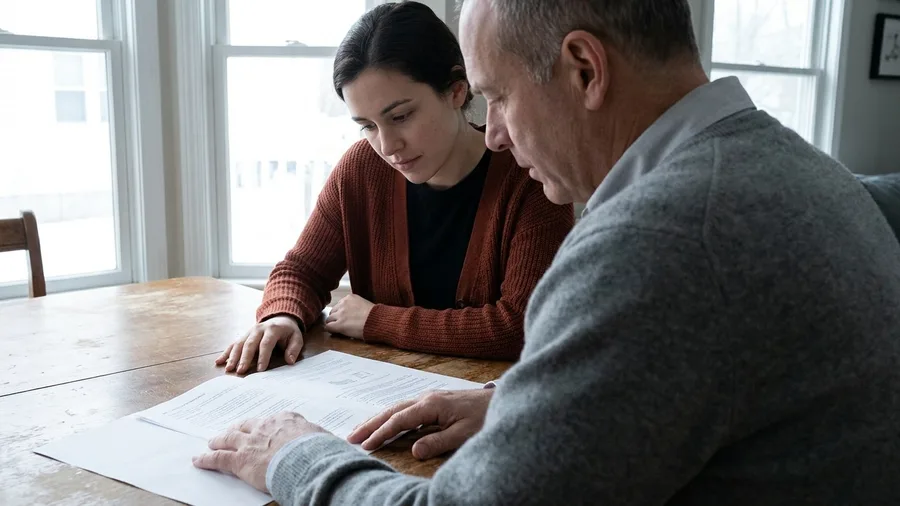
Nothing, until the trust turns into a signature you no longer control. Once urgency is filed as the asker's business, the risk moves inside the house: a spouse, an adult child or an adviser who can be worked on separately, one at a time.
A second decision-maker is a second door to knock on. The persuader only has to move the more willing of the two, and your no stops being a wall and becomes a family meeting.
There is a difference between being consulted and being authorised. Consulting is asking your partner for what they know and still holding the pen. Authorising is handing over the pen, so the other person can say yes for the household while you are in the other room.
Bring a partner in without giving up the signature. The line is 'we decide together, nothing gets signed today, we will both read the terms and answer tomorrow.' It keeps the pair of you in the conversation and keeps the pen where it belongs.
The arrangement has a cost. In homes where one person has genuinely always handled the paperwork, a shared pause slows the admin down, and that slowness is the safeguard rather than the problem.
Watch for the visit that skips you. A contractor who cannot shift your answer can spend the afternoon working on the adult child who manages the parents' bills, and the deal gets done around the person who would have asked the harder question.
💡 Tip: If someone else handles your paperwork, agree on a shared pause. It slows the admin, and that slowdown is the safeguard.
5. They write the terms down first
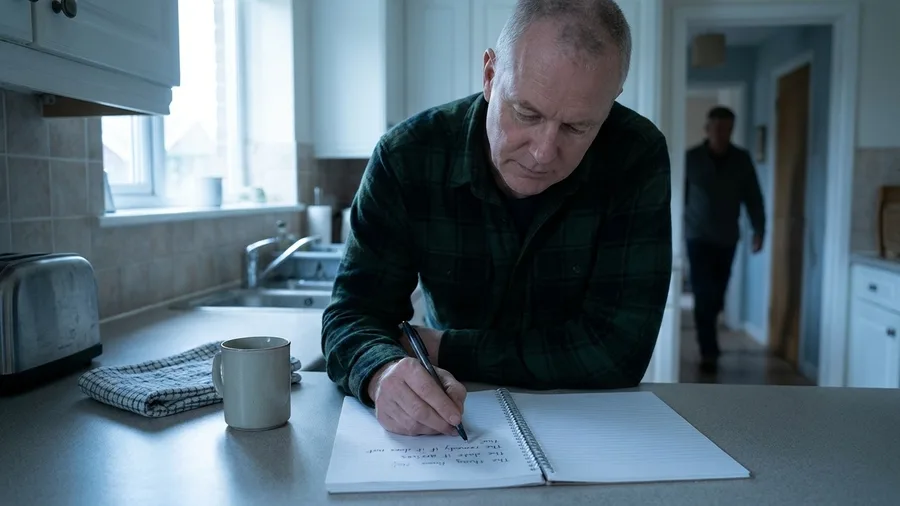
"I'll cover the extra, you can cancel anytime, we'll sort the paperwork later, family rate." Every one of those lines is warm, verbal, and gone by the time anyone needs it.
If the final yes stays in your hand, the next control is making the terms visible before any pen moves. Before you agree, get three things onto paper: the thing itself, the date it arrives, and the remedy if it does not. Asking for them creates a pause in the room. Then say, before I agree, put those three lines in writing and send them to me. What comes back tells you whether you are dealing with an offer that has terms or a mood that has momentum.
Over months, this habit quietly buys you a record you can hold someone to and quietly spends some ease. A neighbour asking to borrow a ladder for an hour does not need a contract, and insisting turns an ordinary favour into a transaction, which is the price of the ones that do need it.
Which asks need the paper
- 🪜 Neighbour borrowing a ladder for an hour — No paper. No pause. A minor favour.
- 🧰 Trade work on the house under $2,000 — Ask for the three lines before any money moves.
- 🏠 A remortgage, a co-signed loan, a family loan over $5,000 — Three lines and a stake-free check, or no.
6. They name the flattery out loud

Praise costs you nothing to hear and everything to answer, because it arrives just ahead of the paper and softens you before the first line is read. A compliment is hardest to resist while it stays warm and unnamed, sitting in the room as though it were simply true about you.
Say it back and it turns into what it is: a move. "You're very kind to say that – now walk me through the price." You keep the manners, you give up nothing, and the talk returns to terms. Then watch whether the warmth lasts once you decline. Praise that dies at your no was never describing you; praise that survives it was only ever courtesy.
The part that stings: people who hear little praise do not want to spend it. "You've always been the level head in this family" lands on the identity that signs the co-signature, and naming it out loud costs you the warm minute and buys back the terms. That trade is the whole habit.
💡 PRO TIP
One test for real praise
Good flattery dies the moment you say no. Real warmth survives it. If the compliment vanishes with the yes, it was never about you.
Testing the Story
The first two themes get you to a pause and keep the decision in your hands. This one decides whether the story being told is true.
Every persuasive ask runs on some claim — an interest rate, a permit, an ownership, a promise of delivery. These three habits test the claim without calling anyone a liar.
7. They check the claim with someone who gains nothing

The quote is on the kitchen table, the figure looks right, and you ring the neighbour who passed the name along. He says it sounds fair. He would – the referral fee is his if you sign. Agreement from someone who gains from your yes is not a check; it is the same pitch wearing a face you trust.
So test the opinion before you weight it. Ask yourself, honestly, in ten seconds: does this person get anything if I say yes? If the answer is yes, their approval tells you about their stake and nothing about the claim. If it is no, you have a real check – someone paid to inspect rather than to sell, a records office, a written source with no commission riding on your signature.
Keep it narrow. You are not asking for a verdict on the whole story, only one line of it: the rate, the permit, who holds title, the delivery date. "Is this figure correct?" A genuine check always costs time – a call, a search, a reply in writing – which is why a deadline so reliably pushes back against it.
On the roof, that means the licensing board's record and the written scope, not the neighbour's nod. You will feel distrustful making the call, and that discomfort fades; the fact you come back with does not depend on anyone's urgency.
💡 Tip: One question, one source, one answer in writing. The check is not a conversation; it is a fact you can hold.
8. They take cold silence over a quick yes

Ten seconds. That is how long the silence lasts after you say no, and it is the whole pressure point – not the no itself. The asker waits to see whether the quiet will convert the answer. What you read as the relationship cracking is usually just someone's disappointment looking for a place to sit.
A no that leaves things intact is brief and gives no reasons: "No, I'm not doing that." Every reason becomes a hook. After "No, I'm not co-signing," the nephew's silence is his disappointment to hold. Fill it with "because your business plan is weak" and you have handed him something to argue with, and the negotiation reopens.
The cost is a moment of coldness. For anyone who hears disapproval as a verdict on themselves, that coldness feels like proof the no was wrong – it isn't. It is the asker's weather, not a fact about your answer.
🗓️ The first-week build
Day 1 — the overnight hold
Say 'I'll tell you tomorrow' to the first thing that asks for an answer today.
Day 2 — the no-cost question
Ask one person who wants something from you: 'And if I say no, what happens?'
Day 3 — the no without reasons
Refuse one small thing in a single sentence. Let the silence sit.
Day 4–6 — the stake-free check
Call one professional or records office about a claim you have been told.
Day 7 — the signature check
Agree with your household that nothing is signed same-day.
9. They ask for the story again and listen

The bill is $2,400 more than the figure quoted in March, and the contractor has a reason for each line of the gap. This is where people who hold a firm no still lose the argument, because a persuasive story is the softest tool in the bag.
Say the account back to him, but start at the end. Begin with the final invoice figure and walk backward to the deposit. Watch what moves: the date the permit was supposed to be filed, the number he first gave for the tile, who he says promised the extra work. A story worked out in advance tends to hold together only in the order it was written, so break the order and the joints show.
Then slow down. A nervous honest man also fumbles dates and gets a number wrong; a shift in the retelling is a reason to walk to the desk and pull the papers, not a verdict on his character. Go to the document rather than back to the person. The dated contract and the signed change order settle the question without another round of talk, and the fix lives in the paper, not the conversation.
Where the nine habits break down
Frequently Asked Questions
Doesn't an overnight wait look indecisive?
It can look exactly that way, and that is the price. The point is not looking decisive. It is keeping the decision. A deal that needs an answer before morning is a deal that is being sold on speed, not terms.
What if the deal really does go to someone else while I wait?
Then it was priced to go to whoever answered fastest, not to whoever read it carefully. A genuine offer survives a night. If it doesn't, you have learned what the offer is worth.
Isn't writing terms down insulting for a family loan?
It can feel that way when you first ask. What it usually prevents is the more damaging conversation twelve months later, when the lender remembers one amount and you remember another. Three lines in a notebook is a lower price than a family argument.
How do I tell flattery from genuine kindness?
Praise that survives your no is manners. Praise that disappears when you decline was aimed at the yes. Say 'You're very kind — now tell me the price' and watch which one you are getting.
What if retelling the story and checking only makes me look suspicious?
It may. Go to the document rather than back to the person, and do not accuse them of lying — ask for the dated contract. The conversation lands very differently when the check is about the paper and not the man telling the story.
The Order to Build These In, Starting Tonight
The order is fixed. Start with the overnight hold, because it buys the time every other habit depends on: 'I'll tell you tomorrow.' When a night is normal, add the two one-line scripts: 'And if I say no, what happens?' and a plain no with no reasons attached. The rest can follow.
That $6,500 loan, or the roof quote on the kitchen table, was not lost because you were foolish. It was lost because no line stopped the clock and nobody with nothing to gain ever saw the paper.
One move this week. On the conversation already waiting, say you will tell them tomorrow, then write the three terms down before you reply. Say the line, then stop talking.
The next high-pressure conversation will still arrive. You will have a first line, a second line, and a reason to use the pause. The loan is only good today. Tomorrow is a better answer, and now you have the sentence for it.
Run the first line on the next ask
Pick the conversation you have been avoiding. Ask what a no would cost, and let the silence sit. The answer tells you what the offer was really worth.

