
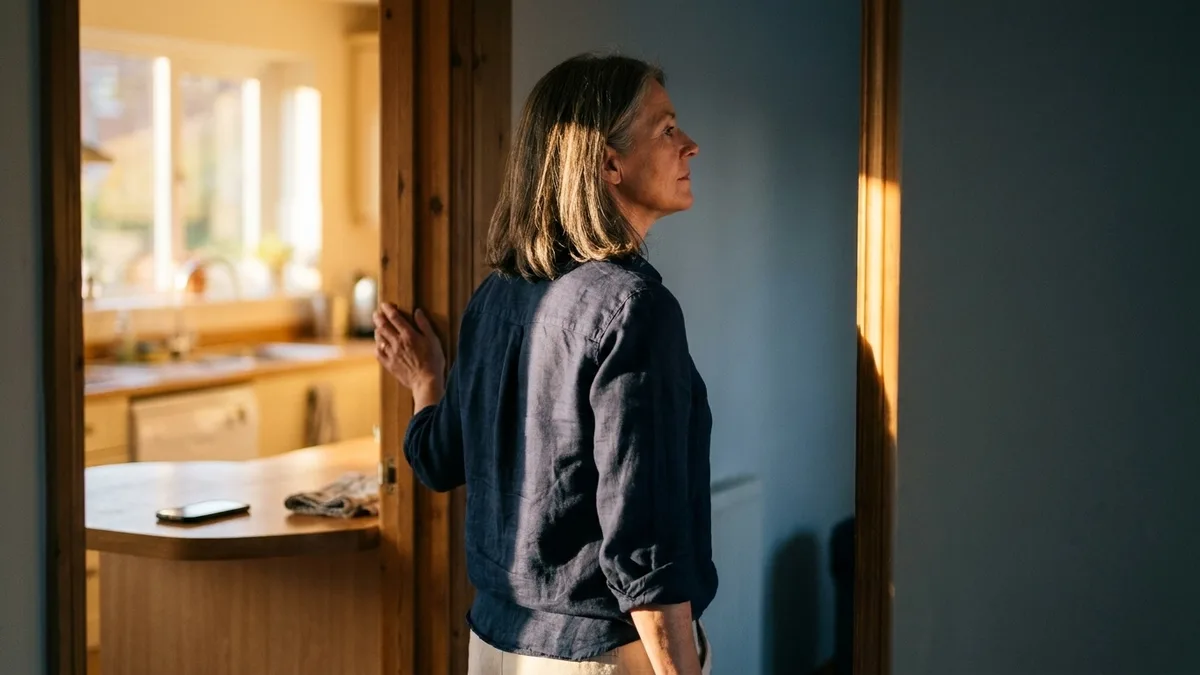
Everyone assumes the family peacemaker is the lucky one, the trusted one, the first call. I believed that for about forty of the fifty years I spent doing the job. I was 16 in 1975 when my parents separated and I became the only person both would still talk to. By the end I was 66, a retired high-school administrator in Dayton, Ohio, the eldest of four, mother of three, married 39 years.
The job ran until March 2025, when a two-hour call over my mother's $4,200-a-month assisted-living bill and which brother visits which weekend ended with me putting the phone face-down on the kitchen counter. Four weeks later, on my 66th birthday, I stopped.
You have been told that if you stop, no one will speak to each other and your parent will suffer for it. That was not what happened to me. What followed was a kitchen decision, not an explosion. The adults who create the fights can be handed their own numbers, and a fragile parent can be protected by someone paid to coordinate care rather than by your silence.
What follows is the accounting, the fallout, and the exact words I use now. It includes a way to tell whether you are the peacemaker or the only adult in the room, and the cases where stepping back has to wait until professional help is in place.
💡 PRO TIP
The sentence does more than one thing
I'm not the messenger anymore isn't just a refusal — it hands the message back to its owner. Say it once, then stop talking and let the silence sit. The first three times I said it, the caller grumbled. The fourth time, they called the person directly.
At 16 I became the one who called

Nobody offered me the job. It arrived as a chore on a weekday in the fall of 1975, a few months after my parents split, when my father phoned our house and asked me to let my mother know he would come by for the station wagon on Saturday. She answered my report with her own: tell him the keys are on the hook.
That was the whole first errand. Thirty seconds of my life, one car, two people who had shared a kitchen for eighteen years and now could not say a sentence to each other. I was sixteen. I thought I was being helpful.
What I was told around then, mostly by my mother, was that I was the family peacemaker. It sounds like a compliment on a child. What it meant in practice was that I could hold two versions of the same marriage in my head, keep the ugliest parts from crossing over, and never put my own needs on the list. Sensible was a job title wearing a nice dress.
The arrangement had a stated end date. It was temporary, my mother said, just until the lawyers were finished. Two weeks, maybe a month. The lawyers finished in 1976. The messages kept coming, and nobody ever called the job back in, so it ran from that fall until my sixty-sixth birthday in April 2025.
It was not purely a burden, and I will not pretend it was. Being the switchboard put me at the center of everything: I got the first call, I always knew where each person was and who was speaking to whom. Whatever I lost, I also belonged somewhere. Stepping out of that middle later did not feel like relief so much as demotion.
| The peacemaker years (16–65) | Since I stopped at 66 |
|---|---|
| 60–80 relay phone calls a year between feuding siblings | One group text for logistics with my three siblings and me |
| Thanksgiving for 14 and Christmas Eve for 11 at my house | One holiday a year hosted, the rest attended or skipped |
| About $600 of my own money on each holiday meal | Care coordinator at $65/hour, two hours a month, $32.50 each |
| I edited messages before passing them along | I forward the text and let them read it themselves |
| I absorbed the anger so nobody else had to | I answer every request with one sentence |
The work was relay calls and softened messages
The errand was always labor, a stack of small tasks with times and costs, and the stack grew until it filled every calendar I owned. Peacemaking was never a mood I was in. It was a phone I answered, a message I rewrote, a table I set.
By the 2000s, a normal year meant sixty to eighty calls I made purely as the relay between siblings who were not speaking. Each one carried a due date, a grudge, a rehearsed apology, a holiday logistics question, or the delicate instruction not to raise the subject of money at dinner. I dialed, I listened, I patched.
There was editing before anything got through. I struck the word always from one sentence and never from another, because both words were indictments my sibling would have had to take back later. I pulled the money jab out of a perfectly good insult. I replaced selfish with thoughtless, which sounded softer and mostly was.
My reasons were two. I wanted to keep my mother from another flare-up she would feel in her chest for a week, and I wanted to spare whoever had said the sharp thing the apology they would inevitably owe. Editing was, I told myself, kindness.
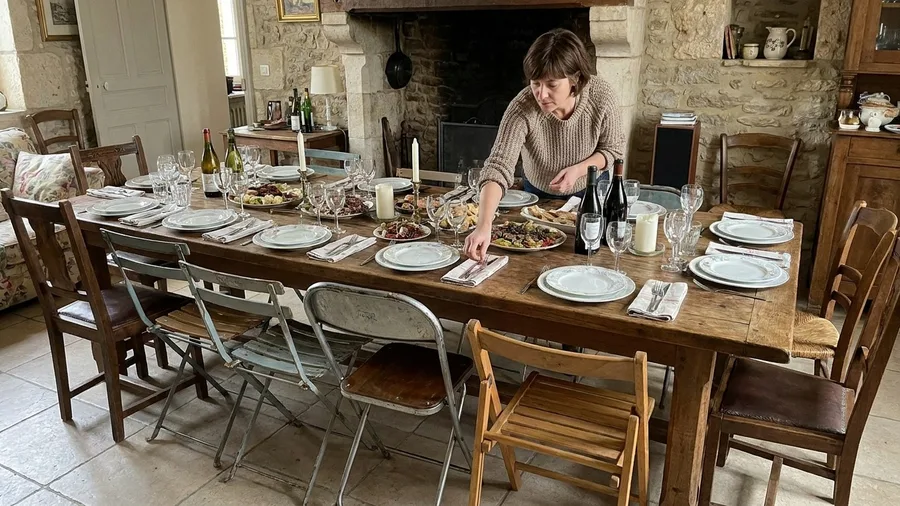
The hosting was the visible half. Thanksgiving for fourteen, Christmas Eve for eleven, all at my house, and somewhere around six hundred dollars of my own money went into each meal of my own money: turkey, ham, three pies, and the folding chairs I rented because my dining room holds eight.
praise for the result, never for the work. People said what a great Thanksgiving it was, how everyone got along so well this year. Nobody saw the two hours of calls it took to make that peace, so the labor looked like weather. Atmosphere. Something that just happened, rather than something I did.
Everyone praised me for it, so it stuck
A complaint would have handed me a reason to walk away, and nobody ever gave me one; the compliments came steadily enough to keep me in the chair. Praise turned out to be the harder thing to quit.
They came from every direction, always warm, always in front of whoever was standing nearby. My mother used to say I was the only one who could get through to my father, as if that were a gift and not a verdict on her marriage. Aunt Ruth, at every reunion, would call me the sensible one. And one Thanksgiving a neighbor raised her glass and said, in front of my husband and a full table, that our family would fall apart without me. Everyone laughed. I laughed too.
I made a life out of being needed. I was the one who got the first call, the one holding the list of who was speaking to whom, the one who knew which brother needed warning before he sat down next to which sister. There is a real comfort in being the person who knows.
It was not free. On our anniversary in 2011, my husband and I were halfway through dinner at the Oakwood Club when my sister called in tears, and I left the table at 8:40. He ate his dessert alone and did not mention it. He did not have to.
Once I tried to hand it off. In 2012 I asked my younger sister to take the relay calls for one month, and by week three the siblings, who could not be bothered to try anyone else, were calling me again. She passed one message wrong, an apology delivered to the wrong brother, and I took the job back before the month was out.
That failure told me the truth. The family did not want a new switchboard. They wanted the old one, and the old one answered.
Fifty years, by the numbers
The peacemaking job I never put on paper until I quit it
The peace held but nobody actually changed
The peace was real, and it wasn't repair. In the late 1990s my middle brother and my younger sister stopped fighting, and I arranged the thing that started it: the first lunch, the three-hour table, the rehearsal beforehand where I told each of them one thing they could say and one thing to leave alone. It worked. They stayed close for years.
But the same three-way argument came back over our mother's care in 2024. Money, favoritism, who does more. Same script, same roles, same voices overlapping on the call. The 1990s lunch had not built a line between them; it had built a line through me, and I was still standing in it.
Even after they reconciled, they did not call each other. They called me to call the other. That was the whole architecture, and it never changed.
So I ask what fifty years bought. The fight was the same fight at 16, at 40 and at 65. Only the person absorbing it was different, and it was always me. What I had actually built was a way for two adults to stay angry at each other for decades without ever spending an evening on it. Their grievance stayed exactly where it started.
I absorbed the consequences so no one else had to
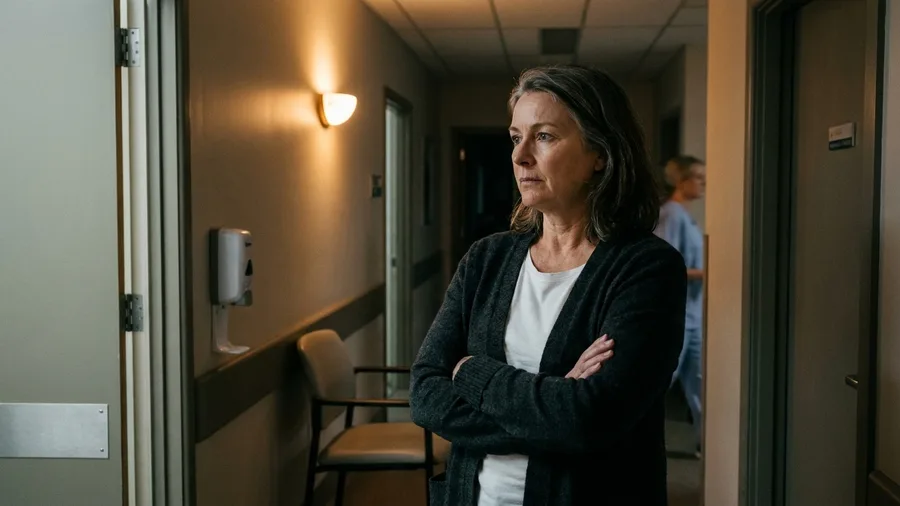
Smoothing a fight doesn't end it. It cancels the Monday phone call that would have forced two adults to speak to each other.
In 2019, one of my brothers left our mother's hospital room before the doctor came in, and the other treated it as proof of who loved her less. I had it settled inside a weekend: two phone calls and a lunch nobody else knew about. The same grievance returned in 2024, larger, wearing different details, during the fight over her care.
There was also the birthday our sister never got a call for. My middle brother couldn't face her, so I drafted what he should say. He read it into the phone as his own, and everybody accepted it. Don't imagine the family didn't notice; they noticed, and learned that an apology could be outsourced and still count.
My weekend went, and so did $140. Two evenings went into rehearsing a sentence until it sounded like him, while the actual grievance stayed exactly where it had been.
every time I did that, I made the repair unnecessary. Once I stopped, two of them worked out the visiting schedule between themselves. Three calls, some grumbling. Nobody died.
📵 The first four months after I put the job down
March 2025 — the last relay call
Two hours on the phone about the $4,200 assisted-living bill, I hung up and sent each brother the other's number.
April 2025 — the birthday
On my 66th birthday I stopped taking relay calls altogether, without announcing it to the family.
May and June — the freeze
Two siblings did not speak to me for four months: no calls, no texts, no Thanksgiving RSVP.
July — the direct line
My middle brother called me for the first time in 20 years, not to relay a message but to ask how I was.
August — the group text
The sister and youngest brother came back into the group text, and the bills and appointments were still getting covered.
It cost me holidays, savings, sleep and patience
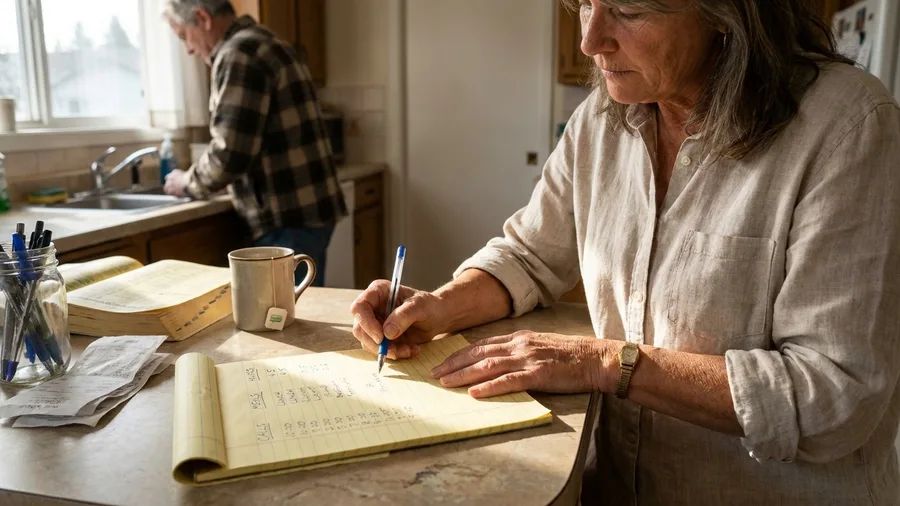
If one person is holding up the whole structure, the receipt eventually shows up in her husband's face, her bank account, and her blood pressure.
The money was ordinary rather than dramatic. Three holiday meals a year – Thanksgiving, Christmas Eve, Easter – each one carrying a bill of about $600 before the folding chairs and the second grocery run.
The calls I mostly gave away free. Between sixty and eighty a year, no fee, no recognition. Each one also dragged a shadow-worksheet of planning no one saw: who sits where, which subject is banned this year, whose apology needs drafting before the call.
The phone went at 11:40 one night. I rehearsed the reply in the dark until 2 a.m. In 2022, my blood pressure went up, and my doctor asked what I still refused to put down. I couldn't answer him.
My husband and I have been married 39 years. 'I married you, not the family switchboard' was funny the first time he said it. By the tenth year he was counting, from the garage, the holidays I spent on the phone.
None of that had ever been added up. The first real accounting came in April 2025 on a yellow legal pad, with three columns: calls, meals, hours.
What fifty years of peacemaking bought and what it spent
What kept me in the job
- Being the first call and the one who knew where everyone was
- My mother's line: you're the only one who can get through to your father
- The neighbor's compliment: your family would fall apart without you
- The calm result at every holiday, credited to the atmosphere rather than to me
What it quietly spent
- Three holiday meals a year at about $600 each from my own pocket
- 60 to 80 relay calls a year, plus the editing and rehearsal behind them
- Sleep lost to 11:40 p.m. calls and rehearsed replies until 2 a.m.
- An anniversary dinner abandoned at 8:40, dessert eaten alone
The job had one rule: I never got to be angry

The rule was never spoken aloud: whoever holds the family together loses the right to be upset about it. A peacemaker's complaint does not get heard as a complaint. It gets handled as a disruption to the calm she is supposed to be producing.
In 2016, at my own table, my sister said my son was always the one who needed extra help. I said the remark hurt me. The table went quiet, and my mother leaned over and said, 'Don't make this about you.'
That was the sentence my whole family had been using in one form or another. 'You're usually the reasonable one' did the same work quietly. It meant that reasonable was my slot, and no grievance of mine could be entered into the record.
The anger did not vanish. It came out at home, at the person who had not caused it. I scrubbed the kitchen at 11 p.m., wrote letters in a notebook I never sent, snapped at my husband over forks in the drawer.
Other people in that house were allowed to be angry. My father could slam doors and be forgiven by the next morning. My youngest brother could go silent for weeks and we all tiptoed around his quiet. No one ever asked either of them to stop. I absorbed the cost of their anger, so the anger never had to be managed at the source.
By March 2025 even the rule had a price tag on it.
The last call was about $4,200 a month
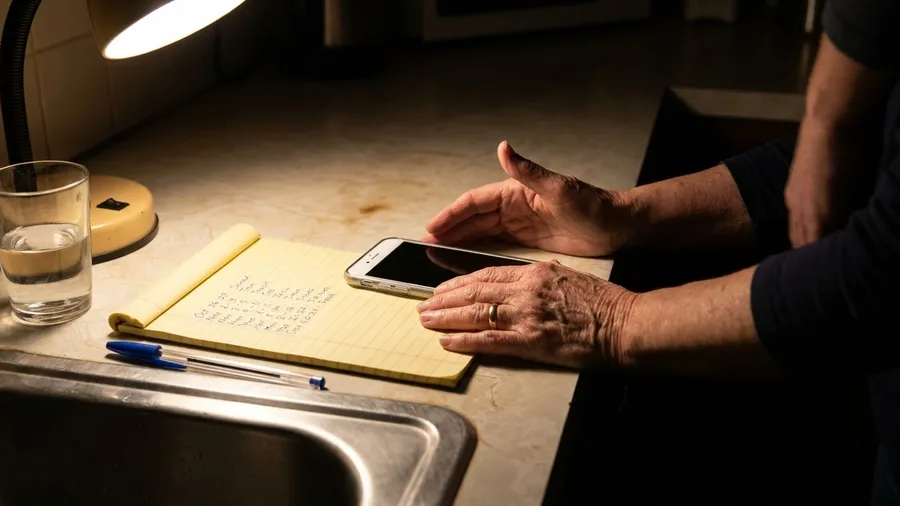
By March 2025 the size of the bill had outgrown the calm it was buying. What ended fifty years was a two-hour call about my mother's assisted-living costs of $4,200 a month and who would visit which weekend.
It was not dramatic. My brothers talked over each other, each one certain the other was doing less, and I was the only one on the call taking notes. I sat at the kitchen counter with a pen and wrote down the names and the weekends while the two of them argued across me.
When it ended I hung up and did the first small thing I had ever done. I texted each brother the other's number and wrote two words: I'm done. Four weeks later, on my 66th birthday in April 2025, I stopped taking relay calls.
Why that call and not the ones in 2024 or 2019? I was 65, four weeks from 66, and had been the switchboard since I was 16. The same call had come around before, with the same notes on the same yellow pad. This time the arithmetic was finally visible.
I made the decision in my kitchen, alone. I told the family nothing. I put the phone face-down beside the sink and did not call my mother to explain.
⚠️ COMMON MISTAKE
Announcing it makes it a negotiation
I told no one I was quitting except the two brothers on that call. A family announcement invites a family vote, and the vote will always be for you to keep working. Quietly sending each brother the other's number did more in one minute than a speech would have done in a year.
Two siblings froze me out; one started calling

What actually happened is smaller and stranger than the catastrophe I had spent fifty years preventing. Two siblings, my younger sister and my youngest brother, did not speak to me for four months. No calls, no texts, no RSVP for Thanksgiving.
The other half nobody predicts: my middle brother began calling me directly for the first time in twenty years. Not to pass a message. To ask how I was doing and whether Mom's prescription had changed.
The holidays got quieter. Thanksgiving was eight at my table instead of fourteen. On Christmas Eve my husband and I went to a movie and ate soup afterward. On Easter I left my phone in a drawer and read on the porch.
By August my sister and youngest brother were back in the group text. The four-month silence had not been permanent. It had been a quiet, plain adjustment, and it ended the way most family weather ends, on its own.
And my mother was still cared for the whole time. Bills paid, appointments kept, weekends covered, by the people who had always been capable of it once the switchboard stopped answering. The people who needed me to be the messenger had to learn to call each other, or they had to find the weekend themselves.
Now I forward the text and let them be adults

The fallout narrowed enough to show me what could actually replace the old job, and none of it was emotional. It was furniture.
Three of us now sit in one text thread that carries logistics only: who drives Mom to the cardiologist Tuesday, who covers the February payment, what time to arrive Sunday. Anything that starts with 'tell your brother' gets no reply from me. Beside it sits a shared calendar where appointments, medication changes and facility notices go the moment they land, so the information lives in a place all four of us can open at 9 p.m. without dialing anyone.
The piece I could not do alone was the facility. We pay a care coordinator $65 an hour for two hours a month, and the four of us split the $130 bill at $32.50 each. She takes the administrator's calls and builds the weekend rotation. I have never once been the one explaining a medication to a nurse at 7 a.m.
The sentence did the rest. 'I'm not the messenger anymore' – I said it 11 times that first month, twice to my mother, once to an aunt who wanted me to pass along a hint about Christmas, and then the relay calls simply thinned out and stopped.
What I kept, I kept on purpose. One holiday a year at my table instead of three. And any call that is for me and not through me, I pick up.
Frequently Asked Questions
How do I stop being the family peacemaker without causing a fight?
You stop taking relay calls, one at a time, without announcing it. When someone asks you to pass a message, say I'm not the messenger anymore and give them the other person's number. The fight you fear is usually much smaller than the one you've been preventing.
What if my siblings stop speaking to me when I quit?
Some may, for a while. In my case two siblings froze me out for four months and then came back into the group text. The silence is real, but it is usually temporary, and it is the price of no longer absorbing their conflict for them.
Is it selfish to stop mediating for my family?
It would be selfish only if the work belonged to you. The conflict belongs to the adults who generate it. Stepping back puts the work where it started, which is not the same as abandoning anyone.
What if my parent's care depends on me holding the family together?
Then do not step back cold. Bring in outside help first — a care coordinator, a social worker through the facility, or an elder-care mediator. In my case a coordinator at $65 an hour, split four ways, handled the scheduling questions that used to run through me.
How long does it take for the family to adjust?
Expect three to six months of grumbling and at least one sibling going quiet. In my case the first direct call from my middle brother came in July, three months after I stopped, and the group text settled by August.
Can I still host holidays after I stop mediating?
Yes, and you should host fewer of them. I went from three holiday meals a year to one. The meal is not the problem — the invisible editing and seating negotiations around it are.
What the peacemaker finally learns about peace
Stopping did not fix my family. It put the work back where it belonged, with the adults who create the fights. Two of them still do not call each other without a reason, and the money argument did not evaporate. What I have now is one holiday instead of three, a group text for logistics, and a clear sentence. That is the verdict. If you are counting what you alone hold, count carefully: if it is messages between adults who can call each other, you are the peacemaker. If it is the medication schedule, the $4,200 bill, and the weekend nobody safe is watching, you are the only adult in the room.
For that second case, do not step back yet. If you are the only thing standing between a fragile parent and real harm, bring in a care coordinator or a professional first, the way I eventually did at $65 an hour for two hours a month. Nobody should quit a job that is currently keeping someone safe.
For the rest of you, go back to the phone face-down on the kitchen counter. The next time a message is placed in your hands, send it back to its owner, set the phone down, and say the sentence I use: 'I'm not the messenger anymore.' Then let the silence do the rest of the work.
The next message is not yours to carry
Before you forward another word between two adults, scroll back to section 10 and copy the exact sentence and the group-text setup. One refusal is enough to start.

