

Keeping a sharp, youthful outlook across decades does not happen by accident or through positive thinking alone.
It takes roughly twenty years of small daily adjustments to build the cognitive and emotional resilience that people at seventy-five rely on every single morning.
At a Glance
The Mechanism Behind Mental Longevity

People assume that keeping the mind sharp as the decades pass requires endless crossword puzzles and safe, predictable brain training games.
That conventional advice misses the mark because comfort is actually what lets neural networks drift into autopilot and static routines. When you intentionally introduce genuine cognitive friction, such as learning a completely foreign skill where you feel clumsy and confused, the brain responds by maintaining its adaptive plasticity. The hidden trade-off is tolerating the daily frustration of not being good at things, which is the exact price of keeping your mental machinery agile.
1. Embracing Cognitive Novelty Daily

Forty times a day, your mind takes the path of least resistance because the familiar route requires zero active attention.
Choosing this effortless coasting saves immediate mental energy, but the long-term price is a gradual dulling of your adaptive agility over months and years of routine.
When you trade that frictionless autopilot for minor daily friction like brushing your teeth with your non-dominant hand or altering your walking path, you spend a little awkward frustration to buy lasting mental flexibility.
The next time you head out the door, take the unfamiliar side street instead of checking out completely.
💡 Tip: Pick one small habit to alter each Monday.
💡 PRO TIP
Break the Autopilot Loop
Small daily disruptions to your routine are enough to keep neural circuits active without adding stress.
2. Curating Social Circles with Intention

Why do we keep spending our limited free time on relationships that feel like an exhausting chore rather than a source of genuine connection?
Over decades, many adults accumulate social obligations that drain rather than feed their energy, mistaking longevity of acquaintance for loyalty.
You spend an entire Tuesday evening listening to complaints from someone who refuses to change anything, nodding along while watching your own evening slip away into a haze of polite exhaustion.
That quiet drain accumulates into chronic mental fatigue, leaving you too depleted to show up for the people who actually light up your world.
Think of your social circle not as a museum gallery that requires preservation, but as a garden that demands active pruning to thrive.
Audit your calendar and protect your attention by gently stepping back from loops of endless grievance, replacing them with deliberate space for mutual curiosity and ease.
💡 Tip: Decline one draining invitation this week without over-explaining.
Social Audit — At a Glance
👥 Frequency
Zero mandatory check-ins with chronic complainers
⚡ Threshold
Two consecutive loops of unacted grievance before stepping back
🛡️ Exception
Keep lifelong bonds experiencing temporary crisis
Action Metric
Reallocate 4 hours of drained Tuesday time to mutual curiosity weekly.
3. Reframing Physical Limitations
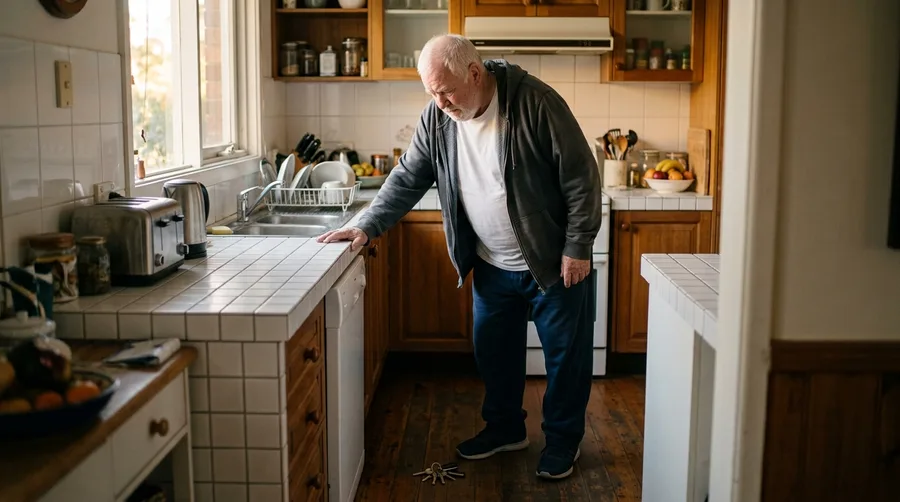
You drop your keys on the kitchen floor, bend down to scoop them up, and feel a sharp tweak in your lower back. You straighten up, wince, and mutter that everything is falling apart now.
How you talk about your body shapes how your body performs over time. That casual language trains your nervous system to expect decline rather than recovery, turning a temporary strain into an accepted permanent state.
Notice the narrative you repeat out loud when minor aches appear. The words you choose determine whether you treat your body like a machine needing repair or a building being condemned.
Swap the fatalistic label for a precise observation by using these exact words. Instead of saying I am falling apart, say my lower back is stiff today because I sat too long. Finish with a practical adjustment, such as I will go walk for ten minutes to loosen it up.
💡 Tip: Replace 'I am too old for this' with 'My muscles need a proper warm-up today.'
Language Shifts
4. Maintaining Physical Agility Through Play

The conventional prescription for physical maintenance usually looks like a silent hour on a treadmill staring at a wall.
Researchers who study human longevity keep finding that structured, joyless exercise regimens have remarkably high dropout rates compared to movement embedded in actual life.
People who maintain physical agility into later decades tend to replace gym workouts with gardening projects, floor stretching, and spontaneous balance challenges.
Try standing on one leg while making your morning coffee or turning weekend chores into a physical game.
Keep movement playful and varied.
💡 Tip: Practice standing on one leg for thirty seconds while brushing your teeth.
🏃 Movement Progression
Step 1: Awareness
Notice how much time you spend sitting still each day.
Step 2: Integration
Add short bursts of balance and stretching to daily chores.
Step 3: Play
Engage in active hobbies that do not feel like workouts.
5. Prioritizing Deep, Uninterrupted Rest

I will catch up on everything tonight once the house finally settles down.
Ask yourself a simple question tonight. Are you trading tomorrow morning for a screenlit hour that you will not even remember by noon?
If the honest answer is yes, you are choosing to run your days on a deficit that slowly frays your patience, clouds your focus, and accelerates the wear your body feels.
Treat your bedtime like a non-negotiable meeting with tomorrow, close the tabs at ten, and let the rest wait until morning.
💡 Tip: Turn off all screens forty-five minutes before lights out.
6. Cultivating Micro-Curiosity

Pretending to understand how things work saves you from temporary awkwardness, but it slowly trains your brain to stop looking closely at the world around you.
You might think nodding along protects your competence, but to everyone else, it signals a quiet disinterest in learning anything new.
The trade-off for looking polished in the moment is a mind that grows rigid from a lack of fresh input.
Instead of faking familiarity, pause and ask one genuine question about how something actually functions, or spend ten minutes looking up the history of an ordinary object on your desk.
💡 Tip: Investigate one unfamiliar question every single week.
7. Releasing Grudges and Chronic Resentment

I used to believe that holding onto an old slight was a form of self-defense, as if keeping score would somehow protect me from getting hurt the same way twice.
The kitchen is quiet at 11:00 PM except for the hum of the refrigerator, and you are standing at the sink scrubbing a single stubborn pan while replaying an argument from five years ago word for word.
Your jaw is locked so tight your teeth ache, your pulse is climbing over a ghost, and the person who said the offending sentence is asleep miles away, completely unaffected by your midnight tribunal.
Holding onto past grievances is an exhausting full-time job that requires constant mental maintenance, diverting valuable emotional bandwidth away from your actual present life toward a ledger that balances itself out with your own peace.
Letting go is not for the other person, and it does not mean granting absolution or pretending the hurt did not happen; it simply means refusing to keep paying the emotional tax on an old transaction.
When the memory surfaces while you are folding laundry, try saying out loud to the empty room, I am putting this down now, and physically drop whatever item is in your hand before walking into another room to change the channel on your thoughts.
💡 Tip: Write down the grievance on scrap paper and recycle it immediately.
8. Investing in Lifelong Skill Acquisition

I cannot start a brand new hobby from scratch because I simply do not have the patience to be bad at it.
Mastering something new requires stumbling through initial clumsiness, yet you hesitate to pick up watercolor painting or learn a new language because you hate feeling incompetent.
Vibrant adults embrace the beginner stage instead of retreating to familiar competence.
Allow yourself to be bad at something new this week without grading your early attempts.
💡 Tip: Spend fifteen minutes daily practicing a clumsy new skill.
Mindset Comparison
9. Maintaining Purpose Beyond Yourself

A narrow focus on personal comfort often breeds existential fatigue.
When you look exclusively inward, everyday irritations take up more room than they deserve, leaving the mind exhausted by its own maintenance.
There are times, however, when protecting your energy requires a season of complete self-focus, and pulling back from external demands is entirely necessary for recovery.
The line where healthy boundaries cross into stagnation is marked by chronic depletion rather than renewal.
When you mentor a younger colleague, volunteer at a community garden, or support a local animal shelter, your focus shifts outward, giving the brain a reason to stay engaged.
Find one tangible way to contribute this week by committing two hours to a single local cause without overcommitting your schedule.
💡 Tip: Commit two hours a week to a local community project.
Purpose Building Timeline
10. Laughing at Life's Inevitable Absurdity

Taking yourself too seriously acts as heavy armor that slowly drains your energy through the day.
Ask yourself how you respond when a simple plan unravels or dinner burns unexpectedly. If your chest tightens and you replay the mistake for hours, you are paying a massive mental tax for a minor hiccup.
When you catch yourself mid-frustration, pause and look for the genuine absurdity in the scene instead of feeding the stress. The next time something slips out of your control, narrate the mishap out loud with dry humor rather than an apology.
💡 Tip: Find one genuine reason to laugh out loud every single day.
11. Cultivating Radical Emotional Honesty

Forty hours a week spent swallowing minor frustrations accumulates into a heavy quiet that eventually reshapes how you relate to everyone around you.
The hidden cost of masking discomfort with polite agreement is the slow erosion of genuine connection, traded away for an easy peace that feels hollow after months of repetition.
What you quietly buy with that temporary safety is a delayed explosion, turning a simple conversation into an overwhelming reckoning because the small moments were never allowed to breathe.
Say what you mean right when it happens, and let the slight awkwardness of initial honesty replace the heavy exhaustion of keeping up appearances.
💡 Tip: Use direct 'I' statements when expressing your needs.
Frequently Asked Questions
Can these habits be adopted at any age?
Yes, neuroplasticity continues throughout your life. Small daily changes yield compounding benefits regardless of your current age.
How long before these changes feel natural?
Most people notice a shift in mental clarity within three to four weeks of consistent daily practice.
What is the single most important habit to start with?
Begin with cognitive novelty by altering simple daily routines to wake up your neural pathways.
Why does social connection matter so much for longevity?
Meaningful engagement lowers chronic stress and provides emotional resilience against life's inevitable challenges.
Where To Begin Your Practice
Pick just one habit from this list and commit to it for the next seven days.
That single focus will set the tone for lasting vitality.
Start Your Daily Routine
Review the micro-curiosity habit above and try it out today.