

Thirty-five years is longer than most people expect when they sit down across from a stranger for the first time. What they expect is a verdict, and what they get is Tuesday through Friday, fifty minutes, $150 an hour in my final year, in a three-therapist group practice in a Denver suburb. About 1,100 couples came through that office, and the ones who lasted did not fight less than the ones who didn't. One couple argued every week for 34 years and stayed. Another never raised their voices and split in year nine.
Most people walk in counting fights. The count is the wrong gauge.
What I watched for instead was quieter: how fast they came back after a blow-up, whether the fight stayed about the thing it started as, whether each could say the other's complaint without editing it. Repairs, scoped fights, answered bids, a clean apology, one real shared picture of five years out. By the end of this list you should be able to run the ten signs against your own partnership and name the one absence that matches your situation.
This is one counselor's observed list, not a prediction and not a guarantee.
Quick Tips Before You Start
Measure the gap
Note how long the silence lasts after a fight, not how many fights you have.
Write it in their words
Before you respond, try to write down your partner's complaint exactly as they said it.
Check who is doing
The partner who made the call matters less than what both do between sessions.
Watch the small bids
Answer the next three 'look at this' moments and see what changes.
Build one weekly habit
A standing Sunday walk beats a dramatic overhaul every time.
How They Fight
The first four signs all live inside conflict, which is where most couples do their looking and where most of them misread what they are seeing. The heat is not the information. What happens after the heat, and what the heat is allowed to touch, tells you far more.
I watched two couples for years who proved this to me. One argued every week for 34 years and stayed. The other never raised their voices and split in year nine. The difference was never volume.
1. They close the gap within hours

It's nine at night and the house is doing that thing where nothing makes a sound except the fan in the hallway. Someone is in the bedroom with the door not quite shut. Someone else is in the kitchen pretending to do the dishes. It has been forty minutes since the thing about the car keys, and neither of you has said a word since, and the next move is going to tell me more about your next ten years than the fight itself ever could.
In my last ten years of practice, at intake I stopped asking couples how often they fought. I asked them how long the silence lasts after one, and who ends it. Those two questions did more diagnostic work for me than the whole hour that followed, mostly because the answer came back before they'd had time to make it flattering.
The repair attempts I actually watched were almost never formal. A joke. A hand on the shoulder on the way past the counter. A cup of tea set down on the side table without comment. A text sent from the next room that just said 'we're okay.' The couples who lasted usually closed the gap within hours, and they did it with something so small it would look like nothing from the outside. It is not nothing. It is the whole thing.
The ones who did not last went to separate rooms and stayed there for days. I once sat with a couple who had spent two weeks of a single August in different parts of the house and called it 'giving each other space.' That is not space. That is a standing pattern, and space has a door. The couple who argued every single week for 34 years and never considered splitting kept the gap short. The couple who never raised their voices, who looked like the calmest people in my waiting room, split in year nine, because silence had set the habit and neither of them ever learned to break it.
So measure the gap, not the count. An ordinary bad stretch is hours. A standing pattern is days, and after enough of those, it becomes weeks. Next time one of you is standing in the kitchen and the fight ended forty minutes ago, that is not the time to win it. That is the time to set a cup of tea down and walk back into the room.
💡 Tip: The next time the fight ends badly, be the one who makes tea. Not a speech. Just the tea.
| Sign | When it was present | When it was missing |
|---|---|---|
| Fast repair | Hours of silence, then a joke, a hand on the shoulder, a cup of tea | Days in separate rooms, weeks of cold distance |
| Scoped conflict | The last ten minutes still about the dishes | The 2019 vacation and the wedding pulled in as evidence |
| Accurate hearing | Each could repeat the other's complaint in their own words | A reasonable request rebuilt as an attack |
| Clean apology | "I'm sorry I did that" with no defense attached | "I'm sorry, but you…" keeps the ledger open |
| Mutual effort | Both did the between-session work | One sat with folded arms for six sessions |
| Small bids | The 'look at this' from the other room gets answered | The bids stop coming after enough turn-aways |
| Transparent separateness | Separate accounts and Friday nights, all known | Passwords exchanged, phones checked, policing |
| One team on outside pressure | Defends you in the room with the family | Negotiates behind your back, reports the result |
| Shared ground | Both name one place the five-year pictures overlap | Two separate deals cut on holidays and money |
| Upkeep, not audit | Standing Sunday walk, ten minutes after the kids are down | Every ordinary Tuesday becomes evidence |
2. The fight stays about the dishes
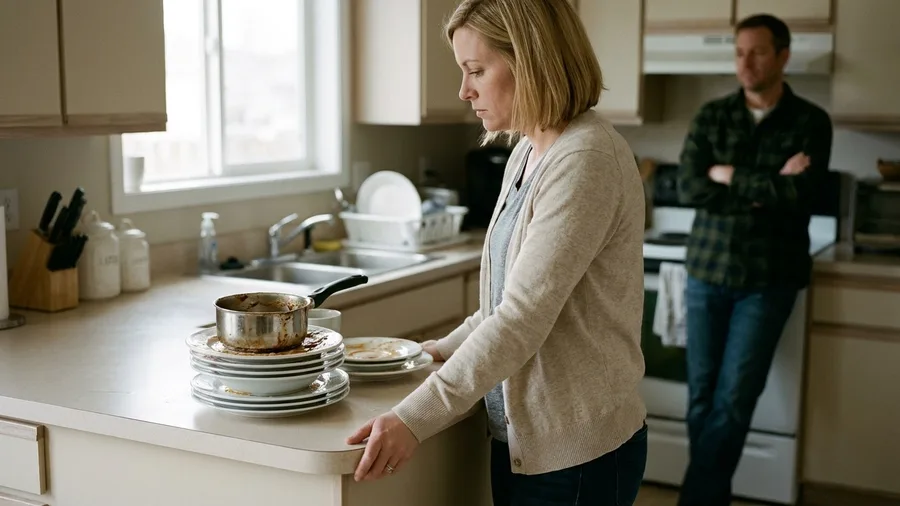
Because somewhere in the middle of it, the subject changed and neither of you noticed the switch. The dish on the counter was the issue. The file that came out of the drawer was not.
Lasting couples fought about the trash and left it there. The trash stayed trash. The couples who wore each other down did something different: the dish became proof, then the proof reached back three years. The vacation in 2019 where you sulked for two days. The toast your mother made at the wedding. Once that drawer is open, the argument is no longer about Tuesday. It is a case being built, and one of you is the defendant.
What surprised me is that the loud couples did this less. Volume had nothing to do with it. They still shouted about money and the dishwasher and whose turn it was, and it was over by bedtime because the fight stayed in the week it started in.
Here is the check you can run tonight. Look at the last ten minutes of your last real fight. Were you still talking about the first two? If the old file is open, you are no longer arguing about behavior. You are prosecuting a character, and that trial never adjourns.
💡 Tip: Ask yourself whether the last ten minutes of the argument were still about the first two. If not, the issue has quietly become character.
3. Each can state the other's complaint
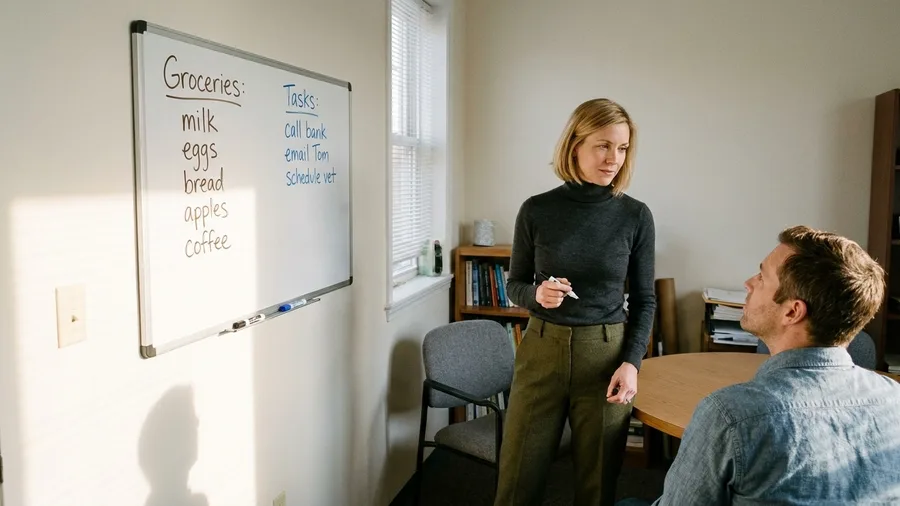
Three sessions. That was usually how long it took a couple who would make it to get through the exercise below without flinching. A fight kept small is a fight that can be heard, and a fight that has swollen into evidence about who someone is cannot be heard at all, which is why the next thing I watched for was simple: could each partner say the other's grievance back without editing it?
The rule was one person summarized while the other listened, no rebuttal allowed, and the listener said either 'yes, that's it' or corrected it. I wrote the complaint on the whiteboard in the complainer's own words, then had the partner repeat it. 'What I hear you saying is that the weekends are the only time you get and I keep filling them.' Then: 'Yes, that's it.' The distortion I saw most often was a reasonable request rebuilt as an attack and then answered as an attack, which is a fight nobody agreed to have.
Ask your partner to say your complaint back before you answer theirs. If they can, you are further along than most couples who walked into my office.
💡 Tip: At home: ask them to say it back before you respond. If they can't, the message wasn't the problem.
4. The apology lands with no defense

The cost of a defended apology is not the fight you are in. It is the fight you will never get to have, because the other person eventually stops bringing things up at all.
Picture it from across the counter. "I'm sorry, but you had been on my case all week" is not a peace offering; it is a receipt with a rebuttal clipped to the back, and it leaves the account open for another ten years. The apology that ended a fight in one night was the one where a partner took the whole of a 60/40 problem without splitting the accounting: no defense, just ownership of the act. "I'm sorry you felt that" leaves the act untouched. "I'm sorry I did that" names it, which means they had already heard the complaint accurately enough to say it back before defending against it.
So there is a ten-second test here, and it does not require a good week. When did you last say sorry to your partner with nothing attached – no "but," no half of the blame handed back, no explanation of why they made it hard? If the answer comes quickly, the ledger is mostly clear. If you have to reach back months, or if the last apology you offered came with a clause, then something closed: they stopped raising things, and the quiet you took for peace was a shut drawer.
💡 Tip: The next apology you owe, try taking more than your share. See what it does to the length of the fight.
⚠️ COMMON MISTAKE
Don't keep score
The partners who kept a running tally of who apologized last were the ones whose fights never closed. A ledger in a marriage always grows, and it never gets settled.
How They Keep the Ordinary Days
Conflict is the easy part to watch. The harder part is the Tuesday night with nothing happening, when the relationship is either being fed or slowly starved without anyone raising their voice.
These three signs live in the ordinary days, and they are the ones couples most often overlook because nothing dramatic is happening.
5. Both are working, not just the caller

"I'm the one who booked the appointment" – I heard that in the first session more times than I can count, and mostly from a partner who was worried it meant something about who cared more. It never did. Which of you picked up the phone and called told me almost nothing about where the couple was headed.
What both of you did between the weekly sessions told me a great deal. There was a partner I remember who sat through six sessions with his arms folded, skipped every assignment, and the couple had separated before the eight weeks tapered off. Compare the second visit where I could see the kitchen timer sitting out on the coffee table, and the whiteboard complaint written in the other partner's own words, so the work had happened in an ordinary kitchen on a Wednesday night.
Uneven enthusiasm in the first few weeks is normal, and it is not the verdict. The question is whether the reluctant one shows up at all – sits in the room, offers something, does the small thing before the next visit. So skip the question of who called. Ask whether the other person is in the room and doing the work between the visits. A caller with a reluctant but present partner has more to work with than two eager people who only ever show up for the hour.
💡 Tip: Uneven enthusiasm at the start is normal. The question is not who called. It is whether the reluctant one shows up and does the work between visits.
Intake and Session Format — What I Used
📋 Intake
One 90-minute joint session
👤 Individual
One session with each partner
📅 Weekly
8 weeks before tapering
⏱️ Session length
50 minutes
💵 Final-year fee
$150 an hour
👥 Caseload
~1,100 couples in 35 years
The only long-term record
Phone calls, holiday cards, and a handful of returns years later. No formal follow-up study.
6. They still answer small bids

A bid is the small reach: "look at this" called from the other room, a hand on the back at the counter while the kettle boils, a sentence tossed out to see if anyone catches it.
The five seconds after the reach is where the account gets its deposits, and the couples who drifted were almost never cruel. They simply turned away enough times that the bids stopped coming, which is why the house can feel so calm and so empty at once. Answer the next three and watch what changes – not as a cure, just as information. Tired and distracted is ordinary; absent for months is a pattern.
Same ordinary evening, one turned toward and one turned away. The couples who lasted kept the account full enough in cheap, unremarkable moments that it could survive the expensive ones.
💡 Tip: The couples who drifted were rarely cruel. They turned away enough times that the bids stopped coming. Answer the next three small bids and notice what happens.
7. Separate territory, no secrecy around it

The usual advice is to merge everything — passwords, accounts, the whole calendar — because keeping anything back is supposedly where trouble starts. That is not what I saw. The couples I most respected after thirty-five years kept a Friday night with their own friends, an account in one name only, a weekend apart each year. The other partner knew about every one of them.
What I watched for in the first session was not what they kept but whether it was hidden. I could often feel the difference before anyone said a word — an answer that came a beat too fast, a detail that did not line up with the one before it.
The other version: phones left face-up, passwords traded as proof, receipts checked. Over five years I watched some of those couples turn the relationship into a shift at a security desk. Some couples shared everything and did fine, but the thing holding them together was transparency, not the sharing.
💡 Tip: Where privacy tipped into hiding, I could usually feel it in the first session without being told. The answer too quick, the detail that did not fit.
Separateness vs. Secrecy
Transparent separateness
- You can name it out loud without rehearsing
- The Friday night is on the shared calendar
- The weekend apart is booked before the flights
- Phone face-up because nothing waits for a quiet room
Secrecy dressed as privacy
- You hear about it from someone else first
- The missing night comes with a timeline you didn't ask for
- Story changed between Tuesday and Thursday
- Phone face-down, then angled away when you sit
The Long Haul
The last three signs only showed up under weight. Money, family, time, the ordinary grind of years. That is where couples either became a team or quietly became two people sharing an address.
Look for these three last because they take longer to see, and because they depend on everything above them.
8. Outside pressure makes them one team
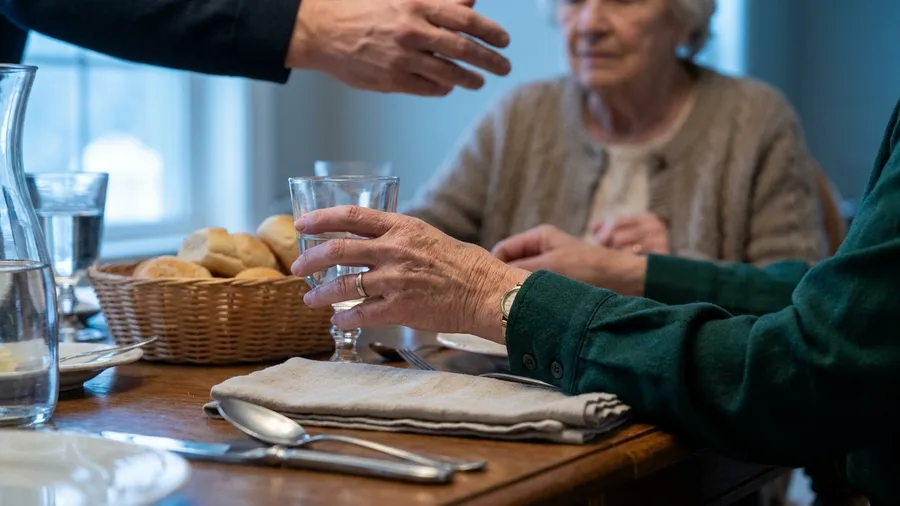
I got this one wrong for years. I used to hear a couple fight about his mother and assume the problem was the mother — push the pair toward setting a boundary, and the rest would follow.
One couple I saw never had a single fight about money across two decades. His mother was the whole war. The outside pressure is what split the team, not the budget.
Here is the tell I learned to watch for. When she is in the room with the family, does he stand beside you out loud — or does he work the deal behind your back and hand you the result when you get home? The second one is not compromise. Over ten years I watched couples quietly cut separate deals with the relatives, the money, the holidays, until there was no team left to negotiate for.
Two people can disagree hard at home and still walk out the door as one unit. The loyalty is in public. The argument can stay in the kitchen.
💡 Tip: The partner who defends you in public, even when they disagree with you privately, is the one worth keeping. Those are different questions.
9. Their five-year pictures overlap somewhere

"We just want different things." I heard that in the first session more times than I can count, usually delivered like a diagnosis. What matters is not whether your wants match. It is whether they intersect anywhere.
The couple facing the Florida retirement on one side and the grandchildren two states away on the other had a real problem. The ones who worked it out had at least one piece of ground they both actually stood on — where they would live, whether there was a child, whose parents got the holidays.
The test I used was simple. Can you each say, in plain words, what the other one wants? Then: can you point to one place the two of you overlap? Careers that went in different directions and hobbies that never once touched were fine as long as that one place existed. The trouble was not difference. It was two people with no shared piece of ground at all.
💡 Tip: What overlap looks like in concrete terms: where you live, whether there is a child, whose parents get the holidays.
The Numbers Behind the Signs
From my practice, not a study
10. They treat it as upkeep, not an audit

A shared piece of ground is not something you find once and then own. It holds only while somebody keeps walking back out onto it, week after week, and that maintenance is the whole difference I am after here.
The costliest thing I watched was rarely neglect. It was the review – a running assessment in which an ordinary Tuesday night, dishes done, television on, nobody saying much, gets entered as evidence for or against the entire relationship, and the verdict is due by morning. I saw partners run that on themselves for years and never once say it out loud to the person sitting beside them.
Upkeep looked far less impressive than repair. A standing walk every Sunday morning, whatever the weather. Ten minutes on the back steps after the kids were finally down. One weekend away each year that got booked in February and protected. None of it was memorable. All of it repeated, and the repeating was the point, because it kept the shared ground from quietly going back to weeds.
The distinction that mattered in the room was what people did with an ordinary week. Under an audit, a bad Thursday meant something was wrong with them. Under upkeep, a bad Thursday was a Thursday, and the response was to show up on Sunday for the walk anyway, or to notice the ten minutes had not happened for a month and start it again.
If you have been keeping the ledger, here is where I would start. Write down the signs that are already solid between you, because people running an audit rarely count those. Then circle the one absence that matches your situation and is buildable in a week rather than a year, and do that single thing before it becomes another item you are grading yourself against. The question moves, in other words, from whether you are going to make it to what you are going to maintain this week, which is the only one either of you can act on.
The honest limit I owe you: I watched couples with every one of these signs present still end, and couples missing half the list stay married forty years. So treat upkeep as a habit you can choose, not a policy that pays out. I would say I got this wrong more than once over 35 years by reading steadiness as proof, which is exactly the error the audit makes in the other direction.
💡 Tip: Pick a single absence. Build it this week. The audit stops when the upkeep starts.
Frequently Asked Questions
Is fighting a lot a sign the relationship is doomed?
No. The couples who lasted fought plenty, sometimes every week for decades. What mattered was how fast they came back and whether the fight stayed about the thing it started as. Volume is not the signal; repair and scope are.
What if only one of us will do the work?
In my practice the couples who made it had both partners doing something between sessions, even if one was less enthusiastic at the start. Uneven enthusiasm is normal. One person doing all of it is not a relationship; it is a solo project with a witness.
Do separate accounts or friends mean we're drifting apart?
No. Every long-married couple I respected had separate territory of some kind. The rule was that the other partner knew about it. Separate is fine. Hidden is what breaks trust, and over five years the surveillance couples I saw turned trust into policing.
We want different things long-term. Is that fatal?
Only if there is no shared ground. Can each of you say what the other wants, and name one place the two overlap? If you can, the difference is a problem to be solved. If not, it is a different conversation.
How do I stop constantly assessing whether we will make it?
Move from audit to upkeep. The nightly review where every ordinary Tuesday becomes evidence is exhausting and changes nothing. Pick one weekly habit you can maintain and do that instead. The question shifts from 'are we going to make it?' to 'what can we maintain this week?' That one you can answer tonight.
Pick One Sign Before Bed
The verdict is plain: this list is diagnostic, not destiny. I watched some couples with every sign present end anyway, and some missing half of it stay forty years. What the ten signs give you is something to aim at, not a forecast.
You came in counting fights. The count was the wrong gauge, and 35 years and about 1,100 couples is where I learned that, including the pair who argued weekly for 34 years and stayed, and the quiet pair who split in year nine. Mark the signs already solid. Circle the one absence that fits. Then do one thing this week under that absence.
If repair is missing, set the kitchen timer for ten minutes after the next fight and end the silence with a cup of tea. If it is another sign, keep the same rule: one week, one sign, one act. This is what one counselor watched for in a Denver suburb, not a promise. The question worth carrying is not whether you will make it. It is which habit you can build this week.
Name Your One Absence
Go back through the ten signs and pick the one that is missing in your relationship right now. Then choose a single thing you can start this week.

