

Pushing a single grocery cart past the cereal aisle on a Tuesday morning forces a sudden, strange calculation. I stood there staring at two brands of bran flakes, realizing I no longer needed to buy the box he preferred. Two years ago, at age 63, I finalized a divorce that dismantled 38 years of marriage.
The ink on the paperwork does not prepare you for the silence.
Initiating a gray divorce means breaking down a four-bedroom life and splitting a carefully built retirement exactly down the middle. This is what the process actually demands.
At a Glance
The Emotional Untangling
Dividing physical assets requires basic math, but dividing a shared emotional history demands an entirely different endurance. When you have spent the majority of your adult life building a 'we', returning to 'I' feels like stepping off a ledge. The grief arrives regardless of who asked for the separation.
Relief and devastation occupy the exact same room.
1. Grief Hits Hard Even If You Wanted Out

Thinking that initiating the split protects you from the heartbreak is a mistake. At 63, I assumed my certainty would spare me from weeping over the retirement map we drew up over 38 years.
The misread is believing that crying over your old four-bedroom house means you want the marriage back. You are grieving the fantasy of aging peacefully on that porch, not missing the exhausting daily reality indoors. A sudden ache hits when imagining future milestones, knowing I will hold any future grandchild as a separated parent.
Absolute relief and heavy sorrow can share the same kitchen table.
The Emotional Reality
2. Adult Children Will Need Strict Boundaries
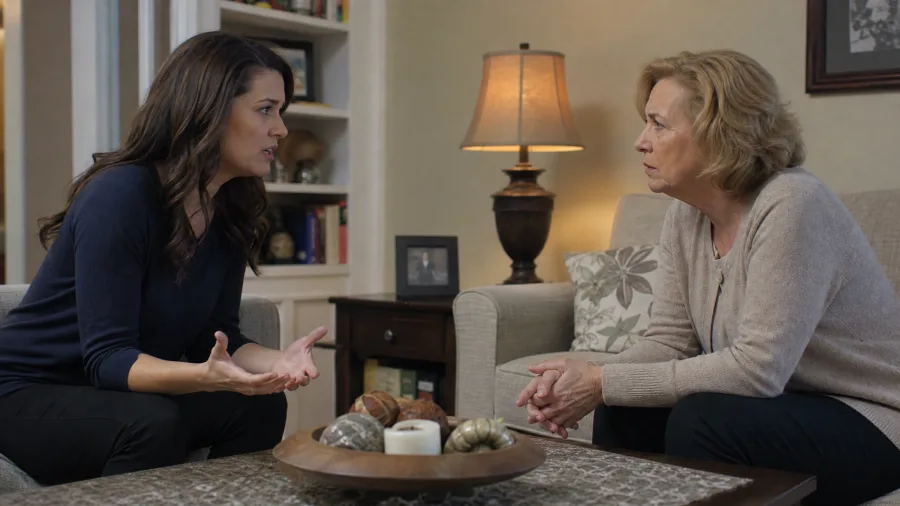
Processing my own heavy sadness immediately collided with the shockwaves hitting my children. I assumed that because they were 34 and 31, I could lean on them and explain exactly why the marriage failed. I sat them down at the kitchen table and started detailing my resentments, expecting adult understanding, but I just watched two independent professionals shatter.
Their adult independence could not absorb this foundational fracture. My guilt over selling the family home and erasing their holiday anchor was heavy enough without forcing them into the middle of the split.
I refused to share another private marital detail or criticize him. Pushing them to maintain an independent relationship with their father is a strict boundary that keeps our parent-child roles intact. It is the only way to stop them from picking a side.
⚠️ COMMON MISTAKE
Treating Adult Kids as Confidants
Leaning on your 30-something children for emotional support forces them to referee their parents' failures. Keep your specific marital grievances exclusively for your own friends and legal counsel.
3. Relearning 'I' After Decades of 'We' Is Exhausting

Shielding your grown children from the fallout takes immense energy, but the heaviest exhaustion hits when you are left alone to meet yourself again. When you share a life from age twenty-five to sixty-three, every personal preference gets quietly sanded down into a mutual compromise until your individual identity simply vanishes.
I froze during my first solo supermarket run. I had bought dark roast for nearly four decades because my ex drank it, leaving me entirely clueless about my own tastes.
Choosing a Tuesday night broadcast without negotiating the channel or asking permission creates a bizarre whiplash between absolute liberty and quiet dread.
You must consciously unearth who you were before the wedding. I enrolled in a Saturday watercolor workshop to revive a creative outlet I dropped decades ago. When people ask what brings you in, use this exact line: "I am remembering how to do something just for me, and I am starting with this." It answers the question without oversharing.
💡 Tip: Reclaiming your space includes buying the specific coffee brand you prefer, regardless of cost.
🗓️ The First Month of Independence
Week 1
Move into the rented 2-bedroom apartment and unpack only the essentials for daily living.
Week 2
Establish a completely new morning routine that does not account for another person's schedule.
Week 3
Identify one old hobby abandoned during the marriage and purchase the basic supplies.
Week 4
Spend a full weekend making every single choice, from meals to television, entirely alone.
The Social and Practical Realities
Dividing a household means cutting ties with more than just a spouse. The external scaffolding of a 38-year marriage includes shared friendships, a carefully maintained home, and intertwined finances. Untangling this web is a brutally practical undertaking that forces you to measure exactly what you can afford to keep.
Moving from a familiar four-bedroom sanctuary to a rented space on a halved income is a shock to the system. The reality of single life demands strict accounting and a thick skin.
4. Your Social Circle Will Drastically Shrink

Four-person group dynamics do not survive the extraction of a single variable. Just as I started the exhausting internal work of relearning my individual preferences in that rented apartment, the external social reality made it painfully clear that our old joint friendships were not going to survive this split intact.
Friends accumulated over thirty-eight years of shared marital history quietly begin to drift away the moment you no longer fit neatly at a coupled dinner table. The routine weekend dinner party invitations simply cease.
It is rarely a malicious exclusion, but longtime couple-friends immediately struggle with the altered geometry of a suddenly odd-numbered room. Realizing that several long-standing connections depended entirely on the effortless convenience of double-dating brings a sharp, specific disappointment. You discover that people you considered closest allies were actually just fans of the unit you formed.
The silence on Friday nights becomes a heavy, undeniable physical presence.
The immediate impulse is to send a defensive text demanding loyalty. Handing old friends an ultimatum like, "I noticed I am not invited anymore," is a script that buys only reluctant pity invitations.
Releasing these drifting friends gracefully, without forcing a confrontation about their sudden absence, is the only practical move. Let the old social circle shrink naturally and accept the disappointment. You will need every ounce of that preserved emotional energy to build a completely new network of people who actually want to know the solo version of you.
Social Shifts to Expect
5. Selling the Family Home Is the Hardest Step

You stand in a quiet hallway holding packing tape, looking at bare floorboards where guests once gathered. As social ties fade, you are left alone with four walls of memories.
Packing up four bedrooms after thirty-eight years hurts far deeper than sitting in a lawyer's office. Opening dusty plastic bins to sort through hand-labeled photo albums, fragile glass holiday ornaments, and old baby clothes turns simple packing into a painful, item-by-item audit of everything you built together.
The deepest grief lives inside those cardboard boxes.
Walking through stripped, echoing rooms alters your perspective completely, shifting the house from a safe family shelter into a hollow display of a closed chapter. When I finally surrendered the heavy brass keys to our realtor on moving day, the quiet click of the door closing brought a sudden finality no court order ever produced.
Closing that door cost my long-held comfort, but it purchased the clean slate I needed to begin building a quiet, independent life.
The Downsizing Timeline
6. Financial Independence Requires a Drastic Budget Check

Well-meaning professionals often advise treating the division of marital assets as a straightforward, emotionless business transaction. In reality, watching 38 years of joint retirement accounts and a hard-earned pension get split exactly 50/50 feels like a terrifying freefall. Emptying out the physical house forced an immediate confrontation with the remaining math.
Downsizing from the 4-bedroom family home into a rented 2-bedroom apartment meant I had to adapt instantly to a single fixed income. That sudden reality creates immediate, suffocating financial anxiety.
You can test your readiness for this exact shock right now. Ask yourself: do you know the precise dollar amount it takes to keep yourself housed, fed, and insured for the next thirty days? If you have to guess, you are relying on a momentum that divorce will instantly destroy.
If you can state the exact figure without checking your accounts, you already hold the absolute baseline for your survival. Knowing your monthly burn rate allows you to make strictly rational decisions.
I built a strict personal budget and began tracking every single expense, from the new apartment rent down to my grocery receipts. Confronting those hard numbers on a spreadsheet was the only thing that finally eliminated my persistent fear of sliding into elder poverty.
After decades of joint financial management, directing my own money became the ultimate proof of my autonomy. Managing all my personal finances independently yielded a lasting, unexpected sense of empowerment.
The Cost of Untangling
7. The Legal Process Will Test Your Sanity

"Get a shark and make him pay for what he put you through." Friends offer this aggressive advice instantly when a decades-long marriage collapses, but fighting for vindication will actively destroy the independent financial baseline you just finished securing. The instinct to punish an ex-spouse feels entirely justified, yet it is a catastrophic financial mistake.
A family lawyer is not an expensive stand-in for a therapist.
My own legal untangling took 14 agonizing months and cost roughly $18,000 in total legal and mediation fees. Using lawyers to litigate emotional grievances rapidly depletes the precious remaining retirement assets you just split fifty-fifty, and it does so without ever providing the genuine emotional closure you actually want at the end of the day.
You must approach the mediation table strictly as a cold financial business transaction. Removing your shared history from the math is the only proven way to preserve your remaining assets and your personal sanity.
Mediation Reality Check
Moving Forward
Once the 4-bedroom house is sold, the $18,000 in legal fees are paid, and the boxes are unpacked in your new apartment, the crisis phase officially ends. What remains is a vast, open stretch of time that belongs entirely to you. Rebuilding a fulfilling life at 65 requires deliberate, often uncomfortable effort.
You cannot rely on the momentum of a shared routine anymore. Forging this new chapter means actively stepping out of the quiet apartment to find your people.
8. Making New Friends in Your Sixties Is Mandatory

I started asking strangers for coffee.
Sociologists studying later-life transitions consistently note that isolation is the heaviest risk after a gray divorce, and waiting to be invited into existing circles rarely works. Rebuilding my network at 65 required deliberate action, like joining a community walking club to establish a predictable routine alongside active peers.
Handing out my number to new acquaintances felt exactly like the sweaty-palmed friend-dating of middle school. Yet, finding other single women in their sixties became my truest defense against the silent apartment.
9. You Must Forgive Yourself for the 'Lost' Years

Staring at my reflection in the new apartment's bathroom mirror, I fell into the trap of calculating the decades I 'wasted' by not leaving at forty. Engaging in the mental loop of believing I threw away 38 years produces entirely useless regret that only poisons my current freedom.
You did not waste your life.
The exception to the rule of looking forward is looking back strictly to grant yourself grace. Staying in the marriage until age 63 was a deliberate choice made using the emotional tools and family priorities available at the time. Reframing the 38-year marriage as a completed chapter that produced my 34- and 31-year-old children entirely removes the label of failure.
10. The Quiet Eventually Becomes Your Greatest Comfort

"I could never live entirely alone at my age." That assumption costs older women their chance at genuine autonomy because they fear the immediate absence of noise. The initial night alone in the rented 2-bedroom apartment brought a terrifying, deafening silence that felt like a physical weight.
The quiet demands that you sit with yourself, spending the mental energy you used to burn managing a spouse's moods. It is jarring at first.
Two years after legal finalization at age 65, that same silence represents absolute peace and control. Waking up each morning with the entire day belonging strictly to personal choice brings profound daily comfort. Nobody is judging your schedule, your breakfast, or your television volume.
Choosing to remain outside the dating pool in favor of a peaceful solo life is a valid, deeply satisfying outcome. The quiet you once feared becomes the luxury you refuse to give up.
Frequently Asked Questions
Is it normal to grieve deeply even if I filed for the divorce?
Yes. Initiating the divorce at age 63 does not bypass the mourning process. You are grieving the loss of a 38-year shared history and a planned future, which exists alongside the relief of leaving an unfulfilling marriage.
How should I handle my adult children's anger over the split?
Maintain a strict boundary and refuse to discuss marital details or criticize your ex-spouse. Encourage the 34- and 31-year-olds to maintain an independent relationship with their father so they do not feel forced to take sides.
Will I be financially ruined by a gray divorce?
While splitting 38 years of retirement assets 50/50 causes immediate anxiety, it is manageable through strict accounting. Downsizing to a rented apartment and tracking expenses rigorously on a single fixed income prevents elder poverty and builds true empowerment.
Why do mutual couple-friends disappear after the divorce?
Four-person group dynamics rely on couple-centric socializing, and many friends do not know how to seamlessly include a single person. Releasing those friendships without anger allows you to focus on building a new circle with active, independent peers.
Do I have to start dating again to be happy in my sixties?
Absolutely not. Many women find that after shedding a 38-year marriage, remaining outside the dating pool is a deeply satisfying choice. Waking up in a peaceful, quiet apartment on your own terms often becomes your greatest comfort.
The Freedom Waiting on the Other Side of the Boxes
Surviving a gray divorce requires dismantling the architecture of a 38-year shared past to claim absolute psychological independence. The first year is an exhausting marathon of dividing assets, managing family dynamics, and absorbing the shock of a halved income in a rented two-bedroom space.
However, pushing through the $18,000 legal ordeal and the quiet nights alone eventually yields a magnificent reward. You earn an authentic, peaceful final chapter written entirely on your own terms.
Review Your Financial Grounding
Scroll up to the strict budget check in step six. Knowing your exact monthly expenses is the fastest route to feeling secure in your new solo chapter.