

Getting this wrong is not dramatic; it is quiet and expensive. You spend years as two people coordinating a household, and the affection you thought was permanent quietly becomes administration. Nobody fights. The calendar on the counter just fills up, the chores get divided, and the phone at the door gets checked before anyone looks up.
Affection in a long marriage rarely dies in a single blowup. It thins, one logistics-only exchange at a time, until you are passing each other in the hallway like coworkers who share a fridge.
What rebuilds it is not a second honeymoon or one big talk. It is small signals attached to moments you already have: the doorway, the counter, the car, the group text. Each costs seconds or a single sentence, and none needs a sitter.
So here are nine low-cost habits, each with a note on when it fits and when it does not. Pick the one that matches your weakest spot, run it for a week, and only add a second once the first feels ordinary. If contempt or a refusal to repair keeps showing up, that is a reason to bring in a professional, not another habit.
Quick Tips Before You Start
Pick one, not nine
Choose a single habit and run it for seven days before adding another.
Say the script out loud
Rehearse the exact words once so they do not sound like a hostage negotiation.
Attach it to a fixed moment
Link the habit to something that already happens daily — coffee, the doorway, dishes.
No scorekeeping
If you catch yourself tallying who did it last, you have already left the habit.
Make it boring
A habit that feels ordinary by day five is working; one that still feels like a performance is not.
1. A real hello and goodbye
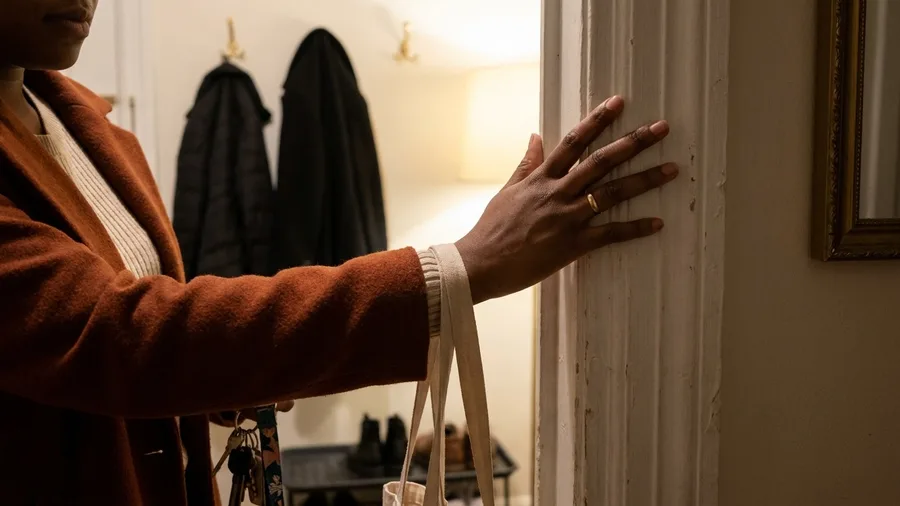
" is asked from the hallway, over a shoulder, while a bag slides off and a phone lights up with six notifications. The words are right and nothing lands.
A real hello is a pause. Stop the task, turn, make eye contact, and say the name or a plain warm line before the bills, the kids, or the supper take the room. The doorway is where the day's tone gets set, and thirty seconds there does more than an hour later once everyone is spent. The goodbye gets the same treatment: a brief stop at the door, not a call from the car and not a wave in the direction of a screen.
If the schedules do not cross, the threshold moves. A text that reads "thinking of you, home at 6" or a note left by the kettle gives the same signal on mornings and evenings that never share a doorway. It costs seconds, needs no talk about the marriage, and it only counts if it survives an ordinary Tuesday.
💡 Tip: If mornings are chaos, put a sticky note on the coffee tin the night before: 'Saw you. Have a good one.'
🌱 GROWING TIP
Start with the doorway you already use
Do not invent a new ritual. Use the exit you already have — the front door, the garage, the school run. The habit attaches to the moment, not the location.
2. One non-logistics question a day

A daily question with no practical answer keeps the other person visible. Most couples talk constantly and learn nothing new: who is picking up, what the bill came to, whether Thursday works. Curiosity about who the partner is now gets no slot at all, and after enough years the silence starts to look like distance.
Here is a ten-second self-test. When did you last ask your partner something you did not already know the answer to, that had no bearing on the schedule? If something comes to mind from this week, you are already doing it and the habit is simply to protect it. If the honest answer is that you cannot remember, that is the gap, and it is ordinary rather than alarming.
The fix is one question a day that cannot be answered yes or no, or with a date. "What smell takes you back?" "What changed your mind this year?" Those are about memory, feeling, opinion, and they cannot be disposed of in one word. The listening rule matters more than the question: no fixing, no counter-argument, one follow-up. A few minutes at the counter or in the car park does it.
Do not turn it into a nightly summit. If it needs a cleared evening and a sitter, it will not last the week, and a habit that dies in seven days teaches you the wrong lesson about the marriage.
The place to attach it is a window you already have, the ten minutes before the commute, the kettle boiling, the drive to the school, much like a morning routine. Same question, same slot, until neither of you has to decide to be curious.
Same Slot, Two Different Questions
The one-word answers
- Yes or no, done in a second
- Rules out a follow-up
- No slot for a second daily ask
- Ask this and the habit dies by Friday
The answers that stretch
- Memories – and the ones they don't bring up
- Feelings – the day's, not the month's
- Opinions – where a follow-up actually goes
- Nothing to fix, so listen and stop there
3. Touch that is not a prelude

Your hand lands on their shoulder at the sink and they go still, reading it as an opening bid. So you stop reaching, and the small contact thins out until a whole week passes with none.
The standard advice is to keep the spark alive, which in practice means touch keeps arriving loaded. The opposite works better: separate warmth from negotiation on purpose. A stated "affection only tonight," a hand squeeze with nothing behind it, a brief hug at the door, sitting close on the sofa. Say which is which out loud instead of leaving each partner to guess from a mood.
Where touch has gone loaded, start low and ask. "Is a hug okay?" is a better move than reading the room and getting it wrong. It fits if it stays light and repeatable, and it fails the moment it needs arranging.
💡 Tip: Use a two-word check: 'Just this?' — it gives the other person an easy yes or no.
4. A spoken thank-you for invisible work

Count the things you did last week that nobody thanked you for. The school form signed before the deadline, the dental appointments juggled, the lunches made on a morning you were already late, the call to your partner's mother because someone had to. Thirty small saves, maybe more, and not one of them shows up anywhere visible.
That is the shape invisible work takes. None of it looks like labor because the whole point is that it runs in the background, and the resentment builds precisely because there is no line on any list where this shows up. So say the thanks out loud, and be specific: "Thanks for remembering the school form. It kept Thursday from falling apart." Naming the task and what it saved is the difference between being seen and being patted on the head.
There is one rule and it is strict. The thanks cannot be a setup. "Thanks for the dishes, you forgot the trash" is a complaint wearing a thank-you's clothes, and the person on the receiving end hears only the second half. One sentence, clean, no scoreboard.
And trade off who is doing the noticing. One of you takes household tasks this week, the other watches for the logistical and emotional labor the week after, so a single partner is not the permanent gratitude monitor. It costs a sentence. Over a year of small, clean recognitions, it keeps the invisible ledger from turning into the argument you have in your head at 11 p.m.
Thank-You That Lands — At a Glance
🎯 Specific task
Name it
🔄 Effect
Say what it saved
⏱️ Length
One sentence
🚫 Never add
A complaint
🔁 Rotation
Alternate weeks
The test
If the thanks could be pasted onto any task, it is too generic to land.
5. A fast repair after a sharp reply

The danger after a sharp reply is not the sharpness. It is the four hours of silence that follow, or the two days of waiting for a proper apology, during which the snapped sentence hardens into the whole story of the argument. Small ruptures become formal grievances mostly because nobody moves first.
So agree, on an ordinary evening, on words you will both use in the moment. "That came out sharper than I meant." Or "Ouch. Give me a minute." Short enough to say mid-fight, when neither of you has anything graceful left in the tank.
Then split the two things that were tangled together. Apologize now for the tone. Put the actual disagreement on the calendar for later, at a stated time, so the repair is not held hostage to winning the whole argument first. The tone gets fixed in seconds. The subject gets its hour on Thursday.
This fits couples who escalate fast and cool fast. It is worth saying plainly that a quick apology for tone is not a way to keep the peace while the same contempt gets repeated week after week. Persistent contempt, or a partner who will not repair at all, is a signal to bring in a professional rather than add another habit to the list.
💡 Tip: The repair line must be short enough to say while your jaw is still tight. If it needs a preamble, it is too long.
The Repair Window in Numbers
6. A private shorthand only you two use

The ones that used to run through a whole dinner without either of you explaining them. They did not leave in a fight. They got buried under school forms and whose turn it is to drive, one unremarkable year at a time.
What most people assume is that the private language was a symptom of early romance, something that fades because the novelty does. What it actually was, and is, is a signal: one word that says we are on the same side and nobody else is in on it. That signal does not require youth or free time. It requires one token, used on purpose.
Pick something specific. The phrase that came out of the night the lasagna burned in the first apartment. A nickname from a trip. A look across a room that means get me out of this conversation. Then use it where it counts, at a family dinner when your partner's uncle starts on politics, and one glance carries: I am with you, we can leave soon, no explanation owed to anyone.
The safety check is the whole thing. The joke cannot be at your partner's expense. If it lands as a jab, even one that got laughs for years, retire it. A private shorthand that stings is not a private shorthand; it is an old insult with sentimental wrapping.
Used well, it costs nothing and does a specific job: an ordinary social moment becomes a reminder that the two of you are a unit. A small private culture, built one phrase at a time, is what stays standing when the logistics press in.
⚠️ COMMON MISTAKE
Private jokes can turn into private jabs
If one of you flinches when the phrase comes out, it has stopped being shorthand and become a weapon. Retire it that day, not next month.
7. A short daily check-in with no agenda
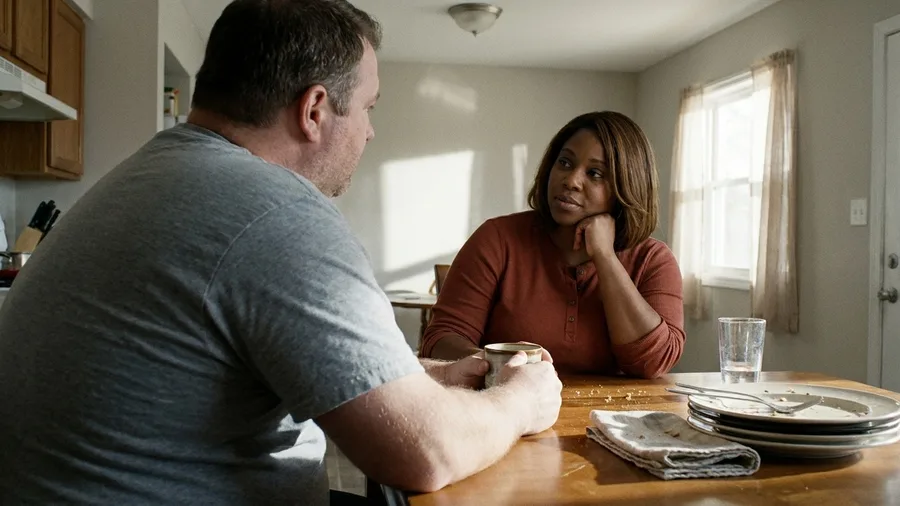
The standard advice for a marriage running on fumes is a weekly date night, a sitter, a table with a candle on it, and the plan collapses by the third week. What researchers who study close relationships keep finding is less cinematic: what holds couples together is the frequency of small, low-stakes contact, not the size of a single planned event.
A private shorthand gives you a signal to use in passing, but it won't hold up through a stretch when the two of you are mostly handing each other logistics. The fix is a slot short enough that a bad week can't kill it. Ten minutes after the dishes, or coffee before one of you leaves, and three prompts: one thing that went okay, one thing that was hard, one thing you need. A few minutes each, not a performance review.
Keep a rule on top of it: no fixing anything unless your partner asks you to fix it. The slot is short, it's fixed, and it repeats, or it doesn't count.
💡 Tip: Set a phone alarm labeled 'check-in' so it does not rely on memory. The alarm is not romantic, but it works.
🗓️ Your First Week of the Check-In
Pick the slot
Choose ten minutes that already exist — after dishes or before the commute.
Set an alarm
Label it 'check-in' so it does not depend on remembering.
Ask the three prompts
One okay thing, one hard thing, one thing needed.
Listen only
No fixing, no rebuttal, one follow-up question at most.
End on time
Stopping at ten minutes keeps the habit from becoming a summit.
8. Praise in front of other people

Two couples at the same table, and both wives mention the same thing: the only compliments they hear arrive when the two of them are alone, in a car, at ten at night. In company the reports change shape. The dishwasher repair gets aired. The way someone retold a story at lunch gets corrected in front of the guests. It takes about one dinner to notice the pattern, because it is not hidden; it is simply not heard by the people doing it.
A specific line changes what the room hears. Not "you look nice" but the sentence that names something true and recent: that the person on your left stayed calm on the phone for forty minutes while the plumber cancelled twice, or kept the family calendar moving through a week that should have broken it. One sentence, said out loud, with four people listening. It is the cheapest thing on this list and the hardest to say without sounding like a toast.
Two conditions keep it from curdling. Find out first whether the praise is welcome; a partner who dislikes being the centre of attention can be told it quietly in front of one person, or the sentence can be aimed at effort rather than the person. And it must be true. A compliment in public cannot cover a private habit of sharpness, and if that habit is the daily pattern, the work is professional help, not a better line at dinner.
Praise in public, correct in private, and never confuse the two.
— The rule couples counselors repeat
9. A small thing to look forward to

Fifty-one weeks a year, and most couples have nothing on the calendar they're both looking forward to. Everything is booked, birthdays and the summer trip, but the ordinary week between them sits flat, and a marriage that only anticipates the big things goes dormant the rest of the time.
Praise in front of other people gives the relationship a present tense worth noticing. It doesn't give it a future. Noticing that makes the next bit obvious: the weeks need one shared moment ahead of them, and the moment needs to be close enough to feel real. Within the next week or two. A walk Thursday evening, a new recipe on Sunday with one episode after, coffee in the park before the errands. Nothing you'd call a date and nothing you'd have to dress for.
Put it where you can both see it. A square on the calendar, a note on the fridge, a reminder in the phone. If neither of you can tell whether it survived the week, it usually hasn't.
The size is the whole point, and this is where most couples get it backwards. The bigger the plan, the more it costs in cleaning and sitters and coordination, and the more likely it stops after one go. Keep it small enough to repeat, and it becomes something the two of you are quietly moving toward all week.
💡 Tip: The best plan is the one you can do again next week without groaning.
Frequently Asked Questions
How long before one of these habits feels natural?
Most couples notice it feels less forced by day five or six. If it still feels like a performance after two weeks, the habit is probably too big — shrink it until it is almost boring.
What if my partner refuses to try any of these?
Start with one that does not require their participation — a thank-you or a public praise. Habits are contagious when they land as genuine. If refusal is part of a wider pattern of contempt, that is a reason to seek professional help, not to try harder.
Do we need to do all nine?
No. Pick the one that matches your weakest point and run it for a week. Add a second only after the first feels ordinary.
What if we have different schedules and barely overlap?
Use the text version of the arrival ritual — 'Thinking of you; home at 6' — and put the check-in on a phone alarm. The habit attaches to a moment, not a shared room.
Is it too late if we have been distant for years?
Small habits can still shift the daily tone. But if there is persistent contempt or a refusal to repair after sharp words, the next step is a couples therapist, not another list.
Pick the Weakest Spot, Then Give It Seven Days
Pick the one habit that matches your weakest point, whether that is arrival and departure, conversation, touch, recognition, repair, play, scheduling, public voice, or anticipation, and give it a one-week trial. Add a second only after the first feels ordinary. And if contempt or a refusal to repair keeps showing up, treat that as a sign to get professional help rather than another habit on the list.
Go back to the doorway. The phone is still lighting up, the calendar is still on the counter, and the conversation is still mostly logistics. Affection restarts at the next hello, the next question with no practical answer, the next thank-you, the next fast repair, the next private phrase, the next check-in, the next compliment in front of other people, the next small plan.
None of those is a grand gesture. That is the point. Repeat one small ordinary signal until it is expected, and affection stops being an event you schedule and becomes the way an ordinary Tuesday works.
Choose your one habit now
Pick the habit that matches your weakest spot, say the exact words out loud once, and put a reminder where you will see it tomorrow morning.