
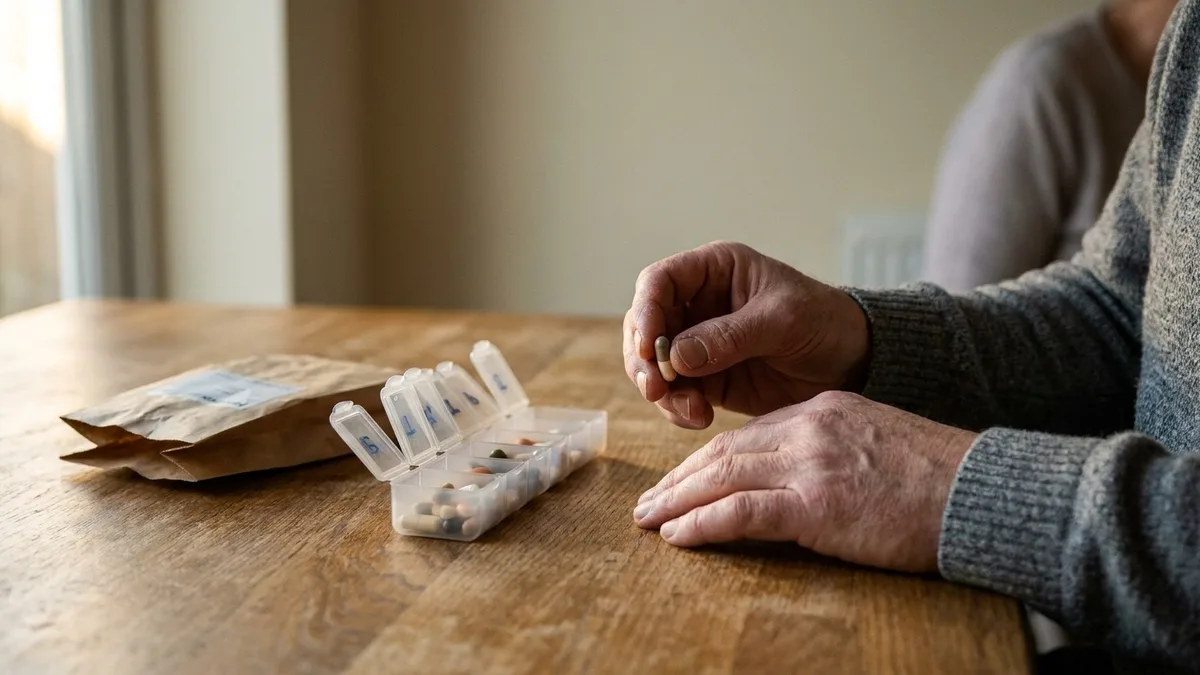
A serious diagnosis reads as a medical event, and the assumption is that the marriage absorbs it and life resumes around the treatment schedule. It does not absorb it. It redistributes it, and the redistribution starts before anyone has finished the first round of appointments.
You come home from the calls and the pharmacy pickup, a friend has not written back in three weeks, and a private suspicion starts to form: the exhaustion means we are failing, the no means rejection, the silence means the friendships are gone. The illness is not only medical. It enters the marriage as unpaid coordination, lost final say, weekly money tension, altered desire, postponed health, social triage, and a calendar cut down to the next scan.
None of that is proof of a bad marriage. These are predictable responses to load, control, energy, and grief, and the damage comes when they stay unnamed until they harden into distance. Over the next ten sections you will learn to see each change while it is still soft, ask for specific help instead of general help, and start one weekly ten-minute check-in with one recurring task handed off for good.
That is the whole premise: the shifts are coming either way, and naming them early is what turns a default burden into an agreement you actually chose.
Quick Tips Before You Start
Write the load down
List every task out loud before assigning it. Unnamed work is what turns into resentment.
Name needs, not hints
Say the concrete thing – 'I need Thursday's ride covered' – instead of waiting to be noticed.
Same slot each week
Pick one fixed time for the money talk and the check-in. Ambush conversations go badly.
Ask before managing
'Would you like help with this, or would you rather decide?' keeps decisions where they belong.
Protect one hour
The caregiver's sleep and food are equipment, not luxuries. Put them on the calendar.
Practical care and control
The first changes are not emotional. They are logistical, and they arrive in the first few weeks while everyone is still being brave and agreeable.
This is where a marriage quietly changes shape. A workload gets assigned by accident, and a person who used to make their own decisions becomes someone decisions get made for. Both shifts are easier to name now than to undo in a year.
1. The well partner picks up a second unpaid job

It is 7:40 on a Tuesday and you are on hold with the insurance company, the pharmacy closes in twenty minutes, and your partner is asleep in the next room. You have not sat down since you got home from your own job.
This is the second unpaid job, and it is almost entirely administrative. Scheduling, insurance calls, pharmacy runs, the symptom note on your phone, the disability forms, the parking validation, the question of who eats what on Thursday. None of it is heavy alone, and together it is a part-time position with no hours and no pay.
What the people who study caregiving keep finding is that this coordination, not the hands-on tasks, is what wears partners down first. The fatigue comes from vigilance and logistics, not from loving less or being weak. You are on duty before every appointment and after it; the visit is one hour, the coordination around it is the week.
The fix is to make the work visible on one page. Four columns: the task, who does it now, how often it recurs, and what can be handed off, read through together, with a name and a date against each handoff. The first shift tends to be the pharmacy run, which almost anyone else can do.
💡 Tip: Add a fifth column for 'who to call when this goes wrong' – the billing office, the pharmacy, the clinic nurse line. That is the column people hunt for at the worst moment.
How Default Absorption Happens
Run the load list as soon as the second step appears, not after the tenth.
2. The ill partner loses the final say
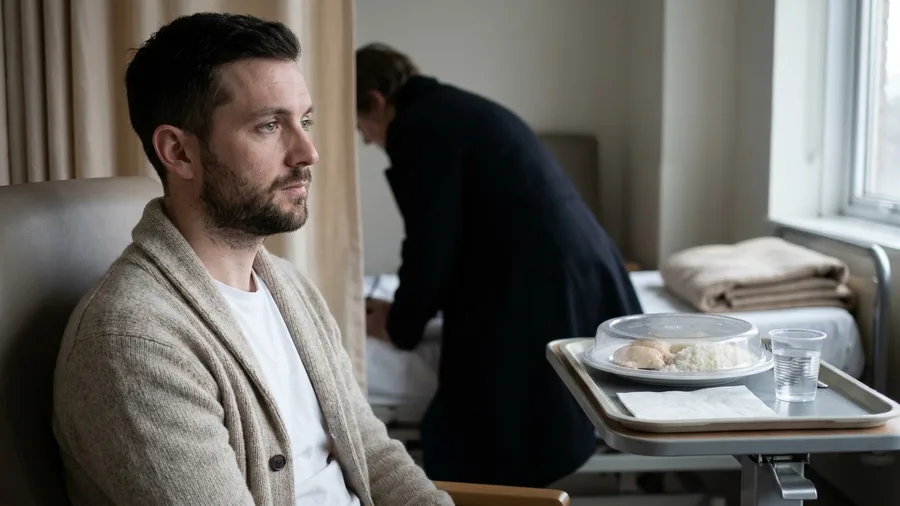
There are four small decisions in any given week that used to be yours alone: what gets cooked, who comes to the door, when you rest, when you are seen. Watch how fast all four migrate to the person who just became good at organizing.
It rarely looks like a takeover. It looks like care. Meals are made bland because treatment makes everything taste wrong and no one asks what you can still taste. Visitors are screened for quiet. Rest gets scheduled for you. Every act is framed as protection, and your preferences quietly drop off the list.
The distinction worth keeping is between executing a request and choosing the outcome. Can I call the pharmacy is help. I told your sister not to visit is not. Before booking, inviting, canceling, or rearranging anything, the question to ask out loud is whether you want help managing this or help carrying it out, because consent has to be explicit now, not assumed.
Skip that and the marriage quietly redraws itself into caregiver and patient. The patient stops deciding, and then either leans harder on the caregiver or starts to resent the very competence that was meant to spare them.
⚠️ COMMON MISTAKE
Do not rehearse the conversation
Couples often plan the hard talk for weeks and then deliver a speech. Skip the speech. Say the one sentence, name the one need, and let your partner answer in their own time.
3. Money talks move from yearly to weekly

You stop having one large yearly talk and start having a small weekly one.
The budget itself has changed shape, the same way the calendar did. Co-pays at every visit, parking, home help, and a stretch of missed work push new costs in while income may be going the other way, and then the explanation-of-benefit forms and the billing errors arrive, each needing a call that cannot wait. Money becomes a weekly fact instead of a yearly plan.
What the reader thinks the growing silence signals is a larger problem being hidden. What it usually signals is that no one has named a time to talk, so bills slide onto autopay, the card balance climbs, one partner finds a cost months late and the resentment attaches to the secrecy as much as to the figure. A ten-minute check-in on a set day, three questions only (what came in, what went out, what needs deciding), keeps money off the dinner table.
💡 Tip: Never open money at dinner or in the car on the way to an appointment. Give it a day and an hour, or it becomes an ambush.
💡 PRO TIP
Say the sentence, then stop
When you ask your partner what they need, ask it once and let the silence sit. Filling the pause with your own suggestions teaches them that thinking out loud costs them the decision.
Body, energy, and the caregiver
The next two changes are the ones couples are least prepared to say out loud, because one is about sex and the other is about the person who is not sick needing something too.
Both get postponed out of politeness, and both get worse when they are. A body that is being treated is still a body in a marriage, and a caregiver who collapses is no longer a caregiver.
4. Sex becomes a question of energy, not rejection

A partner can want you and still not want sex tonight, and the difference is energy, pain, or what the medication is doing to their body. Nausea, numbness, a body that no longer feels like theirs, the flat fatigue that arrives an hour after dinner, can make sex unappealing while closeness is still wanted. Read that as rejection once and the couple starts protecting themselves against something neither of them intended. You initiate, hear no, stop asking to avoid the humiliation. Your partner reads the silence as disgust and withdraws further, and both of you guard against a refusal nobody meant.
Low-pressure touch keeps contact alive without turning every hand on the back into a test of desire. So does the plain question: "Is touch welcome now, and what kind?" Then the specific answer, whether it is a foot rub on the couch or just lying close.
What the spiral spends over months is the easy physical shorthand a couple had before the diagnosis. Naming energy, pain, and side effects is what separates a body that is depleted from a partner who is done.
5. The caregiver's own health gets postponed until it crashes

The first thing to go is not the marriage but the annual physical. It gets canceled because the appointment lands on an infusion day, and the rescheduling call never gets made. Meals get skipped. Sleep breaks at 2 a.m. with a phone check for a portal message. "Gone" means back pain tolerated for two months, blood pressure that has been moving in the wrong direction, and one afternoon the well partner cannot drive to the appointment because the room will not stay still. Then there are two patients.
Your own body has been the thing quietly postponed, and the obvious advice, put your own oxygen mask on first, tends to land as one more chore. One husband who became a caregiver for his wife describes the hard emotional lessons that strain taught him about long-term love. Here it is not a reward waiting at the end of the list. Sleep, food, and movement are the equipment that makes the appointments, the insurance calls, and the patience possible. A caregiver who is running on four hours does not have the capacity to decide well, comfort well, or keep working well. That is not selfishness; it is the difference between a partner who can show up and one who collapses into the next hospital bed.
So the self-care has to stop being an intention and become a slot on the same calendar as the infusions, with a name attached. Thirty minutes, Tuesday at 7, and the person who covers the evening. A standing call with a friend. A scheduled nap. Small, weekly, non-negotiable.
waiting until the list is finished to rest means waiting forever, because the list does not finish. Rest scheduled around the list is not indulgence; it is what keeps the list moving.
Most people do not need a bigger plan. They need one recurring slot on the calendar and one named person to hold the fort while they sit in it.
💡 Tip: Write your own medication and appointment dates next to your partner's on the same sheet. Anything not on the shared calendar will be the first thing you drop.
Help That Supports vs. Help That Takes Over
Supports autonomy
- 'Can I call the pharmacy for you?'
- 'Your sister asked about visiting – what do you want me to tell her?'
- 'I made the soup. Do you want it or something else?'
- Bringing the options, then waiting for the answer
Replaces it
- Calling the pharmacy and switching the dose without asking
- Telling the sister not to come, then mentioning it later
- Setting the plate down and saying it is what's good for you
- Booking, canceling, and rearranging without a word
Time and the people around you
Outside the house, two clocks start running. The calendar shrinks to the next appointment, and the friendship map redraws itself into people who show up and people who do not.
Both changes are survivable. Both go badly when the couple never agrees on who handles the updates, who gets access, and what the next marker on the calendar is supposed to be.
6. Friends split into helpers, ghosts, and clumsy comforters

"Let me know if you need anything," a friend writes, and then the message sits there for three weeks while the two of you try to figure out what to ask for. By then the friend has moved on to other things, and the offer has quietly expired. Some friends vanish like that, and their absence is not excused by how uncomfortable the illness made them; it just leaves a gap where a person used to be. Others become the ones who actually show up with a casserole, a ride, or an hour of company. And a third group sends a card with a line about how everything happens for a reason, then retreats.
The well partner usually ends up as the gatekeeper of all of it. They are the one filtering updates, answering the texts, deciding which visitors are too much today, running interference so the ill partner does not have to. That filtering is a job, and it costs energy the caregiver did not have to spare, and it can curdle into resentment when the same person making the decisions is also the one who never gets a break. The offer-that-goes-nowhere is where this job gets heaviest, because a vague offer still requires the gatekeeper to convert it into something real.
A specific ask is what turns a vague offer into help. "Can you drive to Thursday's 9 a.m. infusion and stay in the waiting room?" is a request a friend can actually answer, and so is "Can you bring dinner Tuesday by 6?" The friend, the task, the time, the place, all named. That single move takes the decision off the gatekeeper's plate, and it gives the friend a way to help that does not depend on guessing.
The clumsy comforters do not need an argument; give them a task and they often become useful. The ghosts are noted and not chased, which is a decision the two of you make together, because access is something the couple controls, not something friends get to claim. Who hears what, who visits, who gets the update, all of it can be agreed between you before anyone else asks.
The Care Load at a Glance
⏱️ Coordination time
5-15 hrs/week
📞 Typical week
3-6 calls
🧾 Recurring paperwork
Bills and EOBs
🚗 Appointments
2-4 round trips
😴 First thing dropped
Sleep
Watch this
The load is not one big task. It is twenty small ones, which is why it hides and why it needs a written list.
7. The calendar collapses to the next appointment

The advice is to take it one day at a time, to stay in the present, and it holds up right until you notice that neither of you has said the word March out loud in six weeks.
Once the helpers are sorted and the rides assigned, the horizon narrows on its own. The vacation you were pricing quietly stops coming up. Your daughter's spring concert passes because the drive was too long. Someone mentions retirement at a barbecue and you both change the subject, because the next scan is Thursday and Thursday is as far ahead as the calendar reliably goes.
Short horizons protect and shrink at the same time. Staying with the next scan keeps the overwhelm to a manageable size, which is why so many couples land there without deciding to. But a year of next scans adds up to a marriage with no shared direction, and one day one of you says a sentence about next fall and the other goes quiet, because next fall does not feel like a place you are allowed to stand.
Keep one small marker in front of you. A Saturday walk after the next scan, a weekend visit from a friend, a date you save in the phone with a name on it. Nothing ambitious. The marker's job is to be a future the two of you can point at, not a promise the illness has to keep.
Realistic planning leaves room for both outcomes. "If Thursday is stable, Saturday walk; if not, we do it Sunday." What you want to avoid is the trip booked as though the bad week will not come, because those are the plans that end in a cancellation fee and a fight. The line to say out loud is "I want something ahead of us, and it has to survive a bad week," followed by what that would look like. Say it before the calendar fills with nothing but appointments.
The marriage still needs a future it can talk about. It does not have to be a large one.
The emotional reckoning
Everything above creates a bill that comes due later: the workload, the lost decisions, the interrupted bodies, the shrinking calendar.
These last shifts are the ones that decide whether the marriage comes out honest or comes out cold. They are also the ones people are most afraid to raise, because raising them feels like complaining about someone who is already suffering.
8. Resentment grows when no one names it
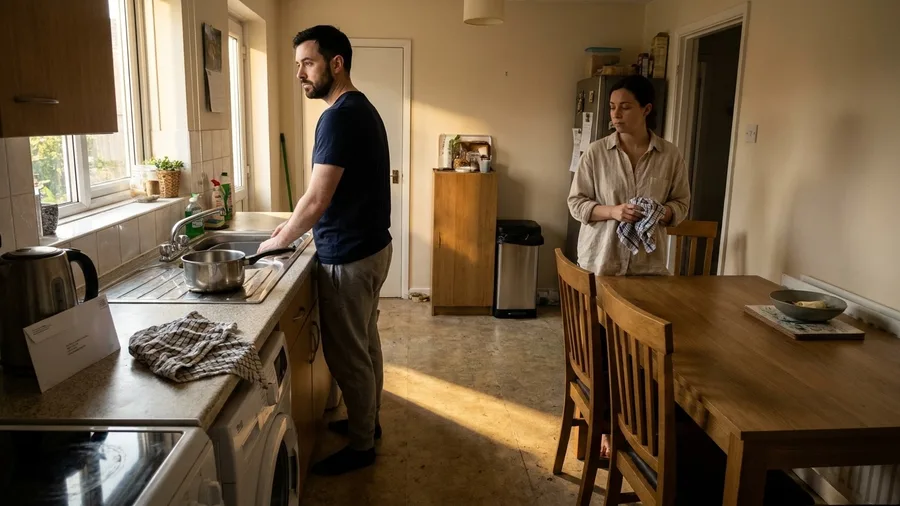
The mistake is treating anger as off-limits because the other person is sick, and that mistake makes the coldness worse, not better.
Resentment runs in both directions. The partner carrying the appointments, the insurance calls, and the extra driving feels overworked, unthanked, and stuck in a job nobody hired them for. The partner who is ill feels dependent, guilty, and talked over, as though adult standing is being handed back to them in small doses. Neither of these gets said, because it feels unfair to complain when the other is the one with the diagnosis.
So it goes underground. A dish left in the sink earns a silence. The tone sharpens over a misplaced bill. The next thing you know, the two of you are being carefully polite, and the polite stretch lasts longer than the argument would have.
"You never help" attacks the person. "The insurance calls all landed on one side this week; one needs to come off that list" names the event and what is needed, and the other person can hear it without bracing. Then leave space: "One hard thing is _. One need is _." Say your two lines and stop, and when your turn comes, repeat your partner's back before you answer your own – because being repeated-back-to is often what tells a person they were actually heard.
💡 Tip: Put a time limit on it – four minutes each, no interrupting. Short and structured beats long and honest, because long and honest tends to end in the dishes.
9. The sick partner grieves their old role

Six weeks, and the question has shifted. Not "what can I do" but "why does my help make it worse."
Because role grief runs underneath the symptoms: your partner is mourning the identity of provider, cook, parent, lover they used to be, and the loss can look like withdrawal, irritability, or refusing the very help you are offering. Grief for someone still present is its own disenfranchised loss, and mourning a living parent shows how to name it without guilt. Take the test: does your partner flinch when you take the pan from their hand, go quiet when you pay a bill, pull out of a bedtime routine you have started handling? Each small takeover, however capable, quietly says "you are not that person now" – even when the motive is nothing but relief.
So ask the different question, out loud: "What do you need done?" is one thing. "Which part of this role do you want to keep?" is the other. Menu choice while someone else stirs the pot. Reading the story while someone else lifts the child. One bill still theirs to decide. The identity survives smaller, or in another form, if you leave it a place to stand.
10. The marriage can get more honest, but not automatically

"At least something good came out of this – we talk now like we never did before." Sometimes that line is true. Often it is said at a kitchen table where one person is doing most of the talking because the other is too tired to disagree.
Serious illness does strip away small talk. The performance of normal married life – how was your day, what's for dinner, did you see the game – loses its footing when the day was a scan and dinner is whatever stays down. What can replace it is more direct: what each of you actually needs about the load, the money, the sex, the friends, the calendar, and the role you each used to hold. The opening is there. Whether anyone walks through it is a separate question.
The same conditions harden in either direction. Silence and distance grow just as easily as honesty does, and nothing about a diagnosis decides which one a marriage gets. That is worth saying plainly, because the stories that circulate are the ones where illness turned out to be a gift, and the couples who quietly drifted apart are not writing anything.
The check that keeps honesty from being a mood: ten minutes, same day each week, three items. What load is heaviest right now, what mood is present, and one need each. Sunday after breakfast works for a lot of people. The line that starts it: "Let's put a 10-minute check-in on Sunday after breakfast and each name one need without waiting for a crisis." Standing appointment, small stakes, so the hard thing has somewhere to go other than the moment it boils over.
Frequently Asked Questions
How do we split care tasks without turning it into a fight about who does more?
Do not negotiate from memory. Write the four-column load list – task, who does it now, how often, what can be handed off – and read it together. The list moves the conversation from 'you never help' to 'this line needs a different name on it,' which is a decision rather than an accusation.
Is it normal to feel resentful when my partner is the one who is sick?
Yes, and naming it is what keeps it from hardening. The well partner carries a second job and the ill partner loses standing, and both of those produce anger that has nowhere to go. Complaint about a specific event and need is not the same as blame, and the difference is worth practicing out loud.
How do we keep any kind of physical closeness when sex has stopped?
Separate touch from sex for a while. A hand on the back, a foot rub, lying close with nothing expected keeps contact alive without turning every touch into a test. Then ask directly – 'Is touch welcome now, and what kind?' – and take the answer you get.
What do we tell friends, and who handles it?
Decide together who gets access and what they are told, then assign the updates to one person so it does not leak onto whoever is in the room. Convert vague offers into specific asks with a person, a task, a time, and a place, and let people say no.
Can we still plan anything when the calendar keeps moving?
Plan with the contingency inside the same sentence: 'If Thursday's scan is stable, we walk Saturday; if not, we walk Sunday.' The date stays on the calendar and the setback changes the timing rather than the plan. What you avoid is booking the trip with no plan for a bad week.
When should we bring in outside help?
Before the crash, not after. If the caregiver has canceled their own appointments, is running on broken sleep, or is snapping at small things, that is the signal to bring in a home aide, a meal service, or a family member on a fixed schedule. If either of you is sliding into something darker than exhaustion, tell the clinic team or a doctor plainly – that conversation belongs with a professional, and it is a short one.
The First Move Is One Task and Ten Minutes
The verdict is simple and worth hearing outright: the marriage does not have to absorb this silently. The ten changes are predictable, and naming each one early converts a default burden, a default control, and a slow resentment into specific agreements between two adults.
So return to that evening for a second. The exhaustion is a second unpaid job, not a verdict on your love. The no may be energy, pain, or what the medication is doing. The friend's silence is triage, not abandonment. The withdrawal may be grief for a role that no longer fits. None of it is evidence that the marriage is failing.
The first move is one recurring task, named and dated: the pharmacy run changes hands starting Monday. Then a weekly ten-minute check-in, Sunday after breakfast, where each of you names one need. Open it exactly like this: "Let's do a ten-minute check-in every Sunday after breakfast, starting this week. The pharmacy run changes hands starting Monday. Each of us names one need now, and the other answers in turn."
Say it before the next appointment call. That is the decision on the table tonight, and it takes about the same time as one hold on the insurance line.
Put One Handoff on the Calendar Today
Write your four-column load list tonight and move exactly one task to another name with a date. Then book the ten-minute Sunday check-in before the week fills up.

