

Two people lose a spouse in the same month. One goes back to work on the Monday, and by the sixth week the day has a shape again. The other stands in a kitchen at two in the afternoon with nothing on the calendar and a phone that rang for eleven days and then stopped. Same loss, different lives to absorb it into.
At 68, weeping over your mother's death can feel like an old wound splitting open, some proof that a loss you thought healed has relapsed. At 40, a commute, colleagues and deadlines took the first shock and carried some of it for you. That difference is not poor coping. This grief lands on an emptied schedule, a thinner peer network, an older body and a load of forms, and the old grief surfacing alongside the new one is not square one again.
Most of what you are feeling is explainable, ordinary grief in a changed life, not a disorder and not a timetable you are failing to meet. Two places need a doctor or counselor rather than endurance: the body, and a flat, unrelenting slide that does not lift even briefly. Read the seven things below and see which fit, then this week tell one person plainly what happened and book one appointment. The paperwork can wait a week. You only get one first month.
Quick Tips Before You Start
Anchor the week
Put one standing appointment with other people on the same day each week and treat it as immovable as a shift.
Name both losses
Say the current death and the old one out loud in the same sentence; the old grief is not relapsing.
Eat by the clock
Set meal times and keep water within arm's reach, because appetite comes back after routine, not before it.
Widen the circle
Add one new person through a group or a class before pressing harder on friends who are exhausted themselves.
Stagger the paperwork
Do certificates, pension and insurance first; leave the bank, utilities and the contents of the house for a month.
Why It Lands Differently Now
Grief at this age does not arrive into the same life that handled earlier losses. The scaffolding changed underneath you: the workday, the colleagues, the daily errands that broke up rumination, and often the person you would have talked to about it.
The first two things on this list are about that changed ground. Neither one is a sign that you are grieving badly.
1. Retirement Leaves Hours for Grief to Fill

It is 9:40 on a Tuesday, and the flat is silent in a way it never used to be. For years this hour was a train seat and a screen full of messages; now the only sound is the kettle, then the clock, then your own thinking going round the same track it went round at seven.
That silence is not a mood. It is a shape. The commute, the colleagues, the deadlines and the small daily interruptions that absorbed an earlier loss have all gone, and grief that once had to wait for a quiet evening now has the whole day to work in. Researchers who study bereavement keep returning to the same observation: it is not the intensity of feeling that wears people down so much as the absence of ordinary demand around it, and later life strips away exactly that scaffolding.
So the instinct is to fill the hours. A walk, a class, a tidy-up, three errands strung together to prove the day has content. That is activity, not structure, and it tends to fold by the third week, because nothing in it depends on another person turning up. A to-do list cannot notice you are missing.
The move that holds is smaller and more social: one standing commitment with other people, the same day, the same time, every week. A choir, a walking group, a standing coffee with a neighbour, a shift at the charity shop. It works because it does two things a list cannot. It interrupts rumination at a fixed point, and it places your grief beside a reliable appointment with other people, which is a very different thing from a diary kept full on your own.
Try saying it as a fact, not a plea. "Thursdays I'm at the club, ten till twelve." Then go, including the weeks you would rather not, because the regularity is doing the work rather than the mood.
One honest exception. If you are still working full-time, or looking after a grandchild every weekday, that scaffolding is right there and this particular hole may not be yours. The hours are already spoken for, and grief is fitting itself around them.
💡 Tip: Choose the commitment with a fixed day and at least one other person's name attached. 'Go out more' fails; 'Tuesday, 10am, the walking group' holds.
How Hard Each Change Hits in the First Six Months
Rough position of each factor, from mild to severe, for someone no longer working
- An empty weekday schedule: The largest single driver of the flatter, lonelier shape of grief at this age.
- A circle that is also grieving: Fewer check-ins, not less affection.
- The paperwork load: Heavy in the first two months, tapering fast after.
- Lower physical reserve: Sleep and appetite go first; existing conditions need watching.
- A full working week or daily caring: The workday scaffolding is still there and absorbs more than you would think.
Positions reflect a typical pattern, not a score for any one person.
2. New Losses Reopen the Ones You Thought Healed
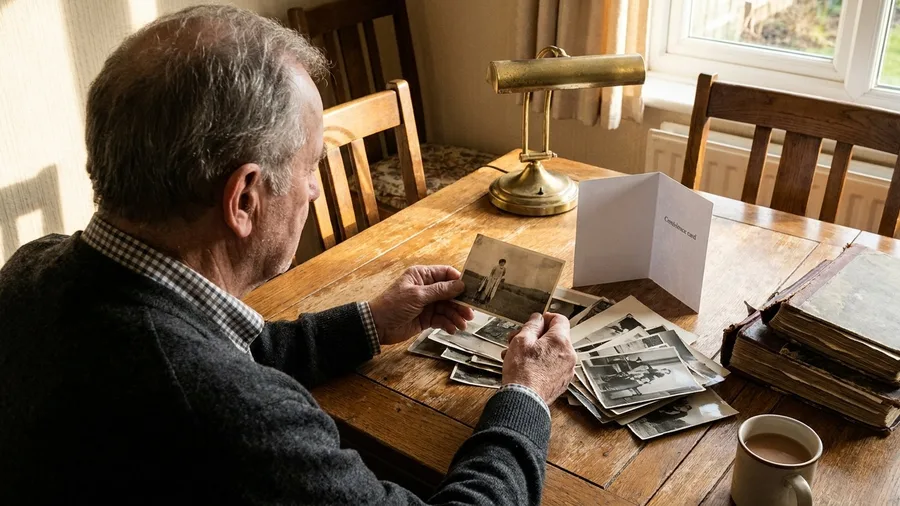
The common advice is to let old grief stay in the past and deal only with the fresh loss in front of you. That is tidy, and it is wrong. The old losses are already in the room.
By this point in life there is accumulated material: parents and siblings, a divorce, the end of a working life, a body that does not do what it did. A new death, or a date on the calendar, can reopen any of it. The woman weeping at 68 over her mother, gone thirty years, is mourning two absences at once: the husband whose chair is empty now and the mother she lost before her children were grown. Deaths, a divorce, retirement, a slowing body, all of it is the expected background of a long life, not a sign you have coped badly.
One reader will find the first year more plain: someone with no earlier major loss has less old ground to reopen, and the grief may sit closer to the surface of the current absence.
What helps is not to choose between them. Name both out loud, the one you buried this year and the one you buried decades ago, and let them be two griefs rather than a relapse into one.
💡 Tip: If you had no major losses before this one, the first year may be more straightforward than the articles suggest. Less old material to reopen.
What It Costs You Day to Day
The next three things are about the daily texture of this grief: the phone that stays quiet, the body that gives less room, and the second office of forms and hold music.
None of them look like mourning from the outside. All three of them are.
3. Your Closest Friends Are Grieving Too

I got this one wrong for years. When someone newly bereaved told me the phone had gone quiet and wondered what they had done, I assumed the answer lay in them, in the ordinary clumsiness of other people around loss. The likelier truth is harder and kinder at once: by this age, the friends who would once have called are grieving too.
The peer network a 40-year-old leans on is often itself depleted. The people who would have checked in are at funerals, sitting beside a spouse in hospital, or too wrung out to lift a phone. The cards stop after a few weeks not because the loss is forgotten or you have become a burden, and the silence is the strained round of the same room rather than a verdict on you. The same drift can happen inside a marriage, and feeling lonely while married explains why closeness fades without a fight. The better move is to widen rather than press: a bereavement group, a faith or hobby community, a younger friend or colleague. New people, not harder knocks on the old exhausted door.
And if your circle is large, younger, or simply nearby, none of this applies and the phone may well be ringing.
⚠️ COMMON MISTAKE
Don't Read the Quiet Phone as a Verdict
Most friends your age are not indifferent, they are at a hospital appointment, a funeral or exhausted. Condolence cards stop after a few weeks because of social habit, not because the loss has been forgotten. Treat the silence as information about their capacity, not your worth.
4. The Body Has Less Margin Than It Did
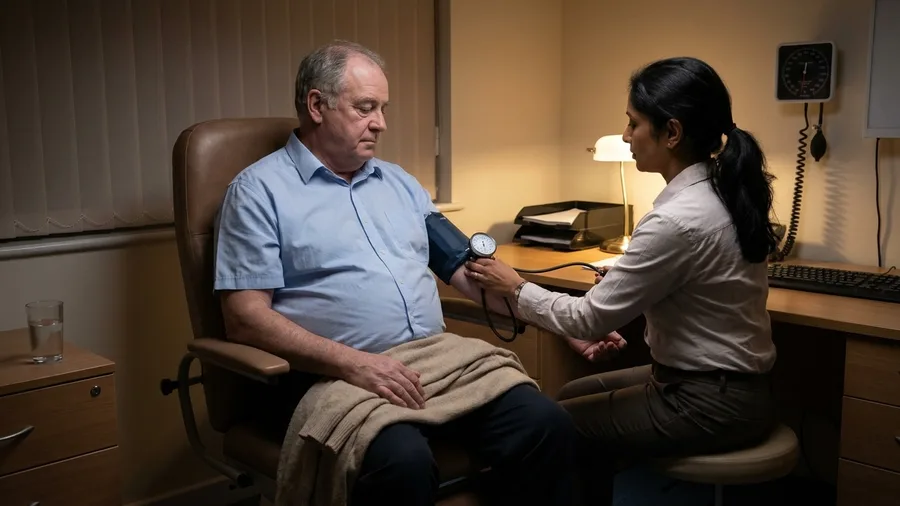
The cost shows up before the tears do: three hours awake at 2 a.m., a plate pushed away half-eaten, a jaw that aches from clenching on the phone all afternoon. Grief in an older body has less give in it, so it surfaces as broken sleep, dropped appetite, tight shoulders and a fatigue that no nap fixes. And when the circle around you has thinned, more of the practical load lands on the household and on the body absorbing it.
The reason to watch this closely is the conditions already on the list. Blood pressure, diabetes, a heart that has needed watching for years – those are the ones that register the strain first. When you call the GP, say the words: "My husband died six weeks ago and I'm not sleeping and I've stopped eating much." Not just the headache. The bereavement belongs in the picture, because it changes what the symptoms mean.
There is one move that helps before appetite returns, and it is not about wanting food. Set the times. Toast and tea at eight, a sandwich at one, a glass of water on the counter beside the sink. The body takes the routine first and the hunger follows – it rarely arrives the other way round. This is a reason to get checked, not a reason to alarm yourself.
One conversation with the GP about sleep, appetite and the conditions already being treated is the whole task here. No numbers to chase, no worst case to picture. Just make the call while the pattern is still fresh enough to describe.
💡 Tip: Book the appointment for the sleep and appetite, not for the grief. Doctors respond faster to symptoms, and the two conversations end up in the same place.
🗂️ The Paperwork That Fills the Day
Death certificates
Get six to ten certified copies; almost every other office will ask for one in the first month.
Pension and Social Security
Notify both in the first fortnight; overpayments are far more annoying to unwind than to prevent.
Insurance deadlines
Read the policy letters now and diarise every date; this is where money quietly disappears.
The accountant
Hand over the tax position in one go rather than trying to file anything yourself this year.
The attorney
Give the will and the house to one professional; do not run property decisions by committee.
Bank and utilities
These can safely wait a month. Transferring accounts is not urgent and not a measure of how much you cared.
The house and its contents
Leave the wardrobe and the boxes alone for now. Sorting is a next-year job, not a first-month one.
5. The Paperwork Becomes a Second Full-Time Job

The exhaustion is real work, even when the day looked empty. Death certificates in triplicate, a pension office that needs the exact date, Social Security, a bank that wants the will before it will move a joint account, insurance forms, the house and everything in it. Calls, hold music, a form sent back because one box was wrong.
You think the tiredness means you are grieving badly, or that something is wrong with you for feeling worn down by a day where you did nothing. What actually happened is that the paperwork crowded the mourning out. There was no quiet hour to sit with the loss, because the morning went to the phone queue, and that displacement is what drains people.
Hand the parts outward. An accountant for the tax and accounts, an attorney for the will and the house, an adult child given one task with the address and the deadline – one, not the whole pile.
What to Do Now, What Can Wait
This Month
- Order certified death certificates
- Notify pension and Social Security
- Note every insurance deadline in a diary
- Give the accountant the tax file
- Give the attorney the will and the house
Leave Until Later
- Transferring bank accounts
- Moving utilities into one name
- Sorting the wardrobe
- Emptying the garage or the loft
- Deciding what to do with the furniture
What to Watch, and How to Carry It
The last two things narrow everything down. One is about telling ordinary grief from something that needs a doctor, and the other is about how long this actually runs.
These are the two that matter most, which is why they come last. Everything above explains the weight. These two tell you what to do with it.
6. It's Not Depression, but It Can Become It

The answer is a test you can run in ten seconds, and it turns on shape rather than intensity. Grief arrives in waves: it knocks you flat at the supermarket hearing his song, then lets you up again, and somewhere in the same afternoon you remember something funny he said and almost laugh. Depression does not do that. It is the same grey at breakfast and at bedtime, and it does not let up for the funny memory.
The plain difference is what the low feeling is pointed at. Grief misses someone: you ache for a particular voice, a particular way of folding a newspaper, and the ache, however sharp, is still a kind of contact with them. Depression is quieter and more level than that. It is closer to feeling worthless without a reason you can name, and to finding that nothing, not the grandchildren, not the garden, not the programme you used to follow, gives you any lift at all.
So run the ten-second version. Do you still get warmth anywhere in a week, a moment of pleasure that surprises you? Do you have an appetite for anything, food or company? Do you sleep at all? When a wave recedes, do you come back up? If the answer is yes to those, you are in grief, and it is doing what grief does, even when it is brutal. If the answer is no across the board – flat grey every day for weeks, no pleasure in anything, no appetite, no sleep – that is your answer, and it means a call, not more endurance.
If the test comes back grey, start with the GP. Say plainly that you were bereaved, and that since then you have not been eating, not sleeping, and not enjoying anything – describe the flatness, not just the loss. Your doctor can rule out the physical causes that mimic this, thyroid and anaemia among them, and can tell you whether what you have is grief that has slid into depression. From there it may be a grief counselor or a bereavement service, and whether medication is part of it is a medical question for that conversation, not a verdict on how well you are coping.
One answer does not wait for a convenient week. If there is no appetite at all, no sleep night after night, or any thought of not wanting to be here, that is a same-week call to the GP – not a sign of weakness, and not something to sit with alone until it passes. The rest of the test can be run slowly, honestly, over a cup of tea. This one cannot.
💡 Tip: Write down where you sat on the self-test and take the note to the GP. 'Grey since April, no appetite, no pleasure' gets a proper response.
7. Waves Keep Coming for Years, Not Months

"It's been a year. Shouldn't I be past this by now?" The year is a marker, not a finish line. The first anniversary closes the condolence cards and the casseroles, and the cards stopping gets mistaken for the grief being over; what actually changes is that people around you stop expecting it, which is not the same thing.
The acute stretch does ease, and then a birthday, a holiday, a grandchild's wedding brings it back at full height, and a wave at a wedding is not a relapse. The same question you would ask of a flat, unrelenting stretch applies to a wave: is it a wave, or does it stay flat for weeks and take functioning with it? Name known triggers ahead instead of avoiding them, arrange company, decide in advance what to attend and what to skip, and put one line in front of a GP or grief counselor: a wave that flattens you for weeks, brings hopelessness, or includes thoughts of not wanting to be here is a call to make, not weather to wait out.
Frequently Asked Questions
Why does this grief feel flatter and lonelier than the losses I had at 40?
Because it landed in a changed life. The workday that once broke up the day is gone, the friends you would lean on are grieving themselves, and the body has less margin. That flatter shape is a description of the ground, not the depth of the loss.
Is it a relapse if I cry for my mother's death again now?
No. A new death pulls every earlier absence with it, and weeping for both at once is ordinary at this age. Name both losses in the same sentence rather than treating the older one as something you failed to finish.
Why am I exhausted when I have done nothing all day?
The paperwork is work. Calls, forms and hold music fill the hours without being mourning, so the day vanishes and the tiredness is real. Stagger it: certificates, pension and insurance first; bank, utilities and the house can wait a month.
How do I tell grief from depression?
Grief comes in waves and still has warmth in it: you can be flattened at nine and laughing at a memory by eleven. Depression is flat, hopeless and unrelenting, with no pleasure in anything. Missing someone points to grief; feeling worthless does not.
When should I see a doctor rather than wait it out?
Same week if there is no appetite, no sleep, thoughts of not wanting to be here, or a flat grey that has not lifted in two weeks. Go to the GP first and tell them about the bereavement, not only the symptoms. A grief counselor or bereavement service can follow.
How long will this last?
The acute phase eases but waves return at anniversaries, holidays and milestones, sometimes for years. The one-year expectation is a social habit, not a fact about grief. Plan around known dates with company rather than avoiding them.
The Two on This List That Need a Doctor, Not Endurance
What you are feeling is explainable, and mostly it is not a disorder. The empty weekday, the thinner circle, the body with less room and the stack of forms change how grief lands. None of the seven is a character failure, and none runs on a timetable you are behind on.
Two of them go to a professional rather than to willpower: the body, and the slide toward depression. The other five are carried, not cured on a schedule.
The woman weeping over her mother's death at 68 is not back at square one. The old grief has reopened beside the new one, inside an emptied schedule, a thinner circle, an older body and a pile of paperwork, and that is a different thing from a relapse.
So do the one thing. Tell one person plainly what happened, and book one appointment, a GP, a grief counselor or a support group. Let the paperwork wait a week. Carrying this starts with one human and one appointment, not with finishing on time.
The one with the Monday desk is not braver than the one in the quiet kitchen; she simply had somewhere to put the first weeks. The one in the kitchen now has somewhere to put this week: a person told, and an appointment made.
One Call and One Diary Entry This Week
Write down the date you will book, and the name of the one person you will tell. Do that before you touch another form.

