

Most people assume moving into senior living surrenders their independence, but waiting until an emergency forces the relocation is what actually strips it away. At 78, I left my 2,100-square-foot Ohio house holding a single key fob to an 850-square-foot independent living apartment, quietly convinced I was surrendering my adulthood.
The common dread is that entering a retirement community begins an institutional decline. In truth, leaving homeownership while healthy trades the draining upkeep of property and creeping isolation for sustained mental bandwidth, active community, and total command over your medical future.
Here is the ground truth of my first 14 months – the grief, the social politics, and the practical freedoms – so you can decide from evidence rather than fear.
Quick Tips Before You Start
Audit Belongings Early
Downsize six months before listing your house so sentimental fatigue does not derail the moving timeline.
Establish Door Rules
Keep your apartment door fully closed for solitude and cracked three inches when welcoming drop-in visitors.
Keep Outside Ties
Maintain at least two weekly off-campus commitments to prevent campus gossip from shrinking your worldview.
Pace Dining Hall Meals
Use full kitchen appliances for breakfast and lunch to avoid conversational burnout from daily communal dinners.
The Emotional and Physical Transition
Leaving a long-term family home involves a profound sensory disruption.
The physical process of sorting forty years of possessions forces you to reckon with past identities before you ever unpack a box in a new hallway. The early months test your patience as your daily habits reorganize around a totally unfamiliar floor plan.
1. Downsizing Possessions Triggers Genuine Grief Before Relief Arrives

You stand in the garage holding a socket wrench you have not touched since 2014, suddenly convinced that putting it in a donation box erases thirty years of Saturdays.
Popular advice frames downsizing as an immediate emotional victory, but clearing sixty-five percent of my belongings from a three-bedroom house and half-acre yard felt like an inventory of past roles. Sentimental attachment binds memory to workshop tools and formal guest sets, even though daily life needs only functional staples. Giving them away felt like dismantling old identities.
My first six weeks in the apartment brought genuine mourning.
I spent those early days reaching for phantom kitchen pans and workshop gear that no longer existed in my 850-square-foot space. By month three, however, the unburdening finally worked. Shedding two floors of accumulated possessions eliminated the cognitive fatigue of managing storage, replacing decades of domestic clutter with an unpredicted and quiet spatial lightness.
💡 Tip: Photograph sentimental items you cannot keep and compile them into a slim photo book before donating.
2. Shedding Home Maintenance Liberates an Enormous Amount of Mental Bandwidth
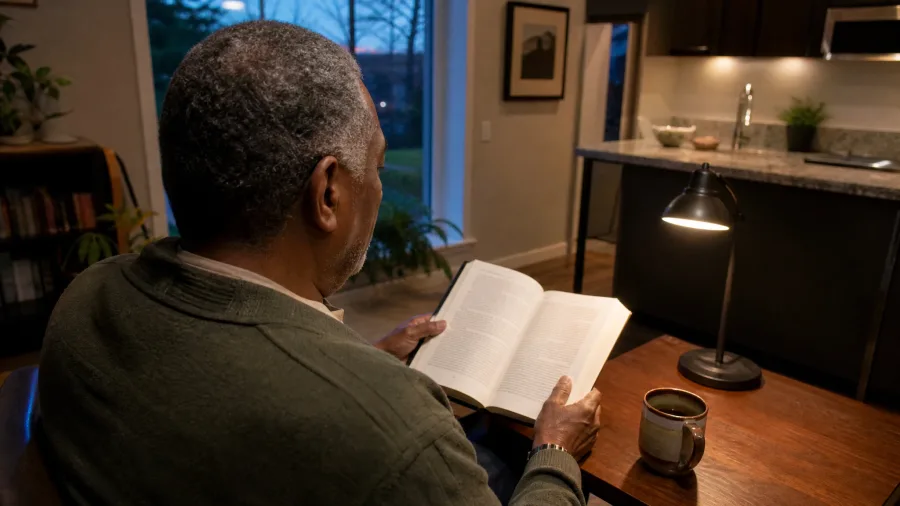
Most people assume surrendering a house deed means giving up personal self-reliance. In reality, maintaining a property quietly consumes hours of low-grade worry each week.
For decades in Ohio, my calendar was dictated by gutter cleanings, furnace filters, and checking roof shingles after summer storms. Here, my $3,400 monthly fee covers every structural repair with one phone call. When a kitchen faucet leaked last month, a technician arrived in twenty minutes, replaced the gasket, and handed me no bill.
That reclaimed cognitive energy converted directly into two uninterrupted hours of daily reading, morning campus walks, and writing. Outsourcing physical upkeep did not erode my independence; it redirected my focus toward intellectual engagement.
Monthly Living Cost Shift
Entrance fee of $185,000 paid upfront as a life-care asset reserve.
3. The Identity Shock of Being a Senior Resident Fades Fast

People warn that living exclusively among retirees will make you feel instantly ancient. That advice is backwards, even if walking past hallway walkers and emergency pull cords sparked a visceral resistance during my first weeks.
Ask yourself one ten-second question: on a Tuesday afternoon, does your suburban street feel peaceful or isolating? When working neighbors commute at dawn, remaining behind breeds quiet marginalization. Living among peers removes that age-based friction completely, establishing an effortless social baseline where everyone shares the same generational reference points and daily rhythms.
Chronological age is the least interesting shared trait.
Within a month, my sense of identity realigned completely around my lifelong habits as a high school counselor. Daily life anchored directly to the books on my reading stand, active curiosity, and real conversations with new neighbors, entirely detached from anyone's physical deficits or the institutional activity calendar pinned in the lobby.
💡 PRO TIP
Reframe the Campus Safety Devices
Treat the wall-mounted morning check-in button like a building smoke detector: a passive safety utility that runs quietly in the background, not a statement about your personal stamina.
Social Complexities and Daily Life
Sharing dining spaces and corridors creates rich community, but it also creates politics.
Living among three hundred retirees requires managing social friction, establishing clear personal boundaries, and choosing vulnerability when building genuine friendships.
4. Dining Hall Seating Replicates High School Social Dynamics
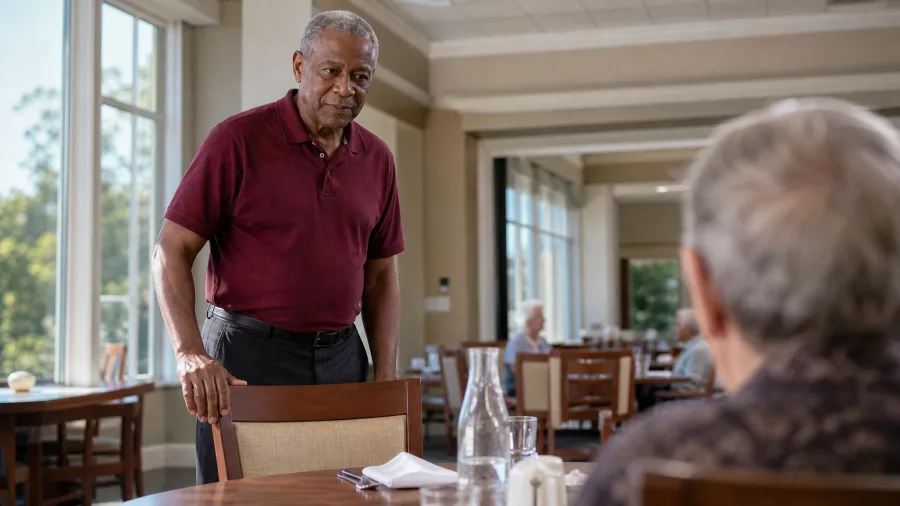
The 5:30 PM dinner rush presents an immediate puzzle: established cliques, rigid table claims, and social politics that look remarkably like tenth grade.
My monthly fee includes 30 meals, but handling open seating requires a deliberate routine. I arrive ten minutes before the crowd, always ask before pulling out a chair, and balance communal tables with solo meals on my balcony. Constant small talk over soup drains energy quickly.
Cooking simple suppers in my apartment kitchen two nights a week prevents social exhaustion and keeps community dinners genuinely enjoyable.
💡 Tip: Split your 30 monthly meal credits between communal dining and quiet meals cooked in your apartment.
5. Building Deep Friendships Requires Deliberate Vulnerability Over Casual Proximity

The quiet cost of relying on sheer proximity is an exhausting loneliness disguised as an active social life. You can spend months exchanging thirty pleasantries a day without building an ounce of genuine emotional safety.
In the mailroom and elevator banks, casual chatter defaults almost instantly to joint aches, the afternoon weather, and dining room service complaints. It offers pleasant company, but it quietly burns through your daily social stamina without providing real comfort. Moving past that superficial barrier requires risking deliberate vulnerability instead of waiting for connection to happen on its own.
Real community is forged in intimate corners, not crowded halls.
Four months after unpacking, I reserved the second-floor library for a weekly six-person history discussion group. That modest table filtered specifically for residents who preferred rigorous intellectual debate and candid communication styles. During our third meeting, an abstract conversation about postwar civic life shifted without warning into something far more personal and honest.
Arthur, a retired chemist, set his notebook down and confessed, "I ran a research lab for forty years, and yesterday I spent two hours wondering what my life is actually for now."
That single admission dropped every defensive posture at the table. We spent the morning talking openly about the grief of lost spouses, vanished careers, and changing physical stamina. Deep friendships in a retirement community require proactive vulnerability and curated smaller gatherings rather than passive reliance on large campus mixers.
Navigating Daily Campus Socialization
Superficial Connection
- Lingering in main lobbies for random chatter
- Attending massive 50-person generic mixers
- Discussing only medical complaints and weather
- Letting conversation drift without shared focus
Intentional Friendship
- Starting 4-to-6 person focused interest groups
- Inviting two neighbors for coffee in your unit
- Speaking honestly about grief and life changes
- Setting strict limits when social energy drops
6. Clear Personal Boundaries Are Essential to Protect Daily Privacy
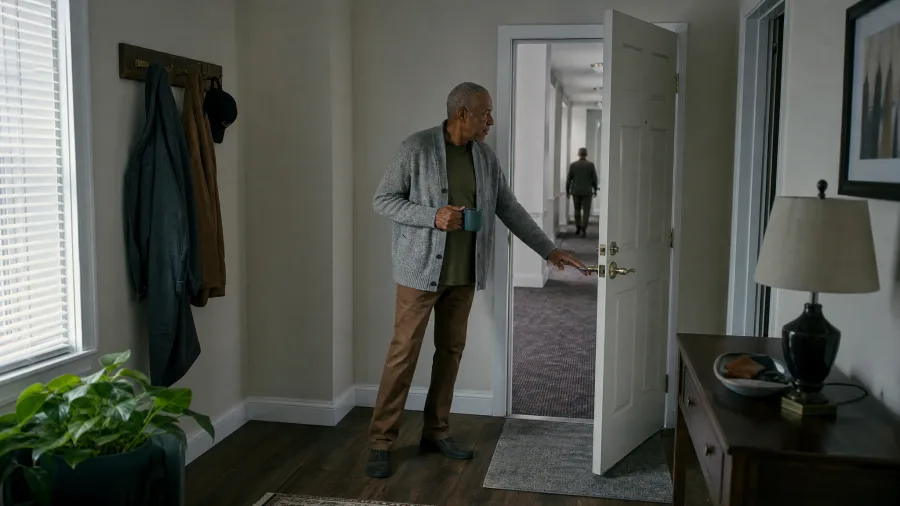
During my first two months, I left my apartment door propped open on its brass kickstand, assuming neighborliness required constant accessibility. Between casual hallway drop-ins, sudden event invites, and morning wellness checks from staff, my quiet hours vanished under well-meaning intrusions before I had even finished my morning coffee.
Living sixty feet from fifty peers requires clear boundaries.
I adopted a strict physical rule on our corridor: a latched door signals complete privacy, while a door cracked two inches invites drop-ins. When neighbors recruit for activity committees or group bus outings, I use a steady line: "Thank you for thinking of me, but I keep my afternoons reserved for reading."
Treating my 850-square-foot independent living apartment as a private sanctuary preserves my daily mental energy amidst non-stop campus activities. A direct, gracious refusal protects personal solitude without earning you an anti-social reputation.
7. Watching Neighbors Experience Physical Decline Demands Emotional Resilience

Three times during my first eight months on campus, a neighbor I regularly shared a dinner table with was transferred to assisted living or the memory care wing within forty-eight hours.
Empty dining chairs appear without warning, and brief morning conversations in the mailroom confirm that an unexpected fall or stroke altered someone's routine forever. Psychologists who study communal living consistently find that proximity to peer decline strips away the protective denial we maintain in suburbs. In a community, physical frailty remains in plain sight.
Retreating into your room to hide from it solves nothing.
Building emotional stability demands active, shared rituals rather than quiet isolation. When Arthur passed away in November, three of us gathered in the campus library to talk through the shock instead of avoiding it. 'Skipping Arthur's memorial will not keep any of us younger,' my friend David said. We attended the chapel service together and honored his life.
Researchers tracking late-life adaptation note that confronting mortality collectively tends to replace passive dread with immediate gratitude. Witnessing a peer lose physical ground sharpens your focus on the mobility and clear thinking you still enjoy.
The essential mental boundary is learning to witness someone else's loss without projecting their physical decline onto your own calendar. You can offer real compassion and attend the memorial, but you walk back to your apartment fully anchored in the energy, independence, and good health you still have today.
⚠️ COMMON MISTAKE
Avoid Isolating During Campus Losses
Skipping campus memorial gatherings out of discomfort increases long-term anxiety. Attending shared remembrance services normalizes grief and reinforces communal support systems.
Autonomy, Family, and Long-Term Peace of Mind
The broader value of moving early lies in the psychological relief it grants both you and your adult children.
Removing domestic chores and medical ambiguity restructures family visits into genuine personal time while preserving your control over future care.
8. Relieving Adult Children From Caregiving Duties Restores Pure Family Connection
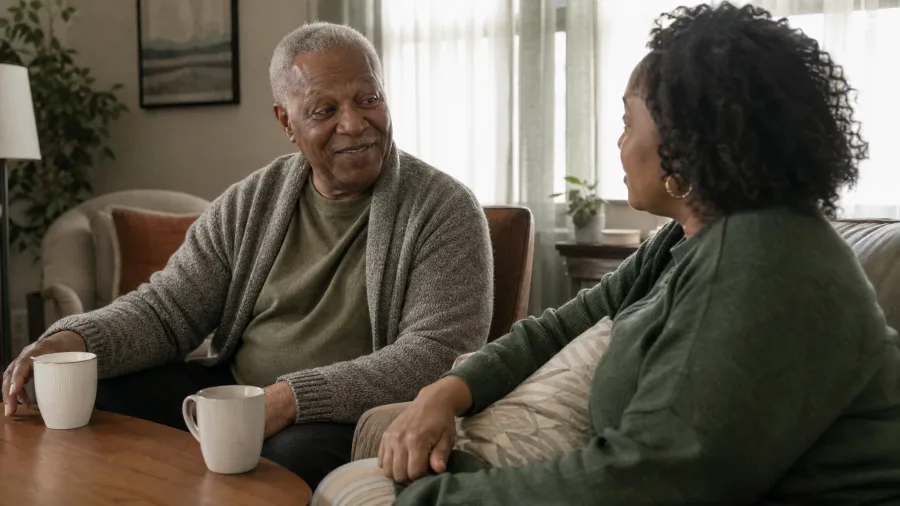
"Let me check the furnace before we sit down," my son used to say the moment he walked into my Ohio house.
Leaning on your adult children for occasional favors is completely natural, but over time, our family visits had quietly devolved into unpaid property maintenance and anxious assessments of my safety. Seeing neighbors face sudden health crises made me realize how quickly domestic help hardens into an exhausting, unspoken caregiving burden that strains the relationship.
Paying the $185,000 entrance fee at this non-profit CCRC guaranteed future access to assisted living and skilled nursing, permanently removing emergency crisis management from my children's shoulders.
That structural shift restored our actual bond.
Our visits now center entirely on shared meals, meaningful conversation, and relaxed updates about my grandchildren rather than household labor. Weekly phone calls shifted from tense logistical check-ins into affectionate, voluntary exchanges between independent adults who genuinely look forward to hearing each other's voices.
💡 Tip: Share your CCRC contract structure with your children early so they understand the progressive care plan.
🛡️ The Path to Long-Term Autonomy
Downsizing and Contract Selection
Audit personal belongings and choose a life-care contract while cognitive capacity is high.
Establishing Independent Routines
Set up apartment boundaries and balance dining hall use with home cooking.
Curating Campus Micro-Communities
Launch small interest groups to build intellectual and emotional intimacy with peers.
Preserving Family Roles
Enjoy visits focused entirely on personal relationships rather than domestic chores.
9. Personal Autonomy Expands Because Physical Energy Is Conserved

We routinely mistake physical domestic exhaustion for authentic independence.
Last Tuesday afternoon, I watched the maintenance crew prune the perimeter shrubs while I sat on my balcony booking train tickets and preparing notes for students I mentor. The building enforces no curfews, no visitor sign-in sheets, and no required schedules, leaving my daily calendar entirely in my own hands.
Outsourcing ladder work, exterior chores, and heavy cooking preserves stamina for active living. Autonomy is measured by where you direct your mental energy, not by the square footage of roof you personally patch.
10. Off-Campus Commitments Prevent the Community From Becoming an Insular Bubble

You cash a check at the campus teller, pick up a prescription down the hall, and realize you have not driven past the security gate in three weeks.
Total self-sufficiency inside the perimeter shrinks the world with astonishing speed. Within a month, dinner conversation quietly collapses into dining room complaints, rumors about staff turnover, and petty hallway politics. The campus ceases to be a supportive home base and turns into an echo chamber unless you deliberately push your daily life outside it.
I keep my physician in town, spend Thursdays shelving books at the county library, and attend regional civic meetings. Carrying external ideas back to the communal table keeps both my mind and my friendships healthy.
CCRC Living Profile — At a Glance
📐 Apartment Size
850 sq ft
💵 Monthly Fee
$3,400 all-in
🍽️ Meal Plan
30 dinners/mo
🚗 Driving Status
Fully active
🤝 Outside Roles
2 weekly shifts
Primary Benefit
Guaranteed lifetime access to higher care levels without leaving the campus.
11. Moving Five Years Early Guarantees You Make the Choice Yourself
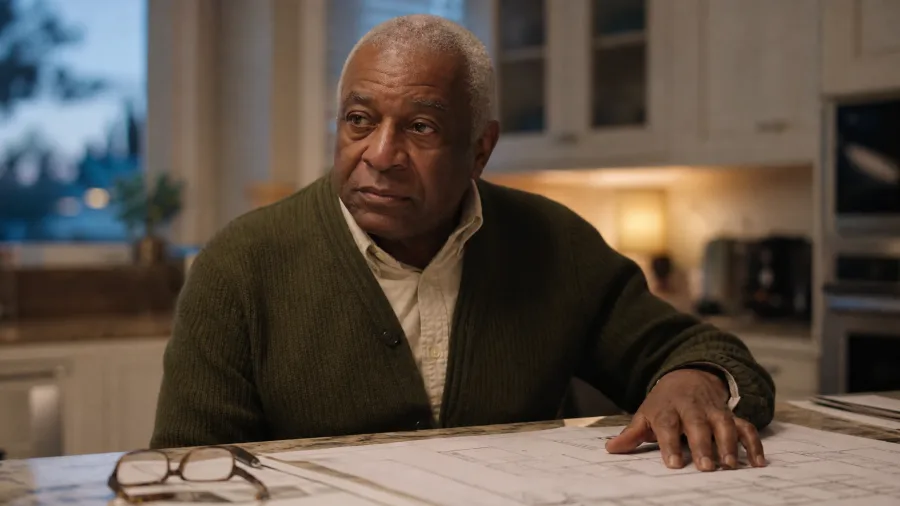
The conventional wisdom says to stay in your single-family house until your body forces your hand. That instinct quietly turns what should be an orderly choice into an emergency room crisis.
Last winter, a medical transport pulled up to our lobby in freezing rain, unloading an eighty-three-year-old neighbor after a fractured hip. Her stressed daughter signed admissions forms in the hallway while staff unpacked boxes into an unfamiliar room. Because I moved at seventy-eight, I vetted contracts, selected my specific unit, and gifted my possessions on my own schedule.
Mastering an 850-square-foot layout, learning community operations, and building a new social network requires substantial cognitive reserve. An unexpected medical crisis wipes out that mental bandwidth instantly.
Relocating five years before it feels strictly necessary protects your self-determination from start to finish. Waiting five minutes too long permanently hands your living choices over to hospital discharge planners and anxious adult children. You either pack your own boxes or let circumstance pack them for you.
💡 Tip: Visit communities five years before your anticipated move-in target to secure preferred waiting list spots.
Key Transition Metrics
Quantifiable realities from 14 months of independent community living
Frequently Asked Questions
What is the difference between independent living and assisted living in a CCRC?
Independent living provides private apartments with full kitchens and optional communal amenities for fully mobile seniors. Assisted living adds daily hands-on personal support like medication management, dressing assistance, and scheduled bathing while remaining on the same campus.
How do entry fees work for continuing care retirement communities?
Entry fees function as an upfront financial commitment securing lifetime access to tiered healthcare levels at discounted rates. Many non-profit CCRCs offer partially refundable entrance fees depending on the specific contract structure you select.
Can I bring my own car and leave campus whenever I want?
Yes. Independent living residents retain complete freedom of movement, personal vehicles, and designated parking spaces without curfews or mandatory travel check-ins.
What happens if my care needs increase down the road?
A continuing care community transitions you seamlessly between independent living, assisted living, memory care, and skilled nursing. You remain on the same familiar campus with familiar staff rather than facing an emergency relocation.
The Proactive Decision Window
The timing rubric is simple: gauge your window by whether you still have the stamina to pack a box, tour three campuses in an afternoon, and introduce yourself to strangers without help. Relocating while fully capable turns a retirement campus into a launchpad for living rather than a refuge chosen under duress.
Fourteen months after walking through that door, that small plastic key fob does not represent the loss of my autonomy. It represents the quiet freedom of having chosen my own life before circumstance chose it for me.
Review the Transition Metrics
Check the Key Transition Metrics panel above to evaluate how shedding domestic upkeep reclaims daily mental bandwidth.