

Fourteen months. That is how long it has been since you sat in the same room as the three of them, and the phone in your hand at two in the morning holds eleven texts that never came back, two birthday cards with no reply, and one request to a school concert answered with 'not this time.'
The twelfth text is the one you are composing now. It will not be read by a six-year-old or a nine-year-old or a twelve-year-old. It will be read by their parent, and it can be screenshotted, saved, and read aloud later in a mediator's office or a lawyer's. Nothing sent tonight can be taken back.
So the order matters. Pause two days. Then one small written request. A one-page log, a mediator before a lawyer, and small contact that does not stop.
Aim it at one two-hour weekend afternoon at a neutral place, inside thirty days. Not an apology from your adult child. That afternoon. Every move below is measured by whether it makes that afternoon likelier or less likely.
By the end you will be able to choose between another text, one written request, and a lawyer, and know which fits where you actually stand. You will also leave with the one move to make this week.
Quick Tips Before You Start
Charge the phone elsewhere
Overnight, plug it in a different room so you are not checking for a reply at 2 a.m.
Write the angry version
Put every accusation in a paper notebook — and never send it.
Pick a review date
60 days from your first written request, then the same date each month.
Keep receipts
A certified letter with return receipt costs about $9 and proves the date.
1. A Two-Day Pause Keeps the First Message Clean

"I'm sending one more text so they know how much this hurts." It is two in the morning, the phone is warm in your hand, and that sentence feels like the only reasonable thing left to do.
the message is not going to your grandchildren. It is going to their parent, who will read it once at midnight and possibly again in a mediation room or a lawyer's office six months from now. A text is a document. It outlives the evening it was sent, and it cannot be taken back.
So the first move is a pause, and it is not passive. For 48 hours, nothing goes out. No text, no voicemail, no email. The phone charges in another room overnight, because a phone on the nightstand at 2 a.m. is not a phone, it is a loaded decision.
What you do inside those two days is write the angry version. Get a paper notebook and put it all down, whole and uncut, every accusation you have been carrying for 14 months. This notebook is for you alone. It never goes to the parent, it never gets photographed, and it is the one place the fury is allowed to exist in full.
On day three, you start the rewrite, and the rule is subtraction. Cut every accusation. What is left is one sentence of warmth and one plain question, nothing else. Warmth and a question are the only two things a parent can answer without losing face, which is why they are the only two that ever get answered.
The cost of skipping the pause is already on the record: 11 texts, two birthday cards, one concert request answered "not this time." That is 14 months of messages that closed the door a little. One more sent in anger does not advance the conversation. It ends it.
💡 Tip: If you feel the urge to send something tonight, write it in the notebook instead. Tomorrow you can decide whether it belongs in the message. It almost never does.
| Route | Typical cost | Time to a reply | What it puts at risk |
|---|---|---|---|
| Small written ask (letter or email) | About $9 for certified mail | Days to a few weeks | Nothing irreversible — a reply can be a no |
| Family mediator | $150–$300 per session, usually two to four sessions | Weeks to a couple of months | The parent may refuse to attend, and you will know |
| Family-law consultation | $250–$400 for one hour | Immediate, but a reply may never come | Converts the parent into an adversary with a lawyer |
2. Small Requests Get Yes; Big Emotional Ones Get Silence

The instinct is to ask for something big, because the hurt is big, and that instinct is what keeps the phone quiet. A request for an explanation, an apology, a reckoning with the fourteen months, all of it asks the parent to lose face in writing. A request for one afternoon asks them to do almost nothing at all.
So the whole ask is one sentence: two hours, a park or a diner, a Saturday within the next 30 days. Neutral ground matters more than it sounds. Your son's kitchen asks him to host, to explain the visit to a six-year-old, to sit in the next room and supervise it. A diner asks him to drive there and sit down. Understanding the contact rules behind a son- or daughter-in-law's distance makes in-law distance psychology easier to answer with one small, face-saving ask.
Leave the past, the apology and the supervision argument out of it. Each one turns a two-hour yes into a hearing about blame, and nobody schedules a hearing. If he offers 45 minutes instead, take the 45 minutes and say thank you. The second ask waits until the first visit has actually happened.
⚠️ COMMON MISTAKE
The one mistake that closes the door fastest
Putting the whole grievance in the first message. A letter or text that argues gets answered with an argument or with nothing. Send the small ask first — the history can wait for a mediator's table.
3. Put It in Writing So the Story Can't Change

The call is where this usually goes wrong, including mine the first time: twenty minutes of warmth and history and my own hurt, and by the end neither of us could say what had actually been requested. A voice fades. A page does not.
Five sentences is the shape of it. "I would like to see the children for two hours on a Saturday in the next month, at the park on Mill Street or any place you choose. Could you reply to this address, or call me on this number, by the 14th?" Then stop. One address or one number matters, because two ways to answer means silence can always be explained away. When texts have gone unanswered, send it certified with a return receipt, about $9 – the green card that comes back carries a signature and a date, and neither can be argued with later.
The tone is the whole letter. No list of grievances, no promises quoted from four years ago. A letter that argues gets an argument back, or gets nothing, and nothing is the likelier of the two.
Write only what you would be willing to hear read aloud in a mediation room, because that is where it may end up. And be clear about what the letter can do: it makes your request dated and undeniable. It does not make anyone answer.
💡 Tip: Read the letter once out loud before you send it. If your voice tightens on any sentence, cut that sentence.
The numbers behind a calm plan
What each move actually costs and how long it takes
4. Keep a Plain Log of Dates and Nothing Else
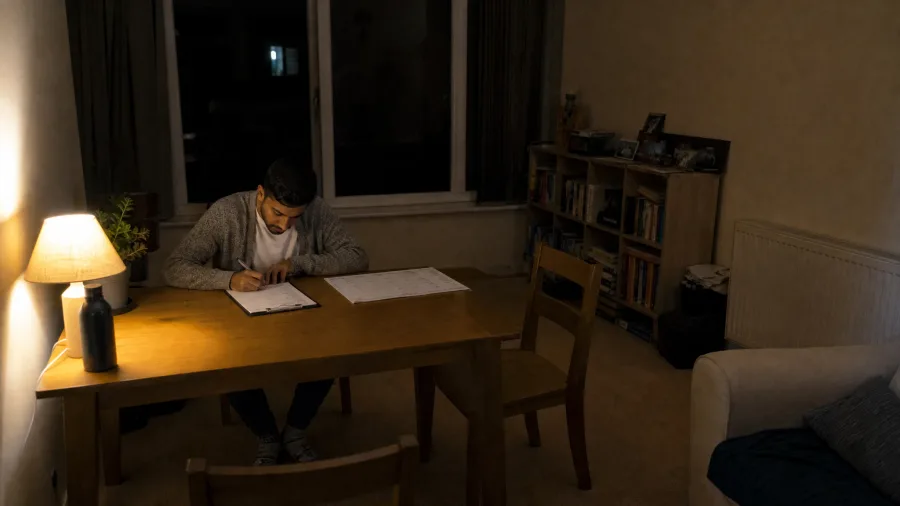
Yes, and the page is smaller than you think. A dated request only does its work if the answers are dated the same way, so the record is a single sheet with four columns across the top: the date, what you asked, what came back, and one line for each. That is the whole system.
The hard part is the margin. No adjectives in it, no 'she always does this,' no paragraph about how the evening sat with you afterward – a page of hurt is legible to no one but the person who wrote it, and anyone else reading it sees temper rather than sequence. So a returned card goes in as 'April 3 – card returned unopened' and stops there. A text that reads 'not this time' gets its date and its five words and nothing after them.
What the sheet is actually for is pattern: how many asks, spaced how far apart, answered how often. That is what a mediator reads in thirty seconds and what a case built on grievance can never show.
Two ways to respond to a short reply
Calm
- Say thank you and take the 45 minutes offered
- Set the next date at the end of the visit
- Log the reply in one line with the date
- Wait for the first visit to actually happen before asking for more
That closes the door
- Re-negotiate upward on the spot — "but I asked for two hours"
- List the months of silence in your reply
- Ask the parent to explain themselves before you meet
- Bypass them and message the child directly
5. A Mediator Is Cheaper Than a Lawyer and Calmer

The cost of the lawyer's letter is not the fee. It is that the fee buys you an adversary who now has counsel of their own, and a parent who was ignoring you becomes a parent with instructions, and instructions tend to read: do not respond directly. Once that letter lands, the small warm message that might have worked in March is no longer yours to send.
Put the two routes beside each other. A family mediator runs $150-$300 a session, usually two to four of them, and what comes out is a schedule both households actually agreed to – drop-offs, holidays, who drives. A one-hour consultation with a family lawyer runs $250-$400 before a single letter is drafted, and what that route produces is compliance or quiet, with quiet being the far more common reply.
Once the requests sit on one page and the gaps between them are visible, the question of who steps in answers itself for most people. Mediation suits a parent who is angry but still willing to sit in a room. It does not suit a parent who will not attend at all, and it is the wrong first call entirely where there are safety concerns – those go to a lawyer before anything else is tried.
To find one, start at your state court's self-help pages or a local family mediation service; both list providers by county, and most post their fees up front.
6. Never Let the Children Hear the Complaint About Their Parent

Nine years old is about the age a child starts asking the question out loud, and the answer you give in that moment travels further than anything else in this article. Whatever schedule a mediator builds, no agreement reaches into your kitchen on a Tuesday call. That rule is yours alone to keep.
The rule is simple and it is absolute: not one word against the parent in front of a child, or on the phone with one. Not a sigh, not a loaded pause, and not the sentence that sounds harmless – 'you'd have to ask your mother' – which a child hears as an accusation with a shrug on top.
Say the 9-year-old asks why you never come over anymore. The script is three beats: you love them, the grown-ups are sorting out the schedule, and then a question about their own week, their team, the dog. Keep it to that. The third beat matters as much as the first two, because it moves the child off the subject without making the subject feel forbidden.
a child who hears a complaint carries it home within hours, not to hurt you but to stay on the right side of the parent. The next visit gets withdrawn, and the withdrawal is attributed to you.
The same discipline covers the errands. Never hand a grandchild a message to pass along, and never ask one what a parent said about the situation – not because the answer wouldn't help, but because the asking puts a child in a position no child can hold.
💡 Tip: If you have already said something and the child went quiet, you can repair it: "That was for grown-ups to sort out, not for you. I'm sorry you heard it."
7. Check the Actual Rules Before You Quote Them

You cannot learn your rights from a headline. The rules that govern grandparents and contact live in your own state's family-law statute, which means you read the statute page yourself, you read the self-help pages your state court publishes, and then you pay a licensed attorney in that state $250 to $400 for a single hour to tell you what the words mean for a family like yours.
That hour teaches one hard thing. What the statute allows is the ceiling; what a judge in your county is likely to do with this particular family is the forecast, and they are rarely the same number.
So the law is the last card in the hand, never the first. It is the one move you cannot take back. Before any legal threat, what psychologists say about estrangement explains which parent moves keep the silence going and the one low-pressure step left. The moment a suit is threatened, the parent who has been ignoring eleven texts becomes an adversary with a lawyer of their own, and the two-hour afternoon you wanted turns into a filing.
One rule about repeating any of it. Take the limit from your state's own statute page, confirm it with that attorney, and do not quote a deadline or a standard to the parent, to the grandchildren, or to a friend until both agree.
Should you call a lawyer this week?
8. A Review Date Turns Waiting Into a Decision
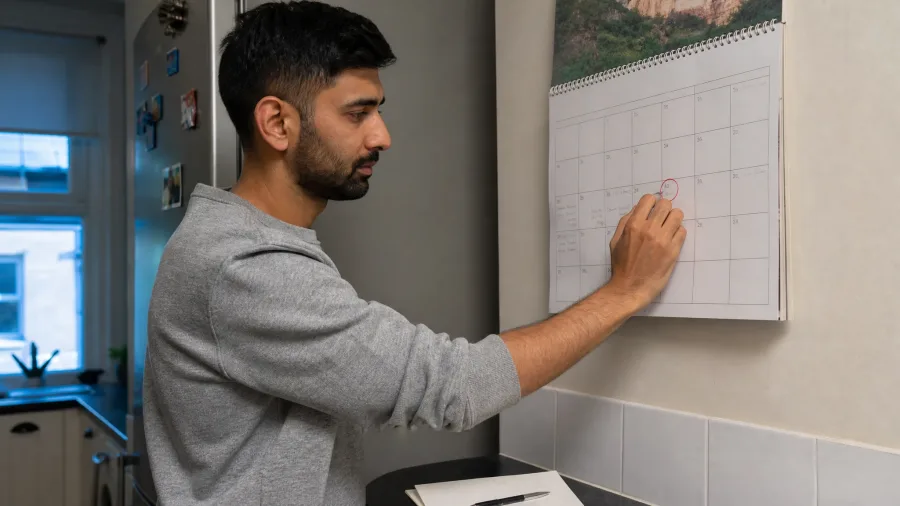
It is 2 a.m. and you are checking the phone again, though nothing has come, because the checking has become the thing you do instead of sleeping. The strain is not the waiting itself. It is that the waiting has no end date, so every night is another chance to decide something at the worst possible hour.
Pick the date and write it down: 60 days from the first written request, then the same calendar day each month after that, on the same page as the log. On the date you look at three things – whether any reply came, whether you have contacted a mediator, and whether the page shows a run of requests with nothing coming back.
A review date and a countdown feel similar from inside and produce opposite behavior. A countdown keeps you refreshing a screen at midnight; a review date moves the decision into daylight, where you can make it with the page in front of you.
The trigger is simple. Two written requests unanswered by the review date means the next call is to a mediator, at $150 to $300 a session, not to a lawyer. You decide that on the date, not at 2 a.m.
9. Keep Small Doors Open: Cards, Photos, Short Calls

Two birthday cards a year, one photo a month, a five-minute call if calls are allowed. Ask yourself honestly which of those you sent in the last fourteen months and how many you quietly stopped after no reply came back. If the answer is none, that is your answer to what happens when nothing works: there is still one channel open, and you closed it yourself.
The reason small contact gets through where requests do not is that it asks the parent for nothing. No reply, no admission, no date circled on a calendar. There is no sentence to refuse. A card with a photo of the garden is impossible to say no to because it was never a question.
On the call, talk about the child's week. Their team lost, their dog chewed a shoe, the science project. Never the situation, never when are you coming to see me, and never a question about what their mother said.
Be honest with yourself about the limit here. This holds a thread; it does not restore visits. That thread is what makes the first real afternoon possible when the door finally swings open, and it is the one thing in this whole situation entirely within your control.
Frequently Asked Questions
How long should I wait before doing something bigger?
Set a review date 60 days after your first written request, then the same date each month. At that review, if two written requests have gone unanswered, the next move is a family mediator rather than a lawyer. The date turns waiting into a decision made in daylight.
Should I text, call, email, or send a letter?
Send one written message first — five sentences with the ask, the date, and one way to reply. If previous texts have gone unanswered, use a certified letter with return receipt (about $9). It proves delivery and dates the request, which a text thread does not.
Do I need to document all of this?
Yes, but keep it to one page. Four columns: date, what was asked, what was answered, one line each. No adjectives and no commentary. A page of grievance is unusable to a mediator; a plain log shows a pattern of requests and answers over time.
Is a mediator really better than a lawyer?
A family mediator costs $150–$300 a session, usually two to four sessions, and tends to produce a schedule both sides agreed to. A lawyer's letter produces compliance or silence, and silence is more common. Safety concerns and a parent who refuses to attend are the exceptions — those go to a lawyer first.
What do I say to the grandchildren about all this?
No criticism of the parent in front of a child, ever. When a child asks why you don't come over, say you love them and that the grown-ups are sorting out the schedule, then ask about their week. Never ask a grandchild to pass on a message or to report what a parent said.
What are my legal rights here?
Read the family-law statute for your state on the court self-help site, then book one consultation ($250–$400 for an hour) with a licensed attorney there. What the statute permits is not what a particular judge is likely to do in your county. Take the rule from the statute and confirm it with the attorney before you repeat it to anyone.
The Grandmother Who Stops Begging Doesn't Disappear
This week it is two things. A forty-eight-hour pause on every message, then one written request, five sentences at most: a two-hour weekend visit at a neutral place, within thirty days, dated, with one clear way to reply. If texts have gone unanswered, send it certified with a return receipt for about nine dollars.
If two written requests go unanswered by the sixty-day review, the next call is a family mediator at $150 to $300 a session, not a lawyer. Safety concerns are the exception and go to a lawyer first. Keep the birthday cards and the monthly photos going through every stage and every silence, because what you are building is a relationship with your grandchildren, not an apology from their parent.
Back to the phone at two in the morning, the twelfth text half written. The message that goes out on day three is the small, warm, answerable one, and it is the one that gets a reply. The door stays open because nothing was ever slammed.
Write the review date tonight
Pick the date 60 days from your first written request and put it where you will see it. That one line turns months of waiting into a decision you make in daylight.