

Why do I feel guilty visiting my parents when nothing bad happened? That is the question, and this settles it. You drive home relieved, and then the relief itself feels like evidence of something cold in you. No fight, no crisis. Two hours and a car ride.
The guilt is not a verdict on how much you love them. It is a signal, and it gets produced by ordinary machinery: obligation scripts, quiet arithmetic, a room where you shrink back into a chair you outgrew, sentences you edit on the way over.
So go through them. Debt, tally, ageing, the child role, old criticism, edited honesty, relief read as disloyalty, go-between pressure. Name the loudest. Then ask whether it belongs to this Sunday or to a kitchen you left years ago, and pick one thing to do with the answer.
Some of what you feel is asking for repair. Most of it is an old reflex wearing today's clothes.
Quick Tips Before You Start
Set a time frame
Agree on a start and end time before you arrive, so the visit has a shape instead of an open-ended debt.
Make two lists
Write what you will share and what stays private. A boundary decided in advance is not a lie told at the table.
Plan ten minutes
Schedule decompression time right after you leave. Relief is a body response, not a verdict on your love.
Name one comment
If an old criticism lands, say once: 'That sounded like a judgment about my job.' Keep it a sentence, not stored evidence.
Brief your partner
Set an exit line and a departure time together before the visit, so you are not improvising peace alone.
The Debt Ledger: When Visits Start to Feel Like Repayment
The first layer of guilt is arithmetic you never agreed to. Somewhere in childhood, care was converted into a bill: they raised you, so you owe them visits. Attendance becomes the minimum payment, and because the balance is never stated, the minimum never clears.
This section looks at how that ledger works and why it makes even a pleasant visit feel like a transaction you are losing.
1. Guilt Starts When a Visit Feels Like Repayment

Twelve minutes. That is often how long you have been in the door before the first thought about how long you still have to stay.
There is a script running underneath these visits, and it goes something like: they raised you, so you owe them. It rarely gets said out loud, but it does not have to. Childhood care gets quietly converted into an invoice, and attendance is the payment. The problem is not that you pay it. The problem is that no one ever told you what the balance is, so the visit cannot sit in the mind as something chosen.
So arriving becomes the minimum. You show up on a Sunday afternoon, stay the hours, and it counts, but it only counts the way a single payment counts against a debt with no stated total. It moves the number and never clears it.
This is why the relief shows up at the wrong time. The visit is pleasant enough, the coffee is fine, nobody argues, and you are already watching the clock. What you are feeling is not boredom with your parents. It is the hope that a finished visit might close something.
It never does, and the drive home confirms it. The next obligation appears in your calendar and the small tight feeling returns, so you conclude the visit itself came up short.
Adults who carry less guilt tend to do one unglamorous thing differently: they make the visit explicit rather than owed. Two hours on a set Saturday, a call every other Wednesday, a clear reason for coming over. A specific plan can be completed and chosen, which lets the guilt stay attached to the script rather than to an offense you cannot name.
💡 Tip: Say the plan out loud: "I can come Sunday from 1 to 3, and I'll call Wednesday." Specific beats open-ended.
2. You Tally the Hours and Find Yourself Short
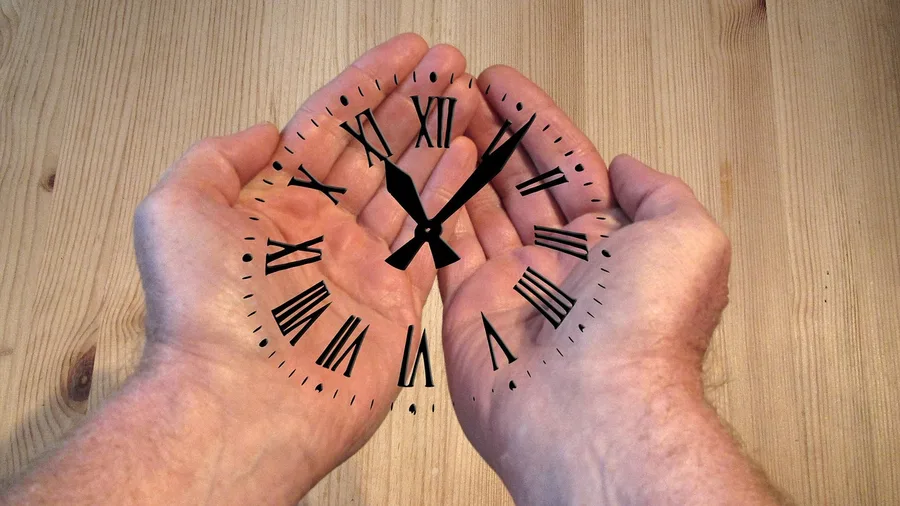
The cost arrives quietly, in a car or a kitchen, as a number you did not choose to keep: two hours there, one call since Easter, four weekends missed. Nobody set a target. You are failing one anyway.
The counting starts the moment attendance becomes a debt, because a bill needs a balance to measure against. So the hours get added, the calls get logged, the skipped weekends get subtracted, and the answer is always short, since the minimum was never written down anywhere. Then comes the comparison that finishes the job: a sister who drives over every Sunday, a version of you from ten years ago with fewer children and a shorter commute, an imagined good child who never seems to come up short.
The fix is arithmetic you agreed to before you arrived. "Two hours, this Sunday, then we head back." "I'll call Wednesday nights, and if I miss one it's not a crisis." "We're not doing the birthday and the holiday this year, just the birthday." Said early, in a calm week, these lines turn a vague standard into a plan, and a visit can then be measured against what was actually decided.
Some families already work this way, time is discussed and agreed, never scored, and in those houses the same two hours never becomes evidence of anything. What is left is old accounting, not a fact about how this Sunday went.
The Visit Ledger — At a Glance
🗣️ Do this first
Name the number out loud before you leave
🚫 Skip this if
Your family already talks about time plainly
🔇 The failure mode
A private target you never say — it can't be met
🚗 Where guilt spikes
The drive home, alone, after a fine visit
📂 Sign it's working
You can miss a call and not open the file
Key insight
A standard you never agreed to is a debt you can't repay, so it never closes.
The Old Child Role: Why You Shrink at Their Table
You walk in at forty-two with a mortgage, a work problem you solved that morning, and a car you paid for, and within four minutes someone is asking whether you're wearing a warm enough coat. Then whether you've eaten. Then what time you went to bed.
None of it is malicious. At that table, the old job is still open, and it reconvenes fast: the supervised child, managed by people who love you and have done it this way for decades. The role restarts before you've taken your coat off.
What follows is a particular kind of shrinking. You start leaving things out so there is less to manage. The job change that's still uncertain, the late night out, the decision about the car become subjects you steer around, and steering around them feels dishonest, even childish.
So the guilt arrives in two directions at once, and neither one has a real offense under it. You feel wrong for slipping into the child role, and then wrong again for resenting the people who put you in it.
The thing that eases it is when the questions come at you as an adult: what's the new job like, how are you and your friends, where do you think the car situation is going. Whether the coat is warm stops being the topic. In homes where that happens, you stay adult at the same table without having to argue your way there.
The guilt belongs to the role, not to anything you did wrong this afternoon.
3. Their Ageing Makes Every Missed Week Feel Costly

A single changed object by the door can reclassify every ordinary week on your calendar as time you no longer have.
The cane is new. The walk to the kitchen is shorter and slower than it was at the last visit, and the house holds less sound than you remember. So work, a child's fever, one tired weekend stop reading as normal life and start reading as abandonment, because each missed week now looks like one week fewer. Researchers who study later-life family contact keep finding the same direction: steady, predictable contact settles the anxiety that sporadic marathon visits only briefly relieve. So the adult packs the calendar, resents the crowding, then feels guilty for resenting a parent who is simply getting older.
A standing Sunday call and a set visit once a month do more for the panic than any single long weekend spent trying to bank time. The alarm belongs to finite time. It is not a report on the week you stayed home.
🌱 GROWING TIP
Consistency Beats Grand Gestures
A standing Sunday call and a monthly visit do more to quiet the panic than a single six-hour marathon. Regular, predictable contact turns finite time into a rhythm you can live with.
The old child role
4. You Become the Child Who Needs Managing Again

The mistake was reading the shrinking as weakness, as if the adult simply lacked the spine to stay grown at the table. The better frame is duller and more useful: the role was never dismantled, only paused, and the kitchen resumes it within minutes.
"Did you eat? Take a coat, it's cold out. How's the job going, are they treating you right? Are you getting enough sleep? Don't drive back too late." Food, coat, job, sleep, driving: five questions in under two minutes, each one supervising rather than asking. The adult answers in the voice of fifteen, then notices it. So the job change goes unmentioned, the late night gets edited out, the car decision is left at the door, and the omissions start to feel like a small dishonesty, performed to keep the managing at a manageable level.
That is the whole trap: guilt for behaving like a child, then guilt for minding the role, and neither guilt attached to anything the adult actually did wrong. Watch what happens when the questions turn to plans, friendships, work, the shape of an adult week. The same person sits at the same table and no one has to shrink. The guilt was attached to the old role, not to the adult in the chair.
5. Old Criticism Lands Faster in Their Kitchen

"I'm only saying it because I care." The obvious advice is to let it go, to treat the remark as an opinion you can weigh and discard. That advice fails, and it fails in this room, because the remark does not arrive as an opinion. It arrives in the old tone, across the same table, in front of the same audience, and it lands as a verdict before any adult part of you can get a hand on it.
A comment about weight, the job, a partner, a child's manners, the state of the house carries thirty years of authority behind it. Critics in the field describe this as the setting doing the work: the content is ordinary, the context supplies the force. So the reaction gets swallowed to keep the visit calm, and then replayed in the car with interest, and the guilt is for having reacted at all.
What works is smaller and harder than letting it go: name it while the plates are still on the table. "That sounded like a judgment about my job." It stays a sentence in the visit, not stored evidence, and it puts the sting back where it started, in the old kitchen, not in your present worth.
The Hidden Price of the Guilt Visit
6. Keeping Your Life Private Feels Like Lying

You are in the passenger seat of your own visit before you have said a word. Somewhere between the driveway and the kitchen table, a list has already sorted itself: the therapy session you started in March stays out, the new relationship stays out, the raise stays out, the weekend that involved no one they know stays out. Money, dating, work, religion, how you are raising your own children – each one weighed for whether it opens a door or starts a fight, and most of them quietly filed under the second.
The visit goes smoothly, which is exactly the problem. No argument at the table, no tightening around the jaw, and afterward the omission curdles into something that looks a great deal like deception. You skipped the part about the counselor and let the conversation move on, and later, on the drive home, that skip sits there like a small lie you told a person who was being kind to you.
privacy is not lying. A calm visit often runs on chosen disclosure, where the adult decides in advance what is shareable rather than handing over everything and hoping it lands. The two are not the same act, even when the silence looks identical from the other side of the table.
What separates them is timing. A lie is invented at the table, in the moment the question arrives, with your pulse up and your answer forming as it leaves your mouth. A boundary is decided before you walk in, and it does not ambush you when your mother asks how the job is going.
So write the lists down the night before. One column for what stays out this visit – the therapy, the dating, the decision about the car – and one for what you can honestly offer: the promotion, the trip in June, the friend who moved back. Two short lists on the back of an envelope, decided in your own kitchen, means the next question at the table meets a decision rather than a scramble.
None of this is a rule about which topics are off-limits forever. Some families can hold the harder material without it turning into an argument, and in those the editing is overcaution rather than protection. The test is simple: if the omission was planned, it is a boundary; if it was invented in a hurry to dodge a fight, it is closer to the thing you are afraid it is.
💡 Tip: Try a phrase like "I'm keeping that to myself for now" if pushed. It names the boundary without starting a debate.
When Privacy Is Healthy vs. When It Signals Danger
Healthy privacy
- You choose what to share based on your comfort.
- The omitted topic is personal, not dangerous.
- You feel relief, not shame, after the visit.
- The boundary can be stated calmly if asked.
Warning sign
- You hide basic facts about your life out of fear.
- The topic always leads to a blow-up or silencing.
- You feel like a liar even when protecting yourself.
- Your partner or children are also told to keep secrets.
Your Life Outside: The Guilt You Carry Back Home
The final layer is the guilt that follows you out of your parents' house and into your own life. It is the guilt of relief, of a partner who does not click, of a family that never quite feels seamless.
This section looks at how the pressures of your adult world collide with the visit, and why that collision can feel like betrayal.
7. The Calm in Your Car Reads as Disloyalty

The standard line is that a good son or daughter should feel a pull toward the driveway, not toward the highway. Then the engine turns over, the radio stays off, and for about thirty seconds the only sound is the blower. The shoulders come down a full inch before any thought arrives to explain why.
Guilt reads that slack jaw as a verdict: if leaving feels this good, the love must be thinner than advertised. But the relief is often the release of management, not the withdrawal of affection. Two hours of watching a parent's face for the first sign of a mood takes real effort, and the body registers the shift before it finds a mature way to describe it.
Ten minutes is enough. Pull over before the phone rings or the group chat asks how it went. Let the quiet be what it is — the end of a task, not the end of a bond.
🔄 A Guilt-Sorting Sequence for the Next Visit
Name the loudest guilt
Identify which of the eight reasons hits hardest before you arrive.
Check the evidence
Ask: Did something specific happen this visit, or is this an old script?
Choose one boundary
Set a time limit, a privacy list, or an exit line for the next visit.
Plan the decompression
Schedule ten minutes alone after leaving to let relief be relief.
8. Your Partner's Discomfort Makes You the Go-Between

The go-between role is what happens when the adult starts translating between two people who never asked and never spoke. The partner dreads Sunday, the parent reads the partner's distance at the door, and before either has said a word the adult has already mapped the seating, chosen three safe topics, warned both sides in the car, and marked the exit. The relief at the end of a buffered visit is honest, and it is the clearest sign of the labor that went into it.
What it spends is not the two hours. It is the months of quiet resentment at being the bridge no one appointed, stacked against the guilt of failing to produce a family that clicks on its own. The partner feels handled, the parent feels managed, and the adult carries both.
Agree with the partner before the visit on the boundaries and say them out loud: two hours, one exit line, a set departure time. Improvising peace alone is what costs.
Frequently Asked Questions
Why do I feel guilty after visiting my parents when the visit went fine?
Guilt after a normal visit often comes from old scripts, not current events. The debt ledger, the old child role, or the relief you feel on leaving can trigger guilt even when nothing went wrong. Naming which mechanism is loudest helps separate real repair from reflex.
Is it normal to feel relieved when I leave my parents' house?
Yes. Relief is a common physical response to the end of an intense, managed interaction. It does not mean you love your parents less; it means you were working hard to keep things smooth. Allowing yourself to feel relief without judgment reduces the guilt spiral.
How can I stop feeling like I owe my parents visits?
Make visits explicit: agree on a specific length, date, and purpose. When you choose the time, attendance becomes a decision rather than a payment. The guilt belongs to the unstated debt script, not to any real obligation.
What if my partner and parent just don't get along?
You are not responsible for making them click. Agree with your partner on boundaries, visit length, and an exit line before you arrive. That way you are not improvising peace alone, and the guilt for not producing a seamless family can be set aside.
When is it okay to keep parts of my life private from my parents?
Privacy is not lying. You can decide in advance what to share and what to keep out, especially when a topic always leads to a fight. If hiding basic facts is driven by fear, though, it may signal a need for broader support or boundaries.
Sort the Guilt Before You Carry It Home
Guilt on a normal visit is not a verdict on your love. It is one or more of eight mechanisms at work, and only some guilt signals genuine repair, an actual harm, a broken promise, an avoidance that needs action. The rest is an old reflex, a script written years ago that still plays in the car.
Think back to the car door and the deep breath. The same moment can be read as disloyalty or as your body leaving a role, and the difference is the name you give it. So name the loudest of the eight: debt, tally, ageing, child role, criticism, privacy, relief, go-between. Then test whether it points to repair needed now or a reflex carried from the old kitchen. If repair, choose one concrete act; if reflex, do not treat it as failure.
Obligation can stay in the calendar, but love becomes clearer when visits are explicit, bounded, and no longer asked to prove themselves. The breath you took at the car door was not the end of a bond; it was the end of a task. Decide which of the eight you will name first, and let that be the only thing you carry home.
Name the Loudest Guilt
Which of the eight reasons hits hardest for you? Say it out loud or write it down. Then decide if it's a call to repair or just an old script you can put down.