
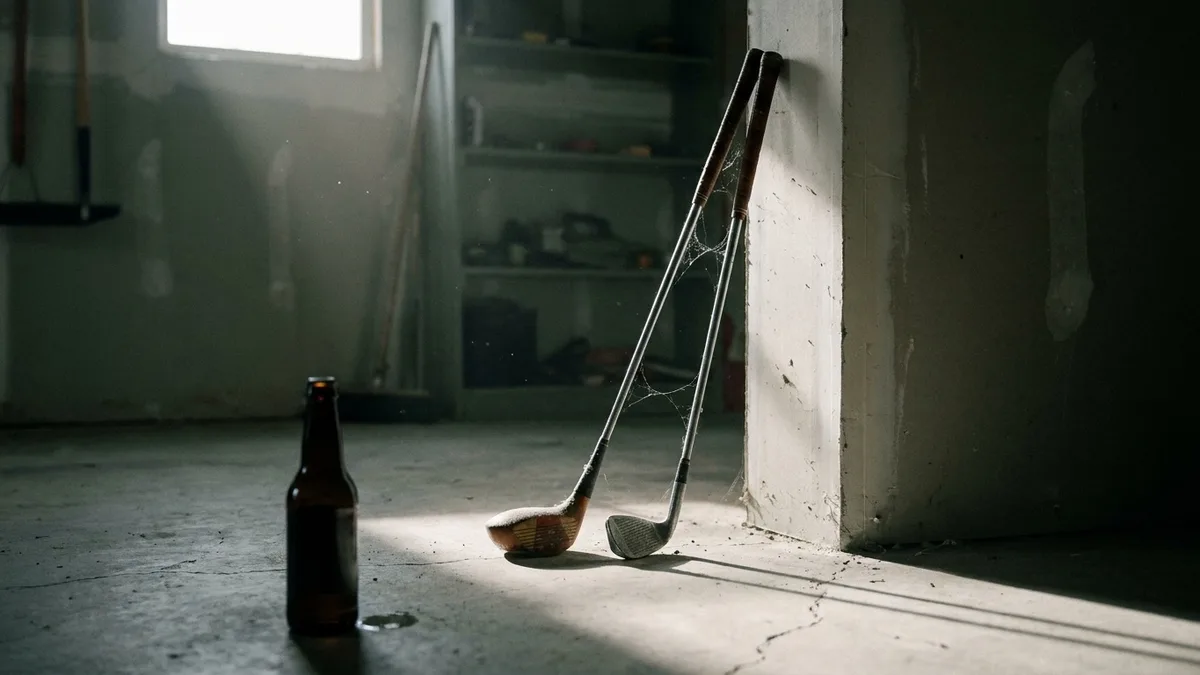
By the end of this you will be able to sort what you are seeing into two questions: did it stay changed, and did anything replace what was lost. The house looks like this. He is 58, married 26 years, two grown children, 18 months out of a 30-year job. He sleeps about ten hours and takes an afternoon nap. The golf clubs have not moved from the garage since spring. Two beers most evenings. And the answer to almost any question is "fine."
Aging narrows a life and keeps a few pleasures in it. What happened in that house emptied the list and put nothing back, and it has not settled the way a bad month settles. The difference between ordinary aging and depression is pattern and replacement, not sadness. That is why a man who never cries can still be the one to worry about.
You are not going to diagnose anyone at the kitchen table, and this piece will not do it either. What you will end with is smaller and more useful: two or three things you actually watched happen, said out loud in one calm sentence, and a primary-care appointment on the calendar. The diagnosis stays with the doctor.
Quick Tips Before You Start
Write it down
Jot the dates and patterns in your phone notes as you notice them, not from memory a month later.
Start with primary care
Book the family doctor first, not a psychiatrist. The doctor can rule out thyroid, sleep apnea, and medication side effects in one visit.
Use plain words
Say "I've noticed" and name two behaviors, not "you're depressed." You are reporting, not diagnosing.
Track duration
Note how long it has been going on — "most nights since March" is more useful to a doctor than "a while."
Don't wait for sadness
Men often show irritability or flatness instead of crying. Look for absence of interest, not tears.
Body and Daily Rhythm
Start with what you can count: hours slept, meals eaten, energy in the chair. These are the changes a spouse notices first because they are visible from across the kitchen. The question is not whether they changed — it is whether they stayed changed after the obvious cause passed.
Aging moves the body's rhythms slowly. Depression moves them and then holds them there.
1. Sleep Changed and Never Settled Back
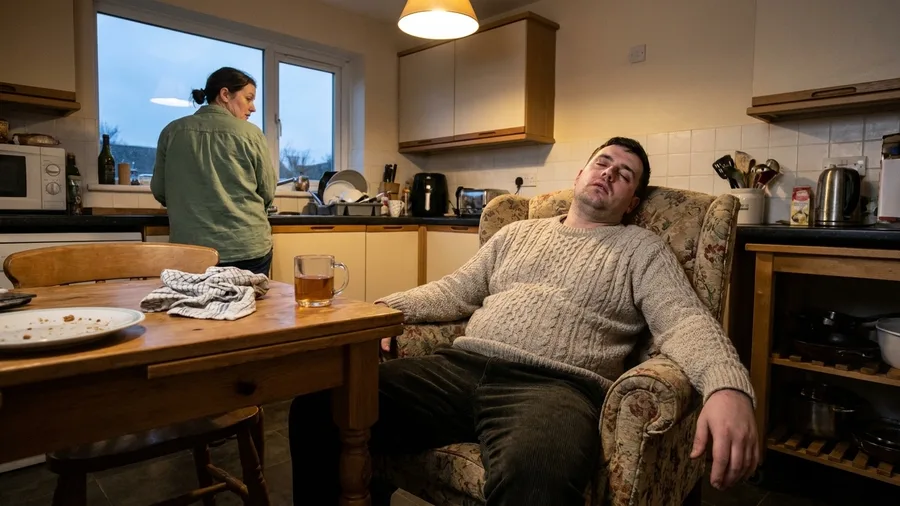
The advice you will hear is to let him sleep, that a man who worked thirty years has earned his rest. That advice holds right up until you count the hours and find they have not gone back down.
Two shapes show up in houses like yours. In one, he is under the blanket by nine, out cold until seven, and by two in the afternoon he is gone again in the recliner with the television still talking to the ceiling. In the other, he drops off fine at eleven and then his eyes are open at four, staring at the dark, and no rolling over gets him back under. Either way, the hours moved – and stayed moved long after the holidays or the surgery or whatever started it had passed.
Aging does move the clock. People fall asleep earlier and sleep lighter, and a four o'clock wake-up is a common companion to that. What aging does not do is add a two-hour afternoon collapse on top of a full night in the same man. Note what to hand the doctor, framed as questions, not causes: sleep apnea, thyroid, nighttime urination, sedating medications. Carry the pattern and how long – 'most nights since March,' 'since the job ended' – not a diagnosis. The two-week criterion comes from DSM-5-TR and belongs to the clinician, not the kitchen.
Then ask what moved into the hours sleep took. Nothing did. No earlier dinners with the two of you talking, no slow coffee on the porch at six. The day just got shorter, and the room got quieter by the same amount.
💡 Tip: If he wakes at 4 a.m. and cannot get back down, note whether he is awake and calm or awake and anxious. That detail changes what the doctor checks first.
| What you're seeing | Ordinary aging | Possible depression |
|---|---|---|
| Sleeping 10 hours plus a nap | Sleep shifts earlier and lighter, but total hours stay similar | Hours expanded and stayed expanded with no replacement activity |
| Stopped playing golf | Narrows the list but keeps a few pleasures | Empties the list and fills nothing in |
| Lost weight or gained weight | Appetite declines slowly over years | Clothes fit differently within a few months with no explanation |
| Angry or irritable | Occasional crotchetiness, but the person is still themselves | Irritability plus flatness between outbursts, a change from who they were |
| Drinks two beers most evenings | Social drinking continues | Drinking alone, on a schedule, to get through the evening |
| Says "fine" to everything | Content with a smaller life | No feeling about that life either way |
2. Appetite and Weight Moved Without a Reason

The first time a husband I knew lost his appetite, I said what everyone says: he is not a kid anymore, his stomach just is not what it was. I believed it for six months. It was not that.
Watch the clothes, not the number on the scale. He pushes the plate back half full and his belt has a new hole in it, or he eats the whole thing and then the chips at nine and the waistband tells you over a season. Either direction counts. The tell is the fit of the shirt changing inside a few months with nothing behind it – no diet, no new pill, no illness.
The aging story fails on speed. Taste bud by taste bud, appetite thins over years, so the man who used to clean a plate is still working through most of it at forty-five and fifty-five. A change you can date to one winter is doing something else. Here is the evidence hidden in plain sight: he eats standing at the counter, or he carries the plate to the other room, or the Sunday dinner that always had both of you at the table quietly has one chair. The shared meal is the ritual, and its going is the finding.
Hand the doctor the questions and nothing more – teeth, swallowing, the medicine cabinet, the thyroid, any weight that moved unexplained. Then ask what replaced the Saturday breakfast at the diner or the Sunday roast. Nothing smaller got swapped in. It simply stopped, and that empty morning is worth saying out loud.
⚠️ COMMON MISTAKE
Don't wait for sadness
Depression in men often looks like irritability, flatness, or exhaustion rather than crying. If you are waiting for tears before you act, you will wait past the point where a doctor could have helped cheaply.
3. A Tiredness That Sleep Doesn't Touch

The recliner creaks and he rocks twice before getting his weight over his feet. He reaches the kitchen, fills the kettle, sits down at the counter, and lets the kettle sit there humming, and you know he slept nine hours and took the nap after lunch.
The field keeps drawing the same line: ordinary age-related stamina loss arrives after effort. What the doctors actually describe is a weariness that arrives before effort, and rest does not repay it. The signs other people see are simple and say nothing on their own – a voice that got quieter and slower, a longer pause before he answers, fewer gestures, hands resting still in his lap.
Rule the look-alikes out first and let the doctor sort them: anemia, thyroid, sleep apnea, heart and kidney trouble, medication side effects. This is the sign most often filed under just getting old, and the one most worth the booking – because that nap did not refill the tank the way a rest used to.
What a Doctor Needs to Hear
Withdrawing From the Life You Shared
This is where the changes stop being about his body and start being about the two of you. The shared calendar gets thinner. The Saturday routines stop. The room gets quieter.
The test is the same: did it stay changed, and did anything replace what left?
4. The Things He Loved Got Quietly Dropped
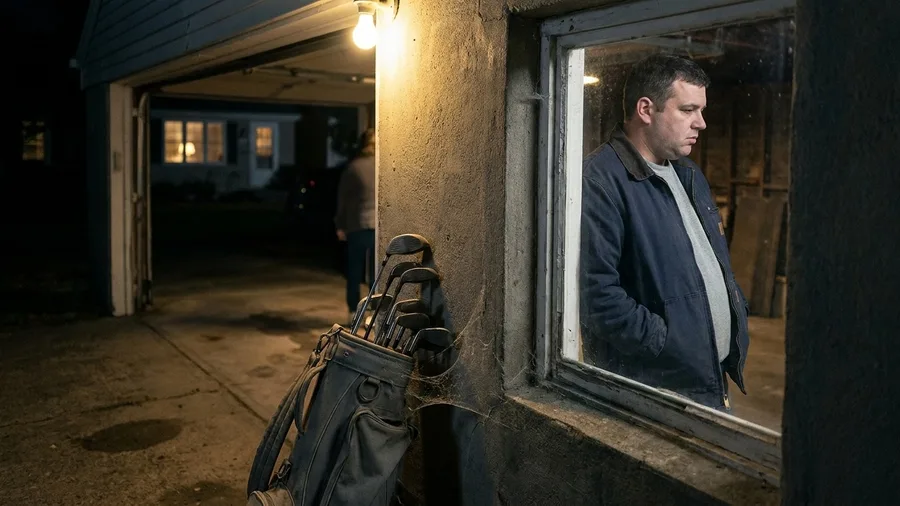
Seven months. That is how long the clubs have leaned against the garage wall in the same spot, and how long it has been since anyone called about a tee time.
A man worn flat by a tiredness rest does not repay stops buying tickets to his own Saturdays. The round costs a five-hour block of energy he no longer trusts himself to have, so he lets it go, and when the invitation comes he says something about the knees and changes the subject.
Here is the difference worth holding onto. Getting older trims the list of what a person enjoys and leaves a few things on it. What you are watching does not trim the list. The garage keeps the clubs, the calendar keeps the empty Saturday, and nothing has been put in their place.
Not the standing breakfast with his brother, not the workshop project, not one small weekly thing he used to guard. And eighteen months after the job ended, nothing has moved into that space either. The job left a hole the size of a working week, and the hole is still a hole.
5. In the Room, But Not in the Conversation
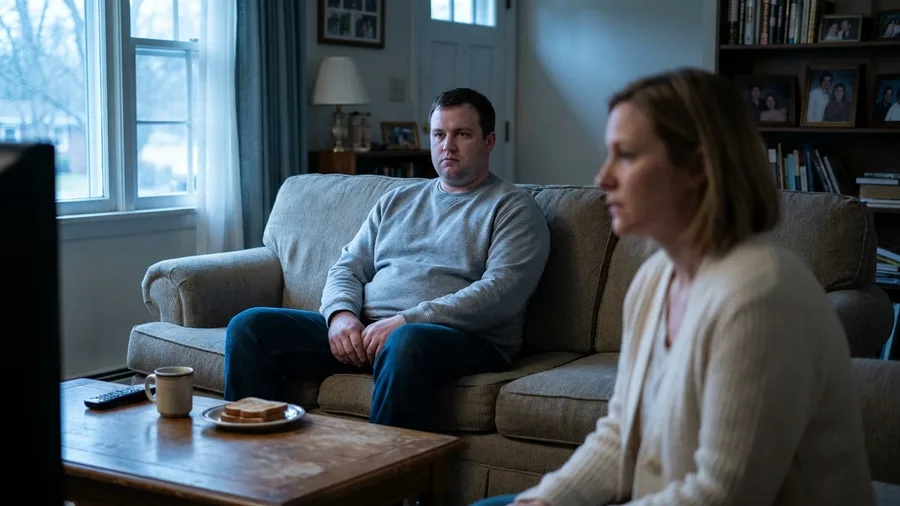
"I'm fine, just tired." You have heard it across the dinner table four nights running, and the plate in front of him is half full.
Notice what is missing from the exchange. He answers whatever you ask. He does not start anything. The man who used to open a conversation with a plan for the weekend, a complaint about the neighbor's tree, a joke about the dog, now sits with his hands still and waits to be asked, and then agrees with whatever you say. What left the calendar has arrived in the room. If you want to understand the inner world behind his silence, psychology on men who grow quieter explores the hidden feelings that often accompany this withdrawal.
This is the version of a quieter life that gets miscounted. Fewer dinners out, a smaller circle, an earlier night in — that is a person who still lights up when the people he loves walk through the door. The reading you are looking at is different: no pleasure in the company of anyone, you included. The evening is not calm. It is silent, and there is a difference you can feel in your shoulders.
Watch, too, for the memory remarks. "Senior moments" that arrive alongside the flatness and leave when his mood lifts are not the same as forgetting that stands on its own, and the distinction decides what to ask the doctor for. If memory is what worries you most, ask about a cognitive screen; ask about a hearing test either way, because a man who cannot follow the table often stops joining the talk rather than admit it.
The two questions from every sign still apply here. Did it stay changed — has the quiet held for months rather than a season? And did anything replace what left — did the talk that used to fill the evening get swapped for something, even something smaller? If the answer is that the room simply went quiet, that is the fact to carry into the appointment, in your words, exactly as you saw it.
Aging vs. Depression: What Actually Differs
Ordinary aging
- Pleasures narrow but a few remain
- Sleep shifts earlier and lighter
- Appetite declines slowly over years
- Content with a smaller life
- Occasional tiredness after effort
Possible depression
- Pleasures empty; nothing replaces them
- Sleep expands and stays expanded
- Weight changes within a few months
- No feeling about that smaller life
- Fatigue that rest does not repay
6. Affection and Sex Went Quiet, Not Quieter
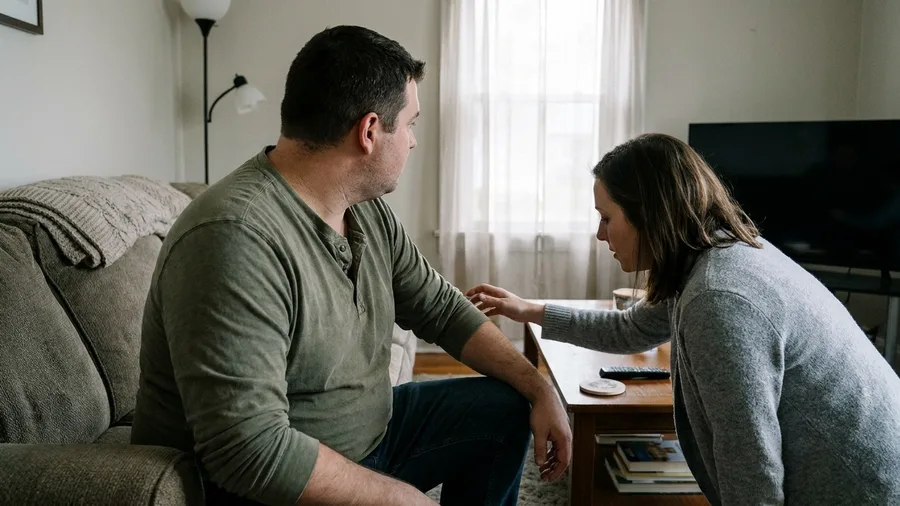
Intimacy is the last thing a spouse says out loud, partly because it sits next to the withdrawal that has already emptied the calendar and the dinner table, and partly because saying it sounds like a complaint about yourself.
Separate desire from ability. Performance changes are common, and they are not the signal. Losing the wish for any closeness at all is: no hand on the arm as you pass, no sitting near on the couch, no kiss goodnight. That is absence, not slowdown, and you can feel the difference.
When you bring it to the doctor, list it plainly as one of the things you have noticed, alongside the sleep and the beers, and name the medications to check – antidepressants, blood pressure drugs, alcohol. You are not accusing him of anything. You are allowed to have been lonely for a year, and saying so in that room is not a verdict.
💡 Tip: Raise this in the doctor's office, not in the moment of refusal. "He's stopped reaching for me, and that's not like him" is a fact the doctor can use.
How it lands between you
7. Patience Turned Into a Short Fuse

The cost arrives before the question does. You start rehearsing sentences in the car, deciding on the drive home which version of the news is safe to bring up, and the house gets quieter in a way that has nothing to do with calm. Something is being managed here, and it is being managed by you.
Then a plate goes into the sink too hard, or the dog barks twice and he is up out of the chair, and the volume in the room changes for about ninety seconds. A man who coached Little League for nine seasons without raising his voice is red-faced over a dish towel. That is the part people notice. The part they file away is what comes after, when he sits back down and there is nothing behind his eyes at all. The snapping and the deadness belong to the same thing, and it is a departure from the man you married, not an intensification of him.
Irritability is one of the ways depression presents in men, and the National Institute of Mental Health says so in its published materials, which is worth reading before you decide this is temperament. Short temper is easier for a lot of men to show than sadness, so it gets shown, and the flat hour afterward gets ignored. Ask yourself when you last saw him genuinely cheerful between the outbursts, and not merely quiet.
Two reactions make it worse, and both are hard to resist. One is the verdict over the dishes – you've just gotten mean – which tells him he has become a worse person and gives him somewhere to put his defense. The other is the diagnosis over the dishes, which ends the same argument from the other side. What the anger replaced matters more than the anger: he did not swap a lost Saturday on the course for a shorter fuse, and no lost pace explains it. Patience was there for twenty-six years and it is not there now.
When to Act, When to Watch
- Says "fine" to everything — Content with a smaller life is not itself a problem.
- Stopped golf, no replacement — Note the date and mention it at the next doctor visit.
- Sleeping 10 hours plus a nap — Ask the doctor to check thyroid and sleep apnea.
- Two beers every evening — Mention the schedule at the appointment. Point him to NIAAA guidance.
- Snaps over small things, then flat — Irritability plus flatness is a pattern to report.
- "You'd be better off without me" — Call or text 988. If there is immediate danger, call 911.
How It Lands Between You
The signs up to now are visible from across the room. A spouse can see the sleeping, the dropped golf, the untouched plate, the flat way he answers – you could point at all of them from the doorway.
What comes next happens between the two of you, inside the marriage, and it is harder to name. It feels less like a symptom and more like a verdict – a judgment on the relationship, or on you.
That is the trap. The withdrawal that reads as rejection is not a verdict; it is the same low mood showing up in the place where you happen to be closest to him. The distance is real, and so is your hurt at it. Both can be true without either of you being the problem.
Keep the question simple when you look at what has changed between you: did it stay changed, and did anything replace what left? A quiet year after a hard season is one thing. A quiet year with nothing moving into it – no shared meal back, no warmth returned, no talk in the evening – is another.
Your loneliness is not a distraction from the worry. It is part of what you will describe.
8. Numb Is the Word, Not Sad
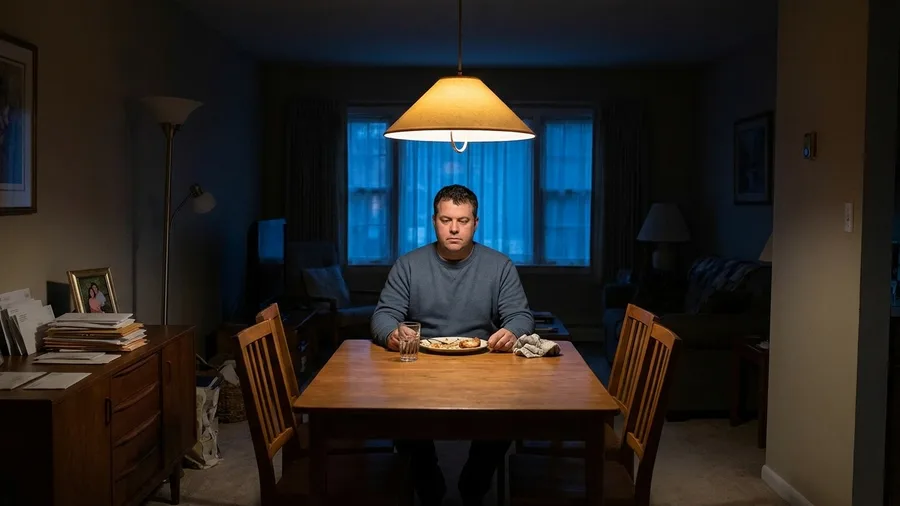
Yes, and this is the version that hides longest. Anger at least announces itself and gives the family something to react to. The flatness underneath it is quieter, and a level 'fine' is exactly what has kept everyone from saying the word out loud.
The picture most people carry around is tears and visible grief, so a man who answers questions in an even voice, watches the game, eats his dinner, and says he is fine reads as untouched. He is not untouched. Emptiness is one of the ways this shows up, and a man who tells you in a steady voice that nothing matters much is not being stoic – he is reporting. Emptiness is the symptom, not the absence of one.
The question that gets past 'fine' is not how he is feeling. Ask what he would normally look forward to this weekend, and watch the pause, the shrug, the way the answer arrives two beats late and has nothing in it. That silence tells you more than any direct inquiry, because it shows you the machinery that used to produce anticipation and now produces nothing.
The aging distinction is worth holding clearly. A man who has decided he does not need much anymore still lights up over the grandkids, still has opinions about the garden, still minds things. A man with no feeling about that smaller life is somewhere else, and the difference between 'I don't need much' and 'it doesn't matter either way' is the whole distance between them.
Here is the line, and it does not move. You describe what you saw; a clinician decides what it means. The kitchen table is not the place to name a condition, and neither this article nor you can diagnose anyone. Nothing has moved into the space where feeling used to be – not pleasure, not worry, not the grandchildren – and two or three of those observations, said plainly to a doctor, are worth more than any label you could reach for at home.
The signs families explain away
9. The Evenings Got a Helper

"I just have a couple to take the edge off." The words are calm and reasonable, and that is exactly what makes them easy to accept. But count the shape of it: the same glass, the same chair, the same hour, most nights, and never a night off.
A schedule is the tell, not the amount. A man who pours his second beer at 8:40 because the evening has to be gotten through is using the drink as a tool, whether or not he would ever call it that. The screen on at the same time, the same chair, the same quiet.
What makes this hard to raise is that it runs both ways at once. Alcohol pulls mood down over weeks, and a low mood makes the drink feel like the one thing that helps. Tell the doctor about both in the same visit – the two beers and the flatness – and let the doctor sort out which is feeding which.
For guidance on limits and health, the NIAAA's official pages are where that question belongs. Take it there, or take it to the appointment.
saying "he has two beers most evenings, poured at the same time" is a fact you witnessed. It is not an accusation, and it asks the doctor a question you are not qualified to answer.
The replacement question settles it. The evenings found a helper – the glass, the sleeping pills, the screen – and the helper now props up the problem instead of holding it off. Nothing smaller moved in. The night just got something to lean on.
💡 PRO TIP
Ask the direct question
Asking "Are you thinking about killing yourself?" does not plant the idea. It gives permission to answer honestly. Ask plainly and wait out the silence.
10. Talk About the Future Got Dark
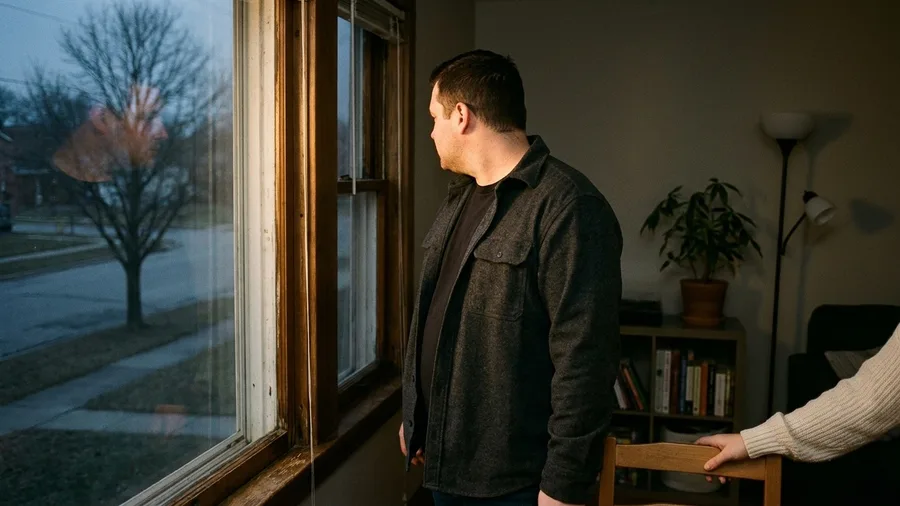
One remark about the future, said in passing, is not a verdict. Three or more in a month, in a level voice, is worth a question. "You'd be better off." "What's the point of fixing that." "I'm just tired of it." These are the lines families laugh off, answer with a joke, or change the subject on – and a couple of beers in the evening can loosen the mouth enough that they get said at all.
You can test in ten seconds how you answered the last one. Did you ask him plainly, or did you laugh? Asking does not plant the idea – the question is "Are you thinking about killing yourself?" or "Have you been thinking about suicide?", said without flinching, and then waited out in silence until he answers.
988 Suicide & Crisis Lifeline – call or text 988; 911 for immediate danger. If he will not talk, stay with him, call 988, and lock up or move what can be moved. A passing dark remark gets a question, not a shrug. A plan, a date, a means gets 911 or a same-day call. And when you check what he used to say about the future – the trip, the garage project, the visit to the kids – and find nothing in it now, that silence is the sound of it.
💡 Tip: 988 Suicide & Crisis Lifeline — call or text 988. For immediate danger, call 911. If he won't talk, stay with him and move or lock up what can be moved.
Frequently Asked Questions
How do I know if it's depression or just aging?
Two questions do most of the work: did the change stay changed after the obvious cause passed, and did anything replace what was lost? Aging narrows the list of pleasures but keeps a few. Depression empties the list and fills nothing in. A doctor has to make the actual call.
What if he refuses to see a doctor?
Go yourself and ask the doctor for guidance. Describe what you have seen, in your own words, with dates. The doctor can tell you what to watch for and how to bring it up next time. You are not diagnosing him by talking to a professional.
What if the doctor says it's just aging?
That is the doctor's call to make, not yours. If the doctor is not concerned, ask what would change their mind — a specific symptom, a duration, a weight change. Write it down. Then watch for it.
Should I ask him directly if he's depressed?
Ask about specific behavior, not the label. "You haven't played golf since spring, and you're sleeping a lot — I'm worried" opens more doors than "are you depressed?" If you are worried about suicide, ask that directly and plainly: "Are you thinking about killing yourself?"
What if he says he's fine and means it?
"Fine" in a level voice can be genuine. It can also be the flatness of depression. The test is whether anything moves him — a grandchild's visit, a favorite meal, a plan he used to look forward to. If nothing does, that is worth mentioning to a doctor.
The Sentence You Say Before You Call
Pick the two or three things you actually watched and say them in one calm sentence at a neutral moment, not mid-argument and not at bedtime. "I've noticed you've stopped golf and you're sleeping a lot. I'm worried, and I'd like us to see the doctor." Book the primary-care visit, not a specialist referral, and go along.
If he refuses, you call the doctor yourself and ask for guidance. If he says it is just aging, let the doctor make that call, because it is not yours to make and the appointment happens either way. On the nights the talk turns dark: 988 Suicide & Crisis Lifeline, call or text 988; 911 for immediate danger. Naming what you see is not diagnosing him. It is the thing that gets him in front of someone who can.
The clubs are still in the garage. The nap is still on the afternoon schedule. The answer is still "fine." Those are the facts you walked in with, and now they can be counted, named, and carried into a consulting room. Say the sentence this week and make the call.
Name the two things, then make the call
Write down the two or three changes you have witnessed with dates, and book the primary-care appointment this week. If the talk turns dark, call or text 988. For immediate danger, call 911.