

Three nights. That is the length of a typical stay in the three-bedroom suburban house where she is 66 and he is 69, married two years, both widowed, and where his adult children – 41, 38 and 35 – sleep on a pull-out couch and share a bathroom with the house. Hers are 44 and 40, and visits run from one night to three.
For her, a visit is a chance to build something. For them it can feel like a test of loyalty to a mother who is gone, or to a household that still keeps her rituals. The distance is often protection rather than rejection.
A guessed nickname, a merged holiday, a stay that runs long, an estate nobody explains – any one of those raises what it costs a stepchild to come closer.
Welcome grows through small moves that leave a stepchild free to keep their old family intact and free to say no.
By the next visit or holiday, you can pick one of the eight and start the first month of contact with it.
Quick Tips Before You Start
Ask, don't assume
Ask what name they want before you guess; the wrong label can set the tone for years.
Keep the old calendar
Keep Christmas Eve and Christmas Day where they were for the first year; invite them to add a dish or ritual rather than merge everything.
Let them pick the exit
Offer a visit-length menu so they can choose a day visit, one night, or two nights without needing an excuse.
Say the plan out loud
State the inheritance plan with an attorney in the room, not hinted at over dinner.
Stay out of old fights
When your spouse and his or her adult child argue, say 'That's between you two' and mean it.
1. Ask what name they want before you guess

"Go ahead and call me Grandma, honey." It sounds warm, and it can land like a bill.
If the stepchild's mother is living, or was the one who died, that word already belongs to somebody, and handing it over on a first visit quietly asks the stepchild's children to file you in a slot their grandmother still occupies. So ask the stepchild, on their own, before the grandchildren are near. "What would you like the kids to call me?" In the same breath, settle what the stepchild will call you, because that one gets guessed wrong too.
This matters most where a mother holds the name already. It matters less when the stepchild has already handed you a first name unprompted, which is their answer given in advance.
A label corrected two holidays in does not read as a fix. It reads as a demotion, or a small rejection, and the stepchildren will not say so out loud. Ask once, and the name is the first thing at the door they got to decide.
💡 Tip: If the stepchild hesitates, offer two options ('Jane or Gigi') and let them pick; a closed choice is easier than a blank page.
2. Keep your holiday rituals, then invite them in
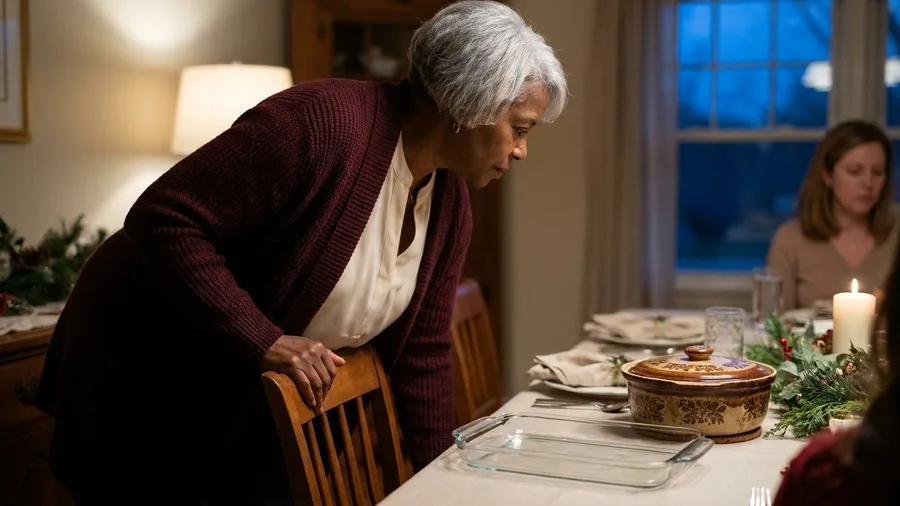
The first holiday after a remarriage is where a merged family tradition gets announced, and if it gets announced, that is usually a mistake.
Consider the December of the first year: Christmas Eve at her daughter's house, as it has always been, then Christmas Day at his, and Thanksgiving still trading off between the two sides. Then someone suggests one big dinner at the new house, everyone under one roof, and his 41-year-old quietly calculates that the Eve at her mother's is now a thing of the past. That is not a scheduling problem. It is a trade they were not asked about.
Keep the calendar as it stood, at least for the first year, and hand them an addition instead of a replacement. Ask each of them to bring one dish from the other household's table, or to run one ritual, a game, a toast, the same pie their mother made. The old table arrives with them and sits beside yours.
It does not fit every family. Where the two sides had already been sharing holidays before the marriage, one combined dinner is nobody's loyalty test, and treating it as one invents a problem. But where the traditions were separate, an invite they can add to leaves both households standing. A merge does not.
💡 PRO TIP
The additive invitation
When you invite a stepchild to bring a dish or a ritual, name it in the invitation: "Bring your mom's cranberry thing if you want." A specific invitation is easier to accept than a general offer to 'make yourself at home.'
3. Give each stepchild a standing one-to-one slot

The common advice is to let the relationship build on its own and not force time alone with a stepchild. Waiting on it is how two years pass and you are still only ever in the same room as a group.
Put a short standing slot on the calendar instead: once a month, about 45 minutes, the same day each time, no agenda. The point is direct contact, not a family meeting, so the spouse is not in the room and not ferrying messages between you. Keep the spouse, the will and the old grievances off the table, because each of those turns half an hour into a hearing, like grandparent habits that frustrate adult children.
The exception is where the stepchild arrives and asks to talk through the will. Then take it to the conversation with everyone in it, not to this slot. A monthly call that gets canceled twice is finished, though, whatever the reason. The stepchild reads the second cancellation as proof the slot was never real and stops saving the date.
💡 Tip: Put it on the calendar as a recurring event with a name; a named slot is harder to cancel than an open offer.
The real cost of the one-to-one slot
Put all five on the calendar before the first call. One dropped slot is read as a verdict on that person, not a scheduling problem.
4. Let them set how long each visit lasts
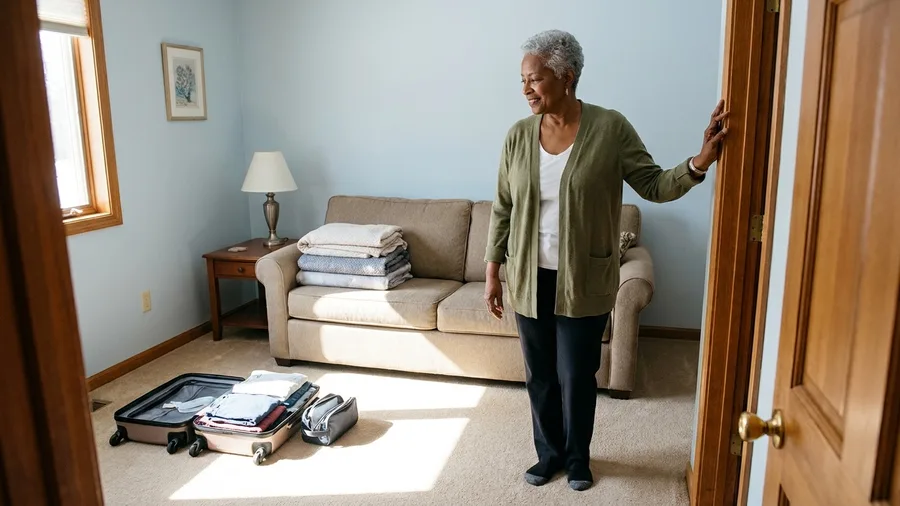
Three nights on a pull-out couch, sharing a bathroom with the whole house, is a bigger ask than it sounds when you are 41 and doing it out of duty rather than choice. A stepchild who dreads the length of a visit starts finding reasons to shorten it, or to skip it. So let them pick the length before they commit to coming.
Offer a menu in plain terms: a day visit only, one night, or two. Let them choose the dates and tell you when they plan to head out. And say the exit out loud: 'You can leave after breakfast.' That gives them a clean departure with no excuse to invent and no apology owed.
A visit that ends on time protects the next invitation. The shorter stay that finishes well is the one that gets repeated, and the stepchild keeps control of the door they came through. The whole point is that leaving costs them nothing, so coming costs them less.
Room, bathroom, and who gets told
Pull-out couch, shared bath
- Ages 35-41 queue for one shared bathroom
- Pull-out couch has no door to shut
- Skip this setup for stays over two nights
- Three hours away means they stay or don't come
Before you offer the menu
- Swap the pull-out for a real bed first
- Give them a bath window: 'Bathroom is yours 7-8am'
- Day visit for the 3-hour drive, one night for the 20-minute
- Tell your own adult children the rules before they hear them secondhand
5. Say the inheritance plan out loud, on purpose

The first time a stepchild went quiet when the will came up, I read it as coldness. It was not coldness. It was a question they could not ask out loud: is she going to take what our father meant to leave us?
That suspicion is rarely about affection. It is about money and care, and it hardens quietly over years. Here the numbers are concrete: about $260,000 in combined retirement savings and a house worth roughly $410,000 that is the main asset. His three children are 41, 38, and 35; hers are 44 and 40; there are four grandchildren, ages 4 to 12. Unspoken, a number that size grows teeth.
So put the numbers in one room. The house value, the accounts, who gets what. State the plan; do not hint at it and hope they trust the hint. Bring in an estate attorney so the plan is binding and reads as a decision, not a favor one spouse is quietly doing the other.
Have the conversation once, with all the adult children together, in one room or on one call. No side deals, no one learning it secondhand from a sibling. The version passed along a chain is the version that gets distorted.
that nothing is being hidden, and that the new spouse is not quietly draining the estate. Naming the plan plainly does more than any amount of reassurance.
That is what lifts the money fear out of the room. When the estate is not a mystery, a short visit stops feeling like an audit of what you might be after, and starts being a visit.
💡 Tip: Bring a one-page summary to the meeting so no one has to rely on memory or paraphrase later.
The Numbers in the Room
🗣️ Talk about it
Once, not twice
👥 Who hears it first
All five together
🚫 Never do this
Tell one child early
📄 Bring to the meeting
Signed documents
↩️ If a sibling asks later
Point to the meeting
The order that works
Attorney drafts it, both spouses sign, then the five hear it at once.
6. Stay out of fights that started before you
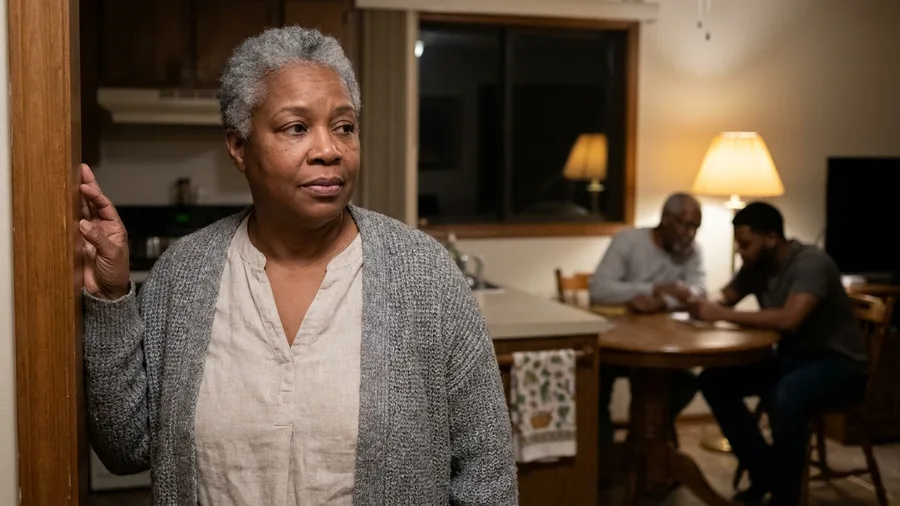
Sunday afternoon, the two of them at the kitchen table, and the old argument restarts – the loan he never repaid, the birthday he skipped, the years the boy says his father was somewhere else. Your husband's jaw goes hard and you feel the pull to fix it. Studies in family and stepfamily research land on the same finding: when a stepparent steps into a dispute that began long before the wedding, the child's grievance doesn't disappear – it finds a new address. The fight is theirs and always was.
The line you need is short: 'That's between you two; I'm not getting in the middle.' It declines the judge's seat without declining the man sitting across from you.
Take a side and you become the villain in a quarrel that isn't yours – and the adult stepchild's grievance about his father, however old, gains a target it can reach. You inherit twenty-five years of history you weren't present for, on one side of a table with no evidence. The stepchild loses the chance to settle it with the man it belongs to, and you've made his loyalty harder, not easier. The exception is safety or health – where someone's wellbeing is genuinely at risk, speaking up belongs to the moment. Old grudges are not that.
Staying out keeps the direct relationship direct. The one-to-one slot you already hold with each stepchild can survive a fight you didn't enter – it cannot survive you being appointed to the other side. You married into what was already there, and what was already there was theirs.
⚠️ COMMON MISTAKE
The referee trap
Stepping in to referee an old fight feels helpful in the moment, but it makes you the referee for good – and the person the losing side blames. Say your exit line once and leave the room.
7. Put one of their things in your house
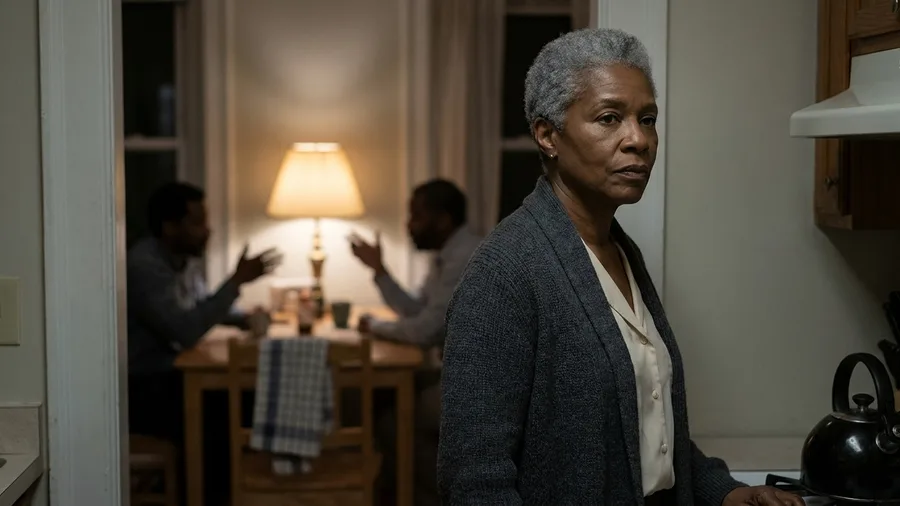
One shelf in the guest room. One hook by the door with a key on it. That is the whole gesture, and it takes an afternoon.
The shelf stays hers after she drives home. The mug does not go into the back cupboard on Monday, and the room does not become storage again the week she leaves, because the stepchild who finds her shelf cleared away has learned the space was a loan, not a place. A key on the hook does the same work as any conversation about belonging, and does it without asking anything back.
Say nothing about it. The moment you mention the shelf, waiting for a thank-you, it stops being a gesture and becomes a test with a passing grade. Gestures signal membership; demands for closeness turn a mug into an exam.
The guest room, before and after
8. Start a small ritual they can skip

Something small enough to skip. Sunday morning coffee, a birthday breakfast, a ballgame on opening day, whatever fits the life the stepchild actually has, held to under an hour at the same time each month.
Short and predictable beats an elaborate occasion, because a big production asks for attendance while a small one only offers it. Then say the line out loud: "Skip whenever; it's not a test." The line only works if it survives being taken up on, and it will be, sooner or later.
A ritual the stepchild can decline stays voluntary. A mandatory one turns into exactly the loyalty test the relationship is trying to avoid, and the whole point of a repeatable slot is that it gives the stepchild somewhere to stand that is entered freely rather than owed.
💡 Tip: If they skip twice in a row, keep the slot open and say nothing. The empty slot is the proof that the opt-out is real.
🗓️ Your first month, in four steps
Ask the name question
Before the next visit, ask the stepchild what they want the kids to call you.
Set the one-to-one slot
Put a recurring 45-minute slot on the calendar within the month.
Have the visit-length talk
Before the next overnight, offer the menu and the host line: 'You can leave after breakfast.'
Book the estate meeting
Before the holidays, get the attorney and all adult children in one conversation.
Frequently Asked Questions
What if the stepchildren don't want a relationship at all?
Then the moves still matter, but they become offers rather than expectations. Keep the one-to-one slot available and the door open, and do not chase. A stepchild who declines now is not necessarily declining for good.
Should I call them my stepchildren to their faces?
Let them use the word first. Say 'my husband's son' or use their name until you hear them describe you. The label is theirs to choose, just like the name question.
How do I handle the holidays when everyone wants different things?
Keep the old schedule for the first year and add one optional element rather than merging. The goal is not a perfect new tradition; it is a holiday where no one has to choose between households.
What if my spouse won't stay out of the fight with his son?
That is a conversation for the two of you, not for the stepchild. Agree in private that each of you handles your own children's conflicts, and hold the line together.
Do we need a lawyer for the inheritance conversation?
Yes, for the plan and the documents. A professional in the room makes the plan binding rather than a verbal promise, and it takes the conversation out of the family's guessing.
How long before this starts to feel normal?
Expect months, not weeks. The measure is not warmth but repetition: a slot that happens, a visit that ends on time, a plan that was said out loud.
Ask the name question before the next visit
This week, before anyone arrives, ask the name question: "What would you like the kids to call me?" Whatever they answer, use it, and do not renegotiate it in front of the children.
Then put the rest on a calendar. The one-to-one slot within the month. The visit-length conversation before the next overnight. The inheritance conversation most families avoid before the holidays, with the estate attorney in the room.
Polite distance is not a verdict on you. It is a test of whether welcome will cost them the family they already have. The aim was never instant closeness. It is a relationship they can enter without betrayal and leave without penalty – three nights on a pull-out couch, or one, and either one fine.
Start with the name question
Before the next visit, ask the stepchild what they want the kids to call you. One question, one conversation, and the rest of the list gets easier.