

The visits take two days. The feeling they leave behind takes about a week to fade, sometimes two if nobody says anything.
It is 8pm the evening they drive off. The dishwasher has been reloaded their way, the laundry lifted out and refolded, the four-year-old's shirt buttoned again after you'd done it. Nothing in that list is large enough to say out loud.
So it gets swallowed. She means well, it's small, raising it would be petty – and by the third visit the swallowed pile is the thing you're actually tired of, not the visit itself. What moved was never a dish or a snack. It was who decides, who does the unpleasant work, and whose word the child learns to wait for.
Sort the nine by who pays after the door closes. Seven cost you a moment. Two cost your child something that lasts, and those get one calm sentence at the next visit.
Quick Tips Before You Start
Name the payer
For each friction, ask who gets the easier hour and who gets the cleanup, the enforcement, or the smaller voice.
Wait one visit
If the same moment repeats next time, it is a pattern, not a mood, and worth one sentence.
Say it once, plainly
One calm sentence in the moment beats a summary on the drive home, which lands as an attack.
Ask, don't take
'Want a hand?' keeps the visit warm and your standing intact. The difference is asking versus taking.
Pick two, not nine
Bringing nine complaints to one conversation guarantees none of them get heard.
Overrides that undercut your authority
1. Redoing your parenting grades your competence in public
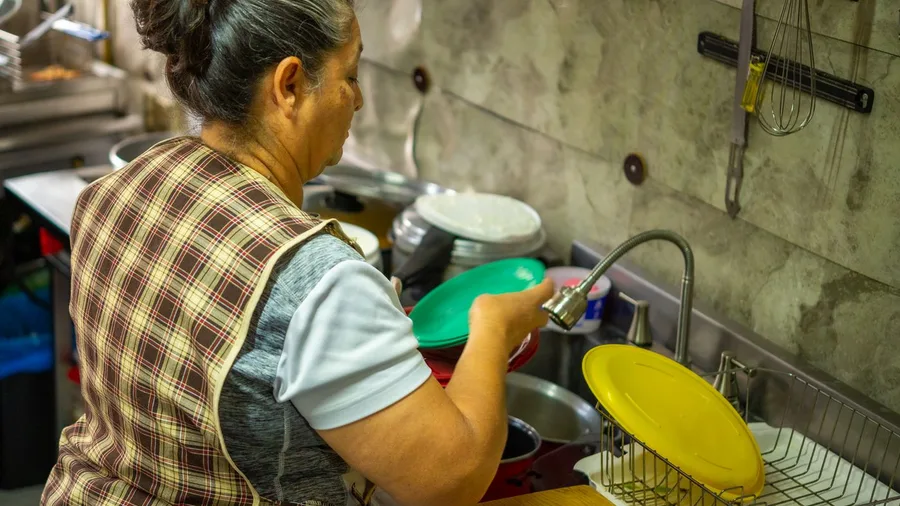
It shows up as a small domestic correction. You have washed the pans and set them in the rack; ten minutes later they are back in the sink. The laundry you put away comes out of the drawer and goes back in folded tighter, corners matched, the way she does it. Your two-year-old, dressed and out of the house in twenty minutes flat, reappears in a different outfit before lunch.
None of it is a criticism anyone says aloud, and that is what makes it hard to answer. Re-doing a finished job marks your version as a rough draft and hers as the settled one. The real weight is the audience: your daughter is standing at the counter, and the adult she trusts is showing her, without a word, that your decisions can be reviewed and corrected by somebody taller.
The fix is a difference of one word. Somebody who asks 'want a hand with those?' and then waits for your answer keeps the visit warm and keeps your standing where it was; the trouble is never the help, it is the taking. So the next time the pans come back out of the rack, keep it flat and low: 'That one's done — the pans are still in the sink if you want to help.' Then hand her a job that is actually open.
💡 Tip: If she asks 'want a hand?' and waits for an answer, let it go entirely — the difference between helping and correcting is asking versus taking.
The same visit, two ways
Overrides that undercut your authority
None of the first three frictions looks like a power struggle while it's happening. That's what lets it repeat. Your authority as a parent is lost quietly, in front of the one person who is supposed to be learning it, and the repair is a single calm sentence said early. The alternative is a hundred swallowed ones, and swallowed ones don't go anywhere.
Redoing what you have already done is the silent version. The laundry refolded, the shirt re-buttoned, the dishes run under the tap a second time. Nobody says a word, and the message lands anyway, mostly through the child watching from the doorway. The spoken version is louder and cheaper to keep: your no gets overridden before it finishes leaving your mouth.
Your morning went into that limit. A snack, a tablet, the toy in the checkout aisle. You said no to it once, calmly, maybe twice, and the no survived breakfast and the drive. Then Grandma is at the door and the child hears the whole negotiation swing back open. "Just this once" is not what the child hears. The child hears that a no is a first offer.
The third one works the same way with a gift receipt. The drum kit, the bag of candy you had banned, extra screen time, a puppy. The delight gets collected at the door, and the drums end up in your living room with you asking whether the volume can come down. In each of the three, somebody got the easier hour. Count who.
The fix, in all three cases, is the same shape: one calm sentence, said while it's small. Not a lecture and not a face, a line. Name the thing plainly, say what you need instead, and let it be ordinary. The first sentence is the whole investment. Everything after that is either repair or the same repair, deferred.
Wait a week and it becomes an argument about whether you're oversensitive. Say it the first time and it's just information about how your house runs.
| What they do | Why it lands wrong | Worth a conversation? |
|---|---|---|
| Re-wash the dishes or re-fold the laundry | Grades your competence in front of your child | Yes, if it happens repeatedly |
| Override your 'no' with 'just this once' | Teaches the child the limit is a first offer | Yes, early and once |
| Bring the drum kit or the banned candy | Hands you the cleanup and the limit-setting | Yes, before the next birthday |
| Comment on your body in the first ten minutes | Re-opens the old family mirror | Optional — the cost is yours alone |
| Compare cousins on walking, reading, grades | Turns the child into a contestant | Yes, in front of the children |
| Repeat the same parenting advice every visit | Implies you are still a trainee | A redirect, not a confrontation |
| Coax 'one more bite' past 'I'm full' | Teaches the child to override their own stop signal | Yes, at the table |
| Run every visit as a holiday | Leaves you as the only enforcer | Yes, agree on one or two rules |
| Drop by or book weekends on your behalf | Treats your calendar as open-access | Yes, with a standing text-first rule |
2. Overriding your 'no' teaches the child it's negotiable

A single yes that lands right after your no looks harmless. It is the same small transfer of authority, only spoken out loud, with a witness and a sentence attached. It usually takes under two seconds. That's the part that makes it hard to answer in the moment.
You said no to the snack, the tablet, the toy. "Just this once," the grandparent says, already smiling, already reaching across, and the child has the thing before the sentence finishes. Everyone stays warm. That's the problem. The child does not read two seconds of kindness. The child watched two adults disagree in front of them, and the one who was supposed to be in charge lost.
The first time, it is one small thing. The second time, the child knows which door to go through. Requests start routing around you on their own. She stops asking when you're in the room and starts asking Grandma at the door. The limit you set that morning gets re-tested that evening, and again in three weeks over something unrelated. That is the quiet bill. Not the snack. The weeks of re-testing in which your no gets treated as a bid the child has every reason to push on.
The grandparent who backs your no out loud, even disagreeing with it privately, keeps it intact. The two of them can talk about it later, adult to adult, and the child's week stays ordinary. The line to use in the moment is short enough to say in front of the child: "If you want to treat her, ask me first and I'll say yes or no once." Said once, plainly, it turns the moment into a household arrangement instead of a tug between the grandparent and you.
The child doesn't need to see who wins. They need to know there's a rule about how the two of you decide.
⚠️ COMMON MISTAKE
The fix that backfires
Correcting her in front of the child hands the child a second lesson — that the adults are still negotiating, and the limit is not final until they stop. Say the sentence away from little ears, once.
3. Rule-breaking gifts leave you playing the enforcer

Two mornings after the visit ends, the drum kit is still in your living room and you are the one saying it's too loud. Three days after that, the bag of candy you'd banned is gone and you're the one managing the crash. A present that arrives over your limit doesn't stay a present; it becomes a chore with a bow on it.
This is what an override looks like once it's wrapped: the grandparent collects the delight of giving it, and you collect the cleanup and the limit-setting that follows. The pet, the extra screen time, the toy you'd said no to in September and find under the tree in December – the child sees the hand it came from, and the parent sees everything that comes after.
Not every gift is a grab. Ask the grandparent before the birthday or the holiday: "What would you rather they didn't have?" Same generosity, no ambush – most of them have a list already and are glad someone asked. The ones who care about the child more than the moment will take the question seriously.
The simplest boundary is also the fairest: the noisy, sticky, oversized things stay at the grandparent's house and are enjoyed there. Your home keeps your rules, and the child still gets the drum kit – just not the version that plays at 6am in your kitchen.
Comments that land as judgment
The next three are not about what happens to the child. They are about what happens to you, said in your own kitchen, often before you have finished saying hello.
4. Body comments land as judgment from your old home

The cost of a body comment is booked entirely to you, and it's the one line on the ledger the child never sees paid. You're in your own kitchen, in your forties, and someone has just said "you look tired" or "a little more weight?" before you've put the kettle on – an assessment delivered as a greeting, on a scale you thought you'd left behind at fourteen.
It lands because the old family mirror is still running in the same room it always ran in. That's why a throwaway line about your hair can flatten a morning: it isn't the comment, it's the file it re-opens.
Most grandparents are not aiming at you – they're repeating a script their own mother said to them, word for word, and a calm redirect usually ends it. "I'm not taking comments on my body this visit" is a whole sentence, and it works better said once, early, than swallowed and resented for a week.
The words you will hear, decoded
5. Cousin comparisons turn every visit into a scoreboard

" – it's whether your child is about to be ranked in front of you, and whether they'll hear it. Look at who walked first, who reads better, whose manners are better, and where the comparison was said. If both children were in the room, the ranking was heard by both of them.
That's what makes it a scoreboard and not an enquiry: ranking makes your child a contestant and you the coach of a losing team. You can deflect the question, change the subject, praise your own child – and the ranking has still been said aloud, in front of them, and deflecting changes the subject, not the room.
Here's the ten-second test. If the grandparent had praised each child's own thing instead of setting them side by side, would there be anything to deflect? If the answer is no, the visit doesn't need a confrontation – it needs one calm line: "We don't compare them in this house." Said once, early, in front of both children, it stops the next round before it starts.
The children will remember which adult said it. That's the part worth protecting.
6. Repeated advice implies you haven't figured parenting out

We just let him cry it out." Third visit running, same sentence, same three-step method offered over the breakfast table while the reader is slicing bananas.
That is the friction that outlives the earlier ones. A comparison ranks the child and the reader spends the visit defending a small person. Repeated advice ranks the reader. When the identical tip arrives a third time on sleep, on food, on discipline, verbatim, with nothing added since the first telling, the message underneath the words is not information. It is supervision.
Which would be a fair arrangement if the reader were new to the job. Eight years in, the tip lands like being handed the training wheels back. The reader hears a verdict on their competence, not an update on child development, and that is why a suggestion that costs nothing to ignore keeps pricking at them on the drive home.
The read is usually wrong about what it means, though. Asked why the advice keeps coming, most grandparents would not say they doubt the reader's judgment. They would say they want something to give. The field keeps finding that the need to stay useful is one of the strongest pulls on grandparents, and advice is the easiest currency for it: portable, familiar, and available even when they are too stiff to get on the floor and play.
So the loop breaks by handing the role over instead of refusing it. "Show me how you got her down for naps – I could use the trick." That opens a specific request with a defined answer. Then, for the rest: "I've got a plan for that. Can I tell you what we're doing instead?" It says the topic is not open to review; it does not say they are unwelcome in it.
The coin in this friction is usefulness, not control, and it is cheap to pay out. What the reader gets back is a visit where the tip stops repeating, because the person delivering it no longer needs it.
💡 Tip: Asking for a specific skill is the fastest way to end the advice loop. Grandparents who feel useful stop needing to supervise.
The advice loop — at a glance
🔁 Typical frequency
Every visit
🗣️ What you hear
You're still learning
💼 What she means
I want to be useful
🛠️ Best move
Ask for a specific skill
💬 One-line redirect
'I've got a plan for that'
Why it works
A real job ends the loop faster than a debate about sleep training ever will.
Time, food, and the fun role
The last three are the mechanics of the visit itself — the plate, the party, the calendar. They look like logistics and they are not. Each one quietly decides who holds the authority over your child's day.
7. Coaxing one more bite overrides your child's hunger cues

I used to sit at the table counting forkfuls, working out how many I could justify insisting on before it counted as a fight. That was the mistake, and it is not the obvious one. The obvious advice is to let it go because it is only a bite or two.
The plate is the smallest scene in the visit and the most literal. The child says "I'm full" and pushes back, and the fork stays near their mouth: "One more bite for Grandma." Then the follow-up: "Three more and you can get down." The push was never about nutrition. It teaches a child to overrule the signal in their own stomach to keep an adult happy, and that lesson leaves the table with them.
Small portions undercut the whole negotiation, because a child who asks for more clears a plate without anyone coaxing. "She's in charge of her tummy – leave the plate" is the line, and it is one you only have to say once.
8. Fun-grandparent mode leaves you as the only enforcer

It is Saturday night and the four-year-old is dancing on the sofa at 9:40, still awake, asking for another biscuit, and every rule the reader set for the visit has gone.
Bedtime drifts later each night. The screen count quietly triples. Treats become meals, and the word no, when it finally comes, is the first one the child has heard in two days. One bent rule at the table is a small bill. This is the whole ledger going soft at once, and it settles on one person.
Researchers who study grandparent involvement keep reporting the same split: warmth and indulgence rise together, and the discipline side is more mixed. The pattern that shows up in the home is the one most found: the grandparent gets the yes, and the parent gets the ending.
So the reader becomes the one who says the party is over. The child files that away – who stopped the fun, not who started it – and the patience lost on the drive home is the reader's to replace. Keeping just one or two of the rules lets the grandparent be fun and still hand the child back regulated. "Grandma can be fun and still keep the screen rule" holds both.
Visits that end well vs. visits that end in the car
Loosened visit
- No bedtime for two days
- Treats and screen time on demand
- You enforce every rule alone
- Meltdown on the drive home
- Resentment that outlasts the visit
Loosened visit, one or two rules kept
- Bedtime stays roughly intact
- Treats offered, not multiplied
- Grandparent backs the rule out loud
- Calmer evening after the visit
- Fun without the warden
9. Treating your calendar as flexible makes visits a surprise

The generous reading is that surprise visits are spontaneous and spontaneity is warmth. That reading does not survive the first five-minutes-away call on a Saturday you had already filled. An open door and an edited calendar are not the same courtesy; one is hospitality, the other is a key copied without asking.
The patterns are familiar: the car in the driveway with no warning, the weekend arranged with the cousins and announced once the plan is fixed. Underneath each is a statement about ownership, that your hours are shared property and other people may revise them. Your irritation then has to go somewhere, and it rarely goes to the person who earned it.
It goes sideways, into clipped answers across the kitchen bench, a first hour with the mood already spoiled, a squabble with your partner about the recycling. The old annoyance is ordinary enough that people learn to flatten it; the sharper truth is that a calendar holds more than time, and yours is being treated as an open tab.
One question reverses this without reducing a single visit: ask what day works before it is settled. An invitation you agreed to gets a warmer door than a plan you were handed. The sentence for the next unannounced arrival is short and exact: text before you come, and I will say yes if I can.
🗓️ How to have the one conversation
Pick the payer that costs you most
Choose one friction that repeats and that your child also feels.
Wait for a quiet moment
Not at the door, not with the children in earshot.
Open with the shared goal
Say what you both want for the child before you name the friction.
Name the moment, not the person
Describe what happened and what it cost, in one sentence.
Offer the replacement line
Tell her exactly what to say or do instead — she cannot guess.
Let it sit, then repeat once
One calm reminder next visit is normal; three is a lecture.
Frequently Asked Questions
Why do these small things bother me more than the big ones?
Because they repeat. A single rude comment is forgettable; the same re-washed dish every visit is a pattern, and patterns are what we track for meaning. The size of the moment is small; the size of the repetition is not.
Should I bring all nine of these up at once?
No. Nine complaints in one conversation read as an attack, and the grandparent will defend against the first one and stop hearing the rest. Pick the two that actually cost you something and leave the other seven alone.
What if she gets defensive when I say something?
Expect it once. She may hear the sentence as a verdict on her whole relationship with your child. Keep the sentence about the one moment, repeat it once next visit, and let the pattern do the persuading.
How do I know if a behaviour is worth addressing?
Ask who pays. If the cost lands only on you and stops at the door, you can let it go on purpose. If it lands on your child — a limit undermined, a body comment heard, a stop signal overridden — that is worth one sentence.
Is it ever fine to let the rules loosen a little?
Yes, and it usually should. The problem is not a treat or a late night; it is every visit becoming a holiday with no rule at all. Keep one or two rules and let the rest go — that gives her fun and you a calmer drive home.
How do I keep the peace without swallowing everything?
Use short, neutral lines said in the moment, not speeches on the drive home. 'That one's done,' 'she's in charge of her tummy,' 'text before you come' — each takes seconds and each keeps the relationship warm.
Sort the nine by who pays, then say one sentence
One test sorts them. A friction earns a calm sentence only if its cost outlives the visit and lands on your child's expectations of you. Two pass: the overridden no, and fun-grandparent mode that leaves you as the only enforcer. Both teach a small person that your limit is provisional, and both leave you doing the repair afterwards.
Everything else – the refolded laundry, you look tired, the cousin rankings, the drop-by – costs a sting in the moment and nothing by Tuesday. Let those go on purpose. Not swallowed, dismissed.
The two that count are one conversation. The opening line: 'When you say yes after I've said no, she learns to ask you instead of me – so if you want to treat her, ask me first and I'll say yes or no once, in front of her.'
Then back to the kitchen, the dishwasher reloaded, the laundry folded again. Same room, same visit, one sentence fewer swallowed. It was never a test of whether they love you or whether you are a good parent. It is a ledger of small transfers, and only two of them have to be refused out loud.
Pick your two, then say one line
Scroll back to the table and mark the frictions that cost your child, not just you. Take the top one into the next quiet moment — one sentence, then let it sit.