

You catch your reflection in a dark store window while waiting for the crosswalk light to change, and for a split second, you do not recognise the lines around your eyes.
Most advice on aging treats the calendar as an adversary to outsmart with expensive serums or forced optimism, but a small group of people seem entirely untouched by that quiet panic.
They do not talk about turning back the clock, and they treat birthdays as ordinary Tuesdays.
What they possess is not better genetics or stubborn denial, but a distinct set of psychological habits that change how time registers in the body.
Two Approaches to Time
The Resentful Loop
- Constantly comparing today to past decades
- Making self-deprecating jokes about memory
- Exercising purely out of panic and fear
- Surrounding yourself with age-echo chambers
The Calm Baseline
- Treating current capacity as absolute fact
- Answering age inquiries with quiet neutrality
- Maintaining friendships across generations
- Practicing daily acceptance without drama
Why the Calendar Stops Feeling Like a Threat

I cannot believe my knees are already making that noise, someone says over the kitchen island, half-laughing while waiting for the kettle to boil, treating a normal joint sound like a personal betrayal by the universe. The cultural script around aging insists that every decade requires an elaborate mourning period for the physical capacities of the last, as if time were an asset manager slowly stripping your portfolio.
When you buy into that narrative, every minor joint stiffness or forgotten name feels like terrifying evidence of an irreversible slide downward into obsolescence, turning ordinary biology into a personal moral failing. People who stay quiet about getting older have quietly discarded that exhausting baseline comparison entirely, refusing to keep score against a version of themselves that no longer exists.
Instead, they measure their lives against what they want to accomplish next Tuesday rather than what they could manage at twenty-five, completely breaking the cycle of constant self-auditing. That single shift in reference point alters stress hormones, improves sleep depth, and fundamentally changes how the nervous system handles minor physical friction throughout the day.
The next time you catch yourself cataloging a new ache as a sign of decline, try saying out loud that your body is simply carrying the miles of a full life. Notice what happens to your breathing when you stop treating the calendar like an incoming eviction notice and start treating it like a reliable logbook of actual lived experience.
At a Glance: The Aging Resilience Framework
1. They Stop Auditing Their Past Capacities

You finish a heavy weekend hike and your knees ache for two days straight, leading you to mutter that you are losing your edge.
That comparison between your current body and a past version is the primary engine of aging fatigue because it treats every natural change as a personal indictment.
People who never complain simply evaluate their current capacity as an absolute fact rather than a loss.
If you need an extra hour of rest, you take it without staging an internal trial about what it means for your future.
There are moments when physical pain or sudden fatigue genuinely signals an underlying injury that requires professional medical attention rather than quiet acceptance.
The way to tell the difference is to check if the discomfort resolves with basic rest or persists as a sharp, localized alarm.
The replacement move is stark: notice the physical friction, adjust the task, and drop the commentary entirely.
💡 Tip: Say the physical adjustment out loud as a neutral fact, never as an apology or a grievance.
💡 PRO TIP
Drop the Comparison Trap Immediately
Measuring today against a decade ago guarantees a sense of deficit. Treat your current baseline as the only one that exists.
2. They Refuse the Performance of Decline

Three seconds of self-deprecating humor usually buys a room full of relatives a comfortable sense of ease.
You sit down at a family dinner and someone makes a light joke about senior moments over a forgotten set of car keys, leaving you with the heavy urge to lean into the bit just to keep the mood light.
That casual social agreement to perform aging is a trap that quietly accelerates mental fatigue by reinforcing decline as your default identity.
People who maintain their sharpness refuse to participate in shared jokes about failing memories or weakening joints.
When the table starts trading aches, they simply change the subject to something happening next month instead.
Next time the room reaches for an age joke, let the silence sit for one beat and ask a forward-looking question about an upcoming trip or project.
Social Friction — At a Glance
🗣️ Trigger
Aged-joke trap
🛡️ Defense
Neutral pivot
🎯 Outcome
Protected focus
Key Rule
Never validate a joke at your own body's expense.
3. They Treat Physical Maintenance as a Trade, Not a Penalty

The standard cultural advice tells you to stretch daily and hit the gym specifically to stay young, framing every single workout as a desperate bid to roll back the clock. That exhausting framing quietly breeds deep resentment over the months because you are sweating out of pure fear rather than actual purpose.
People who age calmly treat physical maintenance as a simple trade rather than a moral penalty. You lift heavy weights or walk the trail this morning because you want to comfortably carry your own groceries next year, not because you are terrified of an arbitrary number on a medical chart.
Treating movement as a clean transaction rather than an emotional battle stops the silent accumulation of burnout. You spend a manageable hour in motion today to buy physical independence tomorrow, letting go of the exhausting fantasy that sweat can somehow stop the calendar entirely.
⚠️ COMMON MISTAKE
Do Not Exercise Out of Panic
Working out to outrun the calendar guarantees burnout. Move your body because you want immediate strength today.
4. They Spend Zero Energy Wishing for Earlier Decades

Why do we keep spending emotional currency on decades that are already gone?
You look at old photographs from a trip taken twenty years ago and catch yourself wishing you had appreciated your skin then, forgetting that you spent that exact week worrying about things that no longer matter.
That nostalgia is a quiet tax on your current attention.
People who never complain treat past versions of themselves with affectionate distance, like characters in a book they read long ago, recognising that wishing to be thirty again is wishing away everything they know now.
When the thought arises, notice it and gently return your focus to the coffee cup right in front of you.
Mental Focus Checklist
5. They Keep Their Skill Acquisition Active

The quiet penalty for spending decades in comfortable competence is that your world shrinks until every minor physical change feels like a catastrophe.
Most adults stop learning genuinely difficult things long before middle age, sliding into familiar routines where mastery is guaranteed and surprise is entirely eliminated.
When your entire daily landscape consists of tasks you can already execute with your eyes closed, your attention inevitably zeroes in on bodily decline because there is nothing else new demanding your focus.
Ask yourself honestly whether the last genuinely clumsy, frustrating thing you tried to learn happened this year or more than a decade ago.
If you cannot remember the last time you stared at a basic instruction manual feeling completely incompetent, you have accidentally trapped yourself in an ivory tower of your own past achievements.
People who remain untroubled by time are usually wrestling with something awkward and new, like learning a difficult musical instrument or picking up basic woodworking from scratch.
Being deliberately bad at a fresh skill reminds your brain that growth does not belong exclusively to youth and keeps your attention firmly pointed outward toward the horizon.
🌱 GROWING TIP
Embrace Being a Beginner
Pick one skill this month where you will struggle awkwardly. It shifts your mental focus away from physical decay.
6. They Answer Age Inquiries With Absolute Boredom

I used to think that deflecting an age question with a clever joke or a self-deprecating sigh was just good manners, a way to keep the room comfortable.
Someone asks your age at a dinner party with that slightly predatory curiosity people reserve for milestones, and the social pressure to perform surprise or offer a quick quip feels heavy.
We treat the number like a confession that requires immediate emotional padding, as if stating it plainly would stall the momentum of the table.
People who never complain give the number as plainly as stating their street address, with zero emotional padding. They do not follow it up with can you believe it or time flies, because they do not view the number as an event.
They drop the number on the table and let the conversation move immediately to something interesting. The reframe is simple: treat the calendar as data rather than a performance review, and the room stops treating it as a spectacle.
Aging Resilience Audit
7. They Refuse to Edit Their Wardrobe for Audience Approval

You stand in front of the closet wondering if a certain jacket is appropriate for someone your age.
That internal voice is usually an echo of an invisible critic who cares deeply about conformity.
People who stay calm about aging wear what fits their actual life and comfort, regardless of unwritten department store rules.
If you want to wear bright sneakers or keep your hair long, you do it without announcing a justification.
The clothes serve your comfort today, not a demographic target.
8. They Cultivate Friendships Across Multiple Decades
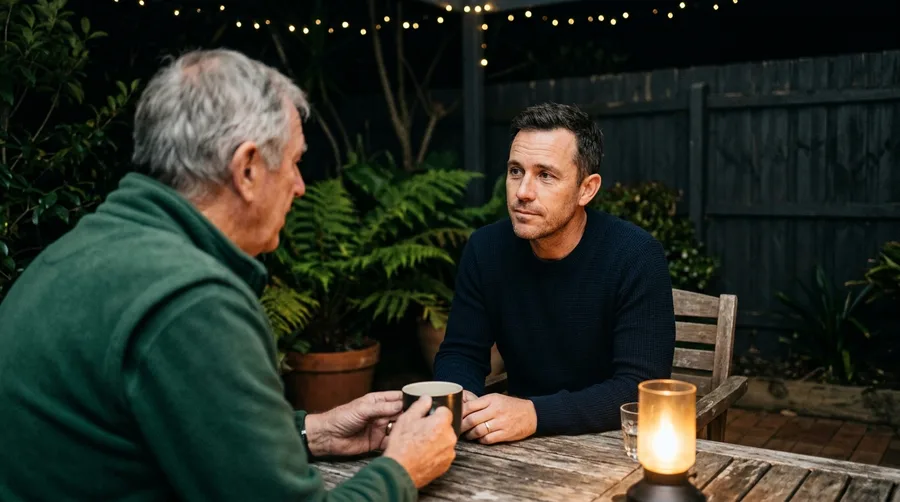
Isolating your social circle to a narrow demographic band creates a closed loop where shared anxieties become the only currency traded.
If every conversation revolves around the same exact life milestones and physical maintenance schedules, your worldview shrinks into a very small room.
Researchers who study social networks and cognitive longevity repeatedly observe that people maintaining deep life satisfaction tend to cultivate friendships spanning multiple decades.
When your closest circle includes someone twenty years younger building a chaotic first career alongside someone twenty years older navigating a completely different phase, your own immediate struggles lose their monopoly on your attention.
You hear entirely different rhythms of thought, distinct priorities, and alternative ways of weathering change that you never would have encountered inside a generational echo chamber.
That structural diversity naturally dissolves the illusion that any single decade holds a monopoly on human capability or relevance.
Instead of waiting for a milestone birthday to force a shift, pick one person outside your peer group this week and schedule a deliberate twenty-minute coffee just to ask what they are currently trying to figure out.
9. They Practice Radical Acceptance Without Performance

You look in the mirror on a Tuesday morning and see a new fold of skin or a deeper crease.
Most people assume that remaining unbothered by these shifts requires a heroic, Zen-like spiritual discipline or a permanent retreat from vanity, but that is simply a misread of the mechanism.
What looks like profound inner peace from the outside is actually just a very boring refusal to argue with mirrors.
When you catch yourself launching into internal negotiations with your reflection, name the data plainly and walk away to make coffee instead.
Frequently Asked Questions
Why do people who age calmly avoid talking about birthdays?
They do not avoid birthdays out of denial, but because they treat them as ordinary days rather than milestones for performance or anxiety. Giving the date zero emotional weight prevents the calendar from dictating your mood.
How do you stop comparing your current physical capacity to your twenties?
You stop by treating current capacity as an absolute baseline rather than a deficit. When you drop the comparison, physical adjustments become neutral logistics instead of emotional crises.
Is it possible to develop these habits later in life?
Yes. Psychological resilience relies on present-moment attention and habit modification, which can be practiced at any point regardless of your chronological age.
What should you say when someone makes a joke about getting older?
Change the subject immediately with a neutral factual statement or a question about something else entirely. Refusing to validate the joke keeps you out of the performance trap.
The Quiet Power of Present Focus
When you strip away the cultural commentary and the self-deprecating jokes, aging is simply a series of physical adjustments met with either friction or ease.
Your next step is remarkably simple: drop the comparison to your past self today and treat your current capacity as the only one that matters.
Audit Your Daily Habits
Pick one mental habit from this list to drop today and notice how much lighter your afternoon feels.