

Five weeks. That is how long you have between now and Thanksgiving, and it is enough time to say the sentence once, calmly, before a holiday table or a grocery aisle says it for you.
You are 61, widowed 18 months. Your daughter is 32 and lives 20 minutes away, at the same grocery store where you shop. Your son is 29 and two hours off. The belief most parents carry into this conversation is that telling adult children about dating means asking permission, or betraying the other parent, or handing the children a veto they were never owed.
The turn is that the dating is rarely the problem. The chance encounter is. Early, brief, plain notice keeps the news in your voice instead of letting a cereal aisle take it.
So you book the Sunday lunch, send the one-sentence heads-up, handle the first reaction, schedule the follow-ups, hold the introduction until it is earned, and make the Thanksgiving call yourself. You are telling them once, early, in your own words, and then keeping the door open without handing over the keys.
Quick Tips Before You Start
Pick a normal Sunday
No birthday, no holiday, no family event attached. Thanksgiving is five weeks out — that is not the deadline.
Phones in another room
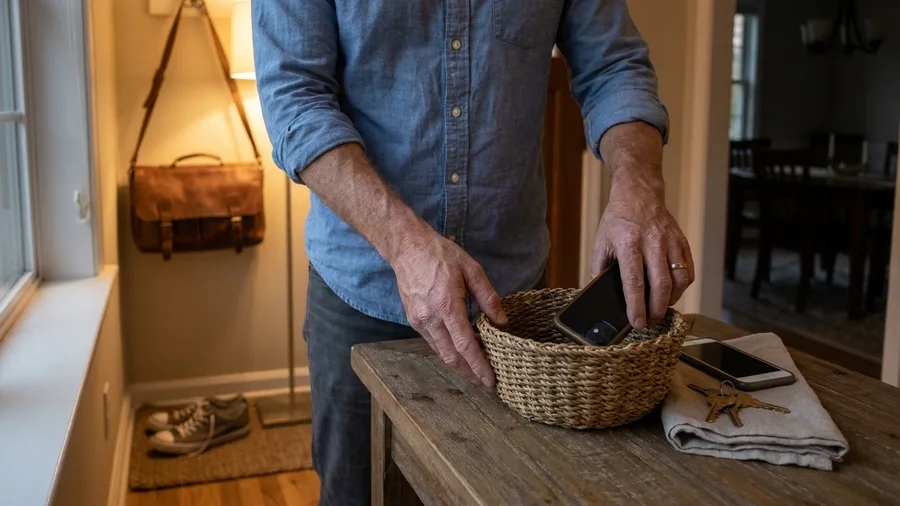
Basket by the door, not face-down on the table. No one texts a sibling mid-sentence.
No partner present
The first talk is you and your kids. Introducing someone at the same lunch turns a notice into a performance review.
Block 90 minutes
Long enough for a first reaction and a second round of questions. Short enough that it does not become a hearing.
One sentence up front
Say the fact before any backstory. The apology and the justification can wait — better yet, skip them.
1. Send a heads-up before the grocery-store run-in

The usual advice is to wait until the relationship is settled, so there is something solid to report. That advice assumes the news will keep until you choose to share it. It will not. A 32-year-old daughter who lives 20 minutes away and shops the same grocery store as you will not wait for your sense of timing. The leak is not dramatic. It is you at the end of the cereal aisle, holding someone's hand, and your daughter turning the corner with a cart.
People who study how families handle news of a new relationship tend to find the same thing: adult children report caring far less about the dating itself and far more about how they found out. Learning it through a sibling, a neighbor, or a surprise in the produce section reads as being managed. Hearing it from the parent directly reads as being trusted.
So treat timing as your job, not a matter of luck. Before any run-in, book a Sunday lunch at your own house. Ninety minutes, no new partner at the table, phones left in another room. Pick a day with nothing attached to it; a holiday already carries too much weight, and Thanksgiving five weeks out is not a deadline for this talk.
The heads-up is one sentence, sent in advance: "I'm seeing someone, and I wanted you to hear it from me." No count of dates, no apology, no details about the person. It gives your daughter a chance to arrive at the lunch already knowing, and it means her first question is never why someone else knew before she did.
💡 Tip: Send the heads-up on a Tuesday or Wednesday, not Friday night. A weekday message gives them a day to absorb it before they have to respond in person.
Notice, Not Permission Slip
Say this
- "I'm seeing someone, and I wanted you to hear it from me."
- "Four dates over six weeks. Not exclusive."
- "The decision to date is mine."
- "I don't want to make you meet someone who might not be around."
- "You can ask me anything, anytime."
Not this
- "Please don't be upset."
- "I know this is weird."
- "If it bothers you, I'll stop."
- "So when do you want to meet her?"
- "That's not fair — you're overreacting."
2. Say one plain sentence and then stop

The silence after you say it is the part people get wrong. Faced with a daughter's face going still across the table, most parents start explaining, and every sentence after the first one turns the news into a case they are arguing. You have erased the chance encounter by getting there first. The next risk is ten seconds long.
At the lunch, state the fact and nothing more. "I've been seeing someone. Four dates over six weeks, and it's not exclusive." That is the whole announcement. It is specific enough to answer the questions coming, plain enough that it does not ask to be approved.
Two phrases have to stay out of your mouth. "I'm sorry" and "I know this is weird" both frame the dating as something you owe an apology for. Say either one and you have handed your daughter the role of the person who gets to decide whether it is allowed.
Then stop. Let five seconds pass, and then five more. The urge to fill that gap with reasons, with reassurances, with a list of what the other person is like, is strong and worth resisting. They speak when they are ready.
When the questions come, answer only what was asked. "How long?" gets six weeks. "How serious?" gets four dates, not exclusive. "Who is she?" gets the one or two facts you are willing to give, and no more. A small packet of answers, repeated honestly, keeps this a notice rather than a hearing.
If they press, say the thing plainly: "I'm telling you because you're my family, not because I need a vote." Your part is the announcement. What they feel about it next is theirs to bring, at their own pace.
💡 Tip: Write the sentence on a card and put it in your pocket. When the moment comes, read it. There is no prize for improvising.
What Changes After the Talk
3. Choose a daytime lunch with no holiday pressure
Somewhere that does not feel like an interrogation, because the sentence alone is heavy enough. A daughter across a restaurant table with a waiter circling is a different conversation than a daughter across your own kitchen table with a plate of food in front of her.
Sunday lunch at your house. Ninety minutes, no partner present, and that is a reasonable format for most families. The house does quiet work: it is your table, your food, and nobody has to manage a check or an exit. Sitting in your own kitchen, she can be upset without also being a guest performing calm in public.
The exception worth naming: if the relationship with your children is already strained, or a sibling rivalry makes a group lunch a bad idea, one-on-one is the better call. The format is not sacred. What matters is that the setting is low-stakes and the two of you can speak without an audience or a time limit pressing.
Phones go into a basket, a drawer, another room. The point is not control; it is that nobody is texting the sibling mid-conversation, so the daughter two hours away hears it from you and not from a live feed. The day should have nothing else on it. No family event, no holiday, no reason for anyone to be watching this as a deadline.
Ninety minutes gives you room for a first reaction, a cooling pause, and a second round of questions. Long enough to be heard, short enough that it does not become a tribunal.
🕰️ The Talk, Start to Finish
Sunday, 12:30
Everyone sits with plates down; phones are already in another room.
One sentence
State the fact — six weeks, four dates, not exclusive — then stop talking.
Five-second pause
Count to five in your head before you say anything else.
First reaction
Let the first answer land without correction or rebuttal.
Their question
Answer only the fact they asked, then stop again.
Second round
After the heat drops, ask what part is loudest for them.
Close at 90 minutes
End on the follow-up plan — a text in three days, a call in a week.
4. Ask their first reaction and hand over the floor

I used to think the announcement needed a case built around it: the reasons, the reassurances, the careful proof that this was sensible. It got the opposite of what I wanted. Every reason I gave was a reason to take apart, and we spent the better part of an hour debating whether I'd thought it through.
What works is smaller. Once the one sentence is out, the question that follows is, "What's your first reaction?" Nothing before it and nothing after it. Whatever comes back is not corrected, not fact-checked, not met with a rebuttal. The first answer gets to land whole.
If the first answer is silence, wait. The pause is information, not a hole that needs filling. The lunch is 90 minutes on purpose, so there is room for the second round after the heat leaves the first, and you can ask which part is loudest. You are still the one dating.
⚠️ COMMON MISTAKE
Don't fact-check their feelings
"That's not what happened" and "You're overreacting" both end the conversation and start a different one. Their reaction is theirs to have. Your job in the first ten minutes is to hear it, not to correct it.
5. Draw a clear line between your dating and their lives

The decision to date is yours, not a family vote, and you say so in one flat sentence.
Outside the window it is the dog and the neighbor's tree. Inside, the son says, "So what does this actually mean for us?" You could list off four dates and six weeks, and every detail becomes something to weigh. The shorter answer holds: the only thing you are asking for is a heads-up before anyone meets a partner. Not approval, not secrecy.
If someone presses, the line repeats without heat. The news is being shared because they are family, not because the relationship is up for a vote. They still own their questions, and whether to bring them to you.
💡 Tip: Say the line once, calmly. If you repeat it three times in a row, it starts to sound like an argument. Say it, then move the conversation to the food.
6. Hold introductions until it is exclusive

Your son is texting from two hours away asking when he finally gets to meet her, and the answer you are tempted to give is a date. Give him a standard instead: three months of exclusive dating behind you, and a daytime family gathering as the setting. Four dinners over six weeks is not that, and telling him so is easier than watching him shake hands with someone who will be gone by spring.
The line that does the work is short, and it is worth saying out loud before they ask: "I don't want to make you meet someone who might not be around." Adult children hear a meeting as an announcement, so the meeting is the one thing you keep until the news is steady.
When it comes, keep it daylight and ordinary. A backyard lunch, nobody hosting anyone, nobody arriving as a guest of honor. Your daughter 20 minutes away and your son two hours away can answer differently, and one may say yes while the other waits a round, which is theirs to choose. You set the pace; showing up stays theirs.
7. Follow up with a text and a call

Three days is the number. Long enough that the lunch has settled, short enough that nobody has decided the subject is closed. The text is short: "Been thinking about Sunday. Anything you've wanted to ask since?" No new details, no defense of the relationship, no reopening of what was already said at the table.
At the one-week mark, pick up the phone. Your son two hours away is the reason. Text flattens a voice, and what you are listening for is tone – whether the answer is easy or careful – and tone is the first thing a text loses. A call catches the pause before "I'm fine," which a message never shows.
Both touch points end with the same standing offer, said plainly: ask anything, anytime, and it will not turn into a fight. Short and scheduled, so a question does not have to be raised cold in the grocery aisle or saved up for a holiday when everyone is tired and the table is set.
💡 Tip: Put the three-day text and the one-week call in your calendar with alarms. The follow-up that is remembered only vaguely is the one that does not happen.
💡 PRO TIP
Ask what they want to know, not what they think
In the follow-up call, ask: "Is there anything you want to know that I haven't told you?" It opens the door to real questions without inviting a vote on the relationship itself.
8. Expect a second round and use the same words

"This is too soon." "You're being reckless." One of those lands about a week in, sometimes after the sibling has been called and the two of them have compared notes. A second round is not defiance. It is how an adult child tests whether the news holds its shape when pushed.
The answer is the answer you already gave: four dates over six weeks, not exclusive. Nothing added, nothing sharpened, no fresh argument about how you have earned this or how lonely the last year has been. New justification invites a debate; the same two facts close the loop by refusing to become one.
Then end the second talk on the plan rather than a verdict – the short text, the week's call, the ask-anything offer standing open. The schedule is what signals this is settled, not their approval of it.
The First Talk at a Glance
📆 When
A normal Sunday, 90 minutes
🏠 Where
Your house, no partner
📴 Phones
In another room
🗣️ Opening line
One sentence, then stop
💬 Your first question
"What's your first reaction?"
📲 Follow-up
Text in 3 days, call in 1 week
The whole point
You are telling them, not asking them. The container protects the news.
9. Give them a Thanksgiving opt-out

The question is whether your adult children can say no to a chair at the table without it being heard as a veto on your relationship. If the answer is no, the holiday is where the progress of the past five weeks comes apart.
Thanksgiving is five weeks out, and whether the new partner attends is still undecided. Name the date before anyone promises a seat. Then give each child two options they can actually weigh: the partner joins for dessert, or sits this one out. Dessert, not dinner, because an hour at the end of a meal is a low-stakes first meeting rather than a full evening of performance.
Ask each of them, separately, which they can live with. Your daughter 20 minutes away may shrug; your son two hours away may want the day to stay as it has always been, and that is worth hearing rather than overriding. A silent plus-one – the partner appearing with no one having been told – is the one move that turns a holiday into an ambush.
If the answers split, you decide and you tell them both the same thing, so nobody learns the plan secondhand. Opting out of dessert is not a veto. It is a person choosing their own attendance, which they own.
What you are testing in ten seconds: can you hear "I'd rather not this year" without treating it as a verdict on the person you are seeing? If yes, offer the two options and let the answers stand. If no, the holiday is not the problem.
Frequently Asked Questions
What if my children already found out from someone else?
You say the one sentence anyway, and you name it: "I should have told you sooner, and I'm telling you now." Do not spend the conversation explaining how the leak happened. The framing — you are the one telling them now — matters more than the sequence.
Do I have to tell them the age of the person I am seeing?
Not in the first conversation. Four dates over six weeks and not exclusive is the fact that matters. If they ask and you know, you can answer, but do not volunteer details that turn the lunch into a debate about a person they have not met.
What if one child is fine with it and the other is not?
Treat them as separate conversations. Your daughter may want to hear more; your son may need weeks. Neither reaction is a verdict on the other, and you do not need to broker a peace between siblings. You keep the channel open with each of them separately.
Can I bring my partner to Thanksgiving if my kids say no?
You can, but consider what it buys and what it spends. The holiday is five weeks after the talk, and a chair is a strong statement. If the goal is peace, the dessert option — a shorter, lower-stakes visit — does more than a full dinner.
How do I handle it if they cry?
Let them cry. Do not rush to reassure them that nothing will change — something already has. Sit with it, hand over the napkins, and say, "I'm not going anywhere." That sentence is usually what the tears are asking for.
Is it my business if my children do not approve?
Their approval is not your business, and your dating is not theirs. You can hear their concern without handing them the decision. The line is: "I hear that you're worried. I'm not going to argue about it today."
Book the Sunday Lunch Before You Lose Your Nerve
This week, pick an ordinary Sunday, block 90 minutes at your own table, phones away, no partner, no holiday attached, and send the one sentence ahead of it: "I'm seeing someone, and I wanted you to hear it from me." After the plates, the order matters. A text on day three asking what they have thought about since. A phone call at one week, especially to the son two hours away, who has only your voice to go on. The standing ask-anything offer, repeated until it stops sounding like a formality.
Then hold: no introduction until three months of exclusive dating and a daytime family gathering. At Thanksgiving, dessert or sitting it out is on the table for each of them. They say what they can live with. You make the final call.
The grocery store will still be there, 20 minutes from your daughter's door, and so will the cereal aisle. The difference is whether she hears it at your table first. So decide now, before the nerve goes: which Sunday, and who gets the text before the others do.
Put the Sunday on the calendar now
Open your calendar, pick a date within the next ten days, and text your kids one sentence: "Can you come Sunday? I want to tell you about something." The rest of this article works only after that message is sent.