

One person turns down Saturday plans and wakes up Sunday glad of it. Another turns down the same plans for the same reason and wakes up Sunday wondering what is wrong with them. The quiet looks identical from the outside.
Past fifty, a blank Saturday can start to feel like evidence: proof of a shrinking life, measured against a script that treats going out as proof you are still in it. But a calendar entry is not a diagnosis. Psychology reads distress, daily function, temperament, health, money, caregiving load, and who is actually available before it decides anything.
The question worth asking is not how often you go out. It is what the quiet evening leaves behind. Does it return you rested, with your real ties still intact? Or does it leave you flat, shut off, or steering around something you want?
That is the test this leaves you with: judge the Saturday by its after-effect and by how you are functioning day to day, tell chosen solitude apart from isolation, and carry out one low-pressure contact or small event to try this week. A quiet night is not the verdict. What it does to you is.
It reflects priorities, not a diagnosis
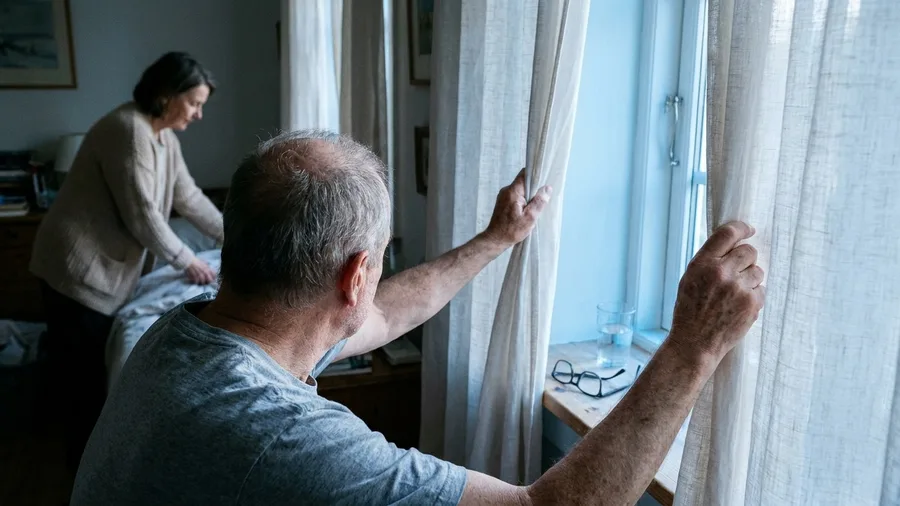
A quiet Saturday is a preference, not a symptom, and a blank space on the calendar cannot tell anyone whether something is wrong with you. Diagnosis is a different kind of work: it looks at what you feel, how long it has lasted, and whether it has started to interfere with the rest of your life. One declined invitation meets none of those tests.
What a clinician would actually weigh is the surrounding picture: your temperament, your health, how much energy you have, what money allows, what caregiving asks of you, and how many people are genuinely available to you. A person who has always preferred low-stimulation evenings reads very differently from someone who withdrew abruptly after retirement or illness. The timing is the tell here far more than the frequency.
Picture two people who both stay home on the same Saturday. One wakes up rested, calls a friend, and keeps her Sunday plans. The other lies flat for three days, lets calls go, and misses the errands she meant to run. The calendar entry is identical; the information inside it is not.
So judge the evening by what follows it. Sleep, work, appetite, mood, whether the grocery run happens or the phone call gets made. A quieter Saturday that leaves those intact is not a disorder, no matter how many nights out the neighbors manage.
If the low mood or the isolation sticks around, the next step is official guidance from the NIMH or the APA, or a talk with a clinician. A clinician can assess what a calendar cannot.
Chosen solitude is not loneliness

You may be neither lonely nor simply antisocial; the two experiences can look identical from the outside.
Chosen solitude is time alone you would pick again. It holds reading, cooking, a film, early bed, and it ends with you feeling more like yourself, not less. Loneliness is different: it is distress about missing connection, and it does not require an empty room. People feel lonely at a full table and perfectly content on a whole weekend alone. The state itself is not the measure.
Try a before-and-after test. Ask what the evening promised, then look at what followed. Replenished, calm, able to reach out tomorrow: that is solitude doing its job. Emptied, restless, aching for contact by 9 p.m.: that is loneliness wearing the same evening. People who handle loneliness well in later life tend to notice that difference early rather than years into it.
There is a middle pattern worth naming too. Hoping someone calls while declining invitations is not a preference for quiet. It points to a block such as anxiety, shame, or low mood sitting between you and the contact you actually want.
Restoration versus ache is the real difference. The same empty Saturday reads one way or the other depending on what it leaves behind.
💡 PRO TIP
Run the Sunday-morning check
Before you decide whether your quiet Saturday is a problem, ask one question on Sunday morning: do I feel rested and able to connect, or do I feel flat and relieved only because no one saw me? The answer points you toward the right next step.
Your social battery may need recharging

Dread before a night out is often an energy calculation, not a character flaw. If going out feels heavier than it used to even when the choice is yours, the next thing worth understanding is the cost of socializing itself. Think of it as a budget rather than a score. You have a finite supply for noise, conversation, the drive there and back, and the recovery that comes afterward, and how much you spend says nothing about your worth.
The drains are ordinary and specific: a room loud enough that you lean in to hear, the drive home at eleven, a stretch of small talk with people whose names you are still matching to faces, the choosing of an outfit, the knowing you will be tired tomorrow. Each is small. Together they add up.
The same dinner party can take more out of you at 60 than it did at 40, and the reason may be sleep, hearing, stamina, or a health issue, none of which mean you are broken. The budget changed. The person did not.
A useful comparison: take one outing and note how you feel that night and the following day, then take one quiet evening and do the same. The result tells you what your budget can actually afford, which is more reliable than guessing from the invitation alone.
What matters is what the quiet alternative gives you. If it refills your energy and leaves you still able to reach people, the dread was accurate accounting. If it empties you and the connection drops away, that is a different signal worth reading.
Chosen solitude vs. avoidance
Chosen solitude
- You'd choose the evening again
- You wake up rested and calm
- You reach out to someone the next day
- You keep one or two standing plans
- You feel relieved, not ashamed
Avoidance
- You cancel plans and feel ashamed
- You hope someone calls but won't call them
- You stay home out of fear or dread
- You have no one to call in a bad week
- The relief only lasts until the next invitation
A few close people beat a big crowd

For most people, one friend who can absorb a bad week is worth more than a room full of pleasant acquaintances. The difference is practical rather than a finding: a single confidant can hear the actual news – the diagnosis, the money worry, the thing you have not said out loud – while a crowded party can stay wide and shallow, all small talk and refilled glasses and nobody who knows your sister's name.
This is not an argument for cutting everyone off. Three people you could call on a hard day is a social life; zero is the warning, and few is emphatically not none.
The maintenance is lighter than people expect. A standing 15-minute call on Sunday mornings. A short walk with one friend who lives four streets over. A text about something specific – 'saw the traffic on your route, you get home okay?' – rather than the vague 'we should catch up' that dies in the drafts folder. None of it requires a monthly party or a standing dinner reservation.
The test arrives on a bad week. If there is genuinely no one to call, or the only names on your list are people you would rather not burden, that is the signal to rebuild one tie – not to add six invitations to the calendar. A smaller Saturday stays connected precisely because a few real ties can survive quiet stretches and rough ones alike.
What the research consistently finds
Direction and magnitude, not fake precision
Figures reflect general survey trends, not a single study.
Avoidance looks different from preference

The surest difference is what follows the decision: choosing home and feeling settled is preference, while cancelling and feeling ashamed, cornered, or relieved only because the threat has passed is avoidance. Same empty evening, opposite information.
Watch for the pattern. Turning down every invitation, not just the ones you do not fancy. Wanting to go and then fearing the room. Distress that outlasts the evening and bleeds into the next morning – the replaying of what you said, the dread about what you skipped.
Daily life is the better gauge than the number of nights out. Work still gets done, errands get run, sleep and appetite hold, and at least some contact stays alive. When those start thinning, the couch is not the issue – something underneath it is.
For this reader, the point is plain: if fear, shame, or exhaustion is what keeps you in, forcing attendance does not fix it, and treating the block does. Persistent distress, panic, hopelessness, or a pattern that feels compulsive is a matter for a clinician through NIMH or APA guidance, not a self-diagnosis quiz.
🗓️ A low-pressure Saturday plan
Keep the quiet evening
Don't cancel the restorative time you already value.
Add one real connection
Text one person, make a 20-minute visit, or take a short walk together.
Schedule the restorative time
Protect it on the calendar so it doesn't get filled by default.
Test one low-stakes event
Say yes to a small gathering once in a while to check your energy budget.
Run the three-week self-check
Track mood most days, sleep, and contact with at least one person.
Make Saturday night fit your real life

Build the evening so the quiet stays and one thread to another person stays with it. That can be a two-line text to someone you actually like, a twenty-minute visit, a walk around the block with a neighbor, or a call while the kettle boils. Make it the first thing that happens, before the screen comes on, because the screen is very good at eating the hour you meant to use.
Then protect the quiet on purpose. Put it in the calendar the way you would a dentist appointment, so it is something you chose rather than something that happened to you. And leave one door open: not every invitation gets declined by default. Once every few weeks, say yes to something small, a coffee, a library talk, a neighbor's porch, just to check what your energy can actually cover.
Run a simple self-check over the past few weeks: mood most days, sleep, and whether you have spoken to at least one person who knows you. If the mood has gone flat, the sleep is broken, or the contact has dropped to zero, that is your signal to act rather than wait for it to fix itself. Staying home can be a choice or a rule, and only you can tell which one this is.
If the pattern feels compulsive or hopeless, staying in not because you want to but because leaving has started to feel impossible, take it to a clinician or to the official guidance from NIMH or APA rather than to a calendar app. Persistent distress is not a scheduling problem.
The aim was never to turn a quiet person into a party animal. It is to keep the restorative Saturday restorative, and stop it quietly becoming a bunker.
Frequently Asked Questions
Does wanting to stay home on a Saturday mean I'm depressed?
Not necessarily. Depression involves persistent low mood, loss of interest, and impairment in daily life for weeks. A single quiet Saturday you enjoy does not meet that bar. If you feel flat most days, have trouble sleeping or eating, or have stopped seeing people entirely, talk to a professional.
How can I tell if I'm lonely or just introverted?
Loneliness is distress about missing connection; introversion is a preference for lower stimulation. After a quiet evening, do you feel restored or emptied? If you feel restored and can reach out when you want to, you are likely introverted. If you feel an ache and wish someone would call, that is loneliness.
Is it unhealthy to spend most weekends alone after 50?
It depends on the after-effect. If you feel replenished, keep up with daily tasks, and maintain at least one or two close contacts, it is fine. If you feel numb, avoid all invitations, or have no one to call in a bad week, that pattern is worth changing.
What if I want to go out but feel anxious about it?
That is avoidance, not preference. Anxiety about social situations is treatable. Start with one small, low-stakes event and a clear exit plan. If the anxiety is persistent or causes panic, seek help from a clinician or a licensed therapist.
How many close friends do I need?
There is no magic number, but one or two confidants you can call in a bad week is a good baseline. Three reliable people is a social life. Zero is a warning sign that calls for rebuilding one connection.
What Your Quiet Saturday Leaves Behind
The verdict depends on what the evening leaves behind. A quiet Saturday that sends you back into the week rested and still connected to the people who matter is a choice worth keeping. One that leaves you lonely, numb, or avoiding something you want is asking for a low-pressure contact and, if the pattern holds, a conversation with a professional who can assess what a calendar cannot.
Notice that the worry has narrowed. It is no longer whether staying home means something is wrong, but whether distress, daily function, and connection survive the quiet. That is a test you can actually run.
Then run it once. This week, text one person, or say yes to one small event that costs you little. The point was never to turn you into a Saturday-night regular. It was to keep the restorative Saturday restorative, and keep that one thread to another person from quietly going slack.

