

The people who stay grounded after a win are not the modest ones. Watch closely and you will notice they are often quite willing to say what they did. What they withhold is a performance of their own goodness. That distinction is easy to miss and it decides everything.
Right now the congratulations thread is still filling up, and the launch post sits half-written because you deleted it twice. The dread has a face. It is you a year from now, saying we when you mean I, and unable to remember the last time anyone told you no.
People rarely drift by deciding to become arrogant. They drift by quietly retiring everything that cost them something, and general modesty costs nothing at all, which is how it survives next to any amount of change. You do not stay who you were by being harder on yourself in conversation.
Each of the eight here is small, repeatable, and can be attempted this week. Each comes with the person it does not suit, because a quality with no failure mode is just a slogan. Stay grounded by treating people who can do nothing for you well, and by keeping one place where you are plainly a beginner and one person allowed to tell you the truth.
One of the eight you can try before the week is out, with a single question to a single person. Start there and the rest get easier.
Quick Tips Before You Start
Name the break, not the luck
When someone asks how you got there, name the market shift, the person or the timing that opened the door — not a vague 'I got lucky'.
Book one beginner slot
A recurring 60 minutes where you are measurably bad and nobody knows your title: a swim class, a language course, a parkrun.
Write down what you cannot do
Keep a running list of specific skills you have not mastered yet, and update it when you learn one.
Watch the least senior person
This week, notice how you answer the most junior person in the room compared to the most senior. The gap is your real humility.
Ask one unflattering question
Text one old colleague: 'What is one thing I have started doing since the win that you would want me to stop?' Then do not argue.
Open one hour a week
A public booking link or a published address you answer yourself, first ten messages, no gatekeeping by seniority.
How they describe their own success
1. They credit the timing and the people, not themselves

The sentence that costs nothing is the one that sounds humble and asks the room to disagree with you. 'I just got lucky' leaves the listener with exactly one polite reply, and it is a compliment, which means you have turned a question about the work into a request for reassurance.
Watch what a grounded person does instead: they build the answer out of three pieces in a single breath. There was a break in the market, a colleague did the hard part in a named number of days, and they will tell you the narrow thing they actually did – kept the scope from creeping, held the timeline, said no to two features. Each piece can be checked. Nobody has to argue with any of it.
The payoff arrives months later, when the same decision gets criticised and the criticism lands on the choice rather than on the person who made it. The one reader this does not fit: if your share of the work is genuinely going unrecorded, say your part plainly first. Handing credit outward from a spot nobody has marked just finishes the erasure.
💡 Tip: Practice the three-part sentence out loud once before the next meeting. The work, the break, the help. Then stop talking.
Avoid These Mistakes
2. They keep a room where they are still beginners

The first version of this I got wrong was a language app, alone, at night, where quitting cost nothing and nobody watched. What actually keeps a person teachable is being visibly bad in front of the same small group every week.
Picture a Tuesday evening beginner swim class: six adults, one instructor, and the only measure that matters is whether you can get across the pool without grabbing the wall. Your lane partner has no idea what you do for a living and no use for your opinion. Twenty-five metres, or a bowl that comes out of the kiln without a crack – slow, scored, public.
Phrasing credit can be rehearsed in an afternoon; the room is the thing that can't be faked. It guards against the drift into a calendar of approvals, where the last time someone told you plainly that you were wrong is too far back to remember, and correction starts to feel like an incident rather than a normal Tuesday. The memory of not knowing stays current, so being a beginner again at work reads as familiar instead of humiliating.
It does not suit a week with no slack – a newborn, two jobs, a parent in hospital. The smaller version still works: one recurring hour with a public score attached, a Saturday parkrun time, a club chess rating, same faces, plainly mediocre.
🌱 GROWING TIP
The 60-minute rule
Pick one recurring weekly slot where you are measurably worse than the people around you and nobody knows your title. Put it in the calendar and protect it like a client meeting.
How they treat people who can do nothing for them
3. They give credit to whoever actually did the work
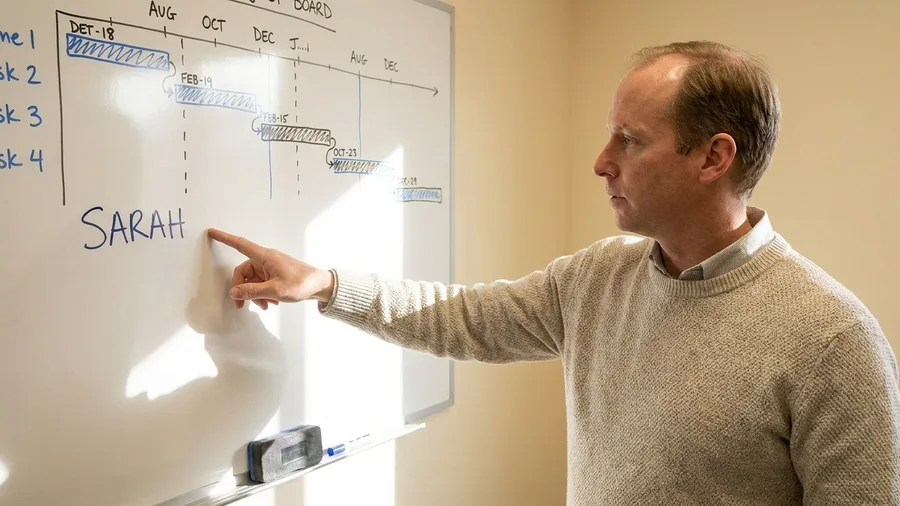
Three seconds is how long it takes to say a name, and it is the whole test. The beginner class two lanes over is invisible to everyone at work; what they actually witness is who gets named at the moment praise arrives.
The obvious move – share the credit with a warm 'we pulled it off' – reads as taking it. Everyone can hear who owns the 'we', and every person below concludes that credit rises and comes back down only if the person at the top happens to remember. They price that risk into the next project.
What grounded people do instead is specific and immediate: 'The migration held because Priya found the race condition on Thursday; I signed off on her plan.' A name, a contribution, a detail only someone who was there could know.
The cost is real and paid every time: a slice of the shine, surrendered exactly when the shine is being handed over. Modesty gives up nothing at that moment; naming someone gives up the only thing on offer. They pay it because the shine recomposes into something longer – the room leaves describing them as someone worth working for.
Watch the mid-level person weighing the internal transfer against the outside offer. They are not listening to the all-hands speech. They are tracking whether names get said in rooms they are not in.
The visible cost of keeping credit honest
What the grounded version of success actually spends
How They Treat People Who Can Do Nothing for Them
Watch the person with the least authority in the room ask a question at the end of a board meeting. Ten minutes will tell you where the boundaries sit, and frequently the door opens easily enough for the people already invited inside it. The harder test is earlier, before the meeting: whether that same person could reach the senior figure at all.
The arrangement that answers this is almost embarrassingly plain. A fixed hour each week, Thursday 4 to 5, with a booking page anyone can open – no referral field, no 'how did you hear about me', no assistant sorting requests by the logo in the sender's signature. The first ten requests that land, in the order they arrive, get answered inside a week, on the person's own account rather than through a filter.
What gets refused matters as much as what gets offered. No 'have your VP reach out first'. No instruction to the assistant to prioritise by seniority or company name. That kind of screening turns a title into a ticket, and it quietly rebuilds the ranking the rest of this behaviour is meant to level.
The limit is stated in public, so it reads as a rule and not as a rebuff: one hour, ten replies, nothing that needs a proposal in advance. Nobody should hear that as the door standing open day and night. Where the volume is genuinely out of hand – a support desk lead, a founder six weeks past launch with four hundred messages stacked up – one stranger a week, answered in a side channel, does the same work in miniature.
What the open line produces is the part no other behaviour reaches: requests and objections from people who were never going to be in the room and have no reason to smooth anything over.
4. They give juniors the attention the client gets

Naming the person who did the work is one high-stakes moment with an audience watching. The same disposition gets tested hundreds of times where nothing at all is on offer.
Watch the least senior person in a meeting ask something basic. The reply comes in one of two shapes: a full answer, followed by a question that keeps the conversation going – or a nod and 'let's take that offline', and the manner visibly changes when it moves there. Everyone in the room catches the shift. The same test runs through the small replies that buy nothing – the email from someone with no budget, the name of the person who set up the projector, the follow-up two days later about an analyst's visa question – and the tone that holds at 6pm exactly as it did at 10am.
Anyone can be warm to the person who signs the contract. A single lapse, the junior getting cut short after a good board meeting, becomes the one story people repeat, because it is the one that plainly cost nothing to fake.
So the person pays in time: twenty unoptimised minutes a day, questions answered instead of routed to a document, no sorting by who is likely to matter – and that block stays in the calendar when the week fills up. The clearest sign is not warmth in one meeting. It is the same person on a bad Thursday.
💡 Tip: Next time a junior asks something, give the full answer and then ask one follow-up question about their work. Watch how it lands.
5. They answer people who can do nothing for them

Usually not, and the reason is rarely rudeness. It is the architecture: the assistant screens by seniority, the email address is a form, and the only way in is an introduction. The people who stay level build one door that bypasses all that.
The most basic version is a set hour in the week, a public booking page with no sorting, and the first ten requests answered in the order they arrive. Or an address the person reads themselves, ten messages at a time. No referral required, no assistant told to check the sender's company. That filter is exactly what converts a title into access again.
The limit gets published alongside it, so it reads as a rule and not a refusal: one hour, ten replies, nothing requiring a proposal, a response within a week. Anyone hearing unlimited access has misheard. Volume that truly cannot be absorbed – a support desk lead, a founder six weeks after launch – still allows a smaller version: one stranger a week, answered away from the main inbox, the terms stated where people can find them.
Researchers who study how people read social signals keep landing on the same point: what tells us about character is not how someone behaves when observed, but the pattern across contexts, especially where it earns them nothing. A reply to a stranger is that test running in the open.
A published address with real replies does something the polished channels cannot. It brings in messages the person would never have gone looking for and never heard otherwise. A stranger with no reason to be tactful will say the roadmap makes no sense, that the pricing confuses them, or that the answer to the last question was wrong. Nobody in the person's own building says those things, because the building has already learned what it costs.
The Open Door, At a Glance
📏 Filter that counts
Self-limits published as rules, not refusals
⚠️ Main risk
No stated limit reads as unlimited access
🔁 Fallback for high volume
One stranger weekly, off the main inbox
🙋 Who bypasses the filter
A real person reads the address, not a form
🧱 Hardest part
Reply in arrival order, not by status
Why it works
Unlooked-for messages — the confusing pricing, the wrong answer — reach you only through a door you did not sort.
How They Keep Learning After the Peak
The first year after a visible win feels like a summit. The second year is where the drift starts, because the rooms you are in are full of people who agree with you and the work no longer tests you.
These four qualities are how someone keeps a real edge on their own learning without needing to be humbled by a failure first.
6. They compare upward, which keeps the gap visible
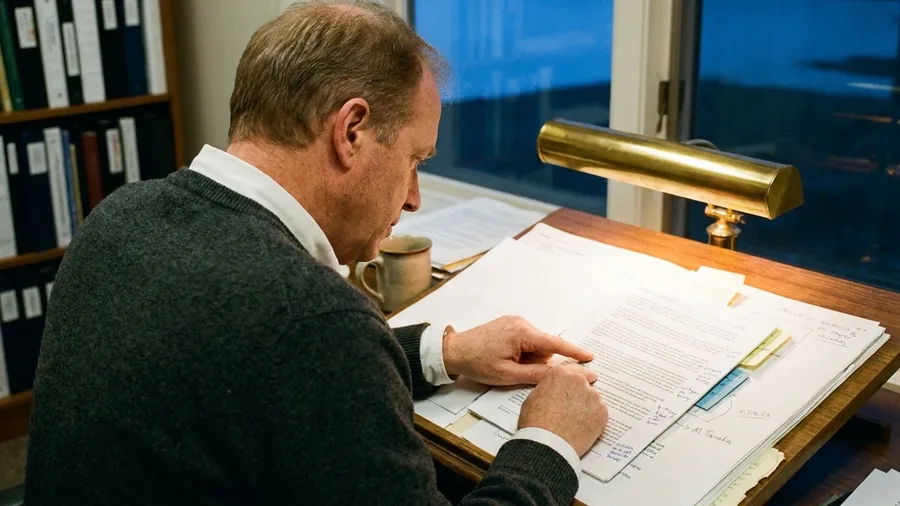
So the promotion lands and within a month the people you measure yourself against have quietly changed – the comparison set shrinks to the colleagues you have already passed, and every meeting becomes a small confirmation that you arrived. That is where the finish-line feeling comes from, and it is a choice about where you look, not a fact about how good you are.
Line yourself up instead against the person two levels up whose work you still cannot do, and keep the gap in writing: the staff engineer whose design docs get read twice, the ceramicist whose glaze you have tried eleven times and cannot reproduce. Write down the specific things you cannot yet do – the negotiation you would lose, the system you could not debug alone. The guard is to keep the list about skills and never about worth, so it stays a map rather than a verdict.
One test tells you whether your comparison is doing any work. Name the practitioner and name the exact deficiency; if you cannot state it as a skill you lack, it is not information, it is a mood.
💡 Tip: Keep your deficiency list in a notes app. Add one item per month. Tick one off when you can do it.
7. They reverse themselves in public and name the reason

The standard advice is to never wobble in public, to project certainty because people need to see a leader who is sure. It is bad advice dressed as strength.
Take the all-hands where you said, on the record, that remote hiring would never work here – a line that got quoted back at you for two years. Then three remote hires outperform through a six-month trial, and you stand in the same room and say you were wrong, and why. The reputation was built on being right, so the reversal costs exactly the material it was made of; that price is why a quiet change of mind, however sincere, teaches the room nothing.
What the public version buys is permission. People watch you survive being wrong and conclude that updating is safe, so the next person who spots a bad call raises it in the meeting rather than drafting a resignation – the alternative is a team that routes around a leader who cannot be corrected. Say plainly whose numbers moved you, and do not claim you saw it coming.
This one does not fit every situation. A regulated role, or a founder mid-contract whose customers read any reversal as instability, may need the private-first version: tell the people affected directly, then state what changed without relitigating the whole decision on a stage.
Choosing Your Venue: Decision Test
Go public
- You can name the specific evidence that changed your mind
- The people who heard the original claim are still in the room
- Your role survives being seen to be wrong
- The correction prevents someone else repeating the error
Private-first
- You cannot yet point to what changed your mind
- The original claim was made to people no longer affected
- A public reversal would be read as instability by clients or regulators
- You need to test the update before defending it
8. They keep one critic who is allowed to disagree

"I don't need anyone to tell me – I know when I've messed up." That is the line, and it is almost always the tell. A public reversal only works if someone flags the wrong call while it is still cheap to fix, and that depends on one relationship nobody can see: a person whose regard predates the success, who gains nothing from agreeing, and who is never a current subordinate with a mortgage priced against your reaction.
It is usually an old colleague from before the title, a sibling, a first boss. It is kept by unglamorous means – a call with no agenda, and a direct ask: tell me where I have got worse since the promotion. The first time it stings, the response is a thank you and a follow-up question, not an explanation of context. What fails is the subordinate critic who cannot afford honesty, so the feedback comes back as you are doing great, maybe delegate more.
Name one person and ask for the unflattering version: what is one thing I have started doing since the win that you would want me to stop? Then do not argue with the answer. Arguing once closes it for good.
🗣️ Build the critic relationship in four steps
Time it at 90 days
Ask within the first three months of the win. Later and the answer sounds like a verdict on the whole change.
Set a permanent cadence
Put it in the calendar every quarter, not when something goes wrong. A call that only happens after a bad call is a review.
Ask what they would stop
Phrase it as a stop, not a start. People can name a behaviour they have watched you pick up; they rarely name the absence of one.
Watch for the polite version
If every answer is delegate more, the critic has slipped into subordinate mode. Say so once, out loud, and ask again.
Frequently Asked Questions
Is it fake to credit the team if I did most of the work?
No, because the three-part sentence includes your part. Say what you did — 'I kept the scope from growing' — alongside the break and the people who helped. The point is to make the claim checkable, not to erase yourself.
What if I genuinely have no spare time for a beginner class?
Then use the smaller version: one recurring 60-minute slot with a public score attached. A parkrun time or an online chess rating is enough. The requirement is that you are measurably bad and the same six people see it every week.
How do I take credit without sounding arrogant?
Be specific and name other people. 'The migration held because Priya found the race condition; I signed off on her plan' is harder to read as arrogant than 'I led a great migration', because it is checkable and it gives credit away at the same time.
What if the honest feedback hurts and I want to defend myself?
Sit with it for a day and then ask one follow-up question. The first time you argue, the channel closes. If the feedback was wrong, you can say so later, once you have shown you can hear it.
Should I reverse a decision publicly if I was wrong?
In most cases yes, and name what moved you. In a regulated role or mid-contract with clients watching, tell the affected people directly first, then state plainly what changed without re-litigating the whole decision in front of an audience.
The First Question to Ask Someone This Week
If you do only one thing, make it the eighth: keep one critic who is allowed to disagree. It is the only quality here that cannot be performed for an audience, because it asks you to hand someone permission to wound you and then not defend yourself when they use it.
General modesty and being pleasant to everyone feel like the same thing, but they are not. They cost nothing, they are indistinguishable from ordinary good manners, and they sit comfortably alongside any amount of drift. That is the problem: you cannot check them, so they tell you nothing about yourself.
Ask the person who knew you before the win and gains nothing from the answer. An old colleague, a sibling, a first boss. Not a current report, not anyone whose week improves when you are pleased.
Then ask it plainly: what have I started doing since the win that you would want me to stop? The version of you that gets rolled eyes is not prevented by being more modest. It is prevented by one person who is allowed to say you have become it, and by what you do with their answer.
Ask the question today
Pick one person whose opinion predates your win, send the text, and sit with the answer for a day before you respond. That is the whole exercise.

