

The casserole dish comes out of the oven and you stand in the kitchen working out how to halve it, because the people you would once have called about the leftovers moved three hundred miles away last spring.
The phone stays quiet, and it is easy to take that quiet as a report card. Someone stopped calling, so someone must have stopped caring, and you begin reviewing old conversations for the moment it went wrong.
Most of the time nothing went wrong. The contact was a structure more than a feeling – the work lunch, the school pickup, the shared stoop – and retirement, a move, a caregiving stretch or a grandchild's Tuesday schedule took the structure without touching the affection.
That distinction is the whole article. Some of the distance in front of you is ordinary and will not be repaired, and some of it is sitting there waiting for one specific invitation. Neither is evidence that you are hard to like.
By the last line you should be able to sort the ten truths into normal and fixable, decide which friendships you want at a different frequency rather than the old one, and send one concrete invitation this week.
Quick Tips Before You Start
Pick a Day and Time
Swap 'we should catch up' for 'Thursday at 10 at the cafe on Main' — vague plans die in text threads.
Read the Reply as Data
'Thursday doesn't work' is calendar information; 'I'm swamped' with no counteroffer is also information.
One Invitation a Week
Rotate through a short list of names so no single friend carries the whole weight of your social life.
Name the Cost Out Loud
A monthly standing call and a quarterly visit cost less than weekly dinners — and last longer.
Show Up Alone
A weekly class or walking group works because the same faces keep showing up, not because you click instantly.
The Circle Changes
Before you decide anything is wrong with you or with them, look at what actually changed. Retirement, moves, grandkids, and caregiving rewrite the calendar that used to keep everyone in the same room.
This first group of truths is mostly about logistics — the normal, not-the-fault kind. Read them and notice which ones match your life right now.
1. Schedules Changed, Not the Friendship

Usually because the thing that produced the calls disappeared, and nobody noticed it leaving.
Consider what retirement actually removes. The noon break that put two people at the same table five days a week, the four-minute walk to a friend's desk, the parking lot goodbye that turned into twenty minutes of talk. Researchers who study adult friendship keep landing on the same observation: closeness in midlife is manufactured by repetition, and it shrinks when the repetition stops. The affection was never the variable. The schedule was.
Then the move happens, and the grandchild's town or the warmer climate puts two states between the Tuesday lunch that used to require only a coat. A friend's silence is not proof of indifference. It may be a new commute, a parent's medication schedule, a pickup at 3:15. Test the story before you write anyone off. Set 'she didn't call because she doesn't care' next to the fact of the matter, which is that the Tuesday lunch no longer exists.
One honest limit: a weekly call that stops is a different signal from a work-lunch friendship that ended at a retirement party. The first deserves a question. The second is logistics, so the fix is a new container: 'Coffee Thursday at 10?' rather than 'we should catch up sometime.'
💡 Tip: A friend in regular weekly contact who suddenly goes quiet is a different signal than a work-lunch friendship that ended with retirement. Don't apply this truth to a pattern that doesn't match.
2. You Will Initiate More or See People Less

You finish a Saturday afternoon walk, your feet warm and your head clear, and you pull out your phone to send the invitation for next week. You stop. You sent the last one too, and the week before that.
The tally feels like a diagnosis. It usually isn't. When work, school, and the old routines stop handing you the same faces – the same office kitchen, the same pickup line, the same weekly meeting – the job of arranging contact falls to one person or no one. In most friendships it falls to whoever notices first, and you are the one noticing. So you will send more invitations than you receive, or you will see people less. Those are the two settings.
What makes it workable is the shape of the ask. 'Sometime soon' has no calendar slot, so it tends to resolve to nothing. 'Coffee Tuesday at 10, the place by the library' can be answered in four seconds. Aim for one invitation a week, rotating through a short list of names – the walk, the coffee, the gallery visit all count. The rhythm matters far more than the size of the gesture.
A declined invitation is not a verdict. 'Thursday doesn't work' is calendar information and leaves the door open for another date. Silence, or a no with no alternative attached, is also information, just a different kind – and worth noticing after the second or third round rather than the first.
Some friends never initiate and still show up whenever asked. One concrete invitation will tell you whether the friendship has a pulse, which is cheaper than a year of wondering whether you're the only one trying. Test the pattern before you file it under one-way.
⚠️ COMMON MISTAKE
Don't Keep a Scoreboard
Counting who texted last turns a friendship into a ledger. If you want to know whether the relationship has a pulse, send one invitation and watch the reply — not the history.
3. Shared History Doesn't Guarantee a Shared Present

Long friendships can thin into a shared archive nobody visits.
The two of you sat in the same office for fifteen years and had the same complaints. Now one has moved, and it's boats and tides; the other still works, checks in on a parent most evenings, and measures the day in errands. On the phone the old stories still land. Then the conversation circles back to the same four anecdotes, the third silence arrives, and you find yourself looking for the exit. Nostalgia is a real pleasure – retelling the good years is its own kind of warmth. Current compatibility is a separate question: can the two of you talk about this week, and this week only, and still enjoy it?
Try one question and watch what happens: 'What's your week actually looking like – what's worrying you?' If the talk stays anchored and easy, the friendship has more runway than you thought. If it stalls the moment you leave the past, you have learned the shape of the gap, not a verdict on the person.
Keep the history without faking the closeness. An annual long lunch, a birthday call, a card that arrives in December can hold real affection without pretending to weekly intimacy. The mismatch isn't a betrayal; two lives moved, and the old format stopped fitting.
Myths About Late-Life Friendship
4. Couples and Singles Drift Apart

"Bring someone, if there's someone." You have heard the line, and you have heard the pause on the other end of it, because there is no someone, or the someone is new enough that nobody at the table has met them. A house with two bedrooms and a dinner for four, built long before anyone's situation changed, quietly decides who gets invited.
Single friends hold one calendar and can say yes on Thursday. Coupled friends are lining up two calendars, a parent's aide schedule, or a grandchild's pickup, and the invitation usually assumes a partner. Ask where a pairing is not the point – a walking group, a museum afternoon, a class – and say the terms out loud: "Come solo; partners another time."
Nothing here is broken. Friendships with a real one-to-one history, and meetups that can flex, tend to ride out the mismatch. Friendships that only ever existed couple-to-couple often settle into a holiday card, and that is a format, not a funeral.
5. Some Friendships Were Seasonal and Are Ending

For a long time I treated every friendship that faded as a bill I had failed to pay. The woman I ate lunch with at the office for nine years, the one I walked the block with every evening while our kids rode bikes, the couple we saw every single Saturday until their daughter graduated and the Saturdays just stopped. I called each one a loss, and then quietly called myself the reason.
None of it was a failure. Those friendships lived inside a routine that held them up: a commute that put you in the same corridor at noon, a school pickup line that gave you twenty minutes a day, a shared porch that made contact automatic. Take the job, the child, the house out of the picture, and the friendship seems to die, though the affection was never the thing that broke.
The shift deserves one plain gesture: a card, a coffee, a line that says the season mattered and the frequency is going to change. And when a friend from a finished season still reaches out, answer. The overtime friend who texts out of nowhere is offering something a shared calendar never did.
💡 Tip: If a seasonal friend still reaches out after the structure ends, accept and reciprocate. A live invitation means the friendship isn't seasonal just because the old routine is gone.
The Hidden Costs and Strains
Some of what thins your circle is not about loss at all — it's about price. Time, money, energy, and caregiving all have line items, and naming them makes the choices clearer.
Read these two truths and notice which costs you're actually carrying. Then decide which friendships are worth the spend and which can shift to a cheaper format.
6. Maintenance Costs Time, Money, and Energy

The first time I added it up, the lunch came to three hours and about $100. Two hours on the road for a ninety-minute meal, gas, parking, and a $25 birthday gift, and I drove home wondering why keeping a friend felt like booking a shift.
That math does not apply to the neighbor you meet for a Tuesday walk or the friend who lives ten minutes away and takes nothing but an hour. It applies to the long-distance ones: the round trip that eats a whole afternoon, the weekend visit that needs pet care or someone to cover the grandkids, the standing phone call placed after work runs late.
The spend is ordinary maintenance, not proof that friendship has become an obligation. Three or four good friends at that rate is a real line in a month, and most midlife budgets never name it, which is why it starts to feel like a job you resent rather than a friendship you chose.
The fix is a rhythm you can repeat. One standing call a month, one in-person visit a quarter, a coffee walk instead of a dinner out, and a turn-taking on who does the driving and the hosting so the travel does not always fall to the same person.
That rhythm does the deciding for you. You keep the friendships worth the spend and lower the format on the ones that are not: the annual lunch for the ones who still matter, the phone call for the ones who drifted, a real conversation about a lighter arrangement for the ones that cost more than they return.
What Each Format Actually Asks of You
🚶 Lowest-cost format that still counts
Walk + call
📅 Minimum rhythm to hold a long-distance friend
1 call/mo, 1 visit/qtr
🔁 Who should host or drive
Alternate, never one person
🚫 Skip the rhythm if
Friend is a 10-min neighbor
⚠️ First sign the format is too heavy
You dread the calendar entry
The honest threshold
If a friendship needs more than one call a month and one visit a quarter to survive, the format is being asked to do work the friendship no longer does on its own.
7. Caregiving Turns Friends Into a Support Roster
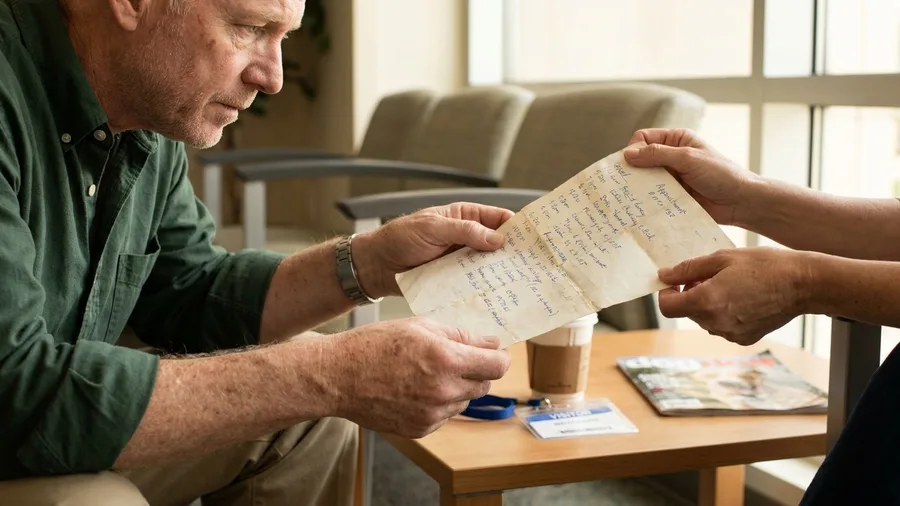
The longer the illness runs, the faster the visiting stops, and the quiet that follows is easy to read as a verdict on the friendship. What actually changes is the job description: company turns into logistics, and most people are better at the first than the second. A friend who came to the surgery and has not called since six weeks of recovery is often not a friend who stopped caring. They are someone who does not know what day it is in your treatment, and is embarrassed to ask twice.
Sit with the two kinds of help. One is concrete: the lift to the hospital, the pot of soup, the pharmacy run, the form that needs a signature. The other is presence: the Sunday call, the twenty minutes where someone asks how the treatment is actually going and waits for the real answer. Some friends drop away because they have a parent of their own on a medication schedule they cannot move, or because a hospital parking garage at 7 a.m. is unfamiliar territory they would rather not face alone. Others lean in with tasks. Both are information.
You can make the ask small enough to accept. Not 'let me know if you need anything' but a fixed slot: a Thursday 2 p.m. appointment with someone waiting in the lot, a Sunday 6 p.m. call that lasts twenty minutes and no longer. Time-bound, task clear, no mind-reading required. When the need is daily or medical or financial, hand it to a clinician, a social worker, a home-care agency, a family member. A friend drafted as staff burns out in a month.
🌱 GROWING TIP
Ask for the Task, Not the Feeling
Friends freeze when the ask is 'be there for me.' They move when it's 'Thursday, 2 p.m., the oncology lot, twenty minutes.' Name the task and the time.
8. Family Obligations Squeeze the Same Hours
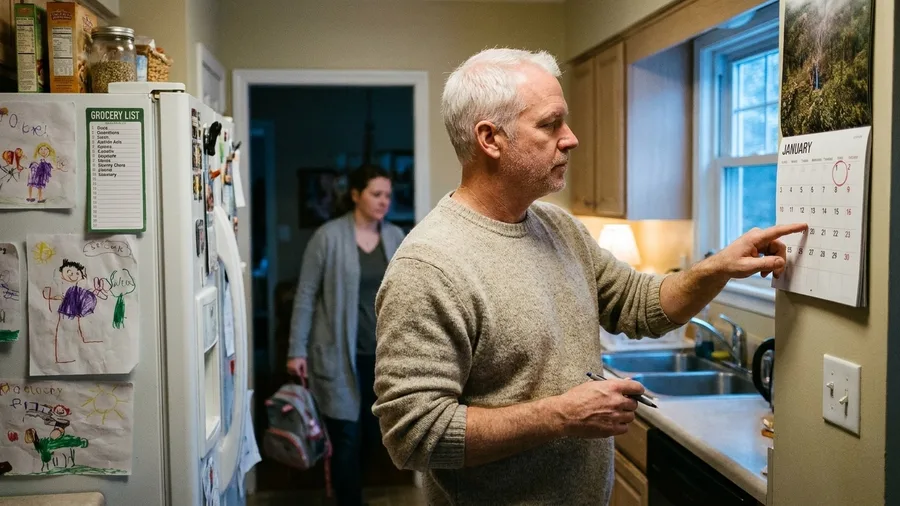
The standard advice is that you make time for the people who matter. It is good advice and it is useless here, because the friend dinner and the grandchild pickup both land at six o'clock, and no amount of caring about either one puts them in different hours. The squeeze is structural, not personal. Grandchildren claim Tuesdays, sick days, school holidays. Aging parents claim appointments, groceries, and the emergency room at two in the morning. Nobody in that list is doing anything wrong.
So stop treating every missed dinner as evidence about the friendship. Block one recurring slot instead, first Saturday coffee at ten, and treat it as an appointment rather than a hope. Then hold one boundary next to it: when a non-emergency family request collides with that slot, say no. One window, defended, beats four dinners cancelled.
If work travel or your own health is the constraint rather than a grandchild's pickup, this particular squeeze is not yours, but the move still fits.
🚶 Rebuild One Friendship in Four Moves
Pick one person
Choose someone you've missed, not the whole list — one name you'd genuinely like to see.
Send a specific invitation
Name a day, a time, and a place: 'Coffee Thursday at 10 at the library cafe?'
Read the reply as information
A counteroffer means the door is open; silence means try again once, then move on.
Set the next slot before you leave
Before the coffee ends, agree on the next one — that's how structure gets built.
What to Do About It
The last two truths are the ones you can act on. One is about building new structures for new friends; the other is about what loneliness actually means.
Read them as instructions, not diagnoses. The fixable part of this list is smaller than it feels — and more concrete than 'put yourself out there.'
9. New Friends Need New Structures, Not Nostalgia

I spent a year waiting for a friendship to rekindle over old memories, when what it needed was a place to meet again. One question cuts through it: do you have a recurring spot where the same faces show up on a calendar, or are you waiting for an old friend to call? A weekly walk, a pottery class, a library shift, a pickleball league, a faith group, a committee. That shared calendar is what does the work, not the nostalgia.
Proximity and repetition do the rest. The same Tuesday class turns strangers into people you nod to, then talk to, then save a seat for. Show up ten minutes early and say something plain: 'New here, what is the easiest way to help or sit?' and to one person, 'First time, came alone.' Not every room will fit. A cliquish table or a bad night will happen, and that is a fact about the room, not a verdict on you.
💡 Tip: Arrive ten minutes early. Say to the organizer: 'New here — what's the easiest way to help or sit?' Then to one person: 'First time here — came alone.'
Friend or Obligation? A Quick Read
Keep Investing
- They reciprocate with some effort of their own
- They offer an alternate date when they can't make yours
- They ask about your week, not just their own
- They show up when something is hard
Let It Fade
- You are always the one initiating
- Repeated cancellations with no counteroffer
- Conversations only circle old memories
- They dismiss or minimize your concerns
10. Loneliness Is a Signal to Act, Not a Verdict

The usual answer is to treat it as a warning about you, and that answer is wrong. Loneliness is a signal that the system of contact around you has gone thin, not evidence that you are hard to like. The feeling names a gap. It does not name a character.
The gap closes with one specific move this week, and specificity is the whole trick. Not 'we should catch up' but a text that could be answered with a yes or a no: 'Coffee Tuesday at 10 at the library cafe?' Or a call that ends with a callback time on the calendar rather than a warm maybe. Then comes the part people get wrong.
The reply tells you about calendars, energy, and fit. It is not a ruling on the friendship or on you. So read the pattern instead of the single message: does this person give back some reciprocity and respect over repeated contact, or do they consistently dismiss, cancel, and leave you carrying all the arranging? Keep what shows up. Let go of what only takes.
One honest caveat. If the loneliness sits on you for months, or travels with depression, a friendship plan is not the treatment. That is a moment for a therapist, a doctor, or a mental-health service, and seeking one is not an admission that the social fix failed. It is just a different problem asking for a different tool.
Frequently Asked Questions
Why did my friends stop calling after 50?
Because the structures that used to put you in the same room changed. Retirement, relocation, grandchild care, and elder care all rewrite the calendar. The silence is usually logistics, not rejection. Check one assumption before you write anyone off.
Is it normal to lose friends at this age?
Yes. Many friendships are seasonal — built on a job, a child's school, or a neighborhood — and they can end when the season does, without anyone doing anything wrong. What matters is whether a live invitation still exists.
Why am I always the one reaching out?
Because after 50, friendship depends on deliberate invitations instead of automatic contact. Someone has to go first. A workable rhythm is one invitation a week, rotating through a short list. Most people reciprocate once prompted.
How do I make new friends at my age?
Join a repeated-contact setting — a weekly walking club, pottery class, library shift, or pickleball league — where the same faces show up on a recurring calendar. Chemistry follows proximity and repetition, not instant matching.
What should I do if I feel lonely?
Treat loneliness as a signal that your contact system is thin, not as a verdict on your character. Text one person a specific invitation this week. If the feeling is persistent or paired with depression, talk to a therapist or doctor.
What Your Next Seven Days of Friendship Look Like
The verdict, plainly: these ten truths, like uncomfortable truths about aging, are mostly calendar, season, cost and care. They explain why a friendship went quiet without proving that anyone rejected you, and most of them leave a clear point where a repair can start.
Which brings back the unanswered call. It is not a courtroom. It is information about a schedule that changed, and the lunch break that used to hold that friendship no longer exists in anyone's day – but a new arrangement can be made from scratch, this week, by you.
Choose one person and send one line with a day and a time in it: 'Coffee Tuesday at 10 at the library cafe?' Then read whatever comes back as information about calendars, energy and fit. The dish is already made, and there is a Tuesday coming.
Send the Text Today
Pick one name from your list and send a specific invitation — a day, a time, a place. Then read the reply as information, not a verdict.

