
Most people assume the tolerance muscles weaken with age, that by 50 you have learned to shrug off disrespect and overwork. The turn is this: the tolerating often gets worse, not better. You have more people depending on you, less recovery time, and a longer history of keeping the peace.
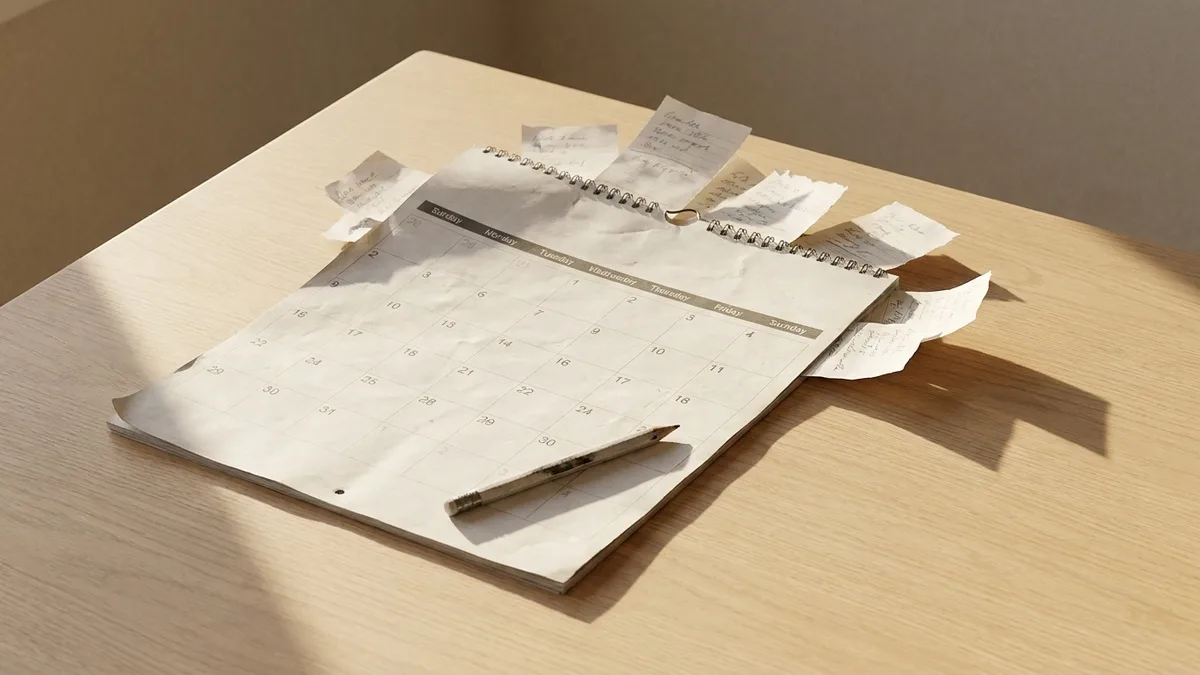
Picture the phone on a Tuesday: a sibling's Sunday call you still have not returned, a work message at 10:47 p.m., a checkup reminder postponed twice. The calendar is full of other people's requests, and your body is braced for the next one.
The problem is not a sudden crisis. It is the ordinary tolerances absorbed so long they look like personality: being talked over, saying yes before thinking, sleeping last.
After 50, nine specific tolerances cost you self-trust, sleep, health, and time. Each has a boundary or next step you can state and practice. By the end, you will choose the one that costs most this week, write a single boundary sentence, and rehearse it before the next encounter. You will also know when persistent pain, low mood, or safety concerns need professional help.
Quick Tips Before You Start
Use a pause phrase
Say 'I will check and get back to you' before agreeing to anything that takes more than a minute.
Write the boundary first
One sentence in a notebook beats a rehearsed speech you never deliver.
Schedule the checkup
Book the appointment before you research the symptoms, not after.
Set a hard stop
Pick a time your workday ends and close the laptop at that time, not the next task.
Track repeats, not moods
One bad day is a mood. The same behavior three times in a month is a pattern.
People and Boundaries
The first four tolerances are relational. They are not about cutting people off. They are about ending the automatic yes, the one-way friendship, and the self-shrinking that keeps a fragile peace.
These are the places where a single sentence, delivered once, changes the terms of the relationship more than a decade of quiet resentment ever did.
1. Constant Disrespect Is Not a Personality Quirk

Three times in four weeks. That is the number that matters, not the explanation that follows it. A brother-in-law who corrects every opinion at Sunday dinner, a manager who talks over you in every team meeting – what you are looking at is a pattern, and a pattern is not a mood.
A single sharp reply the week of a funeral is a bad day. The same dismissiveness landing on you specifically, again and again, is a choice someone keeps making. If you have spent years justifying your choices to relatives, learning what to stop apologizing for can help you hold that line without guilt. Your read on their intent is worth less than the repetition you can count.
So pick the consequence now, before the next dinner: leave the conversation, end the call, decline the invitation. Then run it the moment it happens again, without reopening the debate. Self-trust grows from doing what you said you would do, not from winning the argument about whether you were too sensitive.
💡 Tip: Say the consequence once, in plain words: 'If you correct me again at dinner, I will leave the table.' Then leave if it happens.
2. Saying Yes When You Mean No Trains Resentment

The standard advice is to learn to say no, as if the word were the hard part. What actually gets people is the half-second between hearing the request and answering it, and by then the yes has already left. A colleague catches you in the corridor on your way out at 5:40 with a request to review a proposal by morning; the agreement is out before you have registered that you had plans. Compliance gets trained into a person through speed. The faster the answer, the less chance the asker offers and the less chance you get to notice whether the task is wanted, and after years of that reflex the requests arrive already knowing the outcome.
What the research on requests and compliance keeps turning up is that a delay is the whole lever. A pause need not be clever: something like asking to check the diary and come back on it by the end of the day moves the decision away from the person asking and back to you, and the asker usually reads it as ordinary scheduling rather than refusal. Nothing has been declined. A date and a time for the answer has simply been attached, and most of the pressure to agree on the spot dies in the gap.
A shorter version of the favor is fine only when the task is genuinely wanted. Agreeing to half of something you resented in full changes nothing about the pattern; it teaches the other person that pressing once will produce a smaller yes, and the next ask arrives at the same size as the first. The real cost is easy to count in hours. A 30-minute errand plus 40 minutes of resentful replay that night is the true price, and it is rarely the errand that depletes anyone.
The discomfort of disappointing someone is the price of the pause, and it is a short, survivable feeling. It does not require a justification, a paragraph of explanation, or a promise to do better next time. The asker hears a time frame, not a rejection; the resentment that used to accumulate over months of automatic yes has nowhere to build.
3. One-Way Friendships Are Not Loyalty

The text arrives on a Thursday afternoon: they are moving Saturday, could you bring the van. You have not heard from them since the spring, when they needed a ride to the airport. You remember, because the week you had the hospital appointment, nobody asked how it went.
The same accounting that decides where your yes goes decides this. Over several months, tally who asks and who gives. A friend who calls only when there is a move, a ride, or a shortfall, and never asks about the scan, is running a one-way account – and you have been covering the balance.
Before you pull back, one test. Make a direct request of your own: 'I need help with this on Thursday.' A mutual friend rearranges something or explains why they cannot. A taker deflects, goes quiet, or disappears until the next moving day. Either way you have your answer, and you did not have to accuse anyone of anything.
The change is reduced access, not a speech. Replies slow by a day. The next free weekend is already taken. The next request gets 'I can't, but good luck with it.' No announcement, no explanation, nothing to argue with. The pattern shifts because the supply does.
What that frees up is the point. The weekends and the attention go to the people whose support moves both ways – who ask about the appointment before you mention it. Loyalty to a long history is not a reason to keep paying into an account that only withdraws. Length of friendship is a fact about the past. Whether it carries any weight now is a fact about the last six months.
💡 Tip: Do not send a dramatic message. Just stop being the first to text and see who initiates.
⚠️ COMMON MISTAKE
Don't Confuse History With Reciprocity
A twenty-year friendship that only flows one direction is not a friendship you are saving. It is a habit you are funding. The length of the history does not change the direction of the support.
4. Shrinking Yourself to Keep the Peace

For years I called it being easygoing, and what it actually was, was rehearsal. I practiced the shorter version of every preference before saying it out loud, trimming until nothing in it could start an argument, and by the time it left my mouth there was nothing left worth defending. The tell was how much preparation a two-day visit took to announce.
Here is where it tips from courtesy into cost. Adjusting once to keep a holiday calm is fine. Changing what you want every time, before anyone has objected, is not manners, it is pre-emptive surrender, and the other person never finds out there was a preference to weigh.
The distinction is simple enough to check: if you have never once said the plain version out loud, you are not being kind, you are managing a reaction that has not happened yet.
Body and Mind
The next three tolerances are quieter. They are the ones you aim at yourself: the sleep you trade away, the pain you explain away, the appointment you keep postponing.
These cost more than the relational ones because the bill arrives later and in a currency you cannot borrow against.
5. Sleep Is Not Leftover Time

You stop treating bedtime as the flexible slot at the bottom of the list. The body does not care that the day ran long. It keeps its own clock, and every night you push past it, you borrow tomorrow's patience at a rate you will feel by Thursday.
The difference between the two is not discipline, it is whether the hour has an owner. Sleep treated as a health appointment has a start time. Sleep treated as leftover time has whatever start time the last message leaves it with, which is how a quick reply at 10:20 becomes lights-out at midnight.
So the move is structural. Pick a wind-down hour and a wake time that hold across the week, not a heroic early night after a chaotic stretch. Keep the last hour clear of the inbox, the money conversation, and the family thread about a parent's care. A text that arrives at 9:30 about Thursday's schedule is Thursday's problem.
And if the nights have been broken for weeks rather than days, that is a conversation with a clinician about frequency and duration, not a test of how much you can absorb.
🌱 GROWING TIP
Protect the Last Hour
Set a phone alarm for 9:30 p.m. labeled 'wind down.' When it goes off, the email app closes and the kitchen lights dim. The alarm is the boundary, not your willpower.
6. The Cost of Coping With Pain or Low Mood

The real price of pushing through is not the discomfort itself, it is the slow shrinkage of your week around it. Six weeks of stiff mornings can turn a twenty-minute walk you used to take without thinking into a ten-minute loop to the corner and back, and most people quietly accept the shorter route instead of asking why it changed. Low mood does the same thing more invisibly: a month of flat days and you decline the dinner invitation, then the next one, until the calendar thins out and you call it being busy.
The coping buys you a few months of not thinking about it, and spends your range, your outings, and the version of your life that fits into a normal day.
The question is timing, not toughness. What has been going on for weeks and keeps altering what you do is the thing worth booking an appointment about, rather than diagnosing yourself from a search bar. If the thoughts ever turn to harming yourself or you cannot see a way to stay safe, that is not an appointment, that is immediate help.
💡 Tip: Write three lines before the appointment: when it started, how often it happens, and what it stops you from doing.
Should You Book the Appointment?
7. The Checkup You Keep Postponing

"I'll book it after the holidays." The holidays were eighteen months ago. The appointment still is not on the calendar, and the fear behind that gap has a name: the colonoscopy that might find something, the mammogram that might echo a mother's diagnosis, the blood pressure cuff that might confirm what the pharmacist already hinted at.
Naming the feared result is most of the work. The postponed appointment is not laziness; it is a way of keeping a possibility unopened. And the internet makes the postponement feel like diligence: one more article, one more forum thread, one more symptom chart at midnight, and the call still hasn't happened. Research becomes the excuse that dresses up as preparation.
So the appointment gets scheduled first, before a single search result is read. Book the slot, then read. One page beats a folder of printouts when you are sitting in a room with a clinician who has twelve minutes and your actual history in front of them.
Write it down before you go: the symptoms and when they started, who in the family had what and at what age, every medication and dose, and the two or three questions that keep surfacing at 2 a.m. That page travels into the appointment better than memory does. And the last question belongs on it – ask what screening actually fits your history, rather than assuming one age-based rule covers everyone.
Work and Identity
The last two tolerances are the hardest to see because they look like virtue. Work that never ends looks like dedication. Waiting for approval looks like humility.
Both are ways of handing your time and your desires to a committee that never actually meets.
8. Work Consuming Your Recovery Time

An intention to stop working at a reasonable hour is not a boundary; a closed laptop at 6:30 and a walk around the block is. The ritual marks the end in a way a silent promise never does, because the body needs something visible to believe the day is over.
What many readers assume is that always being reachable reads as commitment. It reads as availability with no floor, and the 10:47 p.m. thread about a spreadsheet gets answered because there is nothing standing in its way. Sort the after-hours messages in advance: a client call before 8 gets picked up; anything after waits for morning. Then protect one recurring non-work commitment as if it were on the calendar in ink – the Tuesday swim, the Thursday choir, the Sunday dinner – because a recovery time that has to be earned never arrives.
The last distinction matters. A quarterly audit is a sprint. A permanent expectation of 60-hour weeks with no staffing change is a design problem, not a personal failing.
Temporary Sprint vs. Structural Problem
Temporary sprint
- Has a clear end date
- You can name what you are finishing
- Others on the team are also stretched
- You recover within a week
- The extra hours are the exception
Structural problem
- No end date in sight
- The extra hours are the new normal
- Staffing has not changed in a year
- You cannot remember your last full weekend
- You are told this is just how it is
9. Waiting for Permission to Want More

The standard advice is to wait until the people around you are on board. It is bad advice. Their approval was never the price of admission, and waiting for it is how three years pass with the pottery course still unbooked. The same pattern of passive delay shows up in other areas, and stopping waiting for things to happen explains how to break it across your life.
A 53-year-old has wanted to take that course since a friend's studio open house, and has not signed up, because a spouse keeps calling it impractical and someone at dinner laughed and said, "Hobbies at your age?" The wanting is real and specific. The objection is not. So the obvious advice – get everyone comfortable first – gets the sequence backwards. You will be waiting a long time for a committee that never convenes.
The fix is to shrink the first step until it is reversible. One six-week class, a single trial session, a refundable deposit. That tests the desire without asking anyone to sign off on it, and it gives you real information rather than speculation about whether you will like it.
Here is where prudence and fear part company. Prudence checks the money, the caregiving calendar, the health question – and then acts on what it finds. Fear asks for consensus before the first step and calls it caution. If the arithmetic clears, the arithmetic is the permission.
Some people will not understand, and their discomfort is not a veto. A spouse's quiet disapproval, a friend's raised eyebrow – these are opinions, not rulings. The life after 50 is not a group project requiring unanimous consent.
The wanting has been there for three years. It does not need a committee; it needs a deposit.
💡 Tip: Pick the smallest version: one class, one session, one deposit. Do not announce it. Just go.
Frequently Asked Questions
How do I know if I am overreacting to someone's disrespect?
Look at repetition and targeting, not the size of any single moment. One sharp reply after a hard day is a mood. The same dismissiveness at the same dinner table three times in a month is a pattern. Pick one consequence in advance and run it. The pattern, not the explanation, is the evidence.
Is it selfish to pull back from a friend who only contacts me when they need something?
No. The ratio of asking to giving over several months is the evidence. Before you pull back, make one direct request for support and see how they respond. A mutual friend shows up or reschedules; a taker disappears or deflects. Then reduce access instead of announcing a breakup.
When is pain or low mood something I should stop just coping with?
Record duration, frequency, and interference. Hip pain most mornings for six weeks, or low mood most days for a month that stops you from seeing friends, is enough to book an assessment. Bring physical and emotional symptoms to the same visit, because splitting them gives a partial picture.
How do I stop work from taking over my evenings?
Set a hard stop and a visible ritual: laptop closed at 6:30, desk cleared, a short walk. Sort after-hours messages in advance so the 10:47 p.m. thread waits until morning. Protect one recurring non-work commitment as an appointment, not a reward for finishing.
What if my partner or friend does not approve of my new plans?
Their disapproval is information, not a veto. Separate prudence from fear: prudence checks money, caregiving, and health; fear demands unanimous approval before the first step. Use a small reversible first step, like a single class or a refundable deposit, to test the desire without asking for a vote.
Name the Night You Were Dismissed
Nine tolerances are not nine projects. Choose the one that cost you most this week – the 10 p.m. work message, the Sunday criticism, the appointment moved to next month – and leave the others where they are.
Then write one sentence short enough to say aloud: "That does not work for me." "This conversation ends here." "The appointment gets booked Monday." Say it once in the mirror before the next encounter, not for the first time during it.
If pain or low mood has been running for weeks, or the thoughts ever turn to harming yourself, that goes to a clinician or an emergency service today. A boundary sentence is not a substitute for care.
The phone will still fill with other people's requests, and the body will still brace for the next ask. What changes is the sentence you now say once, and then again – until the calendar is yours, and not the committee's.
Which One Is Quietly Draining You?
Scroll back to the item that felt like it was written about you. Write the sentence you would say, and say it this week.

