
By the end of this you'll know what ten months of Spanish from zero did to my head at 66, what it took out of my mornings and my bank account, and how to start so it's still running in month five.
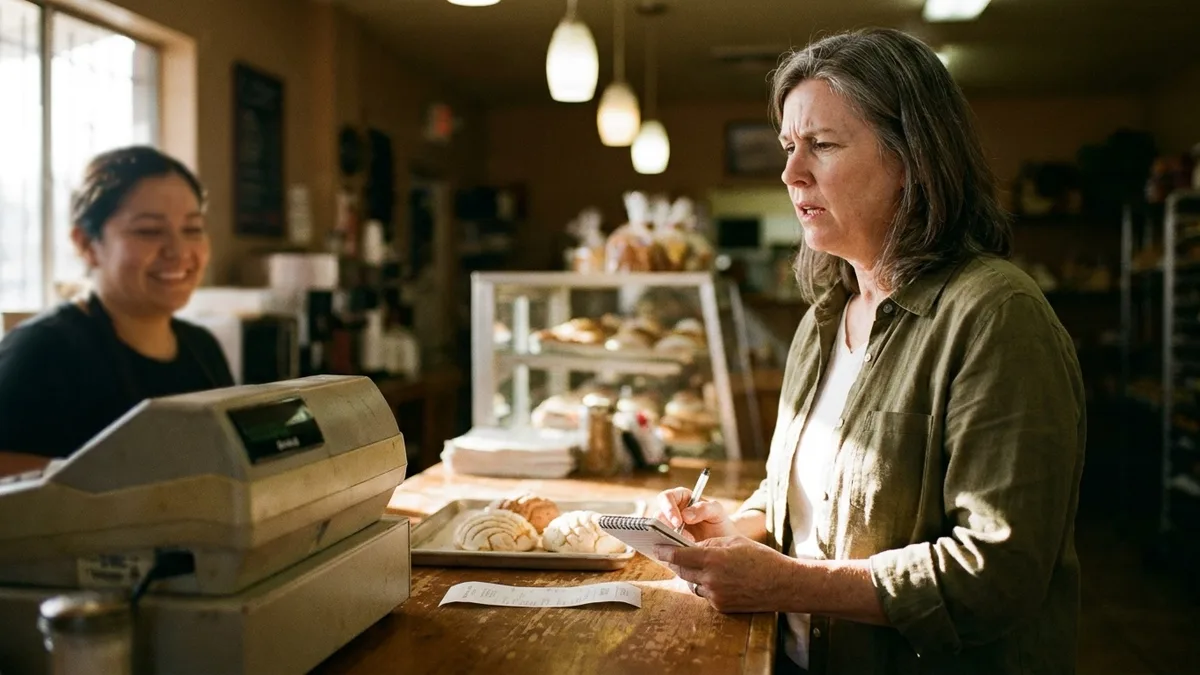
I'm a part-time consultant in Tucson. I began in January with 30 minutes on an app before the 6:30 coffee, a Tuesday-night class at the community college, and a notebook. In November I was in Oaxaca, staying with a family and taking two hours of lessons every morning, still losing the dinner table.
Nothing here was measured. No scans, no tests. My sleep held at seven hours, no supplements, no brain games, no other new routine for ten months. What I have is impressions with dates on them, and the costs were as real as the gains.
The head does feel different, in four or five ways I can name and put a month to. None of them happened at the app. They happened at a register, a desk, a loud restaurant, a taxi. If the change stays inside a progress screen, I don't count it.
The whole thing ran on a conversation and a dated flight, both booked before the first lesson.
Quick Tips Before You Start
Move, don't add
Same 30 minutes, relocated from the 6:30 coffee to Spanish. I added no minutes and skipped no workday.
Have a date and a partner booked first
A flight and a weekly human both on the calendar before lesson one. Take either away and month five is where it dies.
Pay a person by month four
I waited four months. Two 60-minute sessions a month at $25, and it was the nerves, not the vocabulary, that improved.
Study before the afternoon dip
Month one, my head was gone by 4 p.m. The fix was the 7 a.m. slot, not more effort.
Budget the whole ten months
Two semesters at $180, app $13 a month, tutoring $25 a session. About 400 notebook entries in ten months.
What Got Sharper

The first three things I noticed were not about Spanish at all. They were about how my head handled the day: finding words, starting tasks, following a loud conversation.
These are the gains I could date and describe. None of them were measured in a lab. They showed up at a coffee counter, at my desk, and in a restaurant, which is the only place I counted them.
1. Words I couldn't find started arriving mid-sentence
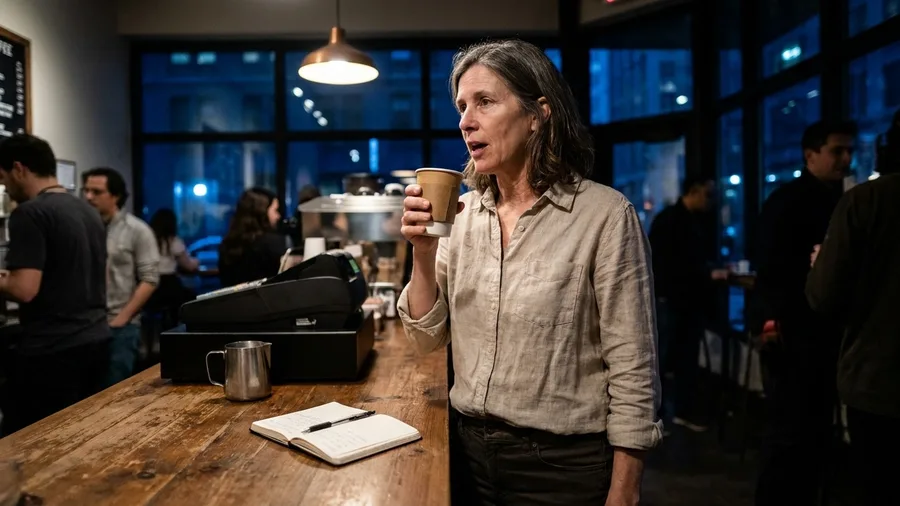
The advice I kept hearing was to make it a habit first and the results would follow, but the first thing that happened was not a habit. It was a word arriving on its own, six weeks in, at a coffee counter on Speedway, when I opened my mouth to say 'without sugar' and 'sin azucar' came out first. The pause in the middle of that sentence had gotten shorter, and I noticed it before I noticed anything else.
By then I had been at the app for thirty minutes every morning since the start, squeezed into the coffee hour rather than added to the day, because consulting was still three days a week and there was no spare hour to add. That was the only change I could point to. Sleep steady at seven hours, no supplements, no brain games, no other new routine. I am not claiming a cause. I am claiming a morning I can date.
The usable lines, if you want them: say the thing out loud at the counter even when the transaction is small, let the second language be the one you reach for first, and count the pause rather than the vocabulary. If the pause does not shorten, the words are sitting on a shelf.
What did not change is worth saying plainly. I still walk into a room and forget why I came, same as before I ever opened the app. The first evidence was a man behind a register holding out a cup, not a progress screen, and that is the only kind I counted.
💡 Tip: Don't wait for the app to tell you it's working. Notice the next time a word arrives before you reach for it in English.
📆 The ten months, in the order I lived them
January: the first 30 minutes
Start at 6:30 a.m., carved out of the coffee hour, 30 minutes a day on the app.
February: the Tuesday class
Add the community-college class, $180 a semester, to get a room full of people speaking aloud.
April: the tutoring sessions
From month four, two 60-minute video sessions a month at $25 each.
May: the plateau
The app runs out of new material and scores stall around 80 percent.
June: the trip gets booked
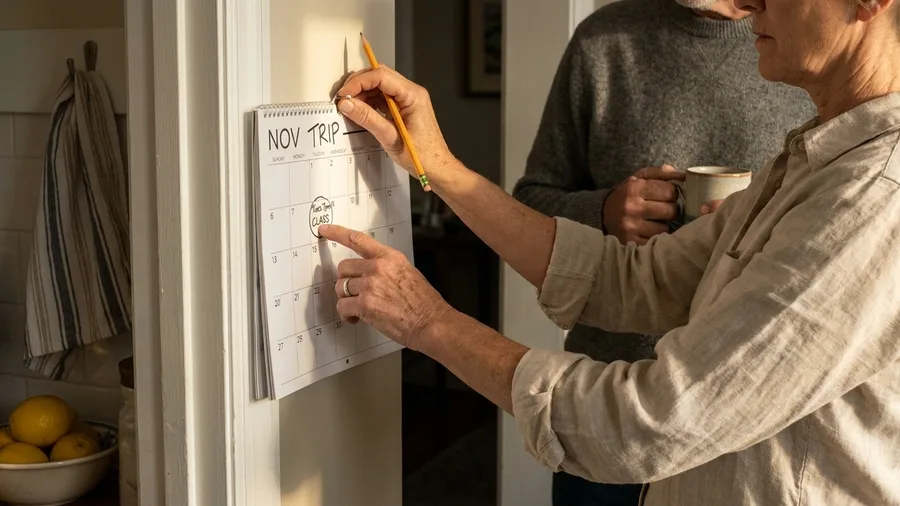
Book 10 days in Oaxaca for month eleven, putting a deadline under the drilling.
November: the Oaxaca test
Stay with a family, take two hours of lessons each morning, and fail at dinner-table speed.
2. Switching tasks mid-morning stopped costing me the whole morning
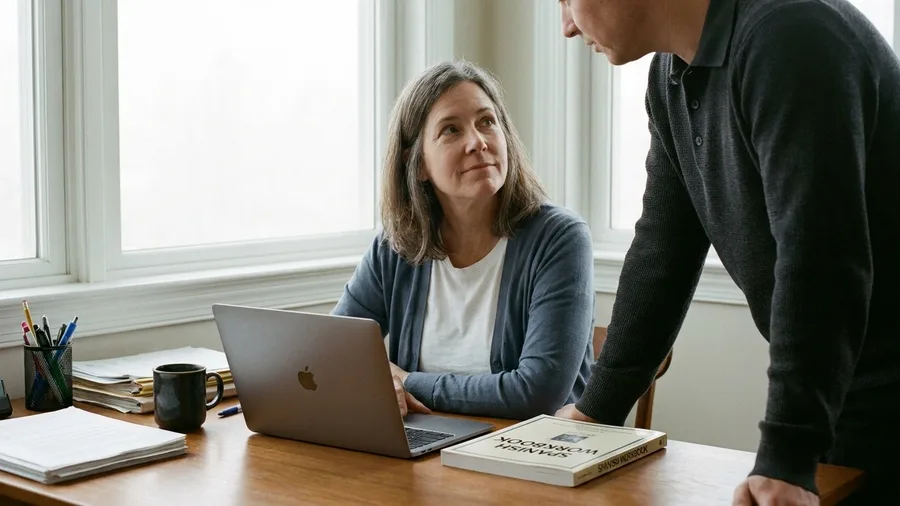
"I sat down to work and the morning just left." The version of this I got wrong was the small one: that a word jumping the queue at a coffee counter was a party trick, and thirty minutes of drilling could not possibly touch the desk where the actual work happens. It touched the desk.
The old pattern was one delivery at the door or one client call, and the rest of the morning was gone. Not tired, exactly, just unable to re-enter. Around the two-month mark I was doing the Spanish at six-thirty, answering client email by eight, and there was no fog in between. Nothing else about the schedule had changed.
Skip three mornings in a row and the fog comes back. The fourth morning's drilling clears it. What changed was not speed; I was not working faster, I was getting started again. The same consulting hours, entered from a standing start.
⚠️ COMMON MISTAKE
Don't mistake the app's streak for progress
I kept a 60-day streak in month two and could not order a coffee. The streak measures taps, not retrieval. Count the moments a word arrives off the app instead.
3. Loud rooms stopped swallowing the conversation
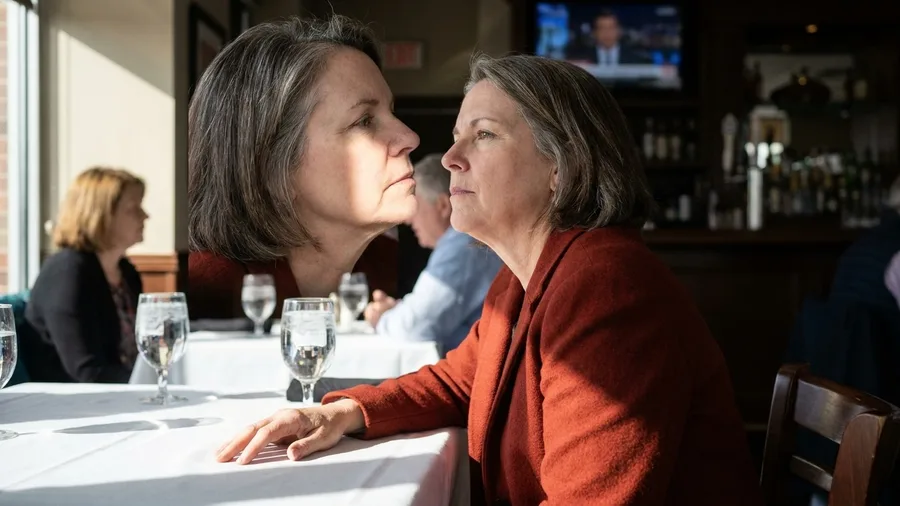
I assumed, for most of the first year, that a loud room at my age was simply closed. That was the thing I had wrong, and the research on listening in noise points the same direction: the ear keeps working, and what fades with disuse or age is the habit of pulling a voice out of a crowd. I had stopped trying long before I had stopped being able to.
In month seven, in a restaurant, I followed a fast three-way conversation for stretches: three people at the table and a television above the bar. What still fails is two people talking over each other, and any table under a screen. The practice behind it was not the app: two hour-long video sessions a month from month four, at $25 each, on top of the Tuesday class.
That was the first gain the screen could not have produced. It needed a person on the other end of the line talking back, and I paid for that part.
| Change | When I noticed it | Still true at month 11 |
|---|---|---|
| Words arriving before English | Week 6 | Yes |
| Shorter task-switching fog | Month 2 | Yes, if I don't skip 3 days |
| Following a fast, loud conversation | Month 7 | Yes, in stretches |
| The 4 p.m. wall | Month 1 | Gone by week 5 with no change to study time |
| The plateau | Month 5 | Broke in month 6 after booking the trip |
| English nouns stalling | Month 4 | Two weeks, then back on their own |
| Speaking vs. tapping | Month 4 onward | The split that mattered most |
What It Cost, and What Passed
Every gain has an invoice. This section is the invoice: the energy dip in month one, the plateau in month five, and the strange two weeks in month four when my English went missing.
None of it was free, and none of it was permanent. Knowing what passed and when would have saved me a few panicked phone calls.
4. By 4 p.m. my head was finished for the first month
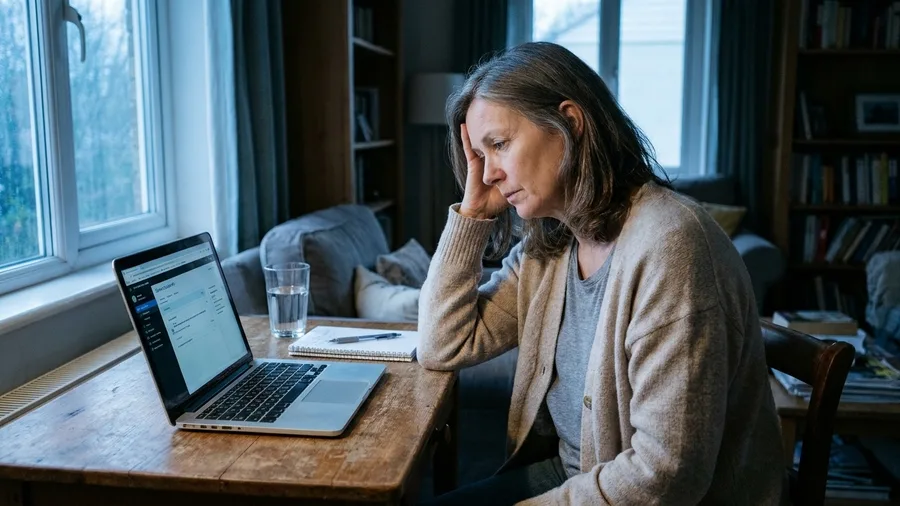
For the first month, my head quit at four in the afternoon. Not sleepy, not cranky. Done. The way a radio goes quiet when you turn the dial past the station.
It showed up in the small hours of the day. A client called at 3:40 and I could answer. By 4:10, a second call came in, and I sat there with the phone against my ear needing two or three extra seconds to put a sentence together, as if the words were being handed to me across a room. I took notes that afternoon that I could not read back that evening.
So I did the arithmetic I actually trusted, which was not the arithmetic in the articles. Thirty minutes of Spanish study felt, in my body, like two hours of client work. That was the whole comparison, and it held for weeks.
For two weeks I pushed the lesson from 6:30 to 7 a.m., trying to get in front of it. That bought nothing. The wall came anyway, and I finally understood the drill was not making me tired, it was spending a currency my afternoons had been quietly running on for years. The drill was not the problem. The time of day was.
I moved it back to 6:30, still thirty minutes, and stopped explaining. It eased by week five on its own. Same lesson, same length, and the afternoon came back. What I kept afterward is one rule I have not broken since: I do not study Spanish after three o'clock, not for ten minutes, no matter how far behind I feel. The fog lifted, but a different kind of flatness was already waiting on the calendar for month five.
Where the ten months went
Rough share of total study time by source
Shares are approximate, based on a 10-month schedule.
5. Month five was a plateau, and it was boredom, not decline
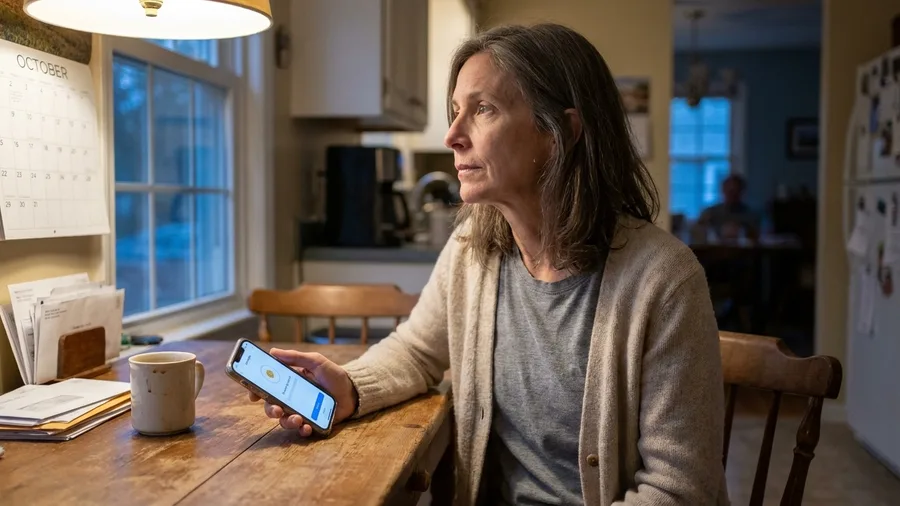
You open the app at 6:30 on a Tuesday in month five. Same lesson as yesterday. You tap through, score 80 percent, close it, and the next morning you do the same thing, and the morning after that.
It read as decline at first. It was not. The app had simply run out of new material, and the flatness was boredom wearing the costume of my brain giving up. What kept me at it was the Tuesday-night class at the community college, $180 a semester, where a person was waiting to hear me talk.
The fix, in month six, was booking ten days in Oaxaca and pinning a date to it. A deadline under the drilling changed the mornings overnight.
If you already speak the language with someone every week, none of this lands on you. The stale app is the problem, not your head.
6. English words went missing for a few weeks
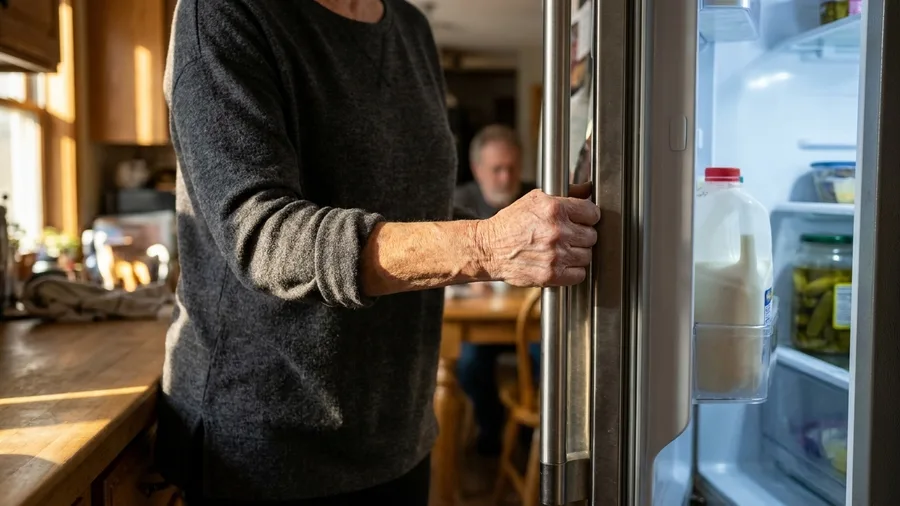
For about two weeks in month four, my English stalled. I stood in the kitchen with the refrigerator door open and the word would not come. I said "the cold thing" to my wife and she laughed, and then a client's name went missing on a call, and it was no longer funny.
Here is the misreading, and I made it myself. I took it as damage, one language eating the other, my own words being pushed out by the new ones. What it actually was, as best I can tell, was retrieval getting crowded, two sets of words competing for the same slot at the same moment. That is my guess and I flag it as one. I am not qualified to say more than that.
What I did was small. Ten minutes a day reading English out loud, and no change to the Spanish schedule. The words came back on their own in about two weeks. I cannot honestly claim the reading did it, only that I did it and the words returned.
The part worth passing on: if it lasts longer than a few weeks, or starts interfering with work, names, daily life, take it to a doctor instead of to a blog post by a consultant in Tucson. The plateau had a clean fix. This one I could only wait out and watch.
💡 Tip: If English words go missing for more than a few weeks or start affecting work, get it checked. Don't wait it out on my say-so.
What It Took to Make It Stick
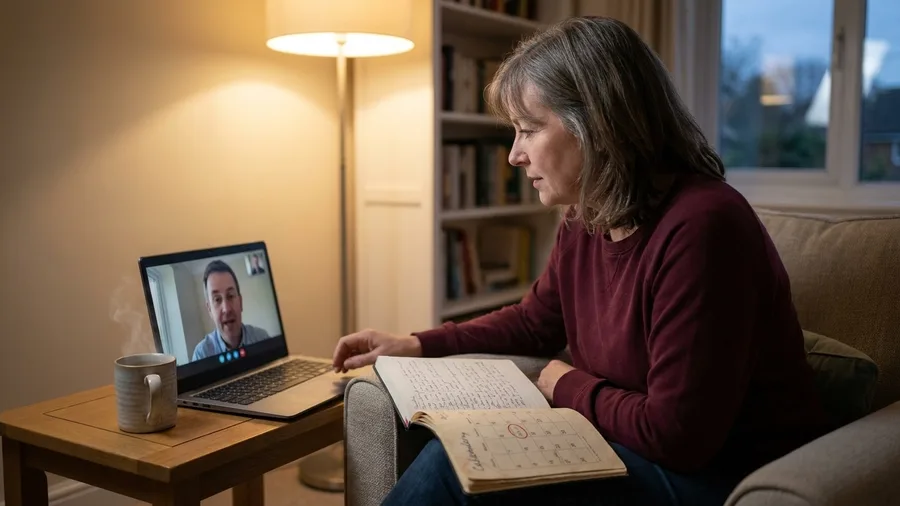
Two things carried the whole thing to the Oaxaca test: saying it out loud to another person, and a dated trip that made the drilling matter.
Neither was optional. The app gave me answers. The class, the tutor, and the calendar gave me the nerve to use them.
7. Saying it out loud did more than tapping the app
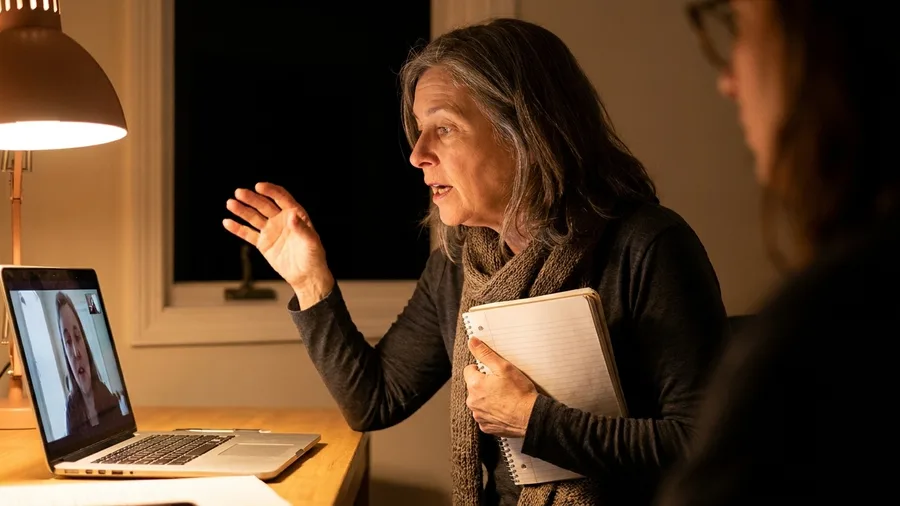
The cost is real: a weekly conversation partner and a classroom are not optional extras, and skipping them quietly buys you vocabulary you cannot use. My routine split like this — half an hour of tapping each morning versus roughly two hours a week actually speaking, split between a Tuesday class and two video calls.
Thirty-five dollars a month for tutoring at $25 a session, $180 a semester for the class, $13 monthly for the app. That is not a small line, but the difference was precise: for months I could answer a question long before I could ask one. The app handed me answers; the tutor and the class handed me nerve.
If you will not open your mouth aloud for the first three months, you keep the words and miss the change. The tapping alone is the cheap version, and it shows.
What the app gave me vs. what the class gave me
The app
- Built my 400-word notebook
- Filled the 6:30 a.m. coffee hour
- Survived month five plateau alone
- Took the Oaxaca family's questions
The class and the tutor
- Made the notebook usable out loud
- Gave me two hours of being asked back
- Held me through month four's word-finding fog
- Turned ten days into conversation, not decoding
8. Ten days in Oaxaca exposed what the class never taught

Ten days in Oaxaca in month eleven, staying with a family and two hours of lessons every morning, gave me a plainer answer than I wanted.
In the market I was fine. Prices, directions, ordering, anything sitting in the past tense came out in one piece. The notebook of about 400 words and phrases covered all of it, because I had written it for exactly those moments.
The dinner table was a different country. The family talked at a speed nothing had prepared me for, the jokes went past before I could assemble a reply, and three of them at once was a wall.
My rough measure of the gap: nearly all of what I had heard in class, about half of what I heard in the street. The class had taught me to take a turn. It had not taught me to keep up.
The obvious advice is to load up on vocabulary before you go. More words would not have bought me the dinner table. What I lacked there was not the noun for the dish – it was the two seconds it takes to catch a joke and laugh in the right place.
So if you are deciding what to spend on, spend on being talked at by people who do not slow down for you. The market takes a notebook. A family at dinner takes months of hearing it fast.
The Oaxaca ledger
Ten days in Oaxaca, month eleven, with two hours of morning lessons.
Frequently Asked Questions
Will I actually feel something in my head, or just know more words?
The first thing I felt was not vocabulary. It was the pause before a word getting shorter at a coffee counter in week six. If you wait for the app to tell you it's working, you'll miss the evidence, which shows up off the app.
Does this help with anything outside the language?
For me, task-switching got easier around month two. One knock at the door stopped costing me the morning. Three skipped days brought the fog back, and the fourth morning's drill cleared it.
What happens when it stops feeling like it is working?
Month five was a plateau: same lessons, no new words, 80 percent on the app. It was boredom, not decline. The Tuesday-night class kept me attending, and booking the Oaxaca trip in month six put a deadline under the drilling.
Is it normal to feel like I am getting worse at my own language?
For about two weeks in month four, common English nouns stalled mid-sentence. They came back on their own. If it lasts or interferes with daily life, see a doctor instead of taking my word for it.
Do I have to talk to someone, or can I just use an app?
I could answer a question for months before I could ask one. The app gave me answers. The class at $180 a semester and the tutor at $25 a session gave me the nerve to start a sentence with a stranger. If you won't speak aloud for three months, you get the words and none of the change.
What does it actually take to hold a conversation abroad?
In Oaxaca I could handle market prices, directions, ordering, and short past-tense sentences. I could not handle the family's dinner-table speed, the jokes, or three people talking at once. Booking the trip before lesson one is what made the drilling matter.
Was $700 and a Year of Mornings Worth It? Here's My Verdict
Yes. Worth it. Somewhere around $700 and a year of 6:30 mornings bought me a shorter pause mid-sentence, a morning I can walk back into after an interruption, a restaurant conversation I can follow, and ten days in Oaxaca where the taxi and the market simply worked. The 4 p.m. wall and the missing English nouns were the toll, and both passed.
So do this first: pick the language you can hold a conversation in by month four, and get a dated trip or a weekly conversation onto the calendar before the first lesson, not after the enthusiasm shows up. Don't bother if you won't speak aloud for three months, if you can't move 30 minutes out of an hour you already have rather than adding one, or if you already speak the language with somebody every week.
My coffee tastes the same this morning, and 'sin azúcar' still comes out first. The change isn't that I carry more words. It's that the gap before I find one is shorter.
Put the trip on the calendar first
Before your first lesson, book the dated trip or the weekly conversation that will make the drilling matter. Then set your alarm for 6:30.

