

The detail that catches your eye is not a flaw or a gift. It is a timing skill, and almost nobody tells you that.
Picture the appraisal across a table, the phrase too detail-oriented delivered as a criticism, to the person who had just found the misspelled name on page 3 of a contract everyone else had already signed off. The trait has no fixed verdict. The same eye that costs you is the one that pays you, and what decides which is where the noticing lands: on something a five-word sentence could fix, or on a wrinkle with nowhere to go, no off-switch and no audience.
Eight strengths follow, each named with the exact moment it stops helping, so the ones that fit are yours to lean on and the rest stop being something you apologise for.
There is a real verdict on this trait, a first one to trust, and a signal for when it has quietly stopped serving you.
Quick Tips Before You Start
Notice, then act
A detail you spot but never mention has the same outcome as one you missed. Say it once, with a fix attached.
Two passes, then ship
One pass for correctness, one for the reader. If the error costs less than an extra hour, you are done.
Attach the fix
Deliver the observation with a solution so it lands as help, not as nitpicking.
Test the read
Ask one plain question before acting on a hunch. The read changes what you say, not what you accuse.
What It Catches Early: The Eye on Objects and Plans
The first three strengths run from the physical world through to plans and money. They share one feature: the detail is cheap to fix when you catch it early and expensive to miss. This is where your eye earns its keep most reliably.
But this is also where the eye can run without an off-switch, so watch for the moment the catch becomes fussing.
1. You catch problems while they are small

Twenty minutes, or a weekend. That is the whole distance between two versions of the same problem, and the twenty-minute version only exists if someone speaks up while the bracket is still holding.
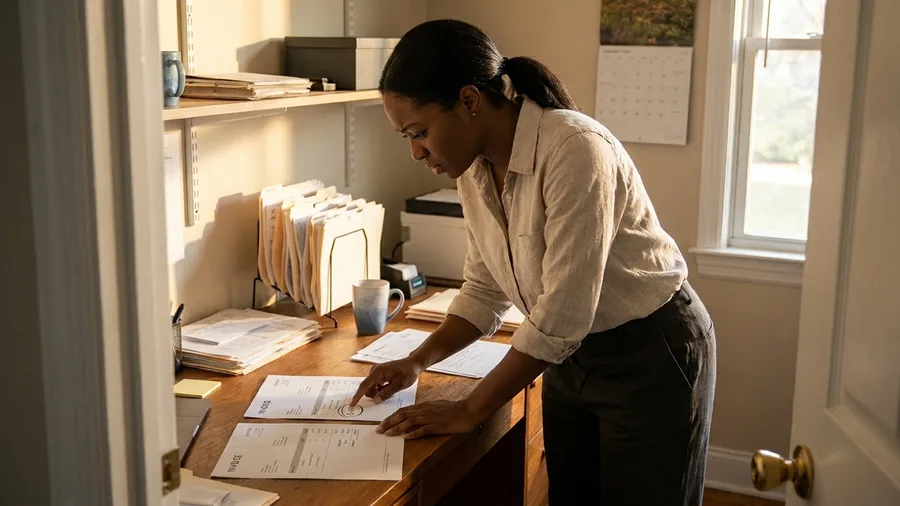
Walk past the shelf for a month and the two screws have worked loose of the plaster, the whole thing drops, and what was filler and a touch of paint becomes a gouged wall and a lost Saturday. A figure that slipped by one digit is a keystroke in the draft and a credit note plus an awkward call with accounts once the invoice has gone out. A name spelled wrong on page three of a contract is invisible and free; the same name after everyone has signed is a reprint.
None of that value lives in the number of things you spot. It lives in how early you spot them, which is a matter of timing before it is a matter of temperament.
And it only counts once you say it. The catch you keep to yourself buys exactly what a miss buys, minus the small comfort of having been right. Said badly, though, it lands as fussiness, because the person hearing it is now standing in front of someone who found a fault and offered nothing else. Name the bracket, then name the fix and the twenty minutes, in that order.
💡 Tip: Say it once, with a fix attached, then let it go. A detail raised without a solution reads as criticism.
| The strength | What it looks like day to day | Where it tips into a cost |
|---|---|---|
| Catching problems early | Spotting a loose bracket or a draft error while it is cheap to fix | Raising it without a fix, so it lands as nitpicking |
| The second pass | Proofreading, lining up edges, catching the final typo | Fourth proofread of a document nobody will finish |
| Finding the flaw first | Seeing the missing budget line or the lease clause before signing | Raising it so often you become the one who kills enthusiasm |
| Reading the room | Noticing the pause, the flat answer, the person who stopped talking | Analysing someone's bad mood all morning as if it is about you |
| Noticing changes in people | Being first to ask when a friend goes quiet | Pushing a door open that they have not agreed to open |
| Sensing something off | A hunch built from a story that changed or a number that moved | Acting before you have checked, and accusing on a bad day |
| Remembering specifics | Quoting the exact email from 14 March to settle a dispute | Winning the point and losing the room |
| Noticing your own state | Registering four nights waking at 3am and correcting early | Turning self-awareness into a loop that never settles |
2. Your work gets the second pass most people skip

You are reading the printed copy for the second time, pen in hand, and your eye stops on the same paragraph it stopped on ten minutes ago, now perfectly correct and still not quite right.
That final look is what divides delivered from almost delivered, and nobody who is not hunting for it will ever see it. It is why a proof comes back clean, why a job gets done without a call-back a week later, why the gift lands because you checked the size and the name rather than guessing.
There is a version of this with an end, and it is worth naming. Two passes, one for what is wrong and one for what the person on the other end will read, then send it; if the cost of the mistake is smaller than the hour you would spend chasing it, it is finished. Polishing past that point serves your own comfort, not the reader, and quietly eats the afternoon you owed the next piece of work.
💡 Tip: Keep a note of every time your second pass caught something that would have mattered. When the note stays empty for a month, you have your answer on where to stop.
Four places the early catch pays for itself
3. You find the flaw before the money is spent

You look at a plan and see where it cracks. This is not gloom. It is the same eye that reads a finished page, run forward through a thing that has not happened yet, and it costs nothing at this stage because nothing has been spent.
The eye catches things quietly and early. A lease where the roof repair lands on the tenant, buried in a subclause on the seventh page. A flight that lands at 6:40 with a train at 7:15 and no slack for the bag claim. A renovation budget someone drew up in an evening, with the delivery charge, the deposit and the insurance simply absent from the sheet. Put the fix in now and it is a sentence, a re-timed booking, one line added to a spreadsheet.
The spending side is slower and it does not show up in the moment. Raise the problem first, every time, and you become the one whose opening line is the objection. People stop bringing ideas to you early, because early is when ideas are fragile and your first pass is not. You end up hearing about the plan after the plan exists, which is the one stage where your talent has nothing left to work with.
So the timing matters more than the accuracy, which is odd, because the accuracy is the part you trust. Say it once, attach the fix to it, then let it sit. Something like: "The budget's missing delivery and insurance, maybe two hundred, want me to add a line?" That is a note on the plan. "This budget doesn't work" is a verdict on the whole thing, and it is the version that gets you kept out of the next conversation.
Raised once with a fix and let go, it reads as care. Raised repeatedly without one, it reads as a personality, and the room slowly arranges itself so you are told last.
If nobody takes the fix, that is also information. It was not yours to carry, and carrying it anyway is how the same eye starts charging rent.
⚠️ COMMON MISTAKE
The fix is not staying silent
Staying quiet to avoid being the problem-killer does not protect the plan; it just means the flaw goes in unmentioned. Say it once, with the fix attached, then let it go. If it is not taken, it was not yours to carry.
What it shows you about other people
4. You read a room before anyone speaks

"I knew something was wrong before anyone said a word." It sounds like a hunch. It is not. Reading a room is pattern-detection running on tone, posture and silence, and it finishes its work long before anyone has found the language for what is happening.
The signals are small and they are specific. A pause held one beat past normal. Pitch climbing half a tone on a question that should be flat. Someone who laughs at every joke staying still at the usual one. The colleague who carried the meeting last month now saying nothing at all. Every one of those is a departure from a baseline, and departures are what the eye is built to catch.
The read is only worth what it changes. A softer question, a topic steered away, the silence left open long enough for the quiet person to fill it. Where it tips over is when the flat answer at nine in the morning is still being taken apart at eleven, filed as something you did.
💡 PRO TIP
The single question that tests the read
Before you act on any hunch about a person, ask yourself: what is the one specific detail behind this? If you cannot name it, you have a mood, not a read. Name it, then look for one more example before you say anything.
What It Shows You About Other People: From the Room to the Person
Plans get made by people, so the eye that reads a document for the flaw is the same one that reads the room for the mood that will decide the document. That is where the eight strengths cross a line.
Up to now the details have lived in things. A bracket, an invoice, a clause in a lease, a connection with thirty-five minutes in it. Get one of those wrong and the cost is money and time, both of which can be replaced on a weekday afternoon.
The next three strengths aim the same eye at people. The evidence gets softer – a hunch, a change in someone's energy, a tone – and the cost of getting it wrong goes up sharply, because now the repair bill is a relationship. You cannot issue a credit note for having accused someone wrongly.
The eye does not change. What has to change is the standard for acting on it: when to speak, when to check first, and when to leave a thing noticed and unsaid. That judgment is the whole skill from here on, and it is harder than the noticing ever was.
5. You notice changes in people before they announce them

The standard advice is to wait until they come to you. It sounds respectful, and it usually means arriving after the worst of it has already happened.
Here is the ten-second check. Think of one person you see most weeks. Can you say what changed in them, specifically, and when it started? If the answer is no, you are not reading them at all. If the answer is a list, you have a baseline and you have caught the departure from it. A habit that quietly stopped, Friday plans no longer mentioned, replies down to four words, three weeks of fine with nothing behind it.
The value sits in the timing, not the diagnosis. Being the first to ask, weeks before anything breaks, helps in a way that the same question asked afterwards cannot. The limit is real too: you can arrive at a true thing before someone is ready to hand it over, and a door pushed open gets shut.
So ask, and leave the exit visible. "I've noticed you've been quiet. No need to talk about it, I'm around." That is the whole move. It tips the moment the noticing is handed over as a verdict about them rather than an offer with the handle on their side.
💡 Tip: Name the observation, not the conclusion. "You've been quiet" opens a door; "you're clearly depressed" closes it.
6. You sense something is off before you have proof
The expensive mistake here is acting on a hunch before it has been checked, and the cost is rarely money. Someone notices their partner is quieter than usual, decides it means the relationship is in trouble, and asks the question that already contains the accusation. That conversation cost a weekend of distance, and the quieter mood turned out to be a bad week at work.
The cheaper version of the same signal is what happens before proof: a stored pattern meeting a departure from it. The story you have heard before comes out with a different date the second time. The invoice figure is not the one quoted on the call. That is not a premonition, and it is not proof either. It is memory of the usual shape, flagging the place where the shape bent.
The test is naming the specific detail behind the feeling, then looking for one more. A single mismatch is noise; two is a pattern. One thing to hold onto before the check: whatever the check turns up, it changes what you ask, not what you say. A question leaves room for an answer. A conclusion leaves room for a defence.
What separates a signal from a story
Holds up under a second look
- The mismatch is concrete: a date, a number, a name
- It shows up again unprompted within days
- You can describe it without describing how it felt
- You would say it the same way if they were listening
Collapses when tested
- The feeling arrives first and the evidence after
- You only find it while already looking for it
- It needs the mood to stay bad to stay believable
- You would soften it if they asked where it came from
What It Does to You: The Record and the Body
The last two strengths turn inward. They are the ones that matter most, because they are the only ones you can act on without anyone else's cooperation.
They are also where the off-switch is hardest to find.
7. Your memory for specifics makes you dependable

Because you filed the sentence as it was said rather than as what it meant, and detail stored that way tends to come back whole, date and figure attached.
That store is also what a hunch is built from. A mismatch only registers because you remember the earlier version cleanly enough to notice the two do not meet. And when an argument later breaks out over what was actually agreed, the same store settles it. In a meeting where two people hold different versions of the same agreement, you can say: "The email from 14 March has it at $4,200, invoiced monthly." That ends the dispute in about ten seconds, before it gets a chance to become a bad afternoon.
The payoff is quiet and it compounds. You get copied in to confirm, you get asked what was actually said, and people stop checking behind you.
The cost arrives later and looks like something else. Quoted at the wrong moment, in the wrong tone, the correction reads as scorekeeping: the point is won and the room goes cold. The fix is timing. Say the wording when the agreement is being made, not when the row is underway. Then the memory is doing the job of keeping the thing straight, which is the job you actually want it for.
💡 Tip: When you catch yourself about to quote the exact wording, ask whether you are trying to keep the thing straight or to be right. Only one of those is worth saying out loud.
The three signals that matter most in your own record
These are the body's early-warning signals. They arrive weeks before a shutdown, which is why the correction is cheap now and expensive later.
8. You notice your own state before it becomes a crash

The obvious advice is to keep watching yourself closely, and it is wrong, or at least it has a shelf life. I spent a stretch treating my own state as a dashboard worth checking hourly, and the checking turned out to cost more than the thing being watched.
The eye that notices a client's slipped tone does not point outward by default. Pointed inward, it registers sleep, appetite, how tight the shoulders have gone, how short the fuse has become. The signals show up weeks before the crash. Four nights in a row awake at 3am. Two lunches in a week skipped without any decision to skip them. The jaw set at the desk at half past ten in the morning. A snap at a mislaid cable that is out of proportion to the cable.
Caught at that stage, the correction is small: the afternoon, a proper meal, cancel Thursday rather than the whole week. Left alone, the crash arrives and takes a fortnight. That is the whole argument for noticing, and it holds right up until the noticing stops ending.
Here is the scene that taught me the difference. Four nights of 3am waking, and I had established a nightly routine of lying still, taking stock of the state, judging it, and finding it wanting. The reading never settled. By the fifth morning I was not tired so much as audited, and the audit never once told me to book the afternoon off. It told me the number was bad and left it at that.
The distinction is simple enough once I saw it. A glance ends in an action. A loop ends in a verdict. Notice the jaw lock, then unclench it and take the walk: a glance. Notice the jaw lock, start asking what it means about you, and ask again at 4pm: a loop, and it does not close.
Every other record in this direction can be checked against someone or something else. The email can be re-read, the invoice pulled up, the other person asked. The one record with no second source is the one you are reading from the inside, and that is why the off-switch matters most here. One check a day is plenty. The skill is not a sharper read. It is knowing when to stop reading.
🔄 How to correct early without starting a loop
Set the one-a-day check
Pick a fixed slot, such as after breakfast, and treat every other check as the loop.
Name the signal, not yourself
Write the sentence as a fact on a line: 'woke at 3am four times.' If it starts with 'I am', rewrite it.
Pick one action this week
One is the ceiling, not the floor. Two actions turn correction into a project you now maintain.
Close it before 48 hours
An action not taken within two days is no longer a signal. It is a worry wearing the signal's clothes.
Book the walk-back, not the fix
Schedule the check-back only after the action. Before it, the calendar is the loop with a date on it.
Frequently Asked Questions
Is noticing small details a sign of anxiety or a strength?
Neither on its own. The same eye that catches a drift early is the one that can loop without an off-switch. The trait is a skill; the question is whether it ends in an action or a verdict.
How do I stop over-checking things that are already done?
Set a rule before you start: two passes, one for correctness and one for the reader. After that, ship. If the cost of the error is lower than the cost of the extra hour, you are finished.
Should I tell someone when I notice they are acting differently?
If you can name the specific change and offer a door rather than a conclusion, yes. "You've been quiet, I'm around" is usually better received than an analysis of what you think is wrong.
Why do I remember exact wording when others remember the gist?
You stored the detail rather than the summary, so it surfaces whole. That is useful for preventing misunderstandings, but only if you use it at the time of the agreement, not the time of the argument.
When does self-monitoring become a problem?
When reading your state turns into auditing it, with no action at the end. A glance ends in a change; a loop ends in a verdict. If the loop will not close, that is worth raising with a professional.
The Verdict on the Eye That Catches Everything
The verdict is that this trait carries no charge of its own. It earns its keep where a catch is quick to make and costly to miss, and it runs a tab wherever the noticing has nowhere to go, no switch to turn it off and no one on the other end. Of the eight, lean first on number one, catching problems while they are small, because it is the early-warning strength, the one that pays soonest and the one the other seven borrow from.
This week, pick one thing you have been silently re-checking. The door lock. The sent email. The sentence in the message. Say it once with a fix attached, or let it go. One thing, not all of them.
And the appraisal was a verdict on a person where a verdict on the situation belonged. You are not too much or gifted in the abstract. You are a tool with eight named tipping points. The name on page 3 still catches your eye, and now you decide what it is worth.
Pick one detail this week
Choose a single thing you have been silently re-checking. Say it once with a fix attached, or let it go. That one action tells you more than another month of noticing.

