
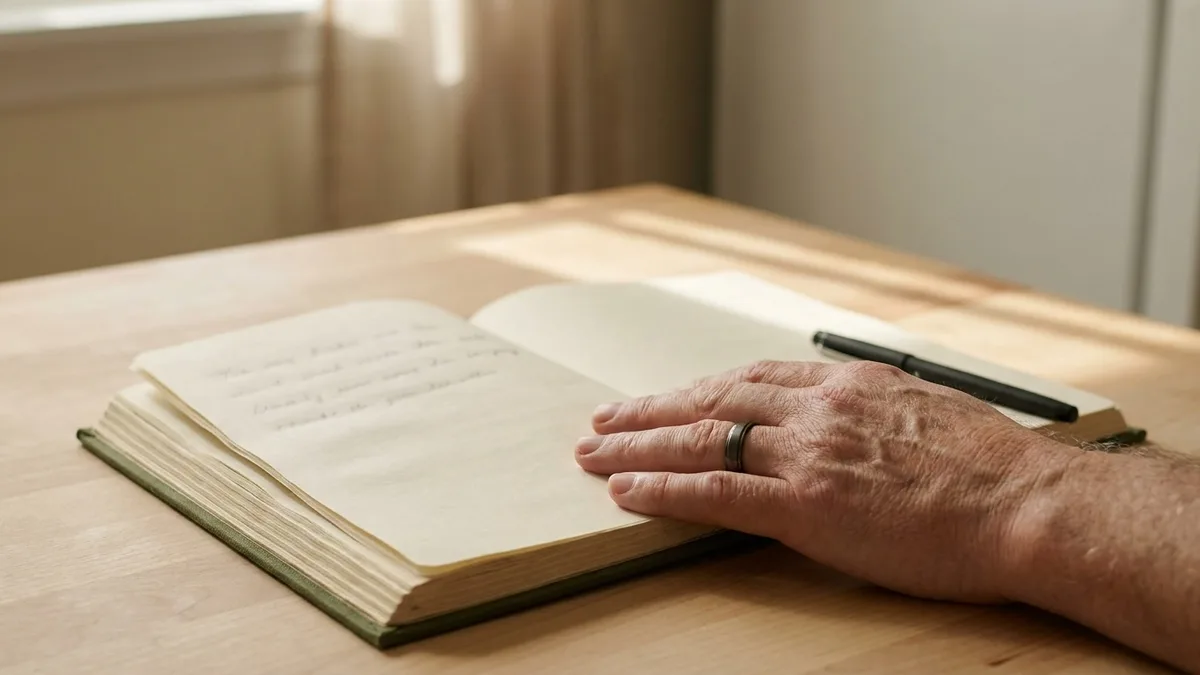
The useful version takes five to ten minutes, three days a week, in three to five lines, not the hour a day most people picture when they buy the notebook.
You have heard that keeping one is good for a mind in its sixties and seventies. You may also have a notebook somewhere with two pages filled and a year of dust on it, and a suspicion that this is homework wearing the costume of self-care. Fair suspicion. No study, percentage or effect size gets quoted in what follows, because none is being sold to you; where evidence matters, the article points you to the official sources and lets you read them yourself.
What you get instead is a plain map of eight mental advantages, what each one feels like on an ordinary Tuesday, who it suits, who should walk past it, and how to try it without it turning into a chore.
Eight small tools, then, each with a shape you can hold in five minutes, and each with an honest note about who should leave it alone. The test of any of them is not whether it sounds wise. It is whether, two weeks in, it is helping or quietly feeding the rumination.
Quick Tips Before You Start
Spend almost nothing
A $10–$20 notebook or the free notes app on your phone. Anything fancier is a reason to delay.
Cap it at five minutes
Three to five lines or bullets. Short and repeated beats long and perfect every week.
Pick one chair, one time
Same seat, same hour, three days a week. The routine does more work than the willpower.
Do not reread the hard pages
If revisiting old worries sets you spinning, write and close the book. It stays written.
Know what it is not
Journaling is not treatment. Persistent low mood, grief or bad sleep belongs with a clinician.
Steadier mood and less rumination
Start here, because this is the pair of advantages most people are actually after when they buy a notebook. A mood that settles and a day that feels chosen rather than endured.
Both come from the same move: getting something out of your head and into a fixed form where you can see it. Neither one requires talent, and neither one requires more than five minutes.
1. It gives worries somewhere to go

For a while I kept a worry journal that was really a worry museum. Every night I wrote the whole thing out, every branch of it, and every night I read the previous week's pages first, so by Thursday I was rehearsing Monday's dread in fresh ink. The notebook made it worse. What I had wrong was not the writing. It was the shape I gave it, and the rereading afterward.
A worry that stays in the head has no edges. It stretches, doubles back, picks up new threats on each pass. Put it into one line on paper and it has a shape, sitting still, small enough to look at. Once it is a sentence instead of a fog, you can see whether it is big or small, near or far, yours to do something about or not. The pull to run through it again usually drops, because the job of holding it has been handed over.
The version that works is three lines: what happened, what I felt, what I will do next. Three to five lines or bullets, not a page. A ten to twenty dollar notebook or the free notes app on your phone will do. The next-day purpose matters more than the prose, because 'I will call the clinic at nine' is a thing you can complete, and complete things stop circling.
There are people for whom this goes badly, and if you spiral when you reread your worries, you already know which one you are. For them the move is a done-for-today page: one line naming the worry, cover closed, no flipping back. If the pattern of worry is heavy, constant, or hard to interrupt, the official psychology body's public information is the place to read further, and a clinician is the one to ask.
💡 Tip: Keep the entry to five lines even if you have more to say. The limit is what makes it stop feeling like a task.
⚠️ COMMON MISTAKE
The rereading trap
Writing a worry down and then reading it back five times is not journaling, it is rehearsal. If you notice yourself returning to the same page, put the notebook somewhere you cannot reach from your usual chair. The point was to give the worry a place to sit, not a seat at the table.
2. It makes the day feel more deliberate

The advice is always the same: carve out twenty minutes, light a candle, write until the page is full. That version tends to last about five days.
What actually holds is smaller and duller. The same chair, the same time, three days a week, five to ten minutes, three to five lines. Tuesday's entry can be four bullets with a bad word in it; nobody is marking it. Consistency is the whole trick, and a short entry you repeat beats a long one you abandon in a fortnight.
Once that rhythm exists, mood stops being weather and becomes something you can read off. After a few weeks the pattern shows: the flat mornings that follow a late night, the better afternoons after a walk, the calls that lift you and the ones that drain. A walk moved, a call made, a heavier morning left alone, all because it showed up twice in the same week in your own handwriting.
If a fixed slot feels like one more obligation, borrow an existing one instead of building a new one, as with a morning routine: write beside the first coffee, right after the pills, the moment the head hits the pillow. The notebook rides on a habit already running. And this is structure, not care. Persistent low mood or anxiety belongs with a clinician, not on a lined page.
| Advantage | What it looks like in practice | Best for | Skip it if |
|---|---|---|---|
| Worries with somewhere to go | Three lines: what happened, what you felt, what is next | A head that circles the same thought at night | Rereading worries sets off a spiral |
| A more deliberate day | Five minutes in the same chair, three days a week | Days that blur into each other | Routine feels like a cage |
| Gratitude made concrete | One thing that went right, and why it mattered | A habit of scanning for what went wrong | You are in fresh grief |
| Working memory kept limber | List three tasks for tomorrow, then number them | Word-finding starting to slip | Frustration ends the session |
| Foggy memories into a record | One line a day plus a monthly 'what I want to remember' page | Family stories nobody else has written down | Rereading old pages hurts |
| Identity after retirement | 'What did I do last week that felt like me?' | A role that recently ended | Introspection feels heavy |
| Easier contact with people | A paragraph to read aloud on a call | Calls that stall at 'so, anything new?' | It replaces actual visits |
| A wind-down before sleep | Done, pending, can wait—then close the book | A mind that reviews the day at midnight | Writing wakes you up |
Sharper thinking and a memory record
These two are the advantages people most often overstate, so they are worth handling with care. Writing is a low-stakes mental workout and a place to park what you want to keep. It is not a shield against cognitive decline, and no honest case for it claims otherwise.
The workout is simple. List three things you need to do tomorrow, then number them in order of what comes first. You recalled the items, held them while you arranged them, and did it in under five minutes. That act of recall and ordering is the exercise. If word-finding frustrates you, use bullet points or a voice note in the free app; the ordering is the point, not the prose. Treat it as a workout you enjoy, and the habit holds itself up without needing a promise attached.
The record is a different kind of value. One line a day, plus a monthly page holding the dates, names and stories you do not want to lose. Rereading those pages cues memories you did not know were still there, because the page is a parking place rather than a test. Life review can surface old loss, so write with a time limit when it does, ten minutes, and stop at the end of it. None of this prevents memory loss. It gives you a workout and a record, which is the honest use of it.
Five minutes against an hour
What actually gets kept over a year
3. It makes gratitude concrete

It is 9:40 at night and you have got the notebook open on your knee, and the page says three good things, and you cannot think of one. The day had a dentist appointment in it, and a bill you did not want to open, and a phone call that left you flat. So you sit there, pen hovering, trying to dredge up something cheerful enough to count.
This is where the practice usually dies. Not because gratitude is a bad idea but because the quota turns it into a test you can fail, and a forced cheerful list reads as fake even to the person writing it. After a week of that, the notebook goes in the drawer and stays there.
will this make me feel better, or will I just be manufacturing cheer? The test takes ten seconds. Picture yesterday. Did something go right, however small, and can you say why it mattered? Almost everyone can. The people who cannot are usually in a stretch where nothing went right, and for them the honest move is not to force it.
So the prompt changes from a number to a shape: one thing that went right, and why it mattered today. One, not three. If the check-in you have set at the same chair each day is going to hold anything, let it hold that – a specific thing with its reason attached, in three or four lines. The bus came when you needed it. A neighbor took the bin in. Your daughter called and you talked for twenty minutes.
In grief, or in a low stretch that has lasted weeks, this should not be forced at all. The instruction there is simpler: write what is true, including the bad day. A page that says the day was heavy and here is why is still a record of a real day, and it counts as done. What this entry does not do is promise a mood shift – the claim is only that a specific thing, with its reason, is easier to notice than a quota, and the research behind positive-psychology exercises is best read at the official source rather than in a figure quoted at you here.
💡 Tip: Attach the reason. 'Good walk' fades by next week; 'good walk because the knee held up the whole way' is a fact about your body worth keeping.
Two things people believe about journaling and memory
Sharper thinking and a memory record
4. It keeps working memory limber
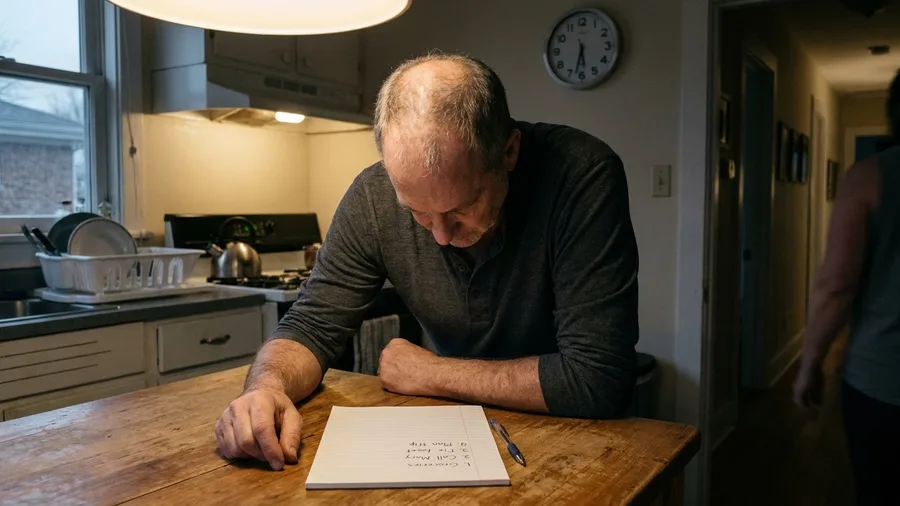
The cost first: do not mistake paying a cheap notebook for attention with keeping the mind sharper, because the two are not the same, and no figure here proves one defends against dementia. What the writing gives is plain – a small, harmless drill that asks the memory to hold and arrange.
It is a job for five minutes: jot what is due tomorrow – the pharmacy, the call to your sister, the form with the date on it – then number the list in the order you will do it. The writing of the order means holding the items and weighing them, which is the drill; the prose matters less.
If word-finding slows you down, shift to bullet points or a voice note. The ordering is the point, and the ordering does not need full sentences. For anything about memory research, go to the official source; no count is quoted here.
💡 PRO TIP
The one-line restart
On a week you cannot face a prompt, write the date and one sentence about the weather and what you ate. That still counts. The block you are breaking is the idea that an entry has to be worth something.
5. It turns foggy memories into a record

The practice is one line a day, with a monthly page for the dates and names and stories you do not want to lose: the name of the street where you grew up, the cousin's wedding, the year the shop closed. Once a month, spend one page on that page.
Rereading it will often cue something you did not know you were still carrying – a voice, a kitchen, a name you thought had gone. That is the good half of the record: the page is there to store things, not to grade you.
The other half, plainly. Going back over a life can turn up loss and old regrets, and when it does, stop at ten minutes by the wall clock. Anyone who finds the rereading painful can keep only the forward pages; and no one should expect that writing any of it down keeps memory loss away.
Identity, connection, and winding down
The last three advantages look outward and then end the day. They are about who you are now that a role has ended, how a notebook can make it easier to reach people, and what happens in the hour before sleep.
These are also the three where it is easiest to expect too much. Read them as small levers, not solutions.
6. It rebuilds identity after retirement
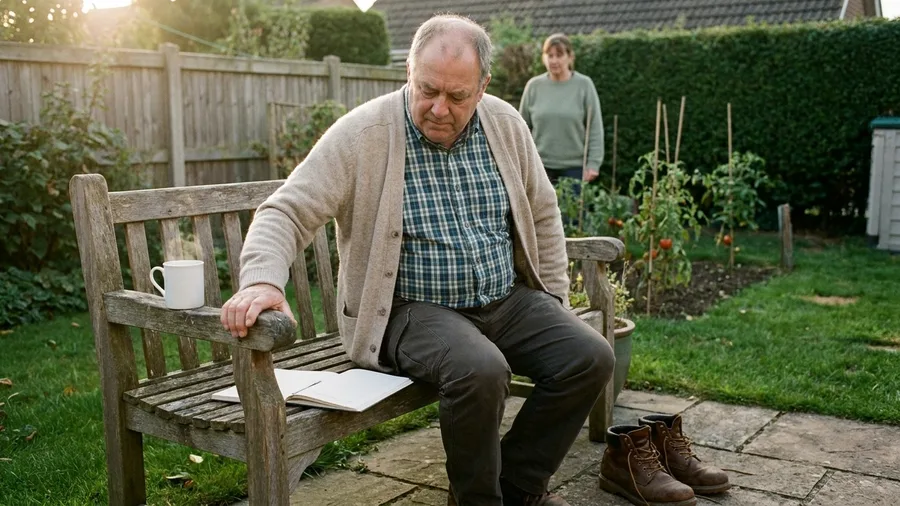
Thirty years of a job title answers the question of who you are without your having to ask it. Then the badge goes back in a drawer, or the caregiving ends, or a health scare rearranges the week, and the answer is suddenly a blank line with nothing written on it.
One question does most of the sorting, and it takes a minute: what did you do in the past seven days that felt like you, rather than like the role? The honest answer is rarely grand. It is the walk you chose over the errand, the hour you lost track of, the call you meant to make and didn't. Chosen, missed, wanted next: those three tell you more about who you are now than the title ever did.
If that kind of looking-in feels like lifting something heavy, skip it. Log the practical instead, the meals cooked, the walks taken, the small wins, and read back a week of it; the record sorts itself without your having to interrogate it. Writing does not resolve an identity crisis. It gives you a place to set the pieces down while you turn them over.
7. It makes staying in touch easier

"I'd love to call her, I just never know what to say." The obvious fix is to write in the notebook until the urge to reach out passes. The counterintuitive move is the reverse: what you write is what gives you the opening line, and the notebook exists to get the call started, not to take its place.
A paragraph written to read aloud on the phone, or a short letter in an envelope, does the job. The details that make a call easy to begin are usually already on the page from the week before. Journaling is an on-ramp to live contact, never the visit itself, and no one is claiming it cures loneliness.
Private people can keep a running list headed things to tell someone inside the notebook and share the list rather than the book. One list, nothing exposed, and the call is easier to make.
Two ways to start, and how they end
The version that lasts
- Five minutes in the same chair, three days a week
- Three to five lines, then the book closes
- A $10 notebook or the free notes app
- Bad days written honestly, not cheerfully
- One prompt chosen to fit today's pinch
The version that quits by week three
- An hour-long session, planned for 'when things calm down'
- A full page attempted every single day
- A $40 hardback bought as motivation
- Three forced positives on a terrible day
- Rereading old worry pages looking for clues
8. It gives sleep a wind-down ritual

The answer depends entirely on which kind of writer you are, and you probably already know which.
The version that helps most people is short and landable. Give it five minutes, and if the pen tends to get you going rather than slow you down, finish well before you turn the light out, an hour early if that is what it takes. Then three short lists: what got done today, what is still hanging, what can honestly wait until tomorrow. Close the cover. The point is not a tidy page; it is that the day now reads as finished instead of trailing off into the dark.
If your mind is clearest at 6 a.m., keep the notebook on the nightstand and write first thing instead, while the material is still fresh. What you are not getting from any of this is a cure for insomnia. If sleep has been a problem for weeks, that is a conversation for a clinician, not for the page.
💡 Tip: Put the notebook down, not on the nightstand, if you tend to pick it back up at midnight.
📝 Getting started in four short steps
Pick the pinch
Choose the one advantage above that matches what is bothering you today.
Set the slot
Attach five minutes to an existing habit—the first coffee, the pills, the pillow.
Write three lines
Use the prompt for that advantage, aim for three to five lines, then close the book.
Decide at two weeks
Check whether it is helping or just feeding rumination, and keep it or drop it.
Frequently Asked Questions
How long before journaling starts to help?
Give it two weeks of five-minute entries, three days a week. That is long enough to see whether the practice is settling you or feeding the worry. If it becomes homework, drop it without guilt—a journal that feels like a chore will not be kept, and a kept habit matters more than a perfect one.
Do I need a notebook, or does a phone app work?
Both work. A $10–$20 notebook from a supermarket or stationery shop is fine, and the free notes app already on your phone is equally fine. What matters is that the tool is within reach from your usual chair. If choosing the notebook takes a week, you have found a delay, not a decision.
Is journaling a substitute for therapy?
No. Persistent low mood, trauma, grief that does not lift, or sleep problems that stay broken after a month are for a clinician, not for a notebook. Journaling sits alongside that work at best; it does not replace it.
What if I miss a week?
Start again the next day with three lines. There is no streak to protect and no catching up to do. People who treat a missed week as failure usually stop altogether, and the record is worth more than the perfect run.
Is there real research behind these advantages?
Some of it is well studied and some of it is overstated. Rather than trust a figure quoted in an article, read the public information pages of the official psychology body in your country, which publish plainly and do not oversell. This article makes the case for journaling; it does not claim it is proven treatment.
Should I read back through old entries?
Sometimes, with a time limit. Rereading a monthly 'what I want to remember' page cues memories that would otherwise fade. But if going back through old worries sets off a spiral, write forward only and keep the older pages closed. The two habits are different, and you get to choose.
The Journal Pages You Can Skip
The verdict is plain: none of the eight is a treatment, and nothing here is proven to hold off decline. What the case rests on is small, cheap and repeatable, a ten or twenty dollar notebook or the free app already on your phone, three to five lines, five to ten minutes, three days a week.
So run the trial. Pick the one advantage that matches the pinch you feel today, not all eight. Three lines, five minutes, in the same chair, three days a week, and at the end of two weeks ask whether it is helping or just feeding the worry. If it has become homework, close it without ceremony.
The unopened notebook and the working practice are not far apart. They are three lines and five minutes in the same chair, and the willingness to drop it the moment it turns into an obligation. Start with the smaller version than you think you need.
And if what you are carrying is persistent low mood, trauma, grief or sleep that will not settle, that goes to a clinician rather than to the page. The notebook is a tool, not a treatment, which is exactly why five minutes is enough to give it.
Pick one advantage, write three lines
Scroll back to the table near the top, choose the row that matches today's pinch, and give it five minutes on three days this week. That is the whole start.

