

Learn one habit well enough in a fortnight to know whether it fits the life you actually have, and you will have done more than most people manage in a year of retirement. Start with the number: a typical retirement week holds 40 to 50 hours that no one has scheduled for you.
That figure explains why the early months feel like a holiday and the sixth month feels like a Sunday that will not end. It is tempting to read all those open hours as a verdict on you, but nothing is broken. Open time is just open time, and it behaves like water: it takes the shape of whatever you put in it.
The people who never seem bored have not filled those hours. They put a few small containers in them – a role with a slot, a standing date, a class with a finish line – and those take 4 to 8 hours here, 1 to 2 there.
So the job is not to build a new full-time schedule. Pick one habit, match it to the biggest gap in your week, and test it before you add anything else.
Quick Tips Before You Start
One slot first
Pick a day and time before you pick the activity; the slot is what holds.
Three weeks
Give any new habit 2-3 weeks before you judge it, and add nothing else during that run.
Write the hours down
Note how long the habit actually took, not how long you meant it to take.
Keep the exit open
Choose commitments you can leave without a resignation speech.
Leave the phone in the car
For third places and classes, the first two visits work better without a screen in your hand.
Structure That Doesn't Feel Like Work
The first three habits deal with the shape of a week. Not the content of it, the shape: when you get up with a reason, when something is expected of you, when work gets finished.
This is where most retirement advice goes wrong. It tells you to fill the time. These habits put a frame around a small part of it and leave the rest alone.
1. A small role gives the week a spine

The usual advice is to stay busy, sign up for everything, treat the calendar like a job. That is what makes people feel employed again, and it is exactly the trap.
A small role is not a job if you size it right. The unit is 4 to 8 hours a week, enough to give the morning a reason and the week a shape, not enough to rebuild the forty-hour week you just left. A Saturday shift at the food pantry. A paid four-hour slot behind the counter at a local shop. One place, one recurring slot, a few familiar faces. That is the whole scale of it.
What it replaces is not the salary. It is the office rhythm, the small external expectation that pulled the day into line without your having to decide what the day was for. Nothing about the role is a boss. Nobody is reviewing you, nobody can make you stay, and quitting is a phone call, not a resignation letter.
There is a specific thing that happens without one. Tuesday arrives, then Thursday, and by Friday you cannot say what happened in between because nothing did. The shift fixes that cheaply. You know the pantry opens at eight, you know the woman with the clipboard expects you, and the rest of the week organizes itself around that one fixed point.
It does not fit everyone, and the exception matters. If you have just walked out of a demanding job, the first months may need a fallow stretch, weeks with nothing scheduled at all, before you take on anything that resembles a commitment. A role taken too early turns recovery into another obligation.
When it does fit, start with one place and one slot. The faces come later, once the same people have seen you twice.
💡 Tip: Ask for a trial shift before you commit. Most volunteer coordinators expect it and will think better of you for asking.
2. Add one habit at a time, not ten
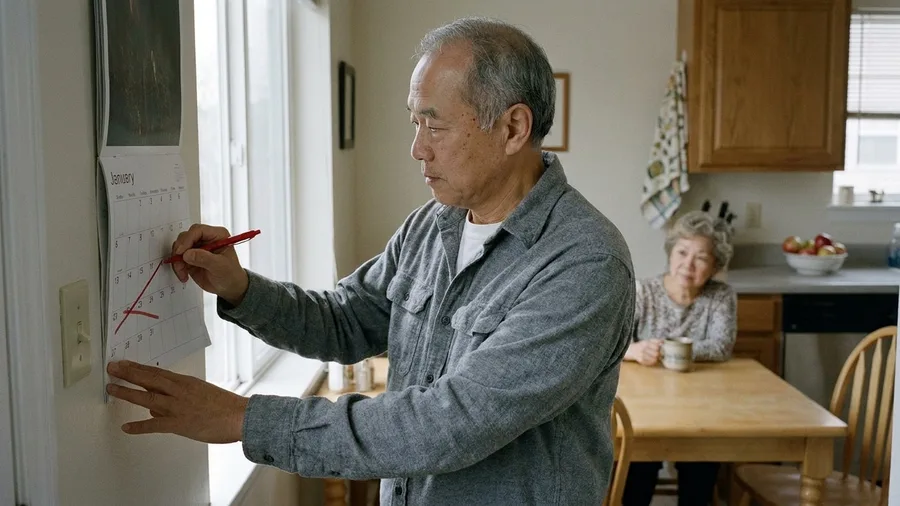
Because you started ten of them at once. Every new routine competes with every other one, and the whole set collapses together, which feels productive in January and leaves nothing standing a month later.
So the honest question is not how many habits to add but how to test one. Give a single habit a trial of 2 to 3 weeks, just one, and ask whether it fits, not whether it makes you a better person. The food-pantry shift gets its three-week run before any class or standing date is added to the week.
At the end of the trial you keep it, drop it, or adjust it, and only then does the next one start. If the household is mid-move or in the middle of a crisis, skip the trial entirely; those weeks need triage, not a new routine.
💡 Tip: Put the trial's end date in your phone the day you start it, so the decision happens on a set day instead of drifting.
3. A deadline every few months forces progress
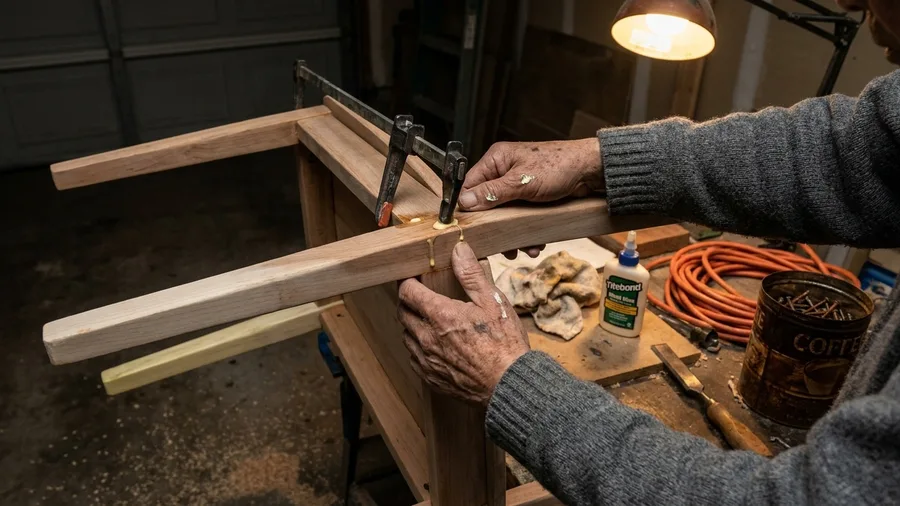
"I'll get to it when I have time" is the sentence that keeps a repaired chair half-sanded in the garage for two years. In retirement the time is there; what is missing is a date.
Pick one small, finishable project every three months and put a day on the calendar. A short talk to give at the library, that chair finally finished, a family dinner you host on a set Saturday. Each needs a visible end, and each has to stay small enough that the deadline is realistic. A date you cannot meet is worse than no date at all.
The point is not output. It is a container for solo work, not an office quota, and the deadline simply pulls you through the ordinary weeks between now and then. If you just left a job built on deadlines, you may need a stretch with none of them first; the quarterly date can wait.
⚠️ COMMON MISTAKE
Don't turn the habit into a job
The warning sign is when a four-hour volunteer slot starts coming home with you: emails on the sofa, a to-do list of your own making, dread on Sunday night. Cut the hours or cut the role. The point was a spine, not a second career.
People Who Expect You
The second group of habits is about other people, and it is the one most retirees get wrong in the same direction: they wait until the week is full of errands and then look for a gap that never comes.
What follows are three containers for company, each small enough to keep during a busy month rather than only during a quiet one.
4. Book the social date before the week fills

For years I treated seeing people as something that happens once the real work is done. Errands first, then the garden, then a tidy house, and if there was anything left of the week I would call someone. There never was anything left.
Unscheduled time is not neutral. It expands on its own, and by Wednesday a retirement week has quietly filled with the bank, the second grocery run and a drawer that finally got sorted. A date put in before that happens is the only kind that survives, because the errands have to arrange themselves around it instead of the other way round.
The step is tiny: pick one person, text them on a Sunday, name a day. 'Free Thursday afternoon, coffee?' The vague version of this, the 'we really should catch up' that both of you mean warmly and neither of you books, is the one that gets postponed for months. An hour with a day attached behaves differently. It sits in the week like a nail, and the chores settle around it.
This is not for everyone. If you are carrying a caregiving load, or you are someone who genuinely recharges alone, a scheduled obligation can land as one more thing owed rather than a relief. For those weeks, the honest move is to leave it out and come back to it later.
5. One recurring date beats a crowded contact list

The hidden cost is renegotiation. A one-off coffee is lovely, and then it is over, and the next one has to be proposed, agreed and scheduled all over again. Over months that small negotiation is what quietly stops happening, and neither of you decides anything.
What prevents the drift is duller and smaller than people expect: one person, one hour, the same slot every week or every fortnight. It holds without an organizer, a group chat or a quorum, which is exactly why the big catch-up that needs six calendars to align keeps sliding into next season. Nobody has to re-confirm the standing one. It simply recurs.
The long-distance version is a phone call at a set time instead of an hour in a café; the same logic works down a line. The cost shows up for anyone who cannot protect that hour, though, shift work or caregiving or a life currently run to someone else's schedule. For them a recurring date turns into one more thing owed. Skip it until the hour is actually yours.
💡 Tip: Name the recurrence on the first date: "same time in two weeks?" Someone has to say it out loud or it does not exist.
6. A regular third place makes you a regular

It is 9:40 on a Tuesday and you are third in line at the same café, and the man behind the counter has started saying 'the usual' before you reach the till. You are not there to make friends. You are there because the coffee is decent and the walk is short and it is a reasonable place to read for twenty minutes.
What you think it signals is that you are a person with nowhere to be, sitting alone with a book in public. What it actually signals is far less loaded: that you are a face this place sees on Tuesdays. That is the whole machinery. Familiar faces turn into nodding acquaintances long before anyone suggests a group, and recognition does the social work that a club membership is supposed to do, without the joining.
The pattern is one place, one time, once a week, and it costs little, a coffee or a library visit never far past $10. In a small town the same slot might be the diner, the library or the hardware store; the place matters much less than its repetition. A name gets learned at the counter, then a comment about the weather, then the question of what you are reading.
It is worth being blunt about who this does not suit. If your weeks cannot hold a fixed slot, the repetition never builds. And if you want real conversation on the first visit, this will feel slow, because recognition takes weeks of unremarkable Tuesdays before it offers anything back.
💡 Tip: Sit where you can be seen, not in the corner. Being a regular means being visible enough to nod at.
Reasons to Pay Attention
Shape holds the week together and people keep you company in it. Neither of those gives you a reason to be interested in anything, which is the third problem and the one that shows up on a rainy afternoon.
These habits are small on purpose. A class, a monthly outing, a written list, and a planned piece of nothing.
7. A course with an end date holds attention

Six to ten weeks, one evening a week, and a date on the calendar when it stops. A language class, pottery, guitar, a community-college short course – the subject matters less than the finish line. Hobbies started alone fizzle because nothing is waiting for you on a Tuesday when the enthusiasm has worn off; a course has a room, a time, and a last session circled in advance.
That known end is the whole engine. You do not have to feel motivated in week seven, because week seven is not forever – it is three more evenings and done. The commitment carries you when the wanting does not.
If classrooms are not for you, swap the class for a project with a public deadline: a talk, a repaired chair, something shown to other people on a set date. What does not work is signing up for one evening a week you cannot actually protect – the public-deadline project is the substitute, not a heavier version of the same mistake.
💡 PRO TIP
Be the person who asks the question
In any class, the people who get the most out of it are the ones who ask the thing everyone else is too proud to ask. It costs nothing, it makes you memorable, and it usually turns into the first conversation at the break.
8. One new outing a month resets the routine

Pick one half-day a month, spend between nothing and about $40, and go somewhere you have not been.
A town thirty minutes down the road you have never stopped in. The museum with the unassuming front you have passed for years and never entered. A different park, one with a path you do not know. The contrast is not with a grand vacation – the point is frequency, not expense. Four unfamiliar half-days a year break four stretches of sameness, and each one gives you something to think about between them.
This sits alongside a class rather than instead of one. A weekly evening class organizes that evening; the monthly outing keeps the other weeks from running together, which a single evening a week cannot do alone. The two work on different scales.
mobility limits, a tight budget, a month already crowded with appointments. The smaller version still counts – drive a route you have never taken, or visit a different branch of the library and sit somewhere new for an hour. What defeats it is turning it into a production: the outing that needs a full day and planning stops happening by month three. Keep it cheap, keep it close, keep it half a day.
9. A written list beats waiting for inspiration

The cost shows up mid-afternoon on a Tuesday: nothing sounds good, the hours are open, and by the time you decide on something the afternoon has gone. Flat days do not fail for lack of options, they fail at the moment of choosing, when low energy meets a blank.
So make the list on a good day. Ten items, each fifteen to sixty minutes, each low effort: walk a different block, call one person, visit the library, sort one shelf. Written down in advance, it means the flat afternoon meets a decision already made instead of a question it cannot answer.
The exception is real, though. If what you need on a given day is rest, not stimulation, the list is optional – a menu, not an obligation. That is the one you are allowed to close.
Chosen Rest vs. Default Drift
Chosen rest
- Thirty to sixty minutes, with a book, a view, or music
- Decided on, and given a start and an end
- You come out of it clearer
- It sits in the week as the counterweight to everything else
Default drift
- Three hours of scrolling and no memory of it
- Nobody chose it; the afternoon just went
- You come out of it more restless
- It fills the gap left by a day with no shape
10. Doing nothing on purpose is not drifting

"I just sat there all afternoon," someone says, and the voice has a small apology in it, as if the hours need defending. Sometimes they do need defending. Sometimes they do not, and telling the two apart is most of what this habit asks of you.
Boredom is what formless time feels like from the inside, and the fix people reach for is more time, filled better. Chosen rest works the other way. It does not fill the empty afternoon, it puts a frame around a piece of it, the way a tablecloth turns a bare table into something set out on purpose. Thirty to sixty minutes with a book, a chair facing the garden, or one record played all the way through, and the stretch has an edge to it instead of just an end.
The comparison that clarifies it is drift. Not the occasional lazy evening, but the three hours that start as a quick look at a screen and end with the light changed and a vague, gritty restlessness you cannot place. Researchers who study attention describe the difference in plain terms: a mind with nothing to settle on keeps circling back to itself, checking, scanning, never landing. Chosen rest gives it somewhere to land on purpose.
So the test is not how many hours were unscheduled. It is what the stretch leaves behind. Chosen rest tends to leave you clearer, a little more willing to start something afterwards. Drift leaves you more restless than when it began, and the strange part is that it can feel busy the entire time.
This is the counterweight to every container the week now holds. A small role, a standing date, a class with a finish line, a list made on a good day: each one divides time and gives it shape. Chosen rest is the same move aimed at the hours that are left, rest given a frame rather than taken as whatever falls off the end of an unplanned afternoon. Without it the containers start to crowd, and a week that is all commitments and no rest is just work with a different address.
One caveat, and it is not a small one. If the flatness runs for weeks, if the things that used to interest you have gone quiet and you are turning down people you like, that is not a habit to adjust. It is worth talking to a doctor about, and worth doing sooner than feels necessary.
💡 Tip: Give the rest an end time. "Half an hour with the crossword" is chosen rest; "the afternoon" is drift with better branding.
The Ten Habits — At a Glance
🕐 Role hours
4-8 a week
📆 Recurring date
1-2 hours, weekly
🏫 Course length
6-10 evenings
🚗 Monthly outing
Half a day, $0-40
🧪 Trial period
2-3 weeks
📝 Quarterly deadline
1 project, 4 a year
The whole list
Every habit together fills only a few of the 40-50 unscheduled hours in a retirement week, and that is deliberate.
Frequently Asked Questions
How long before I know whether a new habit is working?
Give it two to three weeks, and add nothing else during that run. At the end you keep it, drop it, or adjust it. The question is whether it fits your week, not whether you were good at it.
Won't a volunteer role make me feel employed again?
Not if it stays at 4 to 8 hours a week with no boss and an exit you can take. The sign it has gone too far is work following you home: emails on the sofa, a Sunday-night dread, a to-do list of your own making.
What if I genuinely like my own company?
Then the social habits are not the ones for you. Start with the monthly outing or the class instead, and let the recurring date be a fortnightly phone call rather than an evening out.
What should I do first if the days just feel shapeless?
The small role. It is the habit that adds an external expectation, which your own resolutions rarely manage. Pick one place, one recurring slot, and ask for a trial shift.
How do I tell chosen rest from wasting an afternoon?
Chosen rest has a start and an end and leaves you clearer. Drift has neither and leaves you more restless. Give the rest an end time: half an hour with the crossword is not the same as the whole afternoon in the chair.
Pick the Habit That Fits Your Biggest Gap
Pick the habit that matches your biggest gap, and only that one. If loneliness is what you notice most, a standing date with one person, weekly or every other week, is where to start. If the days feel shapeless, a small role with a fixed slot does more than any activity you invent for yourself.
Run it for two or three weeks before adding another. You are not overhauling your life in a weekend; you are testing one container and keeping what fits.
Those 40 to 50 unscheduled hours were never the enemy. A few bounded habits touch only a handful of them and give the week edges, people, and something to pay attention to. Retirement stops being a schedule to fill and becomes a week with enough shape that the empty hours turn into rest you chose rather than drift.
Write one slot in the calendar today
Pick a day, a time and one habit from this list. Put the two-to-three-week end date in your phone at the same time, and let the rest of the list wait its turn.

