
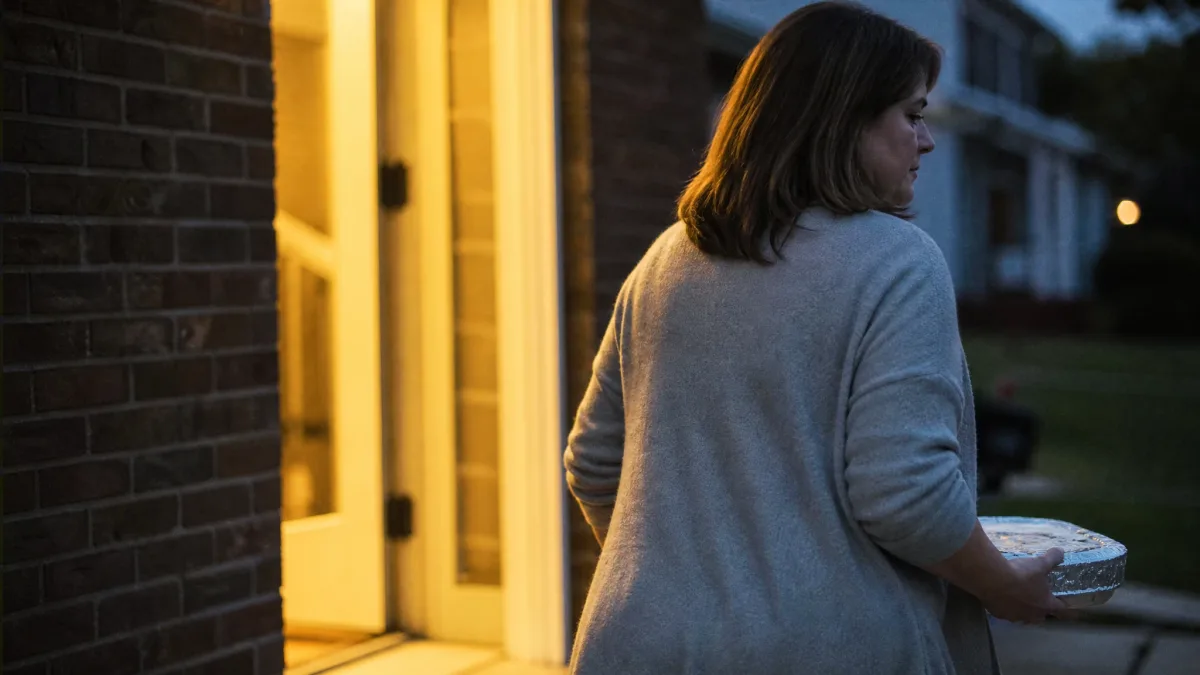
The last of the folding chairs is going back into the hall closet, someone is stacking foil-covered dishes on the counter, and you are rehearsing a sentence in the car and getting it wrong every time.
The fear is specific. What do you say at the service, do you mention him, how do you offer help without hovering. So you say something safe, and it lands wrong, or you say nothing at all.
Then the funeral is over in a week and the absence sets in over months. The cards thin out, the casseroles stop, and the house becomes ordinary right around the time the phone goes quiet. The week she seems fine is a composed day, not a recovery.
What lands is not a perfect condolence line. It is a specific, dated, repeatable offer. Dinner Thursday. A call on the 12th. A standing walk. Something that carries part of the load instead of asking her to name it.
Pick the one move here that fits your friendship, put a date on it this week, and pencil in the month-four call now.
Quick Tips Before You Start
Put a date in your calendar
A reminder two weeks after the funeral beats a promise to check in soon.
Offer one specific thing
Dinner on Thursday at 6, not 'anything you need.'
Say his name
One sentence starting 'I thought of him when…' opens a door she can walk through or leave shut.
Skip the comparisons
Your divorce and your mother's death are real. They are not her loss, and swapping them moves the room to you.
Expect a no and ask again
Two refusals are not a verdict. Keep the same standing invitation on the table.
The weeks right after
1. Grief has no four-week finish line
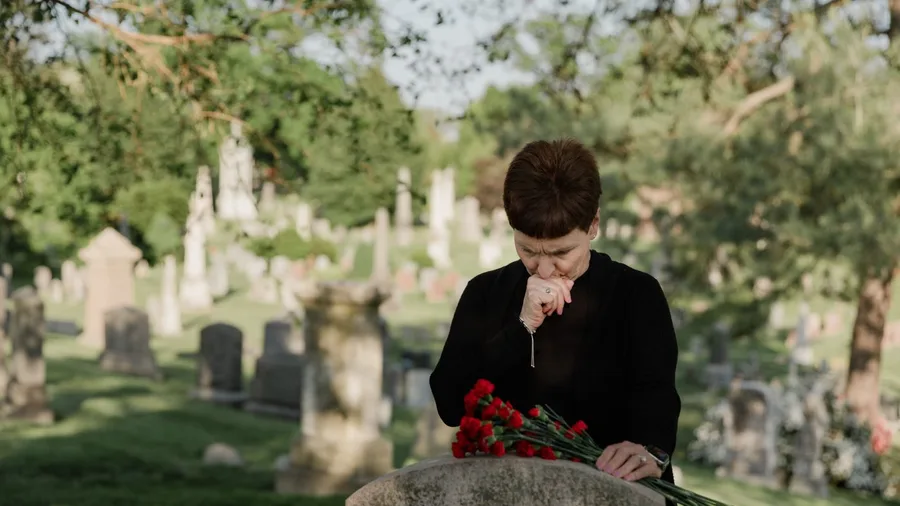
The funeral is a Thursday. By the following Monday the last cousin has flown home, and the house is exactly as quiet as it was the day before the service, except now nobody is knocking. The absence does not arrive all at once. It shows up as a chair nobody moves, a bank statement with one name on it where there used to be two, a Tuesday that looks like every other Tuesday and has to be gotten through anyway.
when did you last reach out, and does it depend on how she seemed? If your calls follow her composure, you are not checking on a widow, you are checking on a performance of getting through, and that performance is her job now, not a sign she has recovered.
A composed week is not a recovery. It is a woman holding her face still in the grocery store so the neighbor will not look worried, and the cost of that effort is that friends read it as permission to go quiet, which is exactly when the phone stops ringing.
Put a date in your own calendar instead of waiting to feel that you should: two weeks after the funeral, then a month after, then another. If she says she needs space, take it seriously and say when you will come back, then keep that day. A check-in tied to a date carries continuity; a check-in tied to her visible pain quietly asks her to break down so she will be remembered.
⚠️ COMMON MISTAKE
Do Not Hand Her a Comparison
'I know exactly how you feel, my mother died last year' moves the room to you. Say 'I can't imagine it, tell me what it's like' and let her stay the authority on her own loss.
2. 'Let me know if you need anything' rarely gets taken up
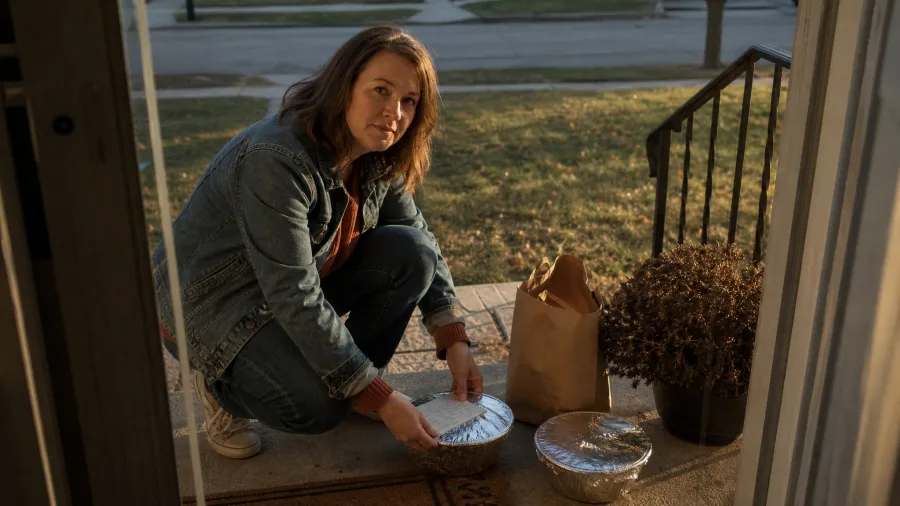
The offer most of us made, standing in the hallway with a covered dish, was some version of "let me know if you need anything," and we meant it completely, which is why it is worth noticing what it actually asked of her.
It asked her to inventory her own needs on no sleep, rank them, decide who can handle which, and then assign the work, which is a second job layered on top of the first one. "I'm bringing dinner Thursday, I'll text before I come" asks nothing. It is a yes or no, and a no costs her nothing.
Match the offer to what you can actually carry: a neighbor takes the school run, a coworker walks the dog at six, a close friend sits with the paperwork for an hour so she is not alone with the forms. A decline is not a no to you. Leave the offer standing without chasing it, and let the specific thing wait there for the week she can say yes.
💡 Tip: Name the day and the hour. 'Thursday' is a plan; 'soon' is homework.
3. The second month is quieter and harder

The phone rang eleven times the week of the funeral and twice in the fifth week after it, the shape of outliving your friends. That is the shape of it. The cards stop, the food stops, the offers stop, and the house does not stop, because now the empty rooms are just what her evenings are, every night, with nobody calling.
The first month is surrounded and busy, full of family, service, and paperwork with deadlines. The second month has fewer people in it and more ordinary hours to fill, and ordinary hours are the ones grief has room to move around in. So a dinner on Thursday helps, but it ends, and Friday is still Friday and then there is a whole weeknone of it is.
The move is not another one-off visit. It is a standing slot: a walk every Tuesday at six, coffee Sunday morning, a call on the same day each week. Predictability does the work, because you show up whether or not she signals that it is a hard day, and she does not have to perform her need to be visited.
Put the reminder in your own calendar a few weeks out, aimed at the week no one else will think to call. If you wait until you can see that she is struggling, you have made your support depend on her holding up a sign.
How to Talk About Him
Everything above is about showing up in the early weeks. This next stretch is about the harder skill: talking about the man who died without either erasing him or turning the conversation into a memorial service.
Friends get quiet here out of kindness, and quiet lands as absence. The two items that follow are the ones widows mention most often: his name, and why your own losses are not the bridge you think they are.
4. His name is not a hazard to say
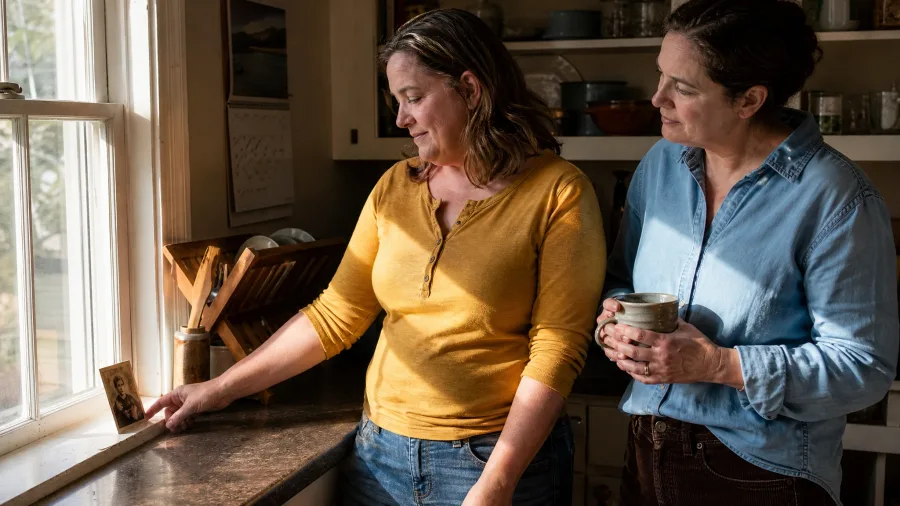
The advice says leave him out of it, spare her, keep the afternoon light. Watch what the advice does in a room: four people at the table and nobody says his name once, and she sits there hearing the years quietly sanded down. Friends think they are protecting her. She hears erasure.
Try the door instead. "I thought of him when that bus went past – he'd have had something to say about the driver." One memory, or one question: "What would he have made of this?" It opens; it does not demand. If she talks, stay in it. If she turns away, let it turn, no lesson, no comfort steering.
And on a raw day she may not want him at all. A change of subject is not a verdict on the friendship – bring him up again another time. Naming him carries the memory beside her. Avoiding him leaves her managing the room's comfort too.
💡 Tip: Ask a question, not just a memory. 'What would he have said?' is easier to answer than a statement she has to respond to.
A composed week is a performance of getting through, not proof that anyone should stop calling.
— What widows keep saying about the friends who disappeared in month two
5. Someone else's loss is not her loss

"I know exactly how you feel. When my mother died, I…" The sentence arrives with real kindness behind it, and it takes the room out of her hands in about four seconds.
The intent is generous. The problem is scope. A mother's death is a profound loss, and a divorce can gut a year, but neither one empties the specific daily slot a spouse occupied. Who you tell the small thing to first at 6:40 in the evening, the person whose name sits next to yours on the electric bill and the mortgage, the shorthand built over twenty years so that half a sentence carries the whole conversation.
That vacancy is what she is standing in the middle of, and a comparison asks her to translate it into something smaller so the two of you can keep talking. The translation is labor, and she is already doing enough of it.
"I can't imagine it. Tell me what it's like." Eight words and a question mark, and not one of them claims ground she is standing on. You are not saying nothing; you are saying that she is the authority on this and you are the one listening.
Watch for the fix-it reflex, which arrives disguised as comfort. A month in, she says she cannot face the garden he kept, and the table says "you'll meet someone" or "at least you had thirty good years." Both send the message that the room would rather she be further along than she is, and she hears it plainly.
The exception is a woman who has also buried a husband. When she says "I know this one," she has standing and she will be believed, and there is no substitute for that. If you have not stood where she is standing, the honest gap in your knowledge turns out to be the more useful thing to offer.
6. She is allowed to be angry at him

Because the anger was always part of the marriage, and the marriage is what she lost. She is furious at him for leaving, at an old argument that never resolved, at the shelf he promised to fix and didn't. Love and fury sit in the same chair.
Correct her – his good points, his kindness – and she learns to hide half of it, perform loyalty, and do the marriage's old work alone. Instead: "That sounds hard," then ask what happened. Stay on the incident. Don't defend him; don't prosecute him.
The line to watch is sustained hopelessness, or talk about not going on. That is beyond a friend's carrying. Point her to a doctor or a grief counselor and stay involved.
What Lands vs. What Costs Her
Carries part of the load
- A date and time you have already chosen
- His name said out loud, once, without ceremony
- A repeatable weekly walk she can decline without penalty
- A second pen on the paperwork at the kitchen table
Hands her another decision
- 'Let me know if you need anything'
- A comparison to your own loss
- Silence where his name should have been
- An invitation she has to renegotiate alone each week
The long haul
7. Invitations must keep coming after a no

The refusal is rarely about you, and treating it as one costs the friendship more than any awkward dinner ever could. When she says no to Saturday, she is usually saying no to the getting dressed, the driving across town, the two hours of being the only woman at a table of couples talking about their plans for the summer.
By the third no, most friends have quietly stopped calling. It feels like reading the room. What it actually does is remove the one structure that let her re-enter without having to ask, so the next social occasion becomes something she has to arrange for herself, or not attend at all.
The move is a standing invitation with a low bar. Not 'let me know when you're free' – that hands her the scheduling. Instead: 'I walk the park loop Thursdays at six. Same time every week, no need to answer, just come if you're up for it.' She can take it up on a strong week without renegotiating the terms, and decline on a hard one without feeling she has cancelled on you.
The wording matters less than the seat. Couples' invitations need adjusting: tell her plainly she can come alone, or bring her sister, or bring a friend – and mean it when she does. An invitation she has to bend herself to fit is one she will quietly stop accepting, and she will not tell you why.
Keep offering after two refusals. When she disappears from the invitations, she is left to carry the proof that she still belongs – which is heavier than any single evening out. Her voice, when it comes, is a yes or a no. The invitation itself is the welcome.
If she asks for a break from all of it, take her at her word and name a date to come back. A pause with an end on the calendar is something she can hold. A silence with no return is one more thing she has to endure alone.
The Paperwork Wave — At a Glance
🏛️ Social Security
Survivor benefits, one office, its own rules
🏦 Bank and cards
Accounts retitled, cards frozen, utilities renamed
📁 Pension or 401(k)
Forms from the plan administrator, not a guess
📱 Phone and insurance
Separate hold queues, separate proof of death
⏳ Typical span
Months of calls after the funeral
Wrong source, wasted month
Every rule a friend remembers secondhand is a rule that has changed since and can cost her another call cycle.
8. The paperwork outlasts the funeral by months

You are sitting at her kitchen table, a folder open between you, and she has been on hold with the pension office for twenty-two minutes. The hold music loops. She has stopped hearing it.
This is the other long-haul work, and it does not end with the funeral. Every account has its own office, form and queue, and the rules live with the office, not in anyone's memory – so the line is 'I will sit with you while you call Social Security, and I will take notes,' not 'I think you just need to call the bank.'
Ask her which one she cannot face, then take that one. 'Give me the phone number and the account details, and I will make the first call this afternoon.' Never sign for her, never decide in her name. You are there to absorb the hours on hold, not the choices.
💡 Tip: Keep one folder, tabbed: ID, death certificates, policy numbers, account letters. Bring your own pen.
💡 PRO TIP
Tasks, Not Feelings
Ask 'What's the most annoying thing on your list this week?' rather than 'How are you holding up?' One gets you a task you can remove. The other gets a polite answer and no help.
9. Her calendar holds dates you are not counting

Because the calendar carries dates the rest of the room never marks. His birthday. Their anniversary. The date of the diagnosis. The last holiday the two of them spent together. Each one lands on a week that looks entirely ordinary from outside.
Put a single entry in your own calendar – the date, and a reminder a few days before – so you reach out first. That way she does not have to announce it. The days before the date often hurt worse than the date itself: the dread, the memory of last year, the anticipation of being alone with it again.
The gesture stays small. A text that morning: 'Thinking of you and him today.' A walk at the usual time. A coffee dropped round with no fuss. Nothing that asks her to host your sympathy or perform gratitude for it.
The frame is simple. Remembering shares the weight of the date; waiting to be told, or not marking it at all, leaves her to carry it by herself.
Where the Help Actually Lands
If you only change one habit, make it the dated reminder in your own calendar.
Frequently Asked Questions
How long should I keep checking in after a funeral?
Longer than feels reasonable. Most support dries up within a few weeks, so the calls in month two, month four and month ten matter most. Set recurring reminders in your own calendar rather than waiting for a sign she needs you.
What should I say instead of 'let me know if you need anything'?
Name a specific thing, a day and a time. 'I'm bringing dinner Thursday at six, I'll text before I come' is a yes or no she can answer in three seconds. Match the offer to your role: neighbor, coworker, or close friend.
Is it okay to mention her husband by name?
Yes, in most cases. Open with 'I thought of him when…' and follow her lead on how far the conversation goes. If she turns the subject, let it turn and try again another week. Silence about him tends to feel like erasure.
Should I stop inviting her if she keeps saying no?
No. Keep the invitation low-pressure and repeatable, and make it fit her actual life, including coming alone or bringing a friend. After two refusals, most people stop asking, and that is when a widow loses her standing welcome.
How much can I help with the paperwork?
As much as she asks for, as long as she makes the decisions. Sit with her, take notes, make calls, gather documents, and always use the official source for a rule rather than memory. Never sign or decide in her name.
What if I say the wrong thing?
You probably will at some point, and it matters less than you think. Repair it with a short, plain sentence, then go back to the person rather than the awkward moment. A friend who stays after a clumsy line is worth more than one who vanished to stay safe.
The Offer With a Date On It
So here is the verdict. One dated, specific offer this week, dinner on Thursday, the school run on Tuesday, a call on the 12th, does more than months of good intentions, and showing up in month four and month ten does more than anything you do in week one.
Which move comes first depends on how close you are. The closest friend starts with the raw conversations and the paperwork, his name, her anger, the forms. A neighbor or coworker starts with a bounded task or an invitation that repeats. The looser the tie, the shorter and more specific the offer should be.
The sentence you are rehearsing in the car will matter far less than whether you are still around when the chairs are long back in the closet. The friend still calling in month four and month ten is the one she will remember. Put the first date in your phone now, while the dishes are still on the counter.
Open Your Calendar Right Now
Add one reminder for two weeks from today and one for six weeks out. Then send the text that names the day, the hour and the thing you are bringing.