
By the end of this you will have two sentences written down and a clear idea of which one goes first. Start with the reason a single good talk rarely clears two years of air. A family dinner, a blowup at the table, a 34-year-old daughter who has been polite and distant ever since, and a parent who believes that saying sorry is the whole repair. It is not the whole repair, and the gap between the two is where most of these conversations fall apart.
A blanket 'sorry for everything' hands her the job of sorting which wrong actually mattered, and a request for forgiveness in the first sitting makes her responsible for your relief. That is a lot to set down in front of someone who did not ask to carry it. The goal is not an apology that gets accepted. It is an apology she can survive, one where she is free to refuse, correct you, or take her time.
So you are aiming at something smaller and harder than absolution.
By the end you will be able to fill in one ownership sentence and one permission request, and you will know which of the two goes out first. It is the second one.
Quick Tips Before You Start
Write the sentence first
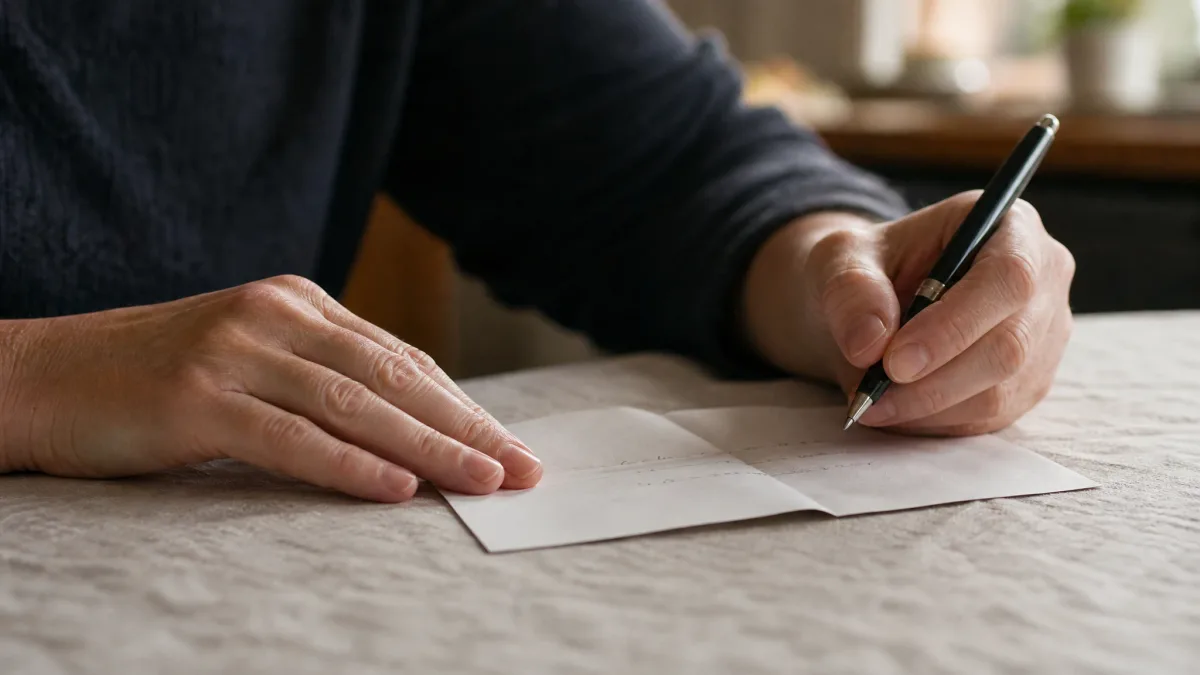
Get your one-sentence ownership statement on paper before you say anything out loud to anyone.
Pick a boring day
Not a birthday, not a holiday, not a Sunday when the whole family is in the house.
Name a length
Ask for 20 to 30 minutes so the conversation has an edge she can see the far side of.
Cut the word but
Read your sentence aloud; if it contains but, if, or you know I love you, cross it out.
Leave the phone down
On the table, face down, silent. A mid-sentence glance at it undoes an hour of listening.
1. One Specific Wrong, Not a Life Review

You are sitting across from her with the whole catalogue loaded – the birthday you missed when she turned nineteen, the boyfriend you never warmed to, the years of advice she didn't ask for – and you open your mouth to begin.
That catalogue is the trap, and it fails in a way that looks like progress. An apology with no single subject leaves her two jobs at once: either she picks which wrong you mean, or she nods along to a vague one she can't really answer. Either way the evening turns into an audit of her childhood, and you are both exhausted by dessert.
Pick one thing. The blowup at the family dinner two years ago is a good candidate because it has edges – a date, a table, a specific thing said. Not 'all the ways I let you down,' but that night: the raised voice, the comment meant to land, the drive home where nobody spoke.
Write what you own in one sentence that starts with I. It might be: 'I lost my temper at the table and said things meant to make you feel small, and I let the evening end without a word to you.' That is the whole apology's spine. What it leaves out matters as much as what's in it – nothing about what she did, nothing about the stress you were under that year. Both of those turn ownership into a trade, and a trade invites her to argue the terms instead of hearing you.
Then use the sentence as a fence. When the conversation drifts toward other years – and it will, because old grievances are patient – bring it back to this one. The narrowness is what makes the whole thing honest: she can disagree with a specific claim, and a real disagreement is worth more than a vague absolution she never quite gave.
💡 Tip: If it is a repeating pattern rather than one night, name the pattern by its shape: 'Every time you mention money, I turn it into a lecture.' Still one subject.
| Defensive line | Accountable replacement | Why it lands differently |
|---|---|---|
| "I'm sorry if you felt that way." | "I lost my temper at the table and said things meant to make you feel small." | The first disputes whether there is anything to be sorry for. The second names the behavior as yours. |
| "I said it because I was under a lot of pressure." | "There was no good reason for me to say it." | An unrequested explanation arrives as a rebuttal, however true it is. |
| "But you know how much I love you." | "That's it. That's what I wanted to say." | The but reopens the case in the same breath as the apology. |
| "Can we put this behind us and move on?" | "What would be useful to you now, if anything?" | One asks for relief. The other hands the turn back to her. |
2. A Permission-First Opening

Ask – and not as a formality. Once you have a sentence this narrow in hand, the natural urge is to deliver it the next time you see her, and that urge is exactly what to slow down, because the question of when she hears it is hers to answer.
The ask is short and carries no freight: 'There's something I got wrong about that dinner two years ago. Would you be willing to talk for twenty or thirty minutes sometime?' No details, no stakes, nothing to brace against. Give her the choice of in person or on the phone, and keep away from a restaurant or a holiday table, where she has no exit and the room is full of witnesses. A bounded window and a say in the setting are what make it survivable.
Then comes the part that buys or spends everything over the following months. A no, or a 'not right now,' has to land without a sigh, without 'fine, forget it,' without the three-week silence that punishes honesty and teaches her never to give it again. A postponement to a named month is a yes. 'Not now' means the sentence waits, written, in a drawer.
What this buys is a daughter who learns her answers are safe with you. What it spends, if you flinch at the first no, is the same thing you were trying to repair – and she will remember which one you did.
💡 Tip: One sentence of the request, then stop talking. The urge to fill the pause is what turns a question into a speech.
💡 PRO TIP
The Pause Is Part of the Apology
When you finish the permission question, leave the silence where it is. Waiting for her answer is the first test of whether you can wait for her answers at all.
3. The No-But Ownership Statement
An apology goes defensive through the small words, and the biggest offenders are 'but,' 'if,' and the reassurance you reach for when you are nervous.
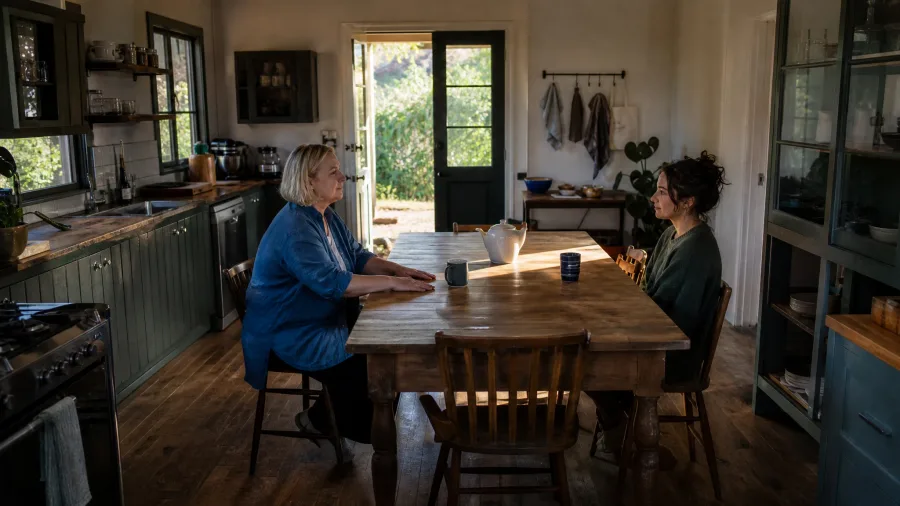
Once she has agreed to a time, the twenty or thirty minutes need filling with the ownership sentence and little else. Say it plain: 'I lost my temper at the dinner and said things to make you feel small.' 'I'm sorry if' quietly disputes that there's anything to be sorry for; 'but' hands the verdict back to you in the same breath; 'you know I love you' asks her to comfort you before she has spoken. Hold the stress, the upbringing, the good intentions until she asks – an explanation she didn't request lands as a rebuttal, however true it is.
Keep it short enough that she has somewhere to put her own words. A long statement fills the room, and she ends up managing your feelings instead of having hers. The sentence has one job: hand the turn back to her.
4. Impact Spoken Before Intent
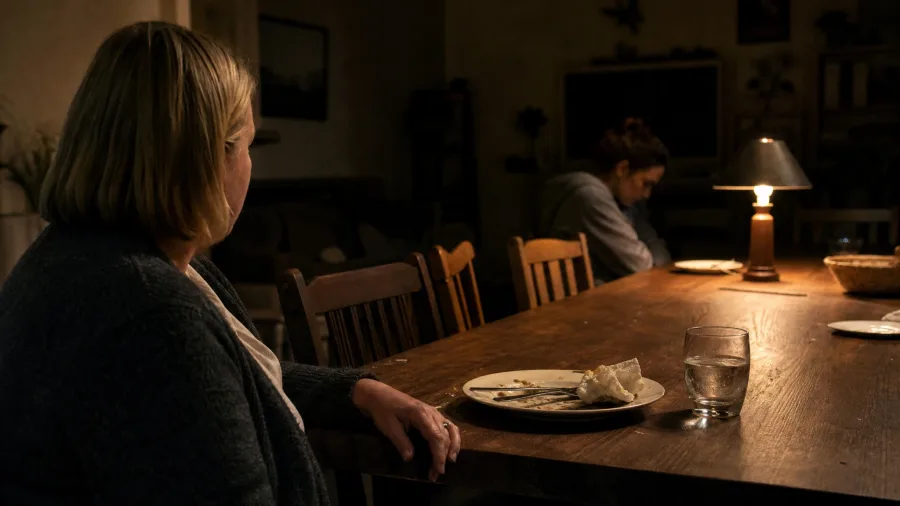
You can own exactly what you did and still be wrong about what it did to her. The usual advice says to follow the admission with your reasons, so the room hears the stress and the good intentions before it hears her. That order is the mistake: it treats her experience as a conclusion your motives get to settle.
Say the effect instead, in one line, and mark it as your best reading rather than a verdict: "My guess is you spent that dinner with everyone watching and no one saying it was off." Then ask whether you have it right, and mean the question.
When she corrects you, keep the correction. The ask exists to be rewritten, not signed off, and the difference matters: a parent who holds the first guess is asking her to agree with a story about herself. "I didn't mean it that way" hands the moment back to your intentions and asks her to grade them; "you're upset because you take things hard" moves the problem into her temperament. Hold both against the act, not the sensitivity.
5. The Listen-Without-Defending Pause

The first time I tried this, I heard the anger and started stacking reasons against it, which turned a daughter's account of a bad night into a debate I was determined to win. The instinct to correct is the instinct to stop hearing, and it runs strong.
So stop talking. Let her reach the end of it, and then leave a beat before you speak, because the quiet after her last word is where you find out whether you can sit in it. "That's not what happened" may be true; saying it out loud wins the point about the evening and ends the conversation you came to have.
Do not ask to be forgiven or reassured here. A question like "do you forgive me?" puts your relief in her hands the moment she is still angry, and it turns her anger into a task she has to finish for you. Ask what she needs now, and take "nothing" at face value; argue with it and you have proved why your grown kids don't call get contested.
If she stays angry, that is not the apology failing. It is the permission you gave her being used, in front of you, without a penalty attached.
💡 Tip: One phrase earns a great deal: "Say more about that." It keeps the floor hers and asks for nothing in return.
What Listening Looks Like vs. What It Only Looks Like
Actually listening
- Letting her finish the sentence, even the parts that sting
- Answering a feeling with "that's fair"
- Accepting "I need space" on the first ask
- Asking "what would help?" and taking the answer
- Bringing it up again only where she invited it
Looks like listening, isn't
- Correcting the date or the wording mid-account
- "I hear you, but let me explain what I was going through"
- "Okay, I'll just never say anything again"
- Asking whether she forgives you by the end of the hour
- Texting three times to check she isn't still upset
6. Repair Offers and Follow-Through

Fourteen days is where most apologies quietly lapse. The conversation went fine, the words were said, and then two Sundays pass and nothing changes, because the part that proves the change was never decided.
Repair begins with what she told you she needed, and it is one concrete thing you can actually keep: "I won't bring up your job at family dinners. If I do, say 'you're doing it' and I'll let it drop." Grand promises, a gift that smooths the table, and a deadline for her to feel better all hand the work back to her.
Then the short message, around two weeks on, tied to the specific change: "I kept quiet on Sunday like I said I would. Still holding to it." If she wants no contact, one line keeps the door open, and that is the only knock that comes.
💡 Tip: If she wants no contact, respect it and leave the door open in one line. No repeated approaches, no messages routed through siblings, no reminders near the anniversary.
Where These Conversations Usually Come Apart
Frequently Asked Questions
What if I genuinely can't remember exactly what I said?
Apologize for the shape of it rather than a quote. "I don't remember the words, and I know I was cruel at that table and I know it was aimed at you." Your daughter's memory of the evening is the one that matters here, and conceding that costs you nothing.
Should I apologize for several things in one conversation?
No. One incident or one pattern, named by the occasion. A list turns the conversation into an audit of her childhood and forces her to relitigate years she may not want to touch today. You can do the next one in six months, if she wants it.
What if my child says the apology is only for my own guilt?
Don't argue with it. Say, "That's a fair thing to wonder, and you get to decide what to do with this." Then let the next two weeks of changed behavior answer the question instead. A protest in the moment essentially proves her point.
How long should I wait before following up?
About 14 days, with one short message tied to a specific change you promised. Not a week (too soon, feels like pressing), not three months (the apology starts to look like a mood rather than a decision).
What if my child wants no contact at all?
Respect it, completely, and say so in one line: "I hear you, and I won't keep reaching out. The door stays open on your side." Then leave it. No messages through siblings, no showing up, no reminders around anniversaries. The door being open has to be true to be worth anything.
Does an apology this short actually count as an apology?
Short is what makes it land. The length is not the measure; the specificity is. A four-second sentence about one dinner does more work than ten minutes about your own childhood, because she can hold it, answer it, and check it against what you do next.
Write Two Sentences Before You Say One Word
The apology is judged by what she is free to do inside it. Refuse the talk, correct your account of the night, stay angry for a while, ask for space, and your honoring of each of those answers is the apology itself, not an obstacle in front of it. What settles two years is a short ownership sentence, a permission request, and a change that survives a Sunday dinner.
Before any conversation, write two things down. The ownership sentence, in the plainest words you have: 'I lost my temper at the table and said things meant to make you feel small, and I let the evening end without a word to you.' Then the permission request: 'There's something I got wrong about that dinner two years ago. Would you be willing to talk for 20-30 minutes sometime?'
Send or say the second one first, not the full apology. If the answer is no, or not yet, the ownership sentence stays written, and the door stays open. You are back in that room with the plates cleared and the silence after, and this time you are not waiting for her to fill it.