

Twelve hours a week sounds small until you have spent two years inside it – two school years and one summer, Tuesday through Thursday mornings, 7:15 to 11:15, at one Title I elementary school in Dayton, Ohio. I signed up at 68, a retired school bus driver two years widowed, alone in a two-bedroom ranch house where the mornings had shrunk to coffee and the news and no reason to leave the chair.
So I called the foster grandparent volunteer office, toured the building, and got paired with three kids over those two years – a 7-year-old, an 8-year-old, and a 9-year-old, each for about a school year. Twenty minutes of reading aloud, breakfast duty, flashcards, and walking the youngest to the bus at 7:40.
I was not being saintly. I wanted a reason to get dressed. What I feared was the drain, my own impatience, and grief coming back up – and what actually came back arrived through routine, blunt questions, repair, and limits. Gas ran about $40 a month, thrift-store books $15, one $60 pair of shoes; the stipend covered gas and snacks, not a salary.
Before you decide, test the fit. Call one school, ask to shadow for a morning, and say plainly what you can and cannot commit to.
Quick Tips Before You Start
Ask for the foster grandparent desk
General volunteering and the foster grandparent program are separate rolls with separate offices. Say the program name or you may get routed to a tutor sign-up that skips the stipend.
Budget the whole year
Mine came to roughly $40 a month in gas, $15 in thrift-store books, and one $60 pair of shoes. The stipend offset gas and snacks — it does not replace a salary.
Give them a calendar to lean on
Same Tuesday to Thursday, 7:15 to 11:15, twice over. On the weeks I missed — two for a knee replacement, one for a funeral — the kids asked where I had gone.
Let the teacher keep the lesson
You run the 20 minutes of reading, breakfast duty, flashcards and the 7:40 walk to the bus. That is the lane, and it is wide enough.
Say your limits at the tour
Name the days, the summer and the extras you will not take before anyone is counting on you. A boundary stated early is a rule; stated late it sounds like a withdrawal.
What Pulled Me Out of My Own Head
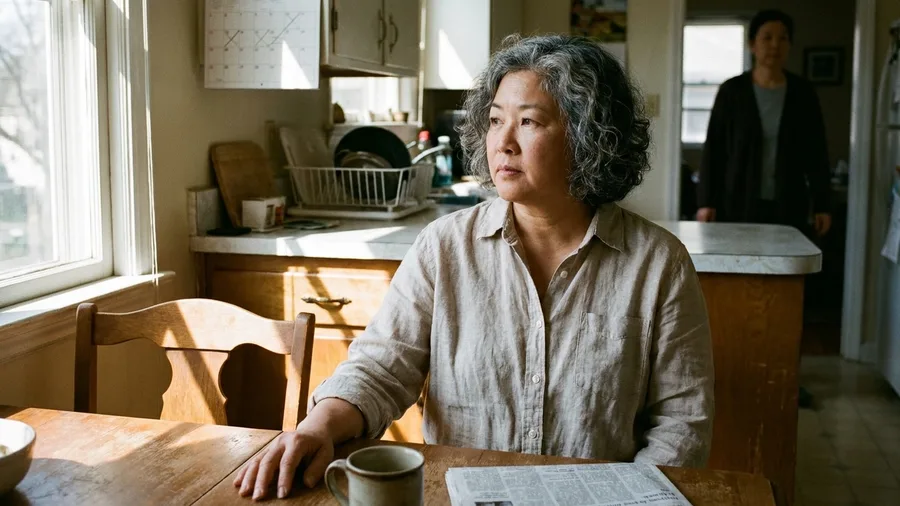
The first thing foster grandparenting gave me had nothing to do with the children. It was a schedule with edges, and edges are what a widowed retirement loses first.
These three entries are about the mornings — the bus stop, the questions, and the one time I raised my voice.
1. The 7:40 Bus Stop Got Me Out of Bed
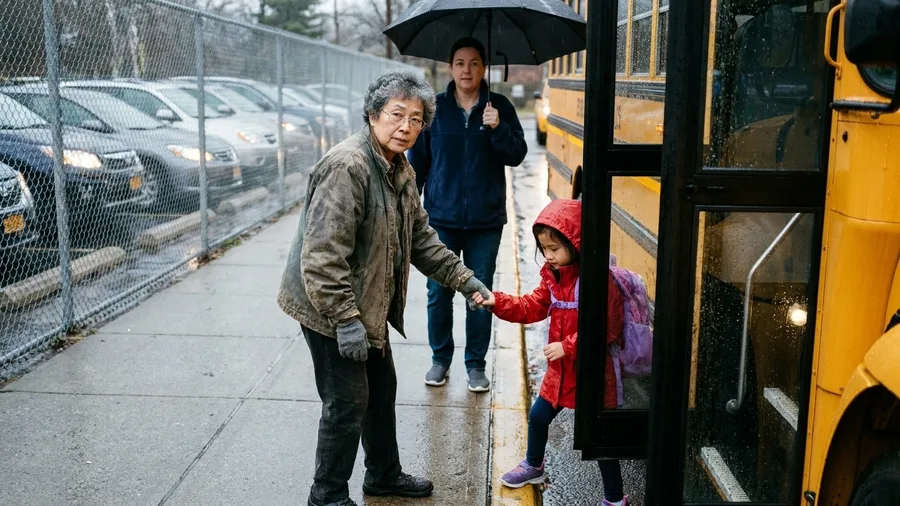
The first thing you would do is stop deciding what they are for.
Before I started, the day had no edges. I was 68, two years without my wife, alone in the two-bedroom ranch, and the whole morning was coffee, the news, and nothing pulling me up out of the chair. For a caregiver's account of how love changes under chronic strain, see lessons on love as a caregiver.
Then came twelve hours a week at one Title I school, Tuesday through Thursday, my mornings divided into twenty minutes of reading aloud, breakfast duty, flashcards, and the walk that got the youngest out to the bus at 7:40. Twice I stood by the phone ready to call in sick, once on a rainy February Tuesday and once after a night I barely slept, and both times I put on my coat because a seven-year-old was waiting on that walk. No epiphany. A duty, which is a stronger thing.
The kids were not what got me going at first. The clock did.
💡 Tip: Tell the kids your days. Once mine knew I came Tuesday through Thursday, they asked on Monday whether I was coming tomorrow, and that question did more than any resolution I made alone.
The Tuesday Morning, Start to Finish
2. The Kids' Blunt Questions Stopped My Rumination
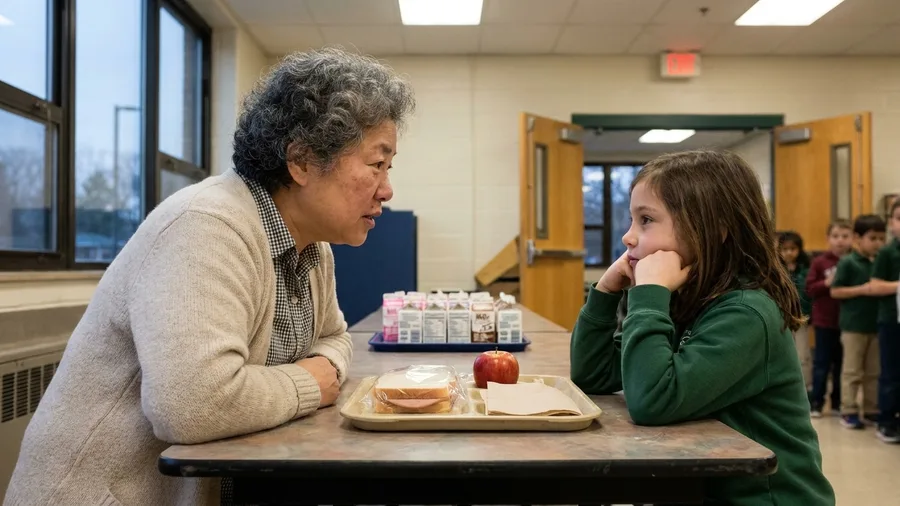
People warn you that being around children will leave you with more to worry about. The opposite happened, and not because the hours were restful. They were loud and they were fixed.
A third grader, eight years old, asked me flat out who packs my lunch. Not a soft question, just a kid wanting to know. So I told her: I do, same as you, and it is one bologna sandwich, an apple, and a napkin. Saying it out loud brought the picture up whole, my wife at the counter wrapping that sandwich in wax paper, and I had to say that part too. The loop I had been circling all week could not keep spinning while I was in the middle of answering.
That is the difference I keep coming back to. At three in the afternoon my house has a ticking clock and a refrigerator humming at me. The school hallway has floor wax under my shoes, kids lined up against the wall, a wedge holding a door open.
The script is short. When the same question comes at you, answer it in plain words, and do not round off the tender part. If a child asks whether I miss my wife, the honest answer is yes, and it was a sandwich she made. If they ask what I am doing after school, the answer is going home to an empty house, and that is fine to say too.
On days I am not at the school, I put on the sixty-dollar shoes and walk to the corner stop around 7:40, then call the office to ask about the next volunteering day. It costs a little privacy to answer those questions straight. It buys back the quiet.
⚠️ COMMON MISTAKE
Don't do this on a bad morning
Do not skip the morning because you are low. I tried that once and spent the whole day in the chair. Go in tired and say less; the routine will carry the hour for you.
3. I Lost My Temper Once and They Forgave Me
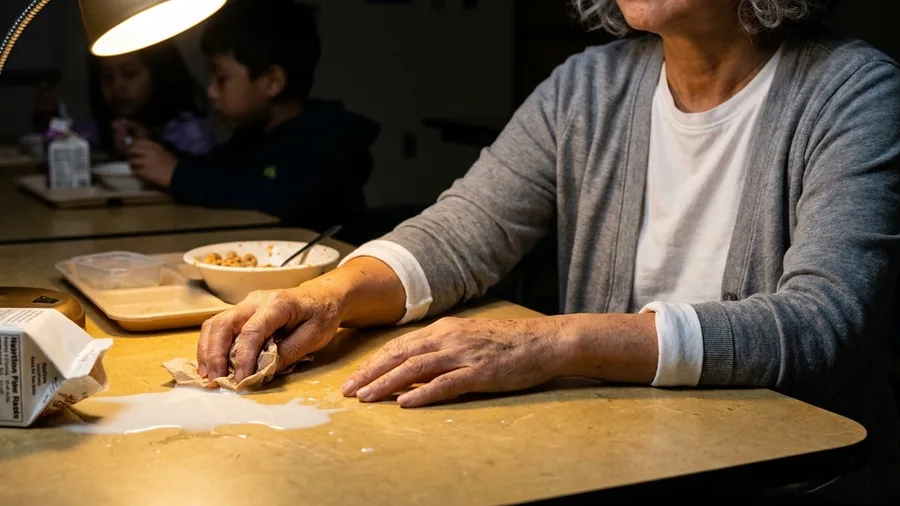
"I could never do it. I've gotten too short-tempered." I have heard that from friends, and I have said some version of it myself. The shorter fuse does show up. What matters is what you do in the moment after it does.
Breakfast duty, milk carton, the 7-year-old: it crossed the table and I said 'Come on, not again' a notch too loud. The room went quiet. I sat down and said, 'I was wrong to yell. Milk is not a big deal. I'm sorry.' She said, 'It's okay. I spill too,' and wiped the table.
Now when the fuse shortens I put both hands flat on the table, say 'I need a minute,' walk to the hallway fountain, and count to twenty before I speak again. This job asks for repair after the slip, not a promise never to slip, and it would not suit someone who cannot apologize to a child.
💡 Tip: Apologize within the minute, not the next day. A child's memory for the repair is short — the sooner it happens, the sooner it counts.
What They Taught Me About Being Wrong and Trying Again
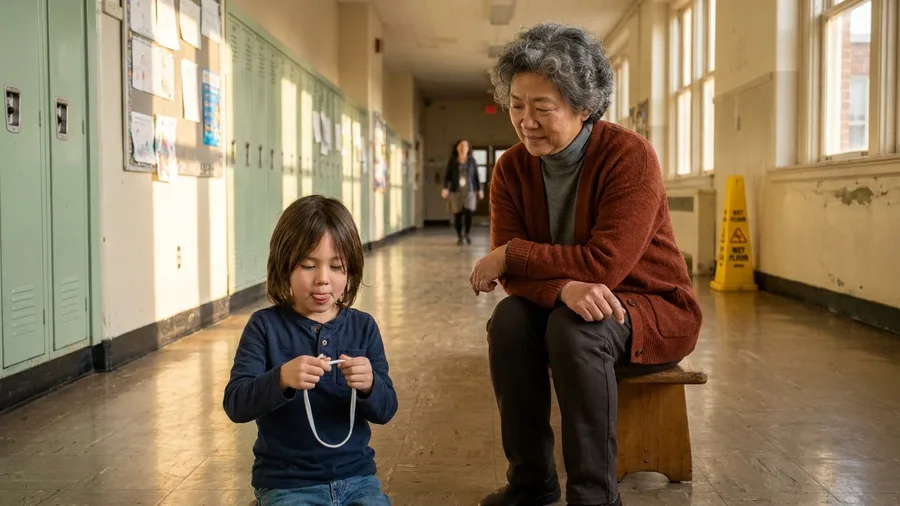
The second year taught me things I did not sign up for. Two of the three kids were better at being wrong than I was.
These entries are about uncertainty, retries, and proportion — the three things I had let rust.
4. Saying 'I Don't Know' Out Loud Got Easier
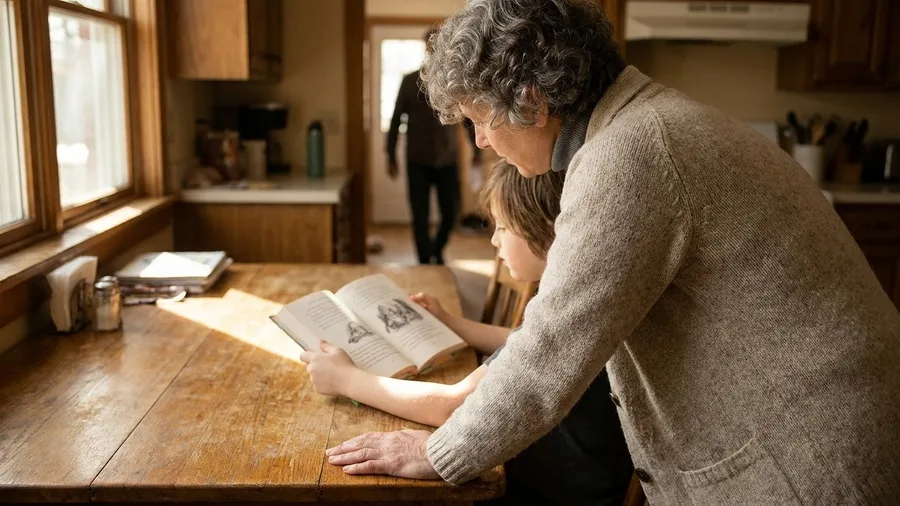
Not knowing the answer is allowed. I had spent a working life being the one who knew the route, the schedule, the rule, and I assumed the job would want more of the same.
The 9-year-old fourth grader asked me why a classmate's father had left. A blunt question, no preamble, asked the way kids ask while a marker is still in their hand. I did not know. I could not make it tidy and I could not make it fair.
So I said I did not know why, that it was a grown-up thing I could not explain, and that it was not hers to fix. No invented story, no softened version. She nodded, said 'Okay,' and asked whether we could finish the chapter. The honest answer did not cost me authority; it ended the interrogation.
With my own grown children I stopped leading with advice. 'I don't know what I'd do – what are you thinking?' is what comes out now. Admitting uncertainty cost me the role of the one who knows. It returned conversations that were not performances.
How Bad a Slip Really Is
Where each one sits on the scale that matters
- Knocked milk carton: Noise and a wet table. Nothing else.
- Raised voice: Real, and fixable inside one minute.
- Unrepaired raised voice: This is the one that changes a room.
- Skipped apology: The child learns the adult will not come back to it.
Ranked from two school years of breakfast duty, not from a study.
5. A 7-Year-Old's Retry Showed Me How to Try Again
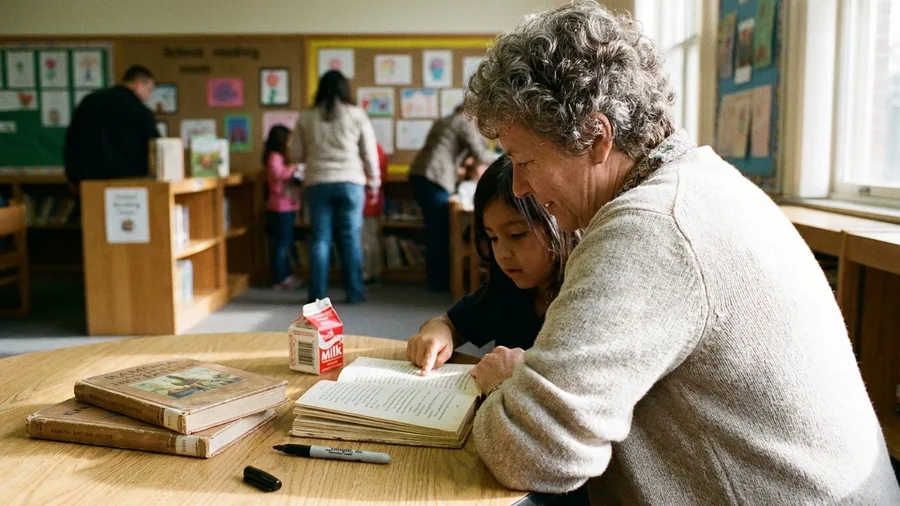
The cost of sitting still is that nothing gets fixed, and I am not built for it. The second grader spent one Tuesday morning on the same lace: five tries before breakfast, two more the next day, every loop sliding apart at the last tug. My hands knew the knot. I put them flat against my knees instead and said 'Try again,' and the aide in the doorway watched me not do it.
That afternoon I thought about the library chess class I quit two Tuesdays in, because the retired men across the table moved faster than I did. I called the branch and went back the following week.
When the lace held, the kid's mouth came open, then she ran the length of the hall to show the aide. Her face was surprise, not victory. Sitting on my hands cost me the quick fix and gave me back a model for my own failures: stay, and go again.
💡 PRO TIP
The words that buy a retry
Say the sentence and then stop talking: "Try again — I'm not going anywhere." The second half is the part that lets a child start over without shame.
6. Their Small Courage Made My Knee Replacement Look Smaller
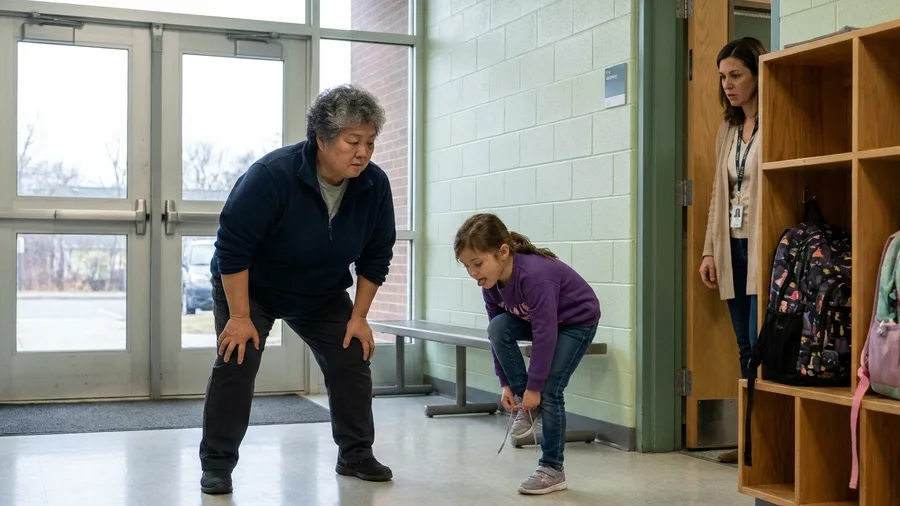
It is Thursday morning, breakfast duty, and the third grader is chewing the eraser off her pencil. Friday's spelling test sits a day away and her stomach hurts – that is how she says it, one hand flat on her middle.
The obvious advice is to reassure her, to say it will be fine, and the obvious advice is wrong. What changed the week was not comfort. She practiced 'because' at breakfast duty, missed it on the test, and came out saying she would try again next week. I watched from the hall and said nothing.
My knee replacement was set for March 12. Before, I told people 'I'm getting a new knee' and then listed the risks, the recovery odds, the things that could go wrong with the stairs at home. After watching her, I told the kids, 'I was scared of falling again.' Being honest about the fear was harder than the surgery date.
Now, when I start to picture the worst, I say the 8-year-old missed 'because' and came back Monday, and then I do one physical-therapy session at a time. Her fear cost me my cover story. It gave me proportion.
What Changed in the Hallway
Before
- 'You should transfer.'
- A plan, in numbered steps, unrequested.
- 'I'm getting a new knee' and a list of risks.
- 'Just retire, Dad.'
- Advice as the first move, every time.
Now
- 'What part can you control?'
- 'What are you thinking about doing?'
- 'I was scared of falling again.'
- Silence, then the question again.
- Advice only after I am asked.
What Came Home With Me
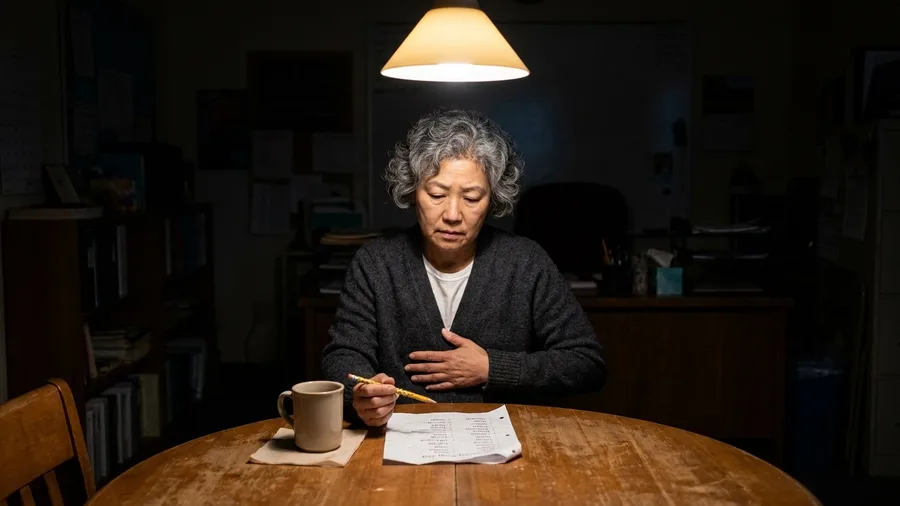
None of this stayed at the school. It came home in the car and sat down in my kitchen.
The last three entries are about my daughter, a shoebox, and the two boundaries I would write down before doing it again.
7. I Talk to My Own Grown Kids Differently Now
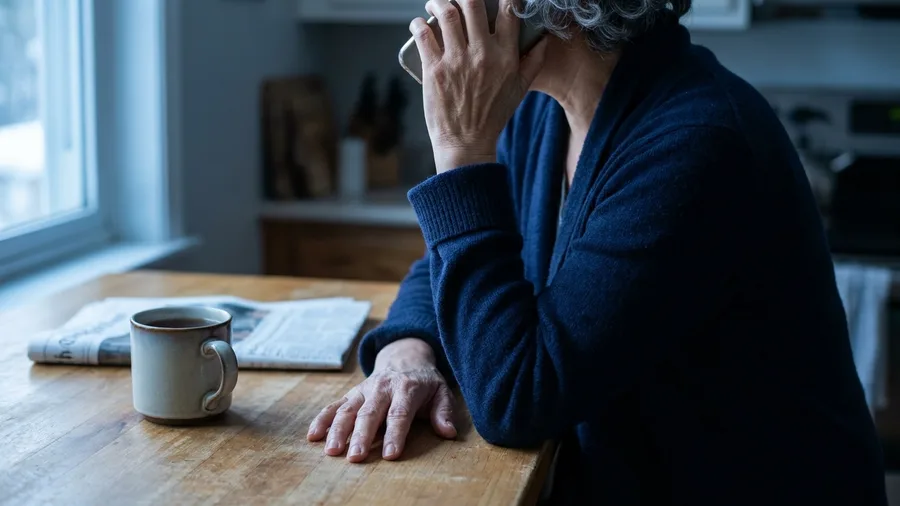
The version I got wrong ran for years. My daughter would mention a supervisor who moved deadlines, and I'd say, "You should transfer," then list the steps in order. She stopped mentioning the supervisor.
What I ask now is different: "What part of it can you control?" The advice I used to give was a plan. The question I ask now is open, and it costs me the comfort of being right.
My daughter said, "Dad, you're not telling me what to do. It's weird, but keep doing it." It has not fully taken. Tired after a Tuesday, I still say "Just retire" before I catch it.
8. A Shoebox of Drawings Is My Best Retirement Investment
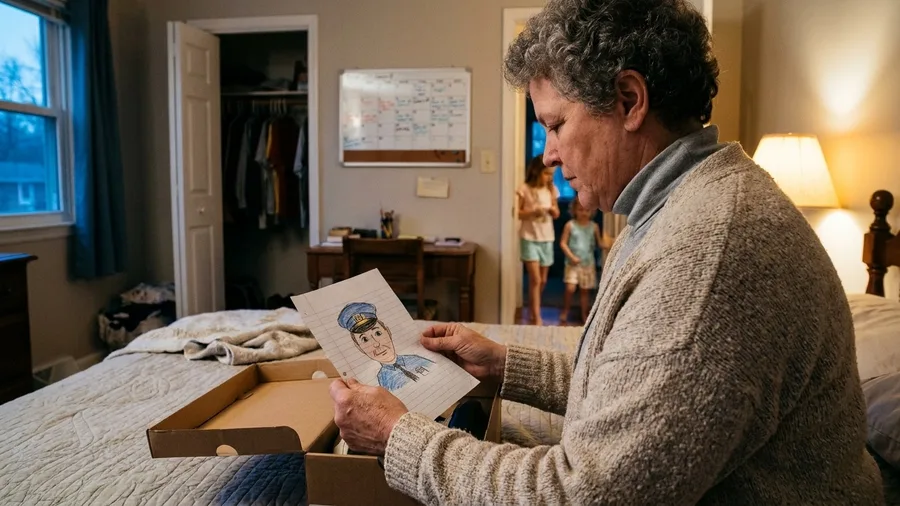
Three years of school life fit in a shoebox I keep on the closet shelf in the second bedroom. Crayon drawing of me in a bus driver cap, two thank-you notes on lined paper, a wall calendar with every event penciled in. I get it down twice a year, first Sunday after the last bell, and some summer mornings at 7:40 when the house is too silent. Readers can discover the quiet habits that make a grandparent remembered long after toys break by reading quiet habits that last.
The desk drawer holds pension statements. Numbers. The shoebox holds names, dates, a 7-year-old's version of my face. That is the record the statements never kept.
What it cost: $40 a month gas, $15 thrift-store books, one $60 pair of shoes. A small stipend from the volunteer office covered gas and snacks, not salary. The box does not fill a Tuesday morning. It is not a substitute for calling the school.
Foster Grandparenting — At a Glance
🚪 Setup first
Tour the school before you commit
🧒 Pairing
One child, one school year (grades 2-4)
🩹 Absences noticed
2 weeks knee surgery, 1 week funeral
📖 Easiest start
Breakfast duty, then read aloud 20 min
🚫 Skip if
You want the stipend to matter financially
🤝 Hardest part
The handoff when the year ends
Failure mode
Treating the shoebox as a substitute for calling the school.
9. I'd Sign Up Again With Two Firm Boundaries
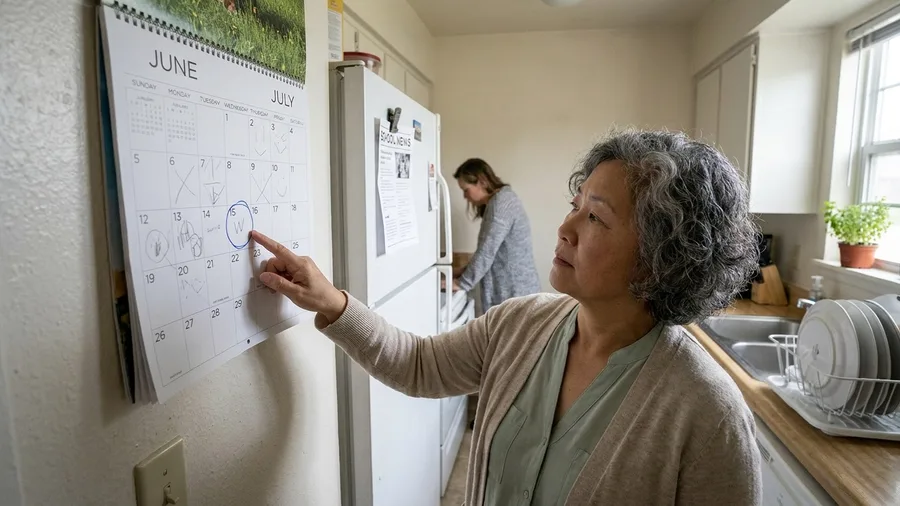
I would sign up again, with two boundaries written down before the first morning. The shoebox on the shelf is what remains; if I wanted that return to repeat, I had to protect the mornings I could actually keep.
Wednesday off, and a hard stop on summer. I said yes to June and July my last year, and by August I was short with the kids over small things, a dropped pencil, a slow line. I also missed my granddaughter's June birthday party in Columbus because I had already promised the school those hours.
What I tell a friend thinking about it: phone the school's foster grandparent volunteer office, ask to shadow for one morning, and name what you can and cannot commit before you start. But this fits only if you can say no. And it is not for anyone counting on the stipend as income; it covered my gas and snacks, not a salary.
Boundaries cost the extra hours. They gave back the mornings still worth showing up for.
Before You Call the Office
Frequently Asked Questions
How much time does foster grandparenting actually take each week?
Mine was 12 hours a week, Tuesday through Thursday mornings from 7:15 to 11:15. The office will tell you the minimum for the school you are placed in. Ask at the tour whether summer counts, because in my school it did and nobody mentioned it until May.
Is there a background check or screening?
Yes. Expect a background check and an application through the school district or the program running the placement. Mine took a few weeks. Start the paperwork in spring if you want to begin in the fall.
Do you need teaching experience?
No. I drove a school bus for 31 years. The classroom teacher runs the instruction, and your job is reading aloud, breakfast duty, flashcards and walking a child to the bus. What you need is a fixed schedule and the ability to apologize when you get it wrong.
What if I get sick or have surgery?
Tell the office and tell the kids. I missed two weeks for a knee replacement and one week for a funeral, and the children noticed both and asked where I was. That is ordinary, not a failure.
Does it pay anything?
The volunteer office paid a small monthly stipend that covered gas and snacks. It was not a salary. My costs ran about $40 a month in gas plus $15 on thrift-store books.
How do I start?
Call the elementary school nearest you and ask for the foster grandparent volunteer office, or ask the district office which school in your area runs the program. Ask to shadow for one morning before you commit to anything.
The Call I'd Make Before I'd Sign Anything
The verdict, for anyone hesitating near 68: the returns are real, and they are not automatic. The schedule got me out of bed, the questions stopped the loop, the apology repaired the room, and the shoebox sits on the shelf – but every bit of it came through specific costs and named limits.
So call one elementary school this week, ask for the foster grandparent volunteer office, and shadow a grandparent for a single morning. Before you sign anything, say out loud which mornings you will keep and which you will not.
At the start it was coffee and the news in a two-bedroom ranch with nowhere to be. Now the wall calendar has school events marked and the $60 shoes sit by the door. You do not need to be a saint or a grandparent – only the person who shows up, apologizes when you miss, admits what you do not know, and names the mornings you can keep.
One call, one morning, one honest list
Find the school nearest you, ask to shadow a foster grandparent for a single morning, and write down the days you can actually commit to before you go.

