
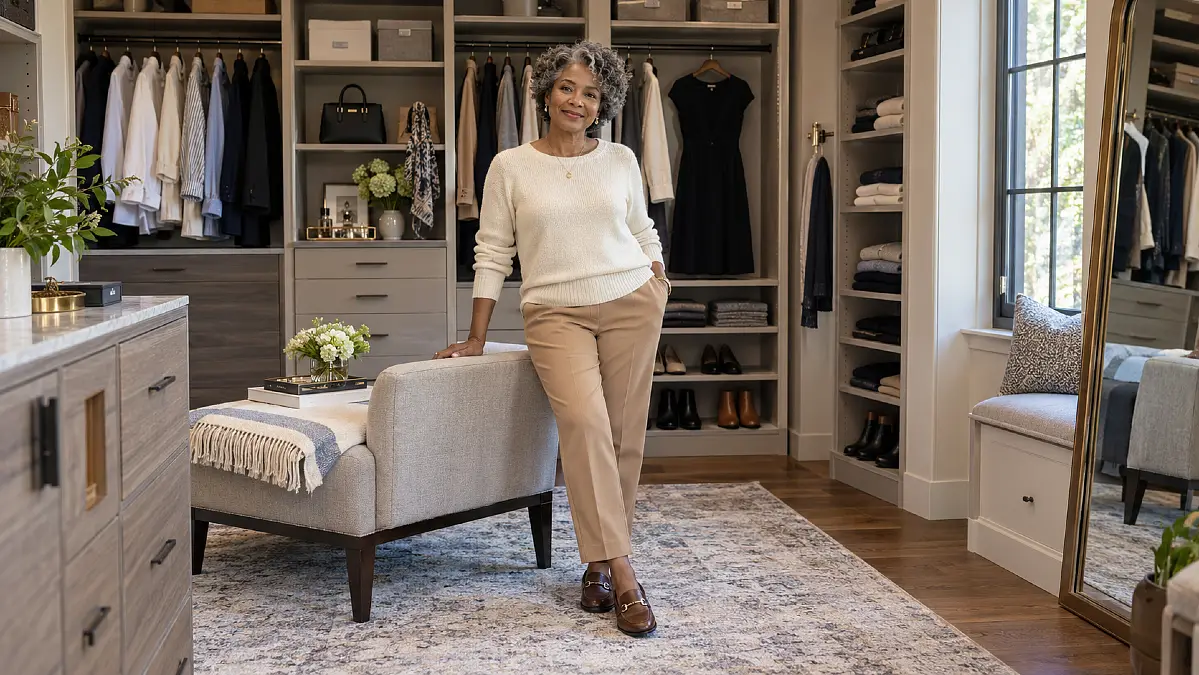
A closet can be full and still leave you feeling like you have nothing to wear. Pieces stop fitting quite the same, old favorites feel tired, and newer trends can make getting dressed more confusing instead of easier.
For women over 50, the answer is rarely another round of random shopping. What helps most is having dependable wardrobe essentials for women over 50 that fit your life now and make the rest of your clothes easier to wear.
You do not need a beige uniform or an expensive wardrobe reset. You need good foundations, useful layers, comfortable shoes, and a few pieces that make simple clothes look intentional.
That is the real no-BS closet.
A True Closet Essential Has to Earn Its Hanger
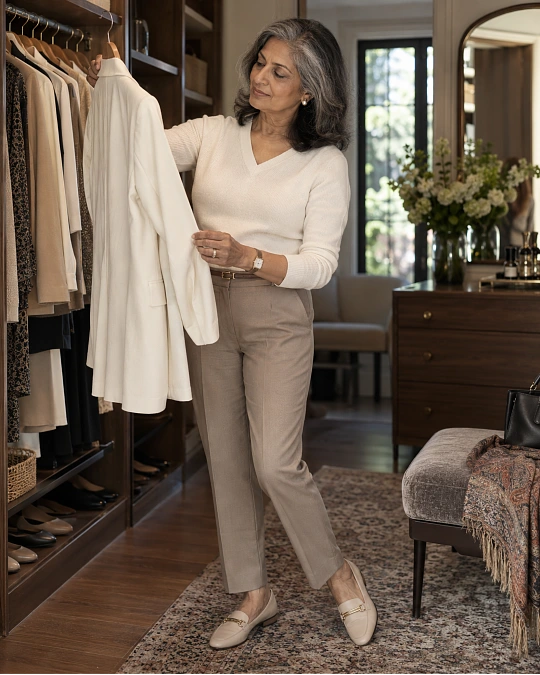
An essential is not something every woman is required to own. It is something you can wear often, style several ways, and reach for without having to build an entire outfit around it.
That distinction matters. A beautiful blouse that only works with one bra, one pair of trousers, and one type of weather may be lovely, but it is not doing much heavy lifting.
The strongest wardrobe essentials for women over 50 usually pass three simple tests: they fit comfortably today, they work with several other pieces, and they suit your actual weekly life.
A woman who works from home will need a different balance than someone who attends meetings five days a week. Travel, climate, social plans, walking habits, and laundry preferences all count.
Here is the framework I would use before adding anything to a closet.
| Closet Essential | What to Look For | It Should Mix Easily With |
|---|---|---|
| Everyday top | Comfortable neckline, good shoulder fit, fabric that holds shape | Jeans, trousers, skirts, jackets |
| Dark or medium-wash jeans | Clean fit through waist and hip, little excess bunching | Knits, shirts, blazers, sneakers |
| Polished trousers | Fluid or softly structured fabric, comfortable rise | Tees, sweaters, loafers, jackets |
| Useful jacket | Enough room for a light layer underneath | Dresses, denim, trousers, skirts |
| Simple dress | Easy waist and shoulder fit, bra-friendly neckline | Flats, boots, sandals, jackets |
| Walking-friendly shoes | Secure fit, wearable heel or sole, useful color | Most everyday outfits |
The exact pieces can change. Their jobs should not.
Your Best Tops Should Frame the Face Without Constant Adjusting
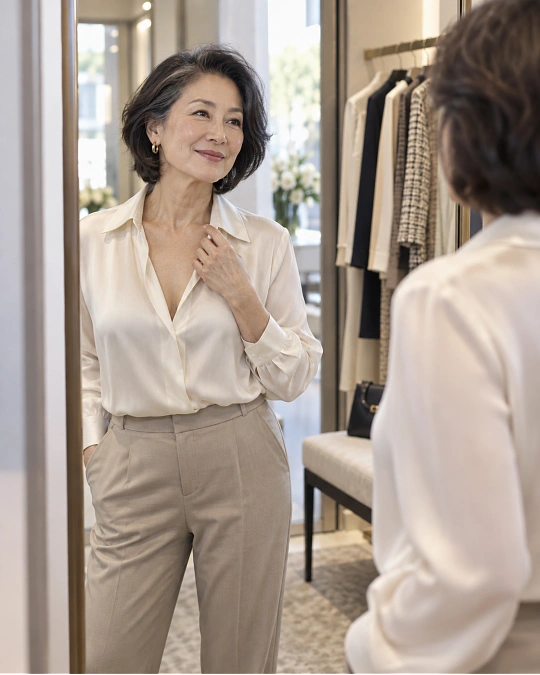
A good everyday top should not need tugging, pinning, layering tricks, or special planning every time you wear it.
Start with a few necklines that make you feel comfortable and open around the face. Crew necks, soft V-necks, boat necks, open collars, and gentle scoop necks can all work.
The important part is proportion. If a top is very loose, pairing it with a cleaner trouser or jean often keeps the outfit from looking shapeless.
If you prefer a fuller bottom half, a more streamlined knit or tucked shirt can create the same balance in reverse.
Fabric matters just as much as shape. Cotton blends, fine knits, linen blends, soft poplin, modal, and fabrics with a little stretch tend to sit more cleanly than very thin clingy jersey.
A crisp button-front shirt is useful, but it does not have to be white. Soft blue, ivory, navy, olive, pale pink, or a stripe may fit your wardrobe better.
Fit note: Check the shoulder seam before worrying about the size number. When the shoulders sit well, a shirt or knit often looks more polished even when the cut is relaxed.
Jeans and Trousers Should Follow Your Shape Instead of Fighting It
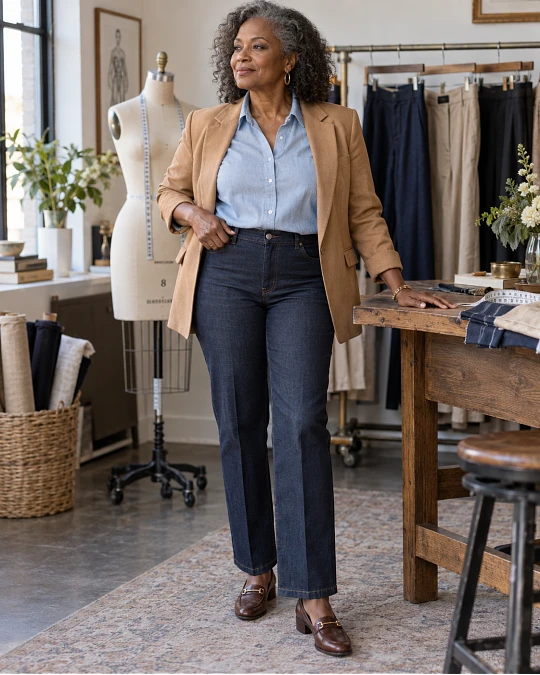
Many wardrobe problems start below the waist.
You find a top you love, then every pair of trousers seems too tight at the waist, too loose through the thigh, too long, too cropped, or simply uncomfortable after lunch.
That is not a reason to give up on trousers. It is a reason to become more selective about rise, fabric, and leg shape.
Straight-leg jeans remain easy to style because they sit between skinny and very wide shapes. A gently wide leg can also look modern, especially when the waistband fits cleanly and the hem works with your shoes.
For smarter days, look for trousers with enough structure to skim rather than cling. A flat front or softly pleated style can both work depending on how the fabric falls.
Use this as a fitting guide rather than a set of rules.
| Bottom or Fabric | What to Look For and Why |
|---|---|
| Straight-leg denim | Enough room through the knee so the leg line stays clean |
| Wide-leg trousers | Fluid fabric and a defined waistband to keep the shape intentional |
| Stretch denim | A little recovery so it moves without becoming baggy by afternoon |
| Ponte trousers | Medium-weight fabric that gives comfort without looking like leggings |
| Linen-blend trousers | A blend with some structure if pure linen feels too rumpled for you |
Try sitting down before buying trousers. Walk, bend, and check the waistband from the side.
Clothes have to work when you are living in them, not only while standing straight in a fitting-room mirror.
The Right Jacket Can Make a Basic Outfit Look Finished
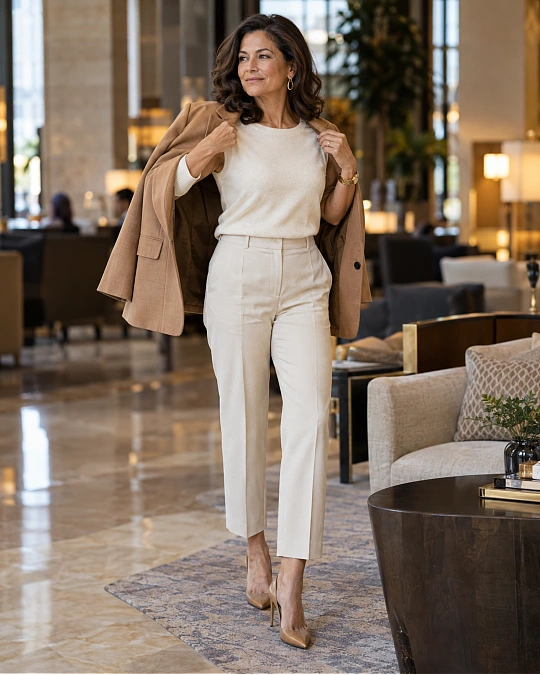
This is where a practical wardrobe starts becoming a stylish one.
A third piece such as a blazer, cardigan, denim jacket, utility jacket, or lightweight trench gives a basic top and bottom more shape. It also creates vertical lines that can make an outfit feel calmer and more pulled together.
You do not need every jacket style. Two or three that suit your life are more useful than a rail full of options.
For example:
- A softly structured blazer works with jeans, trousers, dresses, and simple tees.
- A neat cardigan is useful when you want warmth without the formality of tailoring.
- A denim or utility jacket gives dresses and polished trousers a more relaxed feel.
- A lightweight trench or longer coat helps simple clothes feel intentional during transitional weather.
Pay attention to where the jacket ends. A cropped jacket can work beautifully with wider trousers or fuller skirts because it gives the waist more definition.
A longer blazer or cardigan works well over straighter pieces because it creates a cleaner vertical line.
Comfort upgrade: If traditional blazers feel restrictive, look for softer tailoring, stretch woven fabric, or an unlined style instead of abandoning jackets altogether.
Keep at Least One Dress and Skirt That Require Very Little Styling
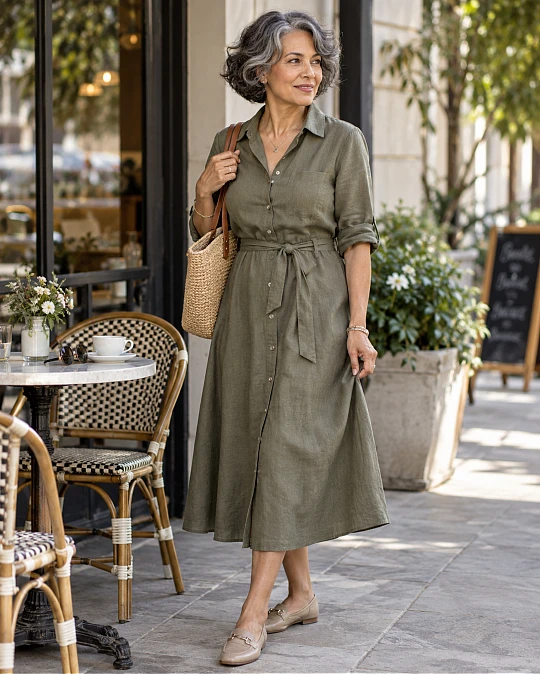
A useful dress earns its place when it solves the whole top-and-bottom question in one step.
It should not be the dress you are saving for a mysterious future event. It should be one you can wear to lunch, dinner, a family gathering, work, or a day out simply by changing the shoes and layer.
Shirt dresses, softly shaped midi dresses, knit dresses, and simple A-line styles are strong places to start. Look for fabric that moves rather than clings and a neckline that works with your normal bra.
The same thinking applies to skirts. A straight midi, fluid A-line, or softly pleated skirt can give basic tees and sweaters much more range.
If skirts always seem difficult, the problem may be the shoes rather than the skirt.
A midi hem with a bulky shoe can sometimes feel heavy. Switching to a sleek sneaker, pointed flat, loafer, refined ankle boot, or lower-profile sandal can completely change the proportion.
Shoe swap: When a dress feels too formal, try it with clean sneakers and a denim jacket. When it feels too casual, switch to loafers or a low block heel and add a structured layer.
Comfortable Shoes Still Need to Work With Your Hemlines
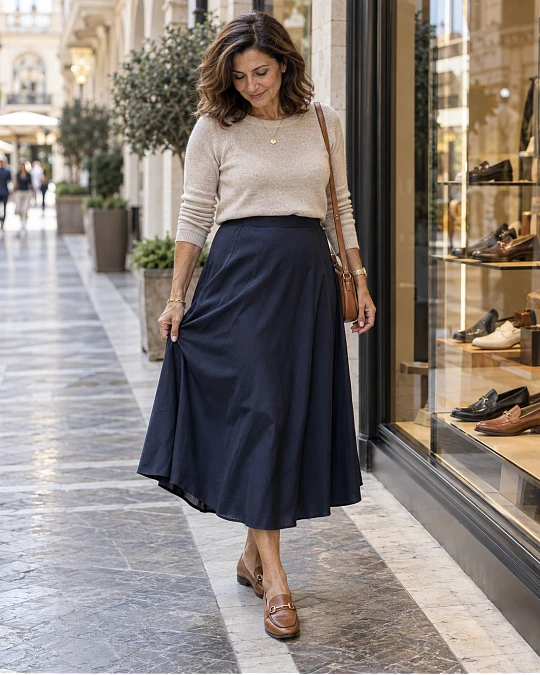
Shoes are often treated like the final detail. In real life, they can decide whether you wear the outfit at all.
If a shoe hurts, slips, pinches, or makes you nervous on uneven ground, it is unlikely to earn a good cost-per-wear no matter how attractive it looks.
A useful closet usually needs a mix of casual, polished, and seasonal options rather than dozens of near-duplicates.
A clean sneaker covers travel days, errands, casual lunches, and relaxed dressing. A loafer or polished flat handles outfits that need a smarter finish without a heel.
An ankle boot works with jeans, trousers, dresses, and skirts in cooler months. Warm-weather wardrobes may get more use from a refined flat sandal or low wedge.
Color is worth thinking about too. Black is useful, but it is not automatically the most versatile choice.
Tan, taupe, cream, chocolate, metallics, burgundy, or navy may blend more naturally with the clothes you actually wear.
The goal is not to own a shoe for every possible outfit. It is to own enough useful shapes that your favorite clothes do not sit unworn because nothing works at the ankle.
Small Finishing Pieces Keep Basics From Feeling Boring
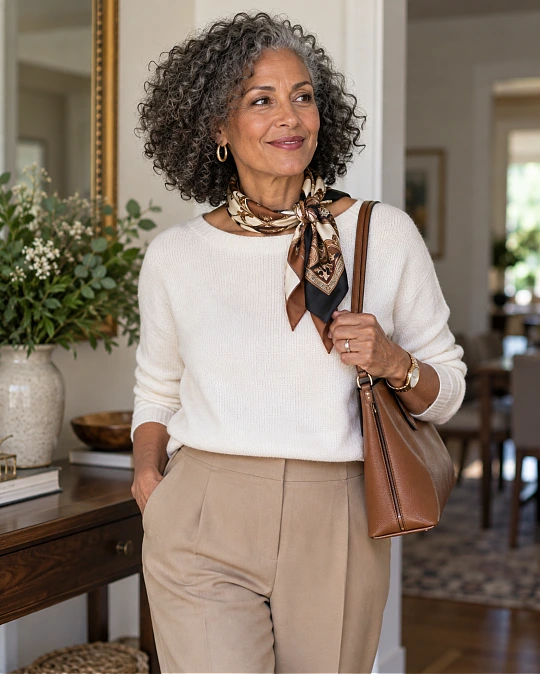
Simple clothing does not have to mean dull clothing.
A scarf, belt, necklace, watch, earrings, structured bag, or interesting shoe can change the mood of a basic outfit without creating more wardrobe clutter.
The trick is choosing finishing pieces that feel like you.
Someone who loves quiet clothes might rely on sculptural earrings and a beautiful leather bag. Someone who likes color may keep the clothes neutral and use scarves, shoes, or jewelry for personality.
Belts can be useful too, but they are not mandatory. Use one when you want to define a waist or break up a longer silhouette, not because someone told you every outfit needs one.
The same goes for jewelry. A simple outfit often benefits more from one noticeable element than several pieces competing for attention.
Color note: If your wardrobe feels disconnected, repeat one or two accent colors across shoes, bags, scarves, or jewelry. That small repetition can make separate purchases feel like they belong together.
Build Your Closet Around Three Outfit Formulas You Can Repeat
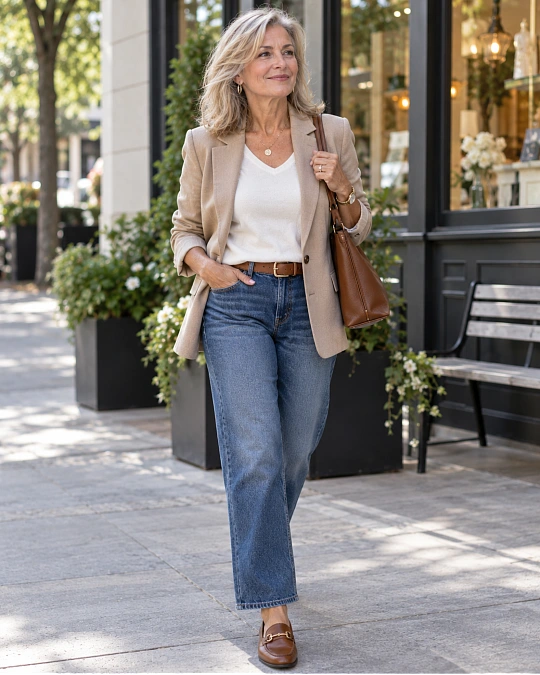
A good capsule wardrobe over 50 does not mean limiting yourself to ten beige garments.
It means knowing which combinations work reliably enough that you can get dressed on a busy morning without starting from zero.
Before shopping, look at what you already wear every week. Your personal uniform is often hiding there.
Maybe it is straight jeans with a knit and jacket. Maybe it is wide trousers with a fitted tee. Maybe dresses make you feel most like yourself.
These formulas show how a relatively small group of clothes can cover very different days.
| Occasion | Easy Outfit Formula | Why It Works |
|---|---|---|
| Errands or travel | Straight jeans + knit tee + utility jacket + sneakers | Comfortable, layered, and easy to move in |
| Lunch with friends | Fluid trousers + soft blouse + loafers + earrings | Relaxed pieces with enough structure to feel polished |
| Smart casual event | Midi dress + blazer + low heel or refined flat | One-piece base with an easy change in formality |
| Everyday polished | Dark jeans + fine knit + blazer + ankle boots | Familiar basics with a stronger outer layer |
Start with the formula you already wear most.
Then look for the weak link. Perhaps the jeans never fit quite right, you lack a useful jacket, or every shoe you own pushes the outfit too casual.
That is where your next purchase should go.
Buying this way is far more useful than collecting trendy outfits for women over 50 simply because they look good online.
Cost-per-wear improves naturally when every new item has several partners waiting for it at home.
Frequently Asked Questions
How many clothes should a woman over 50 have?
There is no correct number. A useful wardrobe is large enough to cover your real activities but small enough that you can see, combine, and wear most of it regularly.
A woman with frequent professional events will naturally need more variety than someone with a very casual routine.
What clothes make a woman over 50 look more polished?
Good fit usually matters more than formality. Clean trouser hems, well-fitting shoulders, shoes in good condition, balanced proportions, and one structured element can make very simple clothes look polished.
That structured piece might be a blazer, crisp shirt, defined bag, or neat jacket.
Should women over 50 stop wearing certain trends?
No trend needs an automatic age limit. The better question is whether the trend suits your personal style, comfort level, and the clothes you already own.
You can often make a trend feel more natural by wearing just one current element with familiar basics.
What colors should women over 50 keep in their closets?
Keep neutrals that work well with your favorite colors rather than relying only on black. Navy, cream, camel, chocolate, olive, gray, denim blue, and soft white can all make useful wardrobe foundations.
Then add the colors that make you feel good near your face.
How do I know what clothing is worth spending more on?
Spend more carefully on items you wear frequently and where fit or material makes a clear difference. Jackets, shoes, trousers, outerwear, and a favorite everyday bag often earn more wear than highly specific occasion pieces.
The price matters less than how often you realistically use the item.