
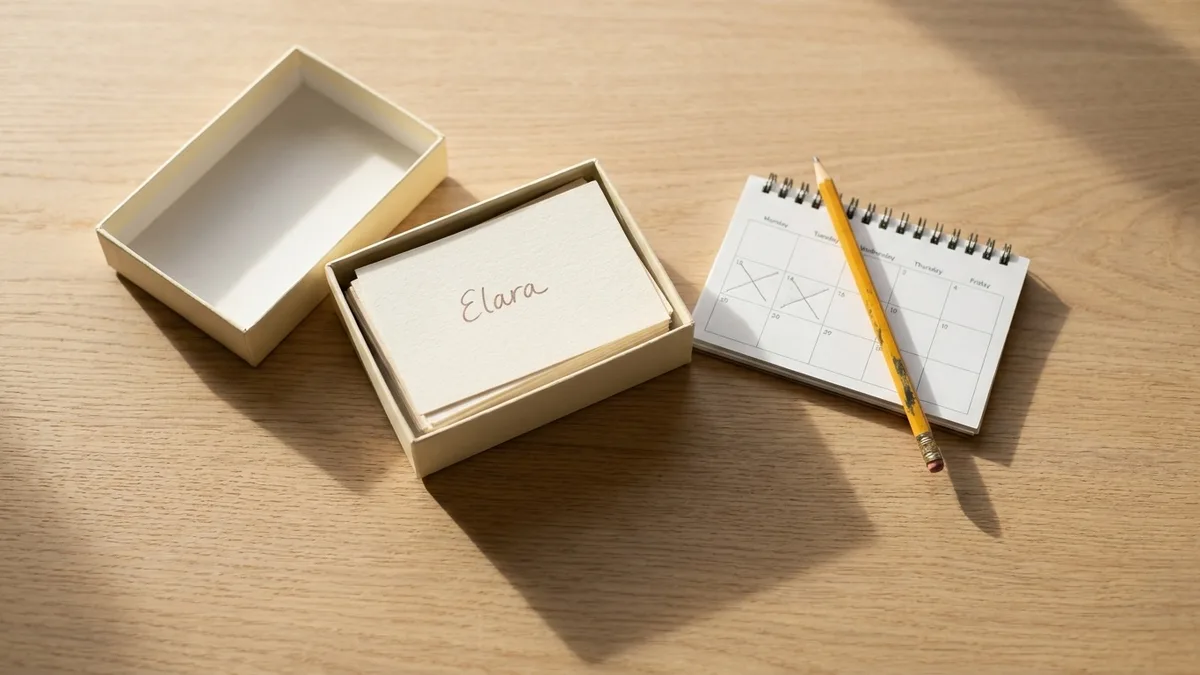
Everyone tells you the circle only shrinks. Mine did, for a while. I was a school secretary for thirty-one years, and I knew every family in that town by their children's handwriting. Then I was widowed at 74, and I sat in a 1,150-square-foot ranch house on a street of similar ranch houses and watched the names thin out. Retire, move, die. I want to be honest about this part: nobody had done anything wrong. The occasions had simply stopped existing.
What changed the count was not a bigger personality. I have the personality of a filing cabinet. What changed it was two standing appointments and a paper card box. Tuesday at nine, coffee at the Lutheran church hall. Thursday at ten, choir at the senior center. That is the year's 45 dollars. Since I turned 70 I have added at least one new friend every year, and I have never once hosted a dinner party to do it.
you do not need an app, you do not need a bigger house, and you do not need to be the woman with the clipboard. A small calendar, kept, will do it.
By the end of this you could sit down with a pencil and choose one weekly activity where the same faces show up, and one standing slot you will keep whatever your mood is on the day, and put both on the calendar. The card box waits until the first three names. Everything else is later support.
Quick Tips Before You Start
Fix two slots
Pick two weekly activities with the same faces and put them on the calendar as unbreakable appointments.
Buy a card box
A plain 3×5 index-card box and a pen, kept where your hand goes, not an app on your phone.
Script one opener
Have one line ready that points at something in the room, not the weather.
Cap the call
First phone calls end at 30 minutes, before the conversation runs out of things to say.
Daylight only
Schedule everything you organize before 4 p.m. and remove the driving excuse for both of you.
1. One new activity each January, picked for its people

For years I joined things for the subject, which is why so many of them went nowhere. I signed up for a watercolor class because I liked the idea of painting, and spent six Tuesdays at a long table where half the chairs changed every week. Nobody was there twice in a row.
So each January I read the parks district catalog, the church bulletin and the senior-center flyer looking for one thing only: the format. A class that meets every week at the same hour beats a lecture I attend once, every time. Before I sign up I ask the office one question, will the same fifteen people be there every week, and a yes puts it on my list even if I only half care about the topic.
Choir is the example. Thursdays at ten at the senior center, forty-five dollars a year, about twenty regulars. I am not much of a singer. The music is the excuse; the same twenty faces are the point.
💡 Tip: Call the organizer before you sign up and ask: 'Will this be the same group each week, or does it change?'
📆 Your First Year, Step by Step
January: pick one weekly activity
Choose a class or group that meets the same day each week with the same people.
Set two standing slots
Block Tuesday and Thursday mornings on the calendar and treat them as unbreakable.
Attend three weeks in a row
Go even when you don't feel like it; the mood catches up about half the time.
Take a helper job
Say yes to the first job offered—coffee setup, sign-in, chairs—so the group has to talk to you.
Make one call a week
Use the 30-minute cap and keep the conversation to arranging a meeting.
Accept every second invitation
Decide after the third meeting, not the first, before you write anyone off.
Start the card box
Only after you have three names worth keeping, write each one down with a detail and a date.
2. Two standing weekly slots that don't depend on my mood
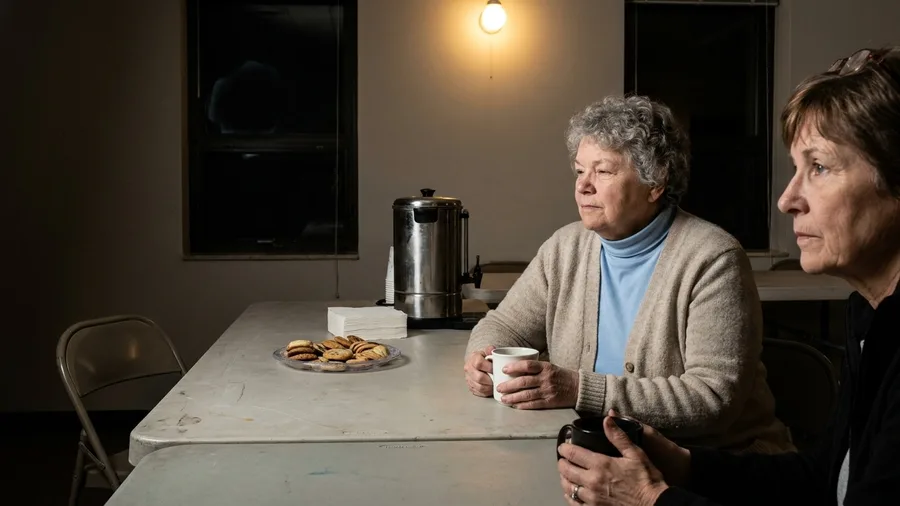
Two fixed hours a week carry the whole thing: Tuesday at nine at the Lutheran church hall, Thursday at ten at the senior center for choir, 45 dollars a year. Same times in January, same times in July.
Researchers who study habit keep landing on the same finding, and it is a dull one. What keeps a behavior going is not motivation but a consistent cue in a consistent place. A standing slot is that cue on a calendar. The slot does not check my mood. Some Tuesdays I drive over in a flat humor and sit down anyway, and by the second cup the mood has caught up. On the mornings it does not, the faces at the table carry me through until the next week.
This is why, when a new person crosses my path, the invitation is to the slot and never to some one-off gathering. Come Tuesday at nine if you can, I say. That gives a new name a set place to turn up again. Occasional visits disappear into scheduling. A recurring hour builds familiarity all by itself.
Skip two weeks and the commitments wait for me. The good intentions do not. Willpower fades; the calendar holds the spot.
My Social Budget at a Glance
Small numbers that keep the method running
3. A three-outing weekly cap that keeps the calendar inviting
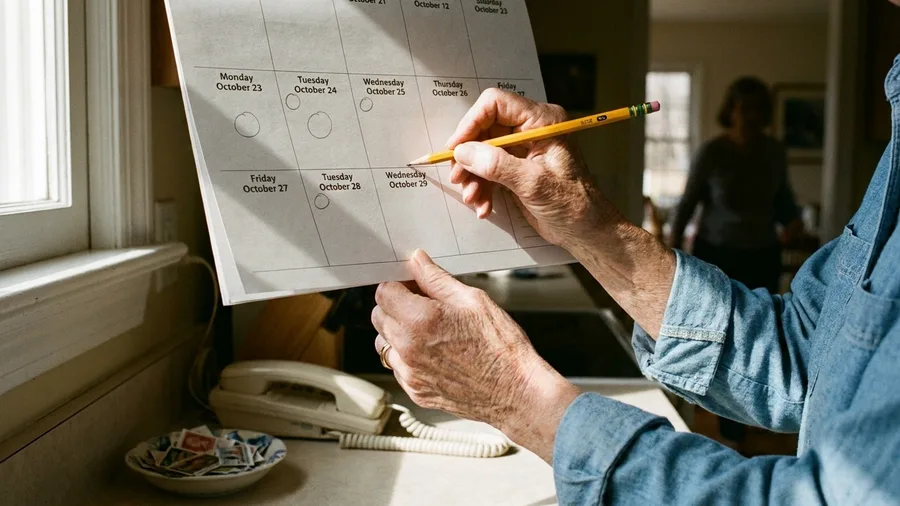
More socializing is not better socializing. I tried the opposite for years and the answer was fewer outings, not more.
My rule is three outings a week at most, counting church and the Tuesday coffee. Inside those three, I aim for two with people I already know and one with newer faces; the familiar ones keep me grounded and the new one keeps the method alive. When someone asks for a fourth, I say, I have my three this week, ask me again next week. It states the limit and keeps the door open. There is a money ceiling too: about 40 dollars a month for coffee, fees, and gas.
The week I let it run to six, it felt like a job. I then skipped everything for ten days. The cap is a ceiling, not a target.
💡 Tip: When you need to decline, say: 'I have my three this week—ask me again next week.' It names the limit and leaves the door open.
🌱 GROWING TIP
Your Next Move
Before you close this page, open your calendar and block two recurring hours this week. Write the activity name in the slot. One of them can be a maybe.
4. An opener about the thing in front of us, never the weather
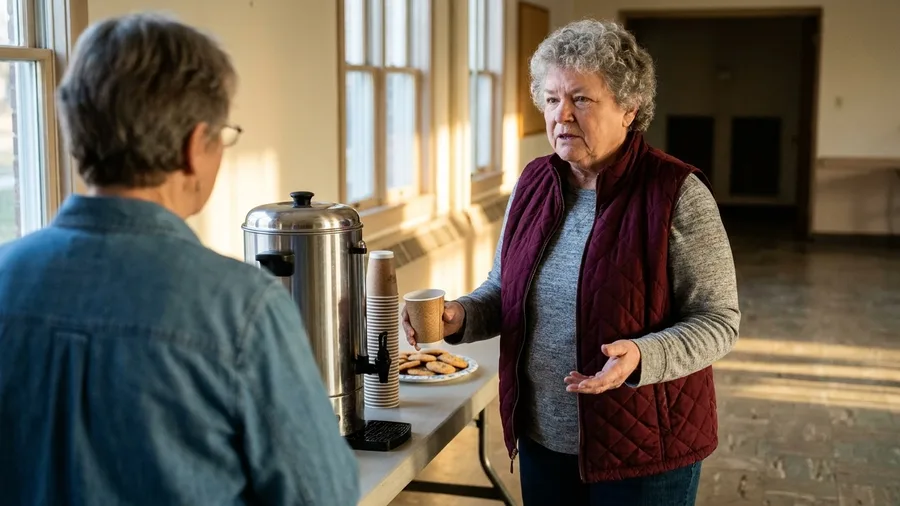
" That was my line at the Lutheran hall my first Tuesday, and it did more for me in ten seconds than a year of smiling at people across the room. A capped week gets you into the chair; it does not write the sentence. The sentence is the only part you have to say out loud, so it pays to have it ready before you sit down.
Notice what that opener does. It points at something both of us can see and taste, the coffee in two cups on a folding table, so the stranger has an answer that costs nothing to give. "How are you" and "some weather we're having" are not questions at all; they are requests for a report, and a report is one word. Fine, thanks. Sure is. Then the two of you sit there with your instant coffee going cold.
Two other lines worked, both because the thing was already in front of us. At my first choir rehearsal, a woman had sheet music spread across two chairs, and I asked, "What piece is that?" Ten minutes later I knew her sister had sung it at her wedding. At the sign-in table, a man had written his name on a tag in a careful hand, and I said, "Did you write that yourself?" He'd done wedding invitations for thirty years.
When a line lands flat, it is not a verdict on you. I asked a woman about her garden once and got "It's fine" and a look toward the door, and I let it go and moved on to the next face. A short answer is information. It tells you this person, on this morning, did not want to talk.
So the script is short: say one true thing about the coffee, the music, or the name tag, and let the other person decide whether to pick it up. If they do, ask one more thing. If they don't, no harm, and you try the same line on the next person, who may have been waiting all morning for someone to say anything at all.
5. A second question about what they love, not what they did
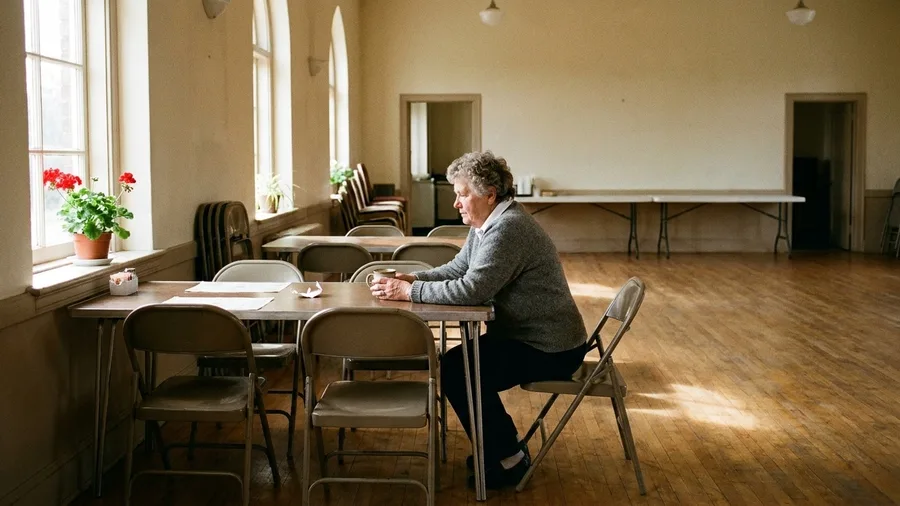
You ask what got them into it, then you wait, and the waiting is doing the work. Someone mentions their Saturday mornings at the greenhouse and stops, half expecting you to fill the gap. Don't. Let three seconds pass. The rest of the sentence – which tomatoes, how long, whether the deer got them – is usually where the actual person lives.
Titles close rooms. When a man tells me he taught history for thirty-one years, the talk is over; there is nothing to pick up. When he tells me he spends Saturday mornings at the greenhouse arguing with his brother-in-law about heirloom tomatoes, I have something to hold. Same office, two different doors, and only one of them opens.
Next time we meet, I bring back the exact thing they lit up about – the Brandywine versus the Cherokee Purple, the granddaughter's Tuesday game, the second alto line in the anthem. Not to prove I was listening, but because a kept detail is a small piece of evidence that they were worth keeping. It costs me one sentence and buys a longer conversation every time.
Then there is the flat answer. Three words, eyes toward the exit, and the body already turning. That is not a puzzle to solve or a wall to press against. I let it go, say something easy about the coffee, and leave the door where they found it. Some people come around on the fourth meeting; some don't. Either way, chasing turns a maybe into a no.
6. A thirty-minute ceiling on the first phone call
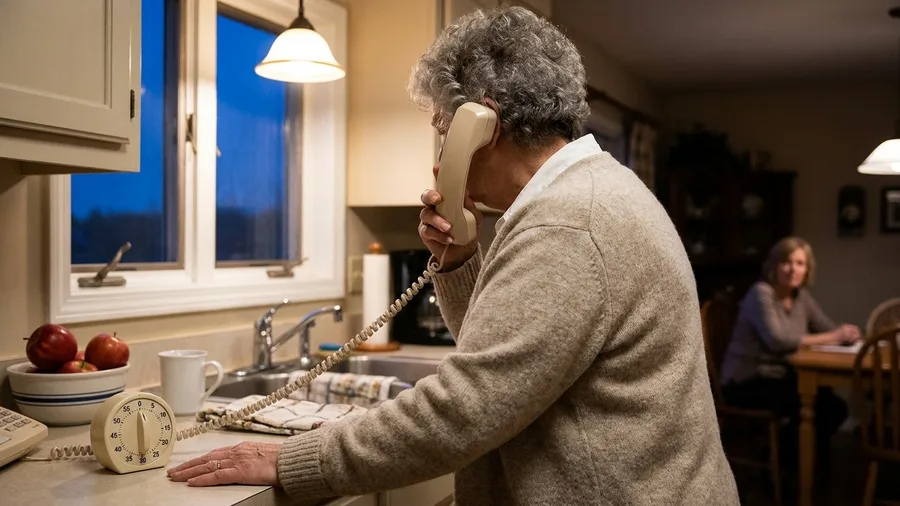
First phone calls get a thirty-minute ceiling, and the line that ends them is "I've got to run at half past." A good second conversation can leave you wanting more, and the wanting is what turns a fair acquaintance into a three-hour call that eats an afternoon and leaves you both tired before the friendship has a chance to settle. The first call is for arranging a meeting, a day, a time, a place, not for having the whole conversation.
The misread is this: you think ending a call early signals you are not interested or have somewhere better to be. What it actually signals is that you have a life and a limit, and the next call is not a burden. I end mine while it is still going well, not after the pauses and the polite winding down. There is a little left on the table, and that is what makes the next call easy to pick up.
So a few plain rules: no calls after 4 p.m., no long catching-up on a first one, and let the phone be a doorway, not the room. The point is not to ration affection. It is to keep the next hello cheap, for both of you.
💡 Tip: Set a kitchen timer for 28 minutes before you dial. When it rings, you have two minutes to wrap up.
💡 PRO TIP
The Exit Line Box
Write three exit lines on an index card and keep it by the phone: "I've got to run at half past," "I'll let you go," and "Let's pick a day next week." Having them ready means you never end a call by trailing off.
7. The three-visit test before anyone gets called a friend

My answer is three, and they have to fall on three separate days. One good hour proves you can both be pleasant in the same room. It does not prove anybody will be back.
At that third meeting I run one quiet check. I look for something I handed over at the first. The name of my late husband, the piece the choir was learning, the Tuesday I said I had a doctor's appointment. If it comes back to me without prompting, I put a mark on the card that night. If it does not come back at all, I leave the card where it sits and wait to see what happens the next time.
Two coffees and a concert with a woman from the pool, and then nothing on the calendar. That was not a rejection of either of us. It was two people who did not reach three. I never called to ask why and never made a speech about it. There is no scene to make – the match simply did not hold.
The word itself comes much later. I have said "my friend June" out loud to a third person, and June and I had known each other close to a year before I did. Scoring three visits earns a name a card, not a title. The test is really a way of slowing myself down at the front end, where I have mistaken a warm hour for a friendship more than once.
8. One paper card per name, with a detail and a date
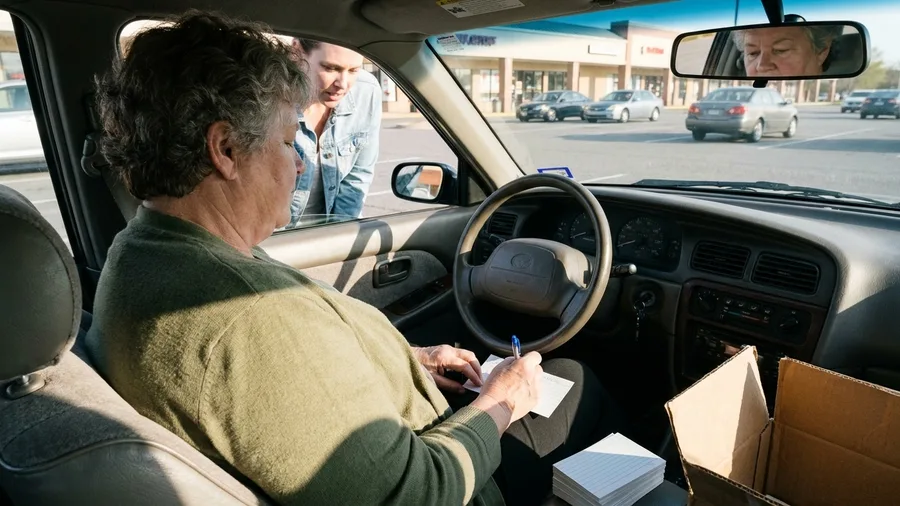
The real cost is not the two coffees – it is the name you lose in the parking lot. I have stood by my car after a good hour, liking someone, and by Thursday I could not bring back the thing she had been so pleased about. That is the leak. Feeling warm is no help if the detail slides away.
So before the engine turns over, I sit with a 3×5 card for two minutes. Who they are, which room we met in, the one thing they told me that mattered, the date I last spoke to them. Four lines, written at the wheel while the lot is still emptying. Two minutes at the car undoes the leak.
About 45 of those cards live in a box now, filed three ways: this month, next month, and names I have let go quiet. The phone list is where names go to vanish – swiped away, never opened. Paper sits in the drawer where my hand already reaches.
💡 Tip: File the card in 'next month' the day you meet someone. It gives you a built-in reason to call before the trail goes cold.
Who Gets a Call This Week
- ✅ This month — Call within the week—they are the ones keeping the friendship warm.
- 🟡 Next month — New names or ones you have not called yet—worth a first or second call.
- ⛔ Dormant — No answer after three tries or a clear 'no thanks'—let them rest without guilt.
9. The Sunday twenty-minute review that decides who I call
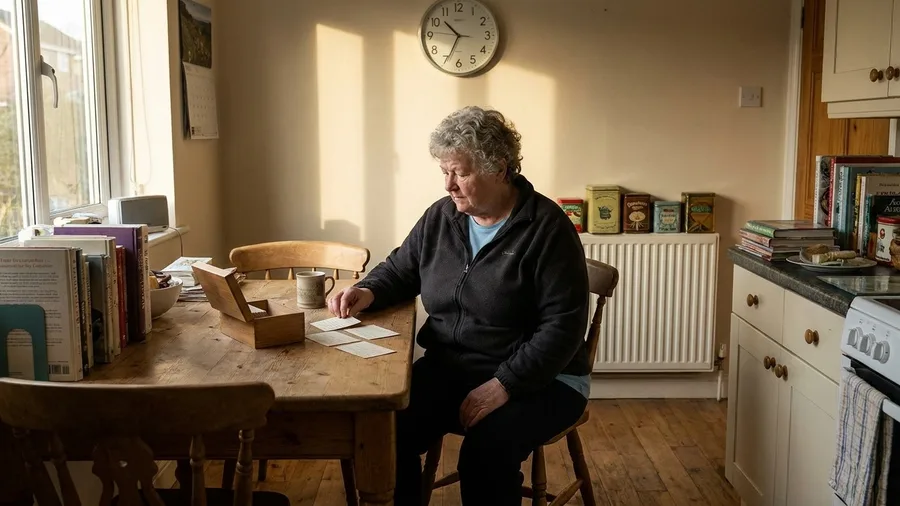
The box only keeps names. It never dials one, and a name left in the box will slide out of your week without your noticing. The review is what turns a paper drawer into three calls.
Here is what makes it an exception to my own rule, and worth saying plainly. Some weeks the answering machine does the deciding for you. A number that has gone wrong, a friend in the middle of a move, a card that is already marked for a birthday on Wednesday. On those weeks, skip the twelve minutes at the table and make the one call that is already overdue. The review is a floor, not a quota.
What does not bend is the honesty. If the coffee is cold and the phone never left its cradle, the Sunday review did not happen, whatever I told myself. Mine is twenty minutes on the clock, the box out, and three names pulled: one old friend, one I have met recently, one I have let go quiet.
Then the real deadline. Every call lands before Thursday, because after that the week fills and the names go back in the box. When I hang up I write the date on the back and a single new detail for next time – the granddaughter's game Saturday, the seed order, the next concert. It is a small bookkeeping job, but it is the difference between a drawer of names and a Tuesday that has somebody in it.
10. Arriving as a helper rather than as a guest
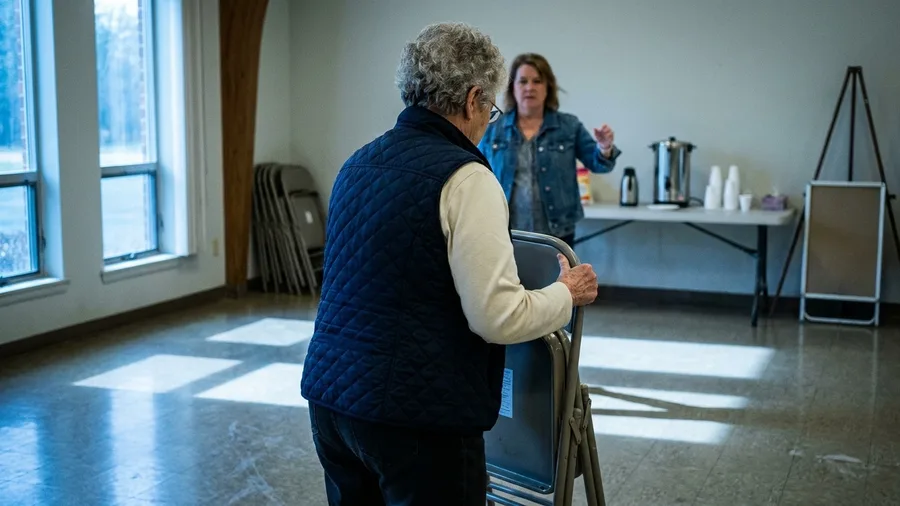
The advice is to walk up and introduce yourself, and it fails most people over seventy because it asks charm to do a job a folding chair could do better.
A phone call from the card box will put me back in a room where I am still the new face, and the way in is not a speech. It is a job. I have set up the coffee urns at the Lutheran hall, sat at the sign-in table with a pen and a stack of name tags, and stacked the folding chairs after choir let out. None of it is impressive. All of it puts me at the front of the room with something to do, and the group has to talk to the person holding the pen.
The rule I use is a two-month shape. In the first month I say yes to any job anyone offers, including the ones nobody wants, because the first month is for being seen and not for choosing. By the second month I know which jobs put me next to the people I actually like, and I ask for that one by name. By then I have stopped being the woman who appeared in January.
There is no free version of this. The helper arrives early and stays late, and the coffee setup takes twenty minutes before the first person walks in. Over a year it is a real cost, but it is paid in minutes rather than in nerve.
When nobody offers a job, I arrive ten minutes early and stand by the table where the cups are stacked. The early arrivers drift there because there is nothing else to do yet, and we need each other for those ten minutes. By the time the room fills, we have already talked.
⚠️ COMMON MISTAKE
Don't Wait to Be Invited
If you stand by the wall with your coat on, people will assume you are leaving. Take the job, sit at the table, or ask a question. Being visible is half the method.
11. Invitations with a fixed end time built in

" is the whole question, and it only works if it names something with edges.
A helper role puts you beside the same people, but an acquaintance becomes a plan only when you say where and when. Mine are the Thursday concert that lets out in 90 minutes, the garden tour starting at 2, coffee at 4, all short and each with a door at the far end. A dinner party is the opposite animal: three hours, no exit, both of us stealing glances at the clock. An invitation that traps two people isn't generous.
So I say it plainly: I'm heading to the concert Saturday morning, come along if you like. They're saying yes to Saturday, not to me for life, and that's why they say yes. I offer the ride without pressing, because I still drive but not after dark, and the hour has to fit the offer.
Six times in the past year I asked first. That number is the method; sitting back and hoping to be asked is not.
12. A daylight-only rule that removes the driving excuse
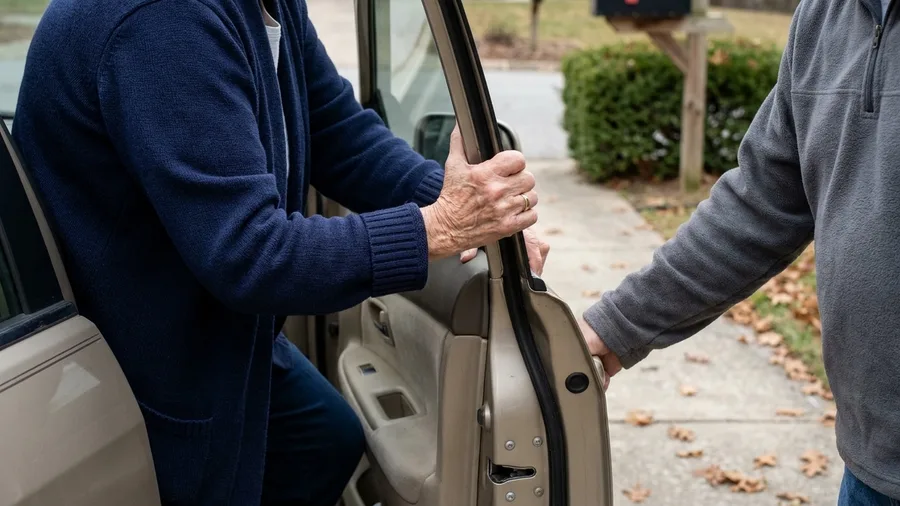
The ones I can name, I can plan around.
Nothing I put together begins after four in the afternoon, and that cutoff lives on the calendar, not in my head. An invitation I wrote for Saturday morning still fails if the plan runs past dark, so the hour of it does the work. I wear the hearing aid Tuesday and say so out loud; the group stops guessing whether I caught the joke, and I stop pretending.
The exception is one evening event a month with the neighbor at the wheel, named in advance so nobody improvises at the last minute. That is the whole of it.
What I gave up was the evening meetings and the guilt hanging around them. Now when I say I don't drive after dark, it's a schedule, not a confession, and the other person has a plain answer instead of a mystery.
13. Yes to the second invitation, however stiff the first
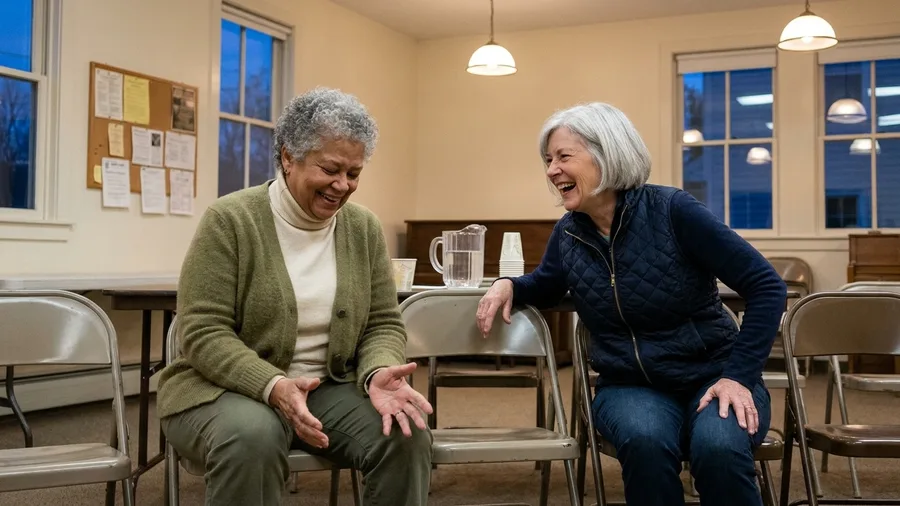
The stiff first hour is the thing that ends most new friendships before they start, and it is almost never a verdict on the person. I have sat through a dull Wednesday in bad chairs where nobody said anything, and I have had the second meeting in that same group turn into the friendship. The first hour is a sample of the room on one day, not the whole room.
The second meeting is usually a different configuration anyway. Different chairs, a different table, a couple of faces who were not there the first time, and often a different piece of the meeting itself.
So the rule I keep is a standing yes: always accept the second invitation, decide after the third. No weighing, no mood check. I say yes on the spot, and I mean it.
The words are short. "I'd like that, thank you. What time?" Or if I am the one asking: "They're doing the garden tour again Saturday at two. Would you like to come with me?" That is the whole script; the rest is showing up.
If it is still nothing after three meetings, let it go without a scene. No announcement, no apology, no explanation at the door. Just no fourth, and a friendly wave if we pass in the hall.
I counted the past year to make sure I was not fooling myself. Eleven second invitations came my way and I accepted all eleven; six I asked myself. The rule is counted, not felt, which is exactly why it works on a day when the first hour was stiff and I would rather have stayed home.
💡 Tip: Keep a note of the second-invitation date on the card. If you decline, you owe yourself a reason you would say out loud.
The Second Invitation, Decided
Say Yes When…
- The second meeting falls on a different day than the first
- The first hour was stiff and you still have a free slot this week
- You can be home by 4 p.m. without hurrying
- The ask came from a face you have now seen twice
It's Fine to Decline When…
- Saying yes would make it four outings this week
- You would be driving home alone after dark
- You have already asked twice and heard nothing back
- Three meetings on three days have passed with no pull to return
14. An exit line that makes the next hello easy
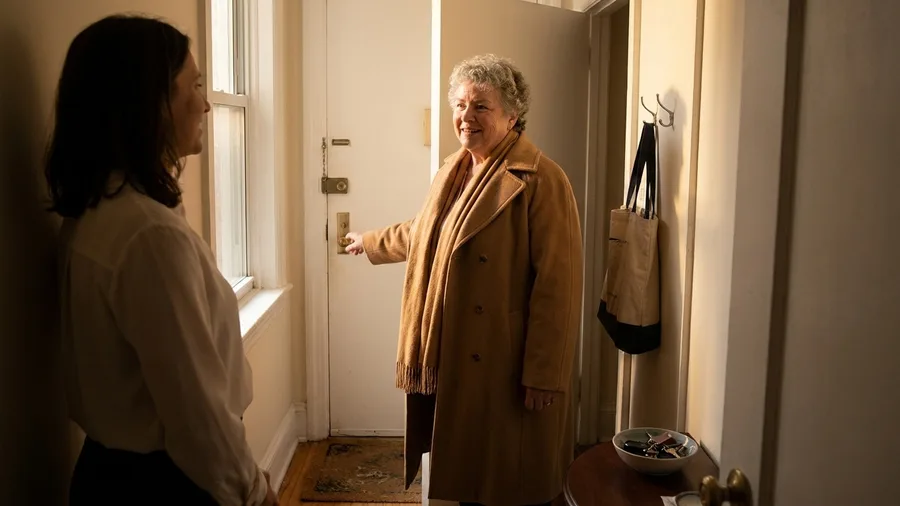
Eleven times last year I was invited somewhere a second time, and eleven times I said yes, including to rooms I had already written off.
One of them had folding chairs that wrenched my back, a woman who talked at the ceiling, and nobody at my end of the table. I went back anyway, and at the second meeting they had pulled the tables into a horseshoe, and June sat down beside me.
Say it as one sentence. I've got to catch the bus, I'll be here next Tuesday. Name the next time out loud, skip the apology, skip the long explanation.
I've heard the other exit, too, the one where someone slips out the side door without a word, then spends Thursday wondering how to walk back in.
Frequently Asked Questions
What if I don't drive?
Pick activities within walking distance or on the town's senior van route. Call the senior center and ask what transport runs on which days. The daylight rule makes this easier because most van services stop after dark anyway.
How do I start a conversation when I'm the new person?
Use the room. Ask about the coffee, the sheet music, or the name tag. If you can, take a helper job—people will talk to you first. One question about what they love, then silence, does more than a whole speech about yourself.
What if someone doesn't call me back?
That is information, not a verdict on you. Move the card to dormant and put your attention on the next name. The method assumes most contacts will not become friends; three visits is the test, and a missed call is not three visits.
Do I need to host people in my home?
No. Every invitation on my list has a fixed end time and a public place—the concert, the garden tour, coffee at 4. A dinner party traps both people for three hours. Short and public is kinder and easier to repeat.
How much does this cost?
About $40 a month for coffee, class fees, and gas. My yearly new activity has never cost more than $100; the choir is $45 a year. The point is to spend a little on the room, not on the person.
Start With Two Slots and One Card
So let me say the verdict plainly: the method is built by the calendar, not by the filing. The card box, the Sunday review, the exit line, the daylight rule – those are supports you add once the slots exist. Skip the calendar and the rest is stationery.
This month, do one thing. Choose a single weekly activity where the same faces keep showing up, and one standing slot you will keep whatever your mood. Write both down as appointments. Start the card box only after the first three names arrive.
I think about the woman I was at 74, in that ranch house, watching friendships quietly end after retirement, move, and die, sure the circle only shrank. Now I have Tuesday coffee and Thursday choir, and at 80 I have added at least one new friend every year since 70. The next one is probably already sitting in a room I can get to before dark. Keep the slot, and the name will come.
Put Two Slots on Your Calendar
Pick one weekly activity and one standing slot. Block them now, before the week fills up with other things.

