
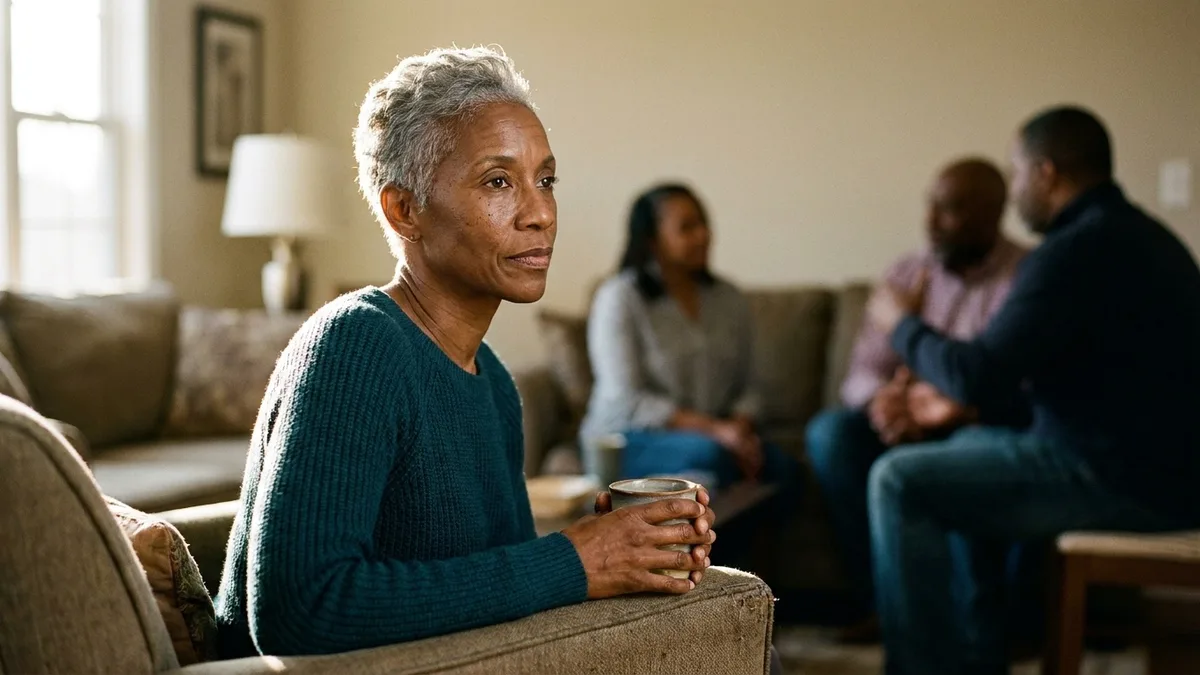
Getting this wrong costs you about $600 and a year of Saturdays, which is the cheapest version of the mistake and still the one I would make again.
I was 61, born in Dayton in 1962, relinquished at six weeks and adopted at four months, both my parents now dead, when I ordered a $99 DNA kit. A first-cousin match came back. A volunteer search angel turned it into a name and an address in nine weeks. Then the email arrived and within hours I was crashing, checking the inbox twenty times a day, unable to sleep.
Finding, contacting and meeting were never one decision. The two-page letter I sent through the agency in March, and the eleven days I waited for a reply, carried more fear than the DNA result ever did.
By the end you will know whether you can send a short letter through an intermediary. And you will know which hope should make you wait: that this gives you a replacement parent, or repairs a past.
Quick Tips Before You Start
Write, don't ring
A short letter through an intermediary lets them say no without a door closing in their face.
Check state rules
Go to your state vital records office's current published rules for the original birth record — not what a forum remembers.
Plan the silence
Decide in advance how you'll handle 11 days of no reply without sending four follow-ups.
Bring a photo
Carry one picture of yourself at the age you were relinquished — it does more than any explanation.
Expect the crash
The relief may last an afternoon. Plan something gentle for the day after the first meeting.
The Search
The search is the part with forms, fees, and a stranger on the other end of an email. It has a beginning, a middle, and an end, and it can make you feel like you're doing something.
What it doesn't tell you is that finding a name is not the same as being ready to use it, and that the waiting is where the real work starts.
1. Relief Lasted One Afternoon

"Once I had a name, I thought I'd finally be able to breathe." That is the sentence I hear most from people who have just found a match, and it is the sentence I said myself, standing in my kitchen with the phone still in my hand and something already going wrong in my chest.
I was 61 and had spent $99 on a spit kit. The match came back a first cousin. A volunteer who works these cold trails for free took that cousin and handed me a name and an address nine weeks later, which sounds tidy until you remember I was born in Dayton in 1962, given up at six weeks, and placed in another family at four months. Sixty-one years of no name, and then a stranger's email at nine on a Tuesday morning.
The research here is consistent and unflattering: adoptees who search tend to describe a spike of relief that does not hold, because a name answers who and leaves untouched the decades you spent not knowing. Within hours of reading mine I was flat on the couch, and for days afterward I opened that inbox twenty times a day, as if she might already have written.
So I sat on the address for a week. Finding and reaching out are two separate acts, and an address is not a permission slip. In agencies that run their own reunion registries, a third party sets the tempo and you never hold this particular hour alone, which is a kindness I did not have. The identification problem was solved. Nothing else was, and the days after that email were the hardest of the year.
💡 Tip: If you get a name and address, wait a week before you use it. The finding is not the decision.
What to Send, What to Hold Back
- ✅ Include your birth date and adoptive facts
- ✅ Offer to send a photo if they want one
- ⚠️ Mention the DNA match, but don't attach the whole report
- 🛑 Do not use the word 'mother' in the first letter
- 🛑 Do not ask for medical history yet
2. Guilt Toward My Adoptive Mother Came First

I had the loyalty question filed under people who had something to feel guilty about, which is a tidy way of not looking at your own. The crash that followed the name did not stay about the name. It moved, fast, to my mother, who had been dead since 2011 and had never heard me mention a DNA kit.
Here is the scene. A Tuesday evening, the laptop open on the kitchen table with the name on it, and in the drawer beneath it a folder of her papers I had not opened in years – her handwriting on the front, a grocery list on the back, the ordinary evidence of a woman who raised me. I sat there feeling like someone who had been caught. Nobody was in the room. The person I wanted to protect had been gone six years, and my father had followed in 2017. The first person I owed an explanation to was beyond hearing one.
That is the cost of a household where adoption was known and not discussed: no questions while she lived, no quarrel, no chance to tell her myself. I started at 61 because the silence had held for decades, and the bill for that silence came due before I had contacted anyone.
I did not tell her before she died, and I have stopped pretending that was entirely respect for her feelings.
The guilt arrived with the kit and the nine-week search, as if both had already betrayed her, and no call had been placed.
Suppose your family talked about it from the start – the search was normal, the questions were welcome. Then this is not the first thing you feel, and you should not expect it to be. Mine was not that family. The guilt answered no question worth asking and repaired nothing; what it showed me was that the search was tangled up with loyalty, long before any stranger was in it.
⚠️ COMMON MISTAKE
Sending a follow-up too soon
Eleven days felt like a month, but a second letter inside that window reads as pressure. Use the time to draft your reply to any answer — yes, no, or silence — so you're not composing in a panic.
3. The Real Fear Was Being Left Twice

The cost of this search is paid in silence, and it is charged to the person who is already tired of being left. Guilt toward a parent who has died has a way of lifting the lid on a plainer fear underneath: that the one who gave you up could do it a second time, by simply not answering.
My approach went out in an envelope, carried by the agency that handled the original placement, and it was two pages long. I put in the birth date, the adoption facts, the cousin match, and a plain request to meet if she wanted to. The word mother never appears in it. Neither do the decades, nor a request for medical history, and I am still not sure whether leaving those out was tact or cowardice.
Then eleven days of nothing. In that window I wrote a follow-up four times and deleted it four times, because the silence was doing the damage, not the woman at the other end of it. Using an intermediary is the whole trick: she could have declined without anyone standing on her porch. She didn't. Her reply said she had wondered about me, and named a diner outside Columbus, which promised a meeting and nothing past it. The quiet was over. The being left was not.
The First Approach — At a Glance
👥 Ages at the table
62, 84, 57, 54
⏱️ Length of that meeting
Three hours
💵 All in, door to door
$600 — kit and two trips
✉️ How the letter travelled
Through the agency, her out if she wanted it
📞 After the diner
Weekly calls with my younger half-sister
Skip the memory
For the original birth record I used the state vital records office's current rules, not anyone's recollection of them.
The First Meeting
The diner outside Columbus had vinyl booths and a menu with photographs. I ordered coffee and didn't drink it. My birth mother, 84, sat across from me. My half-sisters, 57 and 54, flanked her.
What happened in that three-hour window rearranged feelings I thought I already understood.
4. Joy and Grief Arrived in the Same Hour
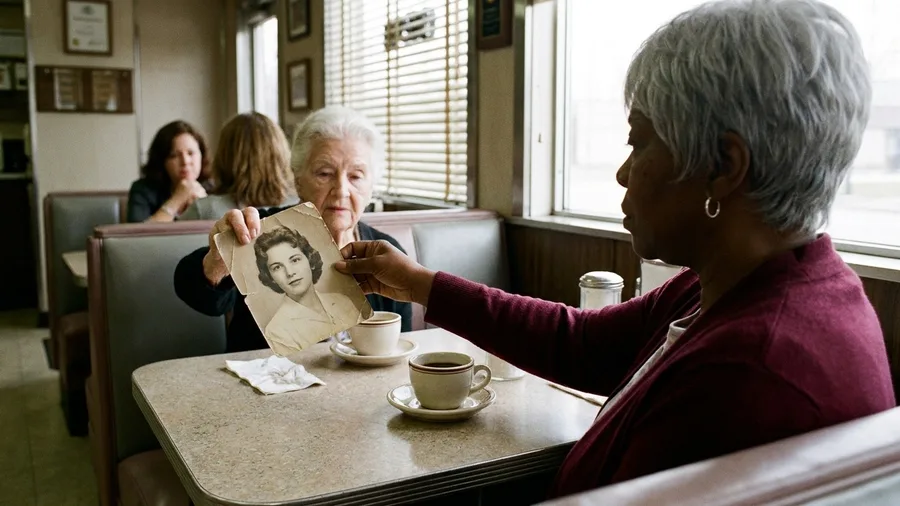
Her face was the whole answer and none of the repair. My birth mother, 84, met me at a diner outside Columbus in April for three hours, two half-sisters, 57 and 54, sitting on either side of her, the three of them having grown up together in a house I had never entered.
She slid a photograph across the table of herself at 22, the year she gave me up. Same eyes, same hands. That turned the missing years into a number: 62. A background fact became a countable loss, and I cried in a diner in front of strangers who were not strangers.
The tears did not mean it went wrong. Joy and grief simply have the same waiting room, and the meeting filled it in an hour. It answered the question of her face and repaired not one of the 62 years.
5. Love for Two New Sisters Was Lopsided

The advice says blood will do the work for you. It does not. My half-sisters, 57 and 54, spent sixty years in one house trading jokes I will never catch up to, and I loved them inside a week anyway.
They came around on a slower clock, and by October the younger one, 54, was calling every Sunday without being asked. That gap is not them holding back a bond. It is two women making room in lives that were already crowded.
In August I met a half-brother, 49, whose father died in 2009. He has his own pace. Family can be added late; it just goes at the speed of the people already living it.
💡 Tip: Don't read their slower pace as a verdict. They are deciding how much room you take in a full life.
6. I Became a Guest in Two Families

Yes, but not evenly, and not automatically. When the holidays came around I put Thanksgiving with the birth family and Christmas with my own children and grandchildren, and the calendar quietly turned belonging into scheduling.
A birthday party is the worst place to build any of this. At 62 I was the stranger in a room where everyone had known each other since they could walk. Lunch, one sister, one afternoon, did more in three hours than a crowded reunion did all evening.
On the other side, my mother died in 2011 and my father in 2017, so the family I came from is now my own children and grandchildren. The question got an answer about where I stand. It did not restore anything. Logistics carried it, not love by itself.
Build the Bond or Burn It Out
What worked
- One-to-one lunches, not big family gatherings
- Letting them set the pace of contact
- Asking about their childhood without comparing it to mine
- Keeping the weekly call with the younger sister
What set me back
- Turning up at a birthday party as a surprise
- Asking 'why didn't you keep me?' at the second meeting
- Expecting instant closeness because we share DNA
- Treating silence as rejection
What It Stirred, What It Settled
By autumn the practical questions had answers and the emotional ones had shifted shape. What arrived was not the tidy resolution I had pictured — it was anger, then something calmer.
The last two feelings were the ones I least expected and needed most.
7. Anger Came Months Later, and Not at Her

You are in a supermarket car park, four months after the diner, and you are furious at a filing cabinet. The meeting went well. The calls are friendly. And the anger shows up now, once the adrenaline has burnt off, pointed nowhere near the 84-year-old woman who showed you a photograph of herself at 22.
It lands on the agency that managed the relinquishment in 1962, the decade that made secrecy ordinary, the sealed file itself. Wait on the file only if you can read it in one sitting; otherwise write to the state records office that holds it, check the rules it publishes, and stop there. States differ, so their current page is your only reliable guide, never mine.
Something changes when you stop chasing the record. The anger goes quieter, and nothing comes back with it — no years, no reason, no apology from an institution that no longer thinks about you. It named what was done to you. It never named her.
Avoid These Mistakes
8. The Calm That Came Was Not Closure

One year on: a kit and two trips, about $600, weekly calls with the younger half-sister, a lunch with the half-brother every few weeks. Thanksgiving with the birth family, Christmas with my children and grandchildren. No dramatic ending.
am I hoping to be parented, or am I hoping to know? If the honest answer is parented — a stand-in for the mother who died in 2011 or the father who died in 2017 — wait. The meeting will not supply one. It will hand you a friendly 84-year-old stranger and then go quiet, and the absence will sit there sharper than before, not softer.
If the answer is know, go ahead, and keep your expectations on the smaller thing. The background hum that ran for six decades does stop. My childhood did not change, my parents are still gone, and nothing in a file or a diner could touch either.
The calm I felt a year in, I first read as closure, and it was not that. It was a question finally answered and set down, with everything around it still exactly where it stands.
Frequently Asked Questions
How long did it take from DNA kit to first meeting?
About five months. The kit matched a first cousin, the search angel found a name in nine weeks, the agency letter went in March, the reply came in 11 days, and the diner meeting was in April.
Should I call instead of writing a letter?
Write. A phone call puts someone on the spot and gives them no time to decide. A letter through an intermediary lets them say no without a door closing in their face.
What if they never reply?
Set a rule before you send: one follow-up after three weeks, then stop. No reply is an answer, and chasing it only makes the silence louder.
Does meeting birth family fix the missing years?
No. It answers the question of who and where, which is real and worth having. The missing years stay missing; the meeting makes the absence more exact, not smaller.
What did it cost?
About $600 total: the $99 DNA kit, the agency fee, and two trips. The weekly phone calls since cost nothing.
Who should think twice before starting?
Anyone hoping for a replacement parent, a repaired childhood, or a family that folds them in without effort. The meeting can't give those, and the gap will feel sharper afterward.
What I Would Tell You Before You Go
Meeting my birth mother at 62 answered a question that had been running in the background for six decades. It repaired nothing. If you can hold both of those facts without flinching, the meeting is worth having, and I would send that same short letter through the agency again.
The first step is a short letter through an intermediary, not a phone call and not a doorstep. An agency, a search angel, a third party can carry the approach and let the other person say no without a door closing in their face.
Anyone hoping for a replacement parent, a repaired childhood, or a family that absorbs the missing 62 years should think twice before starting. The meeting will make the absence more exact, not smaller. The $99 kit and the name in nine weeks started a year that cost about $600 and ended with weekly calls, a split holiday calendar, and no dramatic ending. The question went quiet, the past did not change, and that is the honest trade. Getting this wrong costs you about $600 and a year of Saturdays, which is the cheapest version of the mistake and still the one I would make again.
Before You Send the Letter
Read your state vital records office's current rules on original birth records, and write your one follow-up rule now. Then draft the letter.

