

The paperwork takes months. The grief takes years. That gap is where the surprises live.
The decree gets signed on a Tuesday, and by Thursday you are in a grocery aisle staring at a two-for-one on salmon with your eyes stinging, because the marriage is legally finished and the emotional ending has not even started its engine. The legal ledger closes on the day the judge signs. The other one keeps its own calendar, and it is not the same calendar.
What follows is not chaos. It is a sequence, and sequences can be learned. Private grief, identity drift, family loyalty tests, money fear, loneliness at nine in the evening – each arrives on its own clock, which is why the next chapter is not a reinvention contest. It is a map of predictable aftershocks, plus one move repeated until it holds.
By the end you should know which single thing to start this week – protect your sleep, gather one money document, or call the friend you have been meaning to call – and repeat that before you add anything else.
Quick Tips Before You Start
Name the aftershock
When a wave hits, say 'this is grief' or 'this is money fear'—naming it shrinks it.
Schedule contact early
Book calls or walks before 5 p.m.; loneliness peaks after dinner.
Gather one document
Pick a single financial paper this week—just one—and put it in a folder.
Decide your public line
Have a one-sentence answer ready for nosy questions; you owe no one the full story.
Protect sleep first
Seven hours beats any productivity hack; everything else is harder when you're tired.
The emotional aftershock
The first wave is internal. The decree is final, but the marriage—and the future you imagined—is still ending inside you.
This theme covers what happens when the legal ending outpaces the emotional one, and how to route that gap without mistaking it for failure.
1. The first year is grief, not paperwork
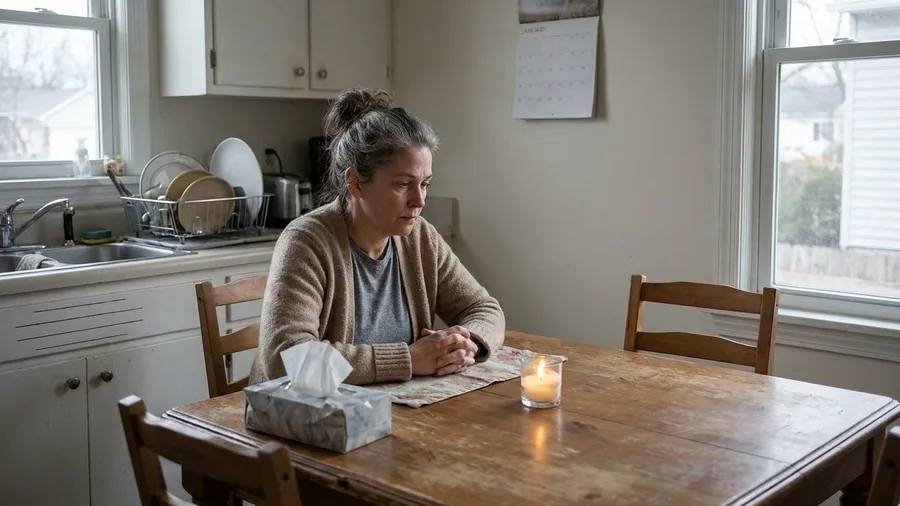
Count the weeks. Two, six, fourteen past the signing, and the sadness is not lifting on the schedule the paperwork implied. Here is a ten-second check: when you picture the marriage as it actually was, does something in your chest still pull, even though you wanted out? If yes, that pull has a name. Grief for a marriage that ended without a clean ceremony, for the future you had sketched out, for the ordinary identity of being someone's wife; none of it closes because a judge tapped a gavel.
Relief and regret can share a single afternoon. You leave the courthouse steadier than you have felt in months, then stand in a grocery aisle at the sight of a meal for two and have to press your palm against the cart. That is not relapse. That is the two clocks running.
The one answer that should change your week: if you cannot get out of bed several mornings running, if sleep has broken for weeks, or if thoughts of self-harm show up, book a therapist or a doctor rather than enduring another month alone.
💡 Tip: Keep a simple note on your phone titled 'Waves'—when a wave hits, jot the trigger. Patterns emerge fast and make the grief feel less random.
⚠️ COMMON MISTAKE
Don't mistake relief for readiness
Feeling relief at the signing table does not mean the grief is skipped. It often arrives weeks later, triggered by a grocery aisle or a holiday card. Let it come.
2. Rebuild your identity before you start dating

"I just want someone to have dinner with." It sounds modest, and it usually is what the woman means. The cost shows up months later, when she is five dates into a man she would not have chosen in a calm year, biting her tongue through a small rudeness because the alternative was another silent evening.
That is what dating as escape quietly buys and spends: company now, old patterns later. The signs are not dramatic. You scroll without caring who, you let one boundary slide to keep the table full, you pick by available rather than by interesting, and the married self is still the one making the call.
The steadier move is to revive one thing that existed before the marriage did. A Wednesday pottery class, the monthly lunch with a friend you have known since your twenties, a Sunday walking group. Those anchors let a new relationship be a choice rather than a rescue, so that a later "no overnight stays yet" needs no approval, only your own.
The First Year by the Numbers
What the aftershock actually looks like
3. Anger is information, not a personality flaw

The common advice is to let it go. Breathe, forgive, move on, be the bigger person. That advice is fine for a parking-space argument and useless for the anger that shows up after a long marriage ends, because it asks you to drop information you still need.
Anger usually marks something specific: a boundary that was crossed, a need that went unnamed for years. You thought you were deciding the house sale together until you learned it had been listed for three weeks, and the fury that followed was accurate. It could be said as a sentence: "When the sale went ahead without a word to me, it felt like being erased. A phone call before the deadline would have been the minimum." That sentence sits much better than a hundred replays of the old fight at 2 a.m.
Protective anger produces a limit, a request, or an exit. Stuck anger rehearses the argument without moving, and keeps your body braced as if the fight is still live. Write the unsent letter if it helps, then reduce it to one line you actually send: "No calls after 10 p.m. about the house; put it in writing."
Where money terms, threats, safety fears, or a clear power imbalance are involved, that line goes through a lawyer or mediator instead of a direct message. The anger still did its job; it just does not carry the conversation alone.
💡 Tip: When you feel the surge, ask: 'What boundary is this pointing to?' Then decide on one action—a request, a limit, or an exit. If none, it's rumination.
Telling Them Apart In The Moment
Protective anger
- 70% of the charge is gone within about a week of the ask
- You can say it in one line without raising your voice
- You sleep the night after you send it
- Any dollar amount, threat, or safety fear goes to a lawyer first
Stuck anger
- Ten minutes of replays a day for a month is the switch point
- Sour stomach, tight jaw, the 3 a.m. wake-up that will not quit
- Telling the story again to a friend resets the clock
- Past six months with no action, book one session with a therapist
Family, friends and privacy
The aftershock moves outward. Adult children, couple friends, and casual acquaintances all have their own reactions—and their own grief—to manage.
This theme covers how to protect your energy and your dignity while giving the people around you room to adjust.
4. Your adult children need time, not details

The cost lands first: a daughter who learns the sale price of the house from her father, at a barbecue, in front of cousins. She was not told because she was not meant to carry it. She found out anyway, and now she carries it sideways, as a thing done behind her back.
Adult children are not neutral parties in a divorce, whatever their age. Researchers who study adult children of divorce describe the same bind repeatedly: the child loves both parents, wants neither to lose, and has no script for the position. Drafting that child as a confidant, a messenger or a go-between for money hands her a job she never applied for, and she pays for the parent's support in guilt that outlasts the settlement.
So the disclosure stays small and clear. Something like: the divorce is final; what is happening between the parents is being handled by the parents; questions will be answered where the answers exist. That last clause matters, because it is honest, and it stops the child believing she is being managed.
Whatever comes back is information, not a verdict. A son may go quiet for a month. A daughter may say, plainly, that she is angry about the timing, and mean it, and still call in six weeks. The adult material – the fear, the fury, the money worry – goes to a therapist, a sister, a friend or a group where it can be held properly. A later invitation can stay open without pressure: this is a lot to absorb, and a real talk is welcome whenever it suits.
💡 PRO TIP
The one-month rule
Give adult children at least a month before you expect a real conversation about the divorce. Their silence is processing, not rejection.
5. Friendships split and it is not your fault

Because a couple was invited to dinner, the reader arrived alone, and the host spent the first ten minutes talking too fast about the weather. The friendship did not end in that hallway. It began to thin there, and the thinning is usually awkwardness rather than judgment.
Watch it happen at a table. Four people, one empty chair where a husband used to sit, and a hostess who cannot decide whether to mention the divorce, so she mentions the garden, then the garden again. The readers who fare best here are the ones who notice the awkwardness and name it lightly rather than chasing reassurance from people who have none to give. The same restraint that keeps children out of the marital inventory applies to friends, and the temptation is sharper, because a social circle that splits can make a person explain too much.
The way back in is duller than it feels. One message, about something other than the marriage: a coffee, an hour, a day named. If it is awkward, say so and keep it simple – most hosts exhale at that. Not every tie fades. One friend may admit she had been waiting for permission to say what she actually thought, and the friendship comes out more honest than it was before.
The other move is sideways rather than backward. A walking group, a choir, a book club, a Saturday shift at the food bank: these build a social slot where the conversation topic is the walk or the book, not the divorce, and where nobody is quietly taking sides.
The drift still stings. It costs something to greet an old friend across a supermarket and get a wave instead of a stop, and naming that cost is fair. Awkwardness and divided loyalty explain the silence; they do not erase it.
What the field keeps finding is unglamorous: friendship survives on repeated, low-stakes contact rather than one big reckoning. Two hours, once a fortnight, with someone who can hold the awkwardness, does more for a rebuilding social life than a long conversation that resolves everything on paper.
Money Plan at a Glance
📄 Documents
6 types
⏱️ Time to gather
2–3 hours
💼 Professional
Fee-only fiduciary
📅 Review
Monthly
Quick win
Listing essentials vs. income takes 20 minutes and immediately reduces panic.
6. You do not owe everyone the whole story

It is 11:40 on a Tuesday, and the staff kitchen holds three colleagues and a kettle. Someone asks how the move went, and the whole account comes out – the lawyer, the settlement figure, the night the marriage ended in a parked car eight years ago. The kettle clicks. Nobody says anything useful. By Thursday it is a story the reader does not control, and it follows her into the 2 p.m. meeting where she needs to sound like the person who runs things.
The obvious advice – be open, be honest, let people support you – is wrong here, or at least half wrong. Recovery after a divorce is partly a question of story management, and the story is a resource, not a tax owed to everyone who asks. Decide the size of the story before the question arrives, not in the kitchen.
Three sizes cover most situations. A public line, short and finished, for acquaintances and colleagues: the marriage ended, things are steady, moving on. A friend version, a sentence or two about it being hard and the marriage having been over long before the paperwork. And a full account, with dates and money and fear, reserved for the few people who can hold it without turning it into gossip or unsolicited advice.
For the nosy question, the answer can be gracious and closed at once: the details are not for sharing here, thanks for asking, the focus is on the next step. People who cannot hold the account – who will pass it on, or use it to tell the reader what to do – get the headline. The rest get the short version until they earn the long one.
💡 Tip: Before any social event, decide your line in advance: headline, short version, or full story. Rehearse it once in the car.
Money and loneliness
The aftershock turns practical. Financial fear and evening loneliness are the two pressures that hit daily life hardest.
This theme covers how to steady both with small, repeatable moves rather than waiting for a windfall or a rescue.
7. Money panic needs a plan, not a fantasy

Financial fear is a physical sensation before it is a math problem. The number in the account does not change between Tuesday and Thursday, but the dread at 3 a.m. insists you are one bill away from ruin.
A real fear deserves a real plan, not a rescue. The rescue shows up as the sudden windfall that never arrives, the investment a friend swears by, the new partner who promises to take care of everything. The other failure is a freeze: the unopened statements, the shoebox of mail that gets pushed to next week and then to next month because opening it means feeling the worst all at once. Neither the rescue nor the freeze settles the fear, because neither puts a fact on paper. Gathering documents does. Statements come first: bank, brokerage, the loan balances, the retirement accounts, the insurance policies, the property records, the papers on any business you own part of. Each is one page you can name.
The first move this week is deliberately small. On one sheet, list the monthly essentials down the left side: housing, food, utilities, medication, transport. On the right, the monthly income. Let the gap or the sufficiency sit there in plain numbers, in your handwriting, where you can see it.
A budget is a budget. It is not legal, tax or investment advice, and those questions belong to a fee-only fiduciary or an attorney, with tax rules checked against the official source rather than anyone's memory of it.
When assets are simple, the one-page plan may be enough, and that is a real answer to a real fear. When there is a business, a contested settlement, or holdings too tangled to read at a glance, the spreadsheet stops there and a professional takes over. Either way, the point is the same: fear shrinks when it meets a document. The line to hand yourself is not a forecast, it is an instruction. "I do not have to know the whole future today. I have to know this month's number, and I have it here."
That sentence does more than most spreadsheets, because it turns a feeling with no edges into a task with an end.
💡 Tip: Use a free budgeting app like Mint or a simple spreadsheet—the goal is one page, not perfection.
The Money Steadying Sequence
8. Loneliness peaks at night; plan contact earlier
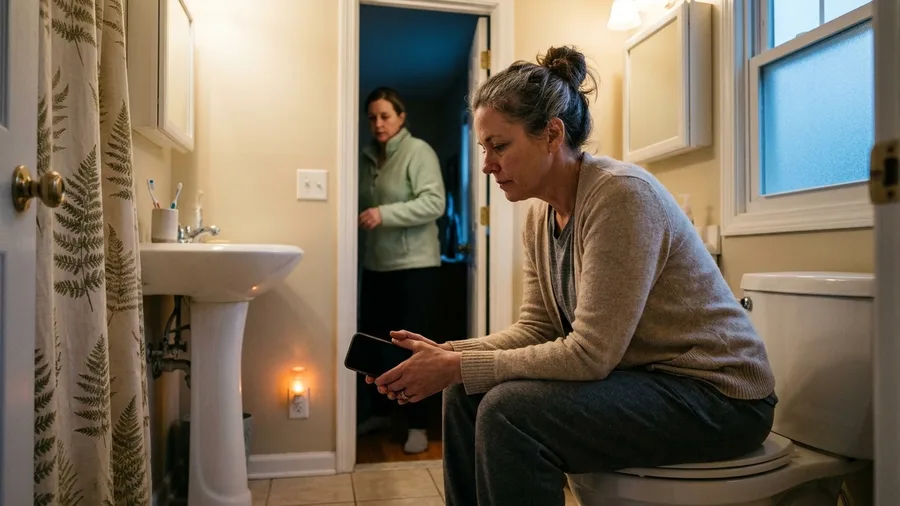
For a long time the writer treated the 9 p.m. low as a personal failing, a sign of not being grateful enough or not being busy enough. It is not a failing. It is a schedule.
Evenings, weekends, mealtimes and the quiet stretch after the dishes are the reliable low points, and the empty side of the bed has its own weight. Loneliness that arrives on a predictable clock can be worked with, because it can be forecast.
The plan goes earlier in the day, not later. Book the walk, the call to a friend, the class in daylight hours, before the low point has a chance to set up. A woman who knows her worst hour is 9 p.m. puts a call to a friend at 6. Then she builds a landing routine for the night itself: tea, a shower, the phone off and charging in another room. Connection does the work in daylight so comfort can take over after dark.
There is a difference worth naming. Chosen solitude restores, and it ends when you decide it does. The other kind feels like a body ache, a wave of panic, a night with no visible edge, and no amount of willpower shortens it. When low mood, panic or hopelessness keeps returning, or sleep and appetite and daily functioning start to collapse, that is the point to call a doctor or therapist, and everyone deserves more than endurance as an answer.
The rebuild
The final theme is the slow work of putting one foot in front of the other—not reinventing yourself in a dramatic stroke, but stacking small, repeatable moves.
This is where the aftershocks become manageable, and where you start to feel like yourself again.
9. Rebuilding is slower and smaller than you think

Sooner than the calendar you have drawn, and smaller than the reinvention you have pictured.
Another woman's faster move across the country or quicker remarriage is not a timetable for you. Assets, children, health, housing and the people you can call all differ, and the comparison tells you nothing about your own rebuild. The mistake is reading the sluggishness as a verdict on you. What it actually signals is that the rebuild is happening in units too small to notice yet.
Count them. Alongside the destabilizing moves, hold four: a night of sleep worth the name, some movement, one contact with another person, one practical task like a document filed or a call made. Track them and the question shifts from whether you feel like yourself to whether the week held its small, unglamorous units.
Start with one – protect sleep, gather one money document, call a trusted friend – and repeat it before you add the next. Slow is the method, not the failure.
Avoid These Rebuild Mistakes
Frequently Asked Questions
How long does it take to feel normal after divorce?
There is no fixed timeline, but most women need at least a year before the grief stops dominating. The first year is often the hardest because the legal ending outpaces the emotional one.
Should I start dating right away?
Only if you can tolerate being alone and state a boundary without needing approval. Dating as escape often repeats old patterns. Rebuild one anchor outside the marriage first.
How do I tell my adult children without burdening them?
Use a script: 'The details are not yours to fix or carry; support is being handled elsewhere.' Then lean on friends, a therapist, or a support group for the adult material.
Will I be okay financially?
Gather documents, list monthly essentials beside income, and see a fee-only fiduciary if assets are complex. A simple budget may be enough for simple assets.
Why is the loneliness worse at night?
Evenings, weekends, and quiet hours are predictable triggers. Schedule contact earlier in the day and set a bedtime routine to ease the low point.
The one move that steadies the rest
Recovery after 50 is not a reinvention contest. It is a sequence of ordinary stabilizers, repeated until they hold, and the repetition is the whole method.
The decree was never going to close the emotional ledger, so stop waiting to feel finished before you begin. Pick one thing this week. Protect your sleep. Gather one money document. Call the trusted friend. Then do that same thing again next week, before you add the next.
The paperwork still takes months and the grief still takes years, and nothing above shortens either one. But the Tuesday you sign and the Thursday you cry are not the same day, and they were never supposed to be. Slow is not the failure here. Slow is the method.
Start with one small move today
Pick one action from this article—sleep, a document, or a call—and do it before the week ends. Then repeat it.