

Everyone assumes this takes a lifetime to untangle. It takes an afternoon to see, and about a week to test.
You soften the news before a family dinner. You apologize for a delay that was not yours. You hear your partner's tone shift and start scanning. It feels like personality, just the way you are wired.
It is not personality. It is a set of peacekeeping rules built in a house where the ground could shift overnight, and nobody ever reviewed them at fifty. They kept running because they worked once.
Here is the useful part. Those rules can be named. Ten of them, each with a price tag attached. Three are genuine strengths worth keeping, alertness, competence, loyalty. The rest spend credibility, intimacy, or truth, and those can be retired on purpose rather than by accident.
That leaves you with a decision rather than a diagnosis. By the end you will know which habits to keep and which to put down, and you will have one first move to make this week, along with the signs in the first month that it is working.
Quick Tips Before You Start
Name the reflex
You cannot change a habit you have not labelled out loud at least once.
Ask, don't scan
One direct question beats an hour of reading faces and texts.
Pause the apology
Before you say sorry, ask: has anyone actually accused me of anything?
Keep a two-column list
Write down which habits still serve you and which just cost you.
Request one small thing
Practice asking for a lift, a shift covered, a meal brought. Notice the discomfort.
Conflict You Still Manage
The habits in this first group were learned in the middle of open warfare. They were sensible then. Now they run on autopilot.
Each one solved a real problem when you were twelve. At fifty-three, the same reflex costs you your peace and sometimes your credibility. Read on for the first three.
1. You Pre-Empt Conflict Before It Starts

For years I thought I was just a considerate host. Then I caught myself lying to a grown woman of eighty about a train time.
It was a Sunday lunch, and my mother had asked whether my father was coming. He was, and the last time they had shared a table two years earlier, a remark about a will had ended with her leaving before pudding. So I told her the train got in later than it did. Eleven forty, I said, when the ticket said nine fifty-two. I had built a small wall of false timings so the two of them would never be in the same hallway, and I did it without noticing I was doing it.
That is the shape of it. Somewhere back in a house where the mood at the door told you what dinner would be like, learning to read the room and rearrange the evening around it was the most useful thing a child could do. It kept the shouting down. It kept you safe. The trouble is the skill does not retire when the house does. If you recognise this vigilance in yourself, understanding why adult children pull away can show what it is still protecting.
So the reader who scans a partner's face at the door, who softens the news about a job or a diagnosis or a Christmas plan before anyone has asked, is running an old program at full strength. It is useful in a crisis and in some work, event logistics, family mediation, emergency medicine. But it never switches off, and it costs: exhaustion, a partner who feels handled rather than trusted, and the plain fact that you never find out what the other person would have felt if you had told them the truth.
💡 Tip: At your next family meal, do not move a single chair. Notice the discomfort, then leave the chairs alone.
💡 PRO TIP
Keep the instinct, lose the rehearsal
The people who left genuinely bad marriages often credit exactly this instinct. The goal is not to destroy it. The goal is to know you have it, and to stop building your life around a danger that is no longer at the door.
2. Sorry Comes Out Before the Facts

You are at the counter and the barista hands you the wrong drink, and before you know it you have said, "Sorry, my fault, I should have been clearer" – about a coffee you did not order. In a meeting that afternoon, before the numbers are even open, the same words come out: "Sorry, that is probably the fault of my side." The facts have not been checked. The apology has already been made.
Once you can see the conflict-anticipating reflex doing its work, you can see what it uses to buy peace: an apology, offered before blame has landed. In a room with two angry adults it was the fastest way to bring the temperature down, and it worked. The cost now is that colleagues and partners hear an admission of fault. Your account of what actually happened starts to carry less weight than your willingness to take the hit.
Grace can look identical and be a genuine gift – the apology offered after the fact, with nothing being confessed. The tell is whether it comes from warmth or from the ancient urge to make the room safe. The weather, the wait, and having a preference are the three places it usually starts.
💡 Tip: When you feel an apology rising, pause for three seconds and ask: has anyone actually accused me of anything?
⚠️ COMMON MISTAKE
The apology as reflex
Apologising for the weather, for the wait, for existing in a space is not politeness. It teaches the people around you that your account of events is negotiable. Save the sorry for when you actually caused harm.
3. You Edit the Truth for Each Parent

The cost of editing your life for two people is that you end up with two edited selves and no one who knows the whole of you. That includes you.
It starts as the same peacekeeping move the apology makes, only applied to facts instead of fault. Your mother gets a version of the wedding trimmed to what she can bear, and your father gets a different one. The job, the money, the diagnosis – each told in the register that will not set off the old war. You become fluent in the translation. At fifty-five you can do it in under a minute, and often do.
The reason it lasts is not fear, exactly. Your parents are old now, and the stakes feel tender rather than dangerous, as if a plain sentence would be a cruelty rather than a fact. The old reflex argues that the truth will start a fire you will then have to put out. So you keep the two files open.
The misread is that this is discretion, or kindness, or simply good manners. What it signals is that the truth about your own life is dangerous cargo that has to be routed carefully. Here is what that costs, said plainly: nobody, including you, is ever met whole.
The move is one plain sentence, said to each parent, and then repeated. Suppose you tell your father that the diagnosis is cancer – the actual word, no softening. If it lands badly, he becomes upset, or asks the old questions, or makes it about the divorce. The next step is not to reach for the second, gentler version. It is to say the same sentence again, calmly, without adding another edit for him to live in. The first attempt will feel like walking into weather. The second is where the habit starts to loosen.
The Language of the Divided House
These are not diagnoses. They are descriptions of habits, and habits can be changed.
4. Raised Voices Read as Danger

Because the alarm was never about this room. In a house where truth had to be split to keep each parent calm, loud conflict was the exact event all that editing existed to prevent, and the body learned to treat raised voices as the thing that precedes collapse.
So it fires early and hard: heart hammering, a kind of numbing fog, and two competing urges, one to bolt and one to fix everything before it spreads. At a 53-year-old's dinner, a partner and a 16-year-old argue over a phone, nobody is in danger, and the plates are cleared and the room is left as if something had broken.
What helps is almost embarrassingly small. Stay in the room five minutes past that first flush of alarm. No mediating, no leaving, no tidying the table, just being present while two people disagree and nothing happens to anyone.
And this is not one fixed pattern. If your parents split quietly, over the kitchen table or through lawyers, the trigger is often the reverse, silence and a closed door rather than volume, so watch which one spikes your pulse before you read anything into it.
💡 Tip: The next time voices rise, set a quiet timer for five minutes. Your only job is to still be in the room.
The Safeguards You Keep
The next three habits were built to keep you from ever being trapped the way you watched one parent get trapped. They are not irrational. They are just expensive.
Each one protects you from a danger that mostly is not there anymore, and quietly limits what you can build. Read on to see which ones are still earning their keep.
5. One Foot Stays Out the Door

An exit plan kept warm at fifty looks like untouched savings, a friend's spare room always in mind, a CV quietly current, and a 51-year-old with a go-bag of documents who has postponed the kitchen renovation for the fourth year.
An option keeps you safe; a rehearsal keeps you half-gone. Knowing you could leave if safety or dignity demanded it is sound. Staging the departure before any evidence has arrived spends your investment on a door you may never use, and the house, the business, the intimacy all stay half-built. If you have actually left a bad marriage, this instinct earned its keep, so treat it as a keeper with a brake, not an enemy. For anyone who has already left, reading lessons from a late divorce can put that hard-won alertness in perspective.
"I am not deciding to stay, I am deciding not to leave in advance." Then, out loud: "The bag goes in the cupboard. If I need it, I will get it back."
💡 Tip: If you can name the exit out loud, it stops being a rehearsal and becomes a choice. Choose once, then act like you have chosen.
One Foot Out the Door: Read the Signal, Not the Setup
Healthy Option
- You can name the specific condition that would make you leave: safety, dignity, or a line that gets crossed.
- The exit plan has a trigger and a deadline, not a feeling.
- You have told one person the plan exists, so it is not a secret you keep from yourself too.
- You spend on the shared life first and treat the escape fund as insurance, not a down payment.
Rehearsed Escape
- The plan has no trigger, only a mood; it activates whenever the week gets hard.
- You refresh the CV, the spare-room offer, and the savings total more often than you touch the marriage.
- You measure your options in private and your commitment in public; the two never meet.
- You keep the exit current and the life half-built, and call the imbalance caution.
6. You Overwork Rather Than Ask

The usual praise is that doing it all yourself shows grit. Around this habit, grit is the wrong word for what it covers.
In a house split down the middle, taking help from one parent could look like siding with them against the other, so you learned to accept nothing and owe no one. The distrust that keeps a bag packed and a room in reserve does not stop at the front door. It follows you into every task that could be shared.
At 50, that looks like moving a two-bedroom flat alone over a single weekend rather than calling the two friends who own a van. Or staying late to finish work nobody asked you to finish alone. At home, lifting, carrying, organising without a word of it delegated. The exhaustion is real and gets talked about. The other cost does not: friends and partners read the refusal as being shut out, and after a few years they stop offering, because the offer keeps getting turned down.
So the weekend ends, the flat is full, the back aches, and two friends spend those days wondering why they were not asked. That is the quiet trade. Nothing was taken from anyone; a place in your life was simply kept vacant.
The test is one item, this week, small and precise. A lift to the airport, a shift covered, a meal brought over. Say the words and stay in them while you wait for the answer. Notice the discomfort, note that nothing broke, and notice who shows up.
Most people will not have been waiting all along to be allowed in. They will simply have stopped asking. Even so, the first request costs, and that is exactly how you find out the urgency was never theirs to carry alone.
📞 The First Direct Request: A Sequence
Do it inside 48 hours
Delay past two days and the request gets rewritten as an imposition. Speed keeps it a fact, not a decision.
Pick someone who has offered before
Not the most reliable friend. The one who already volunteered and got turned down. That offer is the warmest door you have.
Keep it under one sentence
If the ask needs a second sentence to justify itself, it is too big for a first try. Shrink the task until one line holds it.
Expect the ask to feel worse than the answer
The discomfort peaks before they reply, not after. That spike is the habit, not a signal you asked wrongly.
Skip this if the answer is no
A no is not a verdict on the friendship. Thank them, ask someone else, and count the ask itself as the win.
7. Being Needed Feels Safer Than Being Known
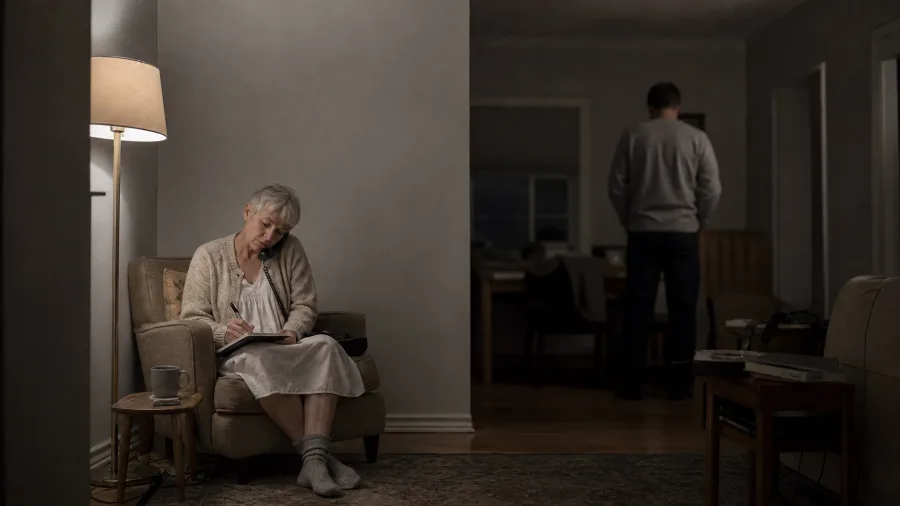
"I like being the one people call."
It sounds generous, and part of it is. But notice who does the asking in your week: the sister whose calls run to forty minutes about her marriage, the grown son whose paperwork you still file, the friend who rings at midnight with a flat tyre. Being needed puts you at the centre of things, and it also means no one has to work out what you might want instead. Ask yourself the plain question: in the last year, how many people have spent an evening doing something you chose, without a problem attached?
Keep the caregiving, because some of that is love and real gift. The cost shows up the year a crisis ends and the calls thin out, and you find that nobody was ever asked to like you for anything but the help. Someone who knows you can name your favourite meal and your limit for noise. That takes months of contact with no task in it, and those months feel strangely bare.
💡 Tip: Caregiving is a real virtue. The problem is only when it becomes the price of being kept.
The Watching, and the Way Out
The final three habits are the ones that show up in your own marriage and your own calendar. They are also the ones most likely to repeat the pattern you grew up in, unless you catch them.
This group also includes the way out: what to keep, what to drop, and the single move that starts the change.
8. You Scan Your Marriage for Signs

Three times. That is how often a man in his early fifties asked his wife whether she was angry with him, after a reply that read "Fine. Later." She was in a meeting.
The scan starts small. A two-word message, a silence across the dinner table, a phone held at a different angle, and the reading machinery that once tracked two adults' moods starts assembling evidence. Therapists who work with couples see the same sequence often enough to describe it plainly: one partner checks, the other begins to feel watched, and the checking rises to meet the distance it created. That loop is common enough to be a pattern, and it is not a prediction of anything.
A real sign looks different in kind. It is a settled run of contempt, or repeated deception, or years of withdrawal, not one flat reply on a Tuesday. What the scan does is take an ordinary gap in a partner's attention and slot it into the marriage you watched end, as though the same film were starting again.
The move is to say the fear instead of hunting for it. "I read your short message as you leaving me, and I know that is mine, not yours." It is the divorce you are bracing for that wants naming, not the one you are certain has already begun.
The Marriage Scan at a Glance
📱 Where it starts
A gap in attention: a short reply, a turned shoulder, a delayed answer
🔍 How it escalates
Checking rises to meet the distance it creates; the other feels watched
💬 The 10-second self-test
Can you name the specific evidence? If not, it is the old film, not this marriage
😤 Skip naming it if
You are in danger or facing repeated deception; then act on facts, not fear
🛑 First move
Say the fear in one sentence, then stop: 'I read your short message as you leaving me'
The difference that matters
A real sign is a settled run over months; a scan is one flat reply on a Tuesday.
9. Holidays Still Decide Whose Feelings You Protect

Because the calendar never got renegotiated. It got inherited.
Do the arithmetic on a typical year. December 24 is three hours of driving to one parent; December 25 is one hour to the other, arriving late and leaving early; December 26 goes to your partner's family, hurried and half-present. Whichever parent got the smaller share produces the guilt, and that guilt sets next year's route. The arrangement has been settled this way for so long that nobody remembers choosing it.
Turn the frame around and the thing looks different. December is not a family obligation you are failing; it is a timetable you are still running for two people who split up before your own children were born. Your partner has spent every one of those Christmas mornings somewhere other than home. Your own health and your parents' age make each long drive a little more of a loan you are taking out.
One honest conversation redraws it. A different day for one parent. A year of staying home. The sentence is short and said plainly, and the driving stops being the thing that carries the feeling.
💡 Tip: Book the 27th before you make the call. A plan you can state is harder to argue with than a feeling you are trying to explain.
10. What You Carry Can Be Put Down

The obvious move is to put all of it down, and that advice is wrong. Alertness, competence, and loyalty earned their place in a divided house and still earn it now. The pre-emptive apology, the edited truth, the flinch at raised voices, the exit plan you never use, the overwork, the need to be needed, the scan of your marriage, the holiday guilt – those are the ones that quietly cost a marriage, a friendship, or a truth. Sort, then put down.
💡 Tip: If a pattern is costing you a relationship that matters, a therapist or a couples counsellor is the right next call, not another year of willpower.
Frequently Asked Questions
Is it too late to change these patterns at fifty?
No. The reflexes are decades old, but they are habits, not personality. The first month of practice will feel uncomfortable because you are asking your body to do something new. By the second month, the pause before the old response gets a little longer.
What if my parents are elderly and I don't want to upset them?
You can tell the truth without being cruel. The goal is not to confront them with every edited fact. It is to stop editing the fact that matters most right now. One plain sentence, said kindly, is enough.
How do I know if my exit plan is healthy or a problem?
A healthy option is knowing you could leave if safety or dignity required it. A rehearsed escape is one you keep secret, fund separately, and never speak aloud. If you can name it to a partner or friend, it stops running the show.
What if my partner does not want to hear about my parents' divorce?
You are not asking them to relive the divorce with you. You are asking them to understand why you flinch at raised voices or read a short text as a threat. One honest sentence about the pattern is usually enough to change how they hear your reactions.
When should I see a therapist?
If a pattern is costing you a relationship that matters, or if you cannot stay in a room when voices rise without panicking, a therapist or couples counsellor is the right next call. This article is a map, not a treatment plan.
Keep The Alertness, Retire The Apology
Sort them plainly. Keep the alertness, the competence, the loyalty. Retire the pre-emptive apology, the edited truth, the danger response, the default exit plan, the overwork, being needed over being known, the marriage scanning, the holiday guilt. Not a purge. An order in which to put things down.
Go back to the dinner where you softened the news, the apology for the delay, the text you scanned twice. Same old peacekeeping reflexes, now visible as habits rather than character, which is the only change that makes the rest possible.
The first move is one direct request instead of carrying the whole task alone. The first month will feel exposing, then ordinary, and the other person's answer will be the evidence you were waiting for: reliance did not start a war. Say the sentence this week and let it be enough.
Make the First Request This Week
Pick one small thing you need and ask for it plainly, without apology or preamble. Notice the pause, accept the answer, and let someone help you.