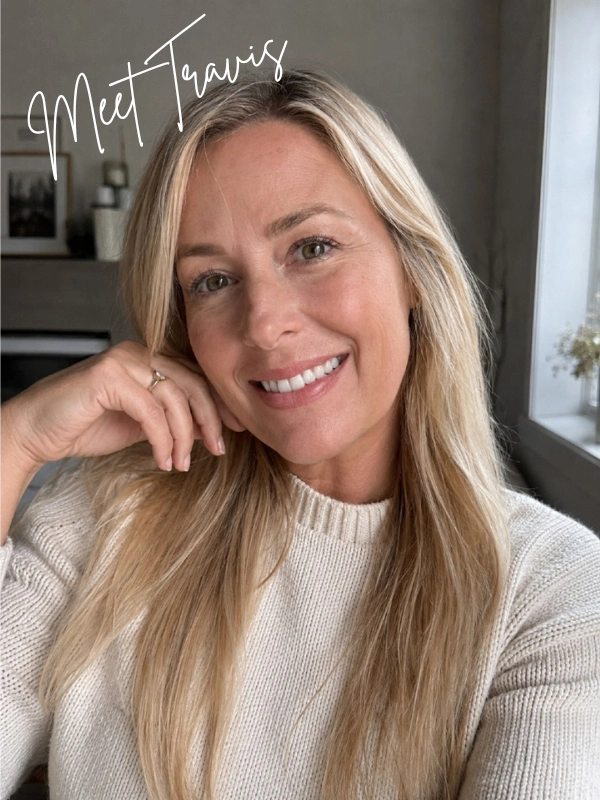

Getting dressed can suddenly feel harder when the clothes that once made you feel like yourself no longer seem quite right. Your wardrobe may be full, yet you keep reaching for the same safe pieces because everything else feels uncertain.
For many women over 50, this is less about losing interest in fashion and more about losing trust in what works. Fits change, trends move on, and old style rules can make style confidence over 50 feel harder than it needs to be.
You do not need a new wardrobe or a dramatic makeover. A few better fits, one reliable outfit formula, and a clearer sense of what feels good now can make getting dressed feel enjoyable again.
Stop Trying to Dress Like the Woman You Were Ten Years Ago
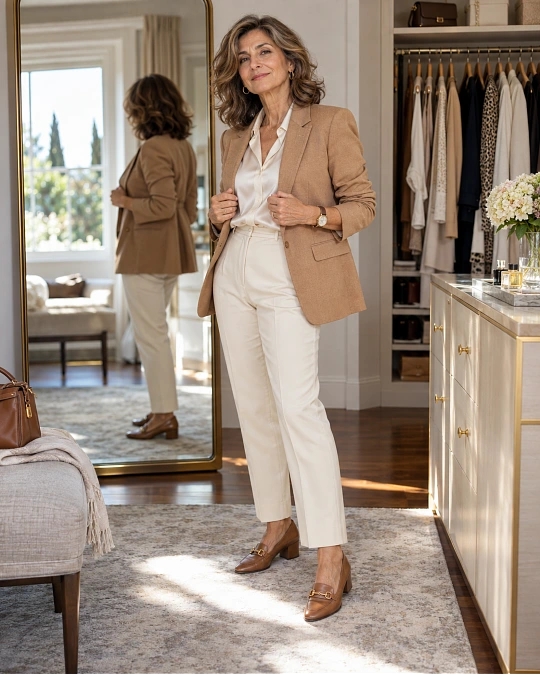
One of the fastest ways to lose confidence is to keep judging today’s clothes by yesterday’s standards.
Maybe a jacket you once loved now feels too stiff. Perhaps skinny jeans no longer feel like the easiest choice. Or a dress that used to feel polished suddenly seems wrong, even though nothing is technically wrong with it.
That does not mean your sense of style disappeared.
Clothes work because of proportion, fabric, fit, and how they suit your real life. When any of those change, your wardrobe needs small adjustments too.
You may prefer softer waistbands now. You may want longer tops, cleaner shoulder lines, lighter shoes, or fabrics that move instead of cling.
Those are not signs that you have to hide your body. They are clues telling you what your wardrobe needs next.
A helpful first step is replacing old fashion rules with more useful ones.
| Old Rule | What Works Better Now |
|---|---|
| Keep wearing a size because it is “your size” | Choose the size that gives the garment the best shape |
| Dress younger to look current | Use modern cuts, shoes, colors, and proportions |
| Loose clothes hide everything | Combine one relaxed piece with one cleaner, shaped piece |
| Save good clothes for special days | Wear your favorite pieces during normal life |
| Copy complete outfits from someone else | Borrow the idea, then adjust it to your body and routine |
The goal is not to become a different woman. It is to make your clothes work better for the woman you are now.
Rebuild Confidence With the Clothes That Fit You Right Now
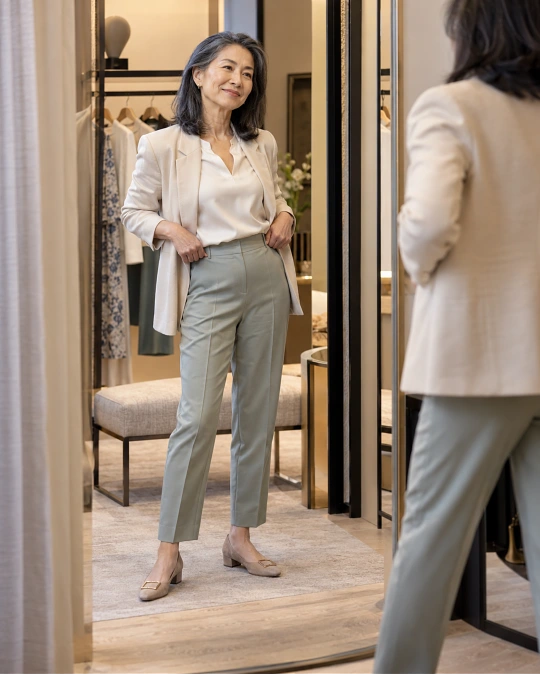
Before buying anything, try on the pieces you already reach for without thinking.
Look for trousers that sit comfortably, tops that fall cleanly from the shoulders, jackets that close without pulling, and dresses you can move in without adjusting every few minutes.
These pieces are important because confidence often begins with physical comfort and reliable fit.
A waistband that digs in, a blouse that pulls across the chest, or shoes that hurt after twenty minutes can make you feel uncomfortable all day. Even a beautiful outfit becomes hard to enjoy when you are constantly fixing it.
Pay attention to the clothes that let you forget about your clothes.
Fit note: A garment does not have to be tight to create shape. A softly defined shoulder, a visible waistline, a clean trouser leg, or a jacket ending at a flattering point can create structure without feeling restrictive.
Try sorting your wardrobe into three simple groups:
- Clothes that fit well and make you feel good now.
- Clothes that could work with a small styling change or alteration.
- Clothes you keep avoiding because the fit, color, or shape no longer feels right.
You do not have to throw the third group away today. Just move it out of your everyday dressing space for a while.
A closet filled mainly with clothes you can actually wear makes mornings much calmer.
Create One Outfit Formula You Know You Can Trust
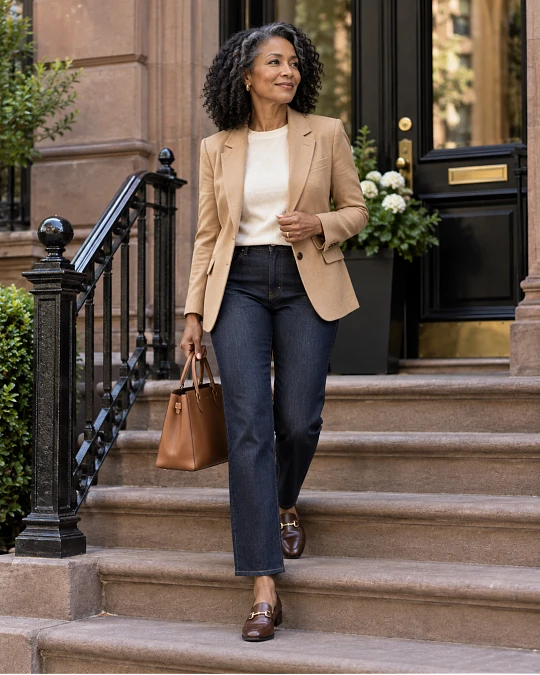
Confidence grows faster when you stop trying to invent a completely new look every morning.
A personal outfit formula gives you a starting point. You can change the colors, fabrics, shoes, and accessories while keeping the basic structure familiar.
For example:
Formula: straight-leg trousers + simple knit top + structured layer + comfortable polished shoe
The trousers give the outfit a clean line. The knit keeps it comfortable, while a blazer, cardigan jacket, or soft overshirt adds shape.
Then choose loafers, sleek sneakers, ankle boots, or low heels based on where you are going.
Here are several formulas that work for real-life dressing.
| Occasion | Easy Outfit Formula | Why It Works |
|---|---|---|
| Errands | Straight jeans + knit top + light jacket + clean sneakers | Comfortable but still pulled together |
| Lunch | Wide-leg trousers + tucked blouse + loafers | Soft movement with clear shape |
| Casual workday | Dark trousers + fine knit + blazer + flats | Polished without feeling formal |
| Weekend | Midi skirt + simple tee + cardigan + ankle boots | Easy mix of relaxed and feminine |
| Dinner | Dark jeans + silky blouse + tailored jacket + low heel | Familiar pieces with richer texture |
Your formula does not need to look like anyone else’s.
If you feel best in dresses, yours may be a knit midi dress, cropped jacket, and ankle boots. If you live in jeans, it might be straight denim, a soft shirt, and loafers.
The best formula is the one that removes doubt.
Use Color and Texture to Make Simple Clothes Feel More Like You
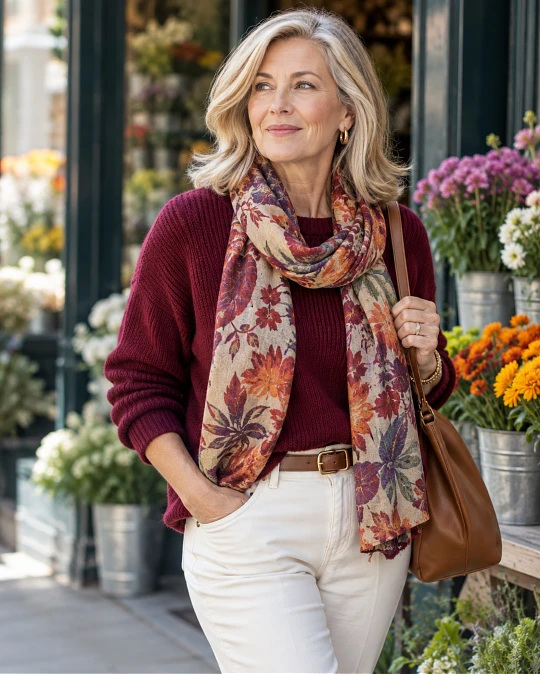
When confidence is low, many women retreat into safe clothes.
There is nothing wrong with navy, black, gray, beige, or denim. The problem comes when every outfit feels so safe that it stops feeling personal.
You do not need a dramatic print or a bright red coat to fix that.
Start with one detail that gives the outfit some life.
A burgundy knit can warm up dark jeans. A soft blue shirt can brighten navy trousers. A camel jacket can make a plain cream top look more finished.
Texture does the same job.
Try suede shoes with denim, a ribbed knit with smooth trousers, a soft wool jacket over a cotton tee, or a satin blouse with a matte skirt.
These small contrasts make simple outfits for women over 50 look considered without requiring more pieces.
If color feels intimidating, keep most of the outfit neutral and add one shade near your face. Scarves, knitwear, earrings, glasses, lipstick, and jacket collars can all change how an outfit feels.
Color note: Pay more attention to what makes your face look fresh than to seasonal color rules. Natural light and a mirror often tell you more than a chart.
Let One Modern Detail Keep Your Wardrobe From Feeling Stuck
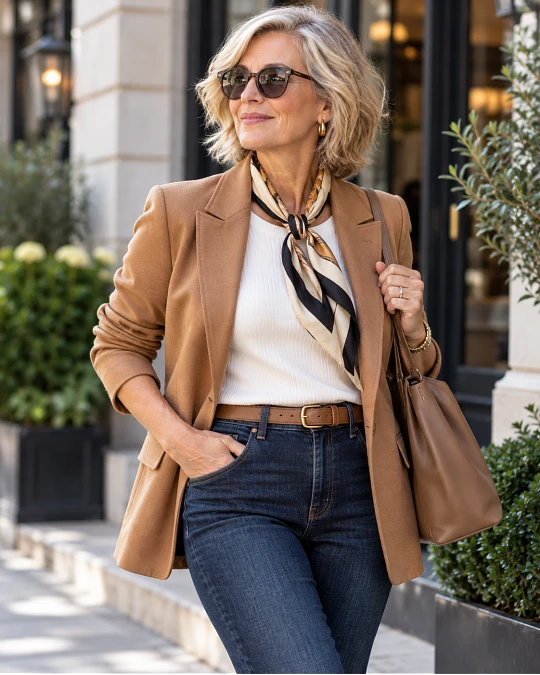
You do not need to follow every trend to look current.
In fact, trying to wear several trends at once can make getting dressed more confusing.
Instead, update one part of an otherwise familiar outfit.
That might mean swapping very narrow jeans for a straight or relaxed leg. You could replace a long shapeless cardigan with a shorter structured knit, or trade heavy shoes for a cleaner loafer or simple sneaker.
Small changes in proportion often make a bigger difference than buying an entirely new outfit.
Here is a useful way to think about those updates.
| If This Feels Off | Try This Instead |
|---|---|
| Long top over loose trousers feels heavy | Use a shorter top or a partial tuck |
| Oversized top and wide trousers feel shapeless | Keep one piece relaxed and give the other more structure |
| Outfit feels dated despite good basics | Update the shoe shape or jacket |
| Everything blends together | Add contrast through color, texture, or a visible belt |
| Outfit looks too formal for everyday life | Swap heels for loafers, flats, or sleek sneakers |
There is no need to retire a favorite piece just because fashion has changed.
Sometimes the item only needs a different partner.
A classic blazer can feel current with relaxed denim. A midi skirt can feel fresh with a simple knit and low boots. A button-down shirt may work better worn slightly open over a tank instead of buttoned tightly to the neck.
That is how a wardrobe evolves without losing its personality.
Stop Saving the Clothes That Make You Feel Good
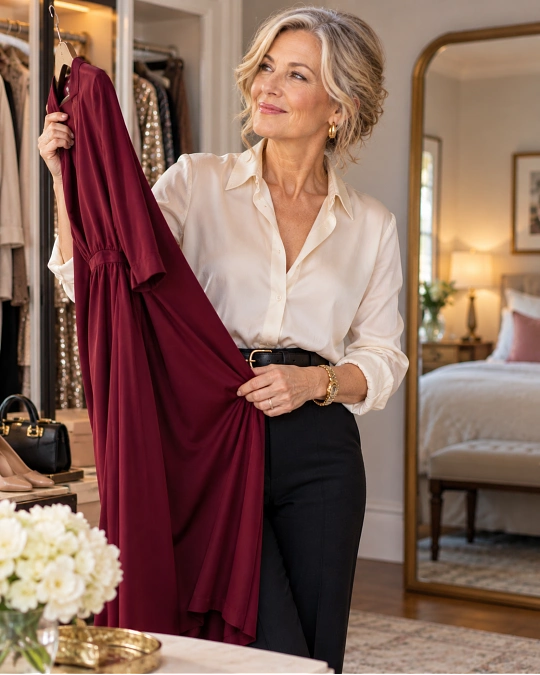
Many wardrobes contain a strange category of clothing called “too nice for today.”
The blazer waits for dinner. The pretty blouse waits for an event. The good loafers stay in the box while an older pair gets worn every day.
But everyday life is where style confidence over 50 is actually built.
Wear the blouse to meet a friend for coffee. Put on the good jacket for errands. Wear the earrings you normally save for dinner.
You are not wasting those clothes by wearing them. You are getting value from them.
This is especially useful if your wardrobe feels boring even though you own plenty of pieces.
Instead of shopping, ask yourself:
- What am I saving that could be worn this week?
- Which jacket instantly makes a simple outfit look better?
- Which shoes make my basic trousers feel more polished?
- Which color makes me feel noticeably brighter?
Sometimes your confidence pieces are already hanging in your closet.
Make Getting Dressed Easier Before You Make It More Stylish
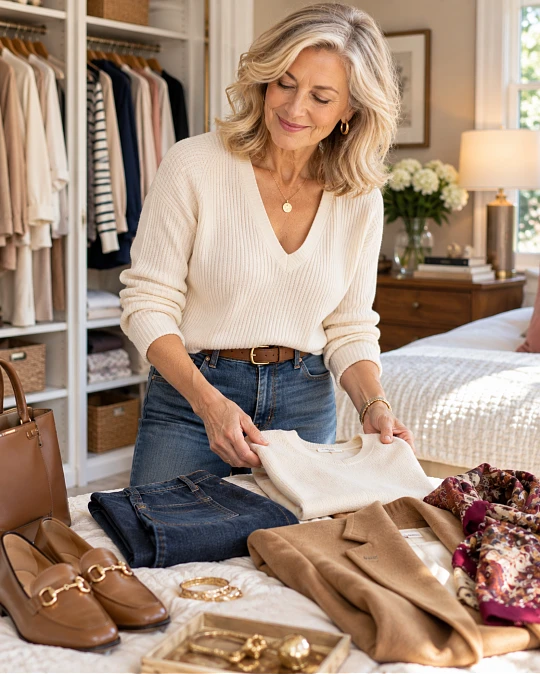
Decision fatigue can make even a good wardrobe feel frustrating.
If you stand in front of your closet every morning trying seven combinations, the problem may not be your clothes. You may simply have too many choices without a clear system.
Make tomorrow’s outfit tonight.
Choose the trousers or skirt first. Add one top. Pick the shoe before you start changing accessories.
Then stop.
If the outfit fits, feels comfortable, suits the day, and makes you feel like yourself, it has already done its job.
You can also photograph outfits that work.
Create a small album on your phone with five to ten combinations you genuinely enjoy. When you have a rushed morning, choose one instead of starting from zero.
That tiny habit can turn dressing over 50 from a daily test into something much easier.
Frequently Asked Questions
How can I get my fashion confidence back after 50?
Start with clothes that fit comfortably today rather than trying to rebuild your whole wardrobe at once. Find two or three outfits you feel good wearing and repeat their basic shape with different colors or fabrics.
Confidence usually comes from repetition. The more dependable outfits you have, the less pressure you feel each morning.
How can I look stylish over 50 without trying too hard?
Keep the base of your outfit simple, then make one part feel intentional. That could be a sharp jacket, interesting shoes, a rich color, or a well-chosen accessory.
You rarely need several statement pieces at once. One clear detail often makes the whole outfit feel finished.
What clothes should a woman over 50 have in her wardrobe?
There is no single required wardrobe. Useful basics often include trousers or jeans that fit well, simple tops, a versatile jacket or cardigan, comfortable polished shoes, and at least one outfit that feels slightly dressier.
Choose pieces around your actual week, not someone else’s idea of what you should own.
How do I stop feeling frumpy in my clothes?
Look first at proportion rather than blaming the individual garment. Too many long, loose, or heavy pieces worn together can make an outfit feel less defined.
Try adding one cleaner line through a shorter jacket, straighter trouser, visible waist, open neckline, or lighter shoe.
Do I need to follow fashion trends after 50?
No. Trends are useful only when they give you an idea that works with your existing style.
Trying one updated jean shape, shoe, color, or jacket cut is often enough to keep familiar clothes feeling modern.
Confidence Comes Back One Good Outfit at a Time
Feeling good in clothes again does not require chasing trends, hiding your body, or replacing everything you own.
It starts with better fit, fewer frustrating choices, and clothes that suit your real life. Style confidence over 50 grows when you stop asking what you are supposed to wear and start noticing what makes you feel comfortable, polished, and like yourself.
This week, build one outfit you genuinely enjoy and take a photo of it. Let that become the first formula you can trust.