

A heavy Sunday edition thumps against the porch door in the freezing Ohio dawn.
I left it sitting there on my sixty-fifth birthday, walked back to the kitchen, and turned the television off during the morning broadcast. As a retired high school history teacher, I used to track the world's crises for ninety minutes every single day.
That daily habit stopped completely twelve months ago.
Stepping away from the daily cycle eliminated my chronic worry and redirected my attention to a manageable, local reality. Here is exactly what shifted over a year of silence.
Quick Tips Before You Start
Cancel the Paper
Stop the physical delivery at the source.
Hide Remotes
Put the television controller in a closed drawer.
Delete Apps
Remove every news alert from your phone screen.
Warn Family
Ask your children not to text you headlines.
1. Anxiety Plunged Within the First Three Weeks

People insist that staying informed is the responsible way to manage anxiety, assuming that knowing every detail gives you some illusion of control. That advice is entirely backwards. On my sixty-fifth birthday, I abruptly ended my ninety-minute morning routine of cable broadcasts and the daily newspaper, expecting to feel terribly vulnerable.
My daily morning chest tightness completely vanished by the third week.
Without the constant flash of red breaking-news banners, my nervous system settled into a lower baseline of arousal. My focus shifted from national crises to the immediate Ohio morning weather and my breakfast routine.
💡 Tip: Identify your physical symptoms before quitting so you can track the physical relief.
⚠️ COMMON MISTAKE
Trading One Screen for Another
Scrolling a social media feed instead of watching cable anchors just trades one anxiety for another. Leave the phone in another room during breakfast.
2. Free Time Expanded by Ten Hours Weekly

Exactly ten hours per week returned to my schedule the moment I dropped the morning paper and the afternoon broadcast loops. The physical reduction in daily panic was a welcome relief, but it left a sudden, measurable gap in the morning routine. You do not realize how much time you spend consuming crises until you stop.
We frame watching the news as a civic obligation, but it is actually an unpaid part-time job. When you abruptly resign from it, those empty schedule blocks initially just cause profound restlessness.
The silence in my Ohio suburban house felt deeply unnatural for the first two weeks. To manage the pacing, I set up a woodcarving bench in the garage. Working with my hands completely absorbed the early morning hours I had previously surrendered to cable pundits and their endless shouting matches.
The afternoon gaps required a different substitution. Instead of sitting with a tablet, reflexively refreshing news sites to see what had broken since breakfast, I pulled books off the shelf and started reading fiction.
The Time Cost of Cable
3. Sleep Quality Improved Without Late Night Updates
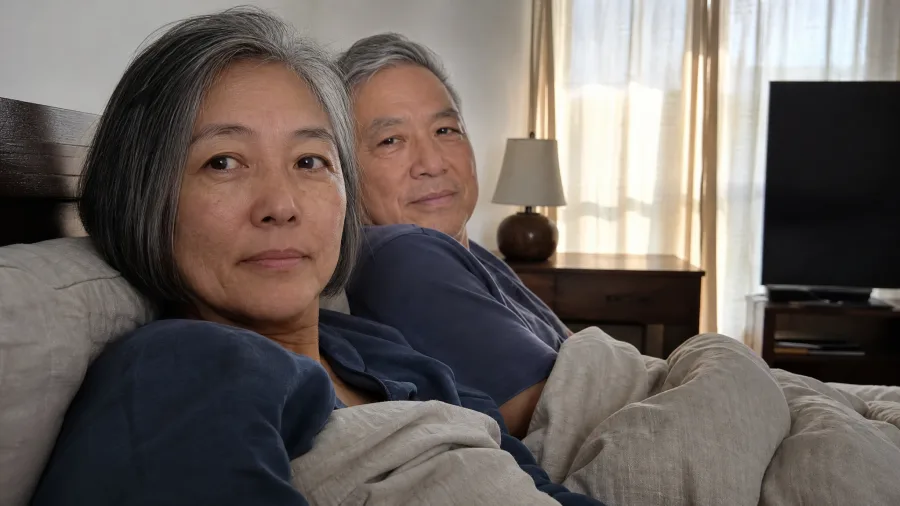
You hit the power button on the remote at 11:30 PM, pull the heavy blankets up to your chin, and close your eyes, but the panel argument about an impending national collapse is still playing on a loud loop in the dark. Filling my daytime hours with physical work at the woodcarving bench thoroughly altered my transition into the evening.
Even so, the old cable habit previously guaranteed a long hour of pre-sleep rumination on distant political disasters. Shutting off that feed permanently eliminated the late-night cortisol spikes keeping my nervous system defensively wired.
The biological withdrawal was paid entirely in the dark.
During month one, I still consistently woke up twice a night with a lingering habitual anxiety, staring at the ceiling while my brain searched for a familiar crisis to fixate on. By month two, that quiet debt was settled. I finally experienced deep, uninterrupted sleep straight through to the Ohio morning.
4. Conversations With Friends Became Much Deeper
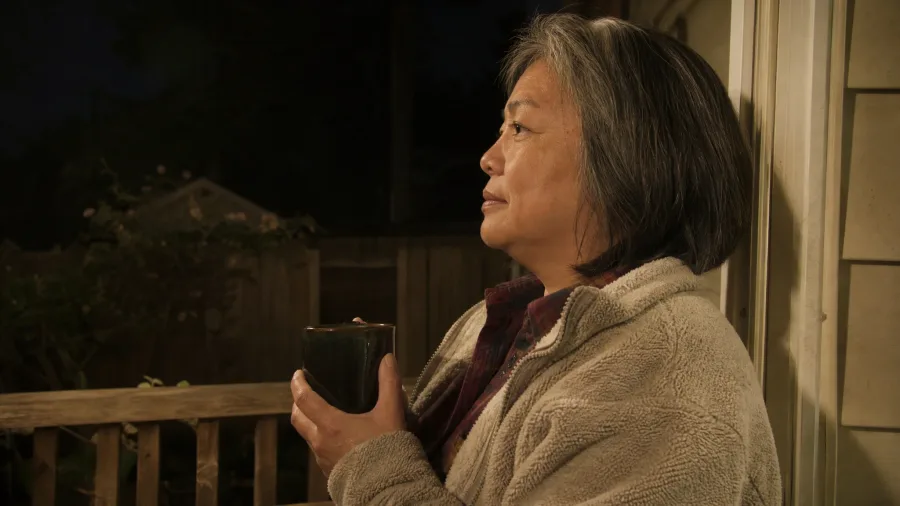
" That was the default greeting across the fence for years. Waking up fully rested, without the lingering exhaustion of late-night disaster coverage, completely altered the temperament I brought to the driveway. I simply no longer possessed the frantic energy required to sustain our usual morning outrage.
Casual social interactions abruptly lost the standard script of reciting identical cable news talking points. My neighbors and I stood by the mailboxes, forced to uncover new topics of conversation completely divorced from national politics.
The initial silence over the shared property line felt remarkably uncomfortable.
Without the familiar, exhausted crutch of shared political grievances, our daily interactions shifted entirely to our personal lives. We started discussing the toddler milestones arriving in family text messages and the upcoming zoning meeting listed on a local community flyer. The scale of my social world shrank perfectly to our specific Ohio zip code.
Friendships deepened significantly through the simple act of sharing actual life updates instead of borrowed television anger. I stopped treating the people on my street as walking representatives of distant political factions.
Instead of arguing blindly about unfixable federal policies over the hedge, I finally learned what the guy next door was actually carving out in his garage workshop. Trading the heavy burden of constant national involvement for immediate local reality made the people standing right in front of me feel like real neighbors again.
💡 Tip: When a friend brings up politics, politely ask about their family instead.
The Conversation Timeline
Months 1 to 3: Withdrawal
- Biting my tongue during others' political rants
- Internal panic at having no hot takes to offer
- The physical itch to check alerts mid-chat
- Faking polite nods until the subject changed
Months 4 to 12: Recalibration
- Realizing neighbors were relieved to drop the debates
- Finding out three locals share my history background
- Driveway chats stretching from 5 minutes to 20
- Actually retaining the names of their extended families
5. Focus and Concentration Span Rebounded
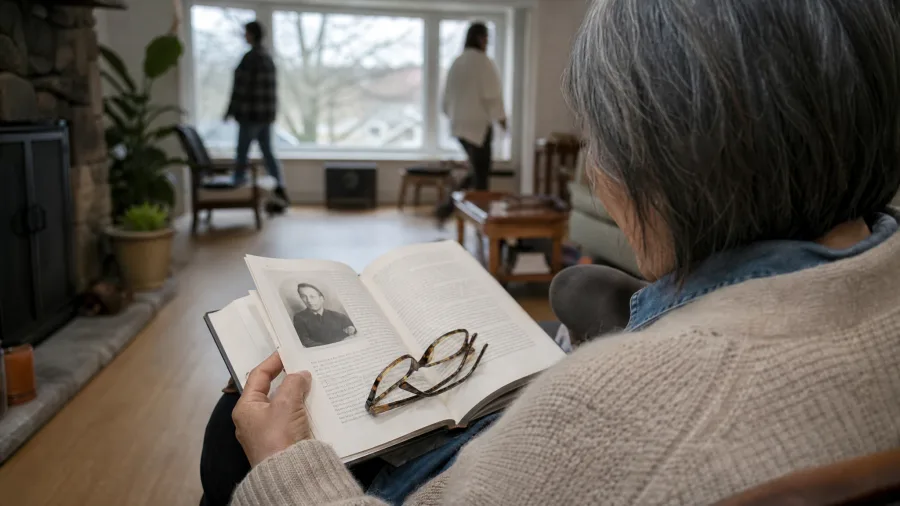
I spent my early sixties convinced my fading concentration was just a biological reality of getting older. I was entirely wrong about my own mind.
The quiet patience required to actually listen to my neighbors soon mirrored a returning capacity for deep reading. Years of processing thirty-second news segments had severely fractured my attention span. Without the heavy cognitive load of rapid context-switching, my daily mental fatigue dropped sharply, and sustained attention returned fully by the fourth month.
The one exception to my blackout rule is engaging with world events at a glacial pace. I successfully finished a 400-page historical biography over a single weekend without once reaching for a remote.
🧠 The Return of Attention
Week One
A restless urge to check for breaking alerts every hour.
Month One
The ability to read a full magazine article without pacing.
Month Two
Mental fatigue drops sharply during quiet afternoons.
Month Four
Sustained attention returns, allowing hours of uninterrupted deep reading.
6. Feeling Out of Touch Proved Mostly Harmless
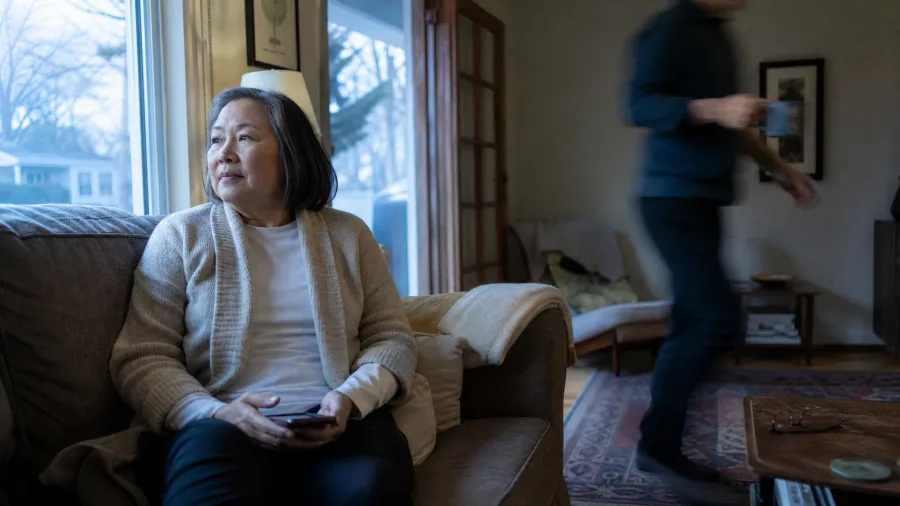
Immersing my brain in deep work forced a direct confrontation with the information I was no longer collecting. For the entire first month, I carried a persistent fear of missing a sudden national emergency.
I assumed that turning off the cable broadcast meant isolating myself from reality. Instead, I learned that major global developments and essential community news always filter naturally through the personal networks you maintain. If a situation genuinely requires attention, a rapid family text message will alert you long before the evening anchors do.
When a neighbor inevitably brings up a headline you missed, the script is simple. You just ask, "I actually stepped away from the news recently. What happened?"
Letting someone else give you the brief summary provides the basic facts without the accompanying panic or the endless punditry. After a year of testing this theory in my Ohio neighborhood, I finally accepted that being out of touch with the daily cycle proved completely harmless to my actual life.
Where Information Comes From Now
7. Outrage Cycles Disappeared From Daily Life

Chronic irritation is an exhausting way to spend a retirement. It is exactly what I paid for with my ninety-minute morning ritual of televised crises and newspaper columnists. Psychologists who study media consumption consistently find that anger drives human attention, meaning the daily programming was actively engineered to keep me furious at distant public figures.
Without those visual triggers, the manufactured indignation simply dissolved.
Once I realized missing that information carried zero consequence, my anger evaporated. A baseline sense of peace replaced my chronic political irritation, and my patience increased noticeably during errands at the local Ohio grocery store.
The Physiology of Peace
🫀 Heart Rate
Lower resting baseline
🧠 Cognitive Load
Drastically reduced
😊 Patience
Noticeably higher
The Core Shift
Removing visual triggers eliminates the physical sensation of anger.
8. Sense of Agency Over Local Life Returned

The reality is the exact opposite. Watching unfixable international disasters unfold every morning had quietly trained me into a state of learned helplessness. Once I stopped burning my energy on distant political outrage, my focus immediately snapped back to my own Ohio neighborhood.
Instead of cable broadcasts, a paper community flyer became my primary source of actionable information. I spent a Tuesday kneeling in the dirt at the neighborhood garden project, pulling weeds and repairing a cedar planter.
The physical work yielded visible, undeniable results before lunch.
9. Mental Quiet Replaced Constant Background Noise
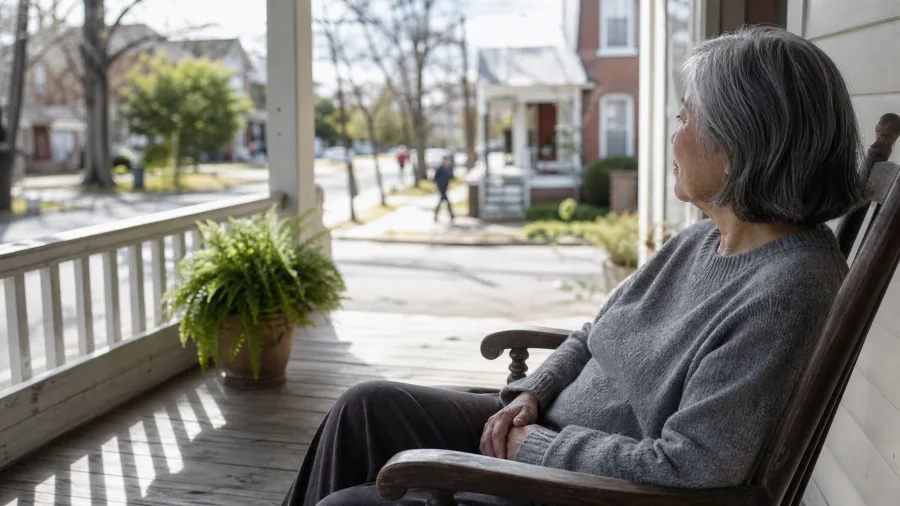
I spent forty years as a history teacher believing that watching the morning cable broadcasts and reading the daily paper was the absolute baseline duty of a responsible citizen. I genuinely assumed that shutting it all off would leave me mentally dull, hopelessly detached, and completely isolated from reality. That conventional assumption is exactly backwards.
Channeling my physical energy into the neighborhood garden and having actual conversations with my neighbors did not shrink my perspective on the world. It simply drained the manufactured, artificial panic from my daily routine.
By the time month twelve finally arrived, a distinct, entirely unfamiliar psychological quiet had permanently settled over my Ohio house. The valuable mental space that used to be constantly burdened by the ninety-minute morning outrage cycle remained remarkably clear and completely unburdened all day. I could finally sit outside on the porch in total peace.
The exhausting background noise of distant, unfixable catastrophes was finally gone.
My internal monologue used to consist of rehearsing angry, unwinnable arguments about external political disasters while standing idly at the kitchen sink. I would literally catch myself muttering, "They have absolutely no real plan for this mess," to an entirely empty room. Now, that restless inner voice has shifted completely toward calm, grounded self-reflection about my actual life.
The verdict on this one-year experiment is obvious to me now. I will maintain this strict zero-news policy permanently for the rest of my retirement, and my mind is much better for it.
Frequently Asked Questions
Will I feel less anxious if I stop watching the news?
Yes. Removing the constant stream of breaking alerts lowers your baseline physical arousal, easing morning chest tightness and tension within a few weeks.
What do I do with all the extra time?
You will recover several hours each week. Fill them with physical hobbies, reading fiction, or local community projects that require your hands.
How does cutting the news affect my relationships?
It deepens them. Without political talking points to fall back on, you are forced to discuss your actual lives and families with the people around you.
Won't I miss out on important world events?
No. The major global developments will always reach you through friends, family texts, and everyday conversations. The daily cycle simply adds unnecessary panic.
Does avoiding evening broadcasts help with sleep?
Absolutely. Cutting off the blue light and the late-night anxiety spikes eliminates the rumination that keeps you awake. Sleep naturally deepens.
The Only Test You Need To Run
Waking up at sixty-six involves zero morning dread. I learned that the world continues to turn perfectly well without my daily supervision, and quitting the news entirely is a highly effective, zero-cost mental health intervention for older adults.
The first step is unplugging the television and deleting all news apps for a strict seven-day trial. The world will keep spinning, and you can stop waiting for a heavy Sunday edition to thump against the porch door in the freezing dawn.
Ready to reclaim your mornings?
Cancel the Sunday delivery right now, and see how quiet tomorrow morning actually feels.