

You stay close to an adult child you disagree with by changing the conditions of contact, not by winning the argument. Staying close is a decision about how you show up, not a verdict you eventually get them to accept. The partner, the job, the faith, the rules for the grandchildren – none of it has to be settled for the calls to get longer again.
The calls that once ran forty minutes now end at nine. Visits come twice a year instead of monthly, and the topic nobody raises sits in the middle of the table anyway. You have a plan for it: make the point clearly, with the right example and the right warning, and the child will come around.
They will not, most likely. What they did was adopt a set of values that is not yours – not make a factual error you can correct. Being right does not reopen a relationship, and each correction shortens the next call by a minute or two.
The seven moves below cover the next month. They keep contact open without either side changing its mind. By the end you will know which contact to make first this week, how to hold your advice until it is asked for, when a boundary actually belongs, and what to say on the phone tonight.
Quick Tips Before You Start
Give it a month
Judge these moves over four weeks of contact, not one dinner.
Retire the one line
Any version of 'you'll understand when you're older' ends the exchange on the spot.
Lower the stakes
A fifteen-minute call about the dog beats a two-hour dinner with an agenda.
Move first, same day
Repair inside 24 hours, before the story gets a clean version.
Limit behavior only
House rules cover what happens at your table, never what your child believes.
1. Ask What Changed Before Arguing Who Is Right

The fight is not really about the facts. You and your adult child have each arrived at the table armed with examples, warnings, maybe a statistic from a podcast, and none of it lands, because the two of you are not arguing the same question. You want to prove the partner is wrong for them, the job is a dead end, the faith is a mistake, or the grandchild's rules are too loose. They are defending a choice that has become part of who they are, and every correction you offer registers as a verdict on their whole life rather than a point in a debate.
That is why the same exchange can play out for the fourth Thanksgiving in a row. You make the case, they go quiet or sharp, the evening ends early, and nothing moves. A values shift, not a factual error, is underneath it: their partner, their work, the way they are raising their kids are now markers of an identity they are building, and facts do not dislodge identity.
So open differently. Ask a question about the shift instead of making a statement about what is wrong. Something like: what changed for you around this? It sounds almost too small to matter, and it is the one move that gets you information rather than a stalemate. You are not endorsing anything by asking. You are finding out how they got from the child you raised to the adult across the table.
Retire the line you have probably used more than once, in some version: you will understand when you have children, or when you are older. It feels like wisdom. It lands as a diagnosis. It tells your adult child they are too young, too inexperienced, too naive to know their own life, and it hands them a reason to end the conversation rather than continue it. Other ordinary lines land the same way, and a look at the phrases your adult kids resent shows which ones to retire.
When they answer, do not pounce on the first opening. Repeat their answer back in their own words first. If they describe the new job as the first time they got to set their own terms, say that back to them before you say anything else. It shows you were listening for their meaning and not just waiting to reload.
Then, and only then, respond. For a parent whose arguments keep circling the same single topic, this one pause does more than a decade of well-made points. Repeating it back is also the test of your own aim: it makes plain, in the moment, whether you are after contact or after victory. A correct rebuttal can still be the thing that closes the door.
💡 Tip: If you cannot remember the last time you asked your child a question and then said nothing for a full minute, start with this move and nothing else.
Correct advice can still cost you the next honest conversation.
2. Advice Only Lands After They Ask For It

Once you know what the choice means to them, the correction is already forming. You have five fixes for the job, three cautions about the partner, a better way to handle the grandchild's bedtime, and every one of them arrives as a verdict: you cannot manage this on your own. That is why the defensiveness comes back so fast when you were only trying to help.
The tell is simpler than it feels. Your adult child describes a hard week and then stops. No question, no pause waiting for your input, no direct request. That is narration, not an invitation. The moment you hear the period at the end of the sentence, you have your answer about whether advice is wanted.
When you cannot tell, ask one plain question: do you want ideas, or do you just want to think out loud? It costs nothing and it removes the guesswork. If they say they want to think out loud, listen and say nothing that starts with you should. You can ask what they are leaning toward. You can say that sounds hard. That is the whole job.
Restraint protects their sense of competence, and competence is what they are protecting when they get sharp with you. Consider what happens when you skip the restraint: the next problem is the one they stop telling you about. The job trouble reaches you through an aunt. The breakup arrives secondhand from a sibling. You become the last to know, and not because they stopped loving you.
There is a hard exception. Money trouble, a safety risk, a grandchild in actual danger: say the thing plainly and say it once. That is not advice waiting to be requested. That is a parent speaking up, and it should be said directly and then left alone rather than held back for a formal request. Everything else can wait for the question, and waiting is what keeps the door open instead of closing it with a verdict.
💡 Tip: Try 'That sounds like a lot' before anything else. It is not a fix and it keeps the line open.
At a Glance
3. Set the Limit on Behavior, Not on Belief
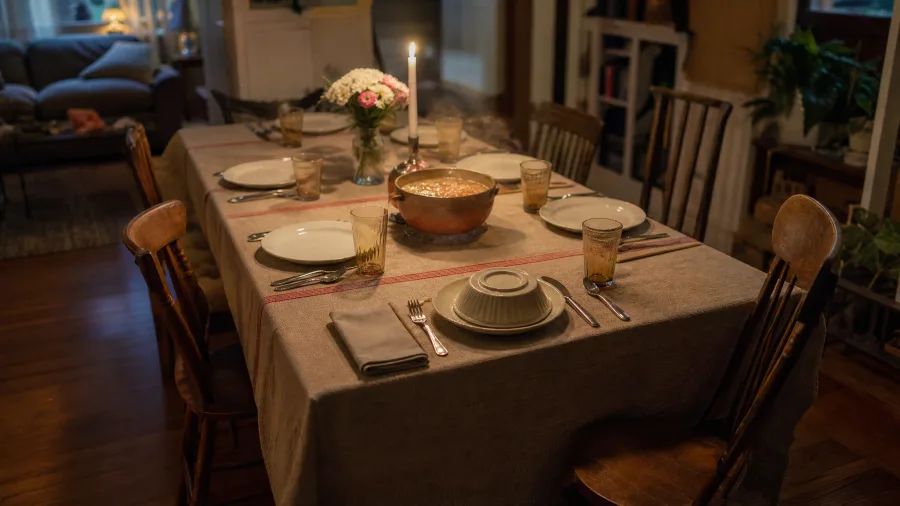
You can set terms for what happens under your roof and how you are spoken to. You cannot set terms for what your adult child believes about the partner, the job, the faith, or how the grandchildren should be raised. Getting this distinction right is how you lay down a boundary without losing them, because the two kinds of limit land completely differently.
Name the behavior out loud and keep it separate from the belief you cannot legislate. Arriving three hours late for dinner. A tone at the table that turns the meal cold. A guest who stays the week and treats your kitchen as a hotel. Those are events with edges. The belief underneath them has no edges and cannot be legislated, so do not try.
Then set one house rule, in one sentence, with the consequence attached: dinner starts at six, and after six-thirty the plate goes in the fridge and the table gets cleared. Or: guests let me know the morning they are coming. One rule, stated once, in a calm voice, is a door held open on stated terms. Compare that with a rule about belief, no talk of that partner in this house, which reads as a rejection of the person and cuts contact rather than correcting anything.
The consequence has to be something you will actually carry out. If you will not leave the plate in the fridge, do not announce that you will, because a threat retracted by Sunday teaches your adult child that your limits are noise. A boundary you can hold without resentment is worth more than a stricter one you abandon the first time it is tested.
A behavior limit keeps the door open because it says what you need in order to stay close. A belief limit tries to change their mind and usually shuts the door, because it asks them to surrender something they cannot give up to keep you in the room.
💡 Tip: Say the rule once, calmly, before the next visit — not in the middle of the late arrival.
Rules Sorted by What They Actually Protect
- 🚗 Ask before bringing a guest to stay
- 🗣️ Everyone speaks to me without shouting
- 🔁 No rehashing the same argument at dinner — Needs a real consequence: change the subject, then leave the table.
- ⏰ Dinner starts at six — Only if the plate truly goes in the fridge.
- 🚫 Never mention that partner in this house — Rejects a person and ends visits.
- ⛪ Attend church with us or don't come — Makes a belief the price of the door.
4. Name the Feeling Under the Words and It Shrinks

A house rule can stop a late arrival at the door. It cannot stop the fight that starts over the dishwasher at eight on a Sunday, with four plates in the sink and a decade of history riding on the tone.
The small topic is rarely the whole topic. When the plates, an unanswered text, or the drive home come back at you in a voice that shakes, goes flat, or climbs two notches above the sentence, the surface words are carrying something that has no words on it yet.
Listen for the mismatch first. A child describing a parking spot like it is a court verdict is telling you where the weight sits, and naming that weight costs one sentence: "That sounded like it landed as a judgment."
Say it as a guess, not a diagnosis. A guess offers a label your adult child can pick up, refuse, or correct, which keeps the exchange open instead of turning it into a hearing.
Being wrong about the guess still moves the conversation. Say the job comment landed as a judgment and your child comes back with "no, it felt like you were siding with my ex," and now the two of you are talking about the actual thing, which beats another twenty minutes on the plates.
Resist the pull to match the volume. Raising your voice to prove you are the reasonable one converts the guess into the same fight you have already had, and the fight ends where it always ends, with a short goodbye and a long silence.
The whole move tests a feeling without settling who is right about the partner, the job, or the grandchild rules. The facts can stay exactly where they are, and the call can still end with both of you on the phone.
💡 Tip: Keep the guess to one sentence. Three sentences of analysis is a lecture wearing a feeling's clothes.
💡 PRO TIP
The Four Words That Buy You a Pause
When the volume rises, say 'I want to hear this' and stop. It is not agreement and it is not surrender. It signals the conversation is not a contest, which is usually the moment your child's voice comes back down.
5. Repair Same Day, Before the Story Hardens

A fight that gets named well can still end badly, because naming a feeling does not stop a hang-up at nine on a Tuesday. What decides whether that night becomes a rough patch or the new normal is how long the silence runs.
Length matters more than size. A sharp exchange on Saturday repaired by Sunday afternoon leaves almost nothing behind; the same exchange left alone for three weeks hardens into a story, and the story has a villain in it.
Get the apology out before the story gets a audience. That means the same day or the next morning, ahead of the call to your sister, ahead of the version your child rehearses with a sibling where you are the parent who always does this.
The repair has to name the specific thing and its effect, with no "but" attached. "Cutting you off about the job made you feel dismissed; sorry for that" is a repair. "Sorry, but that partner is still wrong for you" is the original argument wearing an apology as a coat.
Leave the disagreement out of it entirely. You are not conceding the point about the job, the faith, or the grandchild rules; you are addressing the hang-up, and those are two different things that should not share a sentence.
Moving first does not cost you standing. Repair answers for the cut-off, not for the position you hold, and nothing about the issue gets re-decided because you texted first on a Sunday morning.
Your child is waiting to see whether the silence becomes the punishment. One plain message inside twenty-four hours tells them the door is still open, and it tells you the same thing.
💡 Tip: Do not ask for an apology back in the same message. Ask, and wait — a demanded apology is a bill, not a repair.
What a Fast Repair Actually Buys
The window is narrower than most parents think
Repairing first is not the same as conceding the disagreement.
6. Small, Predictable Contact Beats One Big Reconciliation

An apology mends the cut; it does nothing for the ordinary Tuesday.
What holds a relationship together over a year is not one long dinner where everything gets aired out and then nothing is said for eleven months. Frequency does the work, and smallness does the work, because a call with no subject cannot be a setup. When the child picks up the phone and already knows what the call is about – the dog, the weather, a bad week at work – there is nothing to brace for, and the answer rate stays high.
Pick a slot you can actually keep and put it on your calendar like a dentist appointment. Fifteen minutes, Sunday at four, same time each week, or one text a week that asks for nothing back: a picture of the dog asleep on the porch, two lines about the tomatoes finally coming in, a photo of the shelf you hung crooked. The content is incidental. The pattern is the point. If Sunday at four is a time you will quietly skip when you are tired, choose Wednesday at seven instead – the cadence has to survive a bad week, or it is not a cadence.
Now look at when you actually reach for the phone.
If the calls go out late at night, or only when there is a bill to sort, a health scare, or something you have been worrying about for three days, the child learns the ring tone means trouble. They start letting it go to voicemail, then answering with a flat hello, then answering two days later. The way out is to call sometimes with nothing to say, so the phone stops sounding like an alarm.
This does not work if you are currently not speaking at all.
In that case the first move is one message and no follow-up – something like thinking of you, no need to answer – and then the work is sitting with the silence without sending a second one. Predictable contact keeps a door open that is already ajar; it cannot pry one shut. What it can do, week after week, is teach the child that hearing from you costs nothing, which is the only footing on which the harder conversations ever get another chance.
💡 Tip: Put the call in your own calendar as a recurring event. Predictable for you is what makes it predictable for them.
What Keeps the Calls Getting Answered
Low-Stakes Contact
- A standing Sunday call at four, every week
- A photo of the dog with no message attached
- A two-line text about the tomatoes coming in
- One question about their week, then silence
- Contact on ordinary days, not only emergencies
Ambush Contact
- Calls that open with the partner or the job
- Reaching out only after a health scare
- Three missed calls in one evening
- A dinner that turns into a review of their choices
- Silence for months, then a long letter
7. Grieve the Child You Expected, and Say It Once

The Sunday call goes fine, and you hang up hollow anyway. Fifteen minutes of weather and the dog, and then the rest of the afternoon sits there, because somewhere in your head the same day is supposed to include a table with five chairs pulled up to it.
That hollow feeling has a name, and it is grief. Part of what makes the disagreement with your adult child so sharp is that you are mourning a version of the relationship that is not coming back: the Sunday dinners, the shared faith, the long calls about the job and the promotion and the awful boss. The child did not just choose differently. The picture you were holding got taken away, and nobody held a service for it.
Name it, at least to yourself, and the loss stops leaking into every argument.
Treat what you expected as a real loss, not a sulk. The Sunday table set for five while your child spends Sundays at the partner's family's house is a loss with a date and a chair and an empty place at the table. That is not self-pity. It is the honest shape of the thing, and it deserves the same respect you would give any other loss in your life.
Say it out loud, once, to a partner, a friend, or a therapist, and not to your child as a reproach. "You never come anymore" sounds like grief, but it is grief aimed at the person instead of at the picture, and your child hears a verdict. The picture is the thing that changed. Your child is still here, choosing a different faith, a different job, a different Sunday.
Grieving the picture is not rejecting the person standing in front of you. That is the distinction worth keeping clean, especially on the days when the anger is loud. The adult child who no longer shares your faith or took the job you would not have picked can still be loved in the present, exactly as they are, on the days they do call.
When you name the loss out loud and give it a place to sit, the urge to reopen the same argument shrinks. Grief held outside the relationship keeps the door open. Grief aimed at your child turns every call into the same loss, retold in a slightly different key.
💡 Tip: Write the expected picture down — the Sundays, the faith, the calls. Naming it on paper is often enough to stop it running the conversation.
Score Your Month Before You Judge the Relationship
Aim for four out of six over a month, not perfection in a week.
Frequently Asked Questions
How do I stop the same argument from repeating every visit?
Change what you are arguing about. Facts about the partner or the job will never be settled over dinner, so ask what changed for your child instead and repeat their answer back in their own words. That moves the conversation to the shift in their life, which is the part you can actually talk about.
My adult child never asks for my advice anymore. Should I stop giving it?
Yes, unless they ask. Unasked advice reads as a verdict on their competence, even when the advice is correct. Use one line — 'Do you want ideas, or do you just want to think out loud?' — and hold to it. The exception is money you are lending, safety, or a grandchild in genuine danger, and then you say the thing plainly and once.
Can I set any limits at all without losing my child?
You can set limits on behavior: what happens in your house, how you are spoken to, whether a guest is invited to stay. Write it as one sentence with a consequence you will actually carry out. What you cannot set is a limit on belief — no rule about the partner, the faith or the grandchild rules that mentions the person, because that reads as rejection rather than a rule.
Who apologizes first after a blow-up?
You do, and inside a day. Rupture length matters more than rupture size, and by the weekend the story has been told to a sibling or a friend and gets harder to clean up. Name the behavior and its effect in one sentence and leave the original disagreement out of it.
What if my child has stopped answering my calls entirely?
Drop the large move and go small. Send one message with no expectation of a reply — 'thinking of you; no need to answer' — then another two weeks later about something ordinary. Predictable, low-stakes contact is what rebuilds the habit of answering. Do not use the messages to reopen the disagreement.
Is it normal to feel this sad when I expected to be fine?
It is grief for a picture you had of the relationship, not a judgement on the person your child became. Give it a shape — the Sunday table, the shared faith, the calls about the job — and say it out loud to a partner, a friend or a therapist rather than to your child. Said once, outside the relationship, it stops re-entering every call.
Start With the Cheapest Move and Hold It Four Weeks
The order to do these in is not the order they appear. Start this week with the small, predictable contact – a standing fifteen-minute call or a weekly text that asks for nothing – because it costs nothing and it makes every other move possible. Hold your advice until it is asked for. Save the boundary conversation for the moment a behavior needs one: a late arrival, a tone at your table, a week-long guest who never says when he is leaving. Never for the partner, the job, the faith, the grandchild rules.
Then pick up the phone tonight with one plain sentence: 'Missing the talks – could we set a regular fifteen minutes, Sunday at four?' No agenda, no re-argument, no request for a decision.
The calls got shorter because each one carried a verdict. The same phone can carry a standing call instead. The partner, the job, the faith, the rules – all still there, all still yours to disagree with, and the door held open on purpose. Keep it open four weeks and count what comes back.
Pick Your Sunday at Four and Say It Out Loud
Decide the day and time right now, before you close this tab, and send one sentence to your adult child asking for it. That is the first move, and it is the one that makes room for the other six.