

The people who seem to shrug off a blunt remark are not receiving gentler remarks. They get the same two-line email at 4:45 p.m. — 'Need this fixed. See notes.' — no greeting, no name, no softening. One person loses the evening to it. Another reads it twice and starts a timer, and the difference is not thickness of skin.
What separates them is what happens in the ten seconds after the message arrives. The first draft of a reply is usually a two-sentence rebuttal, and it is usually written before the sender has finished shutting their laptop. The sting is real. It is the speed that is worth questioning.
Being offended is not a direct readout of what arrived. It is a fast interpretation — a story about competence, or disrespect — bundled so tightly with a reaction that the two feel like a single event. Pull them apart and the remark is a remark again.
What follows is eight habits, each with a move or a set of words you can use, so you can clarify a remark, drop it, or address it deliberately rather than at the speed of the sting.
Quick Tips Before You Start
Set a ten-minute timer
Before replying to any sharp message, start a timer and do not send during it.
Ask one question
Replace your first counterattack with a single clarifying question.
Name the story
Catch the sentence in your head and label it as a story, not a fact.
Use the drafts folder
Write the angry reply, save it, and decide later whether any of it needs to go out.
Look for the pressure
Ask what would make a reasonable person send this message at this hour.
1. The Pause Before Assigning Meaning

What actually arrives at 4:45 p.m. is three facts and a blank space: a time, the line 'Need this fixed. See notes.', and the absence of a greeting. Everything after that – the contempt you hear in the missing hello, the verdict you assume sits behind the word 'fixed' – is material you supplied, not material you received.
Clinical training tends to make the same point: the reflex reply is fast because it is automatic, and slowing it down is the whole intervention. Set a timer the moment you open the email and let nothing leave your outbox until it rings ten minutes later. In that gap, write 'Which part of the notes needs fixing?' – a sentence about the work, not the mood.
The pause is not a lid on your feelings. If someone says something plainly hostile to your face, name it now rather than later: 'That was hostile, and I need it said differently.' Ten minutes is for the ambiguous remark, where you are still guessing at the meaning. Ask yourself which one you are holding.
💡 Tip: Clinical advice often suggests delaying the automatic reply to lower emotional arousal and allow a more accurate read. The same test applies: what was actually said, and what did you add?
2. A Clarifying Question Instead of a Counterattack
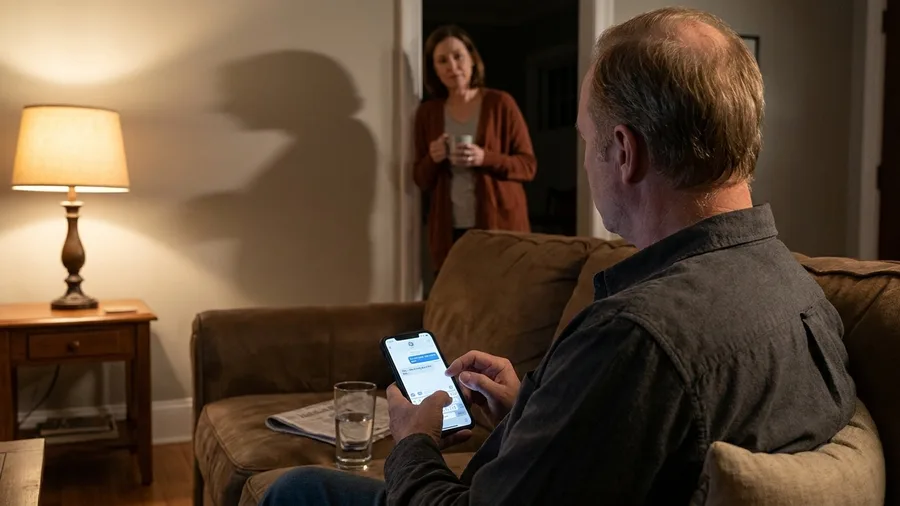
One question, asked before you defend a single thing, will tell you more than ten minutes of rehearsal. A pause gives you empty space; a question fills it with information instead of a counterargument, and the answer routinely turns out to be a person with their back against a deadline rather than a person with a grudge.
Picture the 4:45 email open on your screen and the rebuttal already half-typed. Delete it. What goes back is one plain line – no double question marks, no pasted quote of their message, no 'as I mentioned previously' folded in like a blade. Something like: 'Can you say more about the note and what needs fixing?' Then you wait, and the reply does the work of telling you what the fight is actually about.
With a person standing in front of you, the version is shorter. 'What did you mean by that?' is enough. One question, not a stack of accusations piled on top of each other – the moment you add the second and third, you are no longer gathering evidence, you are prosecuting.
Sometimes the answer is worse than you expected. 'Yes, I meant it' closes the door on the misunderstanding theory, and the honest response is not to relitigate what you heard but to state what you need going forward: 'That came across as hostile, and I need it said differently.' A person who confirms the sting and then refuses the request has told you something the question was designed to surface.
It helps to notice what this costs you socially: almost nothing. Asking reads as curiosity to everyone watching and as composure to the person who sent the two lines. The rebuttal, by contrast, reads as a fight you started.
The question is not yielding ground. It is a test – you are holding your invented story up against the sender's actual meaning and finding out which one survives contact with the answer.
💡 Tip: Use one question only. Stacking accusations into a single message turns a clarification into a cross-examination.
💡 PRO TIP
Script for a Blunt Remark
When someone says something sharp, try: 'That landed harder than you may have meant.' It names the impact without accusing the person of intent. Use it after the dinner joke about lateness or when a partner says 'You never help with dishes' after a long day.
3. The Intent-and-Impact Split

The expensive mistake here is choosing a side. Flatten the remark – decide it was fine, that you are too sensitive – and it goes underground and colours the next three dinners. Decide the person is cruel – and a joke told at a crowded table about your lateness becomes a verdict on their whole character. Both moves cost more than the remark did.
You can hold two facts that feel contradictory: no harm was meant, and it landed badly anyway. 'That landed harder than you may have meant' says both in one breath, and it works as well across a dinner table with three other people listening as it does in a kitchen after a long day, when 'You never help with dishes' arrives before you have taken off your coat.
The self-test takes ten seconds. Is the comment aimed at something you did – being late again – or at what you are capable of? A joke about a habit can usually be met with the impact line and then let go. A claim about your competence or your worth needs an actual boundary, and quietly absorbing it will not do. Then ask: is this a one-off, or the fourth time? One-off and low stakes means you can drop it without pretending it never happened; repeated, or met with a shrug when you name the impact, means it gets a conversation.
Either way, separating what was said from what you decided it meant keeps you out of the two failed positions – pretending it did not sting, or turning one sentence into a full character reading.
Intent vs. Impact — At a Glance
🎯 Intent
What the speaker meant
💥 Impact
How it landed on you
⚖️ Both true
No villain required
🗣️ Script
'That landed harder than you may have meant.'
Key move
Name the impact without assigning intent, then decide if a boundary is needed.
4. A Named Story, Not a Fact

The email is four words and a subject line, and your jaw has already tightened before you finish reading it. Your face heats. Your thumb hovers over reply. Somewhere between the screen and your stomach, a sentence assembled itself without your permission: they think you are incompetent, and they are angry.
That sentence is not in the email. It never was. Put two columns on a scrap of paper: on one side, what exists on the screen, the four words and the timestamp; on the other, everything you brought to it, the verdict about your competence and the mood you assigned to the sender. The right column is longer every time, and none of it came from them.
The phrase that does the work is short: the story I am telling myself is that this email means my job is on the line. Say it silently, in that exact shape, and watch what happens to the sentence. It does not vanish, but it stops pretending to be evidence, and a hypothesis is something you can test instead of something you have to answer.
The cue is physical and reliable. Tight jaw, hot face, the urge to hit send climbing. That is the moment to name the story, before you write a word back, because a named story is the only kind you can set aside long enough to draft without sending.
5. The Ten-Minute Draft Folder
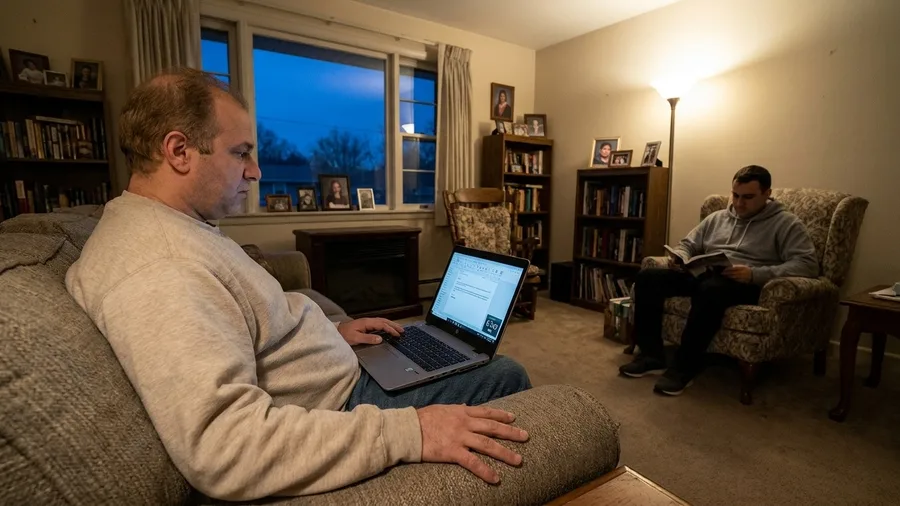
"I'll just say it now while I'm still angry." That line has sent more careers and friendships into the rocks than almost any other single remark, and it rests on a belief worth examining: that speed equals honesty, and that the raw version is the true one.
The anger is not the message. It's the reason to reach for a container rather than a send button: write the sharp two-sentence rebuttal, drop it in drafts, set ten minutes, and decide when the timer ends rather than when your pulse is highest.
When you come back, look for the one factual point worth keeping: a deadline, a missing detail, a question about what's actually broken. Strip the accusation, send that or nothing at all.
💡 Tip: Use the drafts folder for texts, too. Write the message, save it, and decide in the morning whether it still needs to be sent.
⏳ The 10-Minute Email Routine
Read the email
Notice the facts: the time, the words, the request.
Start a timer
Set ten minutes and do not reply during that time.
Write the draft
Type the angry reply in full, then save it without sending.
Wait for the timer
Use the pause to let the first emotional wave pass.
Extract the fact
Find the one factual point worth keeping and send only that.
6. The Need Behind the Sharpness

The version I got wrong for years: reading every sharp line as a verdict on me, and answering it as one. A curt message would land and I would build a whole character out of it, and I never once asked what the sender's afternoon had looked like before they typed it.
Picture the partner home at seven, dishes still stacked, saying you never help. It arrives as an accusation about who you are, and it may be that. It may also be the eleventh hour of a long day, a kitchen that never gets clean, and a person who has been carrying it alone since lunch. The line is sharp because the pressure is high, not because they sat down to compose a judgment.
The email is the same shape at a smaller scale. Four words and no greeting at 4:45 usually means a boss waiting on the other side, a project sliding toward a deadline, and a sender typing one-handed while something burns. A reasonable person under that much pressure writes badly.
Explaining is not excusing. The impact still landed, the boundary still stands, and you can hold both at once with one question: is this urgent, or is there context I am missing? The test has not moved. Their pressure was part of what happened. Your story about their character is still the part you added.
When to Address a Comment vs. Let It Go
Address it
- The remark repeats after you have named the impact
- It targets your competence or character
- The person dismisses your impact when you name it
- It happens in front of others and stings
Let it go
- It is a one-off and low stakes
- It targets a behavior, not your worth
- The person is open to hearing it but you are not sure it needs a conversation
- You are tired and the story is louder than the fact
7. A Short List of What You'll Actually Address

Treat every remark as equally worth a fight and you will spend your week in meetings about tone. The rule is not to respond to more; it is to sort faster, so the dinner joke and the email that actually matters do not get the same slice of your evening.
Ask three things of any slight: has it happened before, is it about something that counts, and would this person hear you if you said it plainly. One no and the remark is dropped or parked, not escalated. That is the whole filter, and it takes about ten seconds.
The friend's joke about your lateness lands with three other people at the table. You do not have to solve it before dessert. Sleep on it, and if it still stings in the morning and clears the three questions, say it once – "That joke about my lateness landed harder than you may have meant" – then let the next one go.
Letting a comment go is not amnesia. You are choosing not to spend a conversation on it, and you keep the right to raise it if it turns into a pattern. The filter asks what was actually said, what you added, and whether the added story is worth the cost of the fight.
What to Expect When You Practice
8. Public Practice at Being Wrong

Being corrected stings hardest when it arrives as a surprise, and the cheapest way to blunt that sting is to say it first, before anyone else has to. Some remarks survive triage precisely because they concern a small error of yours, and getting out ahead of the error lowers the temperature before the correction can land as a verdict on who you are.
Take the dinner where you arrive late. You sit down, the friend is already shaping the joke about your punctuality, and you get there first: "I'm late – that's on me." Three other people at the table hear it, the joke has nothing left to push against, and the evening moves on without a small trial in the middle of it.
The script is one breath long. "You're right, I missed that – I'll fix it." No backstory, no caveat, and above all no counter-accusation tacked onto the end, because the moment you add "but you also" the correction turns back into a contest and you are defending again.
What this practice separates is the error from the identity. What happened was a late arrival or a missed line in a document; what you fear it says is that you are careless or slipping. Naming the first out loud keeps the second from being inferred by everyone in the room.
The limit matters. This is for small, real errors, not for absorbing blame that is not yours – if someone pins something on you that you did not do, the move is not a cheerful apology but a question about what they meant joined to a plain description of how it landed.
Frequently Asked Questions
How do I stop taking a blunt comment personally?
Start by separating what was actually said from the story you added. Then use a ten-minute pause before replying, and ask one clarifying question. The goal is not to feel nothing but to avoid letting your first interpretation become your final one.
Is it weak to ask someone what they meant?
No. Asking is evidence gathering. It tests your story against the other person's actual meaning. If the answer confirms the remark was meant to sting, you can address it directly. Asking keeps you from fighting a fiction.
What if the person really did mean to hurt me?
Then you name the impact and set a boundary: 'That came across as hostile; I need it stated differently.' The habits in this article are for ambiguity, not for clear abuse. They help you tell the difference.
How long should I wait before replying to a sharp email?
Ten minutes is a good starting point. Use the time to let the first emotional wave pass, then extract the one factual point worth keeping and send only that. For serious conflicts, waiting until the next morning can help even more.
Does this mean I should never get offended?
No. Offense is information. The habit is deciding what to do with it: whether to address the remark, drop it, or ask for clarification. People who rarely get offended still feel the sting; they just have a process for handling it.
Before You Close This Tab
The eight habits are one move repeated. Insert a gap between the remark and your reaction, pull apart what was said from what you added to it, then choose: clarify it, drop it, or address it. Everything else is detail hung on that frame.
Which brings the 4:45 p.m. email back around. 'Need this fixed. See notes.' It no longer gets an hour. It gets a pause and a clarifying question, or it gets a draft saved and never sent.
So pick one recurring situation — probably that email — and for one week use only two of the habits: the ten-minute pause and one clarifying question. Nothing else. At the end of the week, look back and ask which of the eight actually reduced what you felt. That answer is where you start the next week.
The goal was never a thicker skin. It is a shorter leash between a blunt remark and the rest of your day.
Your Next Sharp Email
The next time a blunt message lands, set a ten-minute timer and ask one clarifying question before you reply. That is the whole experiment.

