
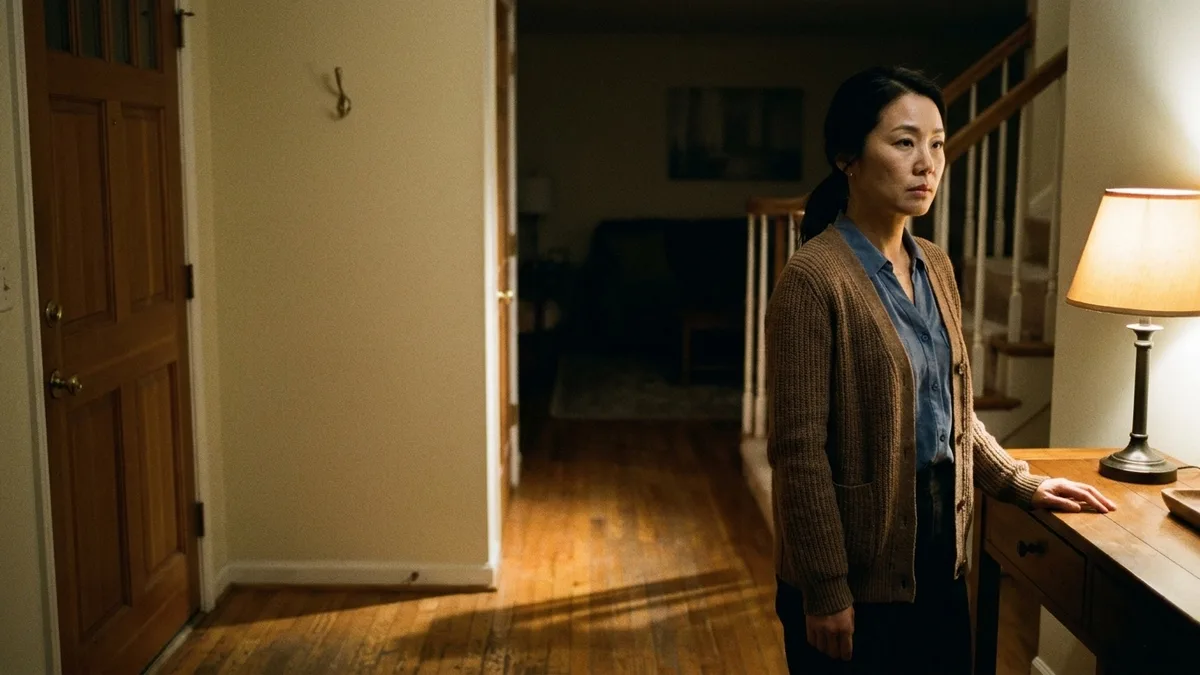
By the end of this, you will be able to tell which of your reasons for staying are protecting something real and which are only managing dread. Start with the sentence most people arrive with: I love them, I am just being realistic. Underneath it sits a leaving list they have not acted on, half-decided, reopened on the drive home.
The question is not whether the love is there. Love can sit in the same room as fear for years. The question is whether the reasons holding you are aimed at a named risk or only at the feeling of threat, because fear is very good at forging the evidence.
So treat what follows as a sorting test. Each ordinary marital caution has a fear-driven twin, and you tell them apart by one thing: whether the reason protects a specific, plannable risk or just prevents a feeling.
You will finish able to name what you are protecting, and make one move this week without waiting to feel certain first. That is the whole aim.
Staying out of fear and staying out of love can look identical from the inside. They are not the same, and the difference is checkable.
Quick Tips Before You Start
Write it down
Keep a note on your phone of every reason you give for staying. Patterns show up fast.
Use a timer
Give each sign ten minutes of honest thought. No spiraling, no deciding yet.
Say it out loud
Fear sounds different when spoken. Try one sentence to a friend and listen to yourself.
Don't decide today
This is a sorting exercise, not a verdict. You are naming what you protect, not filing papers.
How Fear Feels Day to Day
Fear in a marriage rarely announces itself as fear. It shows up as caution, as tension in your shoulders, as the way you check the driveway before you relax.
This first group is about the body and the daily mood. Before you can sort your reasons, you have to notice what your nervous system already knows.
1. You Stay Because Leaving Feels More Dangerous

Twice this month you have looked up the rent on a one-bedroom and closed the tab before the photos loaded. The scale in your head does not weigh affection against loneliness. It weighs threat against threat, and staying wins because staying is the safer loss.
So the question worth asking is not whether you love them. It is what you are avoiding by staying. Grief at the thought of leaving points to attachment; dread of harm, of chaos, of falling apart points to threat. Caution about money has a fixable object. For a first-hand account of what the financial, social and emotional reset actually looks like, read divorcing after a long marriage. Dread of what they would do, or who you would become, has only a feared transformation.
You can rehearse the disaster in detail – the family blaming you, the partner collapsing, yourself unable to cope – and still fail to name one concrete step for any of it. That is a story practiced until it feels true, not a risk assessed. Say the specific danger out loud and check whether it comes with evidence and a plan.
💡 Tip: If you cannot name one concrete next step for the feared outcome, it is a story, not a risk assessment.
Where This Sorting Usually Goes Wrong
2. You Track Their Mood to Feel Safe

The front door opens at 6:40. You are at the stove, and before you turn around you are already reading the sound of the keys, the weight of the footsteps, the length of the sigh. The day's safety is being decided by someone else's mood, and you have learned to check it the way you check weather.
A weekend plan sits half-formed in your head – a drive, a lunch with people you like – and you hold it back, waiting to see which version of them comes home. You scan a door-slam or a short answer for what kind of evening this will be. By the time you know, the plan has quietly died before you ever spoke it.
This is where the misread happens. You tell yourself you are being considerate, that anyone would adjust to a stressed partner. But ordinary consideration does not erase what you wanted. Fear does. The difference is whether your preferences survive the check or vanish inside it.
Here is the small test. Before you read their face, write down what you want – the plan, the ask, the opinion. Then check the face, and see whether the want is still on the table afterward. You do not have to fight for it. You only have to notice whether it is still there.
What the monitoring buys is real: an evening with less friction. What it spends is quieter. Every time you set your wants aside to keep the temperature down, you train yourself to file them as optional, and that habit compounds over months.
So the question sharpens. Is the mood-reading protecting you from a real, nameable risk, or managing a mood that cannot actually be predicted, however carefully you watch? One has an object you can plan around. The other just keeps you at the stove, listening.
⚠️ COMMON MISTAKE
Do not confuse relief with reunion
The calm after a fight is not the same as the warmth of being with someone you love. If the best part of the day is the fighting stopping, you are measuring threat ending, not connection starting.
3. You Mistake Relief for Love When They Come Home
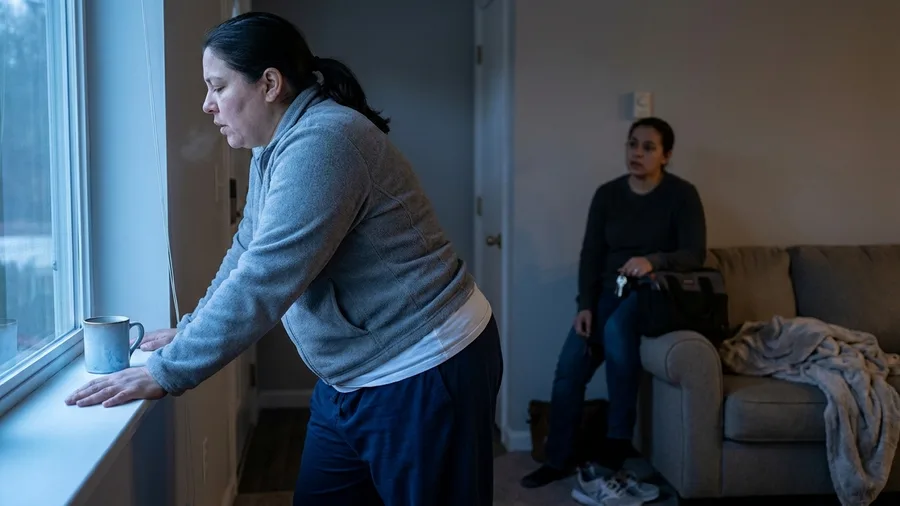
"I'm just so glad when it's over." That sentence comes up often in the calm that follows a bad stretch, and it is worth taking seriously, because it can mean two very different things about a marriage. The obvious move here is to tell yourself the quiet after a fight is the love coming back. That reading is easy, and it is often wrong.
The pattern most people describe runs in a loop: tension builds for days, the fight breaks, and then the relief arrives, warm and close and almost tender. But that warmth resets, and once the partner leaves the room or the house for a few hours, the dread quietly comes back and the next stretch begins. Relief can be a normal part of repair, too, because after a real argument some calm and reconnection are expected.
The difference shows up in what you are looking forward to. When your ears are tuned to a door, a slammed cabinet, the pause before a sigh, the part of the evening you want is the one where nothing happens, and the good night is a night with no friction in it. That is not delight in the person, it is absence of threat.
So try the test out loud. "I'm glad the fighting stopped" and "I'm glad it's them" feel almost identical in the moment, and the second one, if it holds, is the one that is love. If only the first is true, the calm is threat ending, not warmth arriving, and the honest question is what that calm is protecting: the connection, or the ending of danger.
How Fear Shapes Your Choices
Fear does not just live in your head. It writes your budget, your calendar, and the list of things you no longer ask for.
This group is about the choices that look practical from the outside but are actually fear wearing a sensible coat.
4. You Call Financial Fear 'Being Realistic'

When the reasoning mind goes looking for a respectable word for dread, money is the one that never gets challenged at dinner.
It is worth pricing a separate life anyway. Rent, deposit, utilities, childcare, transport, the debt payments you would carry alone. Not to force a decision, just to give the fear numbers instead of fog. Real financial dependency needs a plan, not shame, and plenty of people are genuinely held by it.
The exception is easy to see. Someone who has run those numbers, knows what the trade-off costs, and still chooses to stay is deciding. Someone who says I cannot afford it while never opening a rental site is holding up a number they have not checked. So the question becomes plain: does money name a real constraint here, or is it hiding what you would do if you could afford it?
💡 Tip: If you have said 'I cannot afford it' more than three times this year, open a rental site tonight and write down one real number.
The Words Fear Uses
5. You Have Shrunk Your Life to Keep the Peace
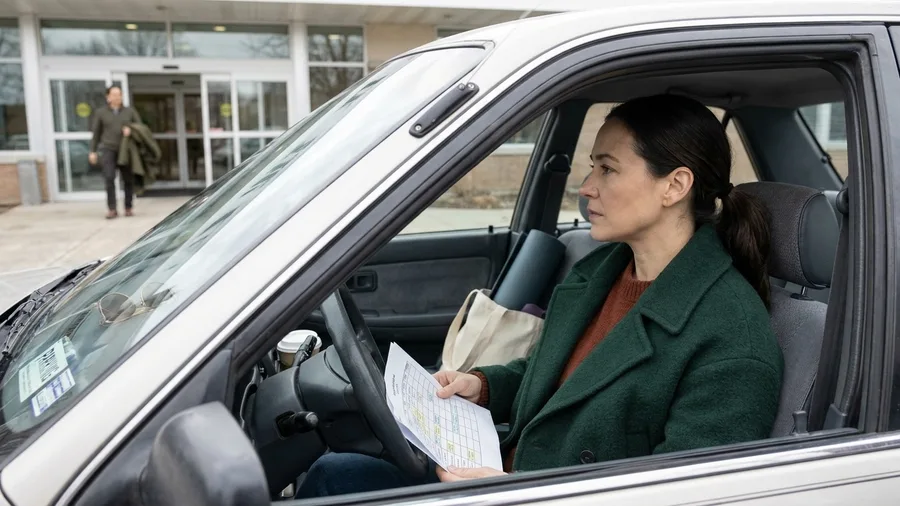
The cost is quieter than the money and harder to count: a life slowly pared down until leaving no longer looks possible, because the person who would have left is not there anymore. It starts with small editing. A weekend plan gets held back. An opinion gets softened to nothing.
Picture the Tuesday night class. You had mentioned it twice, then a sulk after one evening out made the next mention feel expensive, so you stopped. The friend who never gets called now was not cut, just let drift, because seeing her meant paying for it later. The promotion you were going to apply for got described as a lot of extra pressure, and you half believed that too. Each of those looked like accommodation at the time. If that pattern sounds familiar, learn to recognise the habits that quietly drain your calm in protecting your peace after sixty.
All of it did buy quiet. It also trades away the version of you who could imagine a different week, and that is the trade to look at. Compromise is ordinary; the sign is when every compromise cuts the same way, toward their comfort and away from your life.
Make the list. Who stopped being called, which class got dropped, which ambition was softened. The pattern on the page is what answers whether this has been real giving at the edges or hiding in the name of peace.
Accommodation or Disappearance?
Healthy compromise
- Both people give something up, on different days
- Your preferences still show up in the plan
- You can name what you gained, not just what you lost
- The friendship you kept is still on the calendar
- You make a trade-off and feel okay about it later
Fear-driven shrinking
- You are always the one who adjusts
- Your wants vanish before they are spoken
- You cannot remember the last thing you chose for yourself
- The friend you stopped calling stopped being mentioned
- You feel relief, not satisfaction, when you give in
6. You Keep a Secret Exit Plan on Standby
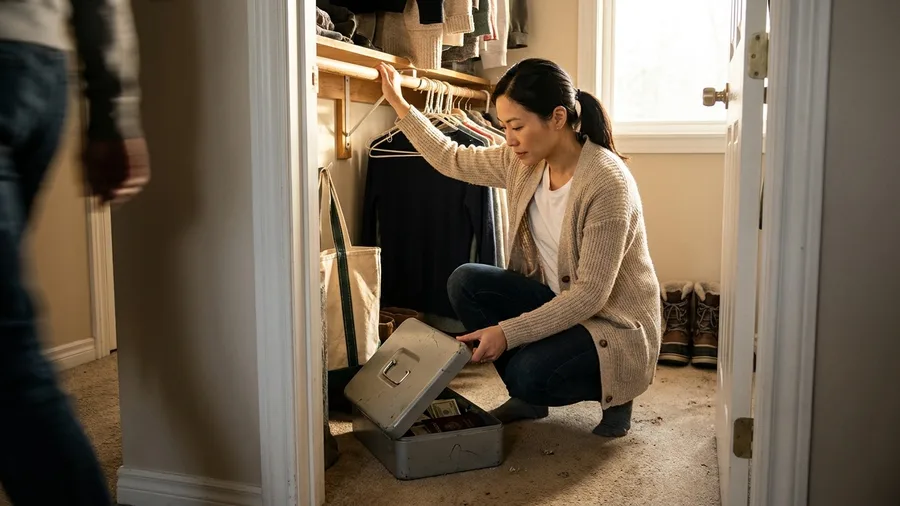
A secret exit plan is the safety valve a shrunken life produces. A separate account with a few months of expenses, a bag in the back of the closet, a mental list of apartments you have never called about. It is not a fantasy you enjoy. It is relief you check on during bad weeks.
The point is not the plan; it is what the plan is for, and whether it ever moves toward a decision. Keep it hidden if you are genuinely unsafe, no one should announce an escape. If you are not, read the direction it pulls you. Braver to stay and work on it, or braver to go.
The Secret Exit Plan — At a Glance
💰 Readiness threshold
Covers a deposit, a first month, a van
📍 Frequency that means something
Weekly for months, not once a bad night
🕵️ Wrong move
Funding it further instead of deciding
⏳ When the plan is not the problem
Real danger — keep it hidden, tell no one
🎯 The tell
You add to it after good weeks too
Order of operations
Fix the number first, then stop. A plan you keep topping up is a decision you keep postponing.
How Fear Writes the Story You Tell
By now fear has moved out of your body and into your choices. The next place it lives is in the story you recite to other people.
This group is about the defenses, the explanations, and the identity you have built around the marriage.
7. You Defend the Marriage More Than You Enjoy It

The standard advice is to stop complaining about your marriage to other people, and it is good advice that misses the harder problem. A marriage can be defended flawlessly and still not be lived. The telling detail is not that the defense exists but that it has become fluent.
You have a version of the story ready before anyone asks. Your partner is steady, they work hard, they showed up when your mother was in the hospital, the mortgage gets paid. It comes out polished, almost cheerful, and it launches in the middle of a conversation that was going fine. Somebody at dinner says they are thinking of separating and you are suddenly making the case for your own life. Defending has quietly taken over the slot where enjoyment used to sit.
So ask yourself the question that sorts it. When was the last genuinely good day, not a vacation and not a holiday and not the wedding in the photo on the shelf. Just an ordinary Tuesday. If something in you reaches for the old birthday snapshots first, notice which direction the answer runs.
Every long marriage has a rough season, and defending it during one is not a job. It becomes one when you can tell who the defense is aimed at and the audience is you, the part of you that keeps half-deciding. Protecting the marriage from fair criticism is one thing. Protecting yourself from the question is another, and only the second one needs the speech this ready.
A Week of Honest Noticing
8. You Can't Picture Who You'd Be Without the Marriage

The mistake is treating the blank as evidence. Ask what would be wrong without the marriage and the mind either stalls or cuts straight to a disaster movie with no script, and it is tempting to read that emptiness as proof the life is good. It is not proof of anything except that the picture has never been drawn. The blank is unexercised imagination, not a verdict on the marriage.
Identity is partly housed inside the marriage and always has been. There is the role of spouse, the shared friend group, the routine of who texts when, the standing story about who you are as a couple. Pull that out and the person left standing has to be imagined from scratch, which is a genuinely uncomfortable exercise, separate from whether the couple is any good. Wobble in that picture is normal in any big change. It becomes a sign when the blank is the only thing keeping you there.
Here is the exercise. Write a page about one week alone, and be as specific as you can. What a Tuesday morning looks like, where you go when you leave the house, who you would eat dinner with on a Thursday in January. The partner's schedule you can list without hesitating and the shared friends you can name in order. Your own Tuesday is where people stall. If you stall, that is information about the page, not the marriage.
The script you can use on yourself, and only on yourself, is short. I can describe their week in detail and I go vague on mine. That is a gap I can close by writing the page, and closing it does not decide the marriage. The tool works whether or not the partner is at the center of it.
🧭 From Noticing to Deciding
Name the fear
Write down what you are afraid would happen if you left, in one plain sentence.
Check the evidence
Ask whether that fear is a real risk with a plan or a story you have rehearsed.
Price the alternative
Look up one real number — rent, deposit, childcare — so the fog becomes a figure.
Run the body test
Notice whether thinking about leaving brings grief or dread, and write down which.
Sketch a week alone
Fill one page with a Tuesday alone. Not to leave, just to see if the picture exists.
Take it to someone
Bring your notes to a therapist or a trusted person this week and say them out loud.
Frequently Asked Questions
How do I know if I am staying out of fear or love?
Ask what your reasons protect. A love-driven reason makes room for the relationship and for you. A fear-driven reason manages a feeling of threat and keeps you from deciding. If you cannot name one concrete step you could take toward the feared outcome, it is likely a story, not a risk.
Is it normal to feel relief when my partner comes home, even if I am unhappy?
Yes. Relief after conflict is a normal nervous-system response. The question is whether relief is the main thing you look forward to. If the good part of the evening is the absence of tension rather than the presence of connection, that is worth noticing.
Does having a secret exit plan mean I have already decided?
Not necessarily. An exit plan can be healthy preparation, especially if you are unsafe. But if the plan brings relief and no decision ever follows, it may be substituting for one. Ask whether the plan makes you braver to stay and work on things or braver to leave.
What if I genuinely cannot afford to leave right now?
Financial dependency is real and not a character flaw. It needs a plan, not shame. Price out what a separate life would cost in real numbers, start with one figure, and bring it to a professional who can help you build a realistic path.
When should I talk to a professional?
If you are losing sleep, feeling hopeless, or unable to function, talk to a therapist or your doctor. If you are in danger, contact a domestic abuse hotline. This list is a sorting tool, not a substitute for professional help.
Can fear and love coexist in the same marriage?
Yes, often. Most long relationships contain both. The useful exercise is not to prove one and eliminate the other, but to notice which one is doing most of the work in your reasons for staying. That balance is what you can actually change.
Name the Fear, Then Take One Step This Week
This list is a sorting tool, not a verdict. Fear-driven staying is named when your reasons manage dread rather than protect a named risk. Love-driven staying can name the cost and still choose the person. The test is not whether you feel afraid but whether the fear points to something you could plan for and still stay.
So here is the first move. Write down what you are afraid would happen if you left. Be specific, unedited, no polishing. Then take that piece of paper to a therapist or a trusted person this week and say it out loud. You are not deciding anything yet. You are only naming the fear where someone else can hear it.
The plain rule: love-driven staying can hold the cost and still choose the person. Fear-driven staying cannot name a risk without rehearsing disaster, and it stays to keep the disaster from happening. If your reasons only manage dread, that is the sign to look at first. This list does not fit everyone. If you are in immediate danger, safety comes before any list. And if you have run the numbers and freely choose the trade-offs, you are deciding, not stuck.
Go back to that half-decided moment. The list does not demand certainty or a decision today. But it does ask for one named fear and one chosen step. Write the fear down. Take it to someone. That is how you begin to tell which reasons are love and which are fear. You will not have the whole answer this week. You will have a place to start.
Write the fear down tonight
Open a note on your phone and finish this sentence: 'If I left, what I am most afraid of is…' Then bring it to one person this week.

