

The surprise is that when parents in their seventies are asked what they would change, almost none of it is about rules set too loose or too tight. It is about the same room, the same evening, a face that stayed trained on a screen while a child talked.
It is 9:40pm. The dishes are still in the sink, the phone is face-up on the counter, and a child is asleep who was promised a story. There is no way to check in advance whether the way these days are being spent becomes the thing looked back on at seventy.
Most of what gets named later is not a failure of love. It is a failure of proportion, and about half of the eight that surface most often only look like mistakes from the far end. The curfew, the rescue, the lost temper over spilled juice were the price of an ordinary childhood.
So the work here is sorting: which two of the eight are actually yours, which you can set down tonight, and the one move small enough to make before Sunday.
Quick Tips Before You Start
Test by memory, not intention
Every regret here gets the same question: what were you buying at the time, and what did your child actually store?
Sort fixable from finished
Time, attention and repair are still open. Rules and rescue are usually hindsight, not error.
One change this week
Pick one move so small you can do it on a Tuesday with no preparation.
Say the repair sentence
If a specific apology is owed, say it in plain words and then stop talking.
Remove one thing
Take one activity off the family calendar and leave the blank space where it was.
Time and attention
The first two regrets parents name are about hours. How many they worked, and how present they were in the hours they had. At seventy, nobody says they wish they had picked up more shifts.
What they say is more specific than that, and it is worth listening closely: they do not regret providing. They regret what the providing looked like from a child's eye level.
1. The overtime was remembered as absence

The advice says the time you spend at work is a gift to your children. It says they will understand when they are grown, when the second bedroom has a bed in it and the tuition is settled and nobody has to take out a loan. That is the version the parent holds while running the numbers honestly, and the numbers do come out.
Here is what the child's account tends to look like instead. A parent who worked an extra shift through three weeks of one December, who was gone from Tuesday to Thursday on a trip that seemed important at the time, who missed bedtime on four nights that month, who watched the school play later on a phone screen from a hotel room that smelled like carpet cleaner. The child does not remember the shift as sacrifice. The child remembers a chair with no one in it and a plate covered in foil on the counter.
It is not that the money did not matter. It is that the mortgage got paid and the braces happened and nobody lost the house, and all of that was real. The money was the part that could be replaced later. The empty chair was not, and it turns out to be the only item the adult child brings up when asked.
This is not every family, and it is worth saying so plainly. There are households where the long hours paid for rent and food, where the schedule was not a choice but a necessity, and the child remembers something different entirely: the lights on when they got home, the fridge that was full, a parent who showed up at the door. For that parent the regret does not apply, and picking it up would be a mistake.
So the test comes down to two columns. The parent was buying provision. The child was storing absence. Both were happening at once, and only one of them was ever on the shelf when the child went looking.
💡 Tip: The test: you were buying provision. Your child was storing absence. Only one of those ended up on the shelf, and it was not the one you were shopping for.
What still moves the needle
Fixable at 70
- Making the apology you have been putting off
- Adding a recurring ten-minute unplugged hour
- Removing one activity from the calendar
- Praising effort out loud, in specific words
Mostly hindsight
- The extra shifts that paid the mortgage
- The strict curfew that kept a teenager safe
- The rescue that prevented a genuine crisis
- The busy years that built real skill
2. They remember attention, not hours logged

" It's the line that comes up whenever the missing hours are the ones a parent is most torn up about, and the answer is that being home and being there split apart more easily than anyone expects.
Three hours in the same room with a laptop open doesn't register like ten minutes with the phone in the other room. A child reads attention almost entirely from whether the adult's eyes come up from the screen.
The kitchen counter at 6:20pm tells it. Phone in hand, the child arrives with a drawing or a wiggly tooth. The parent says "mm-hmm," then "mm-hmm" again. Then, without a word of complaint, the child leaves – and the parent looks up to an empty doorway.
The fix parents tend to land on now isn't the grand trip they'd trade for – it's a short, repeated ritual. The same ten minutes, the same hour each evening, phone charging out in the hallway. Small enough that the day can't argue with it.
There's a counterweight for those whose hours genuinely weren't a choice: if the time available was thin, the regret isn't about the count of minutes, it's about the quality of the few that were there. The currency a parent thinks is being banked is hours in the house. The thing a child is actually storing is whether the adult looked up.
💡 Tip: Pick the ten minutes and defend it like a meeting. 8:45 to 8:55, phone on the charger in the hall, no exceptions.
3. The busy schedule crowded out useful boredom
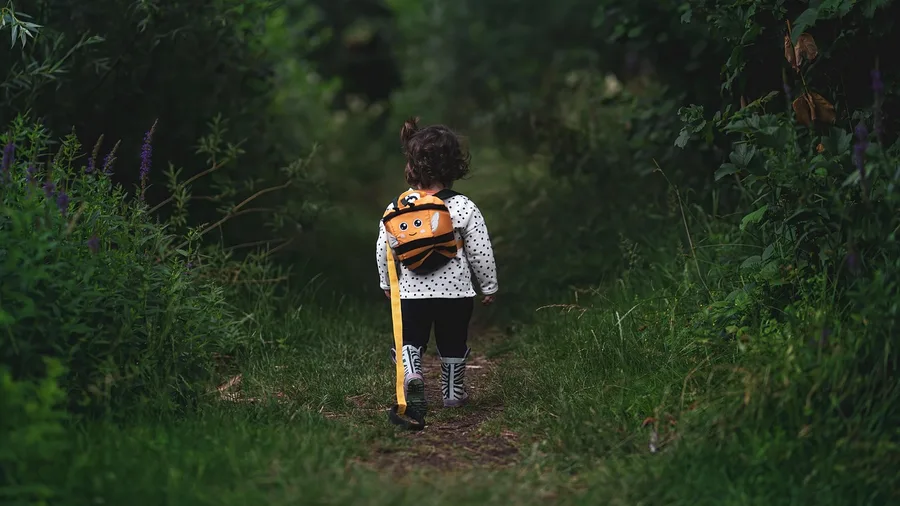
The cost is not the practice or the ride. It is the Saturday afternoon with nothing written on it, and by the time you notice you have already filled that afternoon with something else. The calendar fills itself if nobody guards it, and a child who never has a blank hour never finds out what they would have done with it.
The week tends to run like this: a piano lesson, a practice session, a tutoring hour, a game at eight in the morning, a lap desk doing homework in the back of the car, and dinner passed through the window of a drive-through. All of it was building something real. Discipline, a shot at the team, a line on a resume. What it crowded out was the empty afternoon where a child tries things and discovers what they actually like when nobody is standing over them with a schedule.
The consequence parents name most often is a twelve-year-old who asks what they are doing today and means it as an accusation, or a shelf of equipment from four abandoned activities and not one of them chosen by the child alone. The exception is real and worth knowing. If the child picked the instrument and asks to be taken, that is not your anxiety, it is their interest. So is the family where the structure is the point, the pool, the ride that keeps a kid off the corner.
The test is whether the parent was buying opportunity while the child was storing a calendar with no blank lines on it.
💡 Tip: The test: you were buying opportunity. Your child was storing a calendar with no blank lines on it.
🌱 GROWING TIP
Clear one afternoon this week
Open the calendar and delete one activity your child did not choose. Leave the empty afternoon where it was. Do not fill it with something better. The point is to see what they reach for when nobody is assigning anything.
Discipline and rescue
Next the rules. This is where parents are most likely to regret something they cannot now change, and most likely to be wrong about whether they should.
The rule that felt too strict at the time and the one that felt too soft both get revisited. What matters is not whether they let the child get away with something, but what the child learned about whether it was safe to tell them.
4. How loud you get over a spilled juice
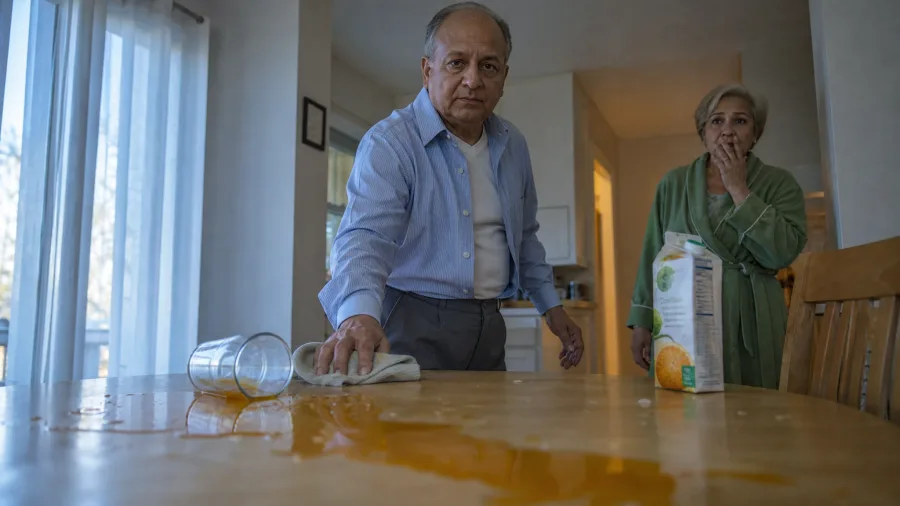
Most parents who ask already know the answer, and the obvious advice – just relax, pick your battles – misses the actual mechanism. A temper over a spill is the other half of the over-scheduled calendar, the same instinct looking for something decisive to control when the day feels like it is running itself.
It is 7:15am, the carton tips, orange spreads under the chair, and the volume that comes out of you is for a 40-cent glass of juice. The thing you were actually afraid of had nothing to do with the spill. Somewhere in your head a voice was saying the scattering is a sign of a child who does not care, and that the carelessness traces straight back to you.
What the adult child takes from the morning is not the lesson. It is the sound. Kids calibrate fast: the note from the teacher that stays in the backpack, the scrape that gets dealt with alone in the bathroom because asking for a bandage means a conversation, the small fib about a small thing to keep the kitchen quiet.
Safety, honesty and kindness were never small messes and still are not. The jacket by the door, the worksheet at 9pm, the B-minus in the folder – those were the size of a sigh. What you were trying to buy was standards. What got stored was your tone, and tone is what a child remembers long after the lesson fades.
💡 Tip: Count to five before you say anything about a spill. The five seconds are the whole technique.
5. Rules won the argument, lost the teenager

Ten o'clock. Nineteen fifty-five home every night for two years, phone charging on the kitchen counter from nine, anything under a B and the weekend was gone, and one bedroom door argued over for so long nobody could recall what started it. The compliance was real, and it looked like success. It was the same overcorrection as the yelling over a cup – small things treated as pivotal, fear dressed as firmness.
What came later was quieter. The party on Friday that never came up at dinner. The ride offered by a friend's older brother, mentioned three months on, or never. The rule kept the body in the house and taught the teenager to run the rest of the life somewhere the parent could not see, and no rule can reach that far.
"Thank you for telling me. I am not going to yell about this tonight." Safety, honesty, and knowing where they are at 2am stay fixed; the hair, the messy room, the elective – those can be shared, and shared control is what keeps the door open.
6. Rescuing them taught them to fear failure

It is 7:40am, the project is still on the kitchen table, the bus leaves in six minutes, and you are in the car with the folder on the passenger seat, rehearsing what you will say to the office about arriving late. The school is twelve minutes away. The grade is due by noon. One phone call fixes all of it.
The same anxiety that writes a curfew writes that drive. A rule is a defense against a future you cannot see; a rescue is a defense against a failure happening in front of you right now – the tears at the breakfast table, the C that closes a door, the spot on the team that goes to somebody else. Both feel like protection. Both are fear with a plan.
Researchers who study how children handle setbacks keep landing on the same observation: the ones who recover fastest are not the ones who avoided difficulty but the ones who were allowed to try something hard, fail at it in a small way, and discover that they were still standing afterward. The lesson is not in the rescue. It is in the recovery.
What the adult child carries instead is a quiet assumption that a mishandled bill or a rejected application is not survivable, because a parent always arrived before it could be proved otherwise. At twenty-three that shows up as a phone call to somebody else first, a form left on the counter, an internship window that closes while they wait to feel ready.
The exception matters. Safety, health, a disability, a school that will not answer a child alone – those are real reasons to step in, and stepping in then is not a rescue. The test that separates them: is the consequence one they can survive and learn from, or one that would genuinely cost them?
"I am not going to call the teacher this time. Tell me what you think your options are, and we will figure out the next step together." You are not buying a clean record. You are handing back the evidence that they can handle the outcome.
💡 Tip: Next time the project is forgotten, ask: 'What's your plan?' and then wait. Let the answer be small and imperfect.
When to step in — at a glance
🚨 Safety or health
Step in before you decide — no waiting for proof
♿ Disability or access
Advocate, and tell the child what you are doing and why
🏫 System that won't answer a child
Make the call yourself, then hand the follow-up back
📝 Forgotten homework
Say nothing at 7:40am; ask what they will tell the teacher
⚾ Playing time or coach's choice
Ask the child what they want to do before you ask the coach
💸 First late fee or bounced bill
Sit beside them while they call, not instead of them
The rule
If you are the one rehearsing the excuse in the car, the rescue is already the regret.
Praise and repair
The last two are the ones parents feel most sharply, because they are about words. What was said out loud in praise, and what was never said in apology.
These are also the two that stay in your hands the longest. You can still say the sentence. The child is still alive to hear it.
7. Praising the grade and skipping the effort
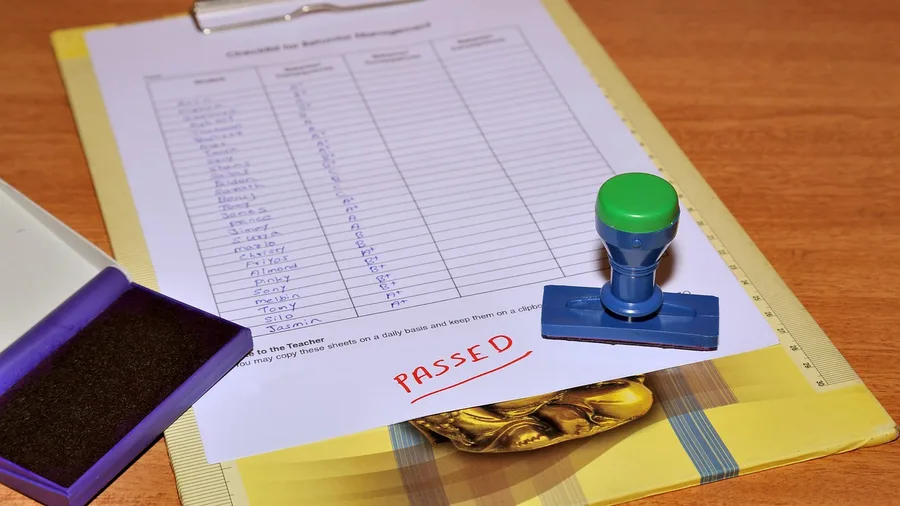
The test comes home in a folder and the first words out of your mouth are about the number.
He is eight, standing at the fridge door holding the paper up, and it says 94 in red at the top. What comes out is 'You're so smart,' or 'Another A, that's my girl,' and it is meant as pride, meant as the settled reassurance that this child is going to be fine. What the child hears, in the same three seconds, is that the paper is the important part — that the thing being admired is the score, not the hour spent erasing and starting over. The two of you walk away from the fridge having had entirely different conversations.
The pattern shows up slowly enough that nobody connects it to the fridge. At ten, the violin goes back in its case in year two, right when the pieces stop being easy and start requiring practice that sounds bad for a few weeks. At twelve, the sport is dropped after a first season mostly on the bench. At fifteen, an essay assigned about something he actually cares about sits untouched until the night before, because a half-tried B feels safer to hand in than a fully tried one. The child has worked out the rule on his own: if the result is what gets praised, then a result that might disappoint is not worth attempting.
The fix is not to withhold praise — the same parent who praises only effort and never results leaves a child who cannot say out loud that she is genuinely good at something, and that is its own gap. The fix is to make the praise specific enough to match what actually happened: 'You erased that whole line and started over — that's the part I noticed.' Three seconds at the fridge, aimed at the erasing instead of the 94, and the child files a different lesson: the trying is the thing that counts here, not just what came out the other end, and trying badly costs nothing at home.
8. The apology never made outlasted the offense

The instinct to apologise less is one worth admitting, because it usually comes dressed as authority. A month of grounding over one text message, a snapped comment at the door, a promised trip called off for work, a punishment that fit the parent's bad evening better than the offense – and no sentence afterward, on the belief that a parent who says sorry hands the child a lever.
What it spends instead is the silence that settles in behind every one of those moments. The child files the exact sentence away, and it is still there at thirty, at forty, at a table where a parent is looking back and can hear it too. The sentence still open to being said is short: 'I was wrong about that. You didn't deserve it.' That is not abdicating authority, and it is not re-opening every decision ever made in the house.
Some parents did say it and carry regret anyway – the apology closed the distance, but the years before it stayed gone, unlike people who look back without bitterness. The parent was buying authority. The child was storing the silence that came after.
💡 Tip: The test: you were buying authority. Your child was storing the silence that came after.
What the silence costs, over months
An apology does not undo the years, but it gives the adult child a different ending to the story.
Frequently Asked Questions
Is it too late to apologize to my adult child?
No. The apology does not need to be long or full of backstory. Two sentences are enough: 'I was wrong about that. You didn't deserve it.' Then stop and let them respond, or not. What usually helps is the willingness to say it without asking anything in return.
I really couldn't be home more. How do I stop feeling guilty?
The regret applies to the quality of the minutes you had, not the number of hours you were gone. If the hours paid for rent and food and your child remembers the lights being on and the fridge being full, that is not a failure. If you can still start a ten-minute ritual this week, do that instead of carrying the guilt.
How do I know if my rules were too strict?
The question is not whether the rules were strict. It is whether your child felt safe telling you when something went wrong. If your teenager stopped volunteering information about where they were or who they were with, the rules were doing the wrong job. Safety limits can stay strict, but they need to come with an open door.
Does giving praise for effort mean I should never praise results?
No. Results deserve a mention. The problem is narrow praise, where the grade is the only thing that ever gets noticed. Add effort and strategy to what you say. A child who hears 'You worked on that for an hour' alongside 'Nice result' learns that ability is not fixed.
What if my adult child doesn't want to hear an apology?
You can say it once, plainly, and then respect their response. If they are not ready, you have still said the truth. Repeating it or asking for a reaction turns the apology into pressure. Keep the words short and let the door stay open.
Which regret should I work on first?
Start with the one that is still in your hands and costs the least to try. For most parents that is the apology or the ten-minute ritual. Pick one. Do it this week. The rules and rescues can wait, because most of them were hindsight.
Only the Open Accounts Need You Now
Sort them first. The hours, the looking-up, the sentence never said are open accounts, because the child is still in the house and can receive the change this week. The rules and the rescues are a different animal: what looks now like a mistake was mostly a decent childhood being paid for, and you can stop carrying that bill. It was settled a long time ago.
Pick one move and do it before Sunday. Say the apology out loud, the actual words about the shouting over the juice. Or hold ten unplugged minutes at the same time every night with the phone in another room. Or strike one activity off the calendar and leave the space empty.
The B-minus temper, the 10pm curfew, the project driven to school at 7:40 in the morning. Those were the price of an ordinary childhood, and they were paid.
Which leaves the kitchen at 9:40pm, the phone face-up on the counter, the child asleep. What holds up at seventy turns out to be short and nearly all one item: ten minutes, and the sentence I was wrong. Both are still available tonight.
Pick your regret and act this week
Choose one: the apology, the ten-minute hour, or the empty afternoon. Do it once. See what changes.