
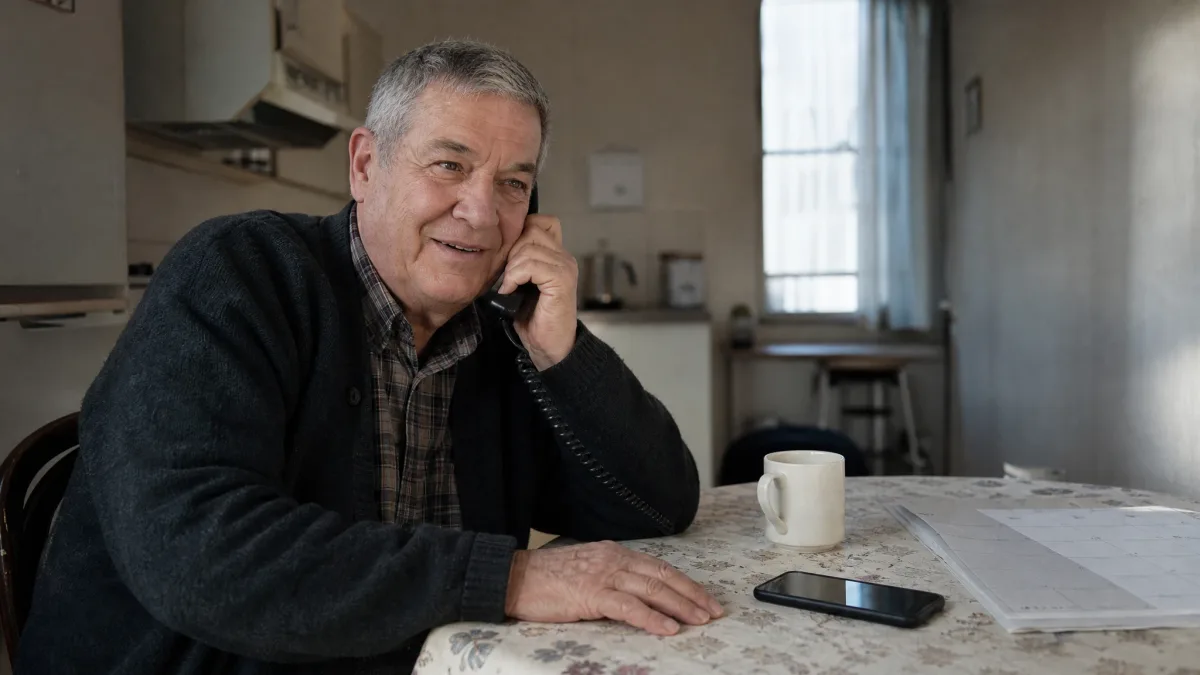
A week of days with no conversation in them costs more than a week of groceries, and only one of those two things can be delivered to the door.
The quiet in a one-bedroom apartment has a shape. Mornings stretch out before the first voice, the landline and the smartphone sit there charged and silent, and a whole day can go by without a reason to say anything out loud.
Waiting for a visit is not a plan. What works is smaller and closer: a fixed cue, one named person or role, and a fallback for the days when energy runs out. Ten routines follow, most of them free and none of them costing more than about $25 a week, running from ten minutes to an hour. They ask nothing of your knees, your car, or your hosting.
Pick one for this week, add one act that gives something back, and write a check-in on the paper calendar. That is the whole of it.
Quick Tips Before You Start
Pick one, not ten
Choose a single routine for this week. Adding a second before the first is automatic is how most plans die.
Name a real person
Write their name next to the routine. A routine addressed to 'someone' will not survive Wednesday.
Build the fallback first
Decide now what happens on a low-energy day: a shorter version, a voicemail, a text. The routine needs a low gear.
Tie it to a daily cue
Attach the routine to something you already do — coffee, the news, the morning pills. The cue does the remembering.
Expect silence sometimes
Missed calls and unanswered notes are information, not rejection. The routine is the win, not the reply.
1. The Morning Check-In Call

Ten minutes, same window every morning, one person who knows to expect you. That is the whole routine, and it works precisely because it asks so little. The call is a social anchor before the day has a shape of its own, and it does something no other routine can: someone else notices when the phone doesn't ring.
Keep the opener boring on purpose. 'Just checking in – what's for breakfast?' gives both of you a reason to be there that doesn't have to be invented fresh each day. If hearing is the barrier, use the landline or an amplified phone; a tablet or amplified handset runs about $60-$150 if the current phone fails you.
Agree the backup before you need it: a voicemail or a two-line text if the call is missed. Say plainly that this is a check-in, not a crisis line, so neither of you carries that weight. Over months it buys a bracketed morning and spends a little of your day, ten minutes, every day.
💡 Tip: Set the call for the same 10-minute window every day, even on days you don't feel like talking. Five minutes counts.
| Routine | Best for | Weekly time | Cost |
|---|---|---|---|
| 1. Morning check-in call | Starting the day with contact | 10–20 min daily | $0 |
| 2. Porch-window hello spot | Unplanned neighbor contact | 20–30 min total | $0 |
| 3. Weekly video coffee date | Closeness without travel | 20–30 min | $0–$150 if tablet needed |
| 4. Shared-TV phone watch | Companionship with little talk | 1 hour | $0 |
| 5. Sunday letter desk | Contact without phone calls | 20–30 min | $0–$10 for stamps |
| 6. Voice-message family thread | Busy or distant family | 10–20 min daily | $0 |
| 7. Borrow-and-return porch shelf | Feeling useful and connected | 10 min | $0–$5 |
| 8. Live virtual library class | A group that expects you | 1 hour | $0 |
| 9. Window herb-garden ritual | Daily purpose and a safe topic | 5 min daily | $0–$15 |
| 10. Call-someone-who-needs-it slot | Moving from receiver to giver | 10 min | $0 |
2. A Porch-Window Hello Spot
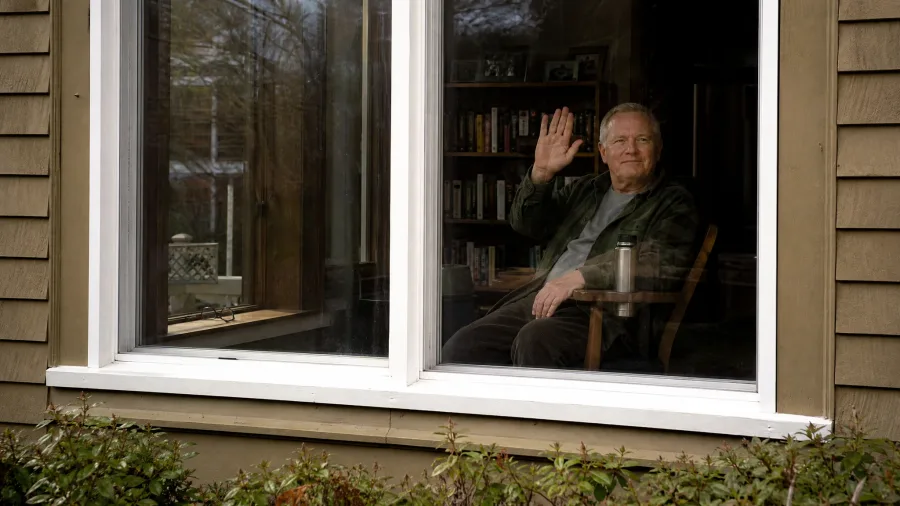
The mistake is turning the window into a vigil. Pull the chair over, settle in with a thermos at four, and then sit there watching the pavement for someone to appear – that isn't contact, it's waiting with extra steps, and it leaves you lower than you started.
The version that holds up is looser. Chair by the front window, good light, a thermos, and no expectation attached. Two or three openers you can say without thinking: 'How's the garden?' or 'Cold enough for you?' A neighbor passing with a dog stops for a four-minute garden question and moves on. Under five minutes, both times, and nobody has been hosted.
Visibility is the point, not standing at the door. A weatherproof crate by the step holds the thermos or a pair of gloves so weather doesn't end the habit. If nobody comes, the chair is still warm and the tea is still tea, and that's the difference between an ambient bridge and an appointment.
What makes it a bridge rather than a substitute: you are reachable, not needy. The neighbors learn the window means she's about, and the contact stays low-pressure on both sides. When someone does want to visit properly, the invitation comes later, from them.
💡 PRO TIP
The Four-Minute Rule
Keep every window hello under five minutes. Short, frequent contact builds more goodwill than one long conversation that leaves you tired and the neighbor late.
3. The Weekly Video Coffee Date

The cost of a standing video call is the setup nobody mentions: a screen propped too low so the cousin spends the whole call looking up your nose, a link that asks for a password you cannot find, and a call that keeps getting rescheduled because asking someone to drive over is the thing you were trying to avoid. Researchers who study loneliness in later life keep returning to the same finding, that the closeness people are missing is not measured in hours but in recurrence – the same face, at the same time, with the expectation that it will happen again. A standing video call delivers that without a single trip across town.
What makes the call land is the fixed cue and the shorthand around it. Choose one person and one time – Saturday at 10 a.m. is a good default because it comes before the day's errands and after breakfast – and keep it to 20 or 30 minutes. Prop the phone or tablet at eye level on a stack of cookbooks so you are looking straight at each other, and log in to the platform a day ahead so the call opens with a greeting rather than a search. If a tablet is the piece you are missing, the ones that hold a stable stand and a large screen run from around $60 to $150, which is the only money this routine asks for.
Give the call a shape so it does not become the same stiff weather report. Both of you use the same mug, keep the same snack on the table, and bring one thing to show – a photo of the herb pots, a card that arrived, a plant cutting you mean to bring over in person when the chance comes. The 74-year-old sits down at 10 a.m. Saturday with the chipped mug, the tablet balanced on cookbooks at eye level, and a photo of the basil on the sill, and the cousin has the same mug on their end. Within a few weeks the mug itself is the cue; you do not have to remember to call, you reach for the cup.
Face-to-face closeness and a recurring ritual, without asking anyone to drive over. The call does not replace the visit; it carries the visit forward to the next one, and the next one has a date.
💡 Tip: Test the link or app the day before. Ten minutes of setup on Friday saves the whole Saturday call.
Four Things People Get Wrong About Company
4. The Shared-TV Phone Watch

Set a time, pick a program you both get for free, and let one of you dial the other as the opening credits roll.
This is the routine for the evenings when the phone call dies at the four-minute mark. Talking face to face through a screen asks for story and energy; two people watching the same quiz show only have to pay attention to the same thing. The television supplies the subject, so neither of you has to invent one. When a sentence runs dry, you both look at the screen and wait for the next question, and the silence stops feeling like a failure.
The 74-year-old and a former colleague settled on the 7 p.m. quiz show. The call starts at the credits, both phones go on mute, and the conversation resumes at the first ad break: 'Did you get the one about the river?' 'No, and I should have.' Fifteen seconds of talk, then back to the screen. The show is the fixed cue, the call is the bridge, and the attention does the work that talk usually has to.
Agree on the muting before the first episode, not during it. The show has to be audible to both of you, so the phones go face down at the credits and come back at the breaks or at the closing music. Keep a short list by the chair of what to continue next week, and close each call with the next episode named out loud. Doing that turns a single evening into a standing arrangement with no invitation required.
A familiar broadcast is easier than a new one, and free beats subscribed when the point is only a shared hour. If the other person is hard of hearing, the closed captions on the screen carry the parts the phone cannot. What matters is that the rhythm repeats. Shared attention holds two people together on the weeks when neither of them has much to say, and those are the weeks it earns its place.
Try it for one episode. If the two of you are still comparing answers at the closing music, the routine is already running.
5. The Sunday Letter Desk

"I'd love to hear from people. I just don't want to be on the phone."
Then don't get on the phone. The obvious move is to call more, and for a reader whose hearing tires or whose voice runs out after ten minutes, that advice quietly ends the contact instead of building it. A card asks nothing back in real time. You write it when you have the energy, it sits in a mailbox, and nobody has to be free at either end.
Keep the supplies in one box or tray: cards, stamps, a pen, and a short list of addresses. Sunday after coffee, write three lines. One memory, such as the kettle that whistled in the old office. One question, about how the garden came through the frost. One thing you are doing this week, the basil and mint on the sill. Send one card and expect no reply. The receiving is yours.
Phone Call or Voice Note?
Pick up the phone when…
- You want to hear a voice and be heard back in real time
- The other person is free for 10–20 minutes and expects you
- You need the energy of a back-and-forth to lift the day
- You're checking in on someone who might be struggling
Send a voice note when…
- The other person is busy or in a different time zone
- You want to say something without the pressure of a live reply
- You only have two minutes of energy today
- You're sharing a small update — weather, garden, a photo
6. The Voice-Message Family Thread
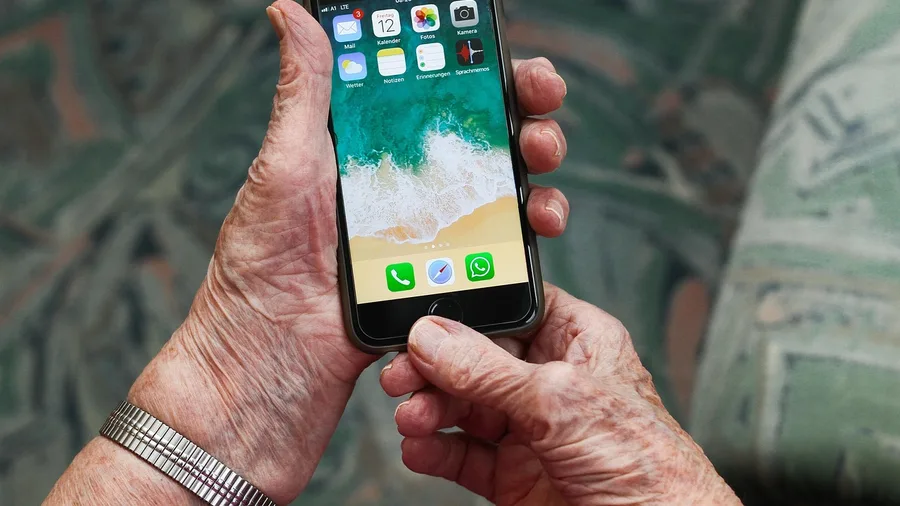
It is after breakfast, the second cup going cold, and the phone is already in your hand before you have decided to send anything. You hold the button and talk for twenty seconds: "Morning, both of you. What's the weather where you are? It's grey here and the basil's sulking." You let go. Then the day goes on without you watching the screen.
That is the whole move: one group thread with two to five people, named plainly so it is easy to find, something like "Daily Hellos." It suits the two or three family members who already send you voice notes. Keep it to that many. The point is a small room, not a crowd where nobody feels spoken to.
Tie the sending to a cue you already have, after breakfast or before the evening news, so you are not deciding each day whether to reach out. Ask one easy question that invites a reply, then leave it alone. A daughter answers at lunch, a nephew answers at midnight his time, and some days neither does. Silence is fine; it is not a signal. And keep urgent news off it: a thread this loose is for presence, not emergencies.
A card still carries more weight, and a thread reaches more people at once without asking anyone to sit down for a call. That is the trade, and most weeks you want both.
💡 Tip: Record your voice note standing near a window — better light makes people more likely to reply to video, and better sound makes voice notes easier to hear.
Voice-Message Thread — At a Glance
👥 Setting it up
Name it plainly, e.g. "Daily Hellos"
⏱️ Daily time
10–20 minutes
🕗 When to skip
If no one already sends voice notes
📅 Reply window
Leave it 24 hours before wondering
💵 Phone upgrade
$60–$150 amplified phone, if hearing is a barrier
The rule
Pair it with one daily call and one weekly group class; the thread is one of four contacts, not the whole circle.
7. The Borrow-and-Return Porch Shelf

Family voice notes keep you receiving. A crate by the door turns you into the one who puts something out and waits to see what comes back. Volunteer coordinators will tell you the sign-up sheet is not the only way to be needed; a weatherproof crate on the step, a card in a plastic sleeve reading 'Borrow, return, or add,' and the role is live by Tuesday.
Stock it with five things you can spare without missing them: three paperbacks, a fold-out umbrella, a jar of mint cuttings in water, a tin of shortbread. Check it once a week on the same morning, swap in what has gone, and keep a small notebook inside the lid for names. When a neighbor returns a paperback with a note tucked in the flap, you have a topic and a reason to knock.
This is exchange, not charity, and the difference matters. If nobody borrows for a fortnight, the shelf is not failing; it is waiting. Leave it up.
⚠️ COMMON MISTAKE
Don't Wait for a Thank-You
The shelf works because it asks nothing back. If you start keeping score of who borrowed what, the whole thing stops feeling generous and starts feeling like a job.
8. The Live Virtual Library Class

Ask the local library or senior center which classes run live and suit a beginner, and test the link the day before.
Joining early is the part people skip. Ten minutes before the hour, open the room and greet one person by name in the chat, Marta, say, who was there last week too.
It reads as a small obligation, but that is exactly what it gives you: a scheduled hour, something being taught, and faces that notice when you are missing. Write next Tuesday on the paper calendar and mention the class to one person, so the slot is real to someone besides you.
9. The Window Herb-Garden Ritual

It is 8:40 and the coffee is still too hot to drink, so you carry the cup to the sill and pick up the small watering can. Two pots sit there, basil on the left, mint on the right, each on a saucer. You touch the soil, find it dry an inch down, and water slowly until it darkens. Nothing about the morning requires you to speak, but something now requires you.
A class gives you a scheduled room; a plant gives you a daily cue inside your own rooms, and a subject you can carry into them. Keep the care attached to something you already do: coffee first, then the pots. Mark the first new leaf of the week on the paper calendar, one small cross in the corner of the box, and you have a record of something growing that you had a hand in.
The plant becomes a bridge when you hand part of it over. Try one of these when the moment comes:
To the neighbor at the window: "The mint is taking over the pot. Would you take a few stems? It roots in a glass of water on the sill." To a daughter on the phone: "I have more basil than I can use. What would you do with a big bunch of it?" To a caller who asks how you are: "The basil has a new leaf. Tell me what is growing at your place."
Each line does the same work. It offers something real, asks a question back, and makes the plant a reason to talk rather than a reason to stay quiet.
Watering takes four minutes. Handing over a cutting takes two more, and it turns a windowsill into an exchange. The herb is not a substitute for people; it is the thing you have in common with them this week. If the basil browns and dies, replace it, and say so to the neighbor. The point was never the plant.
💡 Tip: Mint is invasive — give it its own pot. Basil wants sun and doesn't like wet feet, so empty the saucer after watering.
10. The Call-Someone-Who-Needs-It Slot

The advice for the lonely is nearly always to reach out and ask for help, and it is the wrong instruction for someone who has spent a year being the one who calls. Watering two pots of basil and mint on the sill gives the day a small tending role, but a plant does not need your opinion back. The turn this routine asks for is outward: stop being the person waiting to be remembered and become the person who remembers first.
The test takes ten seconds. Picture three names: a former colleague, a church friend, a neighbor down the hall. If nobody comes to mind who would be glad to hear from you and has something on their mind worth asking about, the routine will not start, and the better move is to keep tending the sill until a name surfaces. If one name arrives and your first thought is that they are busier than you, that thought is the old habit talking. Call anyway, and keep it to ten minutes.
Set the day and the hour and make it the same every week. A former colleague, Tuesdays at 3 p.m., is enough of a slot to keep. Ask more than you tell, and ask the thing that cannot be answered with a yes: "What's been the best part of your week?" Then stay quiet long enough for the answer, because that pause is the whole gift. Ten minutes, then you both hang up while it is still good.
Tell someone in the family that the slot is set, not to seek permission but so one other person knows your Tuesday has a shape. That small disclosure is the only safeguard the call needs. The person on the other end spends ten minutes being asked about their week, and you spend it asking. Reciprocity starts the moment the call is placed, not when someone calls you back.
Frequently Asked Questions
What if I don't have anyone to call?
Start with a role rather than a person: the library class, the porch shelf, the herb cuttings. Roles put you in front of the same people repeatedly, and repetition is what turns strangers into familiar faces.
How do I keep a routine going when my energy drops?
Build the low-energy version first. Five minutes of the morning call, a single voice note instead of a video call, one card instead of three. The fallback protects the habit, so the habit doesn't have to be perfect.
Is it worth spending money on a tablet?
Only if the phone is the barrier — small screen, poor sound, or difficulty holding it. A basic tablet runs about $60–$150, and many libraries and senior centers lend them free. Try the free option first.
What if the person I call doesn't call back?
Treat it as information, not rejection. People are busy, bad at replying, or simply not phone people. Try a different routine or a different person; the routine that fits is the one that survives a missed week.
How long before a routine feels natural?
Usually about three weeks of doing it at the same cue. The first few times feel awkward; by the fourth, the cue does the remembering and you stop negotiating with yourself.
What the First Week Alone Can Hold
Choose by capacity, not ambition. Low energy or hard hearing points to the Sunday letter desk or the voice-message thread; steady energy and one willing person points to the video coffee or the shared-TV watch; a need to be useful points to the porch shelf or the call-someone slot.
Then give one thing back in the same week: a card, a few herb cuttings, a returned casserole dish, a question asked of the other person. Put ten minutes on the paper calendar for Sunday and write down whether it happened, whether it steadied the day or drained it, and the one thing to change. Name the fallback now, before the low day arrives: a two-line text, a twenty-second voice note, five minutes by the window with no conversation expected.
One routine, one person, one fallback. On the morning it all goes quiet again, the charged phone on the table will have a name in it, and the calendar will have a date.
Choose Your First Routine Today
Pick one routine from the ten above, write the name of one person beside it, and put the time on your calendar. That's the whole start — no transport, no hosting, no cost.