
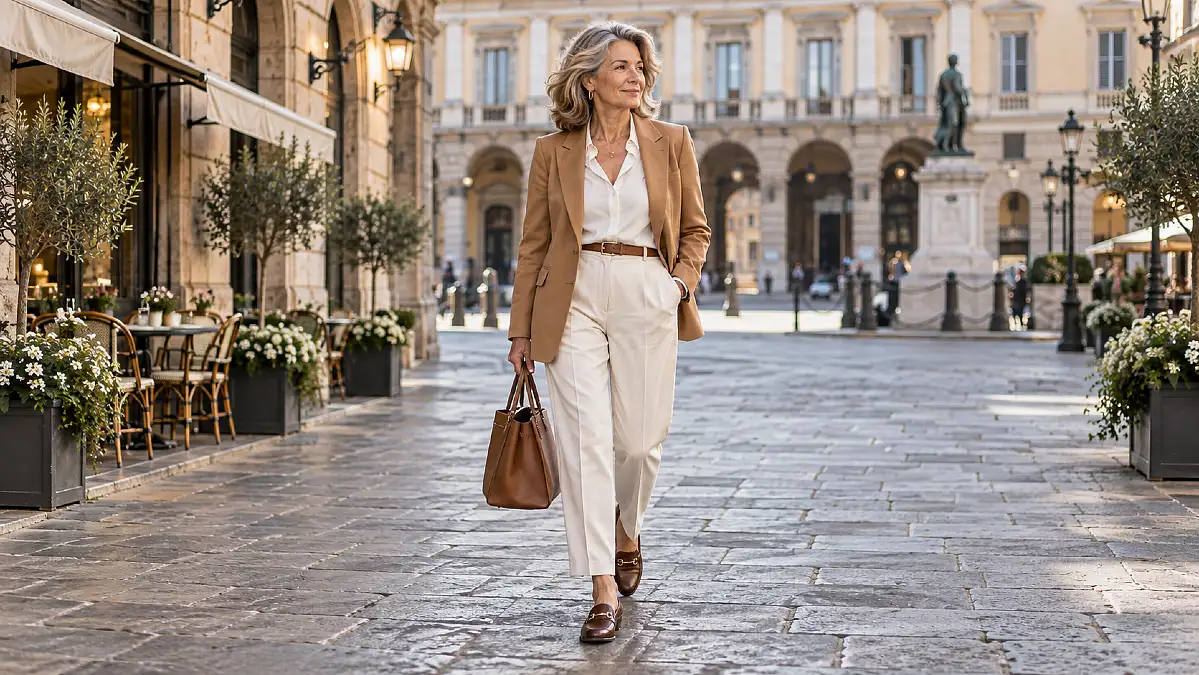
Italian-inspired style can look wonderfully simple in photos, yet feel much harder to translate into an ordinary Tuesday. A linen dress in Rome is one thing. Dressing for groceries, work, lunch with friends, or a long day of errands is another.
For women over 50, the challenge is rarely about needing more clothes. It is usually about making familiar pieces feel more intentional without becoming overdressed, uncomfortable, or like you are wearing a costume.
That is where Italian-inspired dressing over 50 becomes useful. The real lesson is not copying a specific outfit. It is learning how relaxed tailoring, good fabric, controlled color, simple accessories, and confident proportions can make everyday clothes feel more polished.
Italian Style Over 50 Starts With Restraint, Not More Clothes
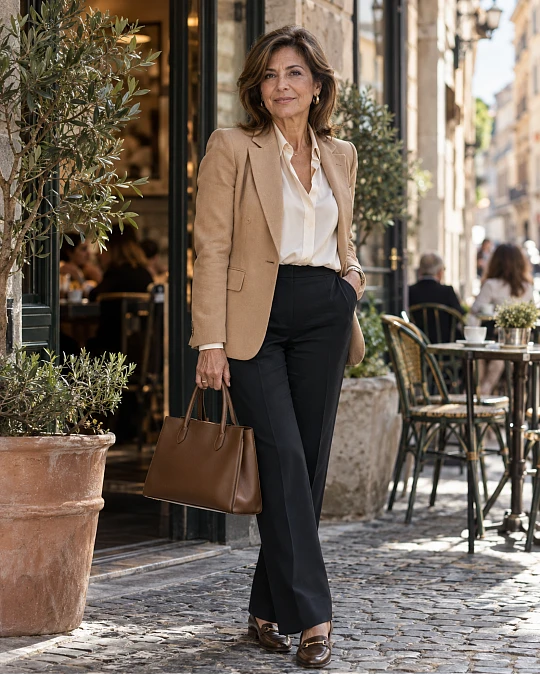
Italian style is often described through beautiful coats, leather bags, loafers, silk scarves, and tailored trousers. Those pieces matter, but the stronger idea underneath them is restraint.
An outfit usually feels more polished when every piece has a clear purpose. You do not need several statement pieces competing for attention.
Start with clothes you already wear often. Straight trousers, dark jeans, a crisp shirt, a knit top, a blazer, or a simple midi dress can all work.
The difference comes from how you combine them.
Instead of trying to make every part of the outfit interesting, choose one focal point. It might be a rich camel jacket, sculptural earrings, red flats, or a beautiful leather bag.
Everything else can stay quieter.
This approach is especially useful when dressing over 50 because it reduces wardrobe noise. You can create stylish outfits for women over 50 from relatively basic clothes when the fit, texture, and proportions feel deliberate.
Try this: Before leaving the house, look at the complete outfit rather than each item separately. If three pieces are all asking for attention, remove or simplify one.
Relaxed Tailoring Makes Everyday Clothes Look More Intentional
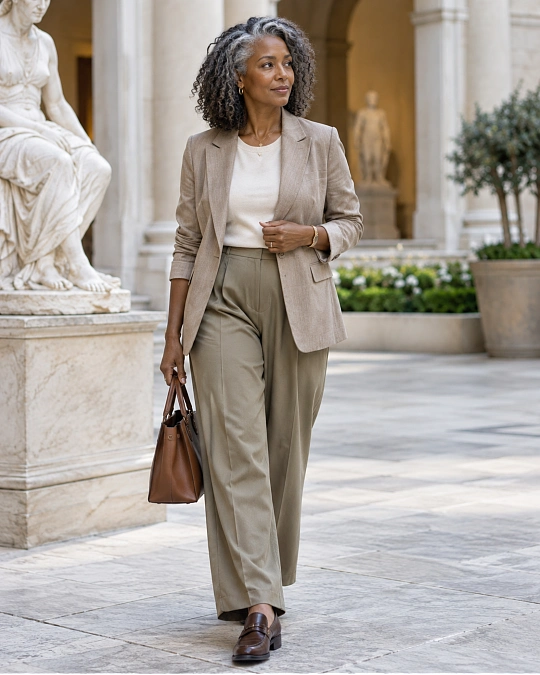
Italian-inspired dressing rarely depends on clothes being tight. Shape usually comes from structure, drape, and proportion instead.
A softly tailored blazer over a simple knit can give jeans more presence. Fluid trousers can look polished without gripping the waist or thighs.
The goal is to let clothing suggest the body’s shape rather than forcing every curve into focus.
For trousers, look for a clean waistband, enough room through the hip, and a leg shape that falls smoothly. Straight, gently tapered, and relaxed wide-leg cuts can all work depending on your proportions.
A jacket should also have enough structure to hold its shape without feeling stiff. Slight shoulder definition can make a simple T-shirt or knit look much more finished.
Here is a useful guide when checking pieces already in your wardrobe.
| Piece or Fabric | What to Look For and Why It Works |
|---|---|
| Straight trousers | Fabric that falls cleanly from the hip without pulling or bunching |
| Relaxed blazer | Light shoulder structure with enough room to layer a knit underneath |
| Fine knit | Soft fabric that skims rather than clings tightly |
| Cotton poplin shirt | Enough body to hold its shape while still moving comfortably |
| Linen blend | Natural texture with slightly more structure and less severe creasing than very lightweight linen |
Fit note: If an outfit looks slightly sloppy, check the shoulders, trouser length, and sleeve length before blaming your body. Small fit adjustments often make more difference than changing the entire outfit.
Use Proportion Instead of Trying to Make Everything Slim
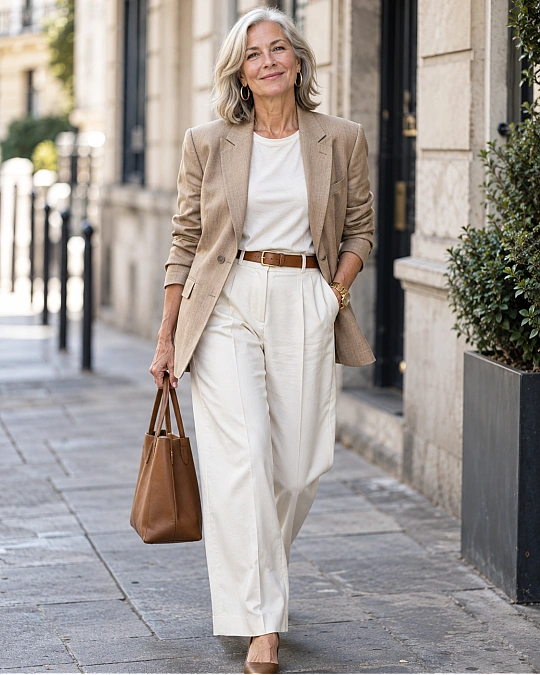
One reason Italian-inspired outfits can look so confident is that volume is usually balanced rather than eliminated.
A roomy shirt can work beautifully with straighter trousers. Wide-leg pants can look polished with a shorter knit or neatly tucked blouse.
If both the top and bottom are loose, creating one small point of structure helps. You might show the waistband, push up the sleeves, leave the jacket open, or choose a more defined shoe.
For example:
- With wide-leg trousers, try a fitted knit, waist-length jacket, or tucked shirt.
- With an oversized button-down, keep the lower half straighter or show part of the waistband.
- With a long midi skirt, choose a top that ends closer to the waist rather than halfway down the hips.
- With a relaxed blazer, keep the layers underneath fairly simple.
None of these are rules about what you are allowed to wear.
They are ways to control where the eye sees shape. That can make simple outfits for women over 50 feel intentional rather than oversized or unfinished.
Comfort upgrade: A half tuck or open jacket can create definition without needing a tight waistband or fitted top.
Natural Fabrics and Rich Neutrals Make Simple Clothes Feel Better
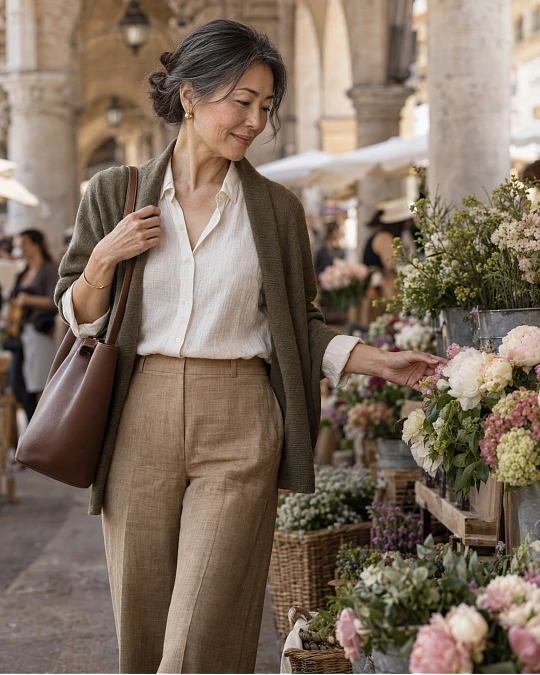
Italian-inspired style does not require an entirely beige wardrobe. But restrained color can make mixing clothes much easier.
Cream, navy, chocolate brown, camel, charcoal, olive, black, denim blue, and warm white create a useful base. From there, one richer color can bring personality.
Try burgundy loafers with navy trousers. Add a tomato-red cardigan to cream jeans. Wear an olive jacket over black and ivory.
Fabric matters just as much.
Cotton, linen blends, wool blends, denim, silk, soft leather, and substantial knits tend to give clothing visible texture. That texture can make a very simple outfit look considered.
You also do not need expensive versions of every fabric.
A well-shaped cotton shirt may serve you better than a costly blouse that is awkward to wash or difficult to pair. Cost-per-wear matters more than the label.
The most useful wardrobe essentials for women over 50 are often pieces you can wear in several settings without thinking too hard about them.
A navy blazer that works with jeans, trousers, and a dress earns its space. So does a cream knit that works under jackets, with skirts, and on its own.
Let Shoes, Bags, and Jewelry Finish the Outfit Quietly
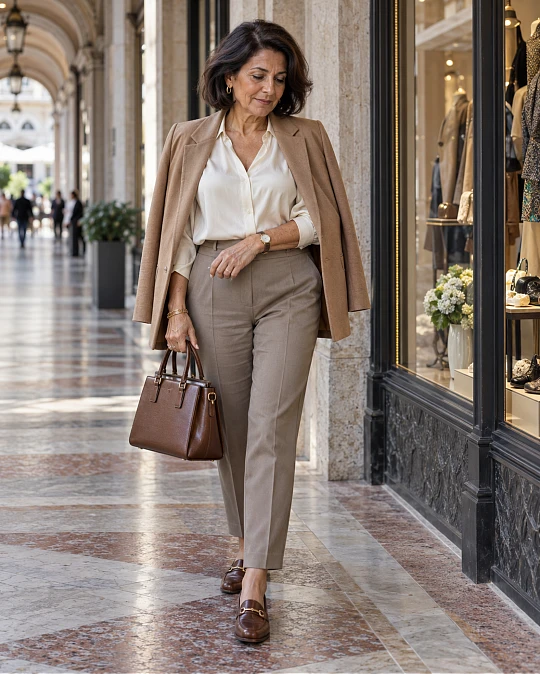
Accessories are where Italian-inspired style can become either very convincing or far too theatrical.
You do not need a scarf, sunglasses, statement earrings, red lipstick, a structured handbag, and dramatic shoes all at once.
Choose one or two finishing details.
A slim leather belt can add structure to trousers and jeans. A pair of loafers can make a knit-and-denim outfit feel sharper.
Simple gold-tone or silver-tone jewelry works because it adds light near the face without taking over the outfit.
Shoes deserve particular attention because they can change the mood of the same clothes.
Dark jeans with trainers feel relaxed. The same jeans with loafers look more polished. Add a low block heel or sleek flat, and the outfit can work for dinner.
Your bag does not have to match your shoes exactly either. Similar levels of polish matter more than matching colors.
A clean leather tote, crossbody, bucket bag, or structured shoulder bag can all work depending on what you actually carry.
Skip the Old Rules That Make Italian Style Feel Like a Costume
The goal is not to look as if you dressed for a movie scene set in Milan. Your clothes still need to work for your climate, schedule, body, and comfort level.
Some familiar style advice can actually make this look harder than it needs to be.
This comparison shows a more useful way to think about it.
| Old Rule | What Works Better in Real Life |
|---|---|
| Italian style means wearing black | Build around neutrals you genuinely enjoy, including navy, cream, brown, olive, or charcoal |
| You need expensive designer pieces | Focus first on fit, fabric, condition, and how often you will wear something |
| Everything should look dressy | Mix one polished piece with relaxed basics, such as a blazer with jeans |
| You need fitted clothes to look elegant | Use tailoring and balanced proportions instead of tightness |
| Accessories should make a statement | Let one bag, shoe, scarf, or piece of jewelry do the talking |
If silk scarves feel too formal on you, skip them. If loafers hurt your feet, wear streamlined trainers or cushioned flats instead.
If beige washes you out, place navy, olive, burgundy, chocolate, or another favorite color near your face.
Italian-inspired style should make dressing easier, not give you another set of fashion rules to worry about.
Build Italian-Inspired Outfits Around One Strong Base
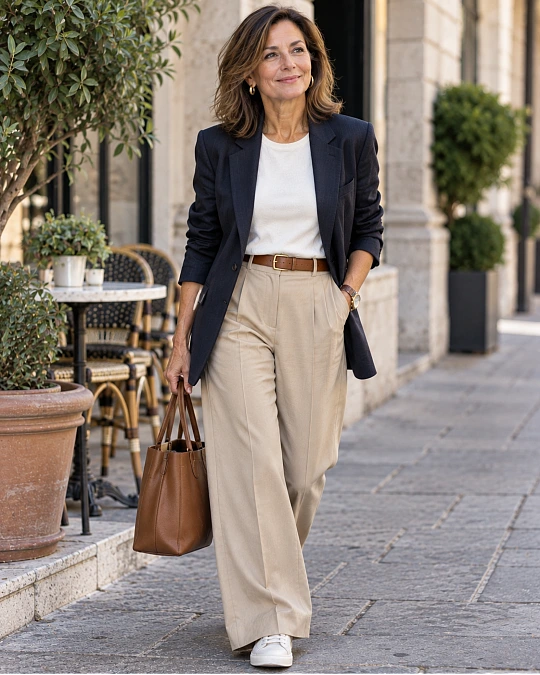
The easiest way to make this style practical is to create a personal uniform.
Start with two or three pieces that already suit your real life. Then change the layer, shoe, bag, or color depending on where you are going.
For example:
Formula: straight trousers + fine knit + relaxed blazer
The trousers create a clean line, the knit keeps the outfit comfortable, and the blazer adds structure. Swap loafers for trainers or flats depending on the day.
That same thinking can create several useful formulas.
| Occasion | Pieces | Why It Works |
|---|---|---|
| Errands or coffee | Straight jeans + fine knit + loafers | Comfortable basics with one polished shoe |
| Lunch with friends | Fluid trousers + tucked shirt + leather flats | Soft volume balanced by waist definition |
| Casual workday | Dark trousers + knit top + relaxed blazer | Structure without feeling overly formal |
| Weekend dinner | Midi skirt + simple knit + ankle boots | Clean silhouette with enough texture to feel dressed up |
These formulas work because they are repeatable.
You can change cream trousers to navy, loafers to trainers, or a blazer to a cropped jacket without rebuilding the whole outfit.
That is the heart of a useful capsule wardrobe over 50. The clothes support one another, rather than each piece demanding a completely different outfit.
Make the Italian Look Feel Like Your Style, Not Someone Else’s
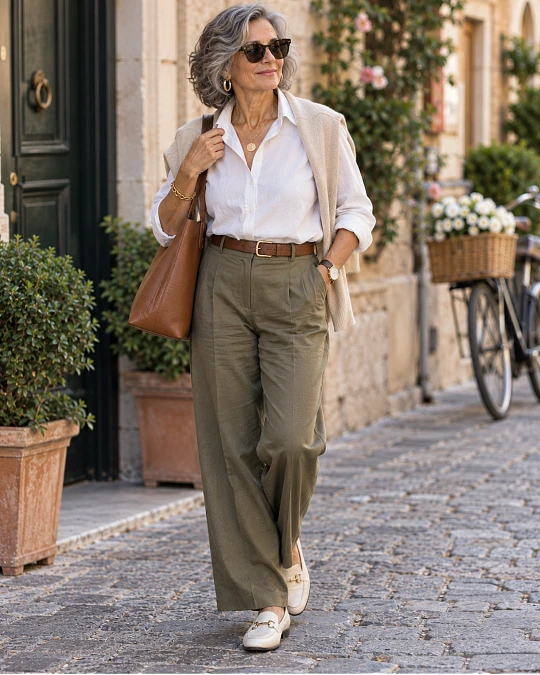
The most convincing version of Italian-inspired style still looks like you.
You might love relaxed trousers but dislike blazers. A cardigan with enough structure can play the same role.
You may prefer trainers to loafers, silver jewelry to gold, or strong color instead of neutrals.
Keep those preferences.
Personal style becomes much easier when you stop treating an aesthetic as a uniform you must copy exactly.
Instead, notice which part of the Italian approach solves a problem in your own wardrobe.
Maybe you need fewer prints and stronger basics. Perhaps your trousers need better tailoring. Maybe your outfits already work, but your shoes are keeping them too casual.
You may even discover that one good leather belt and a sleeve pushed neatly to the forearm are enough to make familiar clothes feel more current.
That is much more useful than rebuilding your wardrobe around somebody else’s idea of chic outfits for women over 50.
Frequently Asked Questions
What does Italian style mean for women over 50?
Italian-inspired style is less about a specific age or set of garments and more about polished simplicity. Think good proportions, strong basics, natural-looking fabrics, controlled color, and a few thoughtful accessories.
You can adapt those ideas to jeans, dresses, trousers, knitwear, and comfortable shoes you already own.
Do I need expensive clothes to dress Italian style?
No. Price cannot fix poor fit or clothes that do not work with the rest of your wardrobe.
Start by improving proportion, pressing or steaming clothes, checking hems and sleeves, and choosing pieces that can be worn several ways.
What colors work best for an Italian-inspired wardrobe?
Black, navy, cream, camel, brown, charcoal, olive, and denim are easy starting points because they mix well.
You can then add burgundy, red, forest green, cobalt, rust, or another color that suits your taste and works with your existing clothes.
Can I wear sneakers with Italian-style outfits?
Yes. Clean, streamlined sneakers can work especially well with trousers, jeans, midi skirts, and simple dresses.
Keeping the rest of the outfit slightly structured helps the sneakers look intentional rather than purely sporty.
How can I dress Italian style without looking overdressed?
Combine one polished piece with familiar everyday clothes. Try a blazer with jeans, tailored trousers with a knit, or loafers with a simple shirt.
Keeping accessories restrained also helps the outfit feel natural enough for everyday life.