
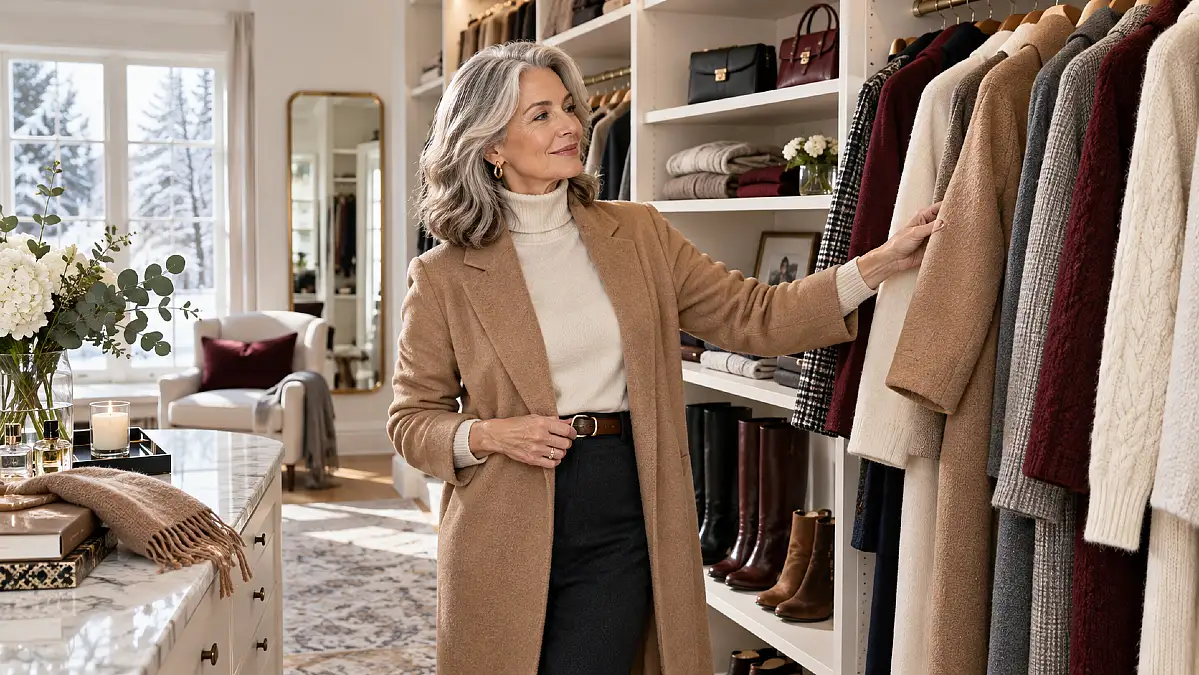
Winter wardrobes can become crowded surprisingly fast. Heavy coats, bulky sweaters, boots, scarves, and pieces bought for one specific outfit can leave women over 50 with plenty of clothes but very little that works together.
The frustrating part is that more clothing rarely makes winter dressing easier. Different proportions, changing comfort needs, and thicker fabrics can make outfits feel heavier or less polished than expected.
A capsule wardrobe over 50 solves that problem by creating a small group of pieces that layer well, feel comfortable, and share the same color story. You do not need to replace everything.
A Winter Essential Should Earn Its Space in More Than One Outfit
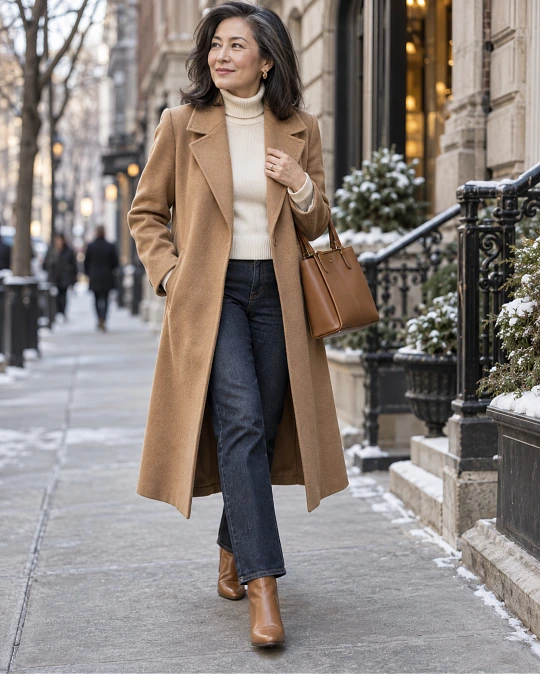
A true winter essential is not simply something basic. It should solve several dressing problems at once and work with enough of your wardrobe to justify the space it takes up.
A beautiful sweater that works with only one skirt is less useful than a simple merino knit that works with jeans, trousers, a midi skirt, and beneath a coat. The second piece gives you far more outfit possibilities.
Fit matters just as much as versatility. Winter clothes already add visual weight, so pieces that skim rather than squeeze or overwhelm tend to layer more smoothly.
Before adding something to your winter capsule, ask yourself whether you can wear it at least three different ways with clothes you already own. That small test can prevent a closet full of attractive pieces that never become real outfits.
Here is a useful starting point for building the wardrobe.
| Piece | What to Look For | Mixes Well With |
|---|---|---|
| Winter coat | Clean shoulders, room for knitwear, knee or mid-thigh length | Jeans, trousers, dresses, skirts |
| Fine knit | Merino, cotton blend, cashmere blend, or smooth lightweight wool | Blazer, coat, jeans, tailored pants |
| Dark jeans | Straight, slim-straight, or relaxed cut with clean finish | Knits, shirts, boots, loafers |
| Tailored trousers | Straight, softly wide, or gently tapered leg | Sweaters, blouses, jackets |
| Midi skirt | Fluid knit, wool blend, or soft pleating | Fine knits, boots, structured jackets |
| Ankle boots | Comfortable heel, supportive sole, simple toe shape | Denim, trousers, skirts, dresses |
These are not rules about what every woman needs to own. They are useful categories that can be adjusted around your climate, lifestyle, and the clothes you genuinely enjoy wearing.
Start With a Coat That Works With Your Real Winter Clothes
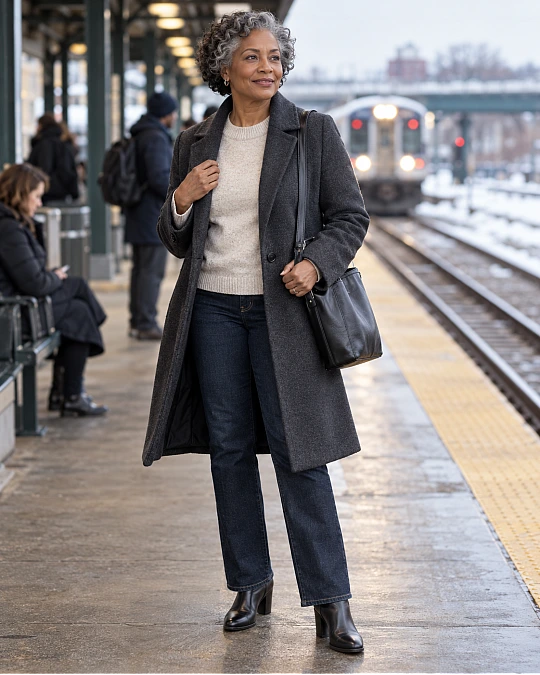
Your winter coat covers more of an outfit than almost anything else you wear. That makes its shape more important than adding several fashionable jackets that rarely leave the closet.
Look for shoulders that sit cleanly and enough room through the arms and body for a sweater underneath. A coat that fits beautifully over a thin blouse but pulls across a winter knit will quickly become frustrating.
Mid-thigh and knee-length coats are especially flexible because they work with trousers, jeans, and many skirt lengths. A softly structured wool or wool-blend coat can also make very simple everyday outfits for women over 50 feel more finished.
Fit note: Try your coat on while wearing the thickest knit you normally use. Move your arms forward, sit down, and button it completely before judging the size.
Color can do a lot of work here. Camel, charcoal, navy, chocolate, black, olive, or soft taupe can anchor a winter wardrobe without forcing every piece underneath to match exactly.
If you already own a good neutral coat, there is no reason to replace it simply because another shape becomes fashionable. Freshness can come from scarves, shoes, knitwear, or a different trouser silhouette instead.
Fine Knits Give You More Layering Options Than Bulky Sweaters
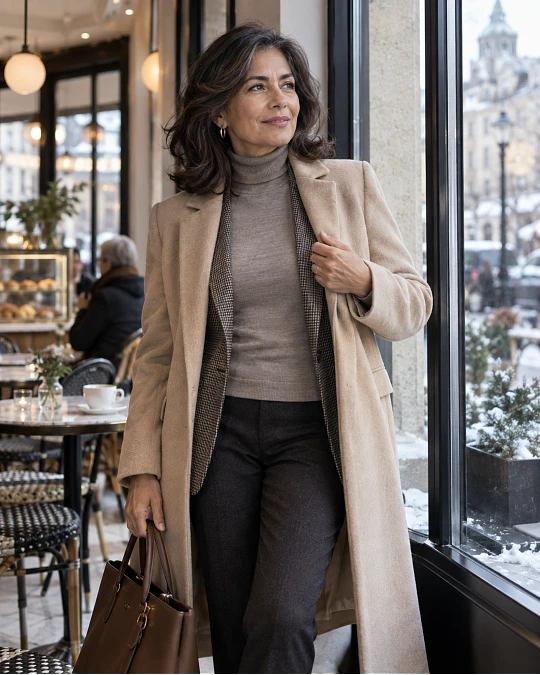
Chunky sweaters can be warm and beautiful, but an entire wardrobe of thick knits leaves very little room for layering. Fine and medium-weight sweaters are usually the pieces that quietly do the most work.
Merino wool, cotton blends, cashmere blends, and smooth wool knits can sit beneath coats and jackets without creating excess bulk around the shoulders. They can also be tucked partially into trousers or skirts to restore shape.
A crew neck is easy beneath jackets, while a soft V-neck creates more open space around the face. A mock neck gives some of the warmth of a turtleneck without feeling quite as enclosed.
Keep one or two richer textures if you love them. A cable knit, brushed cardigan, or slightly oversized sweater adds variety when the rest of the wardrobe is clean and simple.
The easiest approach is to combine several neutral knits with one or two colors you enjoy wearing near your face. Burgundy, forest green, soft blue, plum, rust, cream, or deep red can make winter outfits feel far less flat.
The same base wardrobe can also shift easily for different situations.
| Base Piece | Casual Day | Smart Casual | Colder Day |
|---|---|---|---|
| Fine crew-neck knit | Straight jeans + sneakers | Wool trousers + loafers | Add thermal layer + coat |
| Turtleneck | Dark denim + ankle boots | Midi skirt + structured jacket | Add scarf + long coat |
| Cardigan | Tee + relaxed trousers | Blouse + tailored pants | Button over thin merino knit |
| Knit dress | Flat boots | Belt + refined ankle boots | Add long coat + opaque tights |
This is where a winter wardrobe starts feeling larger than it really is. The pieces stay familiar, but the styling changes according to weather and occasion.
Jeans, Trousers, and Skirts Should Balance Your Winter Layers
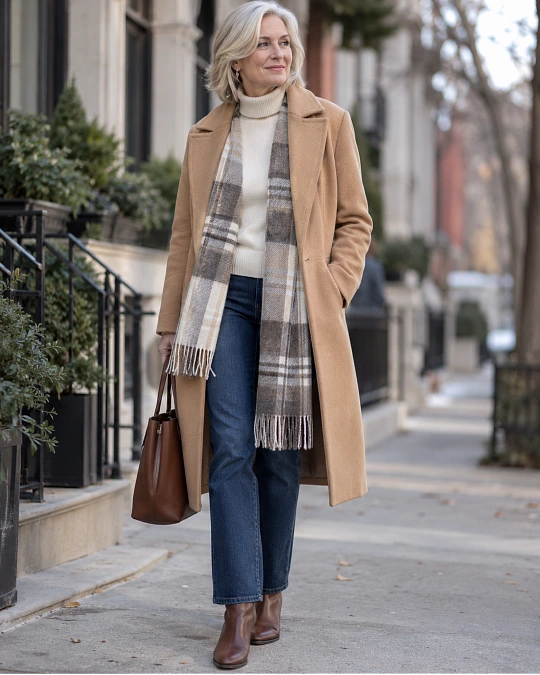
Winter proportions can become tricky because sweaters, jackets, and coats already create volume on top. Your bottoms do not need to be tight, but they should help the outfit maintain a clear silhouette.
Straight-leg jeans are useful because they sit between skinny and very wide styles. They work with ankle boots, sneakers, loafers, and heavier winter footwear without making the outfit feel tied to one trend.
For trousers, try straight, softly wide-leg, or gently tapered shapes. Wool blends and substantial ponte fabrics can feel warmer than lightweight office trousers while still looking polished.
If wider trousers appeal to you, pay attention to length. Too much fabric pooling over a shoe can make winter layers feel heavier, while a hem that falls cleanly gives the outfit a stronger line.
Skirts deserve space in a winter capsule too. A fluid midi skirt with a fine sweater and boots creates an elegant casual outfit without requiring uncomfortable tailoring.
Comfort upgrade: If stiff waistbands bother you on long days, look for partial elastic at the back, stretch woven fabrics, or discreet side elastic rather than giving up on trousers completely.
Let Your Shoes Set the Practical Limit of the Capsule
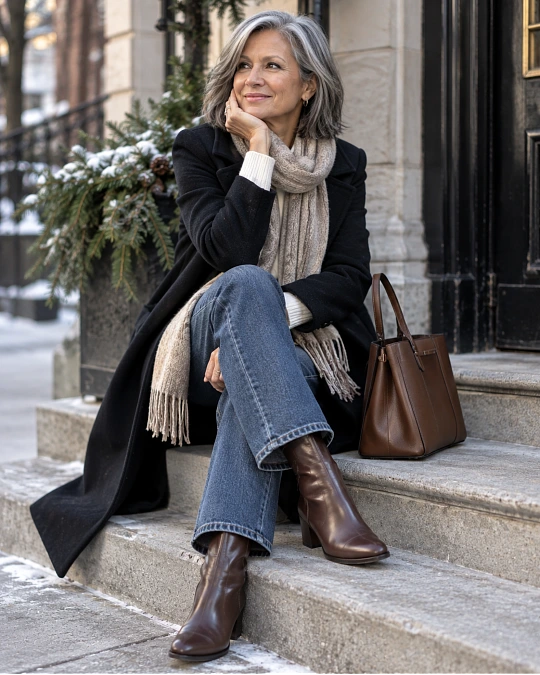
A winter wardrobe can look wonderful on a hanger and still fail if the shoes do not suit your day. Cold pavements, long errands, travel, wet weather, and hours on your feet all change what makes an outfit useful.
A streamlined ankle boot is one of the easiest starting points. A low block heel, flat sole, or modest platform works with trousers and dresses while giving more winter coverage than an open shoe.
Add a comfortable everyday option such as a leather sneaker, loafer, or supportive flat if your climate allows it. The goal is not to collect every shoe category but to cover the situations you actually encounter.
Try keeping your trouser hems and shoe shapes connected. Wider pants often look cleaner with a shoe that has a little visual presence, while narrower straight trousers can work beautifully with a sleeker boot or loafer.
Shoe swap: If heels make an outfit feel polished but uncomfortable, try a pointed or almond-toe flat boot instead. You can keep the elongated line without relying on heel height.
Accessories can then add personality without taking over the capsule. A patterned scarf, textured leather bag, interesting earrings, or a rich-colored glove can change the mood of basic winter pieces very quickly.
Build Your Winter Colors Around Three Neutrals and a Few Accents
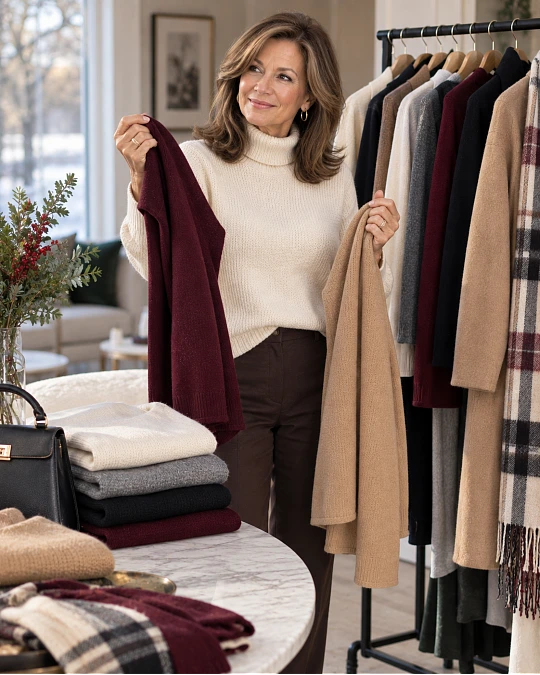
A capsule does not have to mean beige, black, and white. It simply needs enough color connection that most pieces can be worn together.
Choose two or three main neutrals that already dominate your closet. Navy, charcoal, cream, camel, chocolate, olive, black, and denim can all work as foundations.
Then bring in one or two colors you particularly enjoy wearing. Those accents can appear in knitwear, scarves, shirts, bags, or even socks rather than expensive pieces you feel pressured to wear constantly.
You can also mix nearby neutrals rather than matching everything exactly. Charcoal with black, camel with cream, navy with denim, or chocolate with burgundy often looks richer than an outfit made from one flat color.
This approach makes dressing over 50 easier because you stop building isolated outfits and start building combinations.
Use Three Outfit Formulas Instead of Planning From Scratch Every Morning
The most useful capsule wardrobe over 50 is not one that looks impressive hanging in the closet. It is one that reduces decisions at 7:30 in the morning.
Create a few personal uniforms from clothes that already make you feel comfortable and pulled together. Then change the fabric, color, shoe, or accessory instead of reinventing the whole outfit.
These formulas cover many ordinary winter days.
| Occasion | Formula | Why It Works |
|---|---|---|
| Errands or casual lunch | Straight jeans + fine knit + ankle boots + coat | Simple shapes keep heavier layers balanced |
| Work or appointments | Tailored trousers + soft blouse or knit + structured coat | Clean trousers create polish without feeling formal |
| Dinner or gathering | Midi skirt + fitted knit + boots + earrings | The fitted top balances movement through the skirt |
| Travel day | Stretch trousers + merino knit + cardigan + flat boots | Soft layers adjust easily to changing temperatures |
Formula: straight jeans + fine knit + ankle boots + long coat.
That combination is a strong everyday base because every piece has a clear job. Swap the knit for a cardigan, change denim to wool trousers, or add a scarf and the outfit feels different without requiring a new wardrobe.
Buy the Missing Link, Not Another Version of What You Already Own
Before shopping, look at what is preventing your current wardrobe from working. The answer may be much smaller than you expect.
You may have excellent sweaters but no trousers that sit comfortably beneath them. Or perhaps your jeans, trousers, and tops are useful, but none of your coats have enough room for winter layering.
Try sorting your wardrobe by function rather than category:
- Keep the pieces that fit comfortably and combine easily.
- Set aside items that need constant adjusting or special underwear.
- Look for repeated gaps, such as a comfortable dark trouser or lightweight knit.
- Prioritize pieces that create several new outfit combinations right away.
Cost-per-wear matters more in a capsule than novelty. A well-fitting coat worn four times a week may deserve more of your budget than a dramatic sweater that comes out twice each winter.
You also do not need to build everything at once. A strong winter wardrobe usually becomes clearer after you live with it for a few weeks and notice which pieces you keep reaching for.
Your Winter Capsule Quick Guide
Use this simple checklist when editing your wardrobe or getting dressed. The goal is fewer pieces that work harder, layer better, and feel good in real life.
Choose one dependable coat that fits comfortably over your everyday sweaters and works with most of your bottoms.
Mix fine and medium-weight knits so you can stay warm without adding unnecessary bulk under coats and jackets.
Keep jeans, trousers, or skirts that create a clean silhouette with your heavier winter layers.
Prioritize boots, loafers, or supportive flats that suit your weather, walking habits, and most-worn trouser lengths.
Use two or three reliable neutrals, then add a few accent colors through knits, scarves, bags, or accessories.
Before buying anything new, look for the missing piece that would make several existing outfits work better.
Straight jeans or trousers + fine knit + ankle boots + long coat + one personal accent.
Frequently Asked Questions
How many pieces should a winter capsule wardrobe have?
There is no correct number. Your lifestyle matters more than hitting a strict total, so someone who works from home may need fewer structured clothes than someone who dresses for an office several days a week.
Start by making sure your tops, bottoms, outerwear, and shoes actually combine with one another. A smaller wardrobe with strong connections is more useful than a larger capsule built around an arbitrary number.
What colors work best in a winter capsule wardrobe for women over 50?
Start with the neutrals you already enjoy wearing rather than choosing colors because they are considered traditional. Navy, charcoal, cream, camel, chocolate, olive, black, and denim are all easy foundations.
Then add a few shades that make you feel good near your face. Plum, burgundy, soft blue, forest green, rust, and red can bring life to neutral winter layers.
Can I include trends in a capsule wardrobe?
Yes. A capsule should reflect your taste, not remove personality from your clothes.
Keep your most frequently worn pieces fairly versatile, then use a current trouser shape, interesting knit, bold scarf, modern shoe, or distinctive accessory to refresh the mix. That lets you enjoy fashion without rebuilding the entire wardrobe every season.
Are jeans necessary in a winter capsule?
Not at all. If you prefer trousers, skirts, dresses, or knit pants, those can become your everyday foundation instead.
The useful question is not whether an item belongs on a standard capsule checklist. It is whether you genuinely wear it and can style it with several other pieces you own.
How can I stop winter layers from making me look bulky?
Pay attention to thickness and proportion rather than trying to make every layer tight. Fine knits beneath structured outerwear usually create less bulk than stacking several heavy pieces.
You can also keep one area visually cleaner. For example, pair a roomy sweater with straighter trousers, or wear wide trousers with a more streamlined knit.