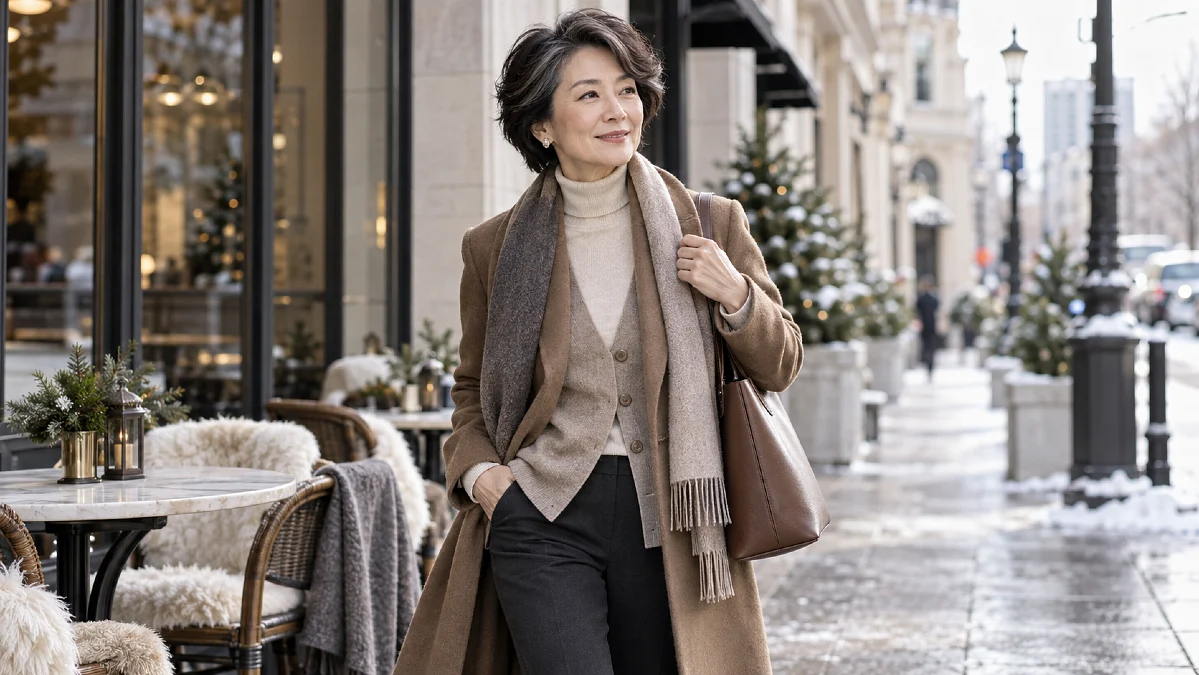
Winter dressing gets frustrating when staying warm seems to mean adding one thick piece after another. A soft sweater, warm coat, scarf, and boots can suddenly make an outfit feel wider, heavier, and less polished than you wanted.
For women over 50, the problem is rarely that layering itself looks bad. It is usually the combination of thick fabrics, competing lengths, and too many loose shapes worn at once.
The good news is that stylish outfits for women over 50 can still be genuinely warm. The trick is choosing where you want warmth, where you want structure, and where the clothes should skim closer to the body.
You do not need a whole new winter wardrobe. A few changes in fabric, proportion, and layer order can make what you already own work much better.
Why Winter Layers Can Start Feeling Heavy So Quickly
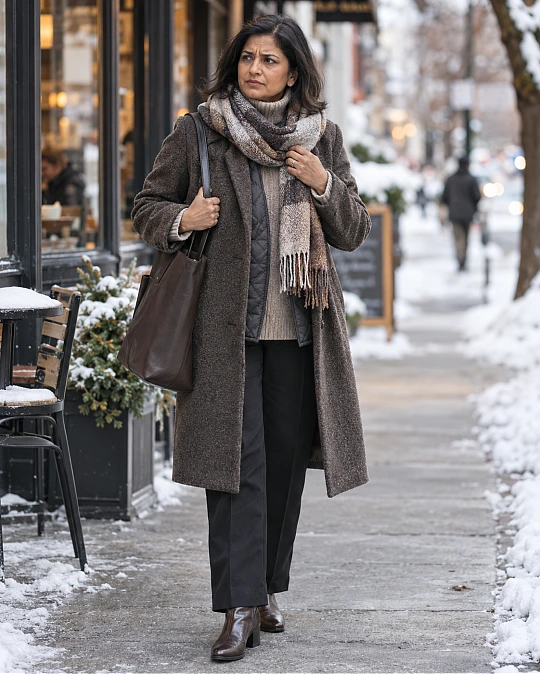
Most bulky winter outfits do not come from wearing too many pieces. They come from wearing too many thick pieces in the same place.
A chunky sweater under a padded jacket, for example, puts extra volume through the shoulders, chest, sleeves, and waist at once. Add a large scarf and the whole upper body can lose definition.
The same thing happens when every layer is oversized. A relaxed sweater can look modern, and so can a generous coat, but wearing both with wide trousers may remove almost every clean line from the outfit.
Think of winter dressing as a balance of volume. If one piece is roomy, another part of the outfit can usually stay simpler or more fitted.
That does not mean tight clothing. It means creating enough contrast that your shape does not disappear under the layers.
Start With Thin Layers That Sit Close to the Body
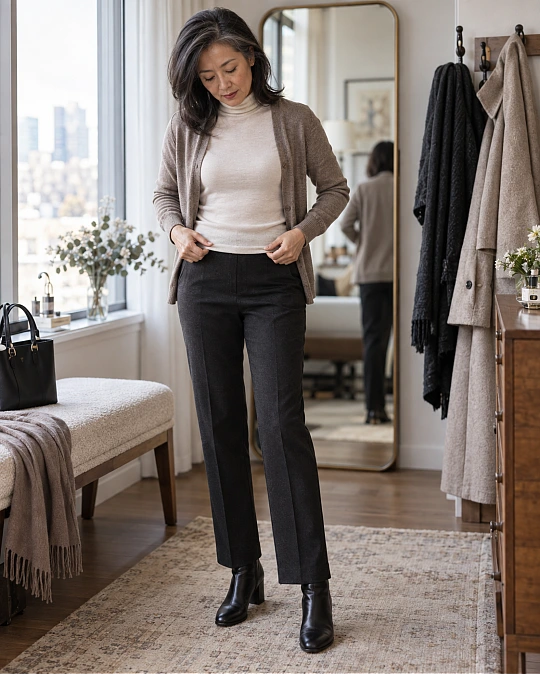
The layer closest to your body has one important job: add warmth without adding much width.
Instead of beginning with a heavy cotton T-shirt, try a lightweight long-sleeve knit, fine merino layer, thin thermal top, or smooth jersey tee. These create insulation while leaving room for the pieces worn above them.
A base layer should follow the body without squeezing it. If it bunches beneath your sweater or rolls around the waist, it can actually make the next layer look less smooth.
Fabric matters just as much as thickness. Fine knits tend to slide beneath other garments more easily than bulky brushed fabrics.
Here is a simple guide for choosing winter layers that work together.
| Layer or Fabric | What to Look For and Why It Works |
|---|---|
| Fine merino knit | Warm without thick sleeves or heavy bulk |
| Lightweight thermal | Useful beneath shirts, knits, and casual jackets |
| Smooth jersey | Layers easily and works well indoors |
| Fine-gauge cardigan | Adds warmth without the volume of chunky knitwear |
| Chunky wool knit | Best used as the main visible layer rather than underneath several others |
Fit note: If a sweater feels comfortable by itself but tight once you add a base layer, the sweater may simply need a little more ease through the armhole and sleeve.
That small amount of extra room can make layering far more comfortable without making the sweater look oversized.
Let the Middle Layer Add Warmth, Not Width
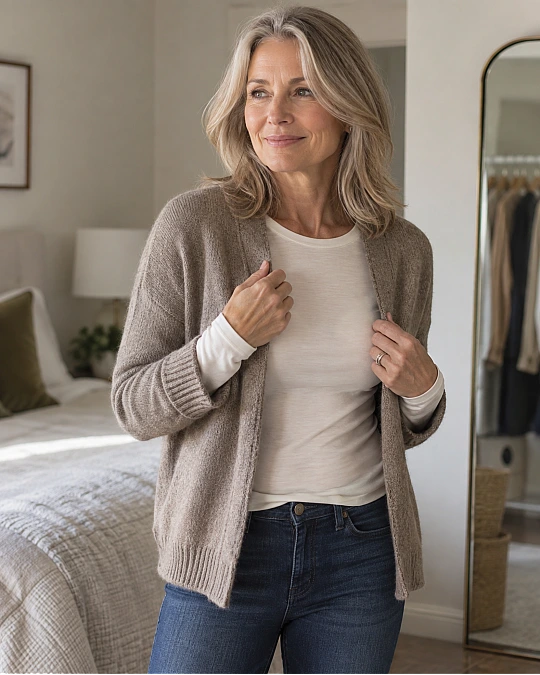
The middle layer is where many winter outfits become heavier than they need to be. This is usually the sweater, cardigan, overshirt, blazer, or lightweight jacket sitting between your base and coat.
Look for warmth with a controlled silhouette. Fine-gauge crewnecks, soft V-neck sweaters, neat cardigans, knitted jackets, and streamlined fleece pieces can all work.
A slightly shorter sweater can also be useful with straight or wider trousers because it keeps the leg line visible. With slim or narrow pants, a longer cardigan or sweater can create a comfortable balance.
If you prefer a chunky sweater, let that sweater become the star of the outfit. Wear a very thin layer underneath and choose a coat with enough room through the sleeves.
You do not need to squeeze a substantial knit beneath a fitted coat just because both pieces happen to be warm.
Comfort upgrade: Test your winter outfit by sitting down and reaching your arms forward before leaving home. If the shoulders pull or several layers gather beneath the arms, removing one thick layer will often feel better than sizing everything up.
Use Coat Length and Proportion to Keep the Shape Clean
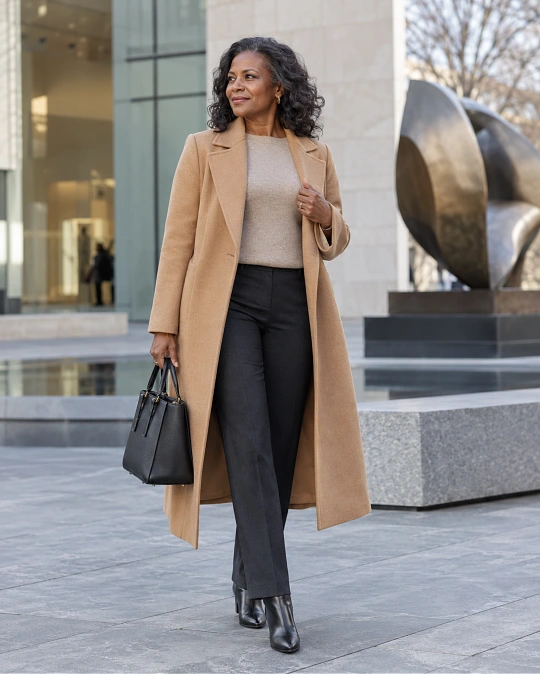
Your coat creates the final outline of the outfit, so its shape matters more than almost anything underneath it.
A clean single-breasted wool coat can calm down a thicker sweater. A longer puffer can make slim trousers and ankle boots feel balanced. A shorter jacket can work especially well with higher-rise trousers or a longer skirt.
The goal is not to make yourself look smaller. It is to keep enough structure in the outfit that the individual pieces still make sense together.
For example, a long coat over long tunic layers and very wide pants can create several competing vertical lines. Tucking or half-tucking the inner knit, or choosing a slightly shorter middle layer, can clean up the proportions.
This same logic is useful when creating stylish outfits for women over 50 from clothes already in your closet. Changing one length can often make more difference than buying another sweater.
Different winter plans may call for small changes while keeping the same base outfit.
| Situation | Keep the Base | Make This Swap |
|---|---|---|
| Running errands | Fine knit + straight jeans | Add a hip-length puffer and sneakers |
| Lunch with friends | Fine knit + tailored trousers | Add a wool coat and loafers or ankle boots |
| Very cold day | Thin thermal + knit + trousers | Add a longer insulated coat |
| Travel day | Soft base layer + pull-on trousers | Add a cardigan and lightweight puffer |
| Mild winter afternoon | Long-sleeve tee + jeans | Swap the heavy coat for a wool jacket |
Building outfits this way also supports a capsule wardrobe over 50 because the same foundation pieces can handle different temperatures and occasions.
Make Scarves, Knits, and Shoes Work With the Silhouette
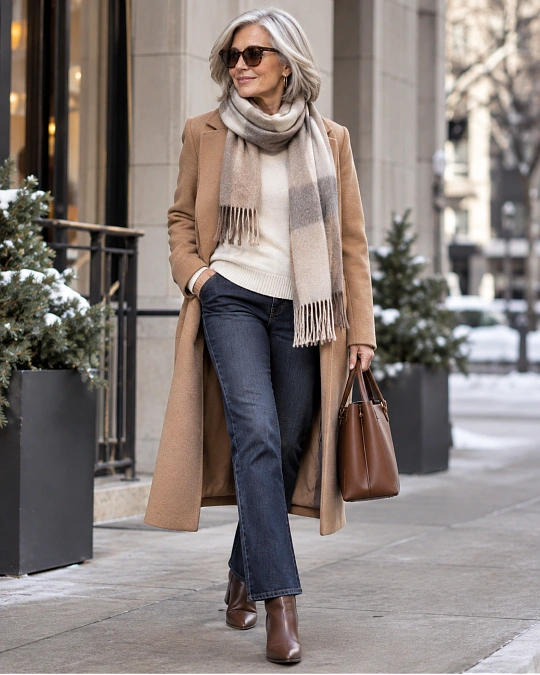
Accessories can add warmth without requiring another full clothing layer. They can also change the proportions of an outfit, so placement matters.
If your coat and sweater already have plenty of volume around the shoulders, a huge blanket scarf may feel like one layer too many. A softer, narrower scarf can provide warmth while leaving the coat’s neckline visible.
A few useful combinations include:
- With a chunky sweater, try straight jeans or clean trousers and a simple boot.
- With a long puffer, keep the layers underneath fairly streamlined.
- With wide-leg trousers, choose a shorter knit or show some waist definition.
- With a long cardigan, try a simple column underneath, such as a matching top and trousers.
- With heavy boots, keep the trouser hem clean so fabric does not pool around the ankle.
Shoes matter because they visually anchor all those winter fabrics. A sleek ankle boot, loafer with a sturdy sole, clean sneaker, or streamlined knee boot can keep a layered look from becoming visually heavy.
Shoe swap: If an outfit suddenly feels clunky, test it with a slightly cleaner shoe before changing the clothing. The issue may be at the bottom of the outfit rather than the top.
Fix the Layering Habits That Add Unneeded Bulk
There is no need for rigid rules about what you can wear. A better approach is noticing which combinations make you feel uncomfortable or hidden, then adjusting one part.
Some winter pieces simply work better as the main layer instead of being stacked together.
This quick comparison can help when an outfit feels heavier than expected.
| Instead of This | Try This |
|---|---|
| Chunky sweater under a tight coat | Fine knit under the coat, or wear the chunky sweater with a roomier outer layer |
| Oversized top + oversized coat + wide pants | Keep one oversized piece and simplify the others |
| Several thick cotton layers | Use one thin thermal or fine merino base |
| Huge scarf over a high-neck sweater | Choose a lighter scarf or open neckline |
| Long top + long cardigan + long coat | Shorten one middle layer to create separation |
If you love an oversized cardigan or dramatic scarf, keep wearing it. The answer is simply to give that piece enough visual space.
This is also why everyday outfits for women over 50 often look more pulled together when one item provides the softness and another provides the structure.
A Winter Outfit Formula You Can Repeat All Season
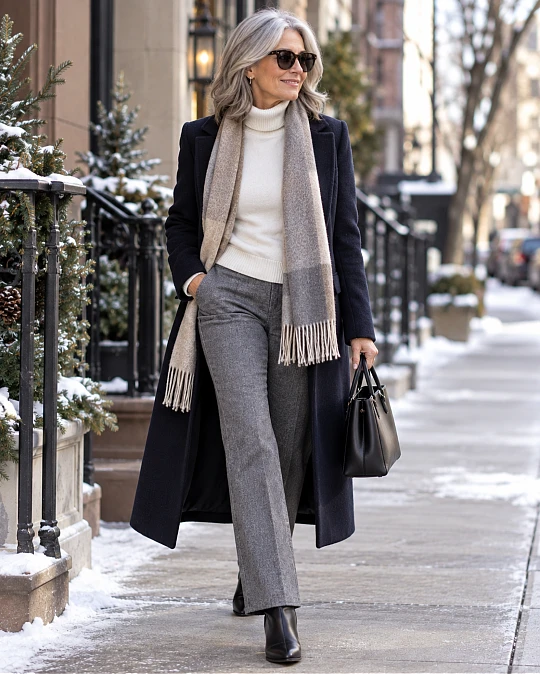
You do not need to invent a completely different outfit every cold morning. A dependable personal uniform removes much of that decision fatigue.
Formula: fine-gauge base layer + straight-leg trousers + clean-lined coat
The thin base provides warmth without bulk, while the trousers create a simple lower line and the coat gives the outfit structure. Add ankle boots, loafers, or sneakers depending on your day.
You can change the mood with color rather than changing the whole formula. Try navy with camel, charcoal with burgundy, cream with chocolate brown, or tonal shades of gray.
On colder days, slip a lightweight cardigan between the base and coat. On milder days, remove it and let a scarf provide the extra warmth.
The formula stays recognizable even as the individual pieces change, which is exactly what makes a personal uniform so useful.
Frequently Asked Questions
How many layers should you wear in winter without looking bulky?
Three well-chosen layers are often easier to manage than several thick ones: a thin base, a warm middle layer, and an outer coat. Very cold weather may require more, but lightweight insulating fabrics can keep extra layers from adding too much volume.
Focus less on the number of layers and more on their thickness and fit.
What type of sweater is easiest to layer under a winter coat?
Fine-gauge merino, lightweight wool blends, smooth cotton knits, and thin cashmere-style knits are generally easy to layer. Look for sleeves that are not excessively wide and shoulder seams that sit comfortably beneath your coat.
Chunky sweaters can still work beautifully, but they usually need a roomier coat.
Can oversized clothes work when layering over 50?
Yes. Oversized pieces can look modern and comfortable when they have some contrast around them.
If your coat is generously cut, try a cleaner trouser shape underneath. If your trousers are wide, a shorter or more defined upper layer can restore balance.
How can I stay warm without wearing a thick sweater?
Use insulation in lighter layers. A thin thermal or fine merino top beneath a moderate-weight sweater can feel warmer than one very thick knit.
A scarf, warm socks, lined boots, and a properly insulated coat can also provide warmth without adding much visual bulk.
What colors make layered winter outfits easier to coordinate?
Neutrals such as navy, camel, cream, charcoal, olive, brown, and black are easy to repeat across several layers. You do not need an all-neutral wardrobe, though.
Keeping two or three layers in related shades lets a brighter scarf, sweater, or bag stand out without making the outfit feel busy.