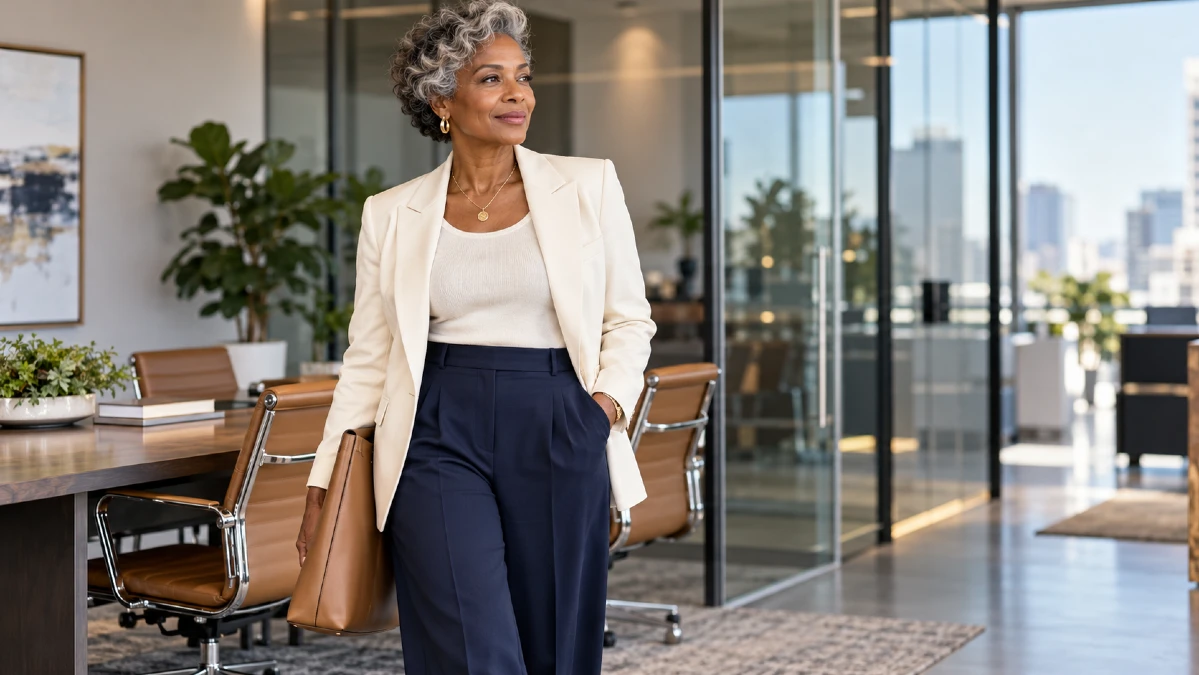
Getting dressed for work after 50 can feel surprisingly difficult when your old office favorites no longer reflect how you want to look. A stiff blazer may feel too formal, while relaxed pieces can leave you wondering if your outfit looks professional enough.
For many women over 50, the challenge is finding clothes that show confidence and experience without looking dated or overly serious.
You want to walk into a meeting looking capable, modern, and comfortable in your own skin. That should not require expensive designer clothes or a completely new wardrobe.
The best work outfits for women over 50 begin with thoughtful tailoring, comfortable fabrics, balanced proportions, and a few modern details that make familiar pieces feel fresh.
Authority at Work Starts With Fit, Not Formality
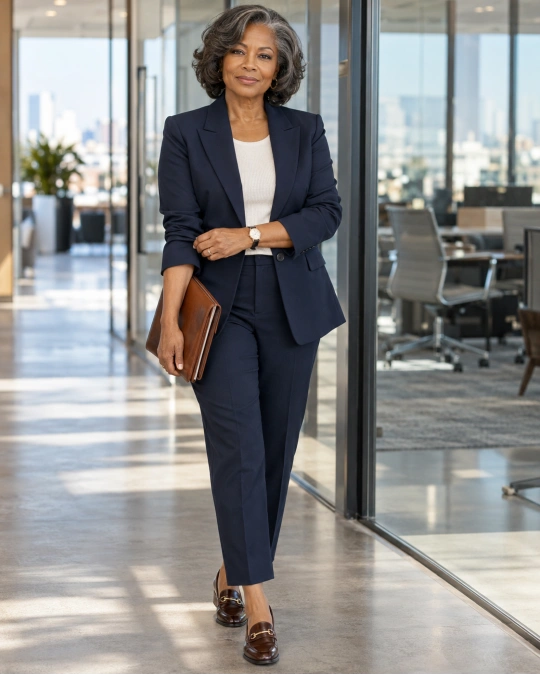
Looking authoritative does not mean wearing a dark business suit every day. The strongest professional outfits often combine one structured piece with softer clothing that allows you to move comfortably.
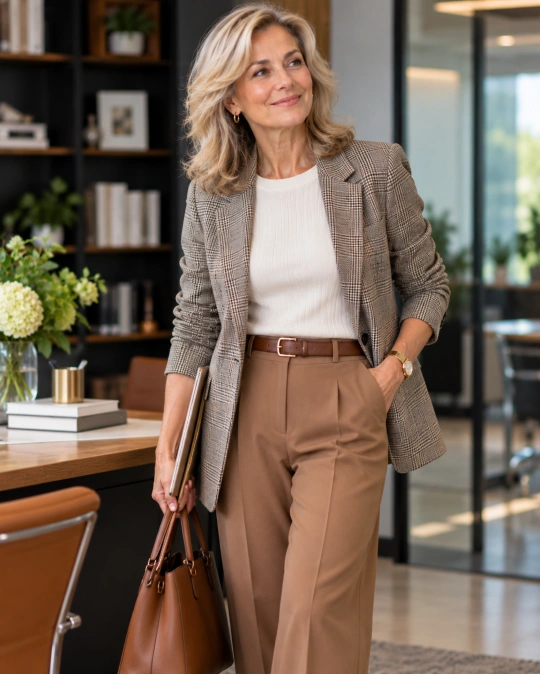
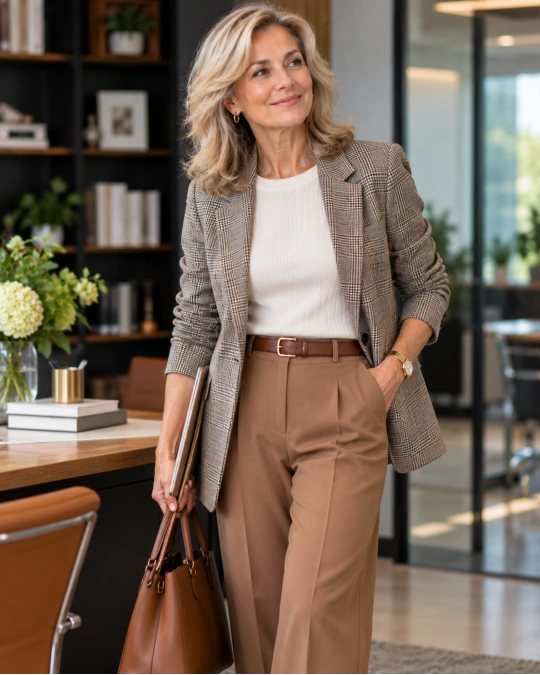
A well-cut blazer over a fine knit top can look just as professional as a traditional suit. The difference comes from how the clothes sit on your shoulders, follow your shape, and create a clean outline.
Clothes that pull across the chest, bunch at the waist, or hang too loosely can make even expensive pieces look less polished. A comfortable fit creates a more deliberate appearance without making your outfit feel restrictive.
Pay attention to three areas when trying on work clothes:
- Shoulders: Jacket seams should sit close to your natural shoulder line without pulling.
- Waist: Trousers and skirts should feel comfortable when you sit for long periods.
- Length: Jacket hems, sleeves, and trouser breaks should work together rather than compete.
A small adjustment from a tailor can sometimes make an older jacket feel better than a new one. Before replacing something you already own, check if a simple change could improve its fit.
Modern Blazers and Trousers Create a Strong Professional Foundation
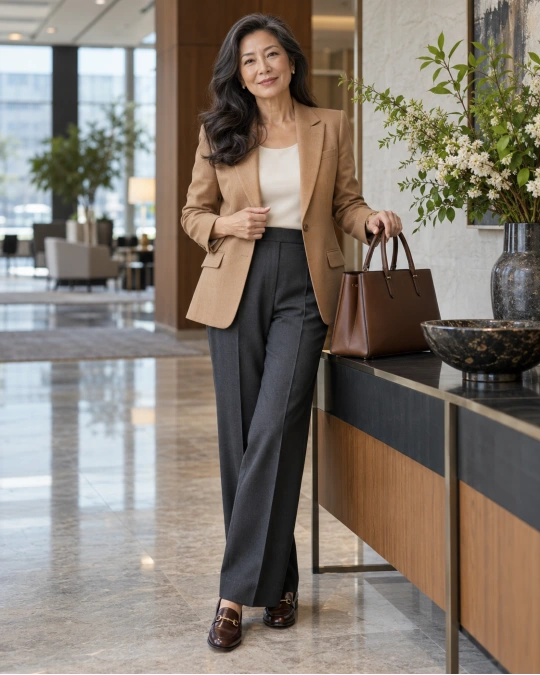
A blazer remains one of the most useful pieces in a professional wardrobe. However, the shape matters more than the label or how much you paid for it.
Look for a jacket with a clean shoulder, a comfortable armhole, and enough room to button without pulling. A softly structured single-breasted blazer often works well because it defines the upper body without feeling stiff.
Straight-leg and gently wide-leg trousers are equally useful. They create a long, clean line and can feel more current than overly tight office pants, especially when the fabric hangs smoothly.
𝐅𝐢𝐭 𝐧𝐨𝐭𝐞: When trying on trousers, sit down before making a decision. A waistband that feels comfortable while standing may become distracting during a full day at your desk.
Fabric also plays an important role in how professional clothing looks throughout the day. The table below can help you choose materials that balance structure, comfort, and a neat finish.
| Workwear Fabric | What to Look For | Why It Works |
|---|---|---|
| Wool-blend suiting | Smooth fabric with a soft drape | Holds its shape and resists looking limp |
| Ponte knit | Dense fabric with good recovery | Offers stretch while keeping a clean outline |
| Cotton poplin | Crisp but comfortable weave | Gives shirts a neat, professional finish |
| Crepe | Fluid fabric with enough weight | Falls smoothly over the body |
| Fine-gauge knit | Close weave that is not sheer | Layers neatly beneath jackets |
A matching suit can be useful for presentations, interviews, and formal meetings. For everyday work, separates often provide more flexibility and make it easier to create different outfits from fewer pieces.
Shirts, Blouses, and Knitwear That Look Professional Without Feeling Stiff

The top you wear beneath a blazer can change the whole mood of your outfit. A crisp button-down shirt feels traditional, while a soft blouse or fine knit creates a more relaxed version of professional dressing.
Choose fabrics that fall smoothly rather than cling or wrinkle heavily. Cotton blends, silk-like woven fabrics, and fine merino wool can all work, depending on your climate and workplace.
A V-neck knit creates an open neckline that works well with structured jackets. A crewneck can look equally modern, especially when it fits neatly at the shoulders and sits smoothly beneath a blazer.
If traditional button-down shirts pull across the bust, consider a different cut or a blouse with a hidden placket. You do not need to force yourself into a shirt shape that has never felt comfortable.
A simple white shirt also deserves a closer look. Bright white can feel fresh against navy or charcoal, while ivory or soft cream may blend more easily with camel, brown, and warm gray.
𝐒𝐭𝐲𝐥𝐞 𝐭𝐢𝐩: Try leaving the top button of a collared shirt open beneath a blazer, if your dress code allows. The small change softens a formal outfit without making it look casual.
Use Color and Accessories to Look Confident Without Overdressing
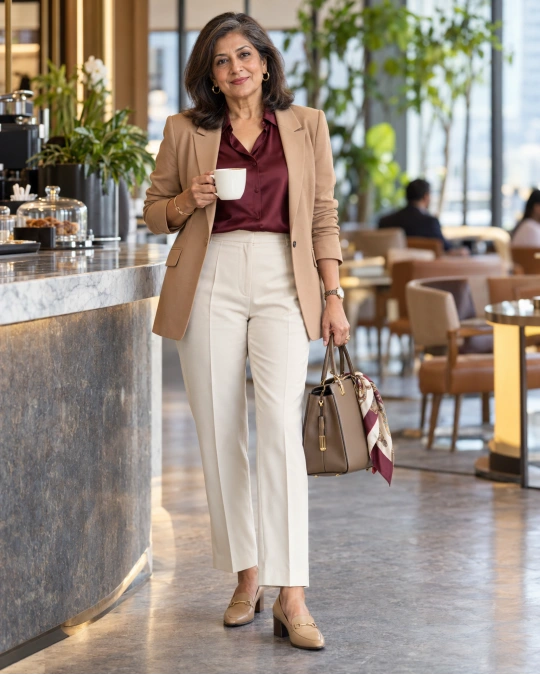
Black and navy are dependable office colors, but they are not the only shades that communicate professionalism. Charcoal, chocolate brown, deep olive, burgundy, and camel can create equally strong work outfits.
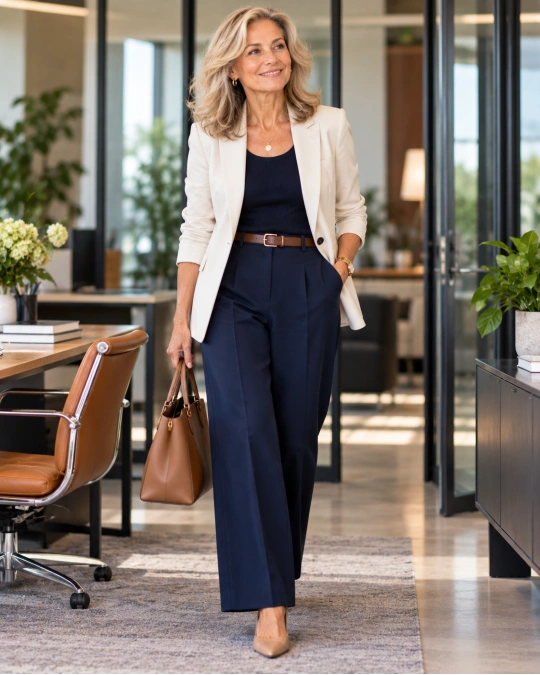
A tonal outfit is particularly effective when you want to look polished without thinking too hard about matching colors. Try navy trousers with a lighter blue blouse and a navy blazer for a look that feels coordinated without being overly formal.
You can also introduce color through one well-chosen piece. A burgundy knit beneath a charcoal jacket or a soft blue blouse with cream trousers can brighten an office outfit while keeping the overall look calm.
Accessories should support your clothes rather than compete with them. A structured leather bag, simple earrings, a clean belt, or a watch can add definition without making the outfit feel busy.
When choosing jewelry, consider the neckline of your top. A small pendant works with an open collar, while stud earrings or a simple cuff can be enough when your blouse has a higher neckline.
𝐂𝐨𝐥𝐨𝐫 𝐧𝐨𝐭𝐞: Repeating a color twice can make an outfit look intentional. For example, a burgundy blouse and a bag with a similar tone can bring together otherwise simple navy separates.
Comfortable Shoes Can Still Look Sharp in the Office
Shoes are often the first place where professional style and everyday comfort seem to compete. Fortunately, looking capable at work does not require spending the day in high heels.
Leather loafers, pointed or almond-toe flats, low block heels, and refined ankle boots can all work with professional clothing. The best choice depends on your workplace, how much you walk, and what feels stable on your feet.
Pay attention to the sole, toe shape, and how securely the shoe holds your heel. A neat flat that stays comfortable during a commute can be more useful than a beautiful pair of heels you avoid wearing.
The same tailored trousers can work across seasons with a few practical shoe changes. These combinations offer a starting point without requiring a different wardrobe for every month.
| Season or Setting | Shoe Choice | Outfit Pairing |
|---|---|---|
| Warm office days | Leather loafers | Straight trousers and cotton shirt |
| Summer business casual | Closed-toe flats | Ankle trousers and lightweight blazer |
| Cooler months | Sleek ankle boots | Wide-leg trousers and fine knit |
| Formal meetings | Low block heels | Tailored suit or midi dress |
| Busy commuting days | Supportive polished flats | Ponte trousers and structured jacket |
For trousers, check the hem while wearing the actual shoes you plan to use. Wide-leg pants that look beautiful with heels may drag on the ground with flats.
Clean, well-maintained shoes also make a difference. Scuffed toes and worn soles can weaken an otherwise neat outfit, so basic shoe care deserves a place in your routine.
Build Repeatable Work Outfits for Different Office Dress Codes
A useful work wardrobe should make mornings easier, not create another set of decisions. You do not need a separate outfit for every meeting, presentation, and ordinary office day.
Start with a small group of pieces that work together: two pairs of trousers, a blazer, a few quality tops, comfortable shoes, and a bag that suits your daily needs. Add a skirt or dress if you enjoy wearing them.
The easiest formula for authoritative dressing is:
Formula: Structured blazer + well-fitting trousers + simple top + polished shoes.
This combination works because the blazer creates definition, the trousers give the outfit a clean line, and the top keeps the overall look comfortable. You can change the colors, fabrics, and shoes without changing the basic idea.
Here are a few ways to adapt that formula to real working days.
| Workplace Situation | Outfit Formula | Why It Works |
|---|---|---|
| Important presentation | Navy suit + ivory blouse + low heels | Creates a coordinated, professional look |
| Everyday office | Charcoal trousers + fine knit + loafers | Balances comfort and structure |
| Creative workplace | Wide-leg trousers + relaxed blazer + modern flats | Looks current without feeling formal |
| Business casual Friday | Dark straight jeans + blazer + leather loafers | Keeps denim neat and intentional |
| Working from home | Ponte trousers + soft knit + simple earrings | Feels comfortable and looks presentable on video |
Dark denim can work beautifully in offices that permit jeans. Choose a clean finish without heavy distressing, then pair it with a blazer or structured knit rather than treating it like a weekend outfit.
For warmer workplaces, a tailored midi dress can be another easy solution. Add a lightweight jacket for meetings and remove it when you need a more relaxed look.
The aim is to create stylish outfits for women over 50 that can be repeated with confidence. A dependable personal uniform is often more useful than a closet filled with pieces that rarely work together.
Refresh the Workwear Details That Can Make an Outfit Look Dated
Sometimes your wardrobe contains all the right pieces, but the finished outfit still feels a little old-fashioned. This often comes down to proportion, styling, or how different items fit together.
You do not need to abandon classic clothes or follow every new trend. A few small changes can make familiar office pieces feel more current.
- If a fitted blazer feels too restrictive, try a softly shaped jacket with slightly more room through the body. Keep the shoulders neat so the extra space looks intentional.
- If your trousers feel dated, experiment with a straight or gently wide leg. A clean hem and proper length can make a bigger difference than buying a fashionable color.
- If an outfit looks too formal, exchange a stiff collared shirt for a fine knit. This keeps the structure of your jacket while softening the overall appearance.
- If your accessories feel too coordinated, try mixing related neutrals instead of matching your handbag, belt, and shoes exactly.
The goal is not to make every outfit look younger. It is to create a fresh, balanced appearance that reflects how you want to present yourself now.
One useful exercise is to photograph three work outfits you already wear. Look at the length of your jacket, the shape of your trousers, and how your shoes finish the outfit.
You may discover that the clothes themselves are fine, but one detail needs adjusting. That is a much better starting point than replacing everything in your wardrobe.
Frequently Asked Questions
What should a woman over 50 wear to look professional at work?
Start with well-fitting tailored trousers, a structured blazer, a simple blouse or fine knit, and polished shoes. Choose fabrics that hold their shape and colors that work together. A clean fit usually matters more than wearing expensive clothes.
Can women over 50 wear jeans to work?
Yes, if the workplace dress code allows them. Dark straight-leg or gently wide-leg jeans with a neat finish often look professional when paired with a blazer, structured blouse, and leather loafers. Avoid heavy distressing when you want a more formal appearance.
How can I look authoritative without wearing a suit?
Use one structured piece, such as a blazer, tailored vest, or well-cut jacket, with simple separates. Keep your shoes and accessories neat, and choose colors that look coordinated. You can communicate confidence without dressing formally from head to toe.
What colors look professional on women over 50?
Navy, charcoal, camel, chocolate brown, and black are dependable professional colors. Burgundy, olive, cream, and soft blue can also work beautifully in office outfits. Choose shades that suit your personal coloring and combine them in simple, balanced ways.
How do I build a modern work wardrobe without spending a lot?
Start by reviewing clothes you already own and identifying pieces that fit well. Build around a few dependable trousers, tops, and one useful jacket, then fill genuine gaps over time. Prioritize items you can wear in several combinations rather than buying separate outfits for every occasion.