

Grey hair can change the way familiar colors look against your face, and that can make getting dressed surprisingly confusing. A shade you once relied on may suddenly feel flat, while a color you rarely considered can make your complexion look brighter.
For women over 50, this does not mean replacing an entire wardrobe or following a strict new color chart. Grey hair simply changes the contrast around your face, so some colors may need adjusting.
The good news is that dressing over 50 becomes much easier once you know how color depth, warmth, and placement work with silver, white, salt-and-pepper, or charcoal-grey hair.
Why Grey Hair Changes the Way Colors Look

When pigment fades from your hair, the contrast between your hair, skin, eyes, and clothing often changes too. That is why a beige sweater or pale grey blouse may suddenly look different even though nothing is wrong with the garment.
Grey hair can be bright silver, soft pewter, icy white, charcoal, or a mixture of several tones. Your skin and eye color matter just as much, so there is no single palette every woman with grey hair must follow.
What usually matters most is contrast. A color that creates a little definition around your face can make your hair look intentional and luminous rather than allowing everything to blend together.
Here is a useful starting point when deciding what deserves space near your face.
| If a Color Feels Like This | Try This Instead |
|---|---|
| Pale beige washes you out | Camel, warm taupe, mushroom, or deeper oatmeal |
| Light grey blends into your hair | Charcoal, navy, slate blue, or graphite |
| Black feels too severe | Ink navy, deep plum, espresso, or soft charcoal |
| Pastels feel too faded | Clearer versions such as lavender, aqua, or soft coral |
| Bright colors feel overpowering | Wear the color in a scarf, blouse, shoe, or bag |
The goal is not to eliminate soft colors. It is to find enough difference between your hair, skin, and clothing that your features still have definition.
Jewel Tones Are Especially Strong With Silver and Grey Hair
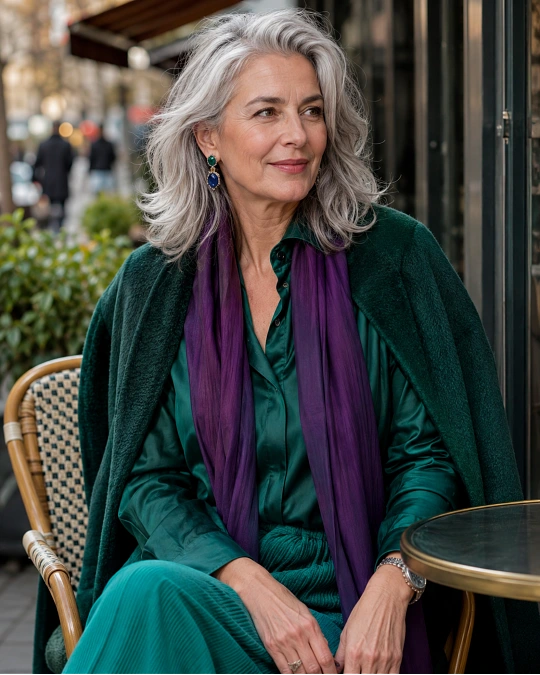
Rich colors are often some of the easiest companions for grey hair because they provide clean contrast without requiring a complicated outfit.
Think sapphire blue, emerald green, raspberry, burgundy, plum, teal, and deep violet. These shades have enough depth to frame the face while still feeling sophisticated.
A sapphire knit with straight-leg trousers, for example, creates a much clearer frame around silver hair than a washed-out blue-grey sweater might.
For everyday outfits for women over 50, you do not need to build an outfit around several strong colors. One saturated shade surrounded by simple neutrals is usually enough.
Try combinations such as:
- Emerald blouse + dark jeans + loafers
- Raspberry knit + charcoal trousers + simple flats
- Deep teal shirt + cream jeans + tan accessories
- Plum cardigan + white tee + navy trousers
Color note: If strong jewel tones feel like too much, choose slightly softened versions. Petrol blue, dusty berry, muted teal, and aubergine still provide contrast without feeling loud.
The Best Neutrals Have More Depth Than You Might Expect
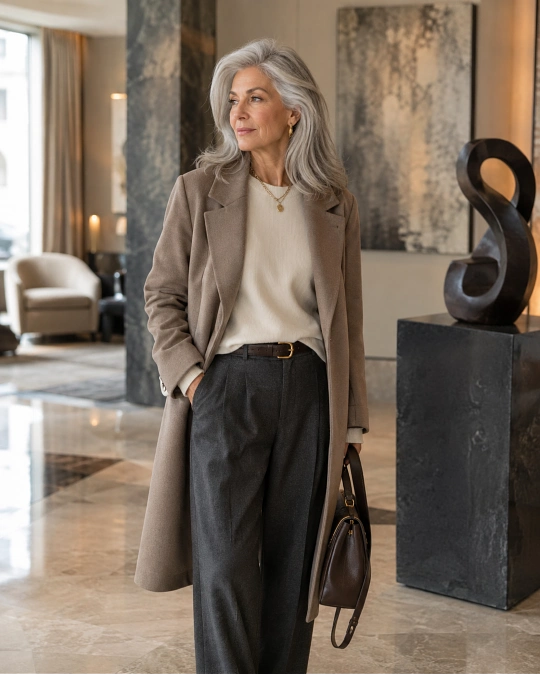
Neutrals become especially useful once grey hair is part of your natural coloring, but the right neutral may not be the one you wore ten years ago.
Soft white often looks fresher than yellowed ivory. Navy can feel gentler near the face than solid black. Charcoal may work beautifully because it echoes grey hair while still providing enough depth to define the outfit.
Camel, chocolate brown, mushroom, taupe, and stone can also work well. The key is checking whether the shade has enough contrast against both your hair and skin.
A neutral wardrobe can still create stylish outfits for women over 50 when texture and tonal variation are doing some of the work.
This quick guide can help when choosing foundational shades.
| Neutral | What to Look For | Why It Works |
|---|---|---|
| Navy | Deep, clean navy rather than faded blue | Frames grey hair without the sharpness of black |
| Charcoal | Medium to dark graphite tones | Echoes silver hair while keeping contrast |
| Soft white | Creamy white without heavy yellow | Brightens the area around the face |
| Camel | Rich tan rather than pale beige | Adds warmth and definition |
| Chocolate | Deep brown with clear richness | Softer alternative to black |
| Mushroom | Balanced grey-brown | Easy with denim, navy, cream, and burgundy |
One simple trick is to hold the garment directly beneath your chin in daylight. If your eyes and skin seem clearer before you notice the clothing, the color is probably helping.
Clear Blues, Greens, and Purples Can Brighten the Face
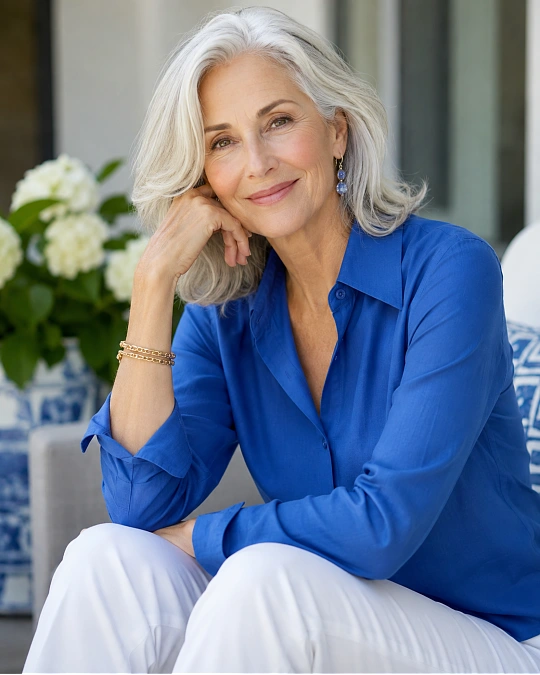
Blue is one of the most dependable color families for grey hair because there are so many depths to choose from.
Cobalt looks striking against bright silver. Denim blue is easy for casual dressing. Navy creates structure. Soft cornflower blue can work beautifully when you prefer something quieter.
Green has a similar range. Forest green feels grounded, emerald looks crisp, and blue-green teal works especially well when pure green feels too strong.
Purple deserves more attention too. Lavender, orchid, aubergine, and plum can bring life to grey hair without looking overly sweet.
What matters is clarity. Colors that look slightly cleaner and less muddy often create more definition around the face.
Try this: Take three tops in similar colors from your wardrobe and stand near a window. Compare them one at a time without judging the size or style.
Notice which one makes your eyes look clearer and which one makes you focus first on shadows or redness in your skin. That small test is more useful than following a generic seasonal color rule.
Pink, Red, and Berry Tones Can Add Warmth Without Looking Fussy
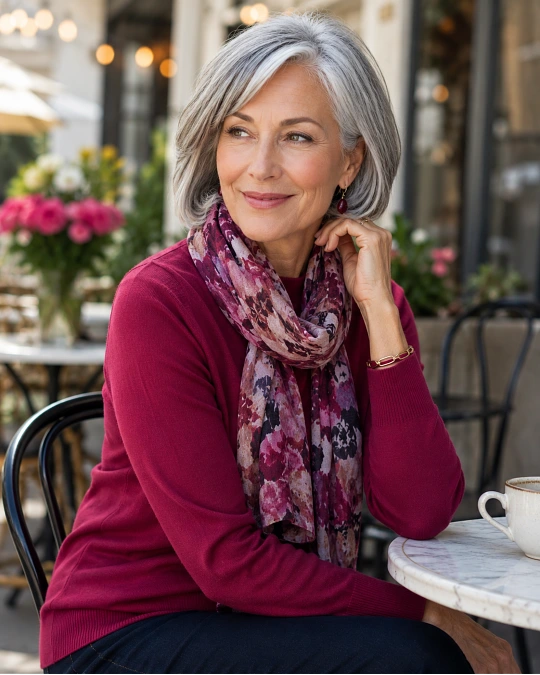
Grey hair does not require you to move toward cooler colors only. Warmth can be very flattering when it comes from the right shade.
Berry, raspberry, rose, brick red, wine, and soft coral can add color to the face without making the outfit feel overly bright.
Pure orange-red may feel strong on some complexions, while a slightly deeper tomato or brick shade may sit more comfortably. Likewise, pale blush can disappear on some people, while dusty rose creates enough contrast.
This is one place where lipstick, scarves, and earrings can help you experiment without buying a new wardrobe.
If a berry sweater feels too bold, wear a berry scarf with a navy coat. If coral near your face feels lively but a coral blouse feels like too much, use the color in a handbag or shoe instead.
That is the advantage of building a capsule wardrobe over 50 around strong neutrals. Color can move in and out without changing the whole foundation.
Be More Selective With Beige, Grey, and Very Pale Pastels
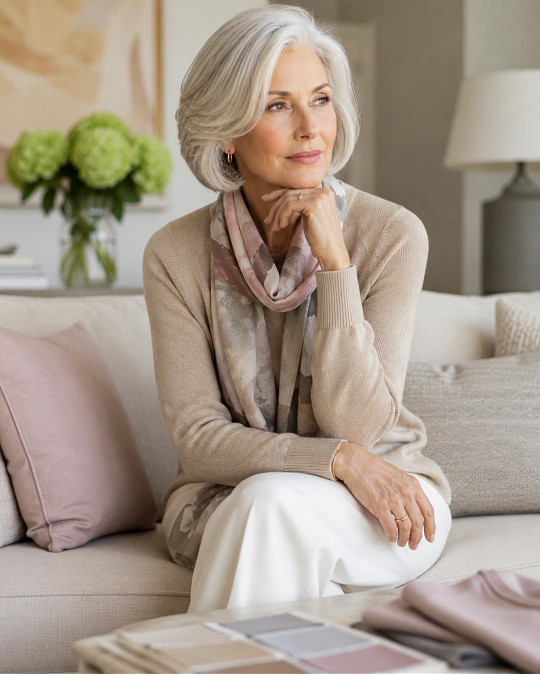
Some colors are not difficult because they are “wrong” for grey hair. They are difficult because they create very little separation between your hair, complexion, and clothes.
Pale beige, washed-out taupe, dusty grey, and weak pastels can sometimes make the entire upper half of an outfit look flat.
That does not mean you need to stop wearing them.
A beige coat may look beautiful over a navy turtleneck. A pale grey sweater can work with a berry scarf. A washed pastel blouse can become more defined when paired with a stronger lip color or darker jacket.
Here is a more useful way to think about these shades.
| Old Approach | More Useful Approach |
|---|---|
| Avoid beige because you have grey hair | Add contrast with navy, berry, chocolate, or a deeper neckline layer |
| Black is always the most flattering neutral | Compare black with navy, charcoal, plum, and espresso |
| Pastels make you look washed out | Choose clearer pastels or add a darker frame near the face |
| Grey hair means wearing cool colors only | Test both warm and cool shades against your own skin |
| Your old favorite color no longer works | Try a deeper, clearer, or softer version of the same color |
This is where styling becomes much more freeing. You are adjusting placement and depth, not banning colors from your wardrobe.
A Simple Color Formula to Use When Getting Dressed
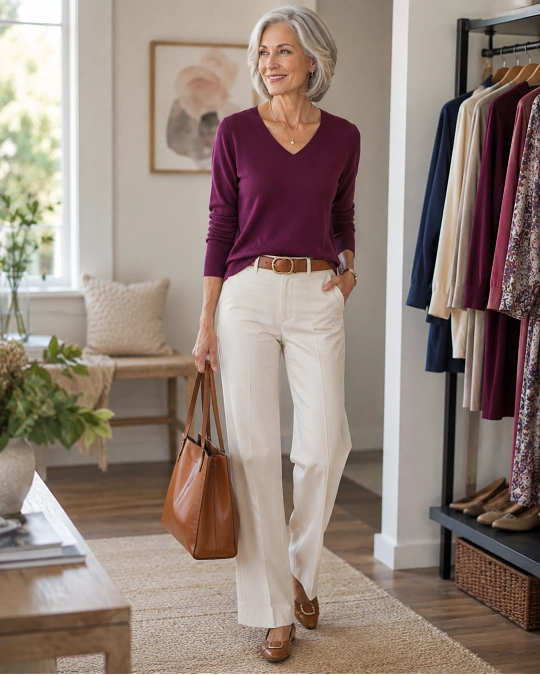
A personal color formula can remove a lot of morning decision-making.
Formula: strong neutral + face-brightening color + one quiet finishing shade.
For example, try navy trousers + a raspberry knit + burgundy loafers. Another option is cream jeans + a teal blouse + camel flats.
For a quieter outfit, wear charcoal trousers + a soft white shirt + a plum cardigan.
This approach works because the neutral keeps the outfit grounded, while the color near your face creates definition around grey hair.
You can also use the same formula for casual outfits for women over 50. Straight-leg jeans + a cobalt sweater + white sneakers can look relaxed without feeling careless.
The goal is not to wear more color. It is to place the right amount of color where it has the most impact.
Frequently Asked Questions
Flattering Colors for Grey Hair
Click or tap any topic below to reveal expert advice
There is no single best color, but navy, cobalt, emerald, teal, berry, plum, soft white, and charcoal are strong starting points. They create useful contrast around silver tones.
Your skin and eye color still matter, so always compare shades in natural daylight rather than choosing by hair color alone.
Yes. Black can look striking with grey hair, especially when there is clear contrast in your overall coloring.
If black feels severe near your face, try navy, charcoal, espresso, or deep plum—or wear black trousers/skirts and pair them with a softer shade on top.
It can work with either. While silver hair may look naturally cool, your skin undertone can still respond beautifully to camel, coral, warm red, or chocolate.
Instead of assuming you need an all-cool wardrobe, test different temperatures directly against your face.
You do not need a forbidden-color list. Very pale beige, weak grey, or faded pastels may sometimes create low contrast, but they work when paired with a stronger shade.
If a specific shade makes you look washed out, simply alter its depth or shift it away from your face with accessories.
Start small with a scarf, lightweight knit, blouse, earrings, bag, or structured jacket.
Keep the rest of your outfit grounded in familiar neutrals like navy, cream, charcoal, denim, or camel. This lets you experiment without overhauling your core style.
The Best Palette Is the One That Makes You Look Like Yourself
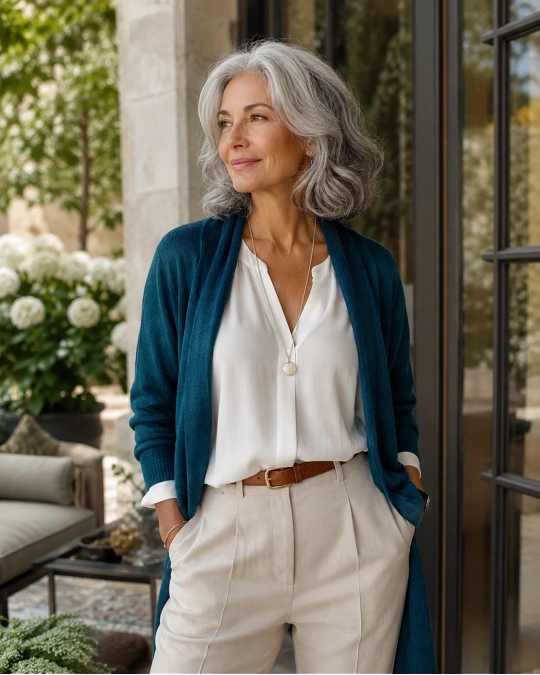
Grey hair does not require a completely different wardrobe. It simply gives you a reason to look again at contrast, color depth, and the shades sitting closest to your face.
The best dressing over 50 is not built around strict color rules. It comes from noticing what makes your skin, eyes, hair, and clothes work together.
Try one small experiment this week. Compare three colors you already own in daylight, and keep wearing the one that makes you notice you before you notice the outfit.